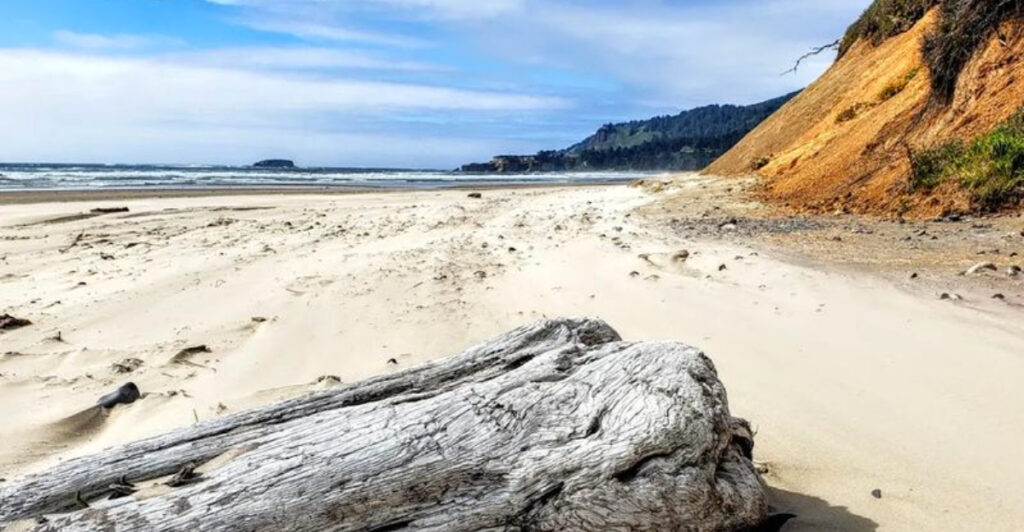
There is a stretch of the Oregon Coast that quietly holds millions of years of history right beneath your feet. The sand here is dark and coarse, the cliffs rise dramatically overhead, and if you look closely enough, you might spot a fossil peeking out from the rock face.
Most people drive past on Highway 101 without realizing what they are missing. Beverly Beach, tucked along the central Oregon Coast in Lincoln County, is the kind of place that rewards the curious traveler with tide pools, ancient marine fossils, stunning headlands, and a raw, windswept beauty that feels completely unfiltered.
I have spent time on a lot of Pacific Coast beaches, and this one genuinely surprised me with how much it packed into a single shoreline visit.
Where Beverly Beach Actually Is
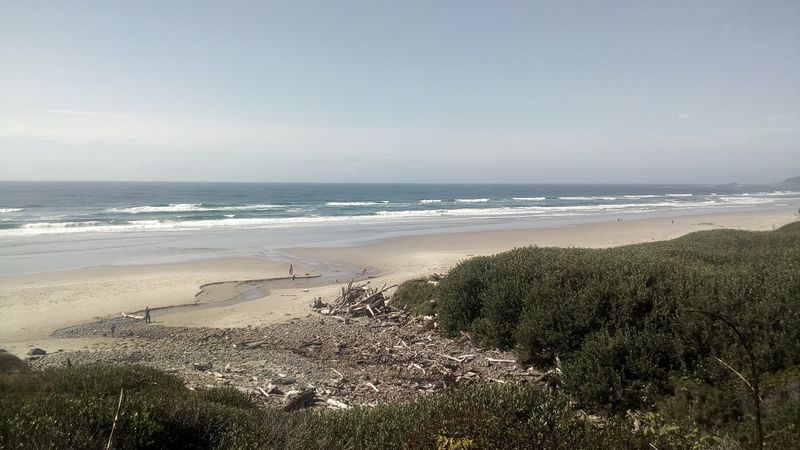
Beverly Beach sits along U.S. Route 101 in Lincoln County, Oregon, at approximately 44.72 degrees north latitude, making it part of the central Oregon Coast.
The community itself is unincorporated, meaning it does not have a formal city center, but the beach and surrounding area are well-known to locals and repeat visitors.
The closest reference point is the town of Newport, Oregon, which lies just a few miles to the south. Beverly Beach State Park borders the area to the north, and the iconic Yaquina Head Outstanding Natural Area anchors the region to the south.
The official address associated with the area is simply Oregon 97365, and while it may not show up on a map as a bustling destination, the physical location is easy to find and well-marked from the highway. Parking areas near the beach give quick access to the shoreline without much of a hike.
What makes this spot stand out geographically is how the surrounding headlands and creek outlet create a naturally sheltered cove feel, even on blustery Pacific days.
The Ancient Fossils Hiding in Plain Sight
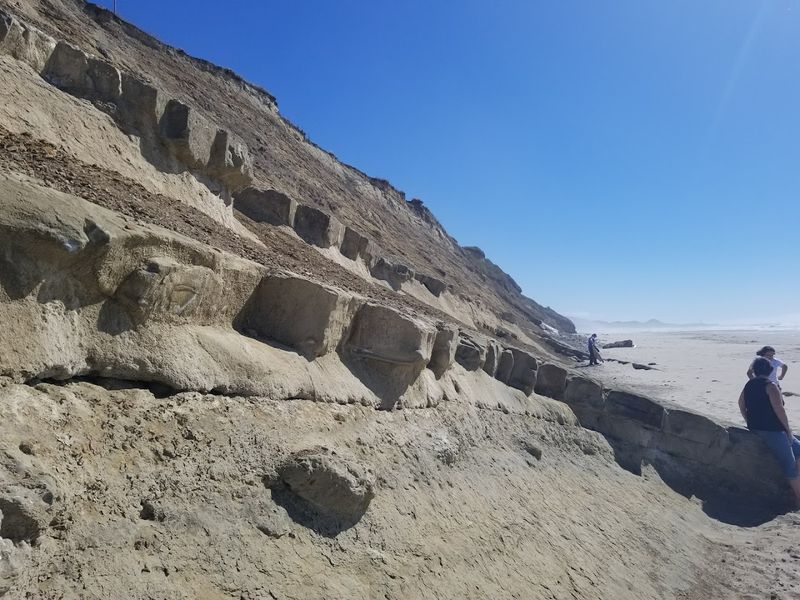
Millions of years ago, this part of the Oregon Coast sat beneath a shallow sea, and the creatures that lived there left behind a remarkable record in stone. The cliffs and rocky outcrops at Beverly Beach contain marine fossils that date back to the Miocene epoch, roughly five to twenty-three million years ago.
Shells, coral imprints, and the occasional bone fragment from ancient sea mammals have been identified in the layered sedimentary rock. You do not need to be a geologist to appreciate them.
A slow walk along the base of the cliffs at low tide reveals patterns and textures in the rock that tell a story far older than anything written in a history book.
It is worth noting that removing fossils from Oregon state beaches is not permitted, so the right move is to photograph what you find and leave it for the next curious visitor. I crouched down at the base of one eroding cliff face and spotted what looked like a scallop shell pressed perfectly into the stone, as if someone had stamped it there on purpose.
That kind of discovery stays with you long after you have driven back inland.
The Dark Sand and What Causes It
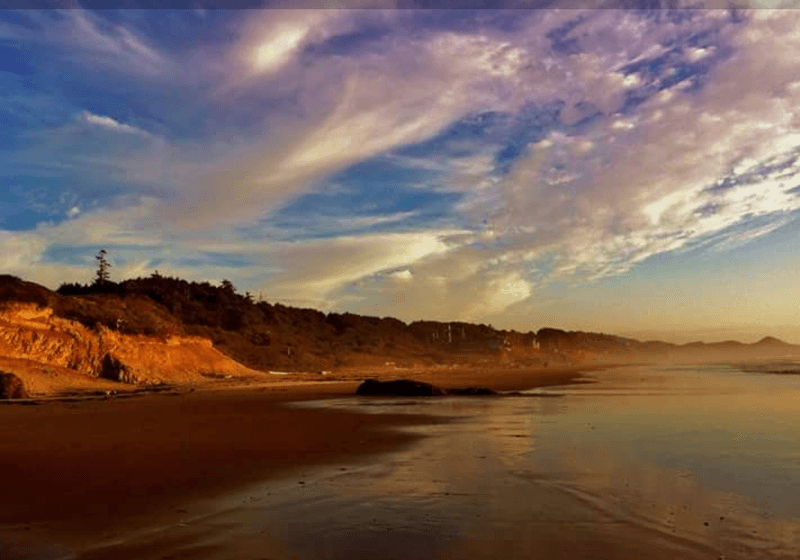
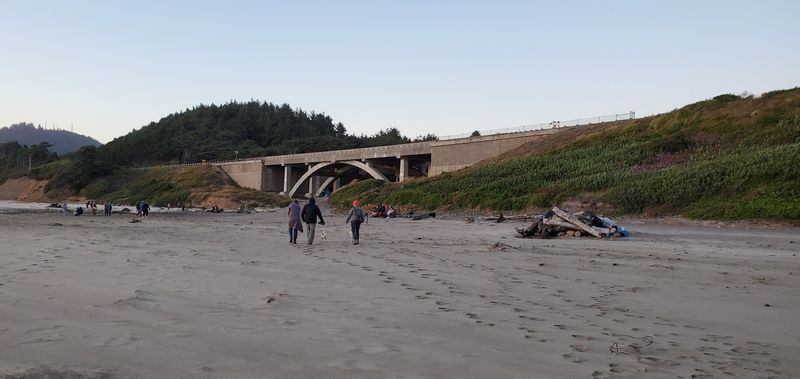
One of the first things you notice at Beverly Beach is that the sand looks different from the pale, powdery beaches you might picture in travel magazines. The grains here are dark, almost charcoal-colored in places, and noticeably coarser underfoot.
This distinctive coloring comes from the volcanic and basaltic rock that dominates the Oregon Coast geology. As the cliffs and headlands erode over centuries, those dark minerals break down into the sand that lines the shore.
It gives the beach a dramatic, moody appearance that photographs beautifully, especially on overcast days when the contrast between the dark sand and the white seafoam really pops.
The coarseness of the sand also means it drains quickly after waves wash over it, so the surface tends to feel firm and easy to walk on even close to the waterline. I found it far more comfortable for a long beach walk than the soft, ankle-sinking sand of some other coastal spots.
The dark color also retains heat from the sun a bit more efficiently, which is a small but pleasant bonus on a cool Oregon Coast afternoon. The texture alone makes it feel like a beach that belongs to a different era entirely.
Tide Pools Teeming With Life
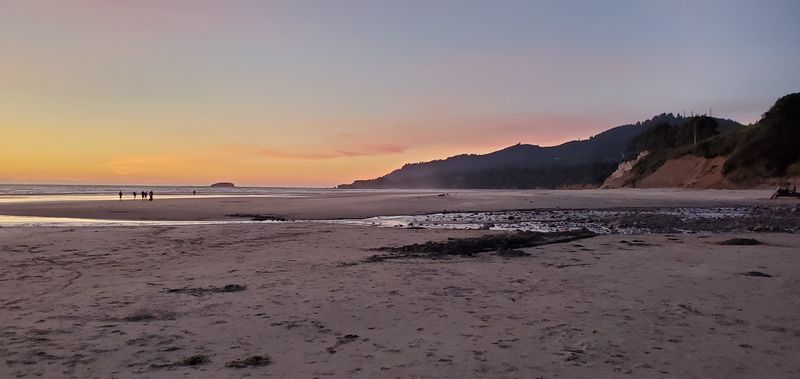
The rocky reef areas at Beverly Beach become an entirely different world at low tide. Sea anemones stretch their tentacles in shallow pools, hermit crabs drag their borrowed shells across barnacle-covered rocks, and the occasional sculpin darts between crevices when a shadow passes overhead.
Purple sea urchins cluster in depressions they have slowly carved into the rock over years of patient erosion. Ochre sea stars, which have been making a cautious comeback along the Oregon Coast after a devastating wasting syndrome, can sometimes be spotted gripping the lower reef edges.
Timing your visit around a low tide chart is the single best piece of advice I can offer for getting the most out of this part of the beach.
The Oregon Department of Fish and Wildlife asks visitors to look but not touch, and honestly, that rule is easy to follow when the pools are this alive and interesting on their own terms. I spent nearly an hour at one pool watching a shore crab systematically pick through a patch of kelp, completely unbothered by my presence.
Tide pooling here feels less like a tourist activity and more like a genuine window into a working ecosystem that has been ticking along for a very long time.
Beverly Beach State Park Next Door
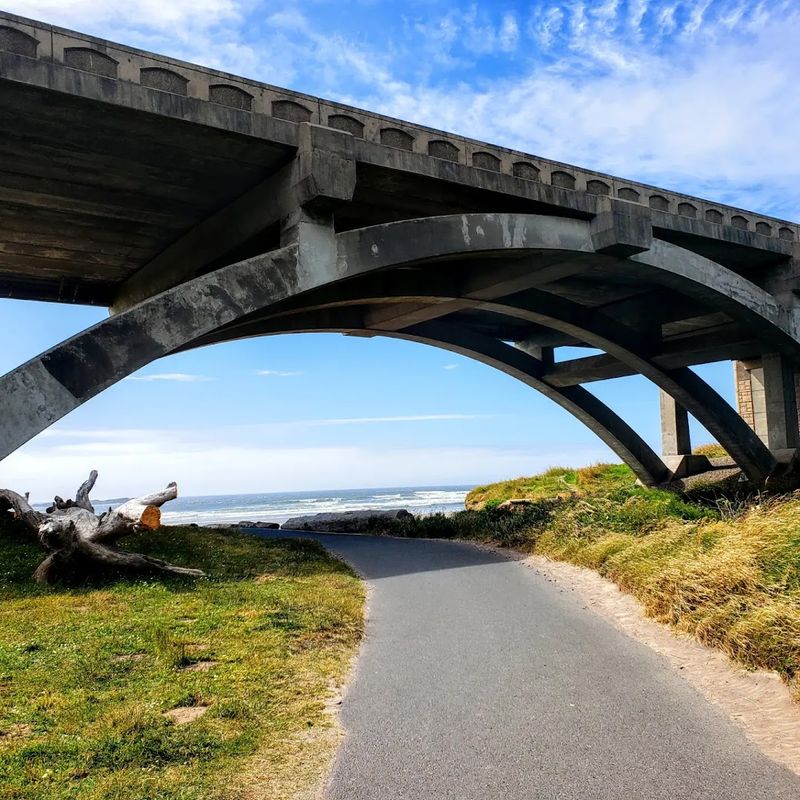
Just north of the unincorporated community lies Beverly Beach State Park, one of the most popular campgrounds on the entire Oregon Coast. The park sits in a forested valley carved by Spencer Creek, and campers fall asleep to the sound of both the creek and the distant surf.
The campground accommodates tents, RVs, and yurts, making it accessible for a wide range of travel styles. A short paved trail leads from the campground through a tunnel under Highway 101 and directly onto the beach, which is a clever piece of park design that keeps foot traffic safe and the experience seamless.
Even if you are not camping, the park offers day-use areas with picnic tables and restroom facilities, so it functions as a solid base for exploring the beach. The towering Sitka spruce trees that shade the campground give the whole area a cathedral-like feeling, with filtered light and the constant soft sound of wind moving through the canopy.
A stay here is one of those experiences that resets your internal clock in the best possible way, making the drive back to everyday life feel both necessary and slightly unfortunate.
The Yaquina Head Connection
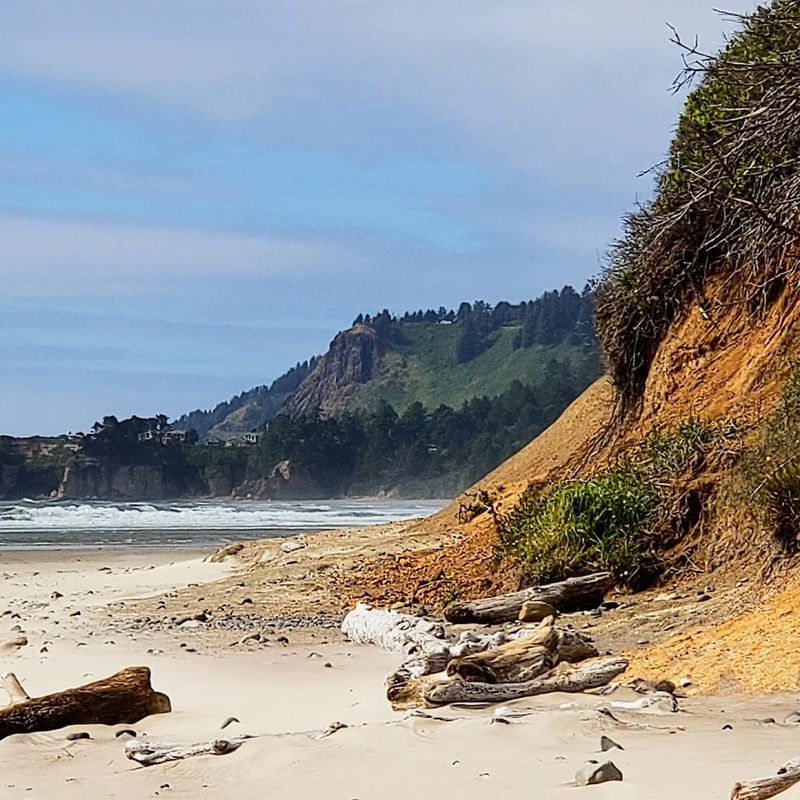
South of Beverly Beach stands Yaquina Head, one of the most dramatic natural features on the Oregon Coast. The headland juts nearly a mile into the Pacific Ocean and carries the Yaquina Head Lighthouse, the tallest lighthouse in Oregon at 93 feet tall and still operational today.
The Bureau of Land Management oversees the Yaquina Head Outstanding Natural Area, which includes tide pools that are considered among the best accessible ones in the state. The cobblestone beach at the base of the headland is a designated National Natural Landmark, and harbor seals regularly haul out on the offshore rocks just below the lighthouse.
From Beverly Beach itself, you can look south and see the lighthouse perched on the headland, giving every sunset view a built-in focal point. The relationship between these two spots is worth understanding because together they form one of the richest coastal ecosystems on the entire Pacific Northwest shoreline.
The drive between them takes only a few minutes, and combining both into a single half-day itinerary gives you a much fuller picture of what makes this corner of Oregon so geologically and ecologically distinct from the beaches you might find further south toward California.
Beachcombing Finds Beyond Fossils
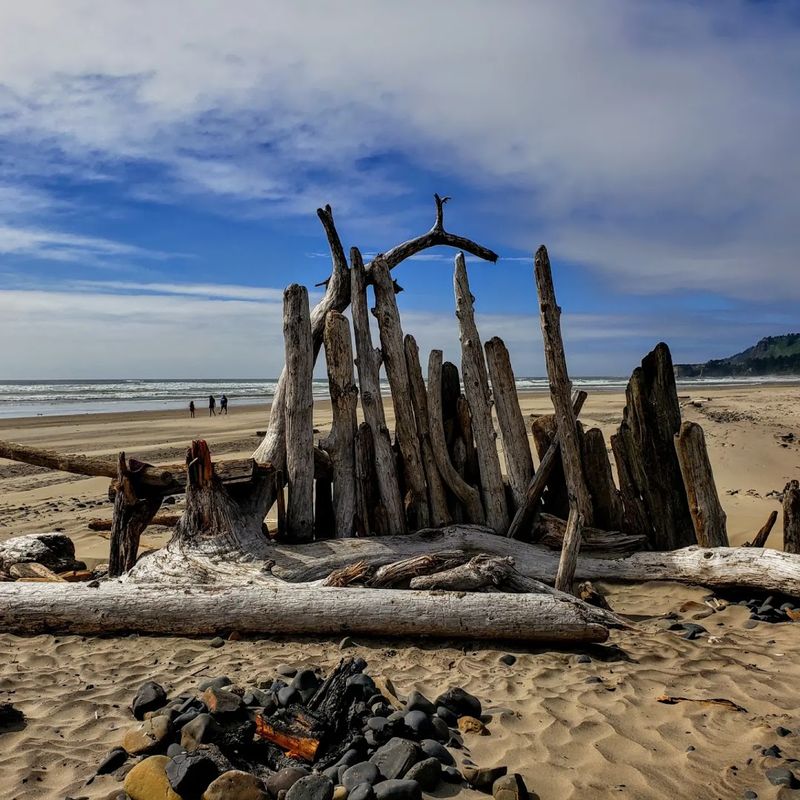
Fossils get most of the attention at Beverly Beach, but the shoreline offers a surprisingly broad range of things to find if you keep your eyes on the sand. Oregon agates, which are translucent stones formed from ancient volcanic activity, wash up here regularly, especially after winter storms have rearranged the beach.
Smooth basalt pebbles polished by the surf, fragments of crab shell, feathers from seabirds, and occasionally pieces of sea glass round out the typical haul. Driftwood arrives in all shapes and sizes, from small sticks to enormous bleached logs that become temporary landmarks until the next big tide moves them again.
Historically, Japanese glass fishing floats occasionally washed up on Oregon beaches, and while that is rare today, the tradition of searching for them gave the Oregon Coast beachcombing culture much of its personality. I picked up a small, perfectly round agate at Beverly Beach that caught the light in a way that made it look almost like a tiny planet.
It now sits on my desk, which is either a charming travel souvenir or a sign that I have a rock-collecting habit I should probably address.
Wildlife You Can Actually Expect to See
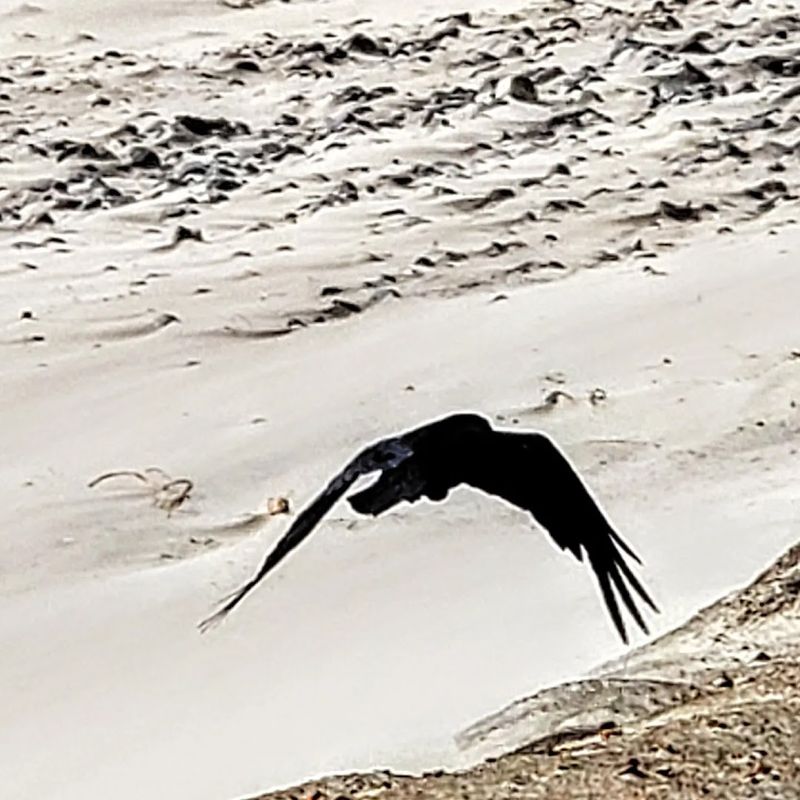
The wildlife viewing at Beverly Beach is not the kind that requires binoculars and three hours of patience. Brown pelicans cruise in formation just above the waterline, their wingspans looking almost prehistoric against the open sky.
Brandt’s cormorants and common murres bob in the surf just offshore, and great blue herons occasionally stalk the creek mouth where Spencer Creek meets the ocean.
Harbor seals pop their heads up beyond the breakers with an expression of total indifference toward human observers. During migration seasons, the beach becomes a stopover point for shorebirds including dunlins and sanderlings, which sprint along the waterline in tight, synchronized groups that look like a single organism moving in waves.
Gray whales migrate past this section of coast from December through June, and the elevated bluffs to the south at Yaquina Head provide good vantage points for spotting their spouts. I watched a small group of brown pelicans at Beverly Beach glide within about fifteen feet of where I was standing, completely focused on whatever fish they had spotted below the surface.
It is the kind of casual wildlife encounter that reminds you the coast does not belong to us, and we are just visiting their turf.
The Geology That Shaped This Coastline
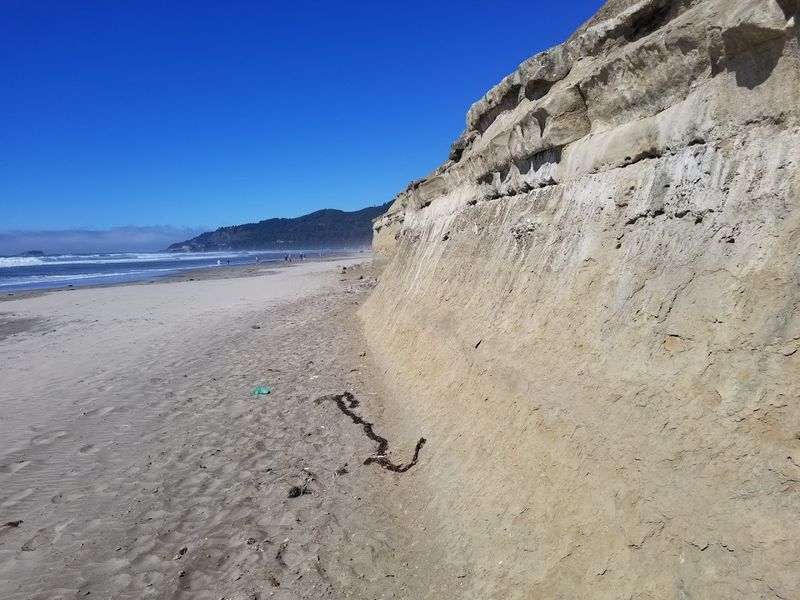
The Oregon Coast is geologically young and restless by planetary standards, and Beverly Beach sits right in the middle of one of its most interesting chapters. The cliffs here are composed primarily of the Yaquina Formation, a sequence of marine sedimentary rocks laid down roughly thirty to forty million years ago when this entire region sat beneath a shallow tropical sea.
Tectonic forces gradually lifted those seafloor sediments above the waterline, and ongoing wave erosion has been carving into them ever since, exposing new layers and releasing the fossils locked inside. The basaltic headlands nearby represent an even older chapter, formed from ancient volcanic flows that predated the sedimentary deposits.
Understanding even a little of this backstory changes how you look at the beach. The cliffs are not just a backdrop for photos.
They are a cross-section of deep time, with each horizontal layer representing thousands of years of accumulated sediment. A geologist friend once told me that reading a cliff face is like reading a book written in stone, and Beverly Beach has one of the more compelling chapters I have personally encountered anywhere along the Pacific Coast, including spots I visited while road-tripping through Northern California.
Best Times to Visit and What to Bring
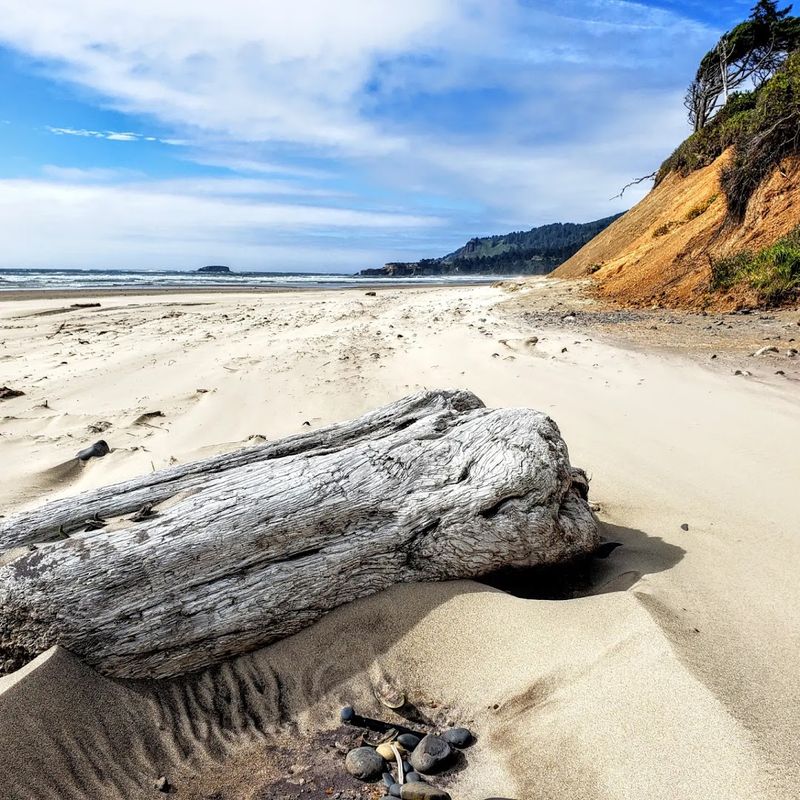
The Oregon Coast operates on its own schedule, and Beverly Beach is no exception. Summer months from July through September bring the most reliable dry weather, though fog is still common in the mornings.
Spring and fall are quieter, with fewer crowds and often dramatic storm light that makes the cliffs and dark sand look absolutely striking.
Winter storms can be spectacular to watch from the beach, and Beverly Beach handles the raw Pacific energy well, but conditions can shift quickly and waves are unpredictable, so staying well back from the waterline during high surf is genuinely important. Layers are non-negotiable regardless of the season.
Even a sunny August afternoon can turn cold fast when the wind picks up off the water.
Sturdy footwear is worth the effort if you plan to explore the rocky reef areas, since wet basalt is slippery in a way that sneakers handle poorly. A tide chart app on your phone, a decent camera, and a small bag for trash you might find on the beach round out the ideal kit.
I have visited in both July and November, and honestly the November visit, wrapped in a rain jacket with the beach almost entirely to myself, felt like the more honest version of this place.
The Spencer Creek Mouth and Freshwater Meeting Salt
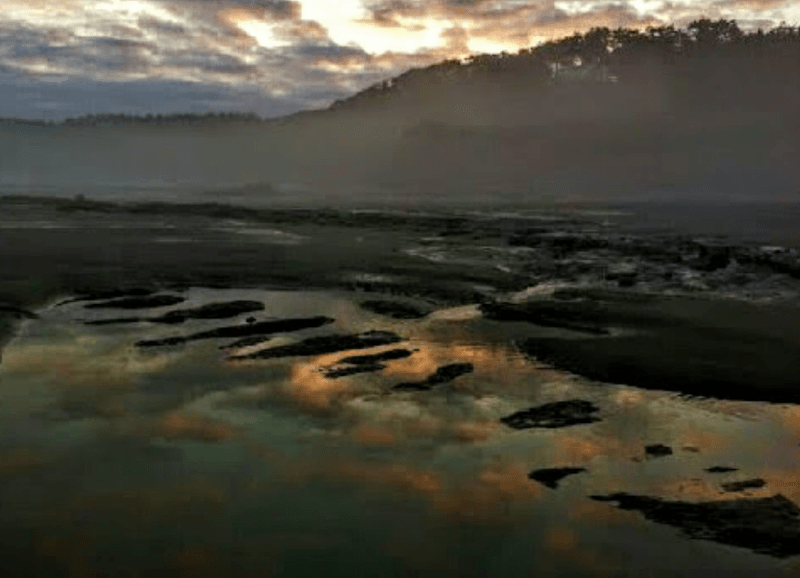
One of the quieter natural features at Beverly Beach is the point where Spencer Creek crosses the beach and empties into the Pacific Ocean. This kind of freshwater and saltwater interface, called an estuary margin, attracts a surprisingly diverse mix of birds and small marine creatures that take advantage of the brackish zone.
The creek runs through the forested valley that Beverly Beach State Park occupies, picking up nutrients from the forest floor before it reaches the sand. Great blue herons often stand motionless at the creek mouth, waiting for small fish or invertebrates to drift past.
The shallow crossing can be a mild obstacle for beach walkers heading north, but it is easy enough to navigate with waterproof shoes or bare feet.
After heavy rainfall, the creek runs faster and wider, and the contrast between the dark, tannic freshwater and the pale seafoam of incoming waves is genuinely striking to watch. I sat near the creek mouth for a while during my last visit and watched a great blue heron catch three small fish in about twenty minutes, each one dispatched with a precision that no fishing rod could match.
The creek adds a layer of ecological complexity to the beach that most visitors walk right past without noticing.
Why Beverly Beach Deserves More Attention
Most travelers on the Oregon Coast prioritize Cannon Beach, Crater Lake, or the Sea Lion Caves, and those are all worthwhile stops. But Beverly Beach quietly offers a combination of geological richness, wildlife diversity, fossil history, and raw coastal scenery that few places on the entire Pacific Coast can match in a single visit.
The fact that it remains relatively uncrowded compared to more famous Oregon destinations is partly a matter of marketing and partly a matter of the beach not having a single iconic landmark to anchor itself to in the public imagination. That is actually what makes it special.
There is no single thing to see and photograph and leave. The whole beach is the thing.
Oregon has a strong culture of public beach access, meaning every inch of the shoreline is legally open to the public, and Beverly Beach benefits from that policy in a big way. The contrast with states like Oklahoma, which is landlocked and has no Pacific coastline, makes the accessibility of Oregon beaches feel even more remarkable.
Oklahoma travelers who make the drive out to the Oregon Coast specifically mention Beverly Beach as one of the more unexpected highlights, and I completely understand why. This beach does not announce itself loudly, but it earns its reputation one fossil and one tide pool at a time.
Share this story