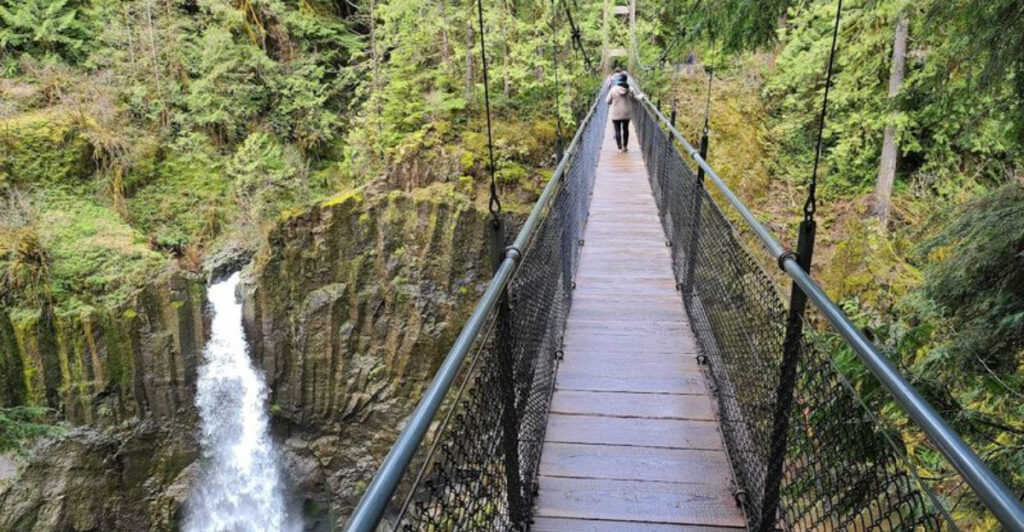
There is a suspension bridge tucked deep in the Coast Range forests of Oregon that stops people mid-step. It sways gently above a rocky canyon, framed by old-growth alder and fern, with a waterfall crashing below.
I had seen the photos online a dozen times and thought, surely the real thing cannot be that dramatic. It is.
Drift Creek Falls and its iconic footbridge, near the small community of Otis in Lincoln County, Oregon, turned out to be one of the most genuinely surprising outdoor experiences I have had on the entire West Coast. The trail is short, the payoff is enormous, and the bridge itself deserves its own fan club.
Keep reading, because every section below covers a different piece of what makes this place so worth the drive.
Where Exactly You Are Going and How to Get There
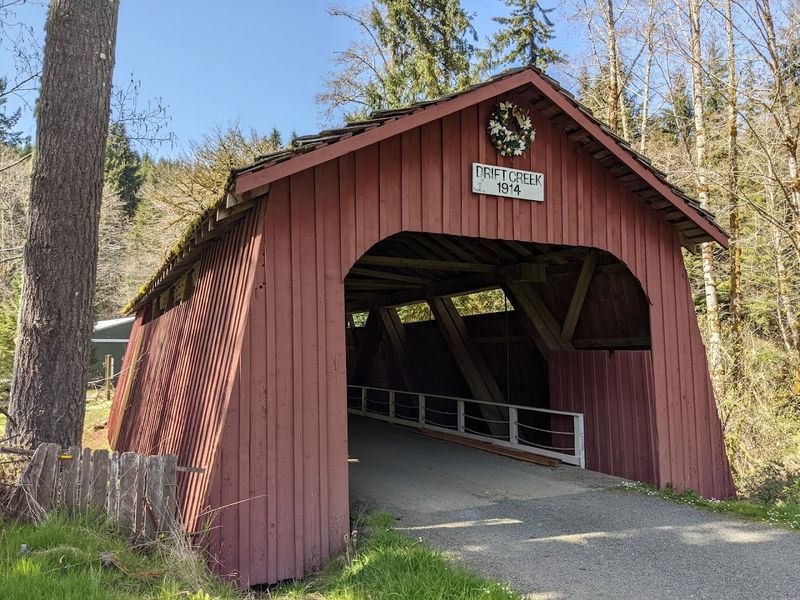
The trailhead for Drift Creek Falls sits at the end of Forest Road 17, accessible from Otis, Oregon, near Lincoln City on the northern Oregon Coast. The full mailing address area falls under Oregon 97368, placing it firmly in Lincoln County within the Siuslaw National Forest.
The most reliable route is to head east from Lincoln City on Highway 18, then turn onto Drift Creek Road at Otis and follow the signs toward Forest Road 17. This approach keeps you on paved road for the majority of the drive, which matters because the road is narrow and one lane in several stretches.
Do not follow the Bottle Saddle Tie Road shortcut from Highway 18. That route sounds tempting on a map, but it creates serious stress and potential vehicle damage.
The southern approach from Lincoln City through Otis is the clear winner here. Download your maps before you leave town, because cell service disappears well before you reach the parking area.
The Suspension Bridge That Steals the Show
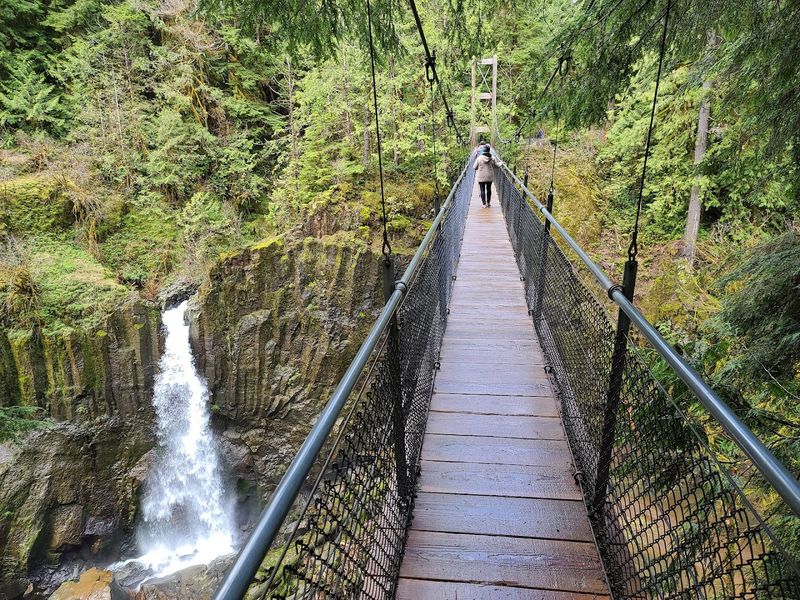
One hundred feet above the canyon floor, the Drift Creek suspension bridge swings lightly in the breeze and offers a view that genuinely earns every step of the hike. The bridge stretches roughly 240 feet across the canyon, connecting two sections of trail with nothing but open air and a waterfall view beneath your feet.
The structure was built by the U.S. Forest Service and completed in 1998.
It replaced an older route and was designed specifically to give hikers a dramatic overlook of both the canyon and the falls. The engineering is solid, but the experience still feels a little thrilling, especially if heights are not your comfort zone.
Holding the railing helps, and within a few steps most people find their stride and start focusing on the scenery instead of the sway. The view from the center of the bridge is the single best angle for photographing the waterfall, with the canyon walls and forest canopy framing the drop beautifully.
Cross it once and you will want to cross it again on the way back.
The Waterfall Itself and What to Expect Up Close
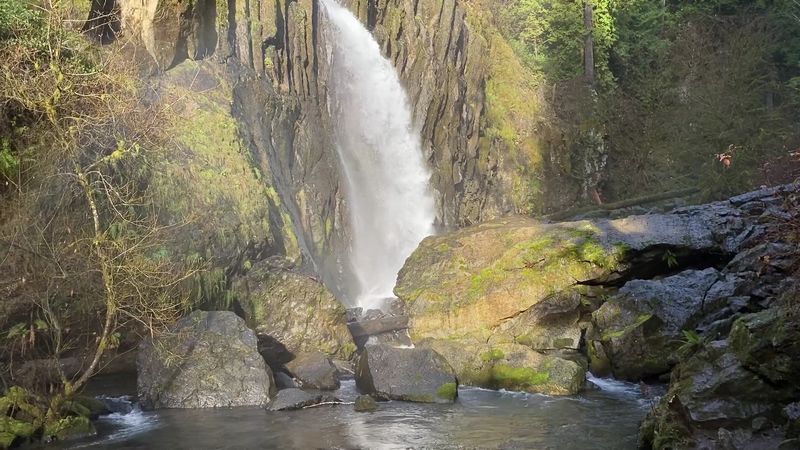
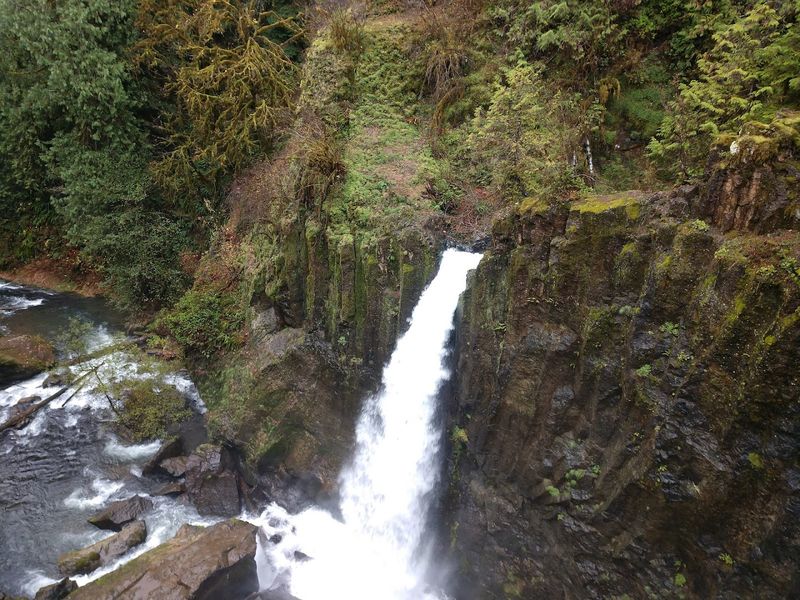
Drift Creek Falls drops about 75 feet into a rocky canyon pool, and it is the kind of waterfall that rewards patience. The first view from the suspension bridge gives you the aerial perspective, all frothy white water against dark basalt.
The second view, from the creek bed below the bridge, gives you the full vertical drama up close.
A short scramble down from the bridge leads to the creek bank, where flat rocks and boulders line the edge of the pool. The waterfall fills the canyon with sound, and the mist keeps everything around it brilliantly green even in dry summer months.
The rocks near the water are consistently slippery, so footwear with real grip matters here. On warm summer days, some visitors wade into the shallower edges of the pool, though the water stays cold year-round given its forest source.
The falls run strongest in winter and spring, when rainfall in the Coast Range peaks. Even in late summer, the drop remains photogenic and the canyon retains its lush, almost otherworldly character.
The Forest Trail and What the Hike Actually Feels Like
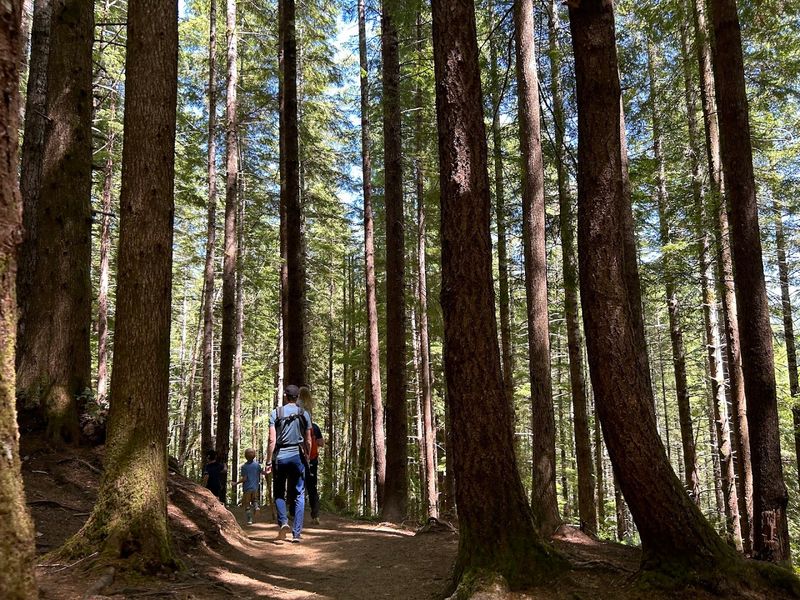
The trail to Drift Creek Falls is approximately 1.5 miles each way, making the round trip about 3 miles total. That distance puts it firmly in the accessible category, and the path is wide and well-maintained throughout.
The first portion heads downhill at a comfortable grade through old-growth temperate rainforest, where the air smells like rain even on dry days.
Alder trees arch overhead, sword ferns crowd the edges of the path, and mossy logs line the forest floor in every direction. The trail then levels out for a stretch before a gentle climb toward the suspension bridge.
That final incline is mild enough that most hikers barely notice it, especially with the anticipation of the bridge view pulling them forward.
The whole hike takes between one and two hours depending on pace and how long you linger at the bridge and falls. Toddlers have completed this trail.
So have older adults and dogs of all sizes. The path does have some rooted and uneven sections, and a few spots get genuinely slick after rain, so grip on your footwear should be a real consideration rather than an afterthought.
Parking, Fees, and the Logistics That Actually Matter
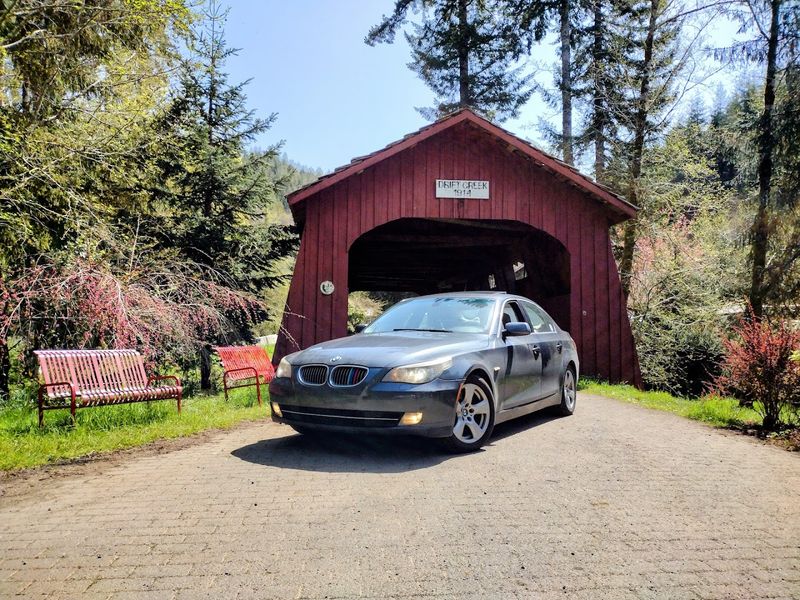
The Drift Creek Falls trailhead parking area fills up fast on weekends, and fast is not an exaggeration. Arriving by 9 a.m. on a Saturday gives you a reasonable shot at a spot.
By noon, vehicles are often parked along the road leading to the trailhead, which adds extra walking distance before the actual hike begins.
A Northwest Forest Pass is required for parking, and the fee is five dollars per vehicle. The trailhead no longer has a cash payment box on site, so you need to purchase your pass in advance or pick one up at a local retailer.
The Bi-Mart in Lincoln City sells them and is a convenient stop on the way out from the coast.
Restrooms are available at the trailhead, which is a genuine comfort given the remote location. There are no food vendors, no gear rentals, and no cell service once you leave the highway corridor.
Bringing water, snacks, and a downloaded offline map is the difference between a smooth outing and an anxious one. The logistics are simple as long as you handle them before you leave town.
The Old-Growth Forest and Why It Feels So Alive
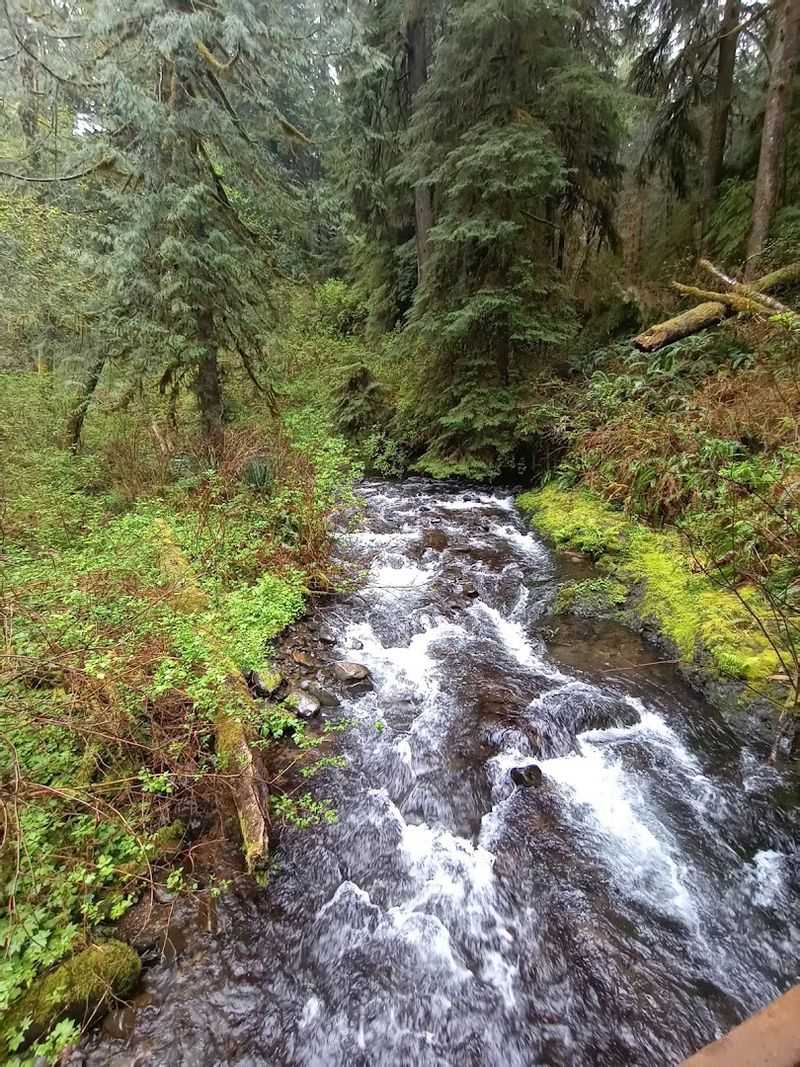
Old-growth temperate rainforest has a specific quality that is difficult to describe until you are standing inside it. The trees are enormous, the canopy is layered, and the undergrowth is so dense and varied that every few steps reveals something new.
Along the Drift Creek Falls trail, this forest is the constant companion from the parking lot to the bridge.
Bigleaf maple and red alder dominate the lower sections, draped in moss and lichen that give the whole corridor a deep green texture. Sword ferns grow waist-high in places, and fallen logs host clusters of mushrooms in nearly every season.
The forest feels genuinely ancient, because much of it is.
The Siuslaw National Forest protects this corridor, and the lack of logging pressure in the immediate trail area means the ecosystem has had decades to develop its layered complexity. Birdwatchers find the forest rewarding, with varied thrushes, winter wrens, and other woodland species audible throughout the hike.
Even on crowded weekend days, the canopy absorbs sound in a way that makes the trail feel quieter and more private than the parking lot would suggest.
Best Times to Visit and What Each Season Offers
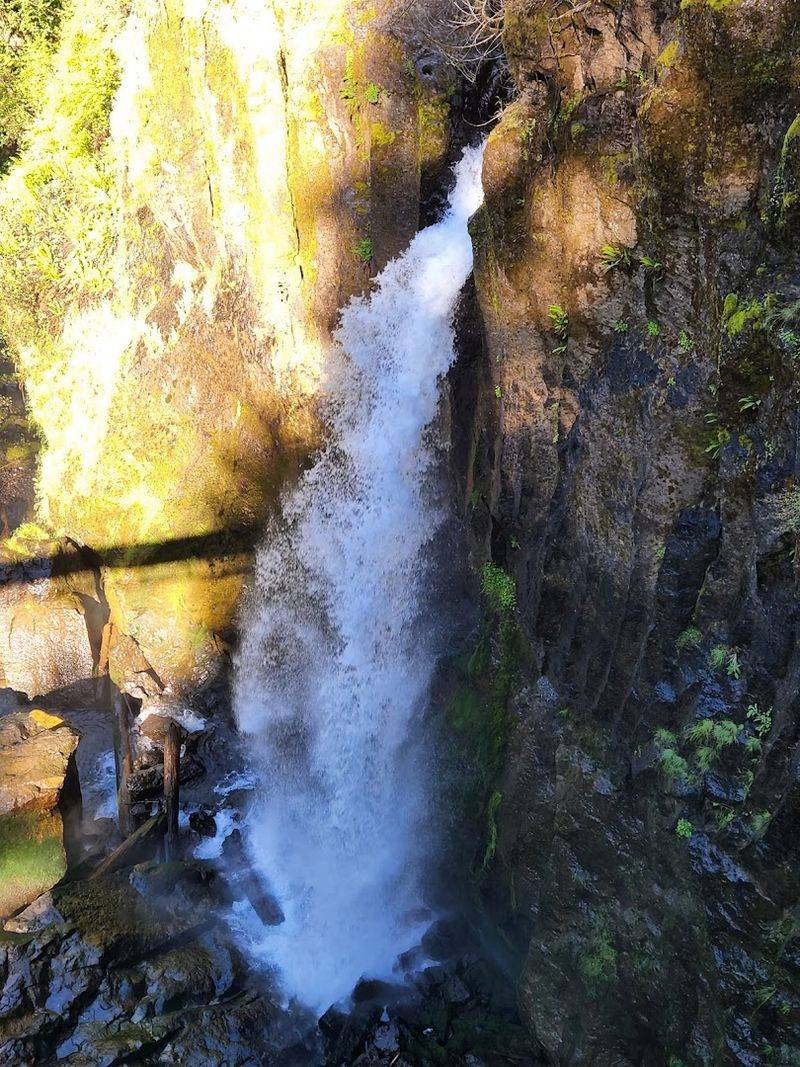
Every season at Drift Creek Falls brings something different, and none of them are actually bad. Winter and early spring deliver the most powerful waterfall, when rainfall in the Coast Range keeps Drift Creek running full and fast.
The falls roar during this period, and the canyon fills with mist that makes the entire scene feel dramatic and raw.
Spring adds bursts of wildflowers along the trail margins and fresh green growth on every surface. The light filters through new leaves in a way that photographers specifically chase.
Summer brings drier conditions, more comfortable temperatures, and the highest trail traffic of the year. The waterfall drops in volume but remains visually satisfying, and the creek pool becomes more accessible for wading.
Fall is arguably the most underrated season here. The bigleaf maples turn gold and amber, the crowds thin out noticeably compared to summer, and the forest takes on a warm, layered color palette that contrasts beautifully with the evergreen ferns.
Rain returns in October, refreshing the waterfall and keeping the trail surfaces lush. Visiting on a weekday in any season dramatically improves the parking situation and the overall sense of solitude.
What to Bring and How to Prepare for the Trail
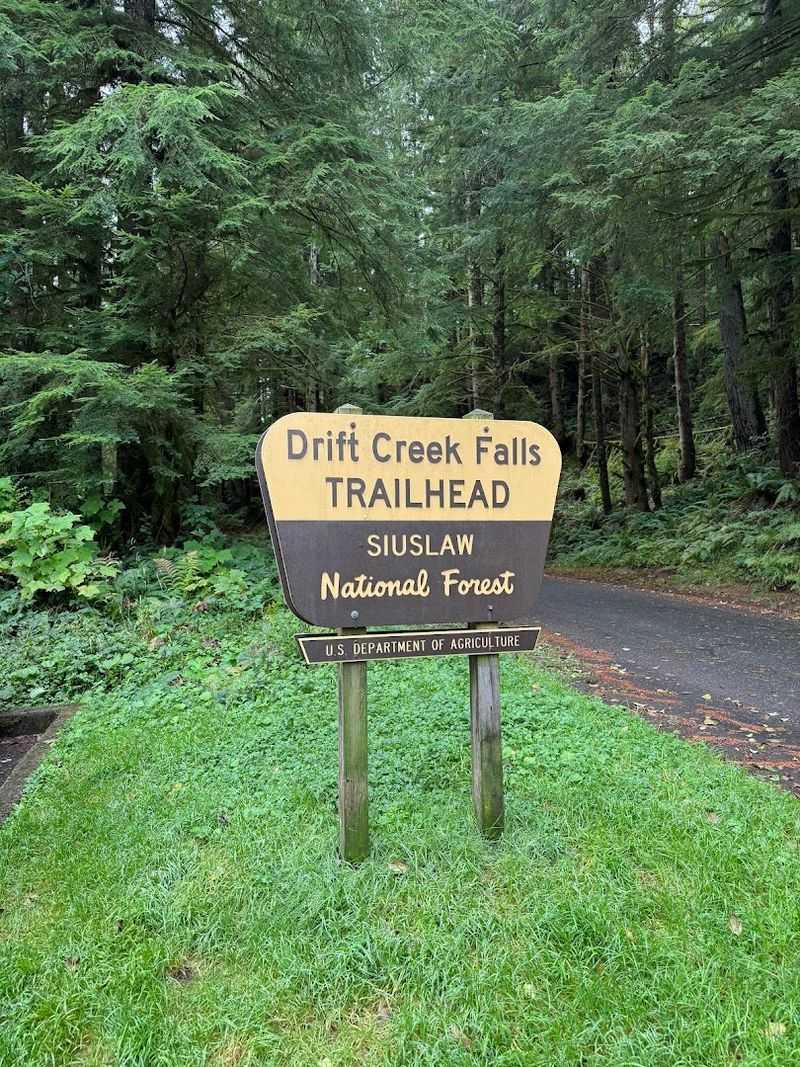
The trail is short, but the conditions in an Oregon Coast Range forest can shift quickly, and preparation makes the difference between a great experience and a frustrating one. Waterproof or water-resistant footwear is the single most important item on the packing list.
Several sections of the trail stay muddy and slick even after dry spells, and the rocks near the waterfall are reliably wet.
A light rain jacket belongs in the pack regardless of the forecast. The Coast Range generates its own weather patterns, and afternoon showers appear without much warning.
Layers are useful because the forest stays cool even when temperatures are mild at the coast.
Water and snacks are worth bringing since there are no services on the trail or at the trailhead beyond the restrooms. Trekking poles help on the return uphill section, particularly for anyone with knee concerns.
If you bring a dog, a leash is required and waste bags are essential since trail cleanliness has been a real issue at this location. A fully charged phone with offline maps downloaded covers the navigation gap created by the absence of cell service along the access road and trail.
Why This Bridge and Falls Stay With You Long After the Drive Home
Some outdoor destinations deliver exactly what the photos promise and nothing more. Drift Creek Bridge delivers the photos and then adds the sound, the smell, the sway underfoot, and the particular feeling of standing above a wild canyon in a coastal forest that has been growing undisturbed for a very long time.
The combination of elements here is genuinely unusual. A well-graded trail, a genuine engineering structure with a real thrill factor, and a legitimate waterfall, all within a 3-mile round trip from a trailhead that is under two hours from Portland, is a rare package.
Most places this photogenic require much more effort to reach.
The bridge itself has a way of reframing the landscape. From the trail, the forest is immersive but enclosed.
From the center of the bridge, the canyon opens up and the scale of everything becomes clear. The waterfall that looked modest in summer photos reveals its true height when you are standing above it on a swaying platform with nothing between you and the canyon floor.
That moment tends to stick around in memory, which is probably why the parking lot fills up every single weekend without fail.
Share this story