This Bozeman museum is one of the nation’s premier destinations for natural history and science. Its collections include world-famous dinosaur fossils, cultural artifacts, and research discoveries that have helped expand our understanding of Earth’s distant past.
Visitors can view a towering Tyrannosaurus rex skull, explore exhibits on prehistoric life, and learn about the people who shaped the region’s history. With its blend of science, archaeology, and cultural heritage, the museum offers an engaging experience that can easily fill an entire day.
Where the Museum Stands and What It Promises
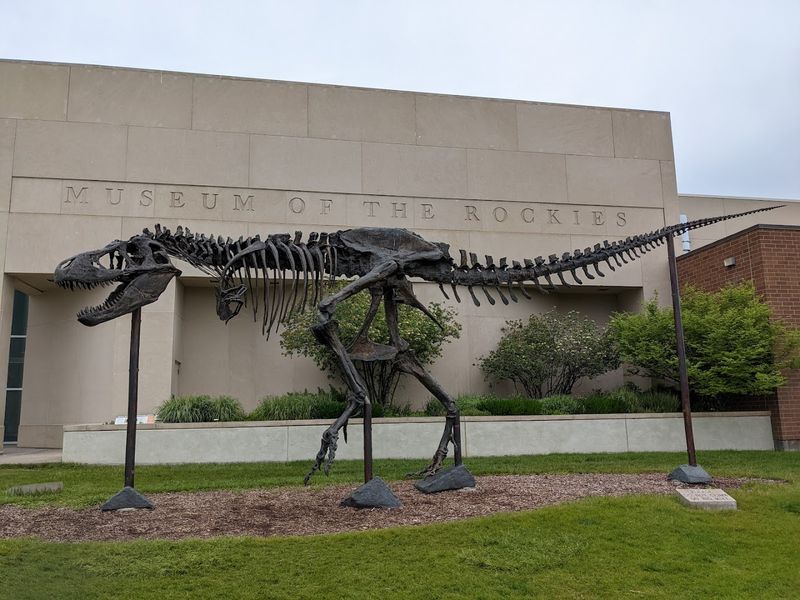
The Museum of the Rockies sits at 600 W Kagy Blvd, Bozeman, MT 59717, right on the edge of the Montana State University campus, and the setting alone tells you something about the seriousness of what is inside.
The parking lot is generous, the mountain views from outside are genuinely striking, and there is even a walking path where you can bring your dog before heading in.
The museum is open daily from 9 AM to 5 PM, and the phone number is +1 406-994-2251 if you want to check on special events or current exhibits before your visit.
Affiliated with both Montana State University and the Smithsonian Institution, this place functions as Montana’s official repository for paleontological specimens. That is not a casual title.
It means the fossils here are not just impressive to look at. They are part of the scientific record, actively studied and preserved for future generations.
The Siebel Dinosaur Complex: A Hall That Earns Its Name
Most natural history museums have a dinosaur room. The Museum of the Rockies has the Siebel Dinosaur Complex, and the difference between those two things becomes obvious the moment you walk through the doors.
The complex is divided into distinct halls, including the Hall of Giants, the Hall of Growth and Behavior, the Hall of Horns and Teeth, and the Mesozoic Media Center, each one focused on a different chapter of prehistoric life.
The Hall of Giants earns its name without any exaggeration. Fully mounted skeletons tower overhead, and the sheer scale of these animals becomes real in a way that no photograph or documentary ever quite manages to convey.
The Hall of Growth and Behavior is particularly fascinating because it shows how dinosaurs changed across their lifespans, using fossil evidence to tell a story about biology rather than just size.
If you only had one hour here, this complex alone would fill it and leave you wanting more.
Montana’s T. Rex and the Skull That Stops You Cold
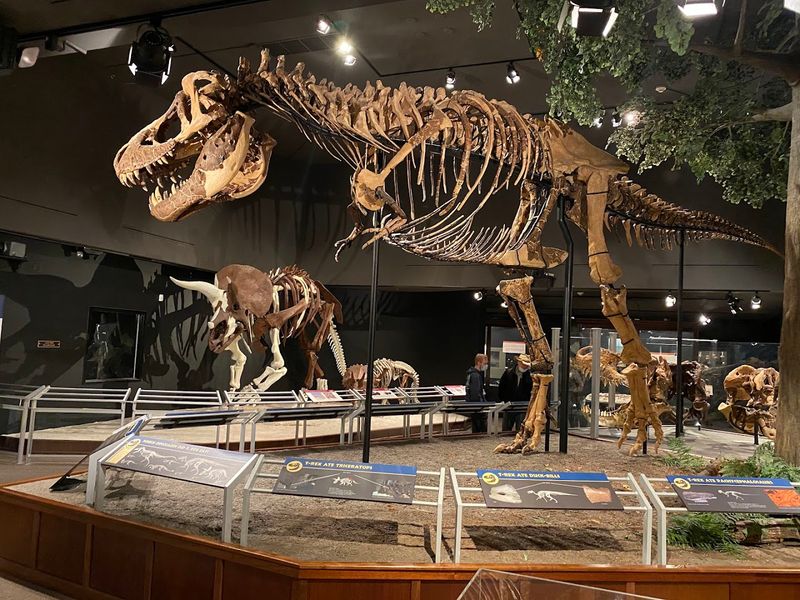
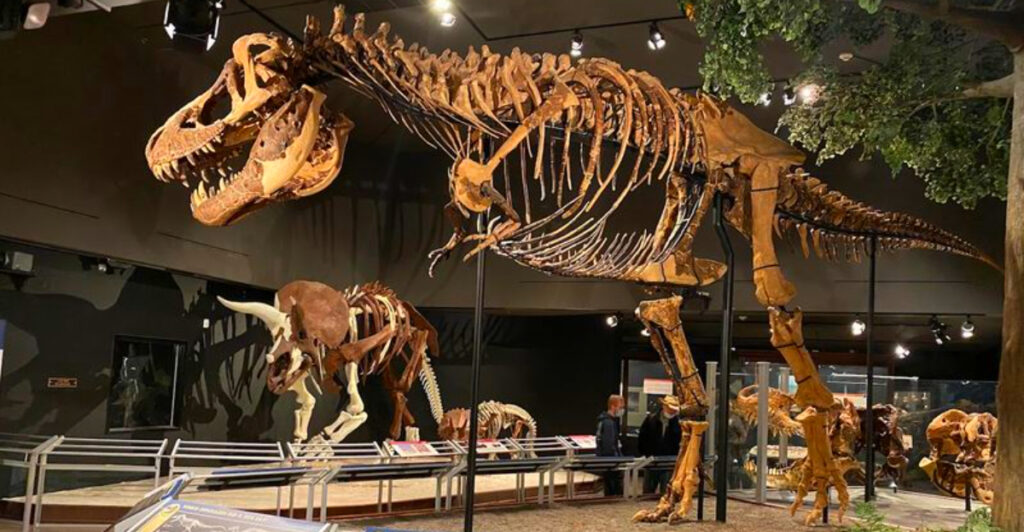
The museum holds 13 Tyrannosaurus rex specimens, which is a number that takes a moment to fully register. Most institutions in the world would consider themselves lucky to have one.
Among them is MOR 008, one of the largest T. rex skulls ever discovered anywhere on earth, and it is displayed in a way that lets you get close enough to appreciate every detail of those massive teeth and bone ridges.
“Montana’s T. rex” is a fully mounted skeleton that anchors the complex with unmistakable authority. There is an upper viewing level where you can look down at the skull from above, which gives you a completely different and equally jaw-dropping perspective.
The museum also holds one of only two complete T. rex skeletons ever found, a fact that puts Bozeman on a very short list of places in the entire world.
And then there is the soft tissue discovery, which deserves its own section entirely, because the science behind it genuinely rewrote the rulebook.
The Soft Tissue Discovery That Rewrote Paleontology
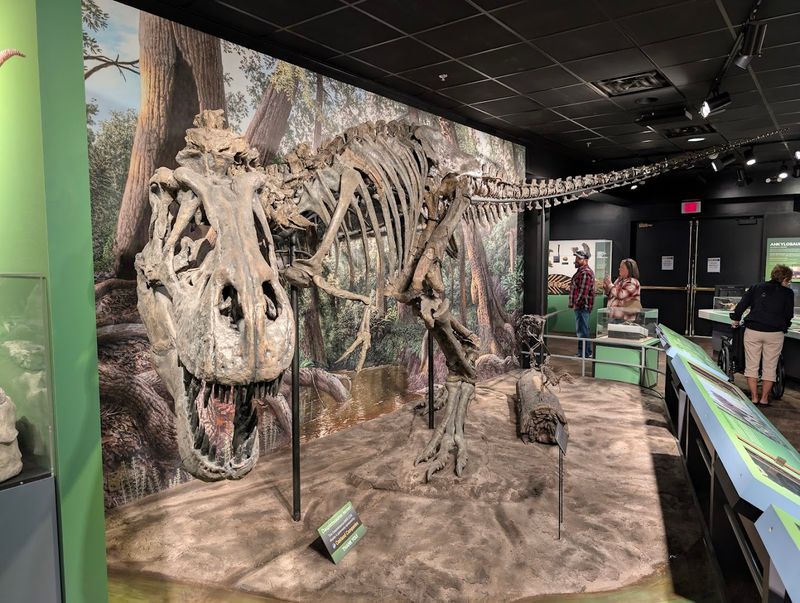
One of the most scientifically significant discoveries in modern paleontology happened because of a T. rex thigh bone from this museum’s collection, and the story behind it is almost hard to believe.
Researchers examining the specimen found preserved soft tissue inside the bone, including what appeared to be flexible, transparent structures that had survived for approximately 68 million years.
Before this find, the scientific consensus held that soft tissue simply could not survive that long. The discovery forced researchers around the world to reconsider their assumptions about fossilization and preservation.
Former curator Jack Horner, who also served as a technical advisor for the Jurassic Park film series, was closely connected to the work being done here during that period.
The discovery is now part of the museum’s story in a way that gives even casual visitors a sense of being connected to something genuinely historic. This is not a place that simply displays the past.
It actively investigates it.
Triceratops, Allosaurus, and the Prehistoric Supporting Cast
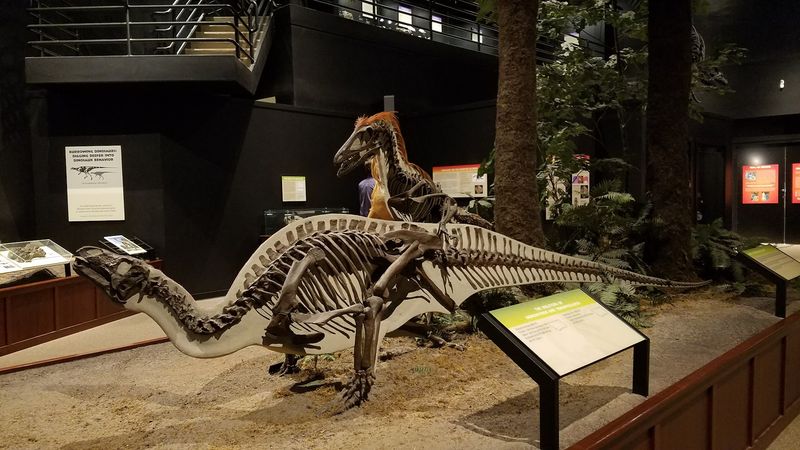
Not everything here wears a T. rex name tag, and the supporting cast of prehistoric creatures is impressive enough to carry the show on its own.
“Yoshi’s Trike,” formally catalogued as MOR 3027, is a Triceratops specimen with horns measuring 125 centimeters long. Those horns alone are taller than most ten-year-olds, and seeing them in person has a way of rearranging your sense of scale.
The museum also displays a Triceratops growth series, showing skulls from different life stages of the same species side by side. Watching how dramatically the animal’s features changed as it aged is one of those quietly mind-bending experiences that sneaks up on you.
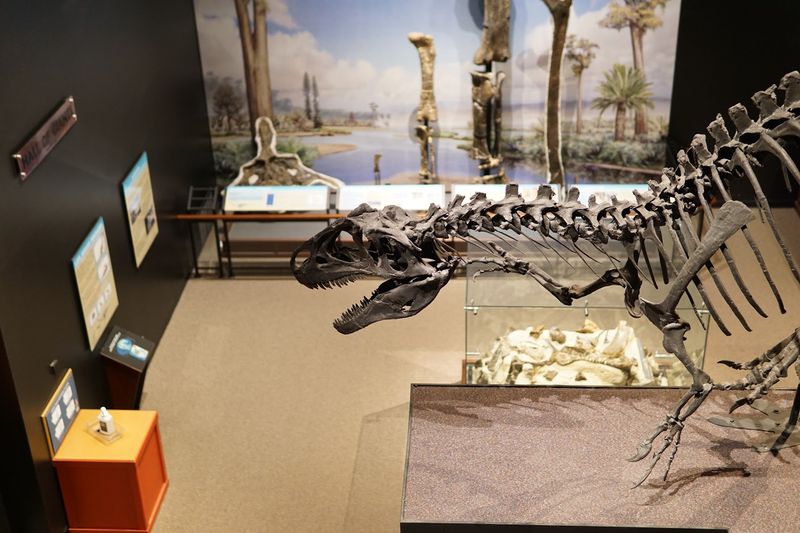
“Big Al” is a notably complete Allosaurus specimen that rounds out the carnivore section with its own kind of menace.
The variety here means that even visitors who came purely for the T. rex end up spending far more time than they planned, drawn from one extraordinary specimen to the next.
Watching Science Happen in the Fossil Preparation Labs
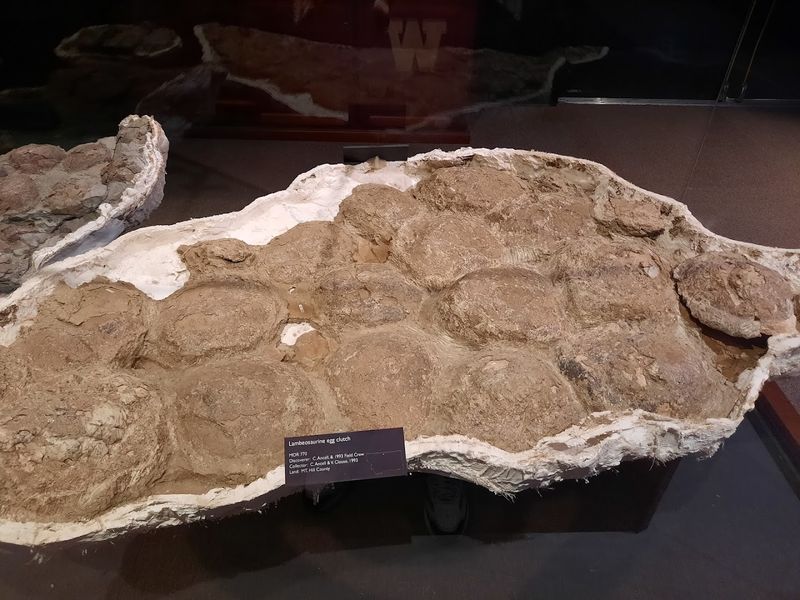
Most museums show you the finished product. This one lets you watch the process, and that distinction makes a genuine difference in how the whole experience feels.
The fossil preparation labs at the Museum of the Rockies are set up so that visitors can observe paleontologists and technicians at work through a viewing window, carefully extracting specimens from surrounding rock matrix using precise tools.
The museum’s paleontology team conducts active fieldwork across Montana every season, and the specimens they bring back often end up in these labs before they ever reach a display case.
Watching someone work on a bone that has been buried for tens of millions of years adds a layer of immediacy to the exhibits that is hard to replicate any other way.
Children in particular tend to freeze in front of that window, suddenly realizing that paleontology is not something that happened in the past. It is happening right now, in this building, on this ordinary Tuesday afternoon.
Paugh History Hall and the Stories of the Northern Rockies
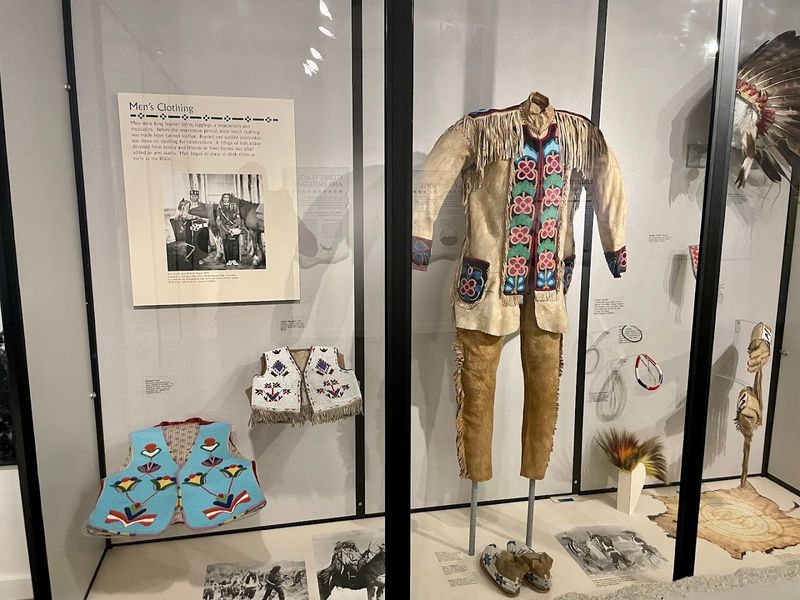
The dinosaurs get most of the headlines, but the Paugh History Hall holds its own as a reason to visit, covering more than 500 million years of physical and cultural history in the Northern Rocky Mountain region.
The hall traces the lives of Native Americans, fur traders, gold seekers, and settlers through to World War II, using artifacts, photographs, and interpretive displays that put human stories at the center of the narrative.
What makes this section feel different from a standard history exhibit is the care taken to present Indigenous cultural histories with accuracy and genuine respect, developed through ongoing collaborations with Tribal Nations and communities across the region.
The museum’s Cultural History Department actively works to expand and preserve these stories, including contemporary objects and narratives that push the exhibit well beyond the typical frontier mythology.
After the scale and spectacle of the dinosaur halls, stepping into this quieter, more reflective space feels like a natural shift rather than a jarring change of subject.
The Living History Farm and the Tinsley House
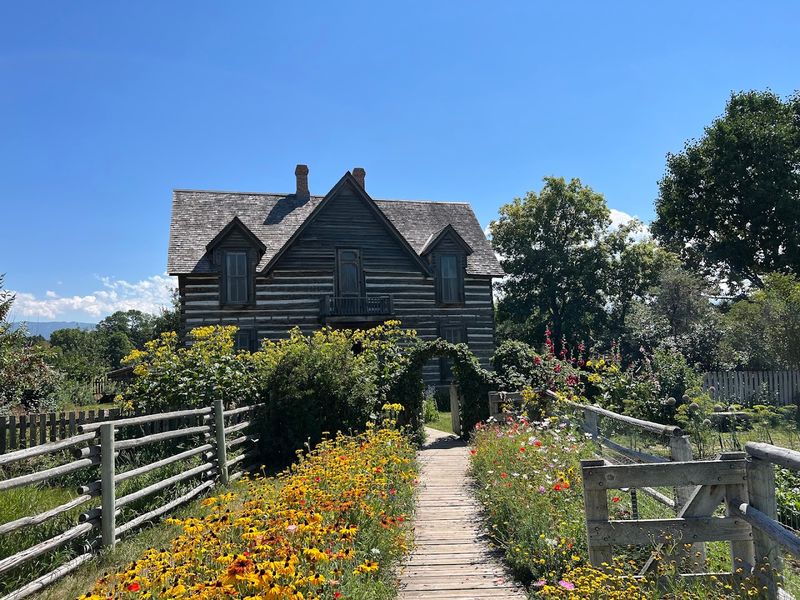
Outside the main building, the Living History Farm offers a completely different kind of engagement, one that trades fossil bones for cast iron pans and hand-stitched curtains.
The centerpiece is the Tinsley House, a preserved turn-of-the-century home where costumed interpreters demonstrate what daily domestic life actually looked like for Montana families at the start of the 1900s.
The experience is tactile and immediate in a way that indoor exhibits rarely manage. You are not reading about pioneer life on a placard.
You are watching someone demonstrate it in a space that still carries the feel of the era.
Worth noting for trip planning purposes: the Living History Farm closes at the end of summer to allow staff to prepare the site for Montana’s colder months, so a late spring or summer visit gives you access to the full experience.
The farm sits on museum grounds and is included with general admission, making it an easy addition that consistently surprises visitors who did not expect it to be there.
The Taylor Planetarium: A Different Kind of Deep Space
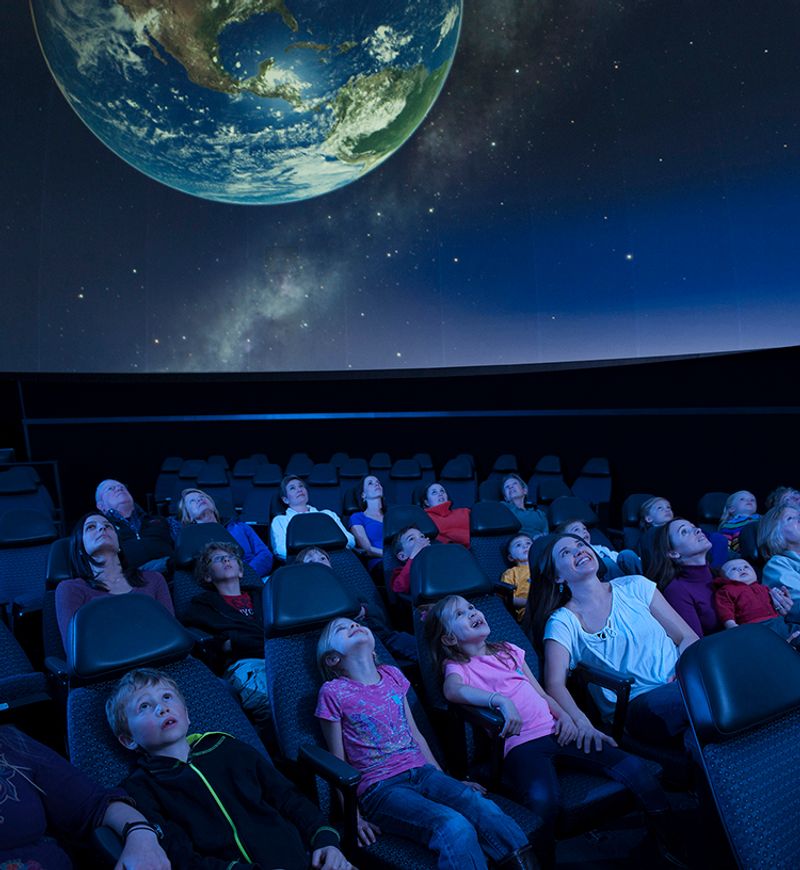
Tucked near the main entrance, the Taylor Planetarium offers something that has nothing to do with dinosaurs and everything to do with why science is endlessly worth paying attention to.
Shows run regularly throughout the day on various topics, and the Montana Skies presentation, which covers the stars, galaxies, and constellations visible from the Big Sky state, is a particular favorite among visitors who grew up here and those encountering Montana’s night sky for the first time.
The planetarium is small and comfortable, with reclining seats and a full dome projection system that makes the cosmos feel genuinely close rather than abstract and distant.
Tickets are priced separately from general museum admission but remain very affordable, and the shows typically run around 25 minutes, making them a natural rest stop midway through a longer museum visit.
The combination of prehistoric earth below and infinite universe above, all within the same building, gives the Museum of the Rockies a philosophical depth that lingers well after you have driven back to your hotel.
Rotating Exhibits That Keep Every Visit Fresh
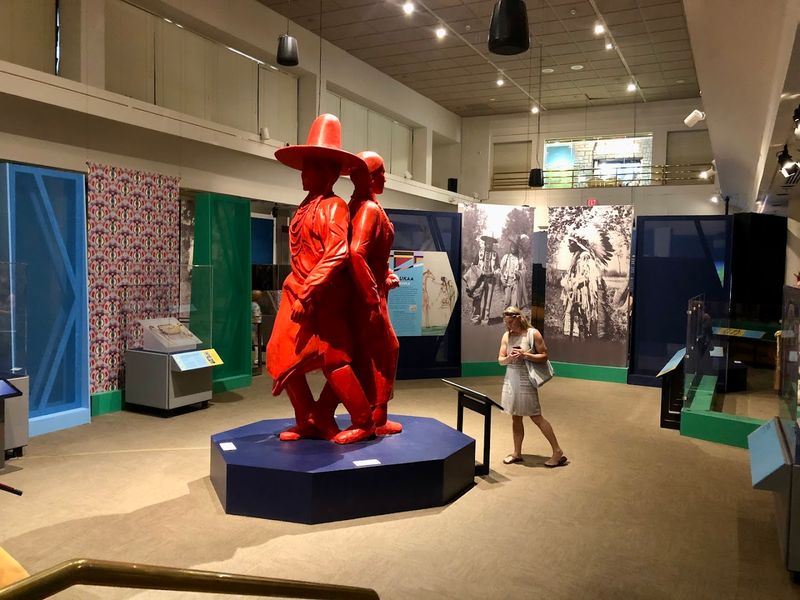
One of the quiet strengths of this museum is that it never quite looks the same twice, thanks to a rotating program of traveling exhibitions that cycle through on a regular basis.
Past shows have included a Marvel Comics art exhibition, a deeply moving tribute to Jane Goodall’s chimpanzee research at Gombe, and a wildly popular display of living frogs from around the world, the last of which drew reactions that ranged from pure delight to wide-eyed amazement at how many varieties of the animal actually exist.
The frog exhibit in particular demonstrated something the museum does well: it can take a subject that sounds narrow or niche and build an experience around it that feels expansive and genuinely surprising.
Checking the museum’s current exhibition schedule before your visit is worth the two minutes it takes, because the traveling show running during your trip might end up being the thing you talk about most when you get home.
Repeat visitors consistently note that there is always something new to discover here, and that is a promise the museum reliably keeps.
Kid-Friendly Features That Make the Whole Family Happy
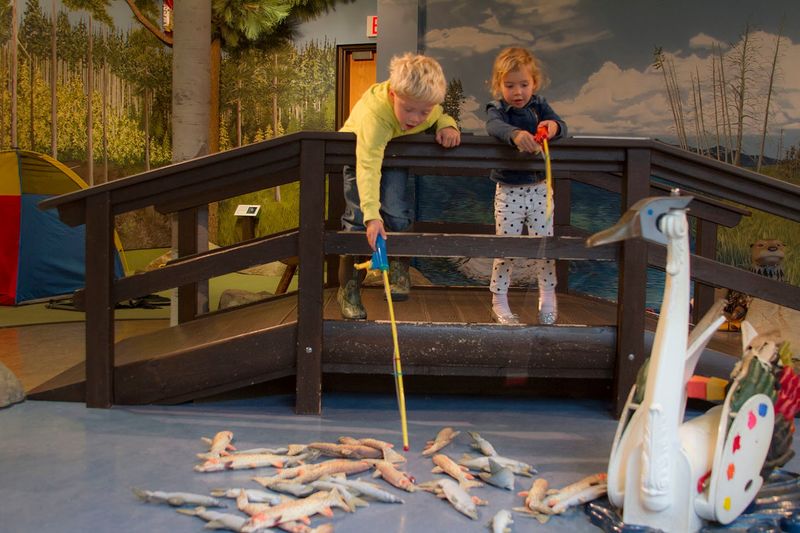
Families with young children will find that the museum has thought carefully about how to make the experience work for visitors who are still at knee height.
The upper floor houses a dedicated children’s museum area with interactive displays and low-key learning stations designed for younger visitors. An elevator makes the trip upstairs easy for strollers and anyone who needs it.
There is a screening room on the main floor where kids can press play and watch educational content about dinosaurs at their own pace, which serves as both a learning opportunity and a welcome breather for parents who need a moment to regroup.
The museum’s layout is clean and easy to navigate, the staff are consistently described as knowledgeable and approachable, and the overall atmosphere manages to feel serious and playful at the same time.
More than one family has reported that a childhood visit here sparked a lasting passion for paleontology that carried well into adulthood, which is about as strong an endorsement as any museum could hope to earn.
Practical Tips, the Gift Shop, and Making the Most of Your Visit
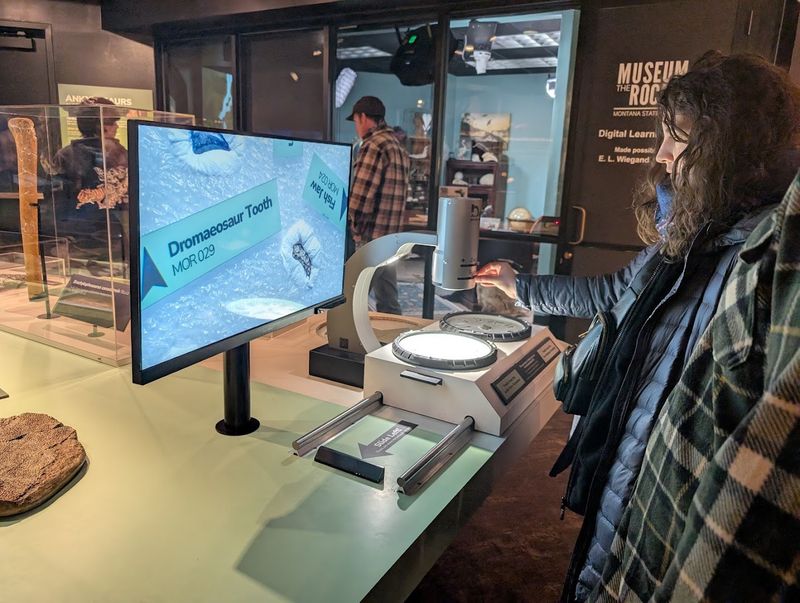
A few practical details can make the difference between a good visit and a great one, so here is what I wish someone had told me before I arrived.
Plan for at least three hours, and more if you want to catch a planetarium show and walk the Living History Farm grounds. The museum consistently rewards visitors who are not in a hurry.
The gift shop is genuinely worth your time and a dedicated budget. Beyond the expected T-shirts and sweatshirts, it carries a solid selection of minerals and stones, books, toys, magnets, and mugs that make for more interesting souvenirs than most museum stores manage to offer.
A small cafe on site handles coffee and snacks, so you can refuel without leaving the building. Membership is available for frequent visitors and includes access to after-hours events and fundraisers that offer a different side of the museum entirely.
The museum’s website at museumoftherockies.org keeps current exhibit information up to date, and a quick check before your trip ensures you arrive knowing exactly what is waiting for you inside.
Share this story