Most people drive past Groveport, Ohio without a second thought. But tucked along South Hamilton Road sits a place that stops veterans, history buffs, and curious families dead in their tracks.
Outside, real tanks and aircraft sit in the open air. Inside, more than 450,000 artifacts tell the stories of American men and women who served across every major conflict in U.S. history.
The moment you spot a genuine WWII-era Higgins boat on the grounds, you realize this is not your average small-town museum.
What Makes Motts Military Museum Stand Apart
Warren Motts has spent a lifetime collecting artifacts that most institutions would never think to pursue. Motts Military Museum, Inc., located at 5075 S Hamilton Rd, Groveport, OH 43125, is the result of that decades-long dedication.
This is a privately owned, non-profit museum that punches far above its weight class. The collection spans every branch of the U.S. military and covers conflicts from the Civil War through the modern era.
What separates this place from larger institutions is the deeply personal touch. Many of the artifacts come with documented histories tied to real soldiers.
You are not just looking at old gear behind glass. You are reading the stories of actual people who carried, wore, and used these items in the field.
The Higgins Boat That Stops Visitors Cold
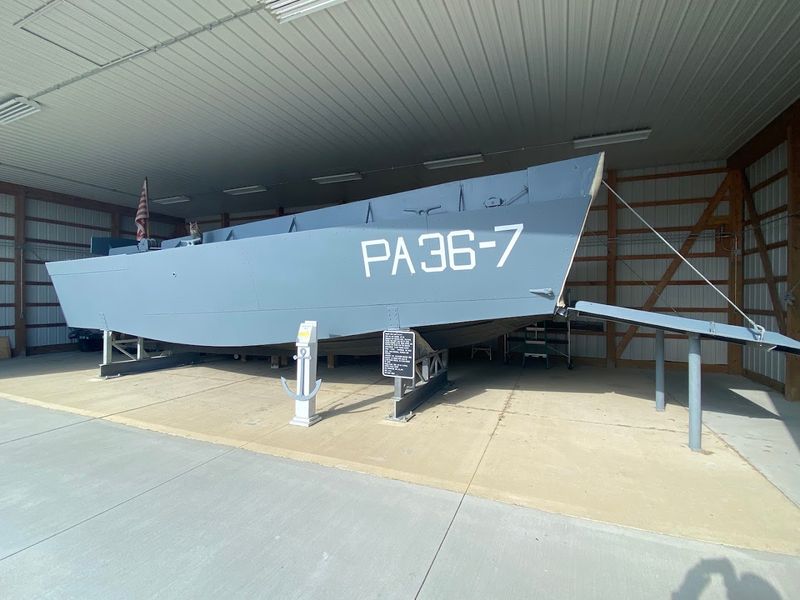
One visitor described seeing a D-Day beach landing craft in person for the first time as a genuinely moving experience, and that reaction is completely understandable.
The Higgins boat, officially known as the LCVP or Landing Craft Vehicle Personnel, carried Allied troops onto the beaches of Normandy on June 6, 1944. Surviving examples are extraordinarily rare today, which makes the one on display at Motts Military Museum a remarkable find.
Standing next to it, you immediately understand the scale. These flat-bottomed wooden vessels were not built for comfort.
They were built to deliver soldiers directly onto hostile shores under fire. Seeing the actual ramp that would have dropped open on a beach during one of history’s most consequential military operations gives the entire D-Day story a weight that no documentary ever quite captures.
Tanks You Can Actually Walk Right Up To
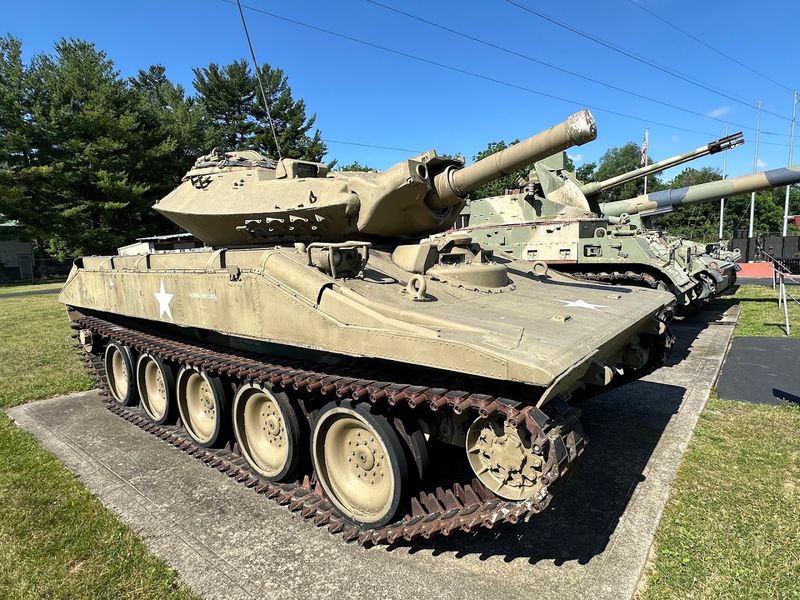
There is something genuinely thrilling about standing next to a real tank. Not a replica, not a scale model, but the actual machine, close enough to touch.
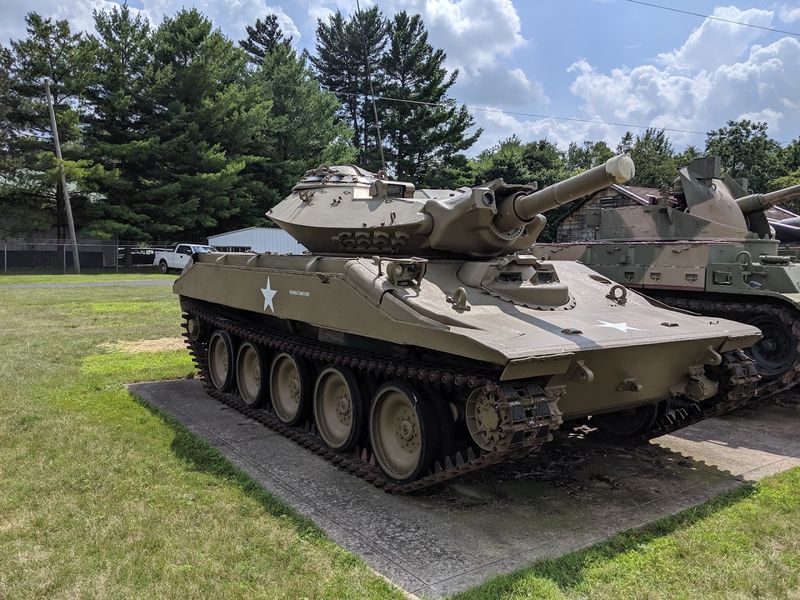
The outdoor vehicle yard at Motts holds a rotating collection of armored vehicles that span multiple eras of American military history. The tanks are maintained in impressive condition, and the sheer size of them hits differently in person than in photographs.
Kids tend to go wide-eyed. Adults often go quiet.
Both reactions make complete sense when you are standing next to several tons of steel that once served on actual battlefields. The museum positions these vehicles so you can walk around them, examine the tracks, and really take in what military engineering looked like across different decades.
Few museums in the Midwest offer this kind of unfiltered, up-close access to armored vehicles.
Aircraft That Earned Their Place in the Collection
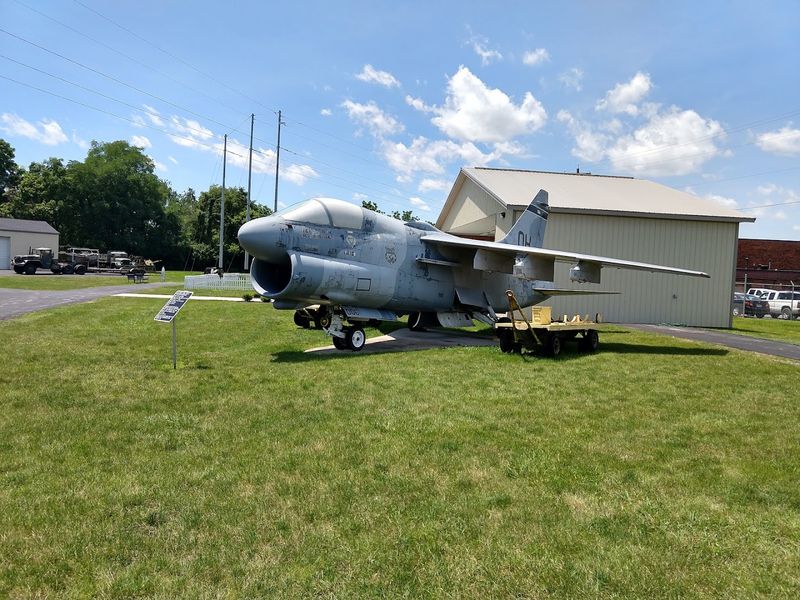
The aircraft on the museum grounds are the kind of thing that makes you stop mid-stride and just stare upward for a moment.
Military planes from different eras of American aviation history are positioned outside where visitors can get close and study them from multiple angles. The condition of these aircraft reflects the care that goes into maintaining the entire collection.
Aviation history is woven deeply into Ohio’s identity, and Motts leans into that connection with genuine pride. The planes on display are not just decorative.
Each one represents a specific chapter of American air power, and the museum provides context so visitors understand exactly what they are looking at. Whether you are already an aviation enthusiast or simply someone who appreciates the engineering of a different era, these aircraft are worth every minute you spend standing beneath them.
Over 450,000 Artifacts Packed Into One Building
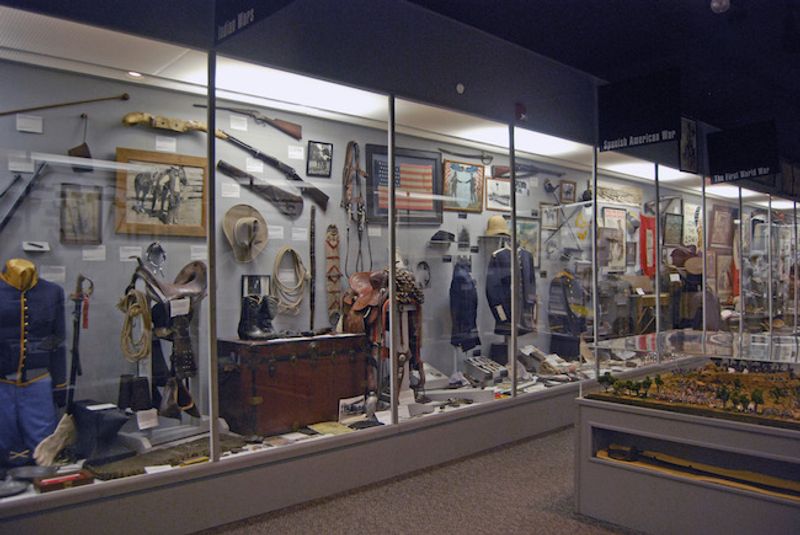
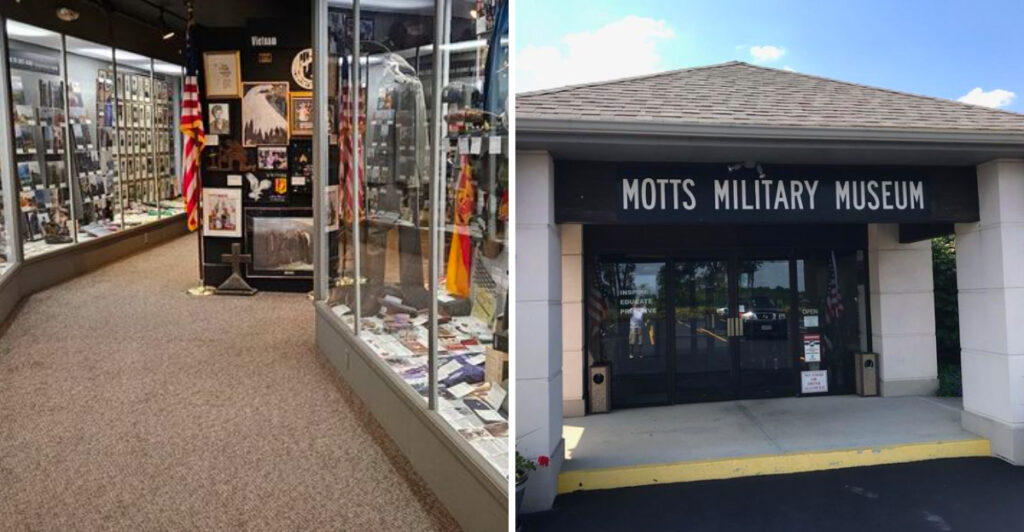
The number 450,000 sounds like an exaggeration until you actually walk through the front door.
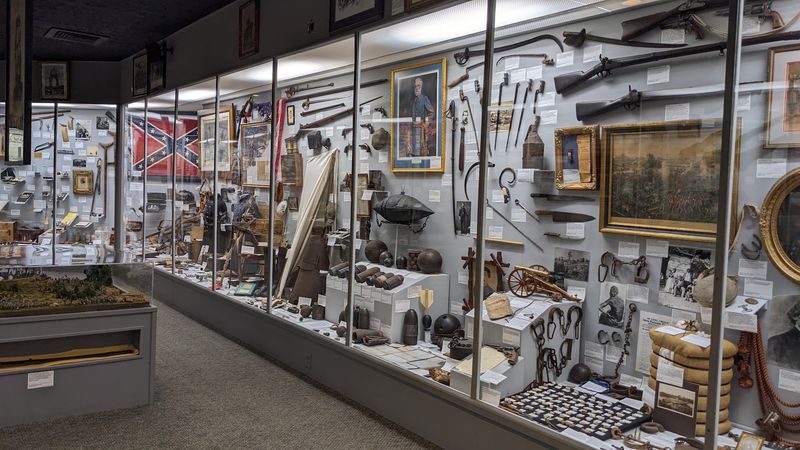
Display cases line every wall and fill the floor space with uniforms, weapons, medals, personal letters, photographs, field equipment, and objects you would never expect to find outside a major national institution. The collection covers every branch of the U.S. military and every significant conflict in American history, organized chronologically so visitors can move through time as they explore.
The density of the displays is part of what makes this place so absorbing. Every few feet, something new catches your eye.
A piece of equipment you have never seen before. A photograph with a handwritten caption.
A uniform that still carries the name of the soldier who wore it. Three hours inside this building can feel like barely enough time to scratch the surface of what is here.
The Eddie Rickenbacker Connection Most Visitors Do Not Expect
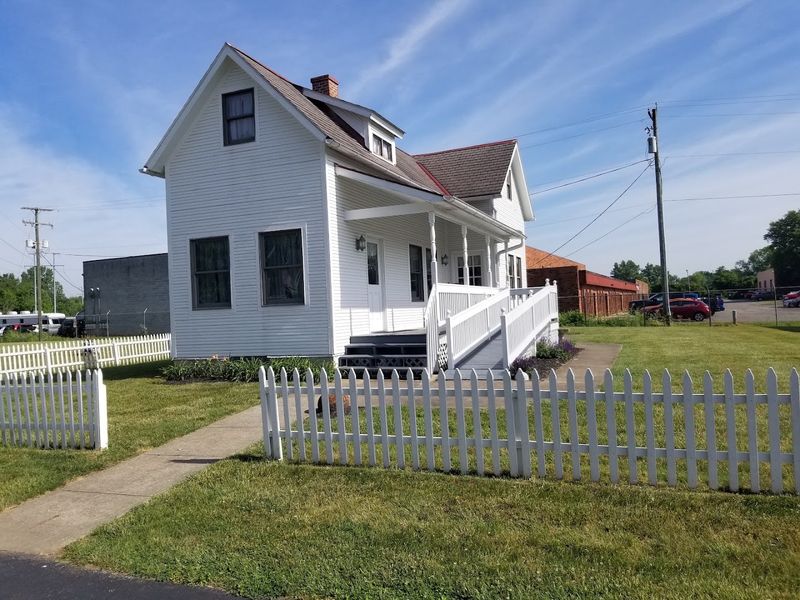
Eddie Rickenbacker is one of Ohio’s most celebrated figures, an ace fighter pilot from World War I who became a national hero, and Motts Military Museum honors that legacy in a memorable way.
On the museum grounds sits an exact replica of Rickenbacker’s childhood home. It is a small structure, but the detail and care put into its construction make it a genuinely affecting tribute.
Guides who lead visitors through it are known for their deep knowledge of Rickenbacker’s life and for sharing anecdotes that you simply will not find in a standard history book.
Rickenbacker’s name graces Columbus’s international airport, yet many people who fly through that airport regularly know surprisingly little about the man himself. Spending time in this replica home fills in those gaps in a way that feels personal rather than academic.
It is a quiet highlight that many visitors carry with them long after leaving.
Military Working Dog Exhibit That Earns Its Own Spotlight
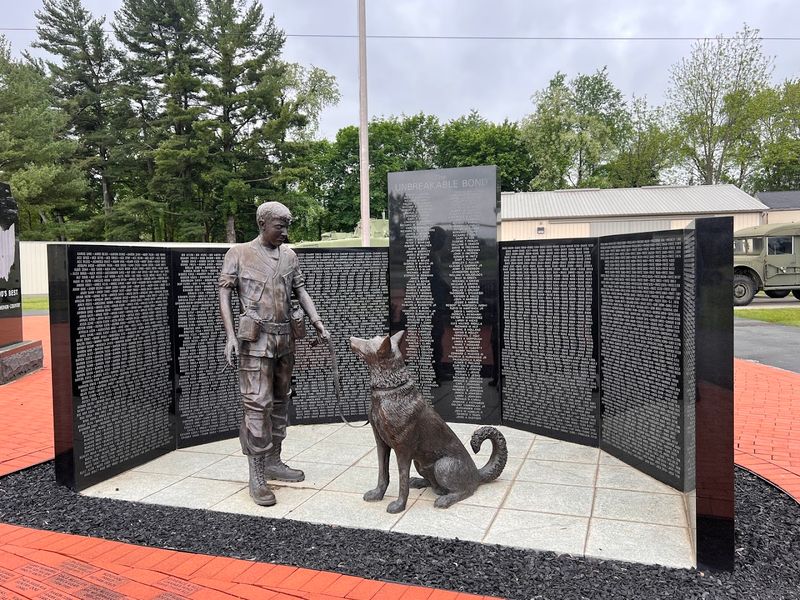
Not every exhibit at Motts Military Museum involves weapons or vehicles. One of the most emotionally resonant sections of the museum is dedicated to military working dogs.
These animals have served alongside American troops across multiple conflicts, performing roles in detection, search and rescue, and patrol work that saved countless lives. The exhibit at Motts brings their contributions into clear focus through artifacts, photographs, and detailed documentation that traces the history of canine service in the U.S. military.
It is the kind of display that catches visitors off guard. You come in expecting tanks and rifles, and then you find yourself standing in front of a tribute to working dogs that is thoughtful, carefully researched, and surprisingly moving.
Military history is full of stories about human courage, but this exhibit reminds visitors that the story of service includes far more than just soldiers.
The 9/11 Memorial Section and Ladder 18
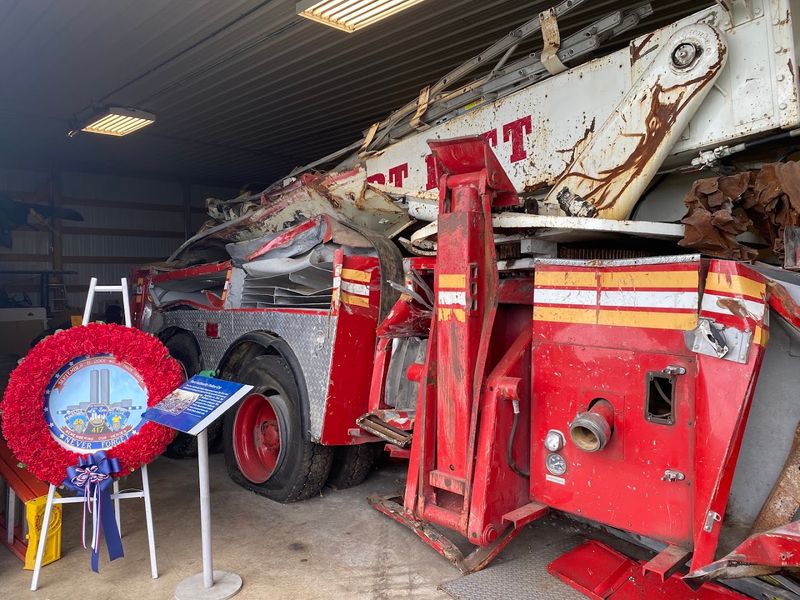
Few exhibits in any museum carry the emotional weight of the 9/11 section at Motts Military Museum.
Among the most striking pieces on display is Ladder 18, a fire truck that was crushed during the collapse of the World Trade Center towers on September 11, 2001. Seeing a piece of equipment that was actually there, that was part of one of the most traumatic days in American history, is a completely different experience from watching footage or reading accounts.
The museum has hosted members of the NYFD for memorial events tied to this exhibit, turning the space into something more than a static display. It becomes a living tribute.
The 9/11 section also connects the broader mission of Motts to the present day, reminding visitors that honoring service and sacrifice is not just about distant history. Some of it happened within living memory.
Holocaust Memorabilia That Demands Careful Attention
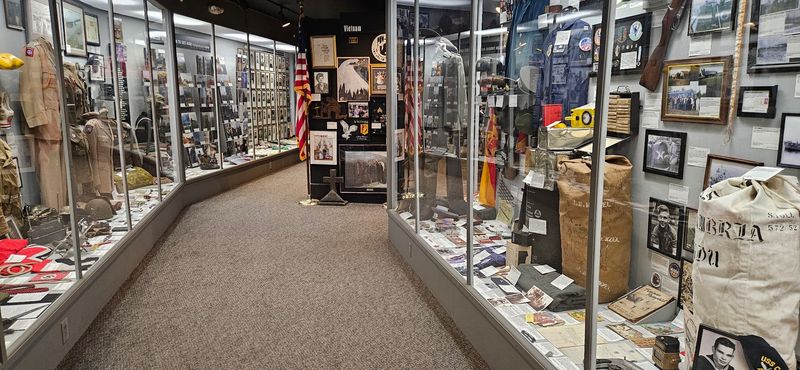
Among the many unexpected corners of Motts Military Museum, the Holocaust memorabilia section stands out as one that visitors approach slowly and leave quietly.
The inclusion of this material reflects the museum’s commitment to telling the full story of World War II, not just the battles and the hardware, but the human cost and the moral weight of the conflict. The artifacts and documentation on display are handled with obvious care and respect.
For younger visitors, this section provides context that transforms the war from an abstract historical event into something that affected real families across the world. For older visitors, it often prompts reflection on stories passed down through their own families.
The Holocaust exhibit does not try to summarize an enormous history in a few display cases. Instead, it offers a window that encourages visitors to learn more long after they leave the museum.
Cold War Artifacts That Many Museums Simply Do Not Have
The Cold War lasted for decades and shaped nearly every aspect of American military and political life, yet it remains one of the most underrepresented periods in many military museums.
Motts takes a different approach. The Cold War section of the collection includes items that even dedicated history enthusiasts often report never having seen before.
Equipment, uniforms, and artifacts from this era fill the display cases with a specificity that reflects serious collecting work over many years.
Part of what makes this section so engaging is how it captures the tension of a conflict that was fought through technology, intelligence, and proxy wars rather than direct combat on a traditional battlefield. The artifacts tell that story in a tactile way that text and film cannot replicate.
For anyone who grew up during the Cold War era, this section carries an added layer of personal recognition that makes it particularly absorbing.
The Vietnam War Dog Team Memorial
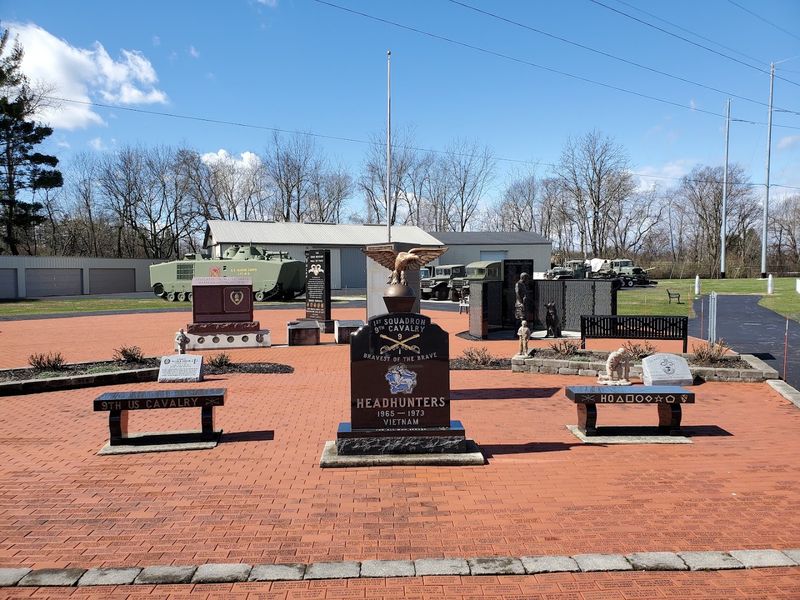
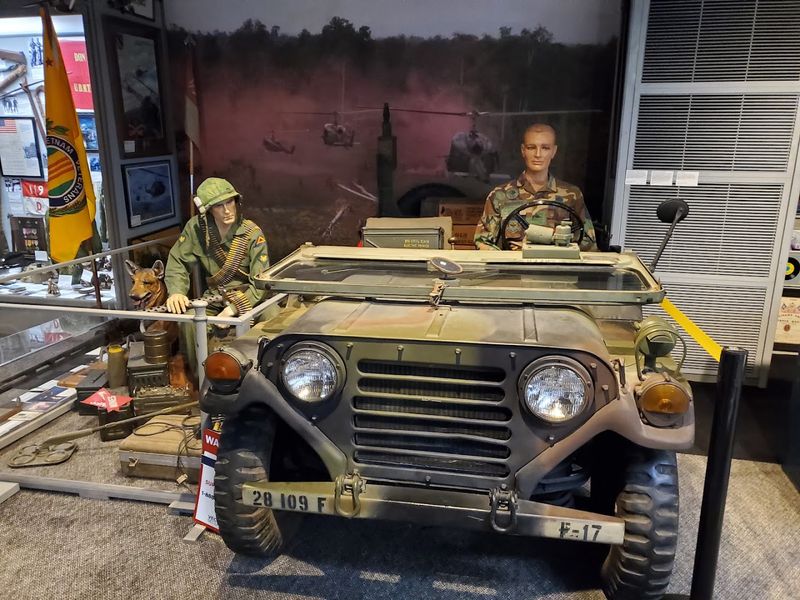
The Vietnam War Dog Team Memorial at Motts Military Museum is one of those exhibits that takes a specific, often overlooked piece of military history and gives it the recognition it deserves.
Dog teams played a critical role in Vietnam, working in dense jungle terrain where their abilities far exceeded what human soldiers alone could accomplish. The bond between handlers and their dogs during that conflict was intense, and the memorial at Motts honors both with equal care.
The exhibit draws visitors who have a personal connection to the Vietnam era, including veterans and their families, but it resonates with anyone who takes the time to read through the documentation and look closely at the photographs on display. It is a section of the museum that feels deeply considered rather than assembled for general appeal.
The specificity of the tribute is exactly what gives it power.
Memorial to All Veterans That Took 22 Years to Complete
Some projects take years because the people behind them refuse to settle for anything less than exactly right.
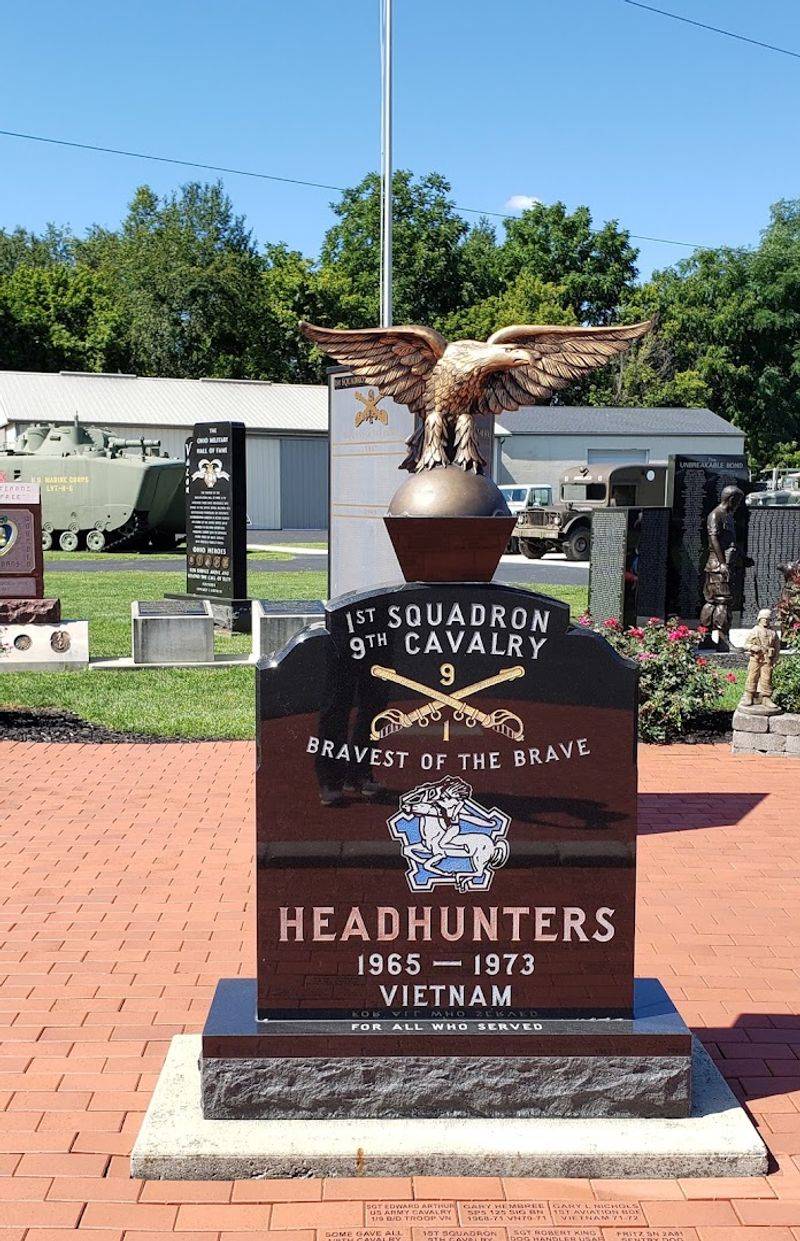
The Memorial to All Veterans at Motts Military Museum was 22 years in the making. That timeline alone tells you something important about the seriousness of purpose behind this institution.
The memorial is designed to honor the sacrifice of every American veteran, regardless of conflict, branch, or era of service.
Standing in front of it, you feel the weight of that commitment. This is not a plaque on a wall or a display case with a typed label.
It is a full tribute that reflects decades of thought about how to properly honor the people who served. Visitors who are veterans themselves, or who have family members who served, tend to spend more time here than anywhere else in the museum.
The memorial earns that attention completely.
Abraham Lincoln Bronze Cast and Unexpected Exhibits
Among the surprises waiting inside Motts Military Museum is a bronze cast replica of Abraham Lincoln, a detail that catches many visitors off guard in the best possible way.
The museum does not limit itself strictly to hardware and battlefield equipment. It reaches into the broader sweep of American history to include figures and moments that shaped the context in which military conflicts unfolded.
Lincoln’s presence in the collection reflects that broader ambition.
These unexpected touches are part of what keeps visitors engaged for so much longer than they originally planned. You come in expecting tanks and uniforms, and you leave having encountered a bronze Lincoln, a 9/11 fire truck, a Higgins boat, and a Vietnam dog team memorial.
The range of what Motts has assembled is genuinely difficult to anticipate until you are standing in the middle of it, trying to decide which direction to look next.
Planning Your Visit to Motts Military Museum
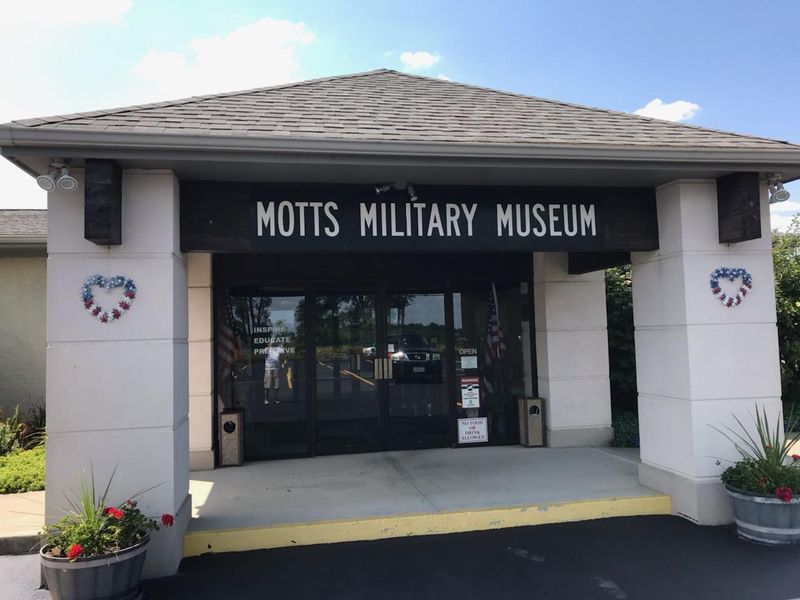
The museum is open Tuesday through Saturday from 9 AM to 5 PM, and on Sundays from 1 PM to 5 PM. It is closed on Mondays.
Most visitors report that three hours is a reasonable minimum, though many return for a second visit because one trip genuinely is not enough to take everything in. The museum recommends using the chronological map provided at the entrance to guide your path through the exhibits, which helps you follow the flow of American military history without missing major sections.
Admission is modestly priced, with discounts available for veterans, seniors, and students. The outdoor vehicle area is free to observe from the parking lot, but the full indoor collection is where the real depth of the museum reveals itself.
If you are anywhere near Columbus, Ohio, this is the kind of place that belongs on your list well before your next trip through the area.
Share this story