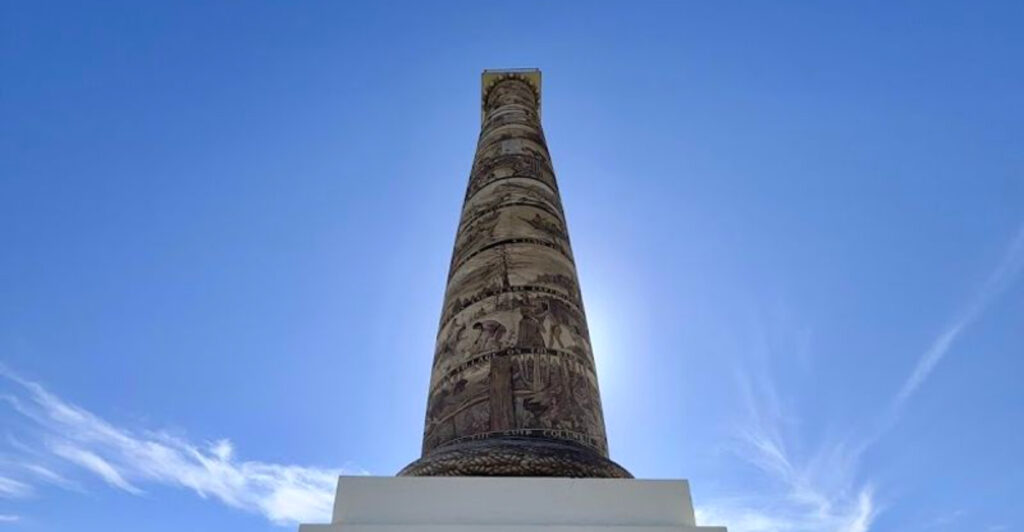
There is a tower standing on a hilltop in the Pacific Northwest that has been quietly watching over a river, a forest, and a small coastal city for nearly a century. It is painted with stories carved into its surface, and from its top, you can see where the Columbia River finally meets the Pacific Ocean.
Hundreds of thousands of visitors have climbed its 164 steps, launched little wooden gliders from its peak, and walked away with a view they never forgot. This is one of Oregon’s most beloved landmarks, and right now, it is celebrating 100 years of history, breathtaking scenery, and pure adventure.
A Century of Standing Tall: The Column’s Origins and Milestone Anniversary
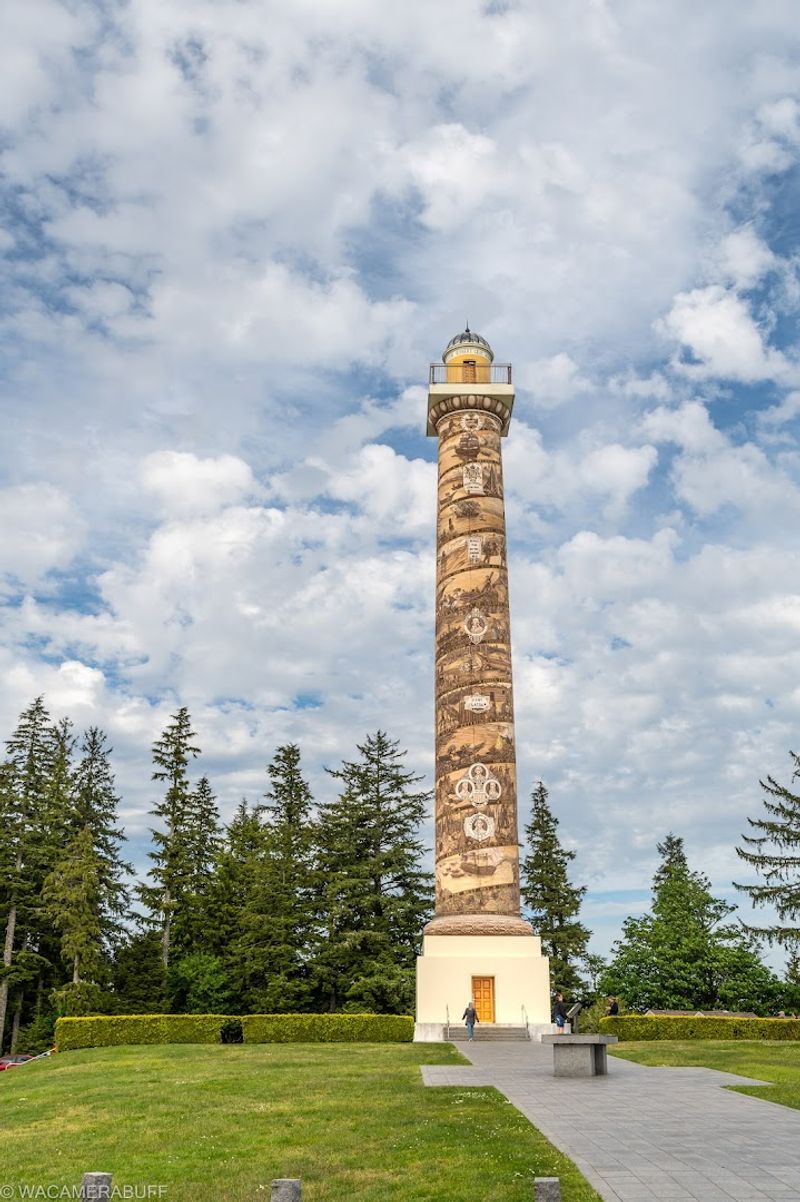
A hundred years is a long time to stand on a hilltop, but the Astoria Column has done exactly that with remarkable grace. Built in 1926 and funded by the Great Northern Railway and the Astor family descendants, this 125-foot tower was designed to celebrate the pioneering spirit of the Pacific Northwest.
It was modeled after Trajan’s Column in Rome, which gives it a distinctly classical feel in a very American landscape.
The centennial anniversary brings fresh attention to a landmark that has never really stopped drawing visitors. Oregon locals and out-of-state travelers alike have made the pilgrimage to Coxcomb Hill to mark this milestone.
Events, special exhibits, and renewed interest in the column’s history have made 2026 a particularly meaningful year for the site.
What makes this anniversary feel special is how little the column has changed. The murals still spiral upward, the steps still creak slightly underfoot, and the view from the top is still the kind that makes people go quiet for a moment.
A century of history does not feel heavy here. It feels earned, honest, and worth every single step of the climb.
Finding the Column: Location, Address, and Getting There
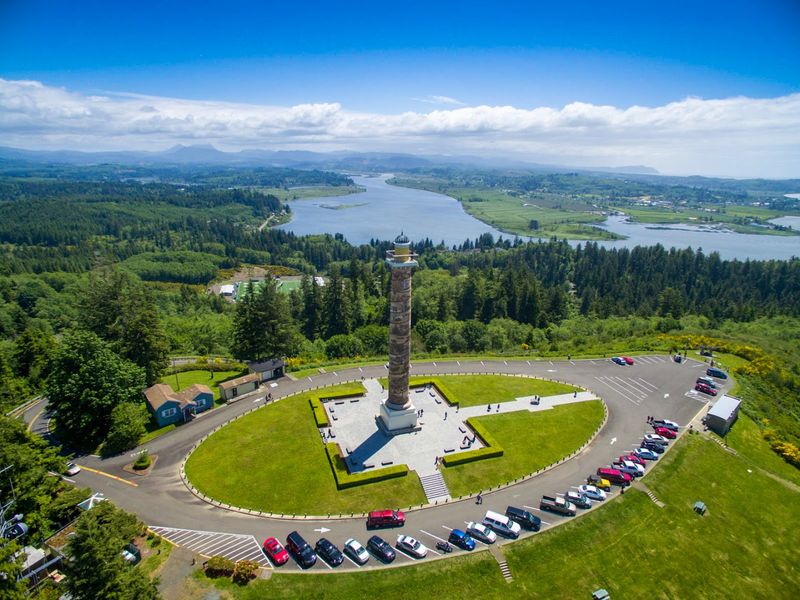
The Astoria Column sits at 1 Coxcomb Dr, Astoria, OR 97103, perched at the top of Coxcomb Hill, the highest point in Astoria. The drive up is short but memorable, with winding roads cutting through thick stands of Douglas fir trees before the column suddenly comes into view above the treetops.
It is easy to find with a GPS, and the road is well maintained year-round.
Parking costs five dollars, which serves as an annual pass and goes directly toward the upkeep of the park. The site is open daily from 5 AM to 9 PM, giving early risers and sunset chasers plenty of flexibility.
The staff on-site are friendly and happy to answer questions about the column’s history or the surrounding area.
Astoria itself sits in the northwest corner of Oregon, right where the Columbia River flows into the Pacific Ocean. It is about two hours from Portland and less than an hour from the Oregon coast.
Whether you are passing through on a road trip or making a dedicated visit, the column is genuinely worth the detour. Few landmarks reward the drive quite so well, and the hilltop view alone justifies the trip.
The Spiral Murals: An Outdoor Art Gallery Wrapped in History
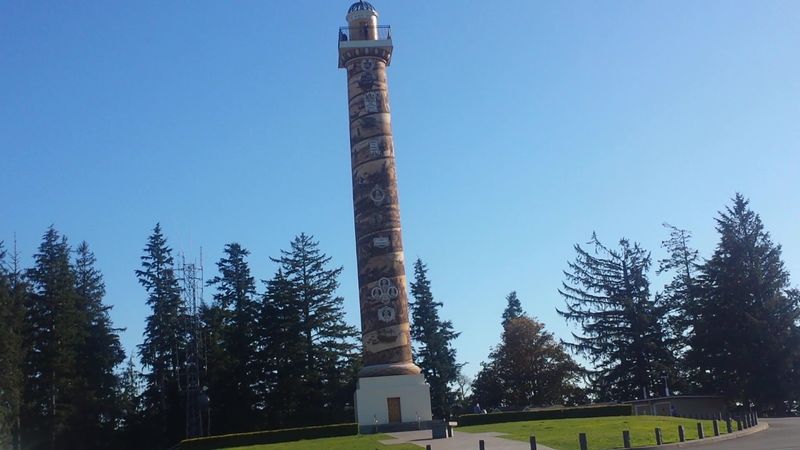
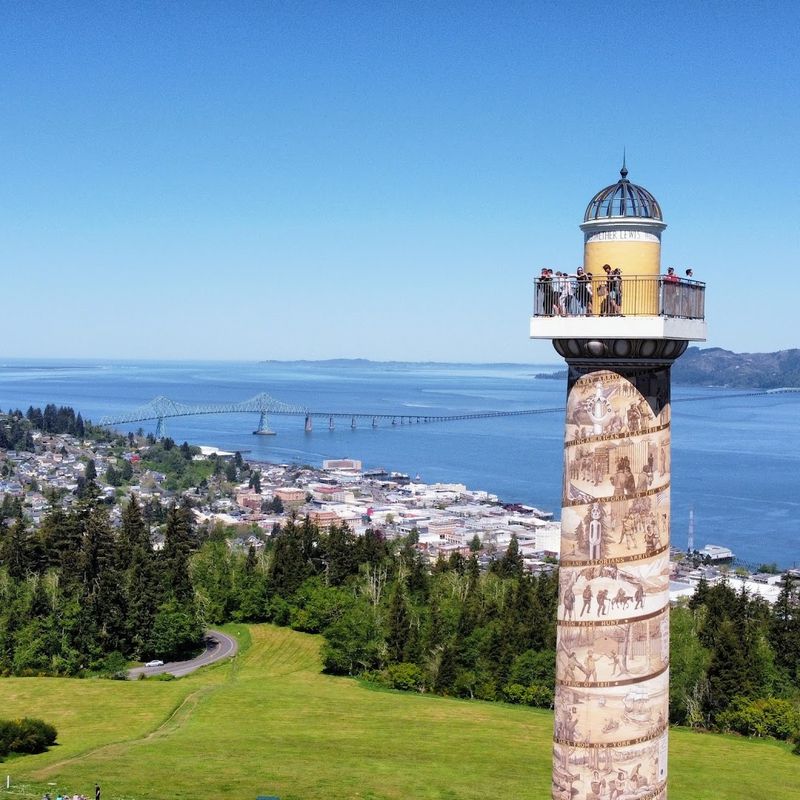
The outside of the column is not plain concrete. It is covered in a continuous sgraffito frieze that spirals from the base all the way to the observation deck, telling the story of the Pacific Northwest across roughly 300 years of history.
Sgraffito is an art technique where layers of plaster are scratched away to reveal images beneath, and the results here are both detailed and durable.
The murals depict scenes from Native American life, the arrival of the Lewis and Clark Expedition, the establishment of Fort Astoria, and the growth of the region through the 19th century. Each panel connects to the next, so the whole column functions like a slow-moving timeline you can walk around and read at your own pace.
Artist Attilio Pusterla designed the original murals, and restoration work over the decades has kept them sharp and legible. A raised brass relief map near the base adds another layer of storytelling by showing the geography of the estuary and its surrounding waterways.
Visitors who take time to study the exterior before climbing often say the murals gave them a completely different appreciation for what they were about to see from the top.
The Climb: 164 Steps to One of Oregon’s Best Views
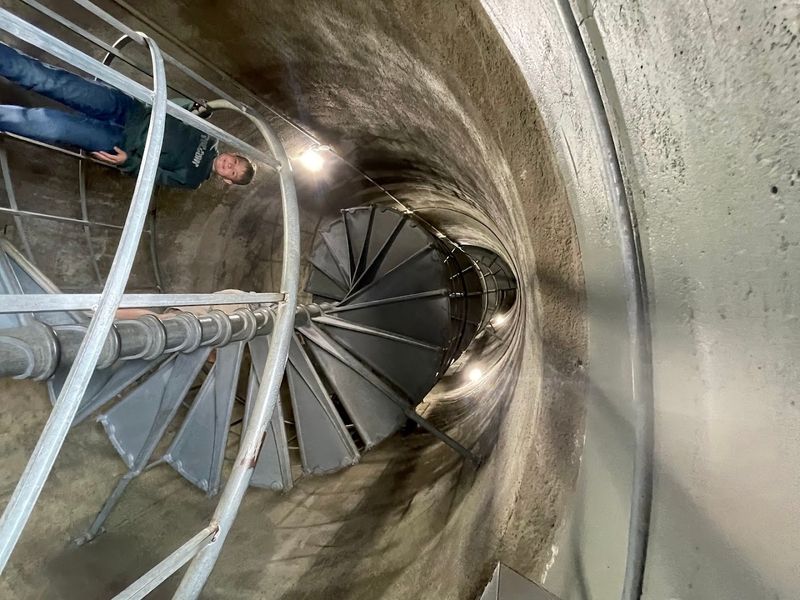
The climb inside the Astoria Column is one of those experiences that is slightly more intense than it looks from the outside. The hollow interior contains a spiral staircase of 164 steps, and the passage is narrow enough that two people going in opposite directions need to be politely aware of each other.
Rest landings appear every 32 steps, which gives your legs and your nerves a chance to recover.
The steps have a slight wobble to them that some visitors find unsettling and others find charming. Either way, the movement is safe, and the structure has been maintained carefully throughout its century of use.
The climb takes most people between five and ten minutes depending on pace and how many photos they stop to take through the small interior windows.
At the top, a narrow open-air platform offers a full 360-degree panoramic view of the surrounding landscape. The payoff is immediate and undeniable.
On a clear day, you can see the Columbia River winding toward the Pacific, the Astoria-Megler Bridge stretching across the water, Saddle Mountain to the east, and the green carpet of Oregon’s Coast Range rolling in every direction. The view is genuinely one of the finest in the state.
The View from the Top: What You Actually See
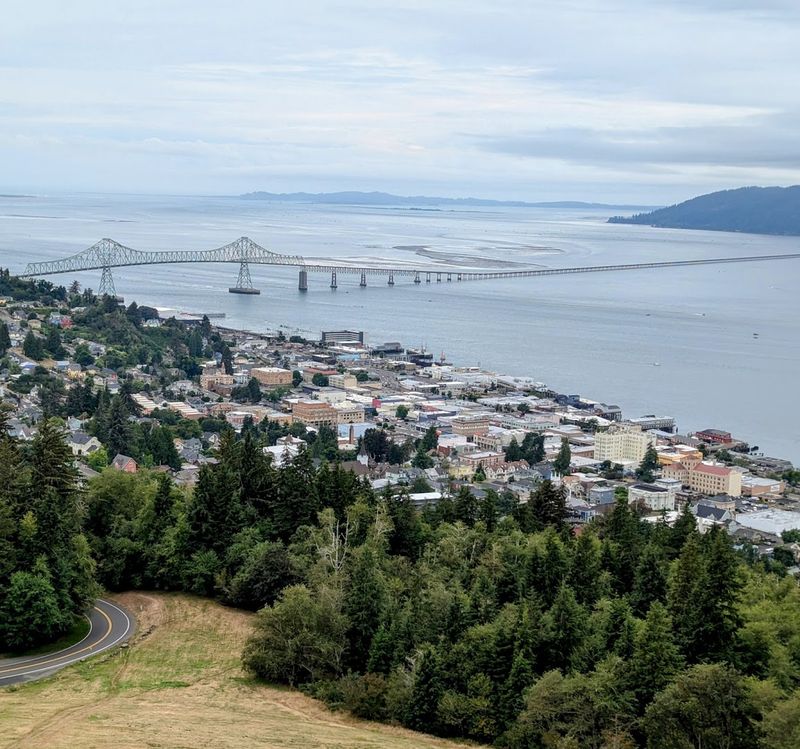
Standing on the open-air platform at the top of the Astoria Column, the first thing you notice is the wind. It comes in steady off the river, and on most days it is strong enough to make your jacket billow.
The second thing you notice is just how much there is to see in every direction.
To the north, the Astoria-Megler Bridge spans the Columbia River in a long, low arc connecting Oregon to Washington state. The bridge is over four miles long, and from this height, the whole structure is visible at once.
To the west, on clear days, you can spot the shimmer of the Pacific Ocean where the river finally ends its journey. Below, the town of Astoria spreads out in a neat grid of Victorian houses and commercial streets running down to the waterfront.
The Coast Range fills the southern and eastern horizons with layer after layer of forested ridgelines, and Saddle Mountain is identifiable by its distinctive double-humped profile. Youngs Bay glimmers to the southwest, and Warrenton is visible across the water.
The full panorama shifts with the weather and the season, but it never disappoints. This view is the reason people drive from as far as Oklahoma just to stand here for a few minutes.
The Wooden Glider Tradition: A Quirky and Beloved Ritual
Nobody officially planned for the Astoria Column to become famous for toy airplanes, but here we are. The gift shop at the base sells small balsa wood gliders for about one dollar each, and launching them from the top of the column has become one of the most talked-about things to do at the entire site.
It sounds simple because it is, and that is exactly why it works so well.
You buy the glider, climb the 164 steps, give it a toss from the platform, and then watch it catch the wind and drift down through the air toward the green hillside below. The wind at the top is usually strong enough to send the little planes on surprisingly long flights, and watching them spiral and swoop draws spontaneous cheers from everyone on the platform.
Some visitors run back down to retrieve their glider and climb up again for another launch. Others buy two or three before starting the climb so they do not have to make the trip back to the shop mid-adventure.
The tradition has no official origin story, but it has taken on a life of its own. It is one of those small, joyful rituals that turns a historical visit into a memory.
Visitors from Oregon, Washington, and even Oklahoma have described it as the highlight of their trip.
The Gift Shop and Visitor Facilities: Small but Thoughtfully Stocked
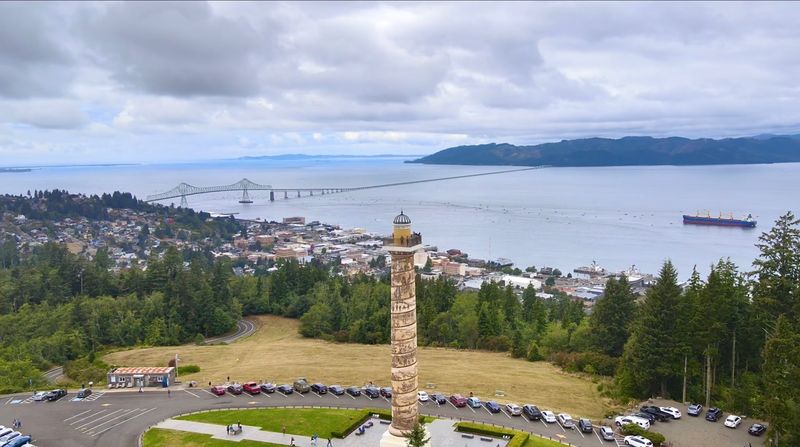
The gift shop near the base of the Astoria Column is compact, but it covers the essentials with a lot of personality. Shelves hold a curated selection of Oregon-themed souvenirs, hats, postcards, books about Pacific Northwest history, and of course, the famous balsa wood gliders that have become synonymous with a visit to the column.
The staff are genuinely helpful and clearly enjoy talking about the landmark.
Refreshments are available for visitors who need something after the climb, and the shop also carries a range of gifts that go beyond the typical tourist fare. The quality of the items is noticeably better than what you might find at a roadside souvenir stand, which makes it a worthwhile stop even if you are not a big shopper.
Clean restrooms are available on-site, which is worth mentioning because hilltop landmarks do not always get that detail right. The overall facilities are well maintained and reflect the care that goes into running the park.
Picnic areas near the column invite visitors to sit down and take their time before or after the climb, and the grounds are kept tidy throughout the week. The site is open daily, and the five-dollar parking fee genuinely feels like a fair exchange for everything included in the experience.
The History Behind the Column: Lewis, Clark, and the Push West
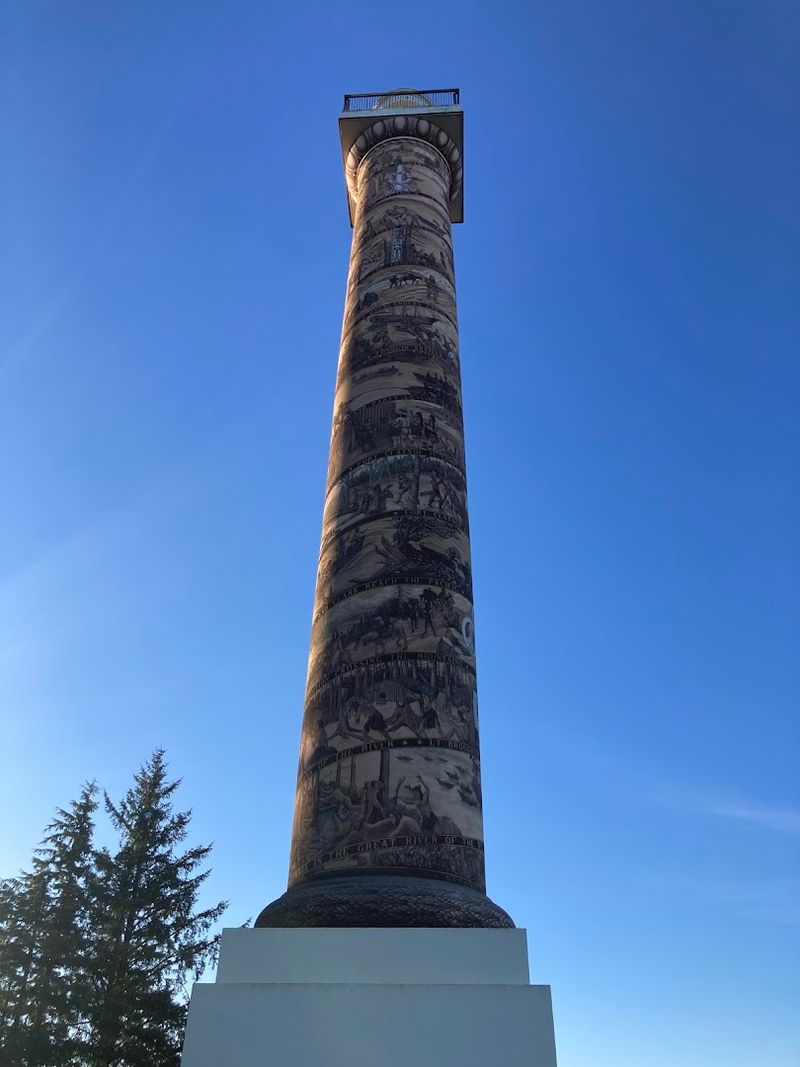
The Astoria Column was never meant to just be a pretty tower. It was built as a monument to the history of the Pacific Northwest, and the murals wrapping its exterior make that mission impossible to miss.
The story it tells begins with the Native peoples who lived in the region for thousands of years and moves through the arrival of European explorers, the Lewis and Clark Expedition, and the establishment of the first permanent American settlement west of the Rocky Mountains.
Fort Astoria, founded in 1811 by John Jacob Astor’s Pacific Fur Company, plays a central role in the narrative. Astoria itself holds the distinction of being the oldest American settlement on the Pacific Coast, which gives the column’s location a layer of historical weight that goes well beyond its physical height.
The Great Northern Railway helped fund the column’s construction in 1926 as a way of marking the significance of the region to American westward expansion. The Astor family contributed as well, connecting the monument directly to the fur trade era it commemorates.
A brass relief map at the base shows the estuary’s geography as it was understood by early explorers. For history enthusiasts, the column offers a genuinely rich and layered experience that rewards careful attention.
Best Times to Visit: Seasons, Crowds, and Weather Tips
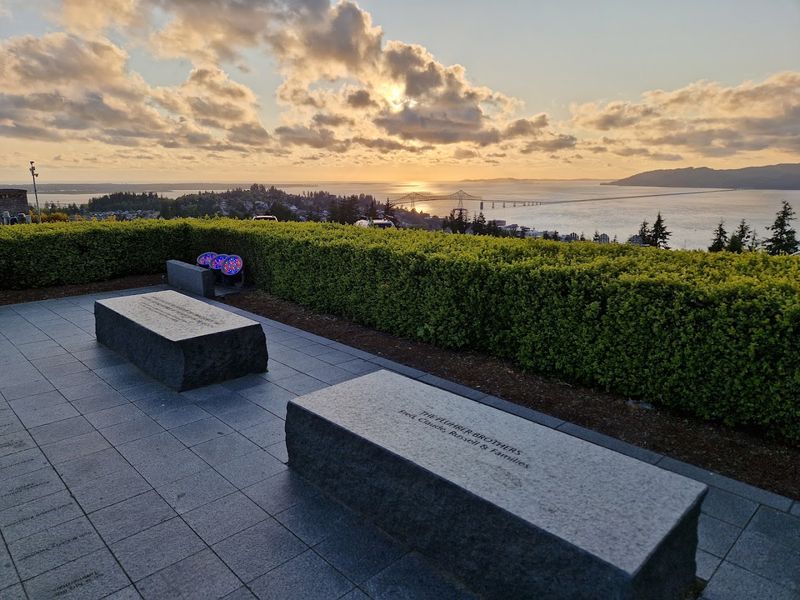
The column is open every day of the week from 5 AM to 9 PM, which gives visitors a wide window to plan their visit around the weather and their own schedule. Early morning visits on weekdays tend to be the quietest, and the soft morning light makes the murals on the exterior particularly easy to photograph.
Several visitors have mentioned having the column entirely to themselves by arriving before 8 AM on a weekday.
Summer brings the best visibility for the panoramic views, and the Pacific Northwest’s long summer days mean the light stays good well into the evening. Spring and fall offer a trade-off: the crowds thin out considerably, but fog and low clouds can occasionally limit the views from the top.
Winter visits are possible and can be dramatic, with storm light over the Columbia River creating a moody atmosphere that summer simply cannot replicate.
The hilltop is genuinely windy on most days regardless of season, so a light jacket is a smart addition to any visit. The five-dollar parking fee stays consistent year-round, and there are no additional charges to climb the column.
Visitors coming from Oregon’s coast towns, or even those road-tripping from Oklahoma, will find the column worth working into any Pacific Northwest itinerary.
Why the Astoria Column Still Matters After 100 Years
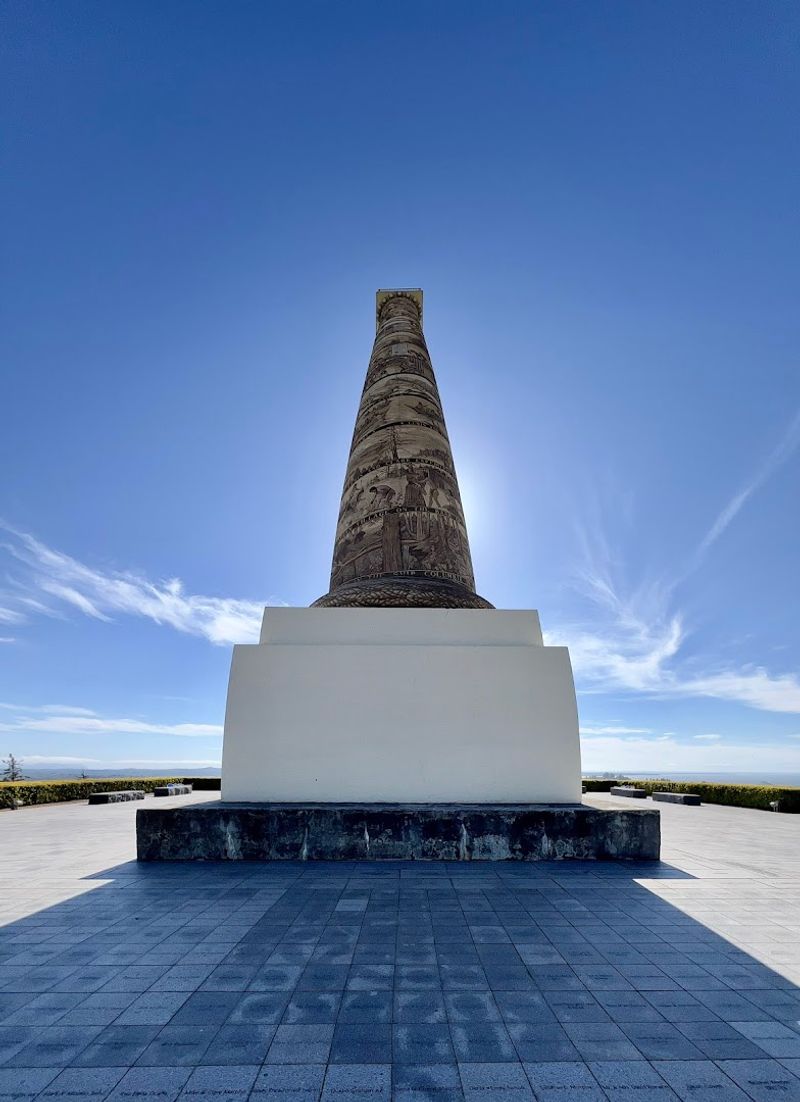
A hundred years after its dedication, the Astoria Column is not a relic. It is a living landmark that continues to draw visitors from across the country and around the world, earning a 4.8-star rating from over 10,000 reviews and a reputation as one of the most rewarding stops on the entire Oregon coast circuit.
That kind of consistent enthusiasm over a century says something real about the place.
Part of what keeps the column relevant is that it operates on multiple levels at once. It is a piece of public art, a history lesson, a physical challenge, a scenic overlook, and a genuinely playful experience all wrapped into one 125-foot structure.
Not many landmarks manage to deliver on that many fronts simultaneously.
The column also connects visitors to something larger than a single monument. It anchors the story of the Pacific Northwest in a specific place, at the spot where the Columbia River meets the ocean, where explorers once stood at the edge of the known world.
Whether you are a history lover, a casual tourist, or someone who drove up from Oklahoma on a whim, the Astoria Column has a way of making the past feel close and the view feel infinite. That combination, sustained across a full century, is genuinely rare.
Share this story