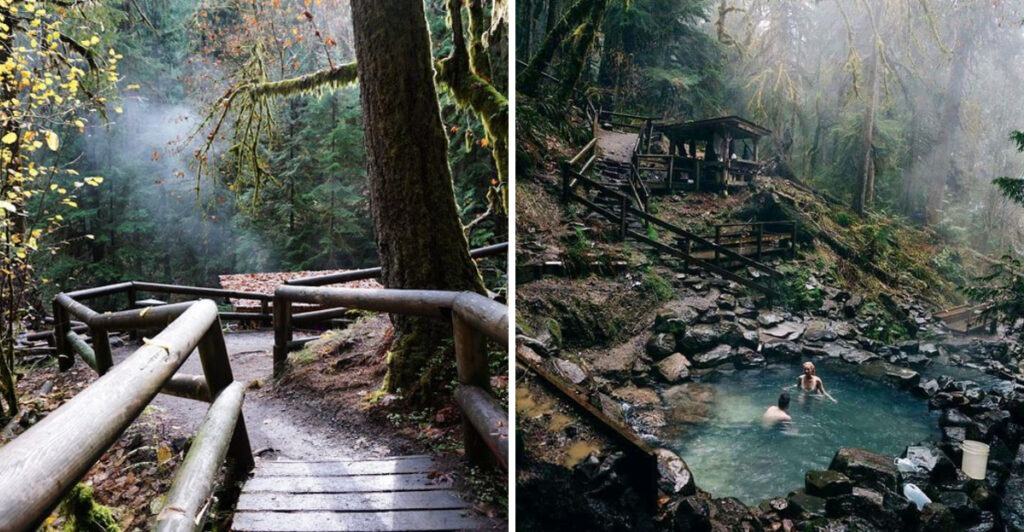
There is a short trail in the Oregon Cascades that ends at something most hikers only dream about: a series of natural hot spring pools surrounded by old-growth forest, steam rising off the water while the trees close in around you. The trail itself is barely a quarter mile long, but what waits at the end makes the drive, the parking scramble, and the entry fee feel like the best deal you have made all year.
This is not some polished resort spa with piped-in music and a gift shop. These are real, geothermally heated pools carved into the earth, each one a different temperature, each one sitting quietly in the woods like they have been there forever, because they have.
Where to Find the Trailhead and How to Get There
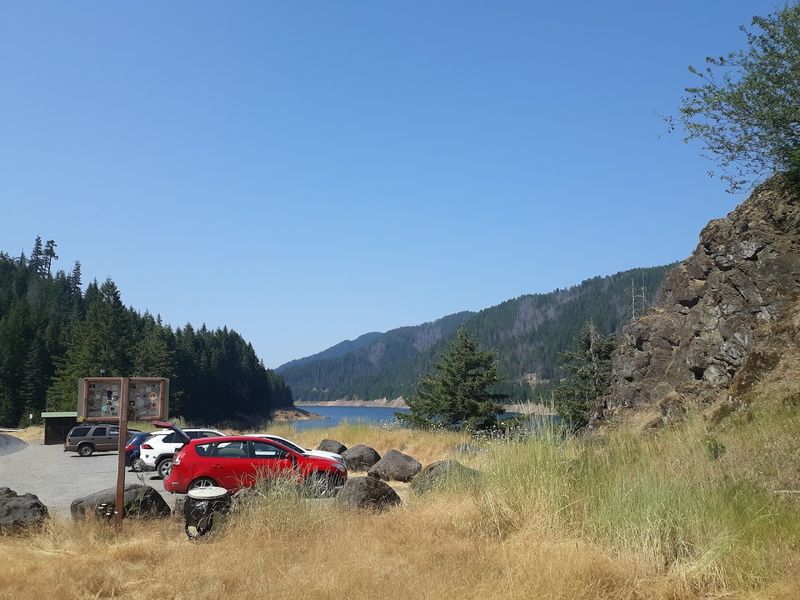
The trailhead sits on Cougar Dam Road in Blue River, Oregon 97413, tucked into the Willamette National Forest east of Eugene. Getting there takes you along the McKenzie River Highway, which is one of the more scenic drives in the state, with the river running green and fast beside the road.
Blue River is a small community, and the turnoff for the trailhead is easy to miss if you are not paying attention. The road narrows as it climbs, and there are sections that are still gravel, so drive with care.
The GPS coordinates are 44.0820783, -122.2321709, and plugging those in is smarter than relying on vague road signs.
The parking area is genuinely small, holding maybe a dozen cars before it fills up completely. On weekend mornings, people arrive before sunrise to claim a spot.
Weekday visits are far calmer, and you will likely find a space without the stress. The ranger station sits near the lot, and staff are usually on hand to collect the entry fee and answer questions before you head up the trail.
The Short but Rewarding Trail Through the Forest
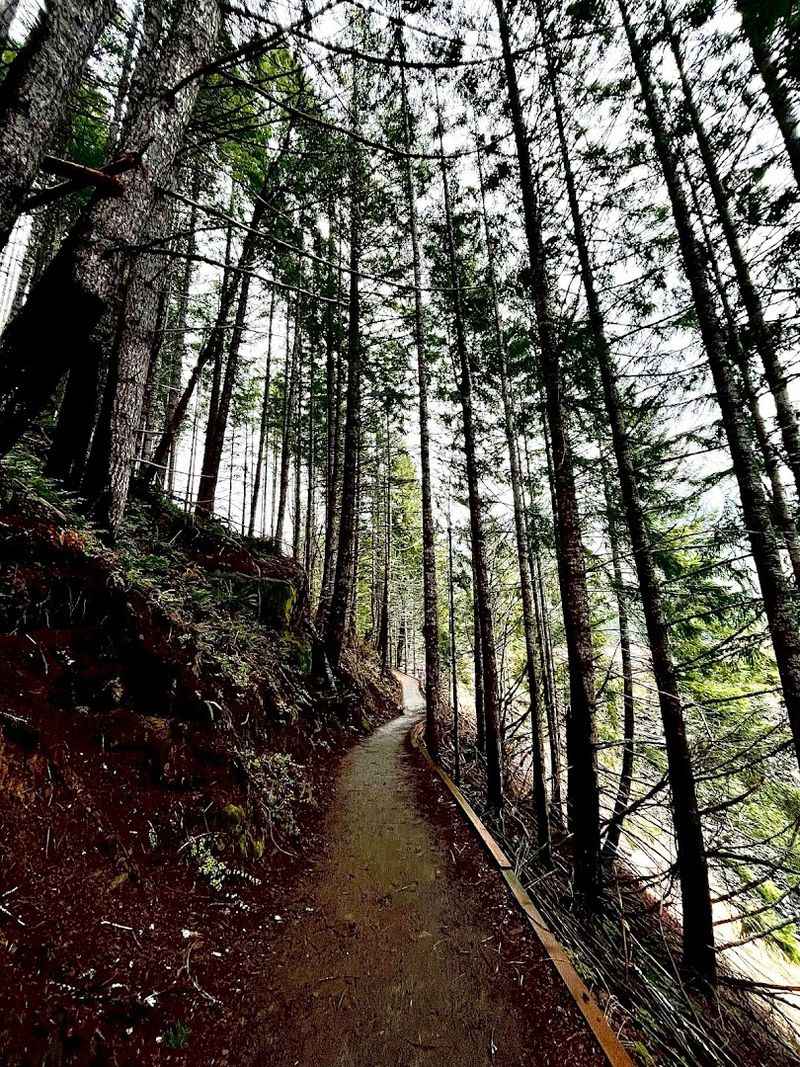
At roughly a quarter mile each way, the trail to the pools is not going to challenge your fitness level, but it will absolutely reward your senses. The path winds through a dense stand of Douglas fir and cedar, the kind of forest where the light filters down in soft columns and everything smells faintly of moss and pine.
The ground can be uneven and rooty in spots, which is worth knowing before you choose your footwear. Sandals and flip-flops are tempting given the destination, but the trail has enough rocks and exposed roots to make closed-toe shoes a smarter call.
The hike takes about five minutes at a relaxed pace, and the sound of the springs gets louder as you approach. You will start to feel the warmth in the air before you see the first pool.
The whole walk feels like a slow reveal, the forest gradually parting to show you something that feels almost too good to be true, right up until you step into the water.
The Natural Hot Spring Pools and Their Temperatures
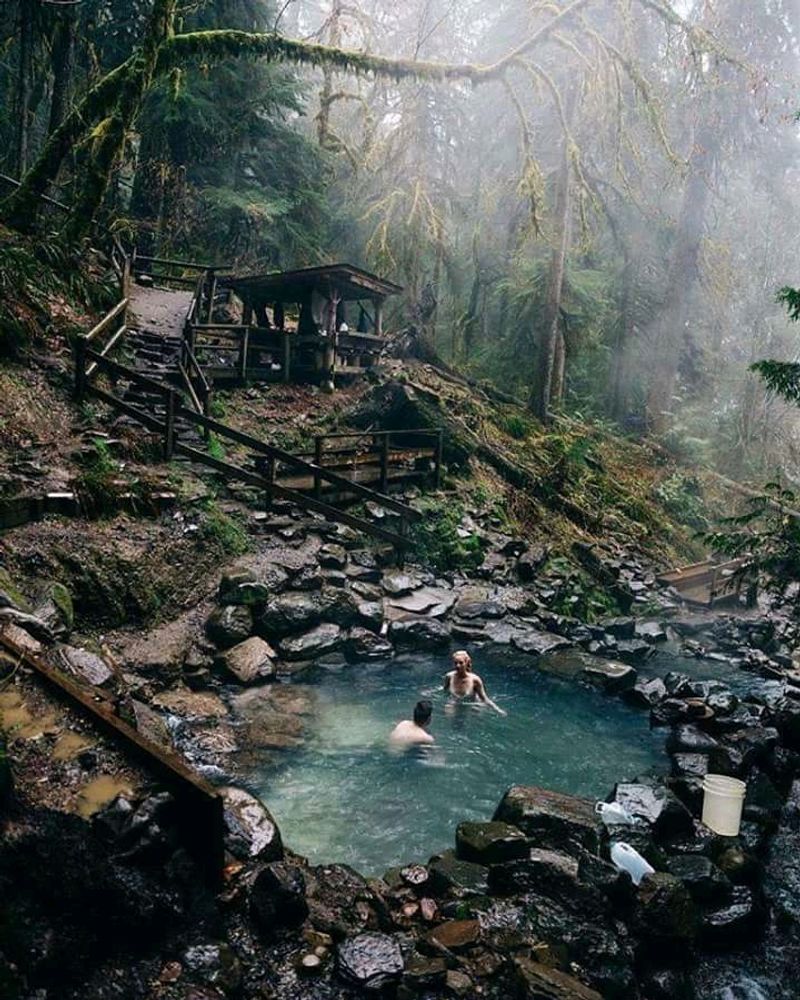
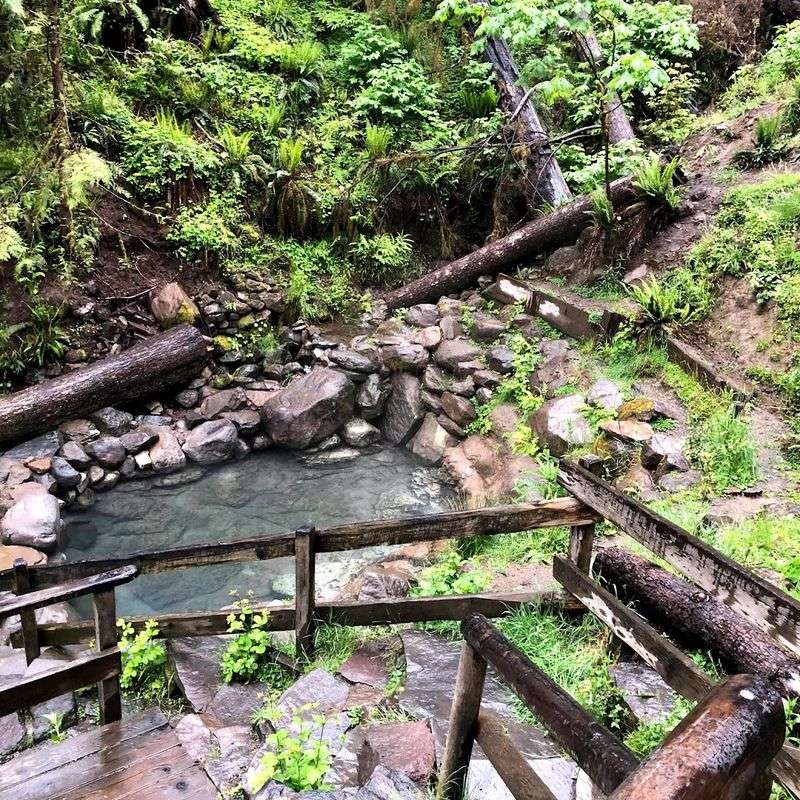
Several distinct pools wait at the end of the trail, each fed by the same geothermal source but sitting at noticeably different temperatures. The pools higher up near the spring source run the hottest, and moving down the hillside, each successive pool cools a few degrees.
This natural temperature gradient means you can work your way from one pool to the next depending on how much heat your body wants to handle.
The hottest pools sit right around the point where most people need a moment to ease in slowly. The cooler lower pools are a relief after soaking in the upper ones, and some visitors prefer them entirely.
After heavy rain, cooler groundwater can seep in and drop the upper pool temperature slightly, which actually draws more people to a spot that is usually too intense for long soaks.
The water itself has a slightly mineral quality that feels different from a regular bath or swimming pool. Your skin feels noticeably softer after a long soak, and the warmth works into your muscles in a way that is hard to describe without sounding like a spa brochure.
The pools are well-maintained and cleaner than most natural hot springs you will encounter in the Pacific Northwest.
Entry Fees, Hours, and Practical Rules
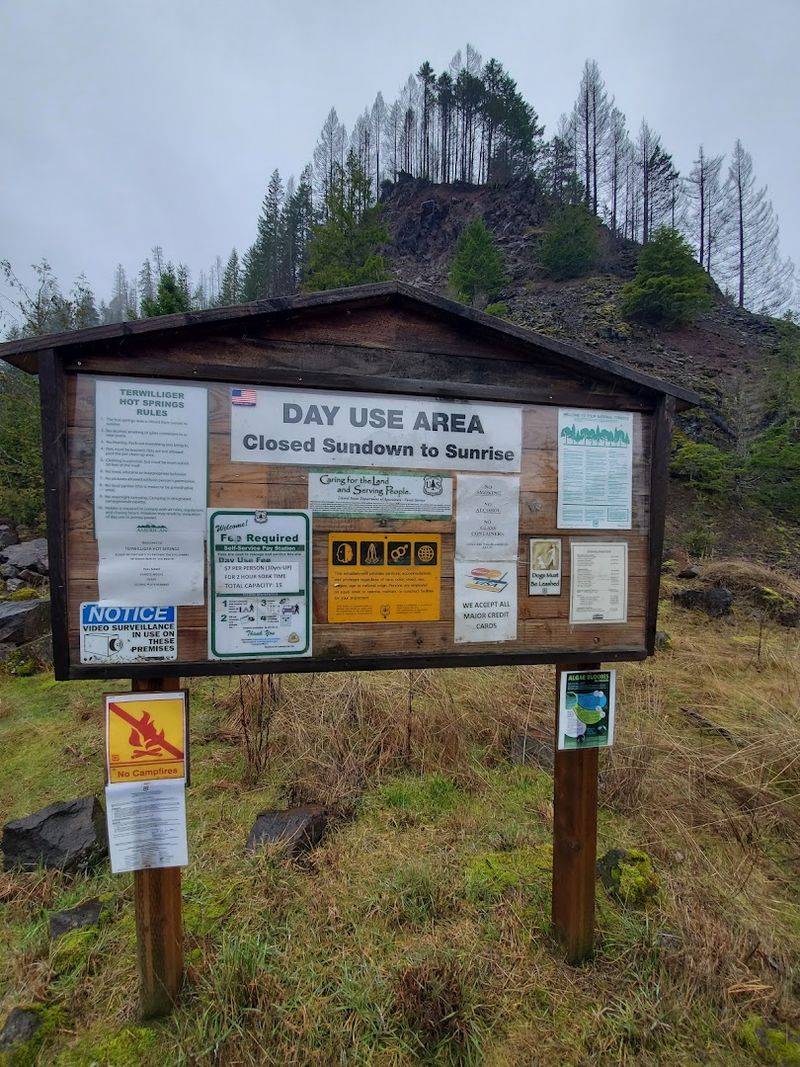
Terwilliger Hot Springs is open most days from 5 AM to 9 PM, with Thursday being the exception, running noon to 6 PM. Those hours matter because the place fills up fast on summer mornings, and arriving right at opening is one of the best ways to get in without a long wait.
The entry fee runs around ten dollars per person, paid in cash. There have been periods when the fee was lower, and longtime visitors remember paying five or seven dollars in earlier years.
The money goes toward trail maintenance and facilities, and the results are visible: the path stays clear, the bathrooms are functional, and there is no trash piling up around the pools.
No pets are allowed on the trail or at the springs. There is a two-hour time limit per visit, which keeps turnover moving on busy days, though rangers tend to be reasonable about enforcement when the pools are not overcrowded.
A covered area with benches near the pools gives you a place to leave your belongings. Bathrooms and changing facilities are available on-site, which is a genuine convenience that not every natural hot spring location offers.
Clothing-Optional Culture and What to Expect
Terwilliger Hot Springs has been clothing-optional for as long as most regular visitors can remember, and that culture is well-established and generally respected by the people who show up. Nobody is required to go without a swimsuit, but many choose to, and the atmosphere tends to be relaxed and non-judgmental rather than awkward or uncomfortable.
First-timers sometimes feel uncertain before they arrive, and that is completely normal. The general vibe at the pools is one of quiet enjoyment rather than anything performative.
People soak, talk softly, and move between pools without making a scene. Respecting that atmosphere goes a long way, and rangers do keep an eye on things to make sure the environment stays peaceful and appropriate.
Families with children do visit occasionally, and whether that works depends entirely on the parents and their comfort level with the clothing-optional setting. Most regulars would describe the springs as better suited to adults, and weekend crowds especially tend to skew older and more experienced with this kind of environment.
The best approach is to come with an open mind, follow the posted rules, and treat the space the way you would want others to treat it.
Best Times to Visit and Avoiding the Crowds
Weekends at Terwilliger can feel like a different place entirely compared to a quiet Tuesday afternoon. On Saturday and Sunday mornings, the parking lot fills before most people have finished their first cup of coffee, and late arrivals sometimes end up parking illegally along the road, which creates headaches for everyone.
Weekdays are the clear winner for anyone who wants a calmer experience. The pools feel more spacious, the forest sounds come through more clearly, and you can actually move between pools without waiting for someone else to get out first.
Early mornings on weekdays are especially good, with mist still hanging in the trees and the water looking almost otherworldly.
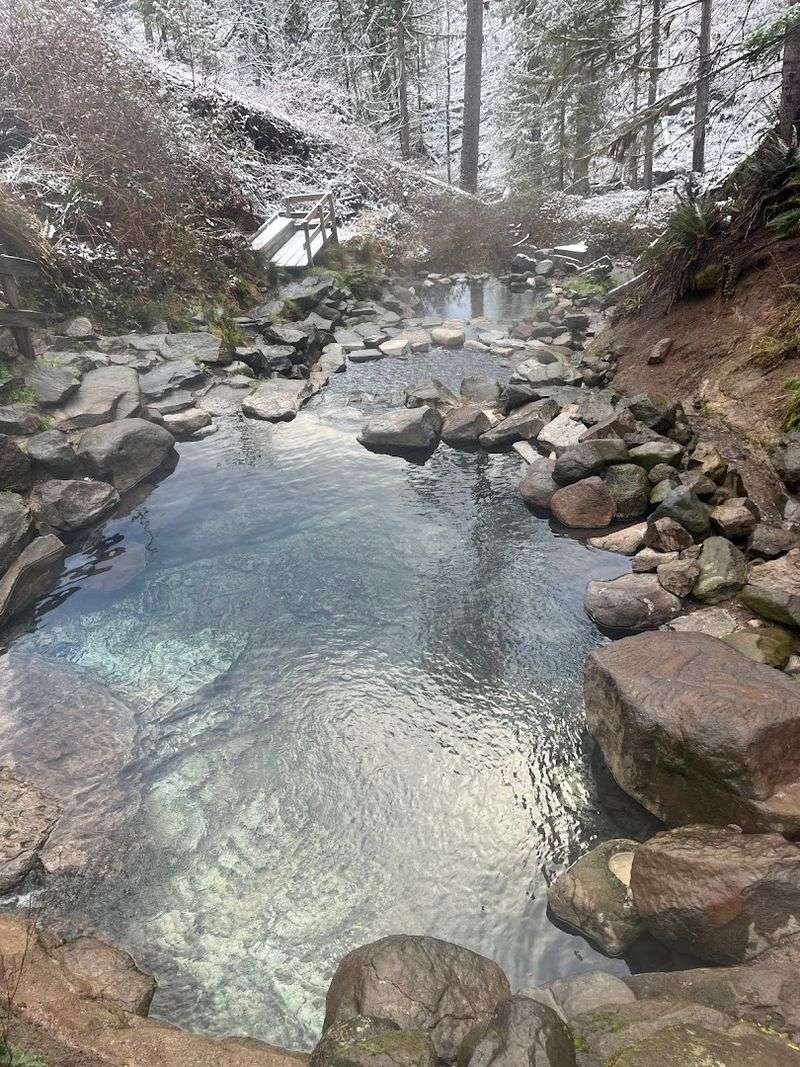
Winter visits have their own appeal that regulars talk about with genuine enthusiasm. Soaking in hot water while snow falls through the tree canopy is the kind of experience that sticks with you for years.
The springs stay open year-round, and the cooler air actually makes the heat of the water feel more intense and satisfying. Fall is another strong choice, with fewer crowds than summer and the added bonus of the forest turning color around the pools.
The History and Past Closure of the Springs
Long-time visitors tell a story of a place that has changed considerably over the decades. Twenty years ago, the trailhead was marked by little more than a small sign by the road, and the springs were free to access.
The whole setup had a rougher, more improvised feel that appealed to people looking for something genuinely off the beaten path.
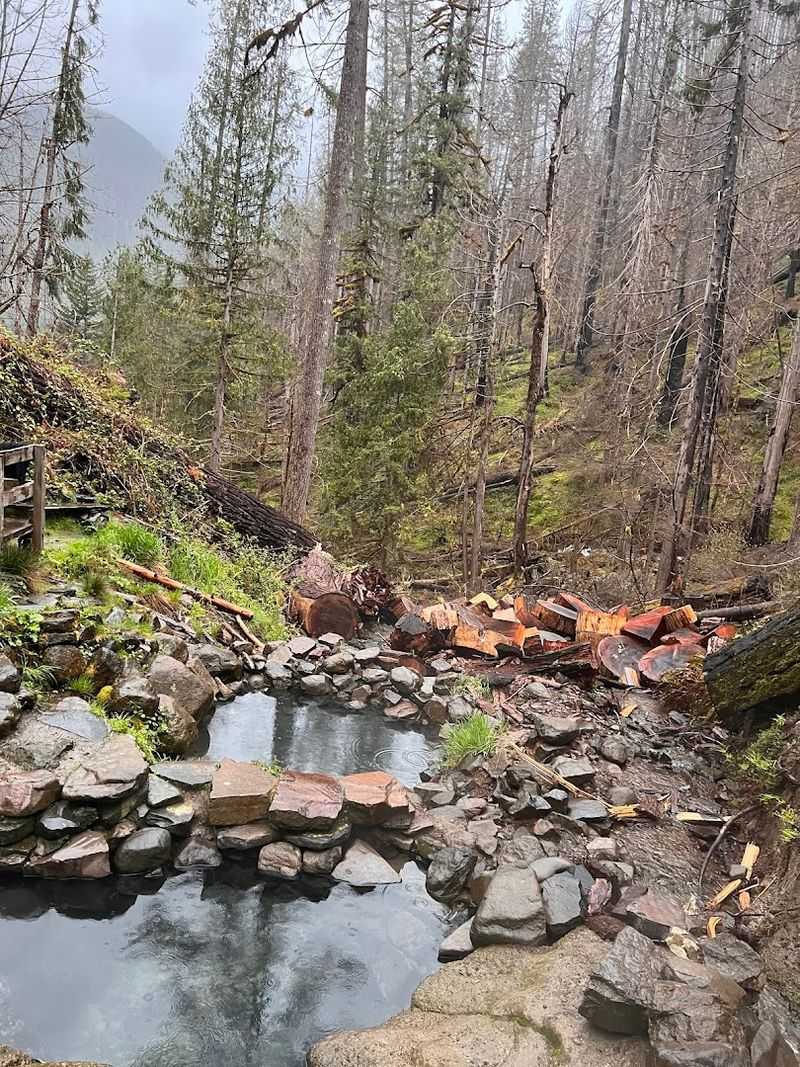
The summer of 2018 brought a serious setback when a fire broke out at the springs and destroyed all of the structures along the trail. The site closed for an extended period while the Forest Service assessed the damage and rebuilt.
The closure lasted over a year, and regular visitors felt the absence sharply.
When the springs reopened, the rebuilt facilities were noticeably better than what had been there before. The trail got cleared and improved, new bathrooms were installed, and the covered seating area near the pools was rebuilt with solid construction.
The entry fee structure became more formal as well, with consistent collection rather than the honor-system approach of earlier years. The springs today reflect a managed balance between preserving the natural character of the place and keeping it accessible and well-maintained for the volume of visitors it now receives.
The Surrounding Willamette National Forest Setting
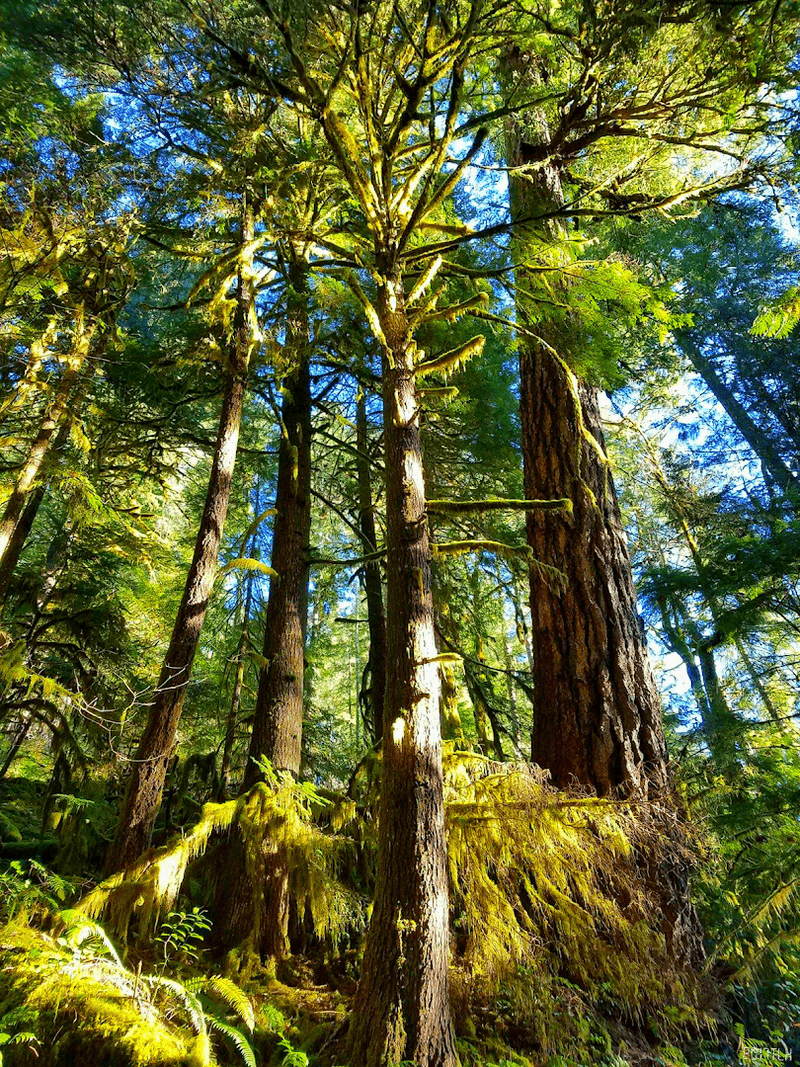
The forest surrounding the trailhead is the kind that makes you understand why people move to Oregon and never leave. Tall Douglas firs and western red cedars crowd close to the trail, their trunks straight and enormous, the canopy high enough above that the sky feels like a distant suggestion.
Ferns cover the ground in thick mats, and the whole place stays green even in summer.
The Willamette National Forest stretches for millions of acres across the Oregon Cascades, and the hot springs sit comfortably within that wild landscape. The McKenzie River runs not far away, cold and clear and fast, a striking contrast to the warm pools waiting up the trail.
The combination of river, forest, and geothermal springs in one small area gives this corner of Oregon a density of natural features that is hard to match.
Wildlife moves through the forest regularly, though the crowds on busy days tend to push animals deeper into the trees. Early morning visits occasionally reward patient observers with a glimpse of deer or birds working through the understory.
The forest itself is worth slowing down for even before you reach the pools, and the short trail gives you just enough time to settle into the atmosphere before the springs take over your full attention.
Hydration, Safety Tips, and Trail Footwear Advice
Soaking in hot water pulls moisture out of your body faster than most people expect, and dehydration sneaks up on you when you are relaxed and warm and not paying attention. Bringing a water bottle is not optional here.
The heat of the pools combined with physical exertion on even a short trail adds up, and feeling dizzy or lightheaded near natural hot springs is not a situation you want to find yourself in.
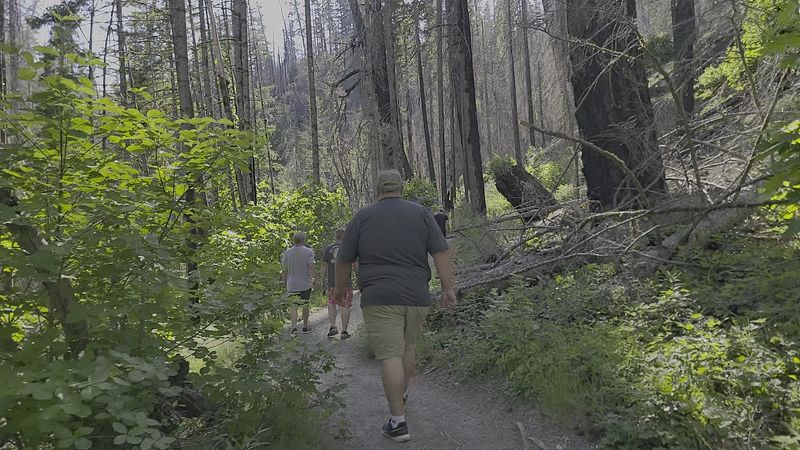
Footwear deserves serious thought before you leave home. The trail is short, but it has rocky and rooty sections that punish sandals and unsupported shoes.
Closed-toe hiking shoes or trail runners give you the grip and ankle support to walk confidently in both directions. There is no shame in changing into sandals once you reach the pools.
Sun protection matters on summer visits, especially if you plan to soak for a while in open areas near the pools. The entry fee covers your access but not your comfort, so pack sunscreen, a towel, and a change of clothes.
Cash is essential since there is no card reader at the gate. The nearest town with services is Blue River, and the nearest city with full amenities is Springfield, about an hour’s drive west on the McKenzie Highway.
Parking Challenges and Getting There Without Stress
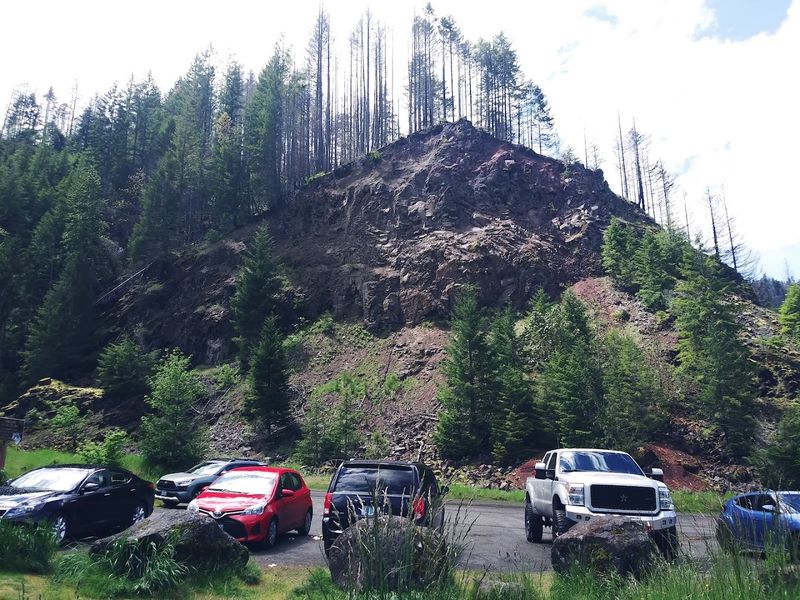
The parking situation at Terwilliger is the single biggest logistical challenge of the whole visit. The lot holds a small number of cars, and on popular days it reaches capacity well before most people would consider it a reasonable hour to be out of bed.
Cars parked along the road illegally become a regular weekend sight, and rangers do address the problem, sometimes requiring people to leave the springs mid-soak to move their vehicles.
Carpooling is genuinely the smartest move here. Fewer cars in the lot means less stress for everyone, and arriving in one vehicle with a group of friends solves the parking problem while also making the experience more social.
Some visitors drive out early, scope the lot, and then return later in the day when spaces open up as the two-hour time limit cycles people through.
Arriving between 5 AM and 7 AM on weekdays almost always guarantees a spot. Thursday afternoons, when the springs open at noon, tend to be lighter than other days.
The road leading up from the McKenzie Highway has improved significantly over the years, with more pavement and fewer rough gravel stretches, making the drive easier than it once was for regular passenger vehicles.
What Makes Terwilliger Stand Out Among Oregon Hot Springs
Oregon has no shortage of natural hot springs, and the competition is real. Umpqua Hot Springs gets a lot of attention as a benchmark, but regulars who have visited both tend to give Terwilliger the edge for cleanliness and trail quality.
The maintained path, functioning bathrooms, and consistent staffing create a more reliable experience than you get at wilder, more remote springs.
The variety of pool temperatures is another genuine advantage. Having multiple soaking options at different heat levels means the springs work for a wider range of people and preferences.
Someone who cannot handle extreme heat can still enjoy the lower pools while a friend bakes happily in the upper ones. That flexibility keeps people happy and keeps the atmosphere from feeling competitive over the best spots.
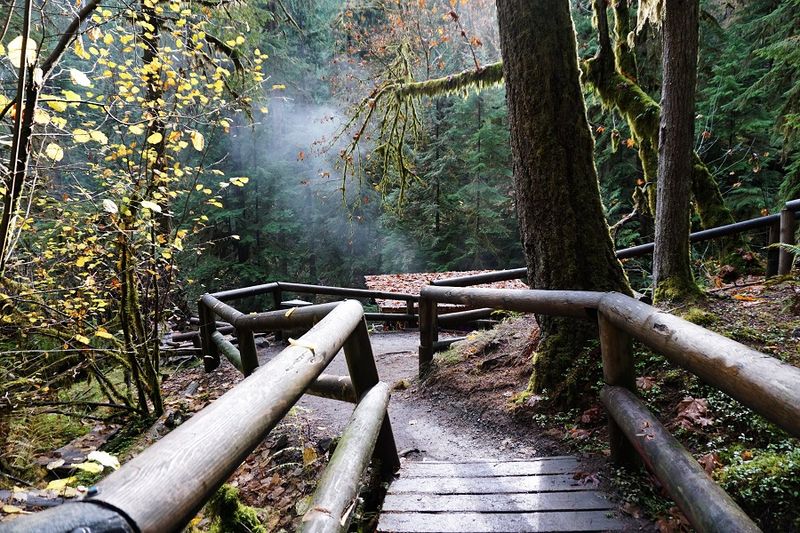
The setting itself is hard to argue with. A forested hillside in the Oregon Cascades, steam rising off multiple pools, the sound of water moving through rocks, and the smell of warm mineral water mixing with cool forest air.
It is the kind of place that people in landlocked states like Oklahoma dream about when they think of the Pacific Northwest, and it delivers on that image completely and without exaggeration.
A Closing Soak and Why People Keep Coming Back
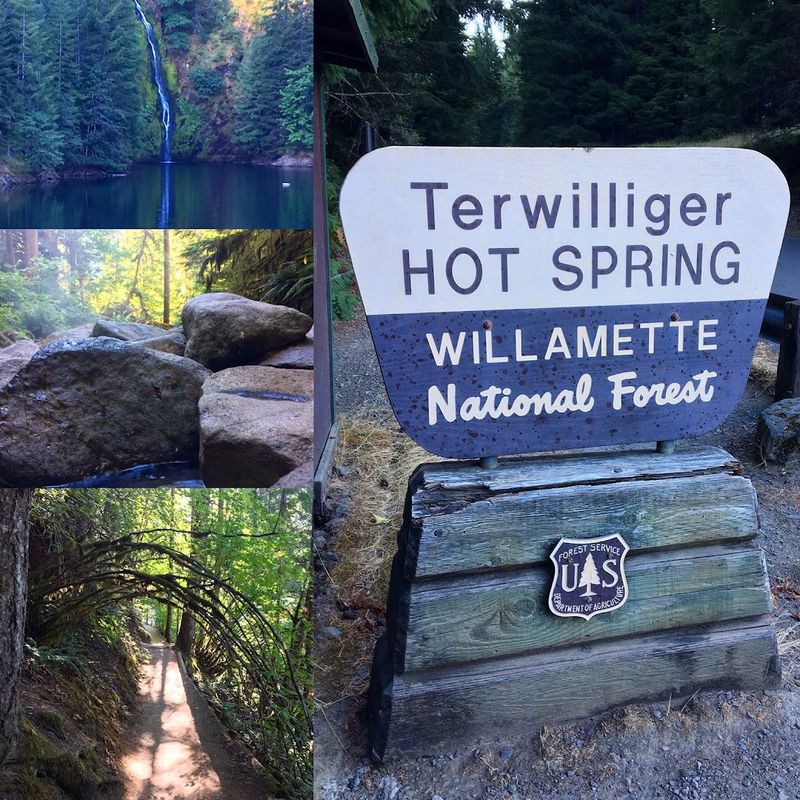
People who visit Terwilliger once almost always come back. The regulars are easy to spot: they know which pool runs at their preferred temperature, they bring exactly the right gear, and they tend to arrive at the optimal time without overthinking it.
Some have been making the trip for twenty years or more, through fire closures and fee changes and trail improvements, and they keep returning because the core experience has not changed.
There is something about sitting in naturally heated water in the middle of an old-growth forest that does not get old. The springs have drawn people from across the country, and visitors from places as far away as Oklahoma have described the experience as unlike anything they expected from a short quarter-mile trail in the woods.
That reaction, the mild disbelief that something this good exists at the end of such a brief walk, is probably the most common one you will hear.
The trail closes at 9 PM most days, which means an evening soak under a darkening sky is entirely possible. The pools lit only by what filters through the trees, the temperature contrast between hot water and cool night air, is the kind of ending to a day that makes the drive home feel easy and the next visit feel necessary.
Share this story