Deep in the Mt. Hood National Forest, a set of steaming, ancient hot springs has been drawing people for thousands of years, long before hiking boots and cedar tubs were part of the picture.
Native Americans considered this place sacred ground, and honestly, after spending a morning there, it is not hard to understand why. The air smells like forest and minerals, the water runs incredibly hot, and the whole scene feels like something out of a time before cities existed.
I had heard about this spot from a friend in Portland, and the moment I finished the 1.5-mile trail and saw those rustic wooden bathhouses tucked between old-growth trees, I knew I had stumbled onto something genuinely special. Keep reading, because this place has layers worth exploring.
Where Exactly You Are Going and How to Get There
Bagby Hot Springs sits within the Mt. Hood National Forest in northwestern Oregon, reached via Forest Road 70 off Highway 224 near the town of Estacada.
The full address used by most visitors and mapping apps is Bagby Hot Springs Trailhead, Forest Road 70, Estacada, OR 97023.
The drive from Portland takes roughly 90 minutes, and every mile of it gets more scenic as the highway narrows and the Douglas firs close in around you. The road is paved all the way to the trailhead parking area, which makes the approach far less rugged than you might expect for a place this wild.
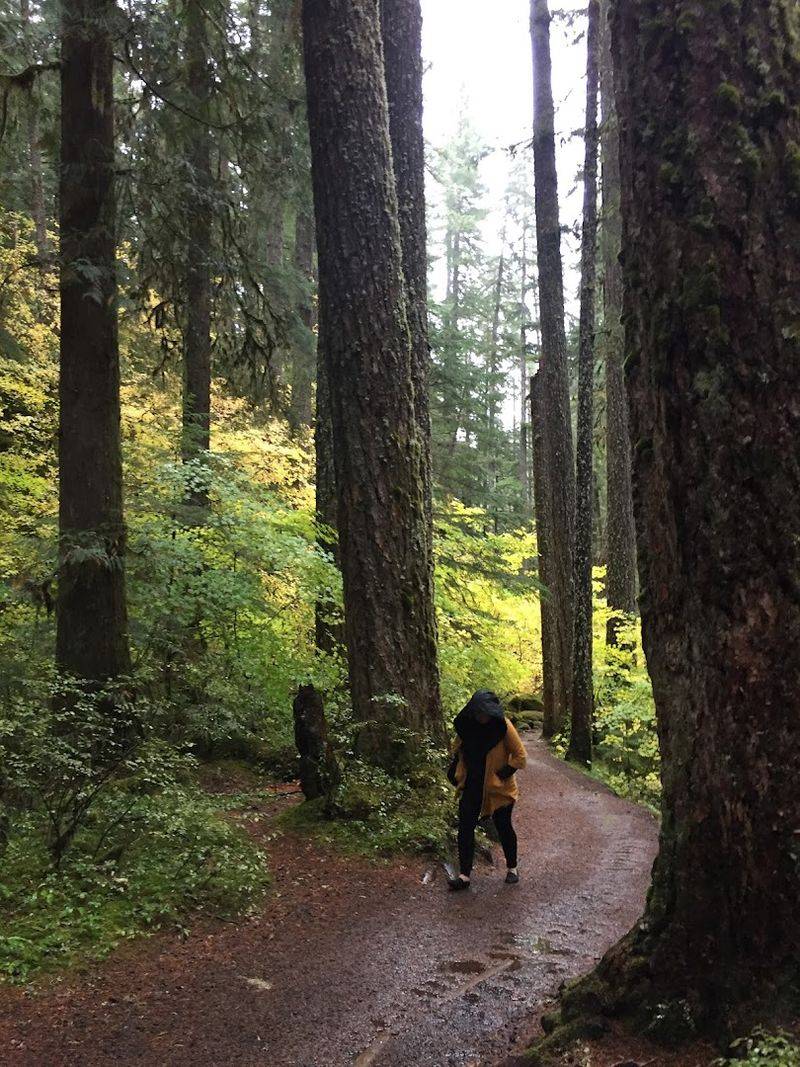
From the parking lot, the trail to the springs is a flat, well-maintained 1.5-mile path that follows the Collawash River through a corridor of massive old-growth trees. The whole trail takes about 45 minutes at a relaxed pace, and the river views along the way are worth the trip on their own.
One practical note worth mentioning: the area operates under a private lease, and a $5 cash fee per person is collected at the trailhead. Bring exact change, because there is no ATM within miles of this forest road.
The Sacred History That Predates Every Map
Long before any trail was cut through these woods, the Molalla people and other Indigenous nations of the Pacific Northwest knew exactly where this water surfaced from the earth. For millennia, these hot springs were considered a place of healing and spiritual significance, a location where the natural world offered something extraordinary and people traveled considerable distances to access it.
The thermal water rises from deep within the Cascade Mountains, heated by volcanic activity far below the surface, and it emerges at temperatures close to 180 degrees Fahrenheit. That kind of heat does not go unnoticed by any culture, ancient or modern.
The name Bagby comes from Henry Bagby, a settler who filed a claim near the springs in the 1880s, but the human connection to this land stretches back far beyond that chapter. Archaeological evidence and oral histories suggest that Indigenous peoples used these springs for ceremonial bathing, healing rituals, and community gathering across countless generations.
There is something quietly humbling about soaking in water that has been valued by human beings for thousands of years, and that feeling settles over you the moment you arrive at the bathhouses.
The Cedar Tubs and How the Whole System Works
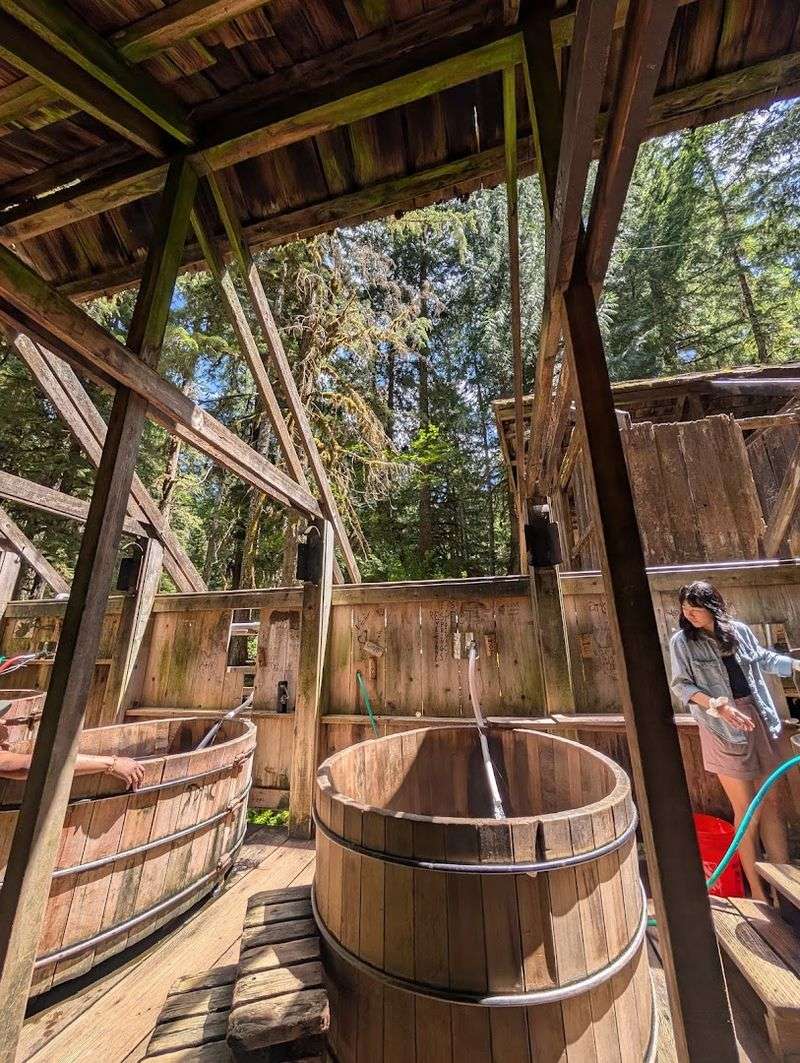
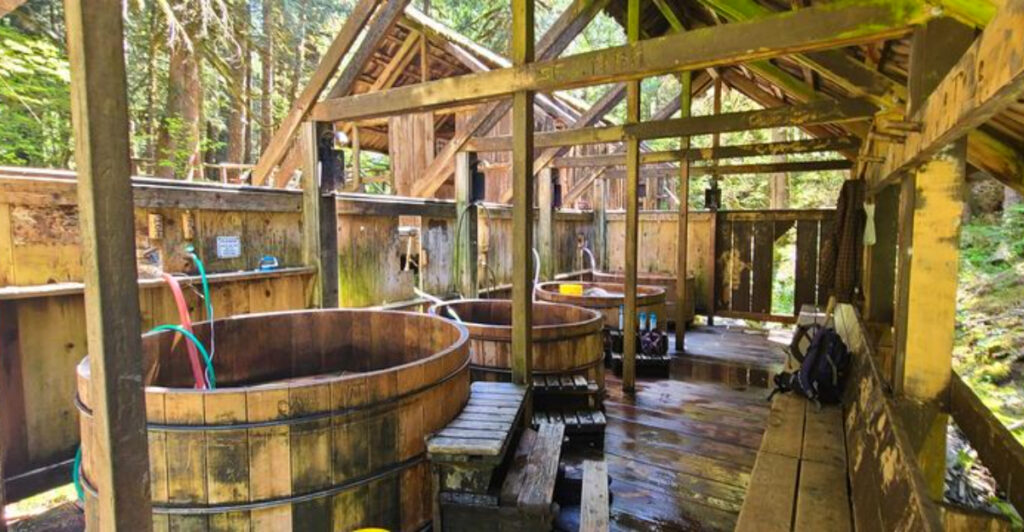
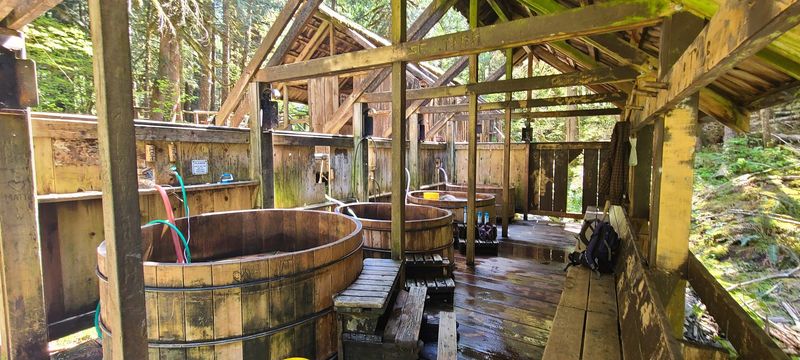
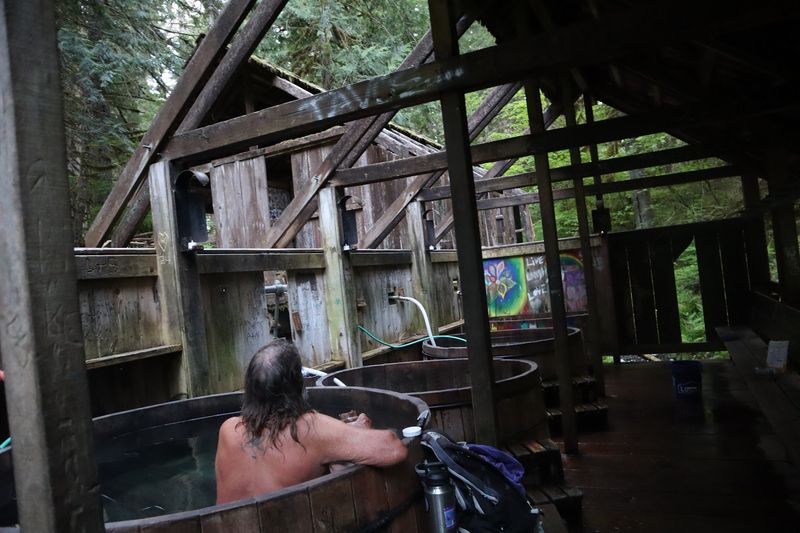
The bathing setup at Bagby Hot Springs is genuinely unlike anything I have seen at other hot spring destinations. Instead of rocky pools or concrete basins, the springs feed into large handcrafted cedar tubs housed inside wooden structures that look like they were built by someone who really loved both carpentry and thermal baths.
The water that flows into the tubs runs at close to 180 degrees, which means you absolutely cannot just climb in without adjusting the temperature first. Each tub has a cold water hose that you use to bring the temperature down to something your body can actually handle, and the whole process of getting the mix right feels strangely satisfying.
There are multiple tubs available, ranging from sizes that fit two people to larger communal options that can hold several visitors at once. After each group finishes, the tub can be fully drained and refilled with fresh spring water, so every soak starts clean.
Fair warning: draining a tub and waiting for it to refill takes upward of 40 minutes, so most experienced visitors skip that step and simply adjust the temperature with cold water instead. A little patience goes a long way here.
The Forest Trail That Makes the Journey Worth It
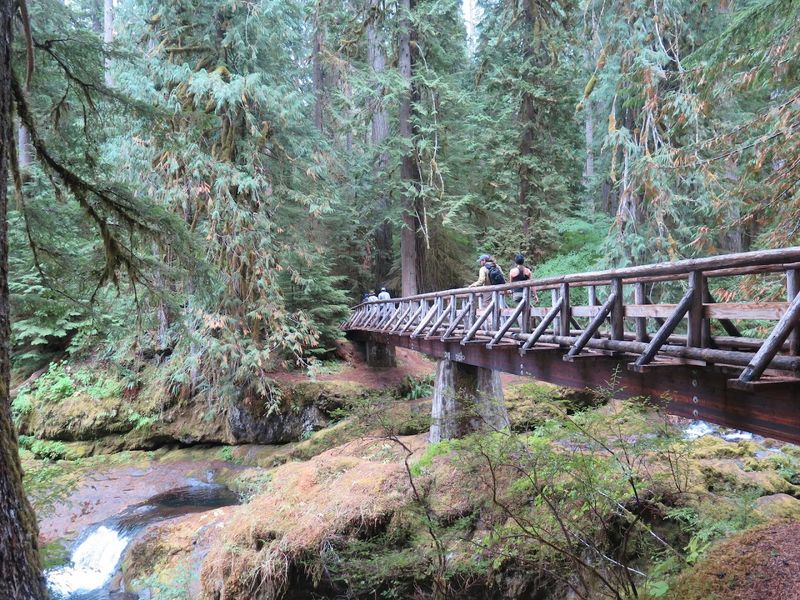
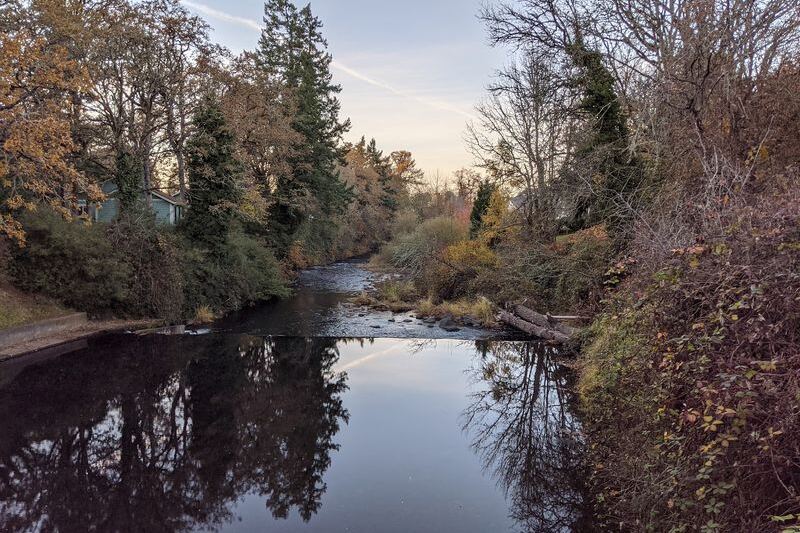
The 1.5-mile trail to the springs is one of those hikes that makes you forget you are exercising, mostly because you are too busy looking at everything around you. The path follows the Collawash River the entire way, and the sound of moving water keeps you company from the first step to the last.
Old-growth Douglas firs tower overhead, some of them wide enough that two people cannot wrap their arms around the trunk. The forest floor is carpeted in ferns and moss, and in the right light, the whole scene glows a shade of green that feels almost theatrical.
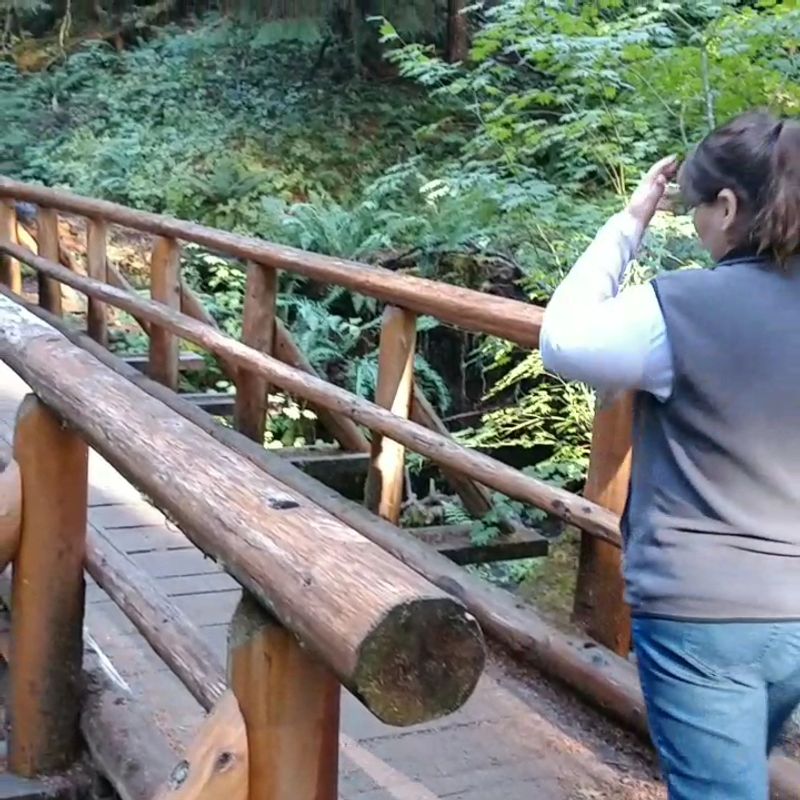
The trail crosses the river on sturdy wooden bridges, and in several spots you can look down into deep, clear swimming holes that look genuinely inviting in summer. The elevation gain is minimal, making this one of the more accessible wilderness hikes in the region.
About 15 minutes past the main tub area, a small waterfall sits just off the trail, and most visitors walk right past it without knowing it is there. The hike back after a long soak feels dreamy in the best possible way, with tired muscles and a completely clear head making every step feel lighter than the last.
Timing Your Visit to Get the Most Out of the Experience
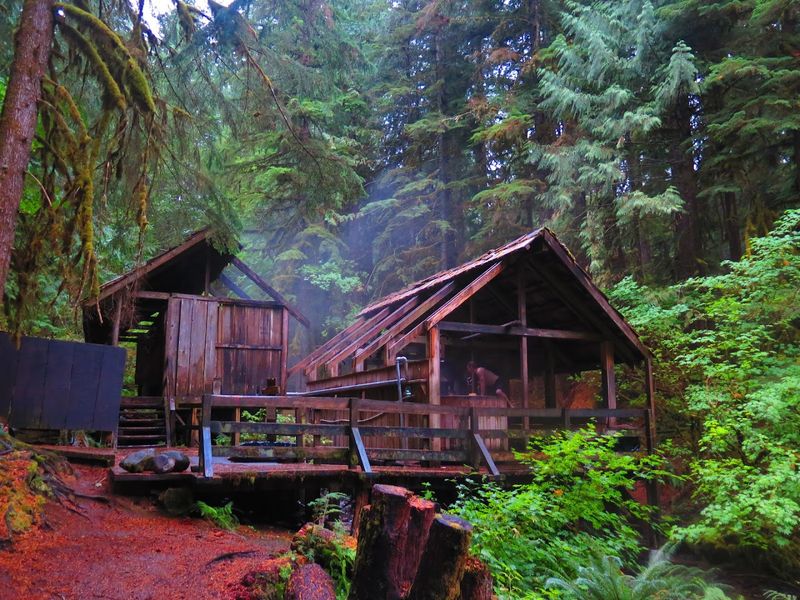
Weekends at Bagby can get genuinely crowded, and the wait for a tub can stretch to an hour and a half or more during peak afternoon hours. The springs are technically open 24 hours a day, but the trail is unlit and there are steep drops along certain sections, so a nighttime visit without proper gear is not something to take lightly.
The sweet spot, based on my own experience and plenty of firsthand accounts from regulars, is a weekday arrival around midday. Getting there by 1 p.m. on a Tuesday or Wednesday often means you can claim a tub within minutes of arriving, and for the first stretch of your soak, the whole bathhouse area can feel almost private.
Early spring and late fall bring fewer visitors, and there is something particularly atmospheric about soaking in hot water while snow sits on the surrounding forest floor. The contrast of cold air and steaming water is its own kind of reward.
Avoid arriving in the late afternoon on summer weekends if you have a low tolerance for crowds and long waits. The hike back in the dark is manageable with headlamps, but the trail conditions and steep sections make daylight the safer and more enjoyable choice for most visitors.
What to Pack for a Smooth and Comfortable Trip
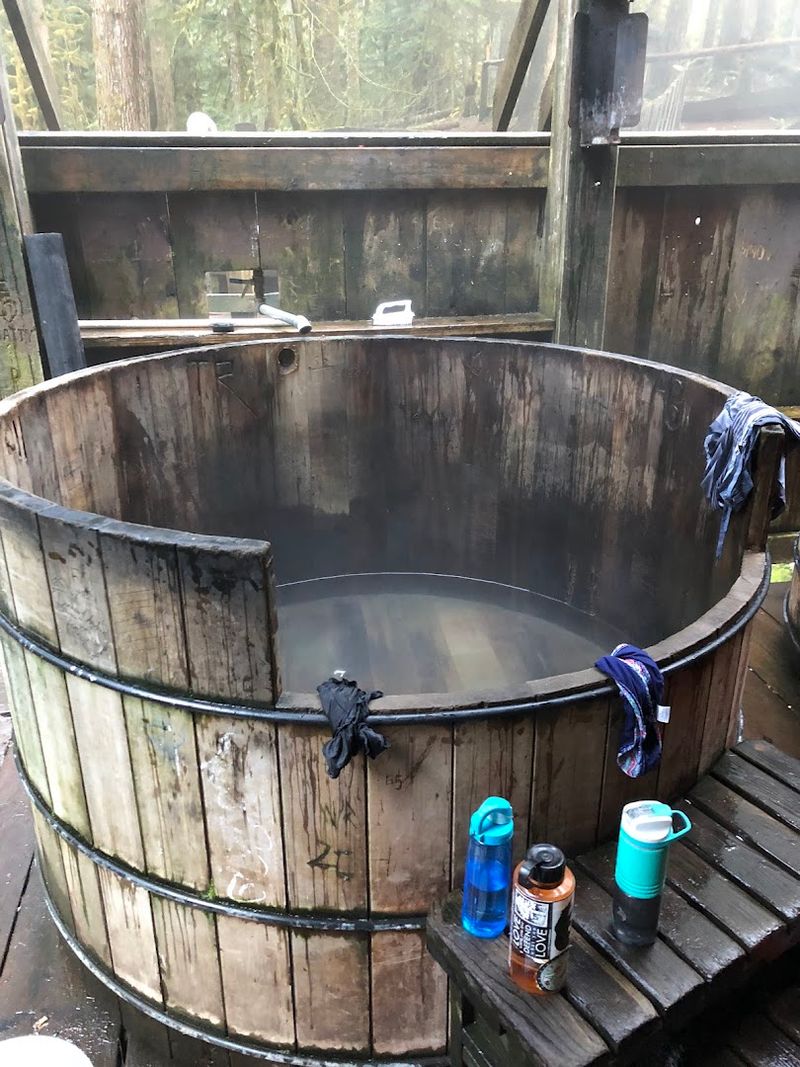
A little preparation goes a long way at Bagby, and the people who show up without thinking through their kit tend to have a noticeably less enjoyable time. The single most important item is cash, specifically five dollars per person in small bills, because the fee collector at the trailhead does not make change.
Beyond the entry fee, a sturdy towel is non-negotiable, and a second towel is not a bad idea since the walk back through the forest after a soak can leave you feeling pleasantly damp and chilled at the same time. Sandals or water shoes help around the tub area, where the wooden floors can get slippery.
Bring more drinking water than you think you need. The hike is not long, but the combination of a warm soak and outdoor exertion adds up, and there is no water fountain or concession stand anywhere near the springs.
A few snacks tucked into your pack will also make the return hike feel considerably more civilized.
If you plan to visit after dark, bring at least two headlamps and consider walkie-talkies, since cell service disappears completely once you enter the forest. The trail is not marked with lights, and the river drop-offs on certain sections require clear visibility to navigate safely.
The Volunteer Community Keeping This Place Alive
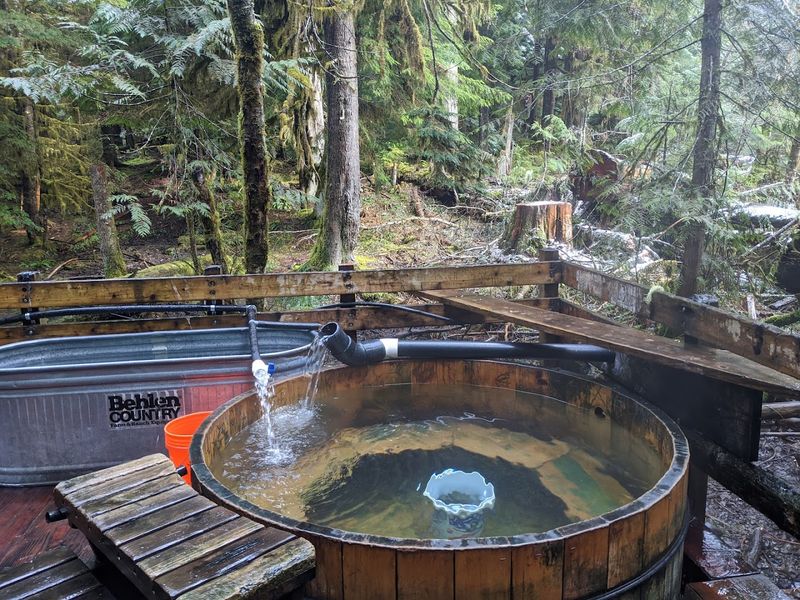
Bagby Hot Springs is not maintained by a government agency with a big budget and a fleet of maintenance trucks. The place runs on a combination of a private lease arrangement and the genuine dedication of volunteers who care deeply about keeping it accessible and functional.
The $5 per person fee collected at the trailhead goes directly toward restoration and upkeep, and the people who manage the site have worked hard to refurbish the cedar tub structures after years of wear and a damaging fire that reduced the number of available tubs significantly. At certain points in recent years, only a handful of tubs were operational, and the future of the site felt uncertain.
The fact that Bagby is still open and improving is largely a testament to a group of people who refused to let it fall apart. New management brought a renewed commitment to cleanliness and structural repairs, and visitors who have been coming since the 1980s describe the current state of the springs as a genuine comeback story.
Packing out your own trash and treating the facilities with respect is not just good trail etiquette here. It is a direct contribution to keeping a place that has mattered to people for thousands of years available for the next generation of visitors.
The Geology Behind the Heat
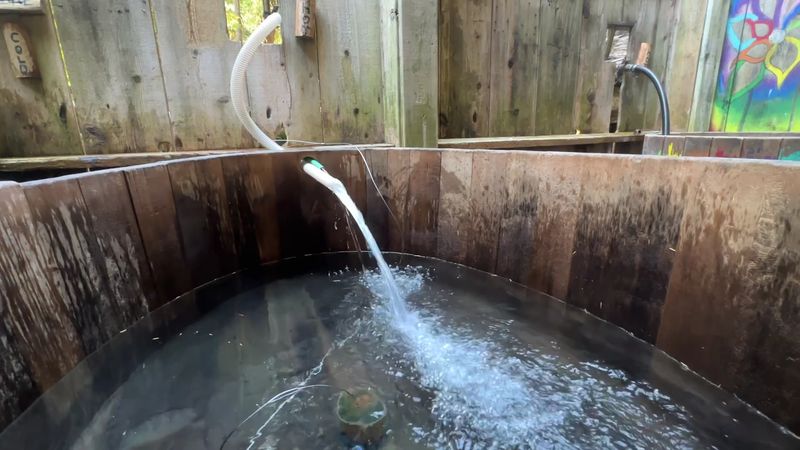
The water at Bagby does not get hot by accident. The Cascade Mountains sit along one of the most geologically active zones in North America, where tectonic plates interact in ways that push heat toward the surface across a wide region of the Pacific Northwest.
At Bagby, the thermal water rises from deep within the earth after being heated by volcanic rock formations far below the surface. It emerges at close to 180 degrees Fahrenheit, which puts it firmly in the category of high-temperature geothermal springs.
The mineral content of the water gives it a slightly silky texture that most visitors notice immediately.
The springs sit at an elevation of approximately 2,280 feet within the Cascade range, and the combination of altitude, forest cover, and geothermal activity creates a microclimate that feels noticeably different from the surrounding landscape. Even on cold days, the area around the tub houses carries a faint warmth from the rising steam.
Scientists have studied the thermal systems of the Oregon Cascades extensively, and Bagby represents one of the more accessible examples of how volcanic geology translates into surface-level phenomena that people can actually experience firsthand. The earth here is doing something remarkable, and the springs are the most obvious proof of it.
How Bagby Compares to Other Oregon Hot Springs
Oregon has no shortage of hot springs, and the state’s geothermal landscape offers everything from completely primitive pools to resort-style facilities. Bagby occupies a middle ground that many visitors find genuinely appealing, wild enough to feel like a real outdoor experience, but maintained enough to be accessible without serious backcountry skills.
Compared to Terwilliger Hot Springs, also known as Cougar Hot Springs, Bagby offers a more structured soaking experience with its individual cedar tubs and fresh-water drain system. Terwilliger features a series of natural rock pools that feel more primitive, while Bagby’s wooden infrastructure gives it a character that is entirely its own.
Umpqua Hot Springs in southern Oregon offers a single tiered pool with dramatic views over a river canyon, but the access road can be rough and the pool has no privacy. Bagby’s tub houses provide a more contained and personal experience, particularly for visitors who prefer to soak without an audience.
What sets Bagby apart from nearly every other hot spring in the state is the combination of its ancient history, its forest setting, the quality of the hike, and the handcrafted cedar tubs that have become genuinely iconic among Pacific Northwest outdoor enthusiasts. It is the kind of place that people return to year after year without needing much convincing.
A Few Final Thoughts Before You Hit the Trail
There is a specific kind of quiet that settles over you on the walk back from Bagby, a combination of physical ease and mental clarity that is hard to manufacture anywhere else. The springs have been producing that effect on visitors for a very long time, and the experience feels no less meaningful for being well-known.
A few practical reminders worth repeating: bring cash, arrive early on weekdays, pack out everything you bring in, and do not drain your tub unless you have serious time to spare. The trail is easy enough for most fitness levels, but nighttime visits require proper lighting and ideally a buddy system, since cell service is completely absent once you enter the forest.
The Mt. Hood National Forest surrounding Bagby is part of a broader wilderness corridor that stretches across much of northwestern Oregon, and the drive through that landscape alone is worth building a day around.
Whether you are coming from Portland, from elsewhere in Oregon, or from a completely different state entirely, this is a destination that earns its reputation honestly.
Unlike destinations in states such as Oklahoma, where geothermal activity is minimal, Oregon’s volcanic backbone makes places like Bagby possible, and that geological gift deserves to be treated with genuine respect every single time you visit.
Share this story