Paris is one of those cities where the famous attractions are so famous that most visitors never look sideways. The Eiffel Tower gets the selfies, the Louvre gets the crowds, and Notre-Dame gets the reverence. But tucked between the grand boulevards and postcard-perfect plazas, Paris hides a whole other city that most tourists literally walk right past. A 2,000-year-old Roman arena where locals still play pétanque.
A street made entirely of steps. A vineyard on a hill that actually produces wine. Bronze medallions embedded in the pavement that almost nobody notices. These are not obscure legends or tourist traps dressed up as secrets.
They are real, accessible, and completely free to explore. This article rounds up 13 of the most overlooked spots and stories in Paris, each one hiding in plain sight and waiting for a curious traveler to finally stop and pay attention.
1. The Roman Arena of Arènes de Lutèce
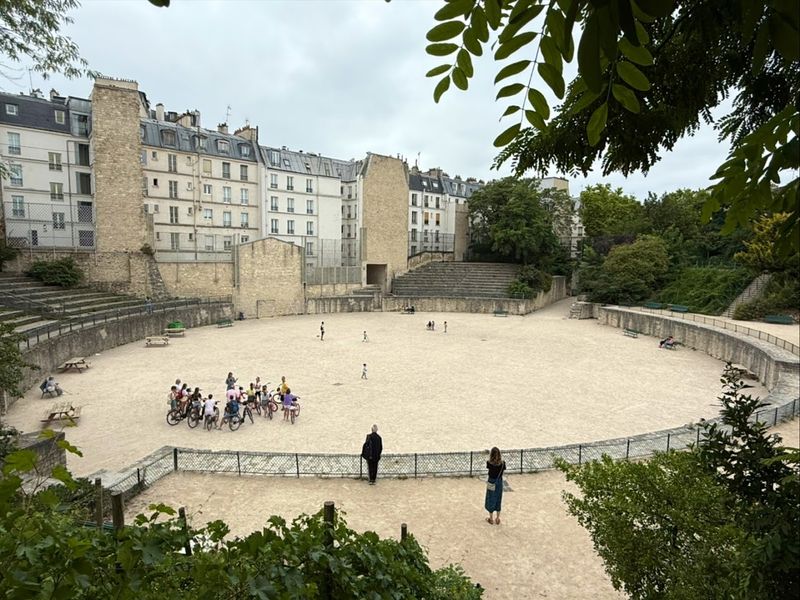
Built around the 1st century AD, this Roman amphitheater predates the city of Paris as most people know it today. The arena once seated up to 15,000 spectators who gathered to watch gladiator contests and theatrical performances staged under open skies.
For centuries, the structure was buried beneath the city and completely forgotten. It was only rediscovered in 1869 during construction work, and writer Victor Hugo was among those who campaigned loudly for its preservation.
Today, the arena sits quietly behind apartment buildings on Rue Monge in the 5th arrondissement. There are no ticket booths, no audio guides, and no queues. Neighborhood residents treat it as a backyard park, playing pétanque on the ancient arena floor while children run across stones that Roman audiences once sat on.
Entry is free, the location is marked on most maps, and yet the majority of tourists in the Latin Quarter never find it. That makes it one of Paris’s most rewarding detours.
2. The Strigoi Carvings at Saint-Étienne-du-Mont
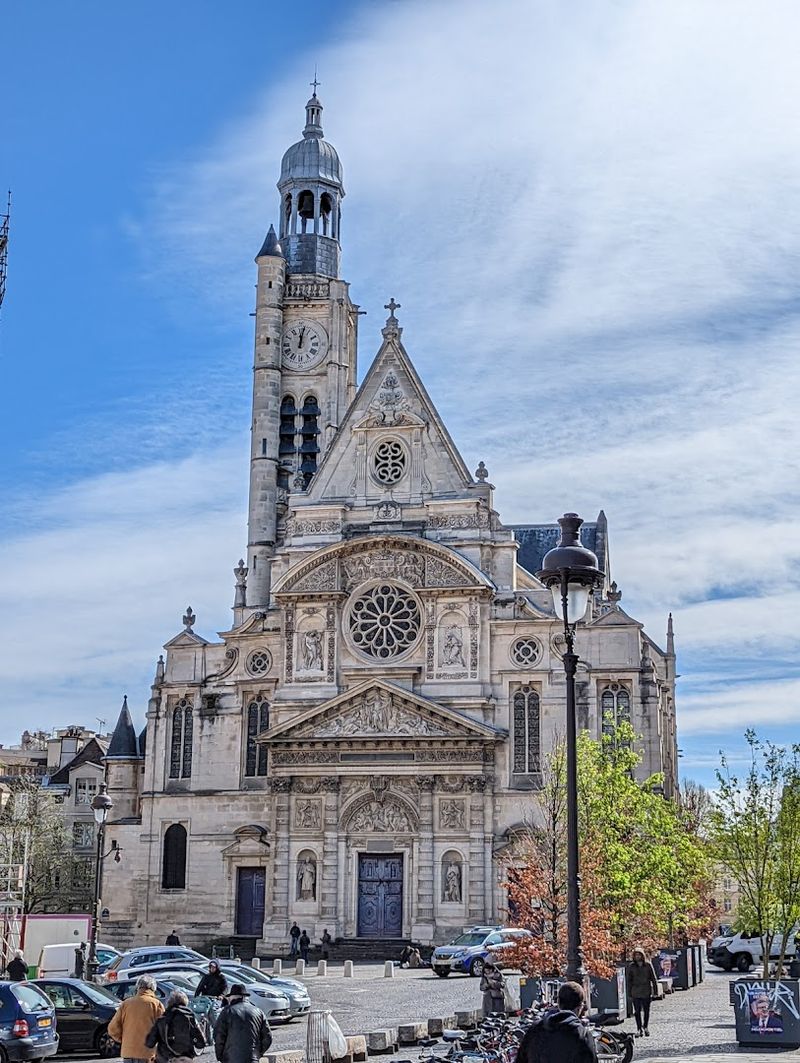
Saint-Étienne-du-Mont is already one of Paris’s most architecturally interesting churches, home to the city’s only surviving rood screen and the shrine of Saint Geneviève, patron saint of Paris. Most visitors focus on those headline features and miss what is lurking on the exterior walls.
Carved into the stonework are a series of grotesque faces, twisted expressions frozen in the medieval imagination of danger and the supernatural. These figures were placed deliberately by craftsmen who believed such carvings could repel evil forces and serve as visual warnings to anyone approaching the sacred space.
The church stands on the Left Bank near the Panthéon, which means it gets a reasonable number of visitors. The trouble is that most people walk straight through the front door without glancing at the walls around them.
Take a slow circuit of the exterior before entering. The carvings are not labeled or spotlit. They simply sit there, watching, as they have for several hundred years, waiting for someone to notice.
3. Rue des Degrés
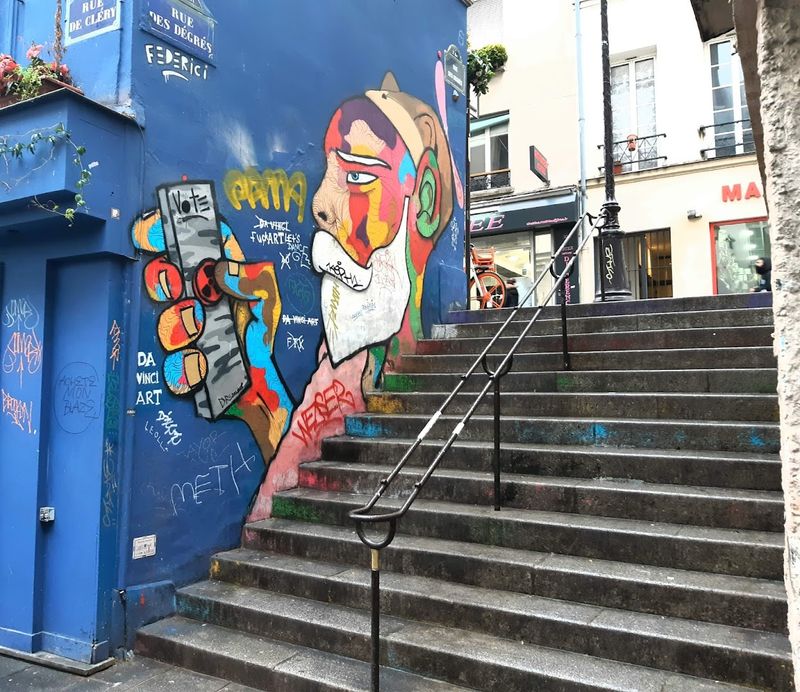
Paris has more than 6,000 named streets, but only one of them is made entirely of stairs. Rue des Degrés in the 2nd arrondissement measures just 5.75 meters long and consists of exactly 14 stone steps connecting two parallel streets.
There are no buildings with front doors on it, no sidewalks, no parking spaces, and no reason for most people to know it exists. Yet it has an official street sign, a name, and a place on the city map. It qualifies as a street purely on a technicality, and Paris seems perfectly fine with that.
The walls surrounding the steps are decorated with street art murals that change periodically, giving the tiny passage an unexpectedly colorful personality. It is genuinely one of the easiest things in Paris to photograph and one of the hardest to find if you are not specifically looking for it.
Getting there requires a short detour from the main shopping streets near the Bonne-Nouvelle metro station. The reward is a quirky five-second street that somehow manages to be entirely unforgettable.
4. The Hidden Sundial of Saint-Sulpice Church
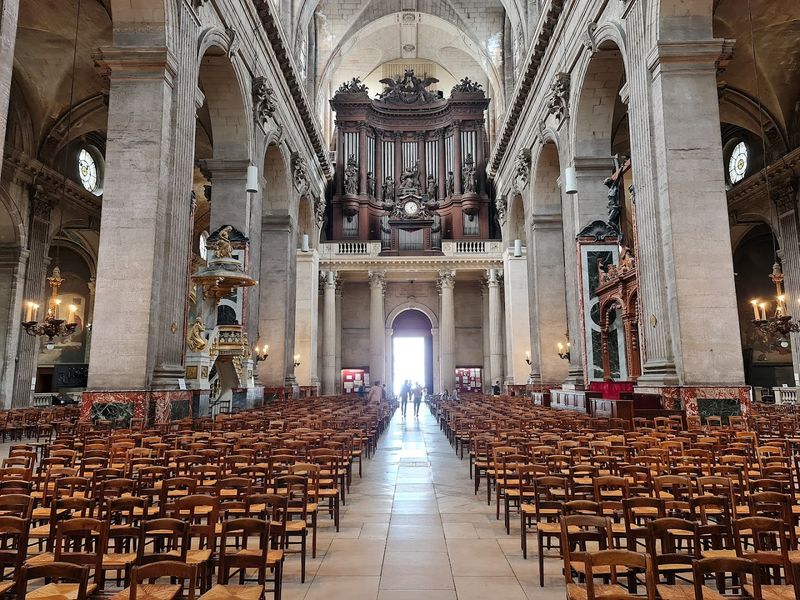
Fans of a certain bestselling novel have been convinced for years that the brass line crossing the floor of Saint-Sulpice is a Pagan symbol or a secret Masonic marker. Church officials have actually posted notices near the feature politely but firmly correcting that claim.
The line is a gnomon, a scientific instrument installed in the 18th century to track the position of the sun throughout the year. It connects a small hole in a south-facing window to a white marble obelisk at the far end of the transept. When sunlight passes through the hole and strikes the line, it tells astronomers the precise date of the spring equinox, which is used to calculate the date of Easter.
It is one of the most sophisticated astronomical instruments ever built inside a place of worship, and it still works exactly as designed.
Saint-Sulpice is a few blocks from the Luxembourg Gardens and open daily. The gnomon is visible from the main floor, but most visitors walk straight past it without a second glance.
5. The Covered Passages of Galerie Vivienne
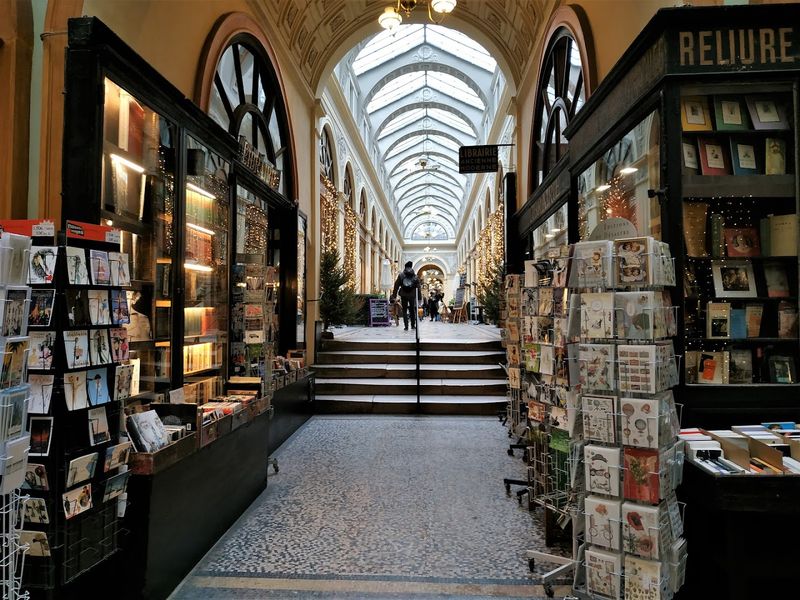
Before department stores existed, Parisians shopped in covered passages. At their peak in the early 19th century, the city had more than 150 of these glass-roofed arcades. Today, fewer than 20 survive, and Galerie Vivienne is widely considered the most beautiful of them all.
Built in 1823, it runs between Rue Vivienne and Rue des Petits-Champs near the Palais Royal. The floor is covered in intricate mosaic tiling. The ceiling is a series of graceful glass arches. The shops inside include independent bookstores, antique dealers, and a well-regarded tea room that has occupied its corner for decades.
What makes Galerie Vivienne genuinely special is that it has not been turned into a shopping mall. The tenants are individual, the atmosphere is calm, and the architecture has been carefully restored without being sanitized into blandness.
Most tourists visiting the nearby Palais Royal never make the short detour to find it. That oversight means Galerie Vivienne remains exactly the kind of place Paris should have more of: beautiful, unhurried, and almost entirely to yourself.
6. The Last Vineyard of Montmartre
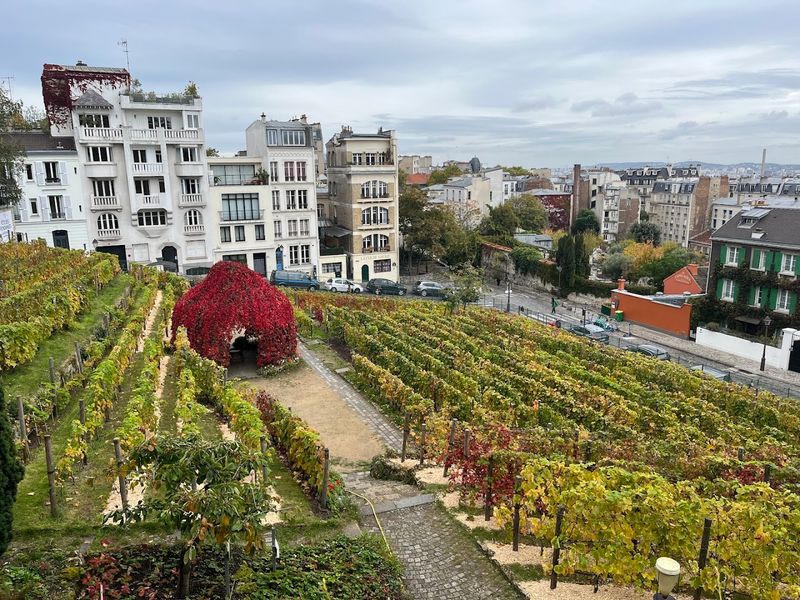
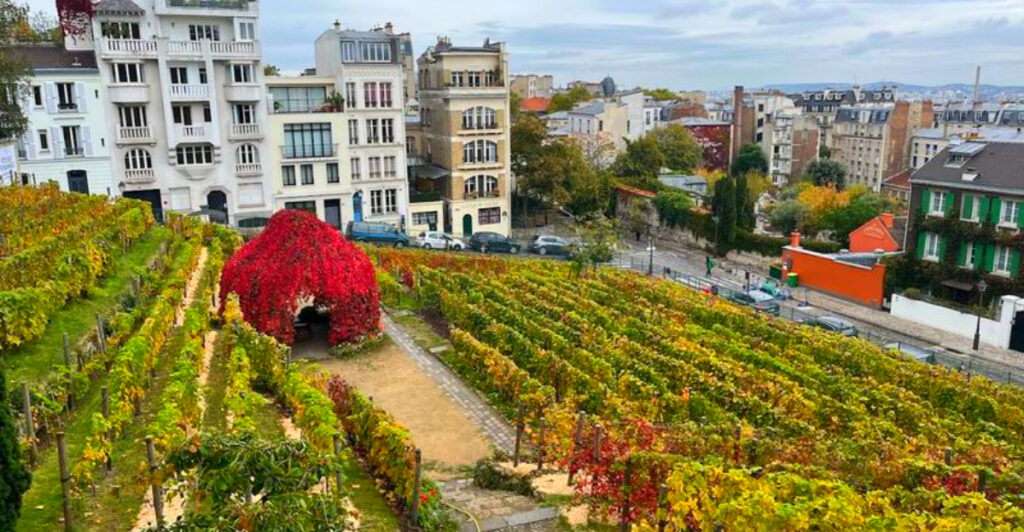
Montmartre has a reputation for artists, steep streets, and the white domes of Sacré-Cœur. What most visitors do not expect to find on that famous hill is a functioning vineyard that has been producing wine since 1933.
Clos Montmartre sits on the corner of Rue des Saules and Rue Saint-Vincent, covering just over 1,500 square meters of terraced hillside. The vineyard was planted specifically to prevent real estate development from taking over one of the last green spaces on the hill.
Each October, the neighborhood holds the Fête des Vendanges de Montmartre, a harvest festival that draws locals together for several days of food markets, music, and the ceremonial gathering of grapes. The wine produced is bottled and sold at auction, with proceeds going to local charities.
The vineyard is visible through its fence year-round and is free to admire from the street. Most tourists visiting Sacré-Cœur walk within two blocks of it without ever knowing it is there, which is a genuinely impressive oversight given that it is a vineyard in the middle of a city.
7. The Medieval Wall on Rue Clovis
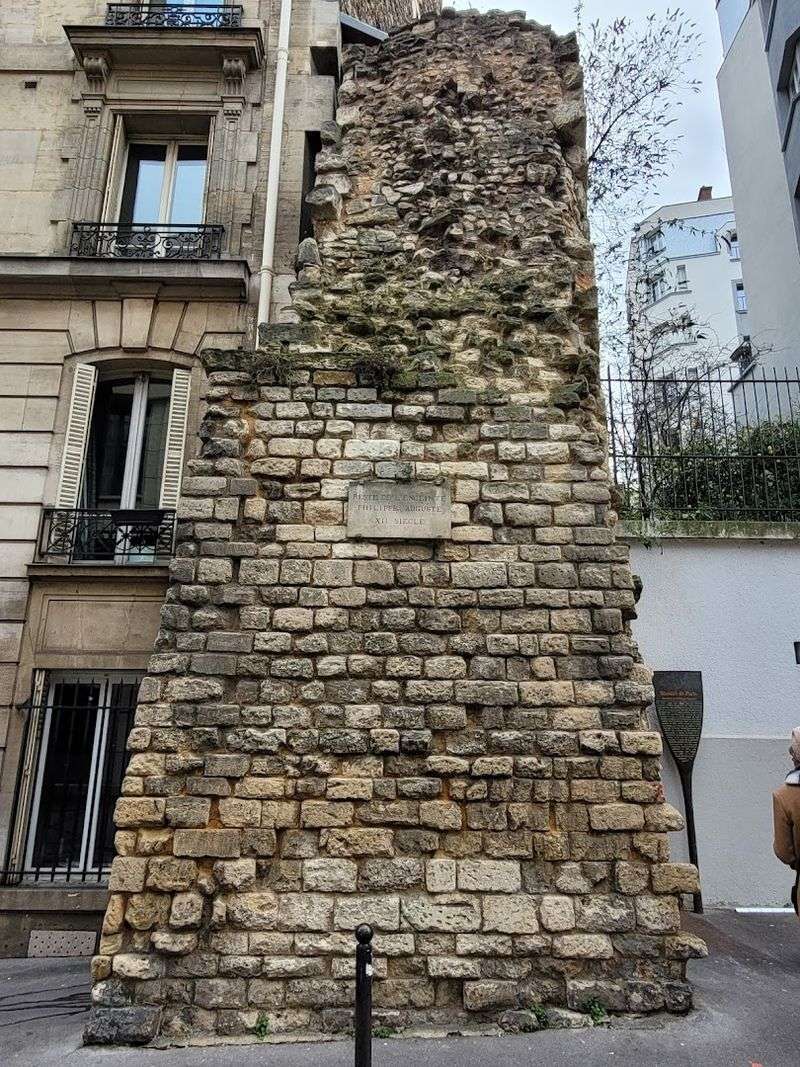
Around the year 1190, King Philip II of France ordered a defensive wall built around Paris to protect the city while he was away on a crusade. The wall eventually stretched for nearly 2.5 kilometers and included towers, gates, and a moat. Most of it has long since been demolished or absorbed into later construction.
One of the best-preserved sections survives on Rue Clovis in the 5th arrondissement, tucked between modern apartment buildings and a school. The original limestone blocks rise several meters high and are clearly visible from the street without any barrier between the visitor and the stones.
There is no entrance fee, no museum attached, and no gift shop. A small information plaque explains the history, but otherwise the wall simply exists as a quiet leftover from 12th-century Paris, holding its ground between a parked scooter and a recycling bin.
Thousands of people walk or cycle past this section of wall every week without registering what they are looking at. A two-minute stop to read the plaque puts roughly 800 years of Parisian history into sharp and unexpected focus.
8. Square du Vert-Galant
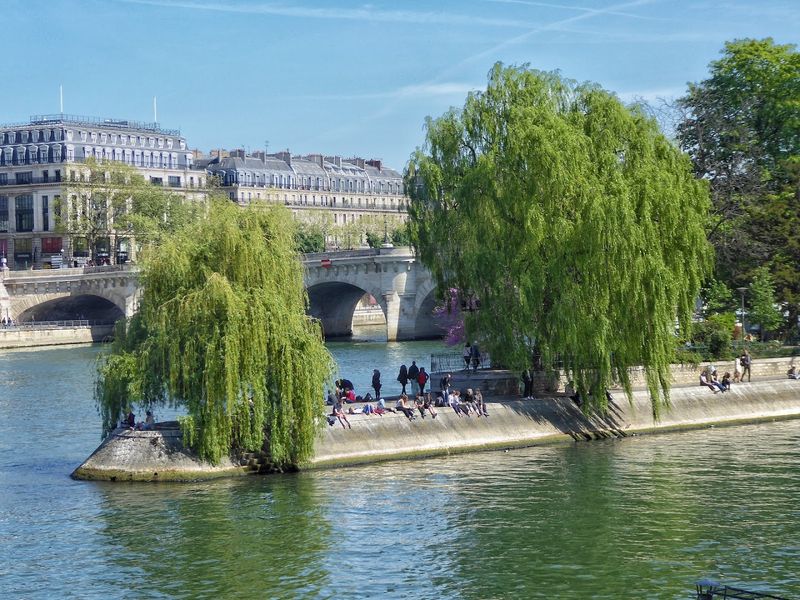
At the very western tip of the Île de la Cité, below the Pont Neuf, a small triangular park juts out into the Seine like the prow of a ship. Square du Vert-Galant sits below street level, which is part of why so many visitors walk straight across the bridge above it without noticing the garden exists at all.
The park is named after King Henry IV, whose statue stands on the bridge directly overhead. Vert-Galant was a nickname that referred to the king’s well-documented enthusiasm for romantic pursuits, which feels like a cheerful detail for a garden this peaceful.
From inside the square, the views of the Seine are unobstructed in both directions. Tour boats pass at eye level. The stone embankment along the water’s edge is a favorite spot for locals to sit and read on warmer days.
Access is through a set of stairs descending from the Pont Neuf. The park is free, small enough to explore in ten minutes, and consistently underused given how centrally located it actually is.
9. Musée de la Vie Romantique
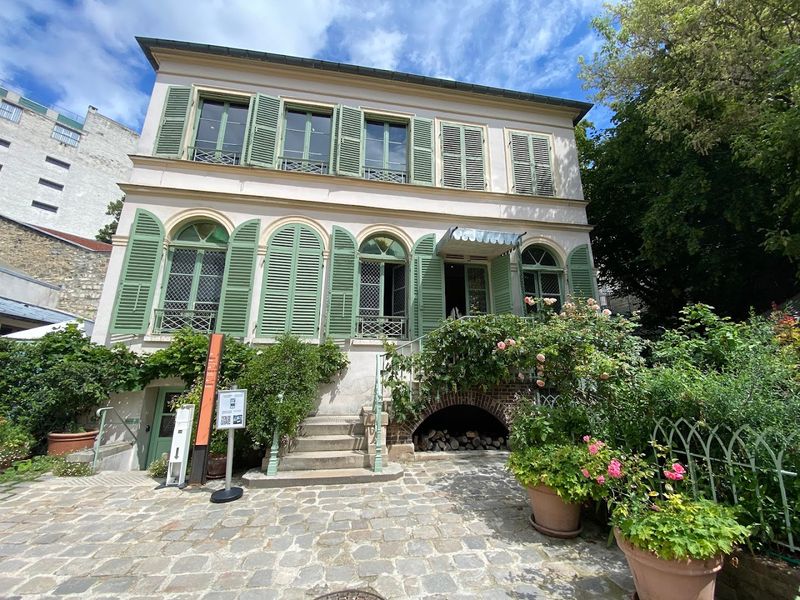
A cobblestone alley off Rue Chaptal in the 9th arrondissement leads to a courtyard that feels completely disconnected from the city around it. At the end of that courtyard stands a two-story Italianate house that served as the home and studio of Dutch-born painter Ary Scheffer from 1830 until 1858.
Scheffer hosted some of the most celebrated figures of the Romantic era here, including Frédéric Chopin, Franz Liszt, and writer George Sand. The museum now dedicated to his memory displays Sand’s jewelry, her personal writing materials, and a collection of portraits and drawings from the period.
Permanent exhibitions are free to enter, which makes the consistent lack of crowds even more surprising. A rotating program of temporary exhibitions covers themes from 19th-century French culture and art.
The garden café operates seasonally and is one of the more pleasant spots in Paris for a quiet break between sightseeing. The whole property has the unhurried quality of a house that was never really converted into a museum and simply forgot to become one.
10. La Campagne à Paris
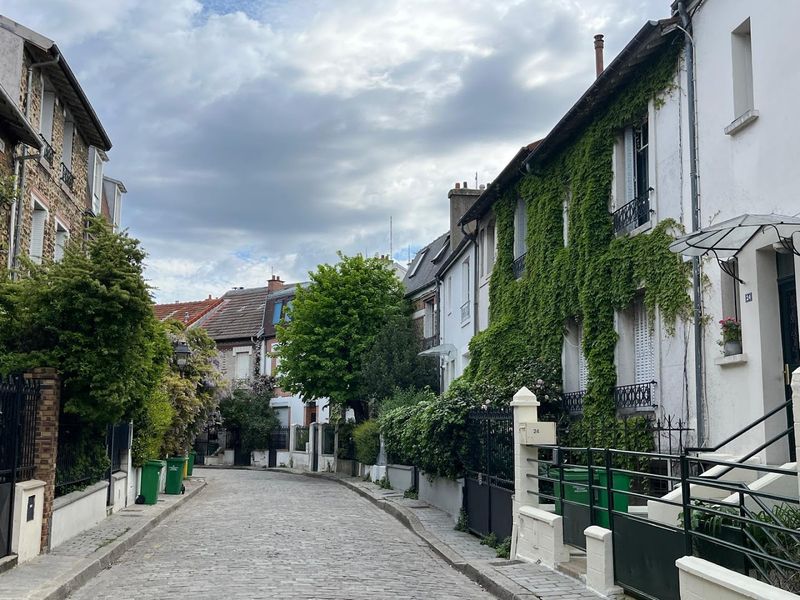
Nobody expects to turn a corner in Paris and find themselves on a lane that looks borrowed from a rural English village. La Campagne à Paris is a small residential neighborhood in the 20th arrondissement built between 1907 and 1926 as affordable housing for working-class families.
The development features detached cottages, small front gardens, flower boxes on windowsills, and narrow tree-lined streets that have no traffic to speak of. The whole area covers just a few blocks, but the contrast with the surrounding urban fabric of eastern Paris is striking enough to stop first-time visitors in their tracks.
Each house has its own character. Some are painted in bright colors, others are covered in climbing plants, and a few have been extended upward by owners who clearly ran out of horizontal space. The neighborhood is still entirely residential, so there are no cafés or shops inside the enclave itself.
Getting there requires a short walk from the Faidherbe-Chaligny or Rue des Boulets metro stations. Most tourists heading to Père Lachaise cemetery pass within a kilometer of it and never know this pocket of unexpected greenery exists.
11. The Coulée Verte René-Dumont
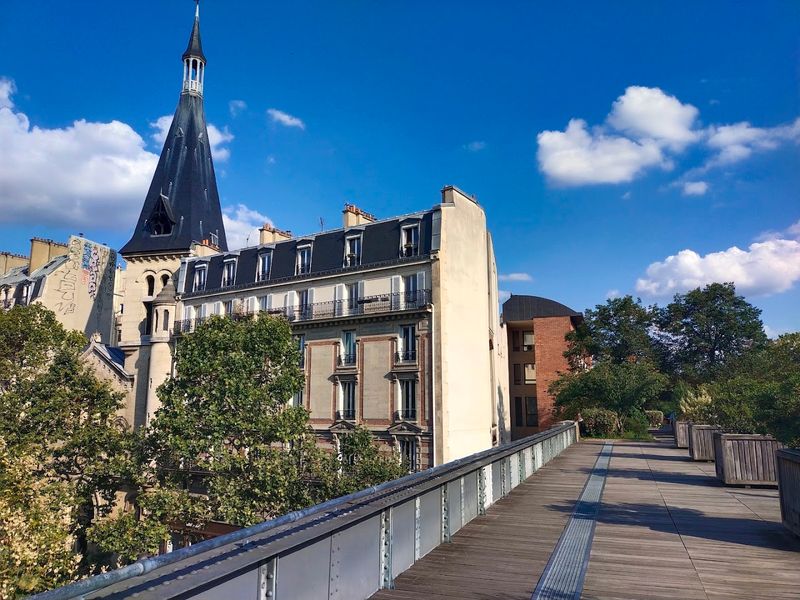
New York’s High Line opened in 2009 and became internationally famous almost immediately. What fewer people know is that Paris had already done the same thing fifteen years earlier. The Coulée Verte René-Dumont opened in 1994, built on top of a disused 19th-century railway viaduct in the 12th arrondissement.
The elevated section stretches for about 4.5 kilometers from the Bastille opera house eastward toward the Bois de Vincennes. The path runs through planted gardens, under stone bridges, and past the arched brick workshops below the viaduct that now house artisan studios and small shops.
At ground level, the route continues as a landscaped green corridor before eventually reaching the edge of the Bois de Vincennes. The full walk takes around two hours at a relaxed pace.
The Coulée Verte is well known among Parisian joggers and cyclists, but it rarely appears on international tourist itineraries. That means the path is genuinely quiet on most days, offering a completely different perspective of the city from above the rooftops without requiring a ticket, a reservation, or a map that takes twenty minutes to fold back correctly.
12. The Medallions of the Arago Line
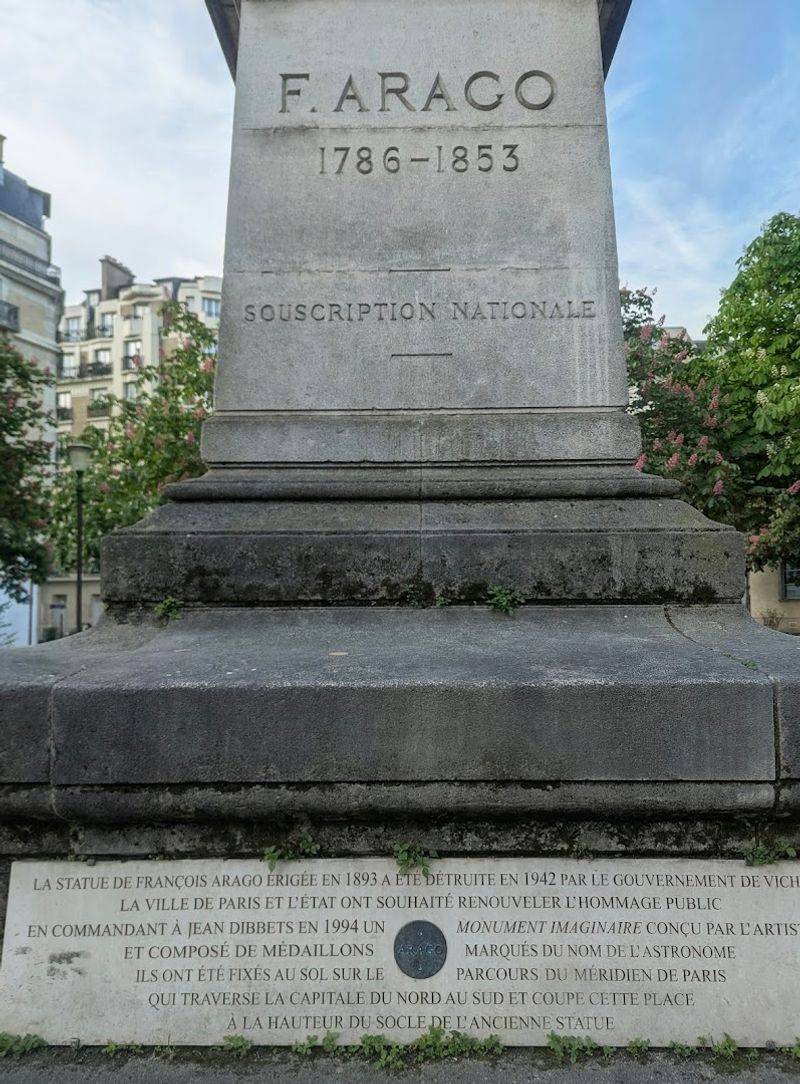
Scattered across the pavements, plazas, and parks of Paris are 135 small bronze discs, each engraved with the name ARAGO and compass directions. Most pedestrians step over them dozens of times without ever noticing they exist.
The medallions were installed in 1994 by Dutch artist Jan Dibbets as a tribute to French astronomer François Arago. They mark the route of the Paris Meridian, the longitudinal line that France used as its prime meridian before the international community agreed to use Greenwich in 1884.
France, for the record, did not immediately accept that decision and continued using the Paris Meridian on its own maps for several more years. The medallions commemorate both Arago’s scientific contributions and that particular chapter of geographic stubbornness.
Following the trail of medallions from north to south takes you across much of central Paris, through neighborhoods like Montmartre, the 1st arrondissement, and into the 14th. It functions as a self-guided walking tour that costs nothing and rewards anyone paying close enough attention to the ground beneath their feet.
13. Rue Crémieux
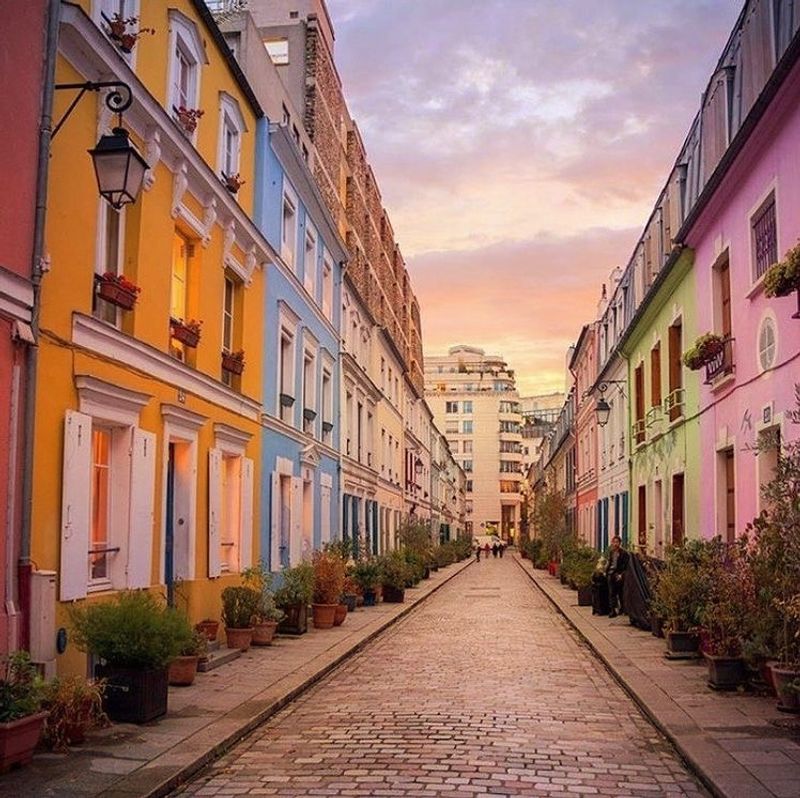
Tucked behind the Gare de Lyon in the 12th arrondissement, Rue Crémieux is one of the most visually distinctive streets in Paris. Each house along this short pedestrian lane is painted a different pastel color, ranging from mint green to coral pink to butter yellow, creating a palette that looks more like a Mediterranean island than a French capital.
The street was built in the 1880s as modest workers’ housing. The colorful paint schemes were added gradually over the decades by residents who apparently decided that cream-colored Haussmann facades were not for them.
Social media has made Rue Crémieux more recognizable than it once was, but it still does not appear on most standard tourist maps or guidebook itineraries. Many visitors to the nearby Gare de Lyon never think to walk the three minutes it takes to find it.
The residents have asked visitors to be considerate about noise and photography out of respect for the people who actually live there. Arriving early on a weekday morning gives the best chance to appreciate the street at its quietest, before the afternoon photographers set up their tripods on the cobblestones.
Share this story