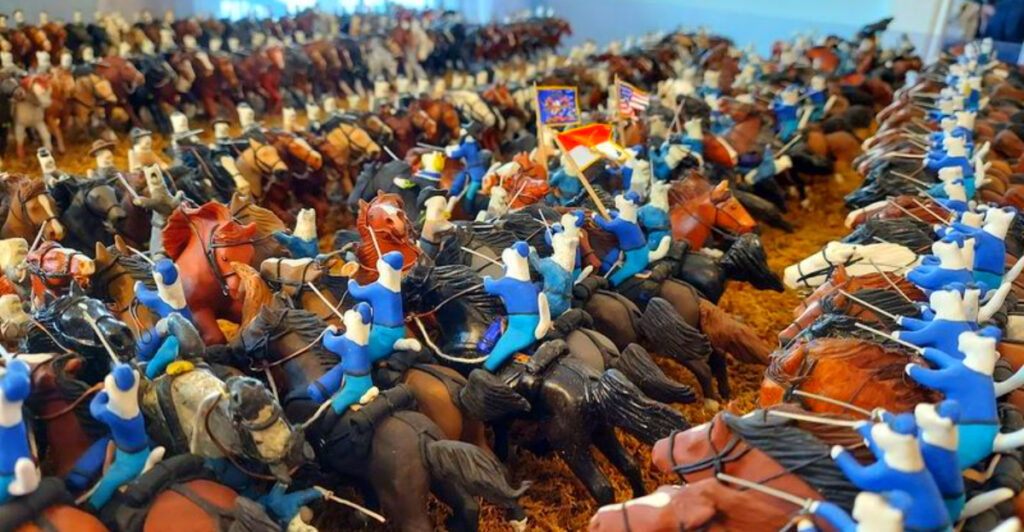
Gettysburg is filled with Civil War attractions, but few are as unexpected as this museum dedicated to history told through hand-sculpted cats. Inside, thousands of miniature feline figures recreate real battles, historical events, and notable individuals with a level of detail that keeps visitors studying each scene far longer than they planned.
The museum is the work of two sisters who spent nearly 30 years building intricate dioramas that blend historical research with creativity and craftsmanship. Every figure, uniform, and battlefield element is carefully designed to reflect actual people and events from the Civil War era.
What could have been a novelty attraction has become one of Gettysburg’s most distinctive experiences. History enthusiasts, families, and cat lovers alike find themselves drawn into the stories behind the displays.
Keep reading to discover how this unusual museum became one of the town’s most talked-about attractions.
A Historic Building With a Story of Its Own
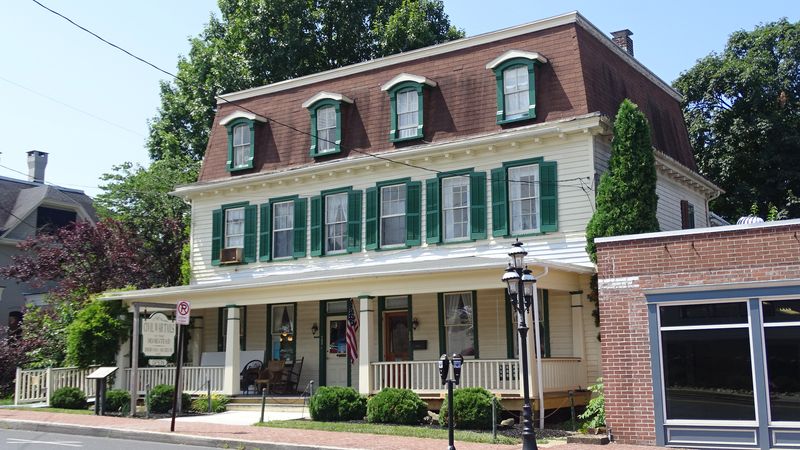
The building at 785 Baltimore St, Gettysburg, PA 17325 carries its own remarkable history before you even walk through the door. It was originally part of The National Homestead, a school established to care for orphans of Civil War soldiers, which means the walls themselves have a direct connection to the very conflict depicted inside.
That layered history gives the museum an atmosphere that purpose-built tourist attractions simply cannot replicate. You are standing in a space that sheltered children whose fathers never came home, and now it houses thousands of miniature tributes to the soldiers those children lost.
The colonial architecture is well-preserved, and the building sits just two properties away from the Gettysburg National Cemetery, making it one of the most historically loaded addresses in the entire town. Street parking is available out front, and additional parking can be found across the street near the bus tour building.
The Twin Sisters Behind Every Cat Soldier
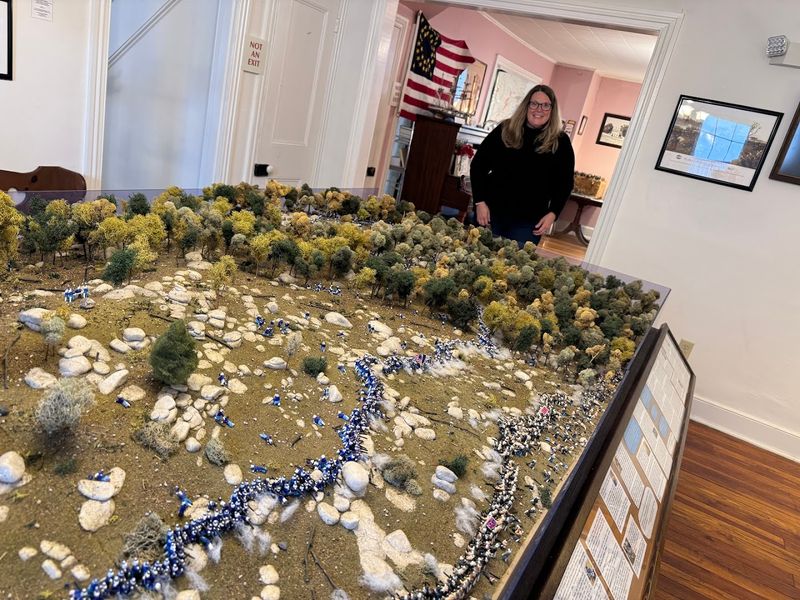
Rebecca and Ruth Brown began sculpting cat soldiers as children, which means this museum is the result of a lifelong creative obsession that started long before most people choose a career path. Rebecca handles the Confederate side of the conflict, while Ruth builds the Union forces, a division that feels both practical and poetic.
The sisters started making Civil War cats in 1995, and their combined catalog has now crossed 10,000 individual figures. Each cat takes a significant amount of time to complete, from shaping the clay body to painting historically accurate details like facial hair, rank insignia, and battle wounds.
What makes a visit truly special is that one or both sisters are often present in the museum, ready to walk you through the dioramas personally. That kind of direct access to the creators transforms a casual visit into something closer to a private history lesson you will not forget anytime soon.
Why Cats Were the Perfect Choice for This Story
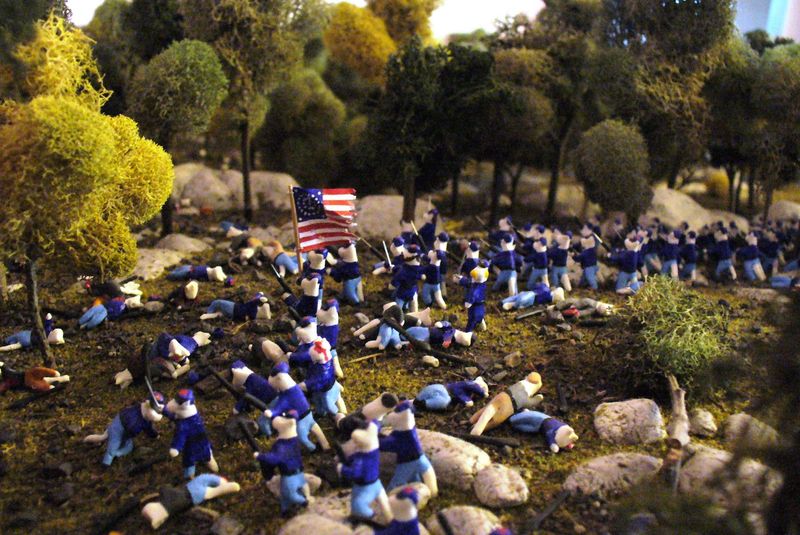
Choosing cats as the stand-ins for human soldiers was not a random creative decision. Rebecca and Ruth deliberately selected cats to make Civil War history feel approachable and engaging, especially for younger visitors, without reducing the gravity of what those soldiers actually experienced.
The approach works remarkably well. Something about seeing a tiny uniformed cat standing at attention on a miniature hilltop makes you lean in closer rather than skim past.
The whimsy draws you in, and then the historical detail keeps you there far longer than you planned.
Crucially, the one-to-one ratio is maintained throughout every diorama, meaning each cat represents exactly one real soldier. That commitment to accuracy prevents the concept from ever feeling like a gimmick.
By the time you have spent twenty minutes studying a single scene, you realize the cats are not softening history at all, they are actually making it hit harder in a completely unexpected way.
The Obsessive Level of Detail in Every Diorama
Every diorama in the museum is built at 1/32 scale, and the research behind each one is genuinely staggering. The sisters verify the placement of individual rocks and boulders using historical photographs and battlefield surveys, so the terrain you see in the display matches what soldiers actually encountered.
Uniforms are researched down to the correct buttons and insignia for each regiment. Weaponry is period-accurate.
Architectural elements like fences, walls, and fortifications are reconstructed based on documented sources. Even the facial expressions on individual cats are considered, with some figures showing visible signs of the strain of combat.
Visitors can view each scene from a traditional bird’s-eye perspective or crouch down to eye level, which gives you a soldier’s-ground-level view of the same terrain. That dual perspective option is a small but brilliant design choice that completely changes how you interpret each scene, and it is one of those details you keep thinking about long after you leave.
Fort Sumter and the Opening Shots of the War
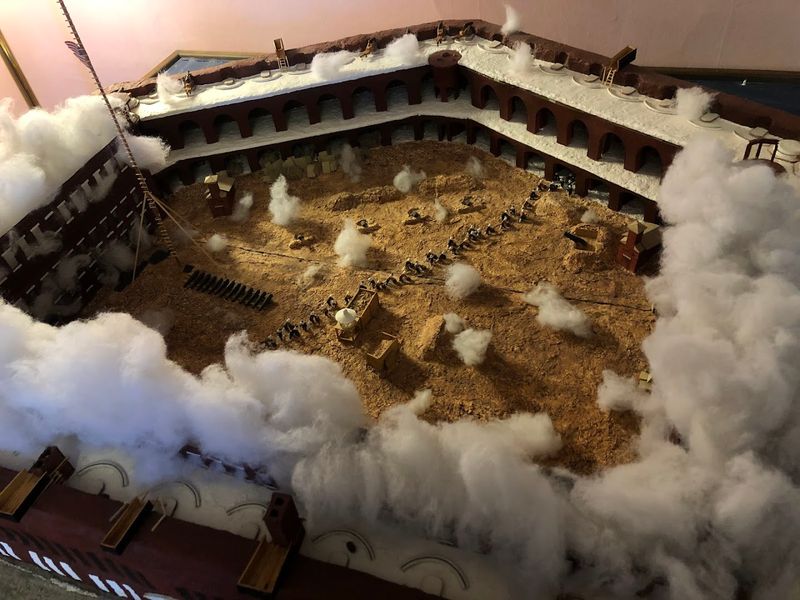
The Fort Sumter diorama marks the beginning of the story the museum tells, covering the April 1861 bombardment that opened the Civil War. Seeing the opening conflict rendered in miniature gives visitors an immediate sense of how the broader narrative unfolds across the rest of the exhibits.
The detail in this scene sets the tone for everything else in the museum. The fort walls, the cannon placements, and the positioning of the defending cat soldiers all reflect documented historical records rather than artistic guesswork.
It is the kind of display that makes you want to pull out your phone and cross-reference what you are seeing with a history book.
Starting the museum’s journey with Fort Sumter also gives first-time visitors a helpful chronological anchor. Even if your Civil War knowledge is limited, the progression from this opening scene through to the later Gettysburg battles creates a narrative thread that makes the whole experience feel cohesive and genuinely educational.
The Battle Between the Ironclads Goes Underwater
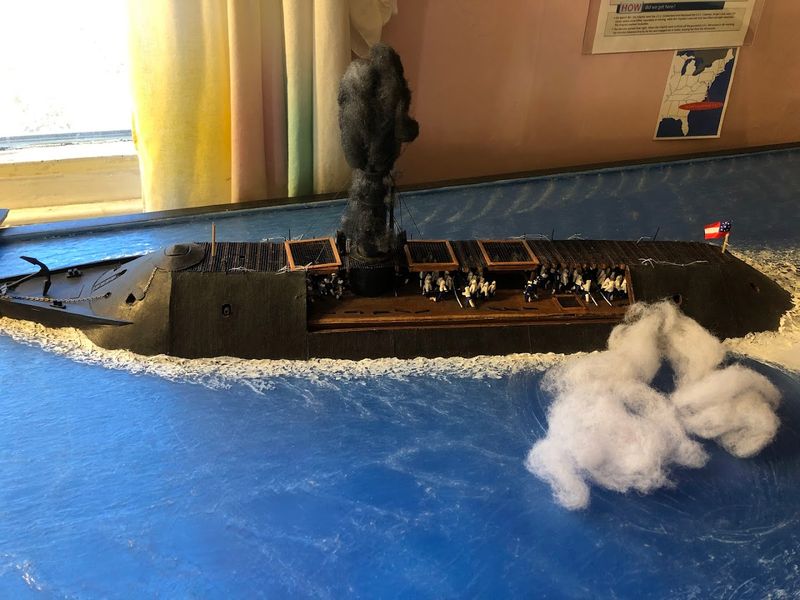
One of the most visually unexpected exhibits in the museum is the Battle Between the Ironclads, which depicts the famous clash between the Monitor and the Virginia. What makes this particular diorama stand out is that it does not stop at the waterline.
The display includes a cross-section view below the surface, showing cat sailors at their battle stations inside the ship hulls. That below-deck perspective is something you genuinely do not expect, and it draws a crowd of people leaning over the display for a much longer look than they anticipated.
The engineering required to create a convincing underwater cross-section at this scale, complete with accurate interior details and correctly uniformed cat crew members, reflects the kind of creative problem-solving that defines everything Rebecca and Ruth have built. This is not a display you glance at and move on from, it is a display that makes you ask questions, and fortunately the answers are usually standing right next to you.
Little Round Top: The Diorama That Took Decades
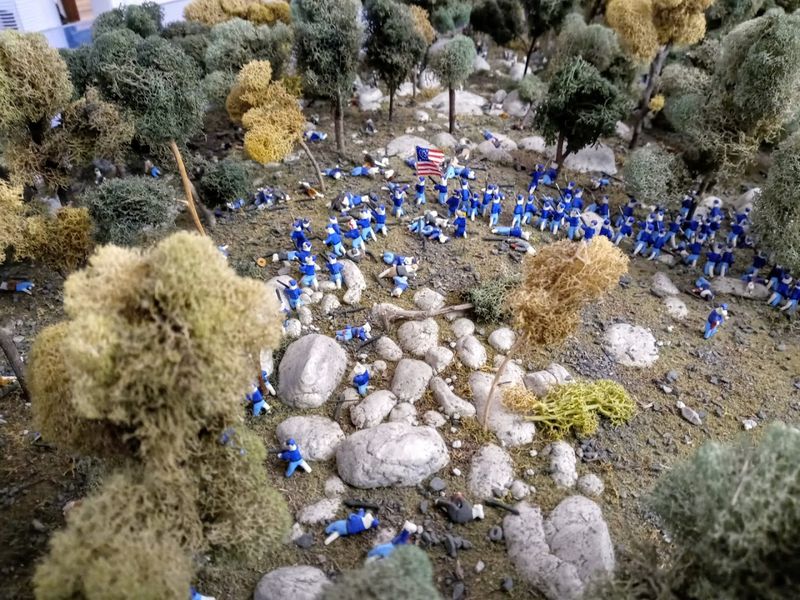
The Little Round Top diorama is the centerpiece of the museum in terms of sheer scale and effort. Completed in February 2024, it features more than 2,600 hand-sculpted individual rocks and will eventually include over 5,000 cat figures when fully finished.
The 20th Maine regiment’s famous defensive stand on this rocky hillside is one of the most studied moments of the entire Civil War, and seeing it rendered at this level of precision is genuinely moving. One visitor who mentioned an ancestor who served as an officer in the 20th Maine found that Rebecca could locate exactly where that specific individual was positioned within the diorama, a detail that speaks to the extraordinary depth of the research behind every figure.
The rocky terrain of Little Round Top is notoriously difficult to recreate convincingly at any scale, which makes the hand-sculpted boulders and uneven ground all the more impressive. This section of the museum alone justifies the admission price many times over.
The Angle and Pickett’s Charge in Miniature
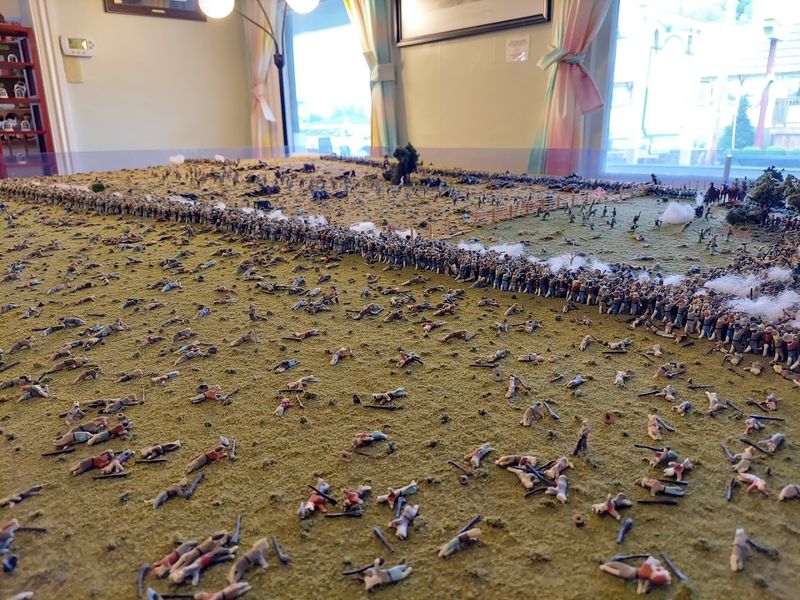
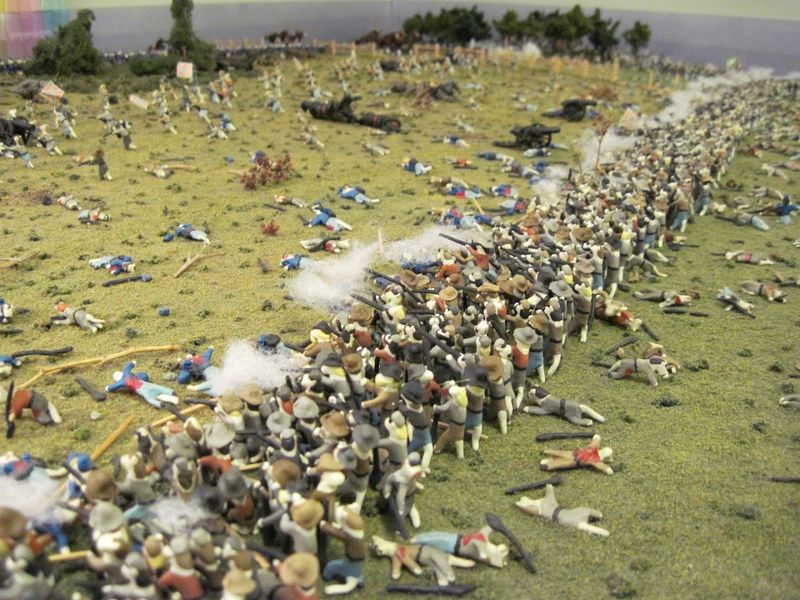
The Angle diorama captures the climactic moment of Pickett’s Charge on July 3, 1863, the point where Confederate forces briefly breached the Union line before being pushed back in what many historians consider the turning point of the entire war. At 1/32 scale, the sheer number of figures advancing across open ground creates a visual impact that is hard to prepare for.
Past visitors have described the Pickett’s Charge display as feeling like a photograph of the actual event, which is a remarkable compliment given that every single element is hand-built from scratch. The open ground, the stone wall, the convergence of thousands of tiny cat soldiers from multiple directions, it all comes together into a scene that communicates the chaos and scale of that day far more effectively than a flat map ever could.
Seeing the physical distance those soldiers crossed under fire, represented here by actual three-dimensional space, gives you a visceral understanding of what happened at The Angle that reading about it simply cannot match.
East Cavalry Field and the Overlooked Battle
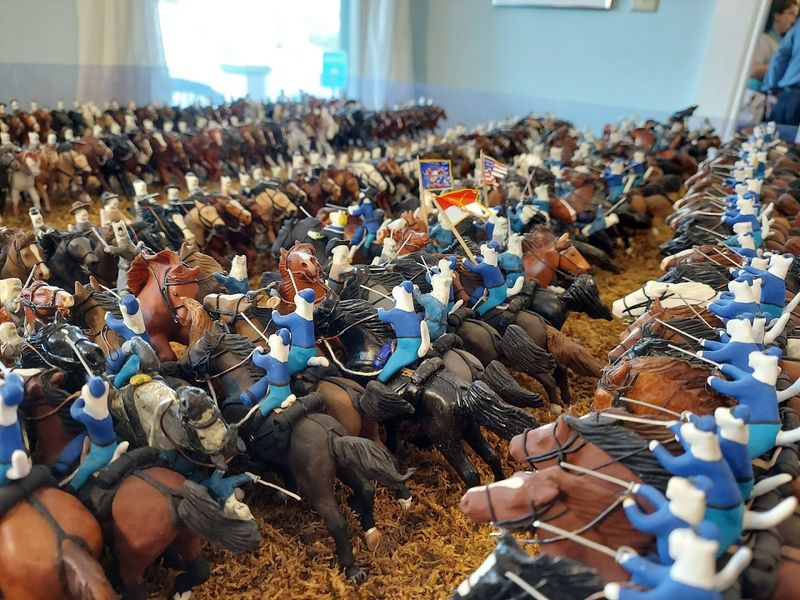
East Cavalry Field is one of the lesser-known engagements of the Battle of Gettysburg, fought on the same day as Pickett’s Charge roughly three miles east of the main battlefield. The museum includes a dedicated diorama for this often-overlooked clash, which pitted Confederate cavalry under J.E.B.
Stuart against Union horsemen commanded by George Armstrong Custer.
Including East Cavalry Field in the collection reflects the sisters’ commitment to telling a complete story rather than focusing only on the headline moments that most people already know. That editorial choice makes the museum genuinely valuable for serious history enthusiasts who have visited Gettysburg multiple times and want a fresh angle on familiar events.
The cavalry figures in this diorama present their own sculptural challenges, with horses and riders requiring different construction techniques than the infantry figures elsewhere in the museum. The results are impressive, and this exhibit tends to surprise visitors who arrived expecting only the famous scenes they already know from textbooks.
Samurai Cats and the Sister City Connection
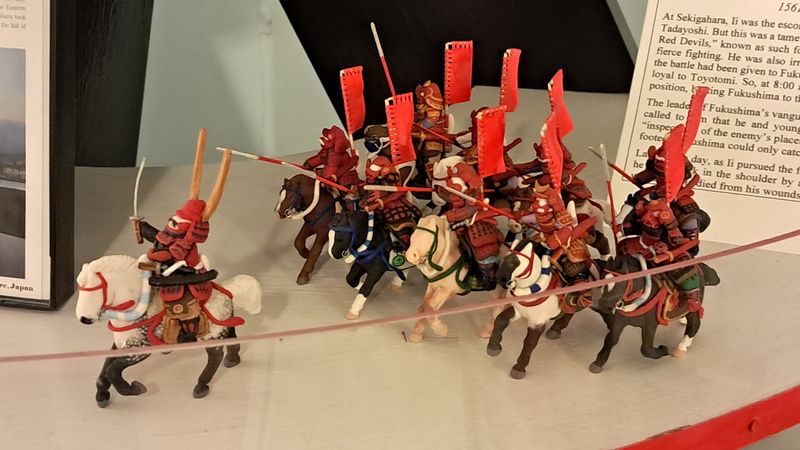
Tucked into one section of the museum is an exhibit that surprises almost everyone who encounters it: a collection of samurai cat figures depicting the Battle of Sekigahara, fought in Japan in 1600 CE. The connection comes through Gettysburg’s official sister city relationship with Sekigahara, Japan.
The historical parallel is genuinely interesting. Both battles were pivotal turning points that reshaped the political future of their respective nations, and both involved massive opposing forces converging on a single location for a decisive confrontation.
The museum explores those parallels through information panels alongside the samurai cat dioramas.
The samurai figures themselves are crafted with the same attention to detail applied to the Civil War exhibits, with period-accurate armor, weapons, and formations specific to feudal Japanese military tradition. For visitors who thought they knew exactly what to expect from this museum, the samurai room delivers a genuinely delightful curveball that makes the whole experience feel even more expansive and thoughtful than advertised.
Unbiased Storytelling That Respects Both Sides
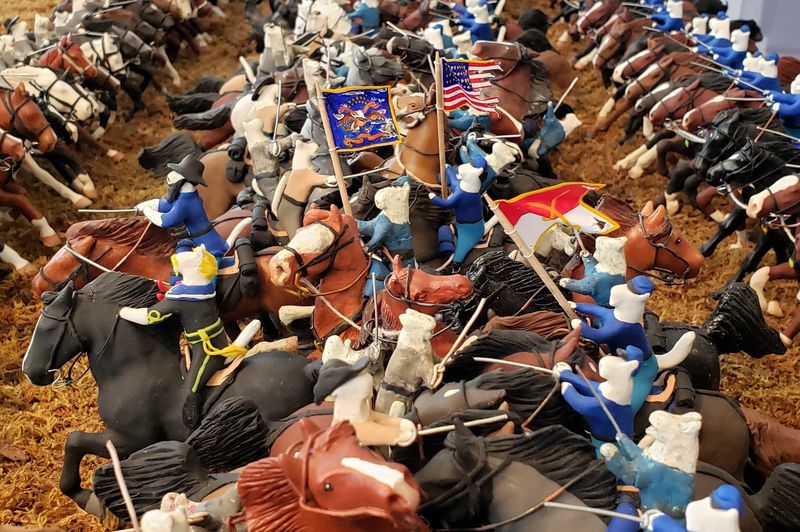
One of the museum’s most deliberate and admirable qualities is its commitment to presenting events without taking sides. Rebecca creates Confederate soldiers and Ruth makes Union forces, a physical division of labor that mirrors the museum’s broader goal of telling the story of both armies with equal care and respect.
The information panels placed alongside each diorama are carefully written to provide context without editorializing. Visitors leave with a clearer understanding of what each side was fighting for, who the individual soldiers were, and what the human cost of each engagement actually looked like at the personal level.
That balanced approach is particularly valuable for younger visitors who may be encountering these events for the first time. History taught through a lens of genuine curiosity rather than judgment tends to stick far longer, and the museum’s tone consistently reflects that philosophy.
The sisters have also published a companion book, “Civil War Tails: 8000 Cat Soldiers Tell the Panoramic Story,” for readers who want to continue the conversation at home.
Practical Tips for Planning Your Visit

The museum is open Tuesday through Saturday, with hours running from 11 AM to 8 PM on weekdays and 10 AM to 8 PM on Saturdays. Wednesday, Thursday, and Sunday are currently closed, so planning around those days will save you a wasted trip.
The phone number is 717-420-5273, and the website at civilwartails.com has current seasonal schedule updates.
Admission is $7.00 for adults and $5.00 for children aged 6 to 12, with children five and under admitted free. Photography is encouraged throughout the museum, which means you will leave with a full camera roll and a strong desire to show everyone you know.
The gift shop carries a solid selection of souvenir cat figures, postcards, plush toys, and the companion book, all reasonably priced. The sisters are happy to personalize books for visitors, which makes for an unusually personal souvenir.
The museum also earns a 4.9-star rating across more than 200 reviews, a number that reflects just how consistently this place exceeds expectations.
Share this story