 Unearth The Voyage
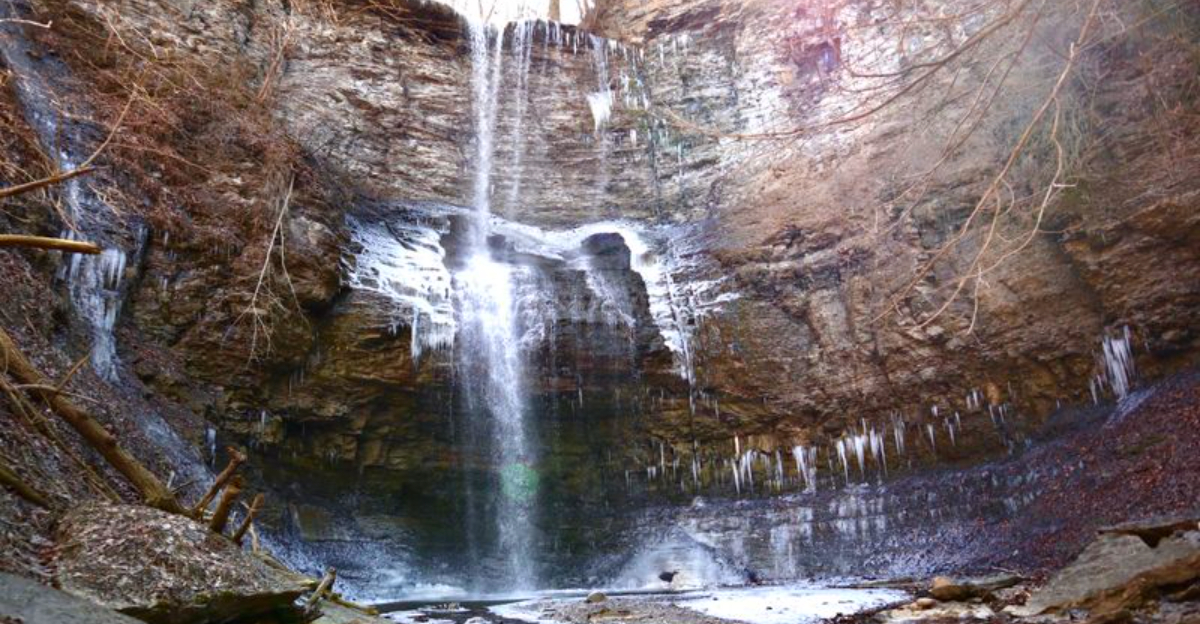
Tucked away in Franklin County, Pennsylvania, Salt Springs State Park might be small in size, but it packs in natural wonders that rival much larger destinations. From a historic bubbling salt spring to a dramatic 80-foot gorge carved by waterfalls, this hidden gem offers boardwalk trails through ancient hemlocks and fishing streams stocked with trout.
Whether you are planning a rustic camping trip or a day hike to chase waterfalls, Salt Springs delivers adventure, history, and scenery in one compact package.
1. Chase the three waterfalls in Fall Brook Gorge
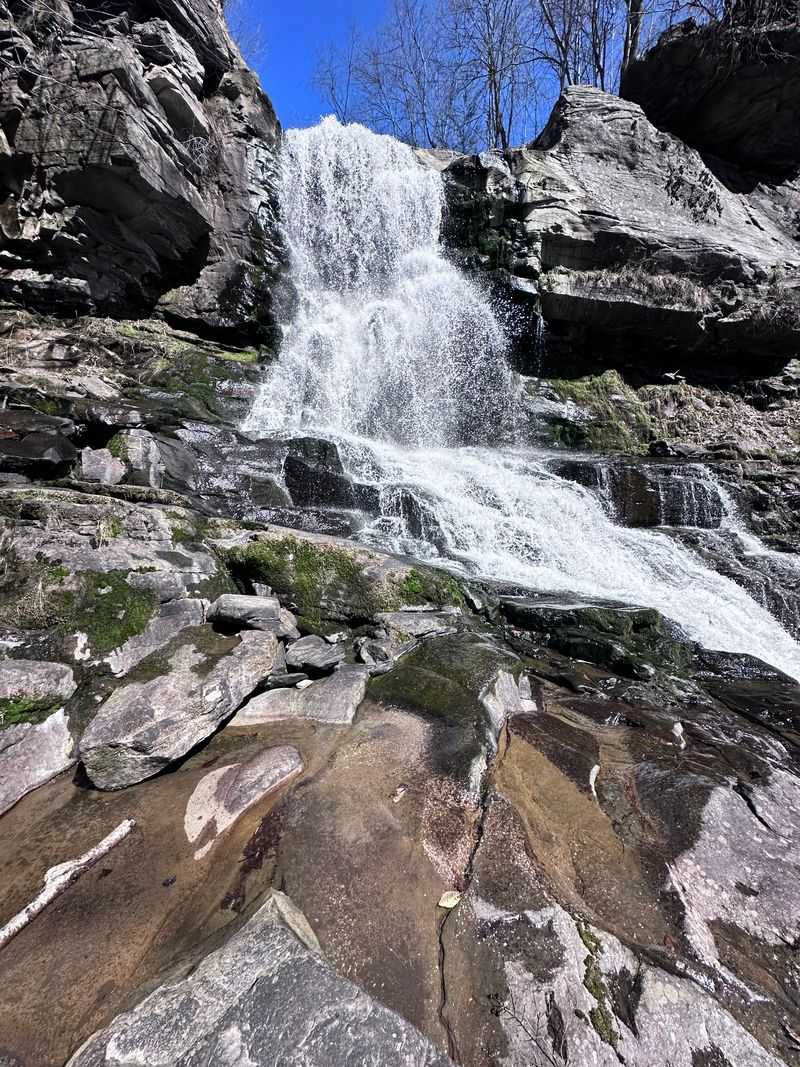
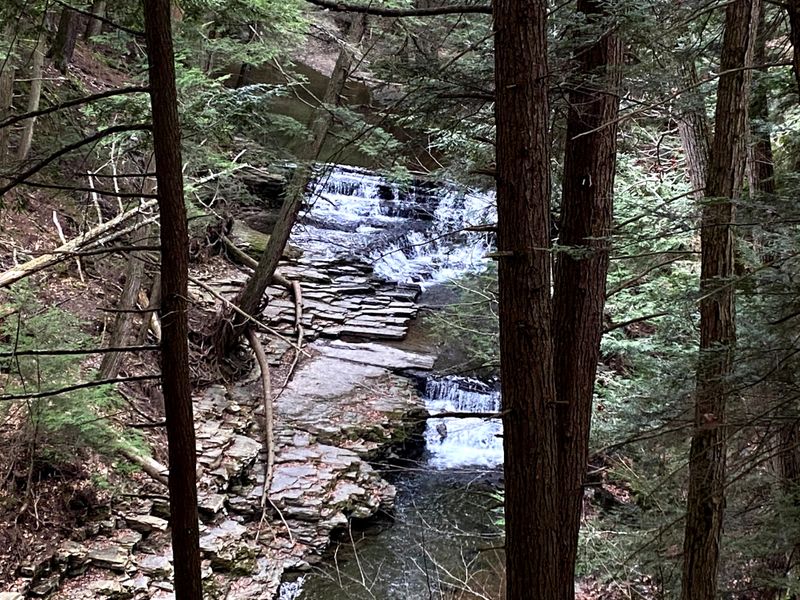
Fall Brook tumbles through a trio of waterfalls, each standing roughly ten feet tall, before joining Silver Creek on the eastern edge of the park. Watching water cascade down layered rock faces feels like stepping into a nature documentary.
The sound alone is worth the hike, with rushing water echoing off the gorge walls.
Photographers love this spot because each waterfall has its own character and lighting at different times of day. Spring runoff makes the falls especially dramatic, while autumn frames them with fiery foliage.
Bring a camera or just your phone to capture the magic.
The trail to the falls is well-marked, though some sections can be slippery near the water. Wear shoes with good grip and take your time on the rocks.
Families with older kids will find the hike manageable and rewarding.
Plan to spend at least an hour here if you want to see all three falls without rushing. Pack snacks and water, because once you start exploring, you will not want to leave.
The waterfalls are the heart of Salt Springs, and they never disappoint visitors seeking natural beauty.
2. Stand on the rim of an 80-foot-deep gorge
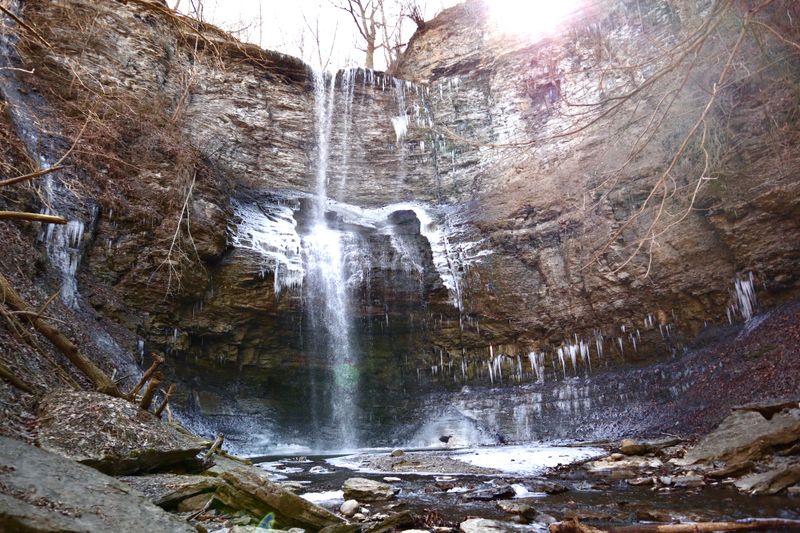
Peering into the 80-foot-deep Fall Brook gorge feels like looking back through millions of years of Earth’s history. Exposed rock layers tell stories of ancient seas, shifting continents, and slow erosion that carved this dramatic landscape.
The sheer depth of the gorge surprises first-time visitors who expect a gentler valley.
Several overlooks along the rim offer safe vantage points to take in the full scale of the gorge. You can see how the creek has sliced through bedrock over countless centuries.
Geologists and curious kids alike find the exposed strata fascinating to study.
Safety is important here, so stay behind any barriers and watch your footing near the edge. The drop is significant, and the rocks can be loose in places.
Parents should keep a close eye on younger children.
Sunrise and sunset light up the gorge walls in warm tones that make the rock layers even more visible. Bring binoculars if you want to spot birds nesting on the cliffs or examine the rock formations more closely.
Standing at the rim is a humbling reminder of nature’s power and patience.
3. Follow Hemlock Trail’s boardwalk past Penny Rock
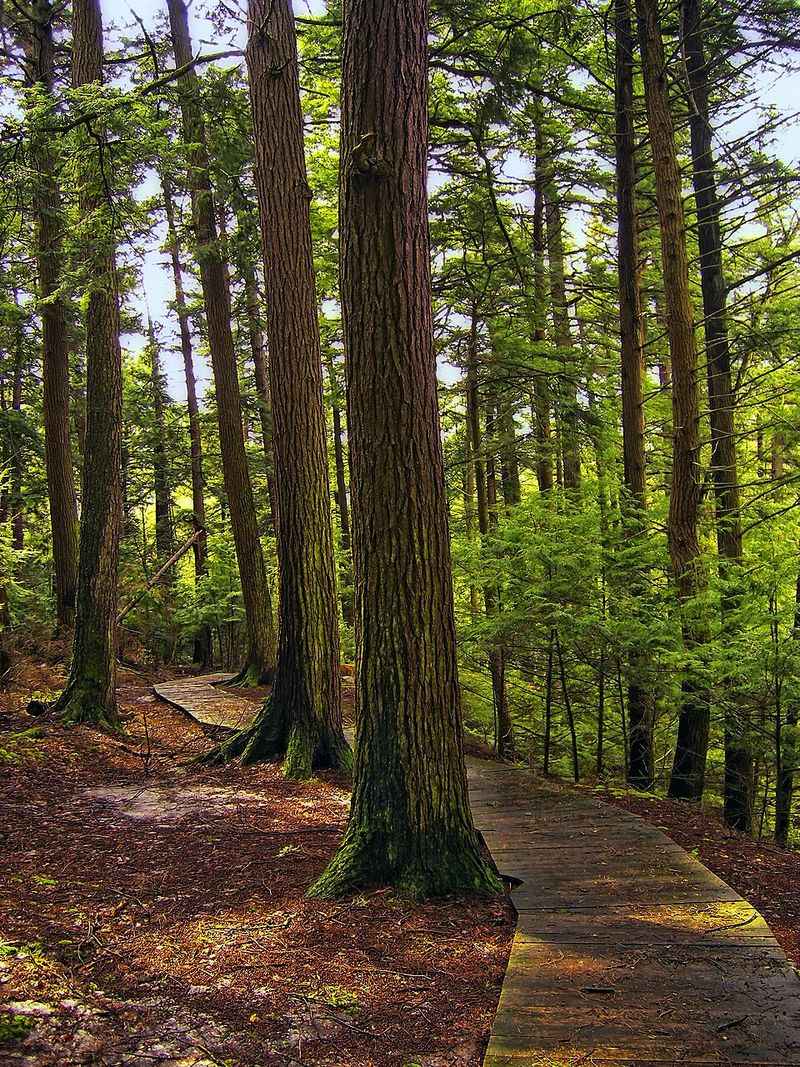
Hemlock Trail starts as a typical dirt path but transforms into something special when it enters the old-growth forest. The raised boardwalk keeps your feet dry while protecting fragile plant life and tree roots below.
Walking on wooden planks through towering hemlocks feels like entering a cathedral of green.
Penny Rock is a notable landmark along the boardwalk, a large boulder that has become a favorite photo stop. Generations of visitors have tossed pennies onto its surface for good luck.
The tradition continues today, and you might spot dozens of coins glinting in the sunlight.
Beyond Penny Rock, the boardwalk leads to a spur trail that takes you to an observation platform overlooking the falls. The platform offers a bird’s-eye view without requiring rock scrambling.
It is an ideal spot for those who want waterfall views without a strenuous hike.
The boardwalk makes this trail accessible to more people, including those with mobility challenges or families with strollers. The hemlock canopy provides natural shade even on hot summer days.
Take your time and breathe in the cool, fragrant air of the old-growth forest.
4. Take the easy Overlook Trail to a boardwalk and observation platform
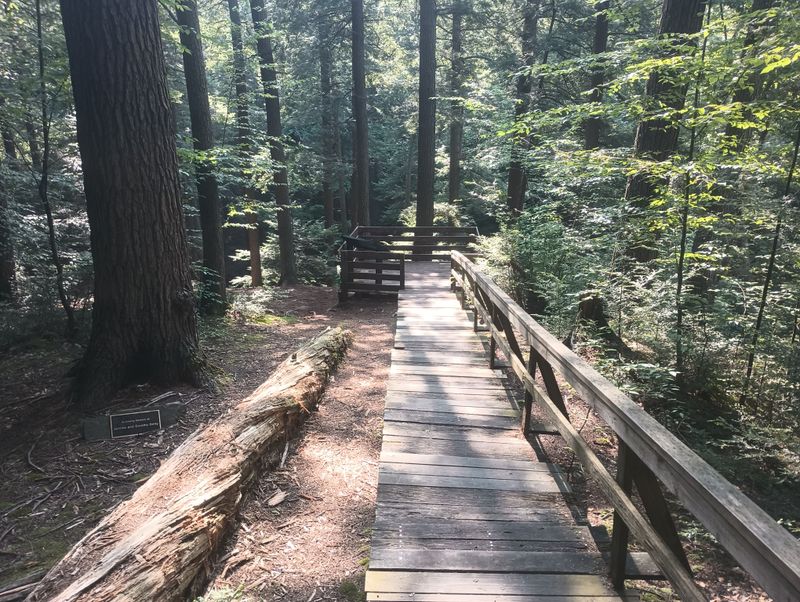
Overlook Trail earns its reputation as the most family-friendly route in the park, with gentle grades and well-maintained surfaces. Even young children and grandparents can complete this walk without difficulty.
The payoff is big for such a short, easy effort.
The trail leads through a peaceful hemlock grove where sunlight filters through the evergreen canopy in golden shafts. Birds flit between branches, and the air stays cool even in summer.
The grove feels timeless, like a place unchanged for centuries.
At the end, a sturdy boardwalk and observation platform provide sweeping views of Fall Brook below. You can see the waterfalls from above, watch the creek wind through the gorge, and spot wildlife along the banks.
The platform has railings that make it safe for all ages.
This trail is perfect for a quick nature fix when you do not have hours to spend hiking. It delivers maximum scenery with minimum effort.
Bring your camera, because the views from the platform are some of the best in the park without requiring advanced hiking skills or equipment.
5. Hike a big park trail system in a small park setting (14.85 miles)
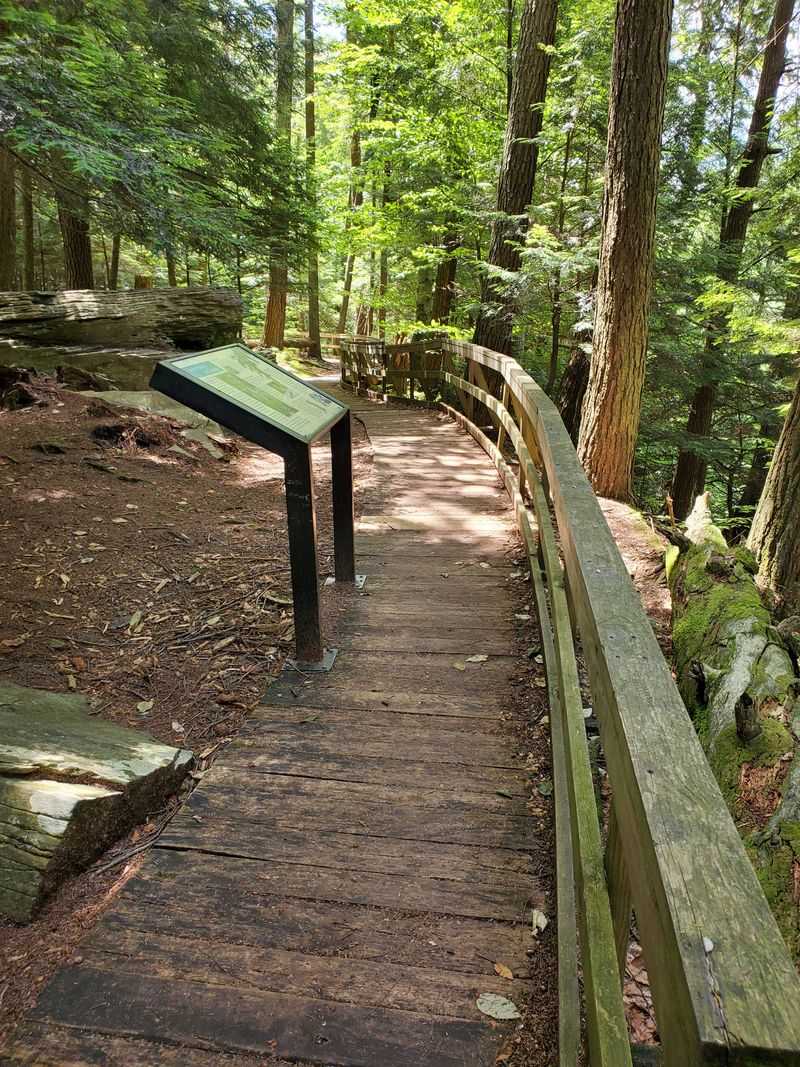
With 14.85 miles of trails packed into a relatively small footprint, Salt Springs State Park offers surprising variety for hikers. You can explore old-growth forests, gorge overlooks, meadow edges, and stream valleys without driving between trailheads.
The network connects in ways that let you customize your distance and difficulty.
Different trails pass through distinct habitats, so each hike feels like a new experience. One moment you are in dense hemlock shade, the next you are crossing sunny meadows where wildflowers bloom.
Birders appreciate the habitat diversity, which attracts different species to different zones.
Trail maps are available at the park office and trailhead kiosks, and most junctions are well-marked. Carrying a map or using a GPS app is smart, especially if you plan to link multiple trails.
Some loops can be combined for longer adventures.
Serious hikers can spend a full day exploring the entire system, while casual walkers can choose shorter segments. The trails are well-maintained but still feel wild and natural.
Boots are recommended for the rockier sections, and trekking poles help on steep grades near the gorge.
6. Try the short-but-steep Gorge Trail for quarry remnants and meadow edges
Gorge Trail might be short, but it delivers a workout with a steep ascent that gets your heart pumping. Starting near the Wheaton House area, the trail climbs quickly, rewarding your effort with changing scenery and historical curiosities.
The steep sections are brief but intense, so pace yourself.
Along the way, you will pass remnants of an old flagstone quarry, where workers once extracted stone for building materials. Moss-covered piles of cut stone and old quarry pits hint at the area’s industrial past.
It is a fascinating glimpse into how people once used this landscape before it became a park.
The trail also skirts meadow edges where wildflowers bloom in spring and summer. Butterflies and bees work the blossoms, and you might spot deer grazing in early morning or evening.
The meadow views contrast beautifully with the dense forest sections.
Gorge Trail ends at Buckley Road, where you can turn back or connect to other trails. The combination of natural beauty and historical remnants makes this route especially interesting for curious hikers.
Wear sturdy shoes for the steep, rocky sections, and bring water for the climb.
7. Visit the park’s namesake: the bubbling salt spring
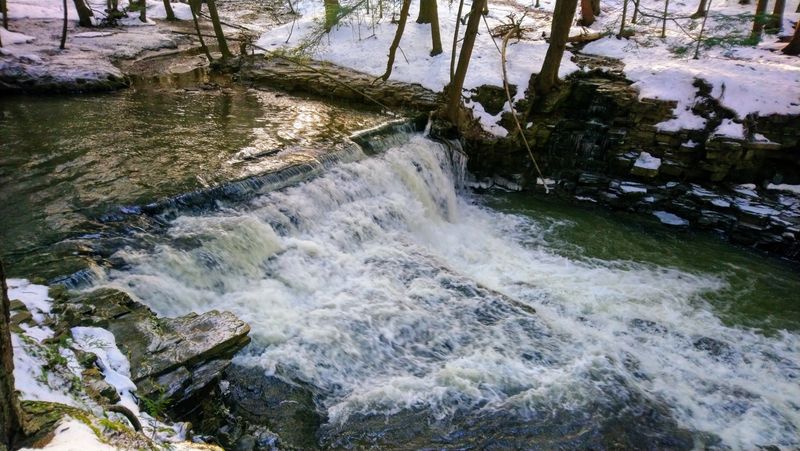
The bubbling salt spring is the reason this park exists and the source of its name. Located at the southeast end of the picnic area, the spring is easy to find and fascinating to watch.
Water bubbles up continuously, driven by methane gas rising from ancient sediments deep underground.
DCNR scientists have tested the water and found it unusually high in chloride, sodium, and dissolved solids compared to typical Pennsylvania springs. The salty composition reflects the area’s geological history, when ancient seas once covered this region.
Tasting the water is not recommended, but you can definitely smell the mineral tang in the air.
The bubbling effect is mesmerizing, with gas bubbles breaking the surface in irregular patterns. Kids are especially captivated by the natural phenomenon, often watching for several minutes.
Interpretive signs explain the science behind the spring in easy-to-understand language.
Historically, Native Americans and early settlers knew about the spring and valued the salt. Later, the spring became a curiosity that drew visitors, eventually leading to the creation of the state park.
Standing beside the spring connects you to centuries of human history and millions of years of geological processes.
8. Camp the rustic way along Silver Creek (tent sites and basics)
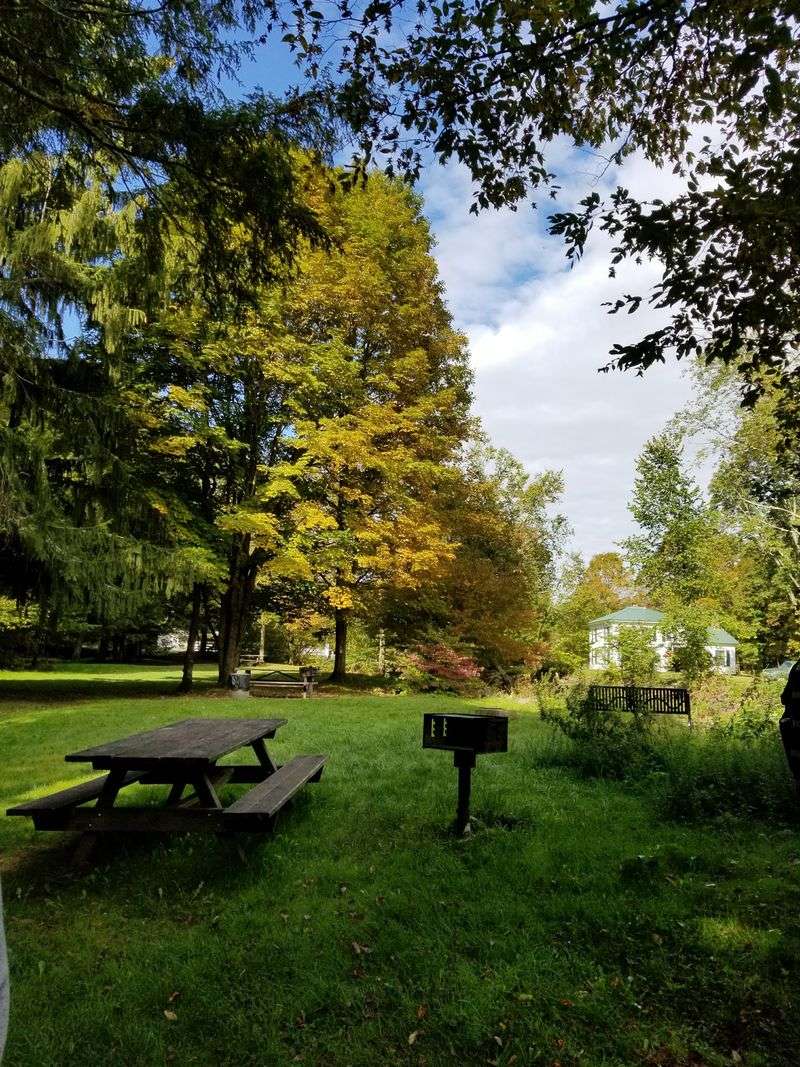
Camping at Salt Springs State Park is deliberately old-school, with rustic tent sites scattered along Silver Creek. Each site includes a fire ring and picnic table, but that is about it.
No electric hookups, no showers, no water spigots at your campsite. This is camping for people who want to unplug and experience nature on its own terms.
The sites are spaced for privacy, with trees and undergrowth providing natural separation. You will fall asleep to the sound of Silver Creek flowing nearby and wake to birdsong instead of alarm clocks.
The simplicity is the whole point, allowing you to focus on the outdoors rather than amenities.
Non-flush toilets are available in the camping area, so you are not completely roughing it. Bring all your own water, food, and gear.
Pack out what you pack in, following Leave No Trace principles to keep the area beautiful for future campers.
Campfires are allowed in the fire rings, making evenings perfect for roasting marshmallows and telling stories. The lack of light pollution means stargazing is spectacular on clear nights.
If you are tired of crowded, over-developed campgrounds, this rustic experience will feel like a breath of fresh air.
9. Book a camping cottage (or plan group tenting)
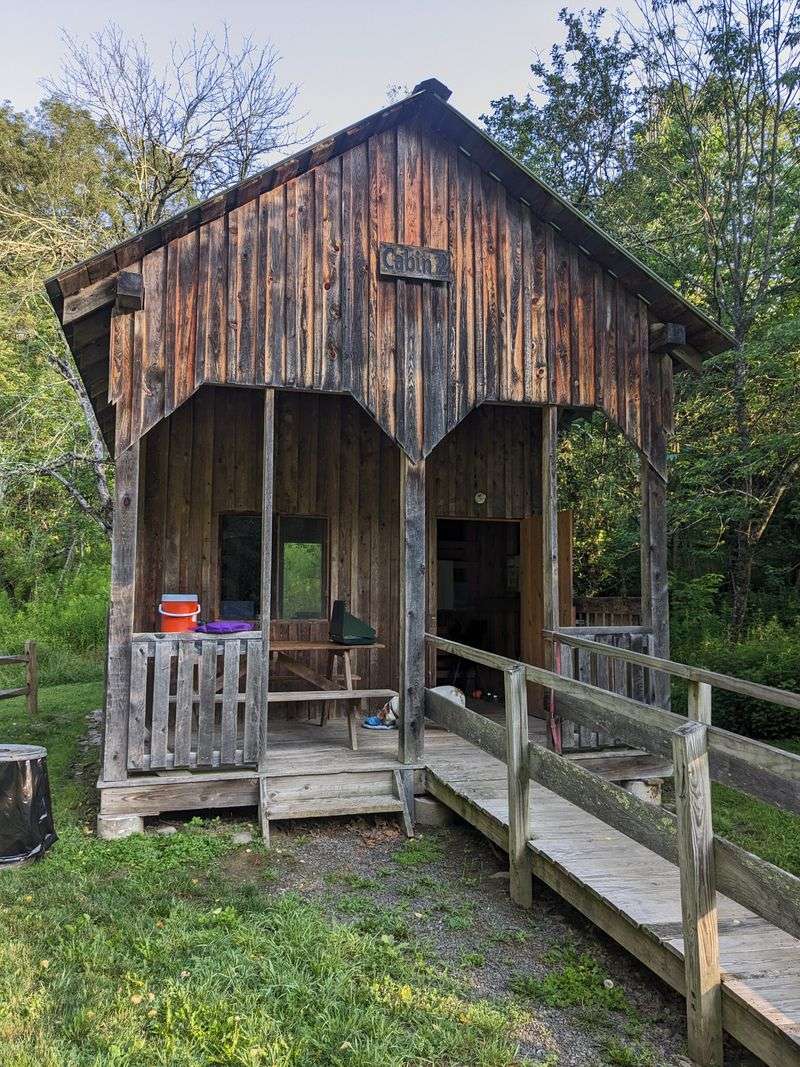
Not everyone wants to sleep on the ground, and Salt Springs understands that with its camping cottages. These small structures offer a roof over your head, electric lights, and outlets for charging devices.
They are still rustic compared to hotels, but they provide shelter and basic comfort for campers who want something between a tent and a cabin.
The cottages are popular with families who want to introduce kids to camping without going full wilderness mode. You still cook outdoors, gather around a fire, and enjoy nature, but you sleep in a bed and have light at night.
It is a nice middle ground that works for many people.
For larger gatherings, the park also offers organized group tenting in a big field. Scout troops, church groups, and family reunions often book this space for events.
The field can accommodate multiple tents and provides a sense of community while camping together.
Both cottages and group sites book up quickly during peak season, so reserve well in advance. The Friends of Salt Springs manage the reservation system, making it easy to check availability and secure your dates.
Whether you choose a cottage or group camping, you will still enjoy the same beautiful park surroundings.
10. Fish Silver Creek and Fall Brook for stocked trout (spring)
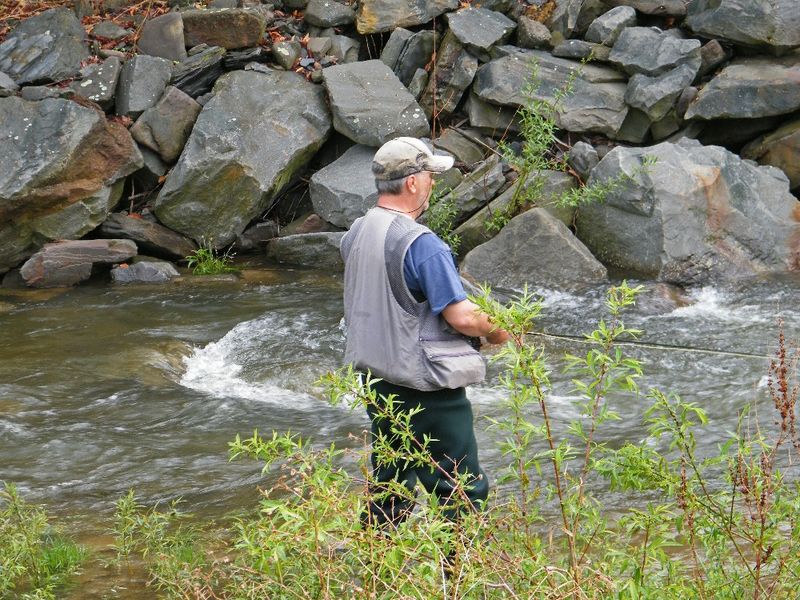
Anglers have nearly two miles of fishable water at Salt Springs State Park, with both Silver Creek and Fall Brook offering excellent opportunities. The Pennsylvania Fish and Boat Commission stocks both streams with trout in early spring, making opening day and the weeks that follow especially productive.
Expect to see plenty of fishing rods along the banks when the stocking trucks arrive.
The streams flow cold and clear, providing ideal trout habitat even after the stocked fish settle in. Some trout hold over through summer in the deeper, cooler pools.
Fly fishers appreciate the challenge of casting in the wooded stream corridors, while spin anglers find success with small spinners and bait.
You will need a valid Pennsylvania fishing license and must follow all state regulations regarding seasons, limits, and methods. Check the current rules before you cast, as regulations can change.
The park’s fishing access is free, making it an affordable day trip for families.
Early morning and evening are prime times, when trout are most actively feeding. Bring waders or waterproof boots if you want to wade into the streams for better casting positions.
Even if the fish are not biting, spending a few hours beside these beautiful streams is time well spent in nature.
11. Step inside the renovated Wheaton House (seasonal weekends)
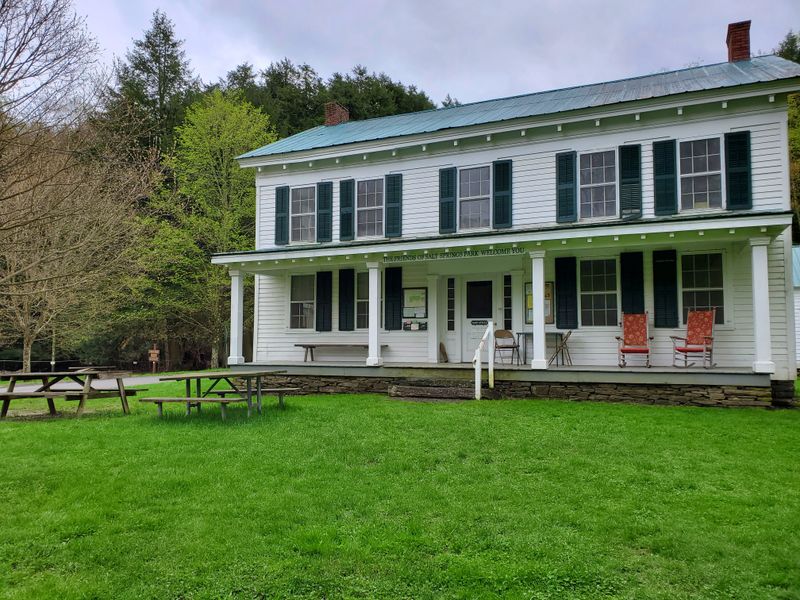
The Wheaton House serves as the headquarters for the Friends of Salt Springs and doubles as a gift shop and interpretive center. Open on weekends from May through September, the renovated building offers a window into both rural Pennsylvania history and the park’s natural features.
Stepping inside feels like visiting a neighbor’s house filled with local stories and treasures.
Interpretive displays cover topics ranging from rural life in the 1800s to the wildlife that calls the park home today. Old photographs show what the area looked like before it became a state park.
Kids enjoy the hands-on exhibits that let them touch animal pelts, examine skulls, or try pioneer tools.
The gift shop stocks books about Pennsylvania nature and history, plus local crafts and park-themed souvenirs. Proceeds support the Friends’ work maintaining trails, funding educational programs, and improving park facilities.
Buying something here directly helps preserve the park you are enjoying.
Friendly volunteers staff the Wheaton House and love sharing their knowledge about the park. They can answer questions about trails, camping, wildlife sightings, or upcoming events.
The house itself is a piece of history, lovingly restored to serve both visitors and the park community. Stop by to learn, shop, and support a great cause.



