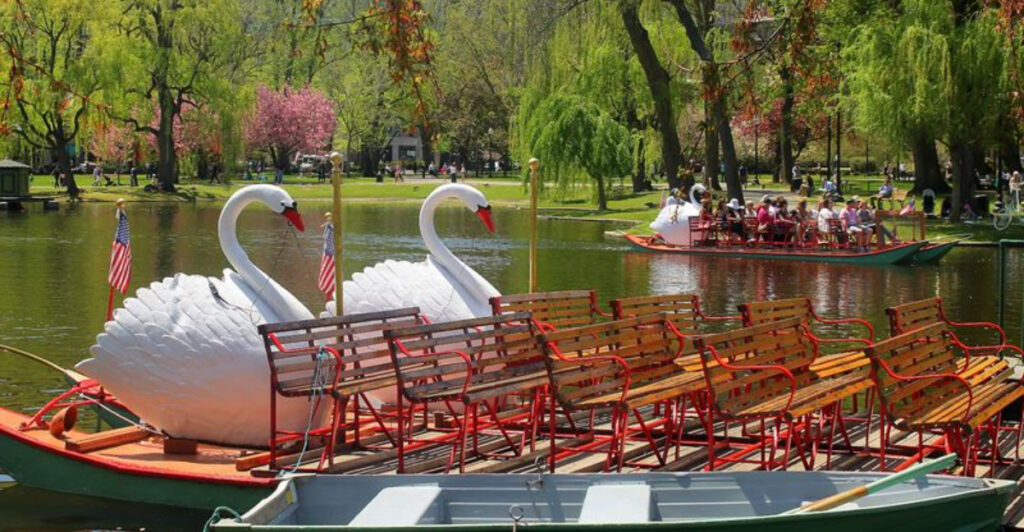
Right in the middle of one of America’s most historic cities, there is a lagoon where something truly one-of-a-kind has been happening since 1877. Boston’s Public Garden is home to a pedal-powered attraction that has carried generations of families across a small but memorable stretch of water.
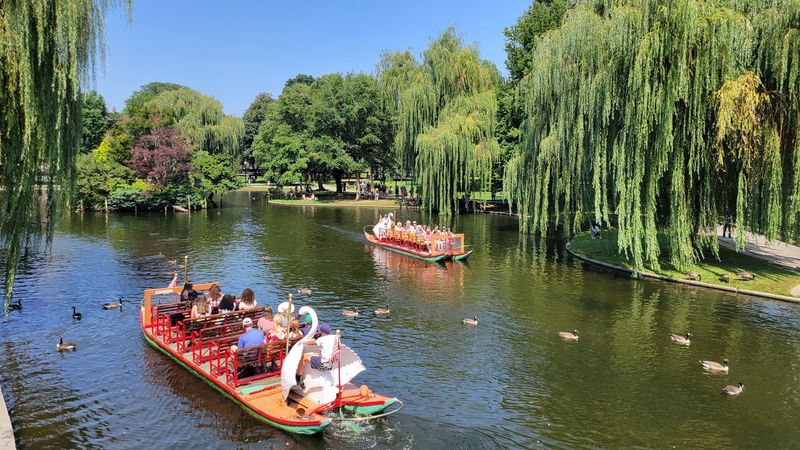
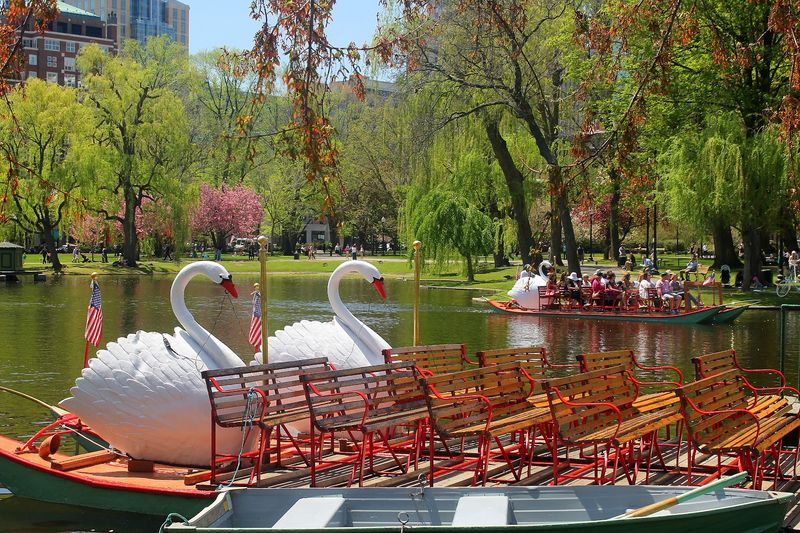
The boats are shaped like giant swans, and a crew member pedals from behind a large swan figure at the back while passengers relax on bench seats up front. No other city in the country offers this exact experience, and that is exactly why people keep coming back year after year.
A Family Business That Has Lasted Generations
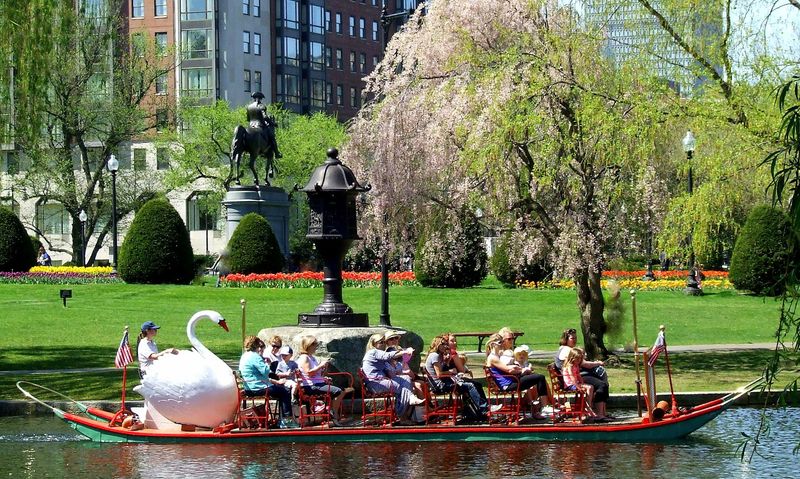
Few tourist attractions in the United States can claim to be both family-owned and continuously operating for nearly 150 years, but the Swan Boats can.
Robert Paget launched the boats in 1877, drawing inspiration from the opera Lohengrin, in which a knight crosses a river standing on a boat pulled by a swan.
The Paget family has run the business ever since, passing it down through four generations without ever selling or franchising the operation.
That kind of commitment to a single tradition is rare in any industry, let alone in tourism, where trends shift constantly.
Each generation has maintained the original spirit of the ride while keeping the boats in working condition, some of which are nearly 100 years old.
The family’s dedication shows in how the boats are cared for and how the operation runs, with a consistency that keeps the experience feeling exactly as it should year after year.
How the Pedal System Actually Works
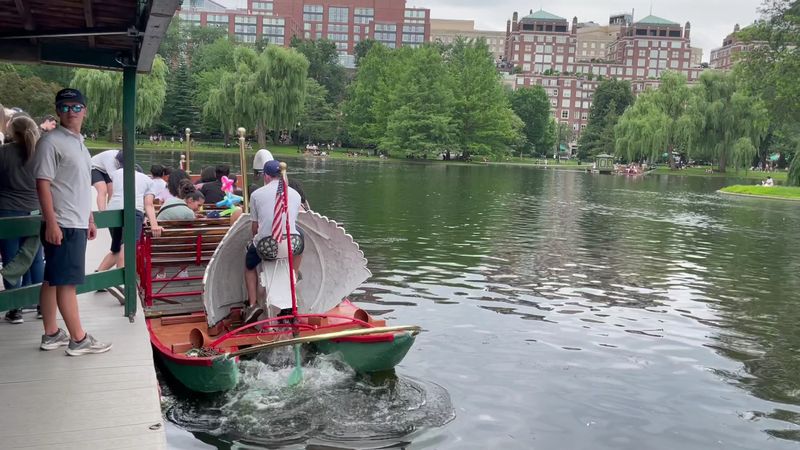
The mechanics behind the Swan Boats are surprisingly simple, and that simplicity is a big part of their appeal.
Each boat has a large decorative swan at the rear, and a crew member sits inside the swan structure, hidden from view, pedaling a bicycle-style mechanism that powers the paddlewheel beneath the boat.
Passengers sit on long bench seats at the front and do not have to do anything except enjoy the ride.
The boats hold around 10 to 15 people at a time, making each trip feel relaxed rather than crowded.
Because the power comes entirely from human effort, the boats move at a slow, steady pace, which suits the calm setting of the lagoon perfectly.
One former crew member noted that pedaling feels like riding uphill the entire time, which gives a real appreciation for the effort that goes into every single loop around the pond throughout the day.
The Route Around Duck Island
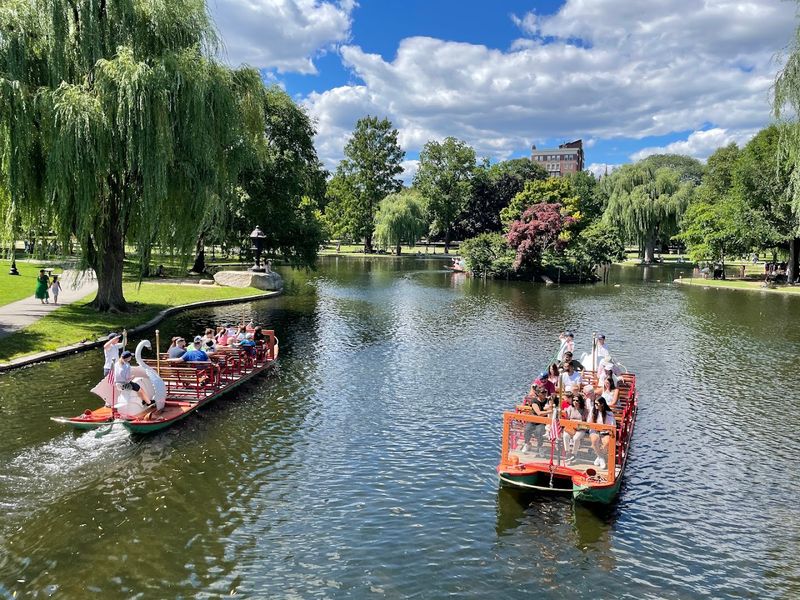
Every Swan Boat ride follows the same route, and that consistency is part of what makes it so reliably enjoyable.
The boat leaves the dock, glides across the open water, and then circles around Duck Island, a small natural island in the middle of the lagoon that is home to a variety of waterbirds.
Ducks are almost always present in large numbers, and turtles can frequently be spotted either swimming near the island or resting on rocks in the sun.
The route also takes passengers under the historic footbridge that crosses one end of the lagoon, which gives a brief but memorable view of the garden from below.
The full loop takes approximately 15 to 20 minutes, making it a comfortable activity that does not require a large block of time.
The unhurried pace of the ride allows passengers to take in the surrounding garden, the wildlife, and the city skyline in a way that walking simply does not offer.
What Tickets Cost and How to Buy Them
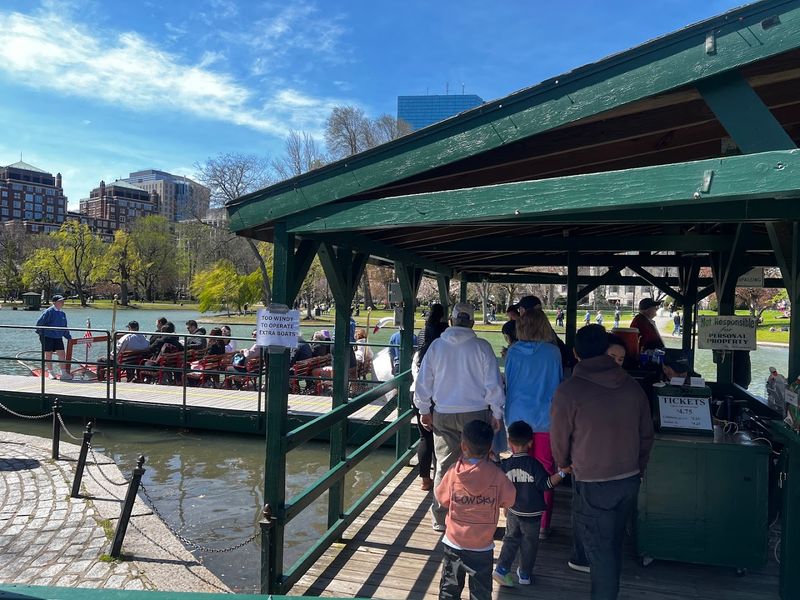
One of the most talked-about aspects of the Swan Boats is how affordable they are, especially for a tourist attraction in a major city like Boston.
Adult tickets are priced at around $4.50 to $4.75 per person, seniors receive a discounted rate, and children under two years old ride for free.
Tickets are purchased on-site at the dock, and there is currently no option to buy them online or reserve a spot in advance.
That means the experience operates on a first-come, first-served basis, but the wait time is typically short, often no more than 10 to 15 minutes even on busy weekends.
The boats run continuously throughout operating hours, and with six boats in rotation, the line moves at a steady pace.
Cash and credit cards are both accepted at the ticket window, so there is no need to worry about having exact change ready before arriving at the dock.
When the Boats Are Open for the Season
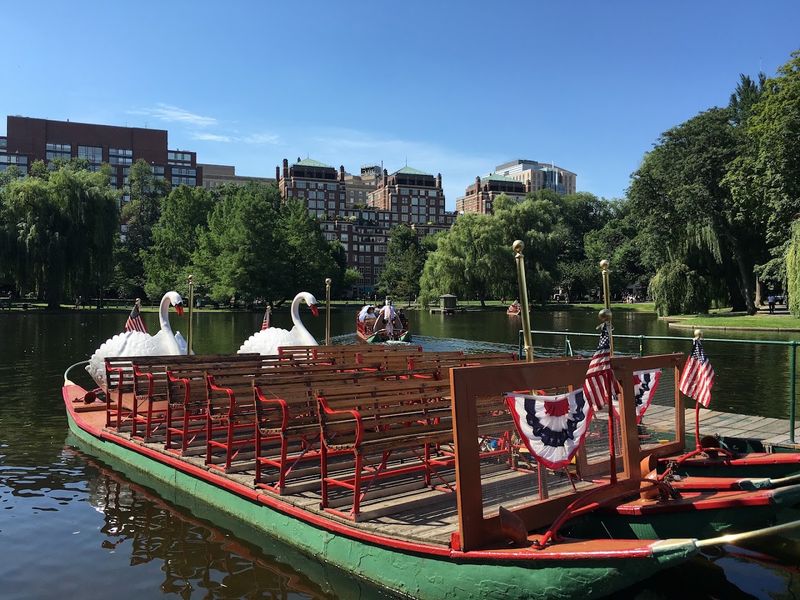
The Swan Boats are a seasonal attraction, which adds to their special quality and makes each visit feel like an event rather than just another outing.
The boats typically open in mid-April and run through mid-September, though the exact dates can shift slightly depending on weather and conditions each year.
During the operating season, the hours are 10 AM to 5 PM daily, seven days a week, giving families and travelers plenty of windows to fit a ride into their plans.
Spring is a particularly popular time to visit because the Public Garden is in full bloom and the weather tends to be mild and comfortable for being outdoors.
Summer draws the largest crowds, especially on weekends, but the fast-moving line keeps waits manageable.
Checking the official website at swanboats.com before visiting is always a good idea, as it posts current season dates and any weather-related closures that might affect the schedule.
The Children’s Book Connection That Brings Families Back
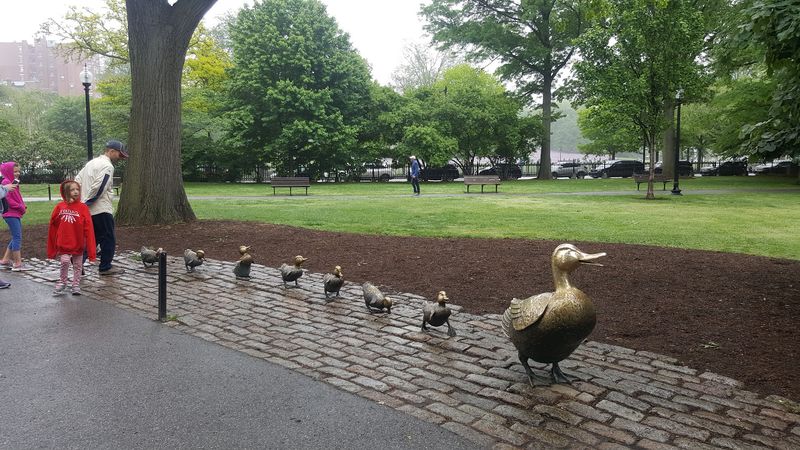
For many families, a visit to the Swan Boats is directly tied to one of the most beloved children’s books in American literature.
Make Way for Ducklings, written by Robert McCloskey and published in 1941, is set in the Boston Public Garden and features the lagoon, Duck Island, and the swan boats as central parts of the story.
A bronze sculpture of Mrs. Mallard and her eight ducklings, inspired by the book, stands in the garden near the lagoon and has become one of the most photographed spots in all of Boston.
Children who have read the book often recognize the landmarks immediately when they arrive, which turns the ride into a kind of real-life story walk.
The connection between the book and the boats has helped cement the Swan Boats as a must-do activity for families visiting Boston, not just as tourists but as readers stepping into a story they already know and love.
Wildlife That Shows Up Without Any Schedule
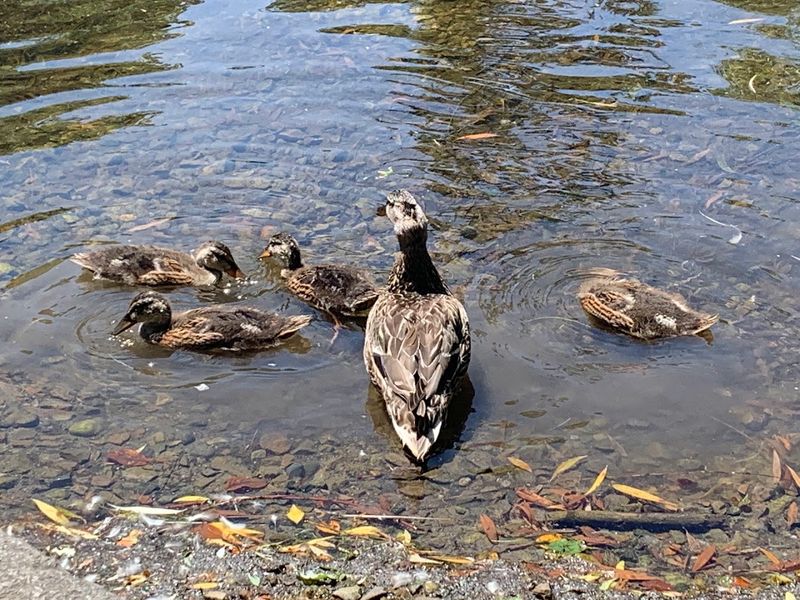
Part of what makes the Swan Boat ride unexpectedly engaging is the wildlife that shares the lagoon with the boats on any given day.
Ducks are a constant presence, often swimming alongside the boats or gathered in clusters around Duck Island, and baby ducks appear during the warmer months, which tends to delight younger passengers especially.
Turtles are also common sightings, either gliding through the water near the boat or perched on rocks close to the island, close enough to get a clear look without any zoom required.
Live swans have also been known to inhabit the lagoon, which adds an extra layer of authenticity to the swan-themed experience.
Pigeons frequently gather on and around the footbridge, and various other bird species can be spotted depending on the time of year.
None of this wildlife is staged or managed for the ride, which makes each trip feel a little different from the last.
A Boat Fleet With a Lot of History Behind It
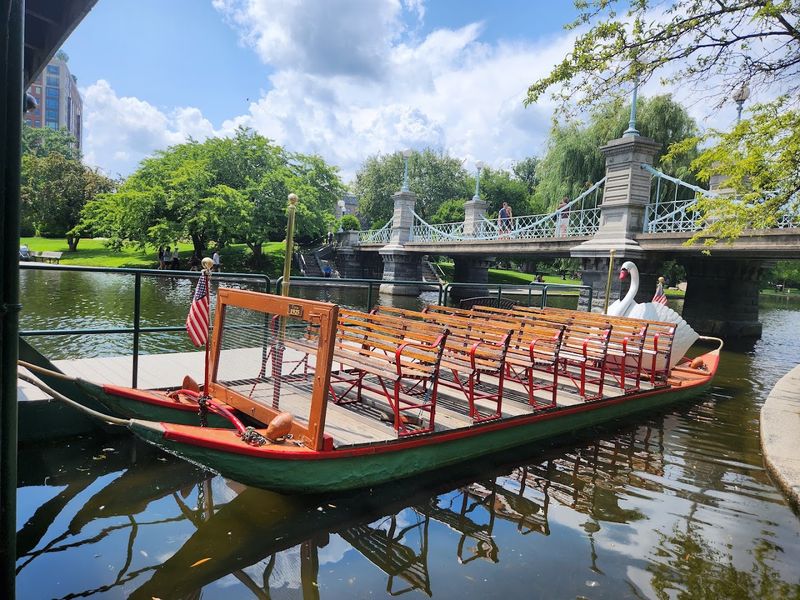
The boats themselves are part of what makes this attraction so unusual, and their age is genuinely remarkable for a working fleet.
Several of the Swan Boats currently in operation are close to 100 years old, with some having been built in the early 1900s and carefully maintained ever since.
The Paget family has overseen the upkeep of the fleet across generations, ensuring that the boats remain both functional and safe for passengers.
Each boat features the large swan figure at the rear, the open bench seating at the front, and the paddlewheel system underneath, all of which have remained consistent in design since the early days of the operation.
The age of the boats is not a drawback but a feature, giving the ride a connection to Boston’s history that most modern attractions simply cannot replicate.
Riding in a boat that has been on the same lagoon for nearly a century carries a quiet kind of significance that is hard to put into words.
Tips for Getting the Most Out of Your Visit
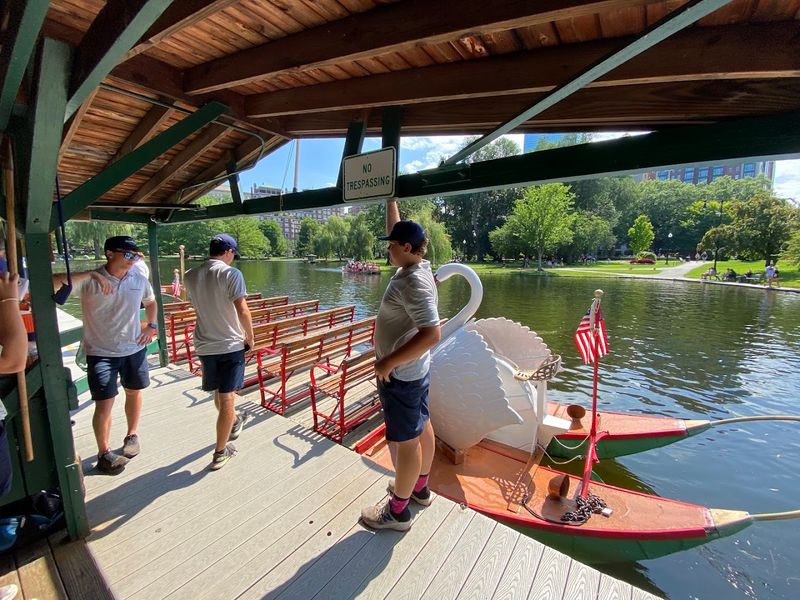
A little planning goes a long way when it comes to getting the best possible Swan Boat experience.
Arriving close to opening time at 10 AM tends to mean shorter waits and a less crowded lagoon, especially during peak summer weekends when lines can build up quickly by midday.
Wearing a hat is genuinely useful advice, as the lagoon is open and there is limited shade while waiting in line or riding on the water.
Stroller parking is available near the dock, which makes the ride accessible for families with very young children who may not sit in a seat independently.
The boats do not allow online reservations, so building a flexible window of time into the visit ensures that a short wait does not throw off the rest of the day.
Souvenirs including hats and stuffed animals are sold at the dock, making it easy to pick up a small memento without having to search elsewhere in the city.
The Public Garden That Surrounds the Whole Experience
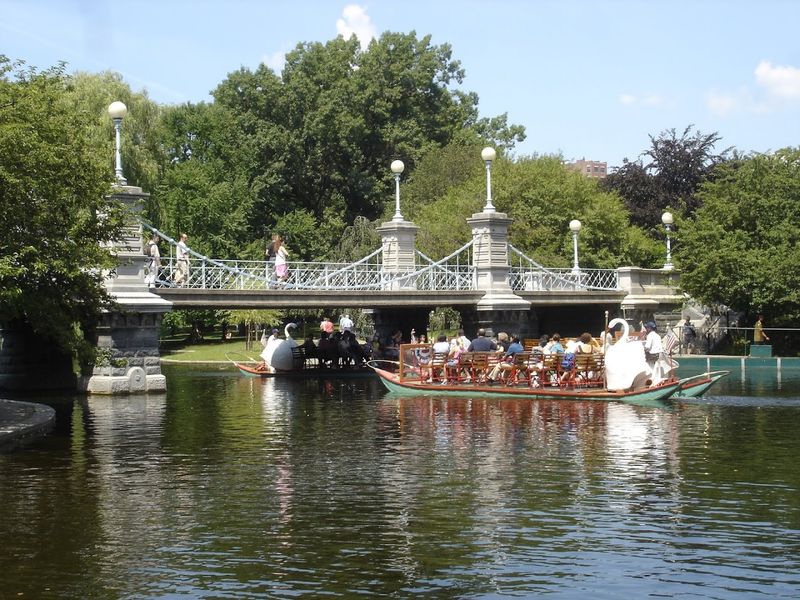
The Swan Boats are the centerpiece of the Public Garden, but the garden itself deserves attention as a destination on its own terms.
Established in 1837, the Boston Public Garden is the oldest botanical garden in the United States, and it covers 24 acres of carefully maintained grounds right next to the Boston Common.
The garden features formal flower beds, massive weeping willow trees that line the lagoon, ornate iron fences, and winding paths that invite a slow, unhurried walk.
The suspension bridge over the lagoon is one of the shortest suspension bridges in the world, and it offers a good overhead view of the boats moving below.
Statues and monuments are scattered throughout the grounds, including the famous Make Way for Ducklings sculpture near the Charles Street entrance.
Spending an hour or two walking the garden before or after a Swan Boat ride turns a single attraction visit into a full and satisfying afternoon in the city.
Why This Ride Has Stayed Relevant for Over a Century
In a city full of museums, historic sites, and modern entertainment options, the Swan Boats have managed to stay on nearly every Boston must-do list for close to 150 years.
The reasons are not complicated. The ride is affordable, accessible, short enough to fit into any schedule, and connected to both local history and beloved children’s literature in ways that give it a depth that newer attractions rarely have.
Families return because children who rode as kids want to bring their own children. Tourists add it to their itineraries because it is genuinely unlike anything else in the country.
The Paget family’s decision to keep the experience simple, honest, and reasonably priced has protected it from becoming something overcrowded or commercialized.
There is something quietly powerful about an attraction that does not need to change to stay worth visiting. The Swan Boats have never needed a rebrand, a renovation, or a social media campaign to fill their boats every single season.
Where the Swan Boats Call Home
The Swan Boats are found at 4 Charles St, Boston, MA 02116, right inside the Boston Public Garden, which sits in the heart of the city near the Boston Common.
The Public Garden itself is the first botanical garden in the United States, and the lagoon at its center has been the home of the Swan Boats since 1877.
The garden covers about 24 acres and is surrounded by some of Boston’s most recognizable streets and neighborhoods.
Getting there is straightforward, with multiple MBTA Green Line stops nearby and walkable access from much of downtown Boston.
The lagoon is small but charming, with a footbridge arching over one end and weeping willow trees lining the banks.
Duck Island sits at the center of the water, and the boats circle around it on every ride, giving passengers a full loop of the lagoon before returning to the dock.
Share this story