On a quiet block in Philadelphia’s Old City, 32 brick rowhouses have stood continuously since the early 1700s, making this one of the oldest residential streets in the United States. Unlike the grand homes of wealthy colonial figures, these buildings tell the story of the craftsmen, tradespeople, and working families who helped build the city from the ground up.
At the center of the street, a small museum inside two original homes offers a rare look at everyday life in colonial America. Visitors can step inside preserved rooms, explore centuries-old architecture, and see how generations of residents lived and worked long before the nation was founded.
What makes this place remarkable is its authenticity. The cobblestone street, historic homes, and lived-in atmosphere create a connection to the past that feels surprisingly immediate.
Here’s why this hidden Philadelphia landmark remains one of the city’s most fascinating and overlooked historic destinations.
A Street That Has Never Stopped Being Home
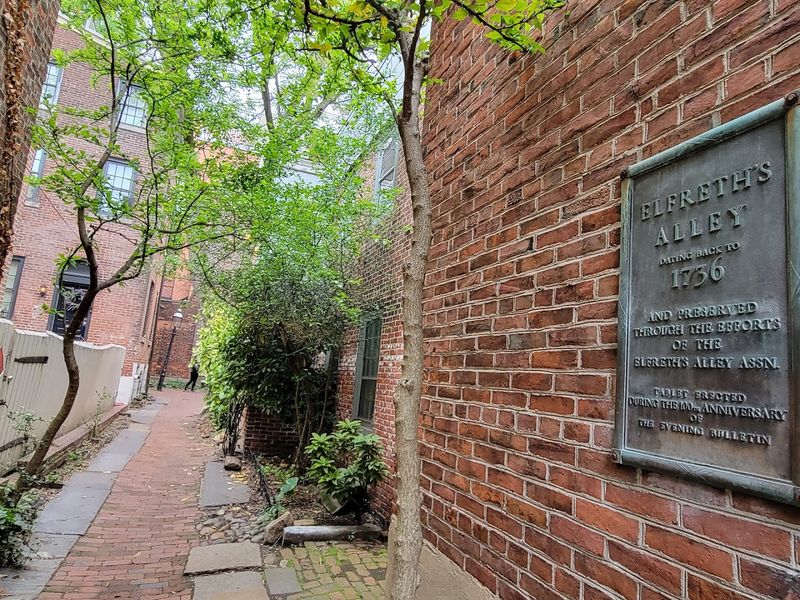
Most streets in America have been torn up, rebuilt, and reimagined dozens of times over. This one has not.
Elfreth’s Alley, located at 126 Elfreth’s Alley, Philadelphia, PA 19106, in the heart of Old City, holds the title of America’s oldest continuously inhabited residential street, with roots stretching back to 1703.
That is not a marketing claim or a loose interpretation of history. People have lived here without interruption for over three centuries, and the street looks remarkably close to what it looked like then.
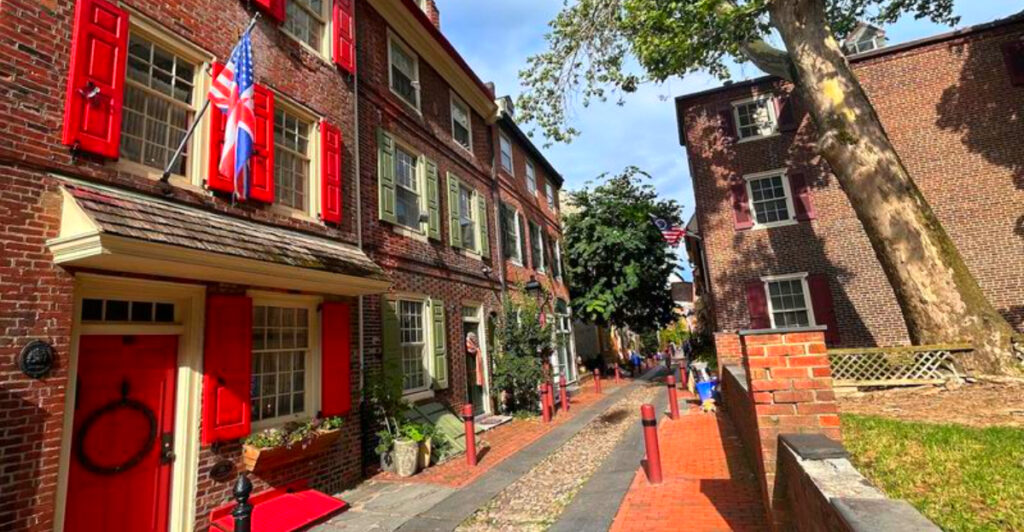
The narrow cobblestone path runs just one block long, flanked by 32 brick rowhouses that were built between 1720 and 1836.
What makes the address feel so different from other historic sites is that it never became a relic. Families still live behind those doors today, making this one of the rare places where history and daily life genuinely share a zip code.
How the Alley Survived Three Centuries of Change
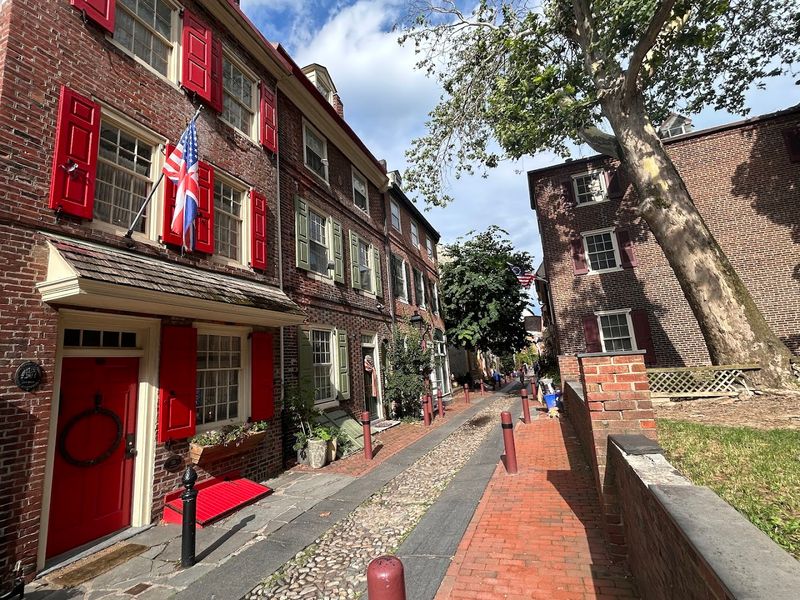
By the 1930s, Elfreth’s Alley was in rough shape. The buildings had aged, the neighborhood had shifted, and there were serious conversations about demolishing parts of it altogether.
A group of residents refused to let that happen.
In 1934, they formed the Elfreth’s Alley Association, one of the earliest neighborhood preservation organizations in the United States. Their mission was straightforward: protect the street, restore the homes, and tell the story of the working-class people who had built their lives there.
The bigger threat came decades later when plans for Interstate 95 nearly swallowed the block entirely. Advocates fought back hard, and the alley earned National Historic Landmark status in the 1960s, giving it the legal protection it needed to survive.
That fight is part of what gives the street its character today. Every brick and shutter represents not just colonial craftsmanship but the stubborn determination of people who refused to let an irreplaceable piece of American history disappear quietly into the past.
Inside the Museum: Two Homes, One Powerful Story
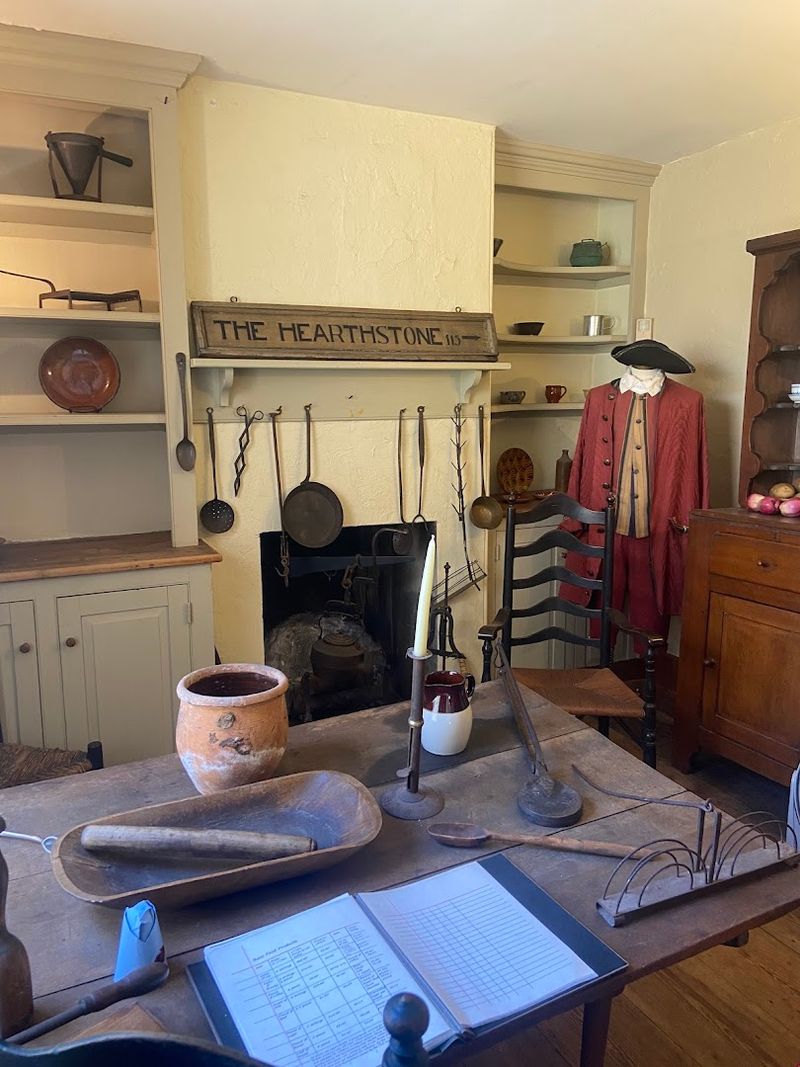
The museum itself occupies houses number 124 and 126, two of the original rowhouses that have been carefully restored to reflect their 18th-century appearance. The rooms are small, the ceilings are low, and the light comes in through original-style windows in a way that makes the space feel intimate rather than grand.
Exhibits inside focus on the real people who called this alley home, not generals or founding fathers but artisans, dressmakers, and laborers. Their tools, furniture, and daily objects are displayed with the kind of quiet dignity that reminds you these were full human lives, not just history book footnotes.
Knowledgeable volunteers staff the museum and bring the exhibits to life with stories that go well beyond the display cards. Admission runs just a few dollars, making it one of the most affordable history experiences in a city full of them.
And if the rooms make you curious about what the rest of the block looks like up close, the next section has some answers worth sticking around for.
The People Who Built Their Lives on This Block
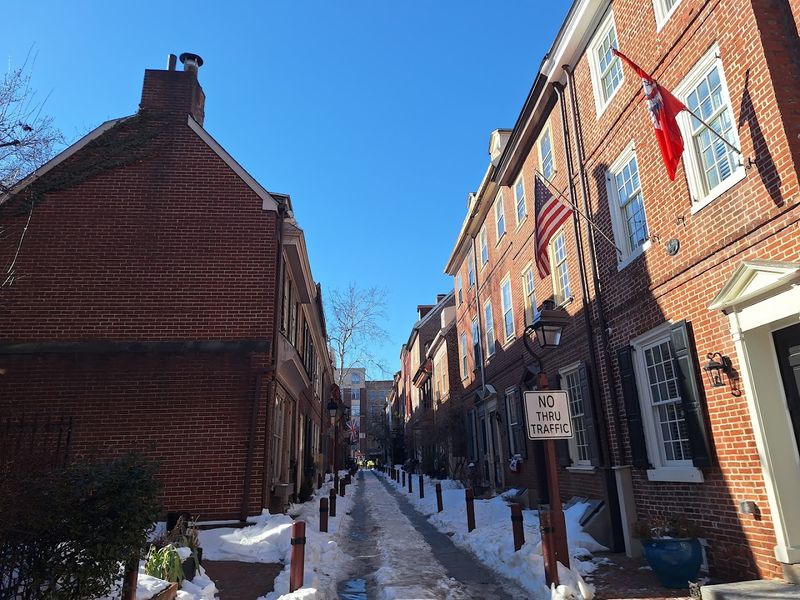
There is a temptation to think of colonial history as belonging exclusively to the wealthy and powerful. Elfreth’s Alley tells a different story entirely.
The residents here were glassblowers, pewter workers, tailors, and sea captains, skilled tradespeople who formed the backbone of Philadelphia’s working economy.
Many were immigrants who had crossed the Atlantic looking for steadier ground. Some were women who ran their own small businesses from their front rooms, a fact that often surprises first-time visitors who assume the era offered few opportunities for female entrepreneurship.
The museum’s exhibits highlight specific families and individuals by name, giving a face and a biography to what could easily remain abstract colonial trivia. Reading about a particular dressmaker or a blacksmith who once lived in house number 118 makes the whole street feel personal in a way that larger history museums rarely achieve.
Understanding who actually lived here changes how you see the alley, and that shift in perspective is one of the most rewarding parts of the visit.
Georgian Bricks and Federal Lines: The Architecture Up Close
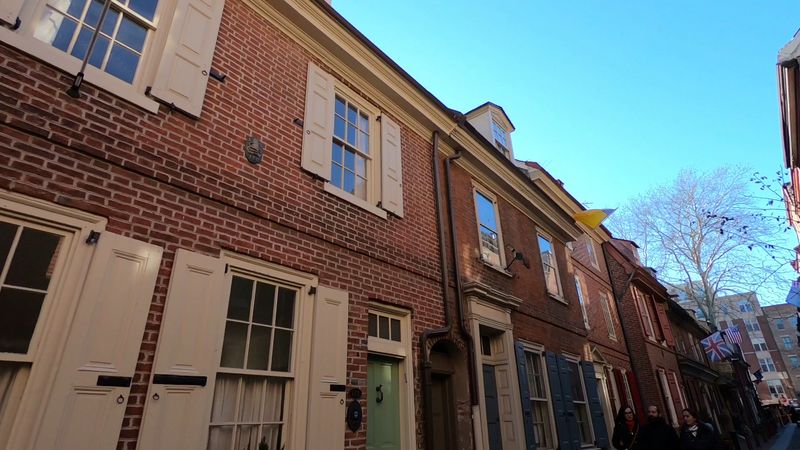
Architecture fans tend to slow down considerably on this block. The homes represent two distinct styles that dominated early American building: Georgian, which was popular in the colonial period, and Federal, which came into fashion after independence.
Both styles sit side by side here in almost textbook-perfect condition.
Georgian homes tend to feature symmetrical facades, simple rectangular windows, and brick laid in careful, uniform patterns. The Federal-style houses that came later added a bit more elegance with fanlight windows above doorways and slightly more decorative trim around entries.
What makes the streetscape so visually satisfying is how consistent the scale remains across all 32 homes. Nothing towers over anything else.
The rooflines stay at roughly the same height, the sidewalk is narrow, and the overall effect is one of compact, confident craftsmanship that feels completely at odds with the modern city just a block away.
Photographers in particular tend to linger here longer than they planned, and honestly, that is a completely understandable response to what the street offers.
What It Actually Feels Like to Walk the Cobblestones
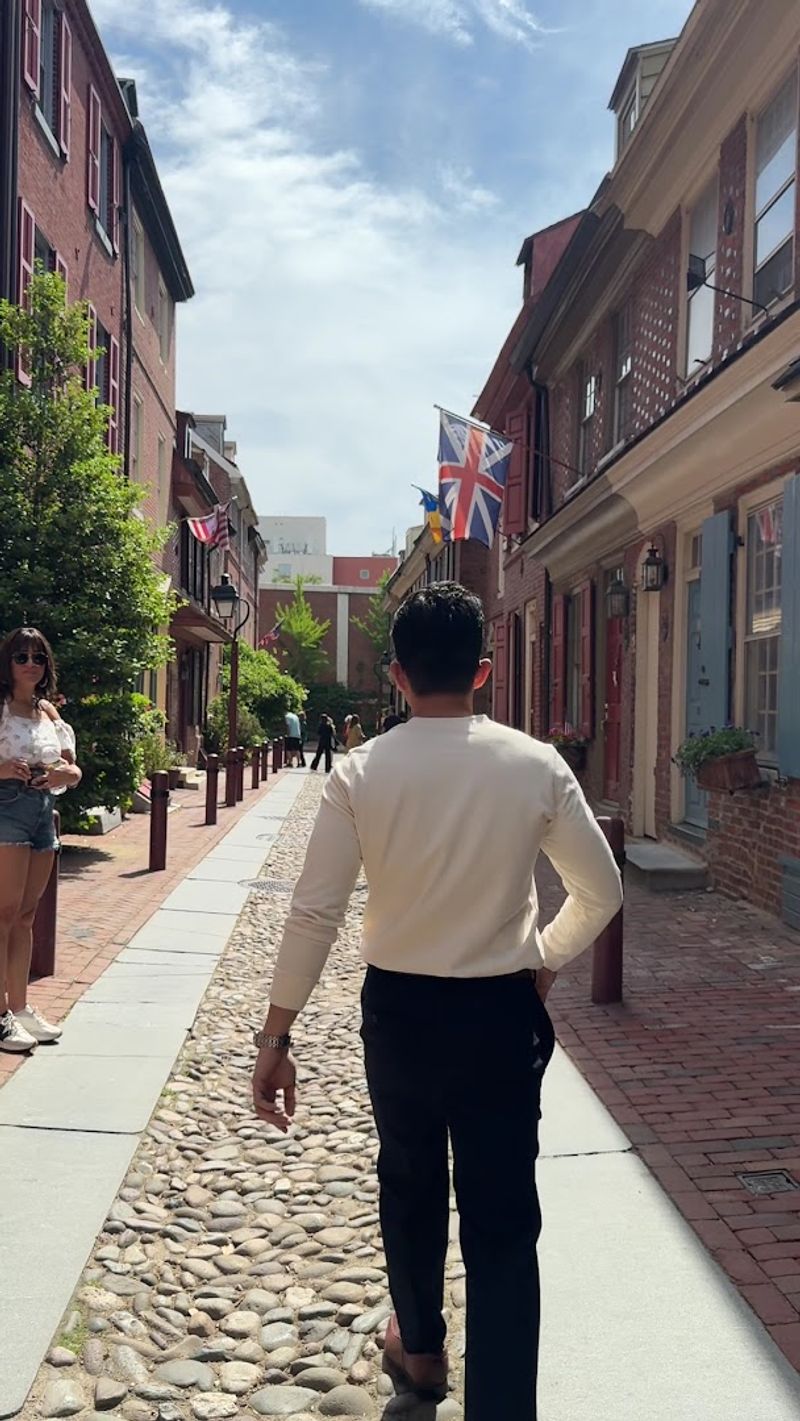
The cobblestones are uneven in the best possible way. Each one has a slightly different shape, worn smooth by centuries of foot traffic, and the sound of shoes on the surface has a satisfying, old-world quality that modern pavement simply cannot replicate.
The alley itself is short enough that you can walk its entire length in under two minutes, but almost nobody does that on their first pass. There is too much to look at: window boxes overflowing with seasonal flowers, painted shutters in deep greens and reds, brass door fixtures that have been polished by hands going back generations.
The scale of the street is part of its appeal. Everything feels just a little smaller than you expect, which creates an oddly cozy atmosphere for an outdoor public space.
On a quiet weekday morning, with few other visitors around, the alley has a stillness that feels genuinely rare in a city of Philadelphia’s size.
Early mornings are especially worth seeking out, and the next section explains exactly why timing your visit matters more than you might think.
Best Times to Visit and What to Expect on Busy Days
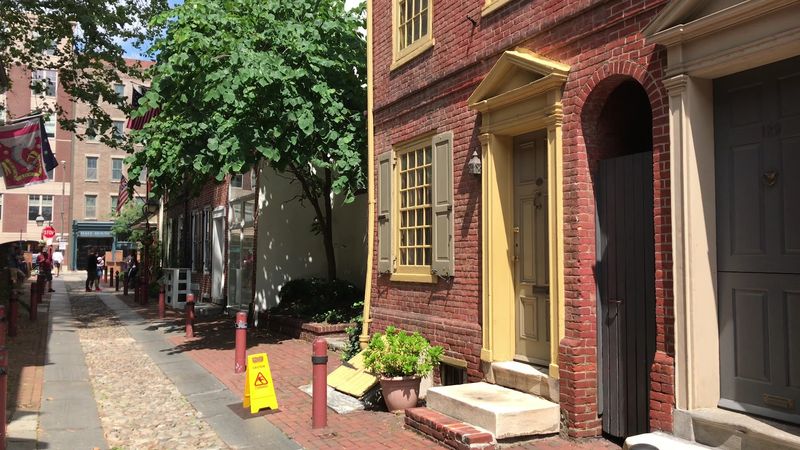
The museum is open Friday through Sunday from noon to 4 PM, so planning around that window is worth doing if you want the full indoor experience. The street itself, however, is accessible any time of day and draws visitors well before the museum opens.
Saturday mornings tend to bring the biggest crowds, especially when local vendors set up a makers market along the alley. The energy is lively and fun, but personal space becomes a limited resource.
Sunday mornings before 10 AM offer a noticeably quieter version of the same street, which many photographers and solo travelers prefer.
Weekday visits are the quietest of all. The alley feels almost private on a Tuesday or Wednesday morning, when you can take your time reading plaques, peering at architectural details, and soaking up the atmosphere without navigating around tour groups.
Seasonal decorations also change the mood considerably. Halloween pumpkins and Christmas wreaths on 300-year-old doors create a combination that is hard to find anywhere else in the country.
Fete Day: When the Alley Comes Fully Alive
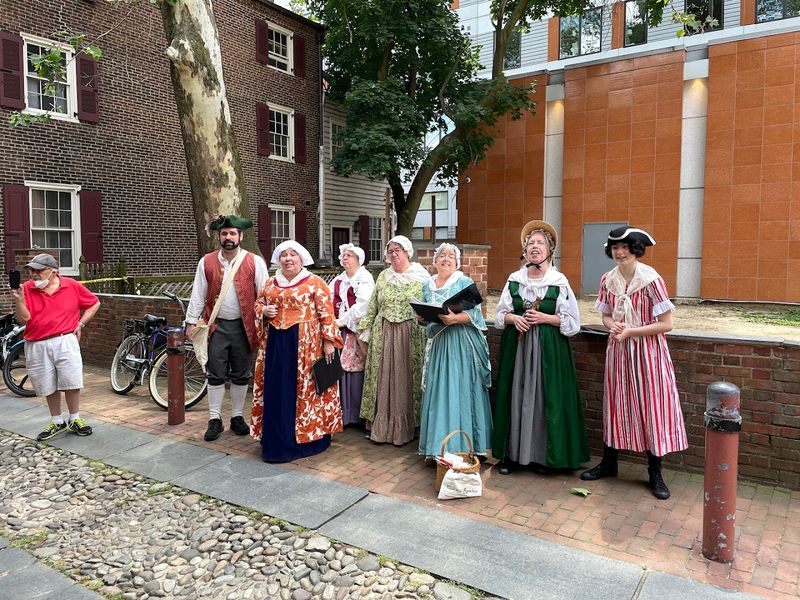
Once a year, the alley transforms into something that feels genuinely theatrical in the best sense. Fete Day, the alley’s annual celebration, opens up private homes to visitors, fills the street with costumed guides, and turns the entire block into a living history event that goes well beyond typical museum programming.
Residents dressed in period clothing from the 1700s and 1800s walk among visitors and answer questions about daily colonial life. Some homes open their front rooms for informal tours, giving a rare look at interiors that are otherwise completely private.
Musicians play period-appropriate tunes, and small vendors sell handmade goods and pastries.
The atmosphere on Fete Day is genuinely unlike any other event in Philadelphia’s already packed calendar of historic celebrations. It manages to be educational without feeling like a school field trip, and entertaining without losing the seriousness of what the street represents.
If your schedule allows for only one visit to the alley, timing it around Fete Day is the smartest choice you can make.
The Neighborhood Around the Alley: Old City’s Historic Core
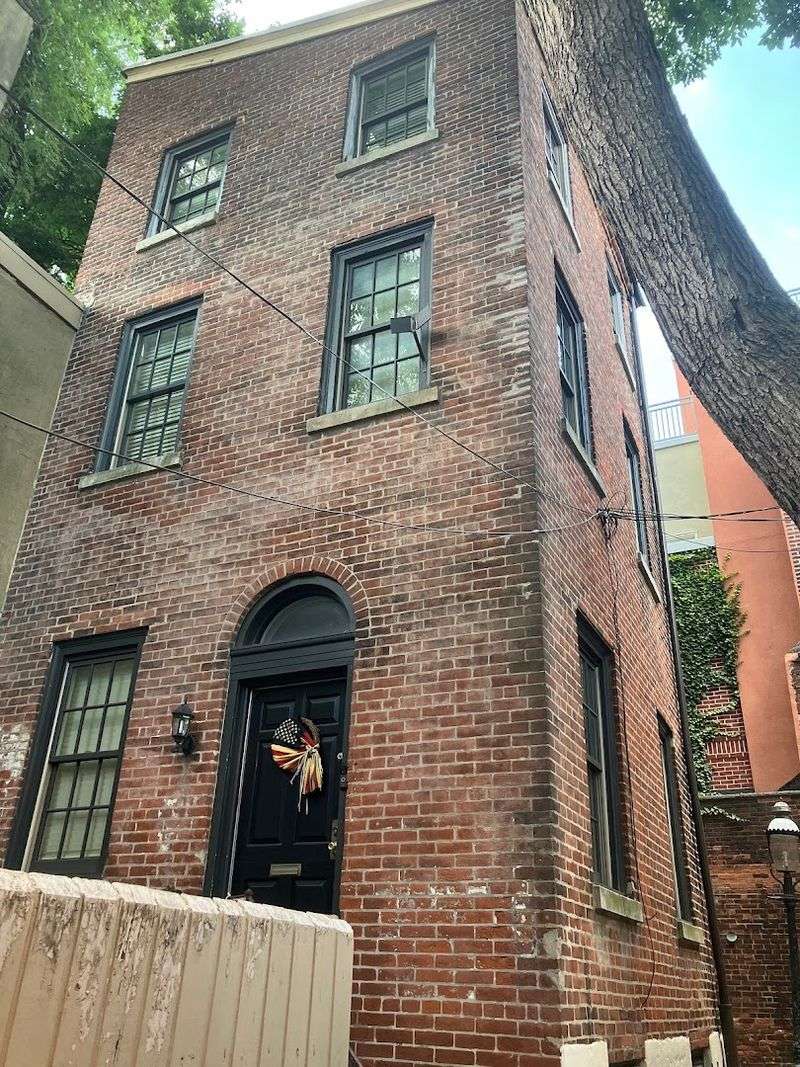
The alley does not exist in isolation. It sits inside Philadelphia’s Old City neighborhood, which packs more early American history into a walkable area than almost anywhere else in the country.
The Betsy Ross House is just around the corner, close enough that you can visit both in the same morning without rushing.
Christ Church, where George Washington and Benjamin Franklin once worshipped, is a short walk away. Independence Hall and the Liberty Bell are both reachable on foot within fifteen minutes, making the alley a natural anchor point for a full day of historic exploration.
The surrounding blocks also hold a mix of contemporary galleries, independent coffee shops, and boutique stores that balance the historic weight of the area with a lively, present-day energy. Old City has managed to preserve its past without becoming a theme park version of itself, which is a genuinely difficult balance to strike.
Starting your day at the alley and working outward from there is a logical and deeply satisfying way to experience this corner of Philadelphia.
Photography Tips for Getting the Most Out of Your Visit
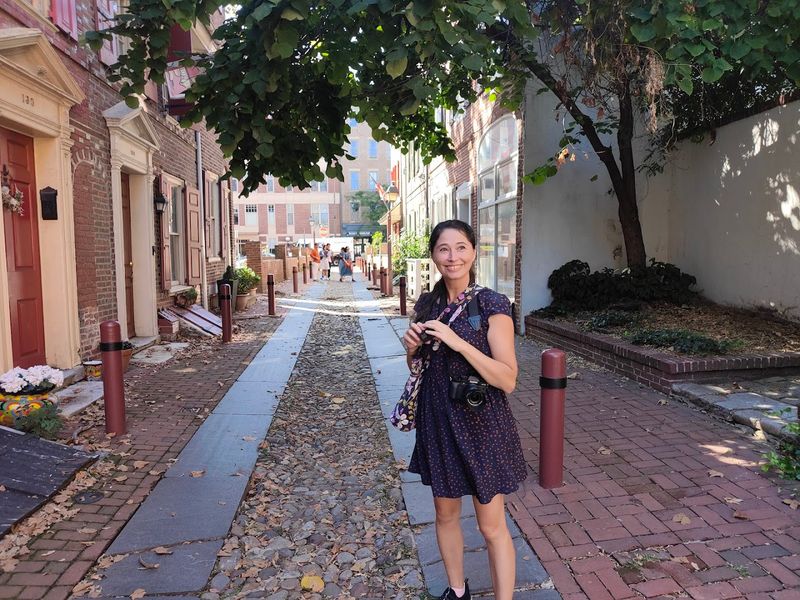
The alley is one of the most photographed streets in Philadelphia, and for good reason. The combination of warm brick tones, colorful shutters, irregular cobblestones, and seasonal plantings creates a naturally photogenic environment that looks good in almost any light.
Morning light before 10 AM hits the facades from a low angle and produces long, dramatic shadows across the cobblestones. Professional photographers regularly arrive early specifically to capture that quality of light before the crowds arrive and before the sun climbs too high to create interesting contrast.
The narrow width of the alley means a wide-angle lens captures the entire streetscape in a single frame, while a longer focal length isolates individual doorways and architectural details beautifully. Smartphone cameras handle the space surprisingly well given how much natural texture and color the street provides.
Keep in mind that the homes are privately occupied, so pointing a lens directly into windows or doorways is something residents understandably find uncomfortable. Respectful photography makes for a better experience for everyone.
Why This Alley Deserves a Permanent Spot on Your Philadelphia List
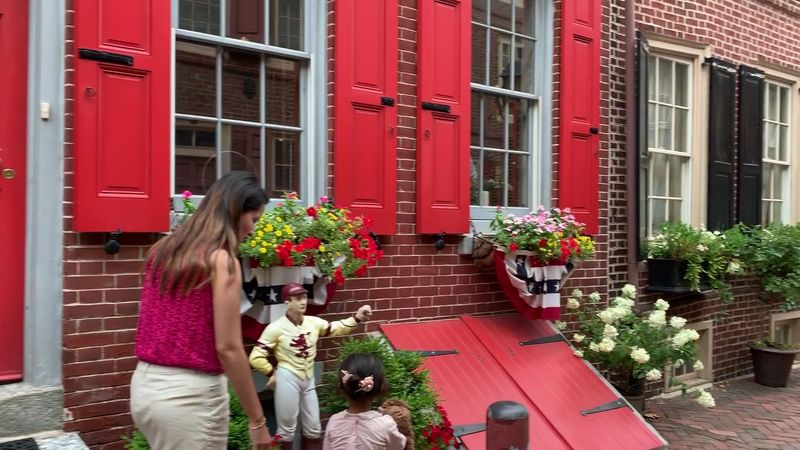
There are bigger history museums in Philadelphia. There are more famous landmarks, longer lines, and flashier exhibits.
But very few places in the city deliver the specific feeling that comes from standing on a street where people have genuinely lived, worked, and raised families for over 300 years without interruption.
The alley asks very little of its visitors in terms of time or money. A walk down the block costs nothing.
Museum admission is a few dollars. A full visit including the museum, a slow stroll, and a few conversations with locals takes about 30 to 45 minutes.
The return on that investment, in terms of perspective and atmosphere, is disproportionately high.
It is the kind of place that stays with you after you leave, not because it overwhelmed your senses but because it quietly insisted that the past is not as far away as we usually assume.
Philadelphia has no shortage of history, but Elfreth’s Alley is the version of that history that feels most honestly and stubbornly alive.
Share this story