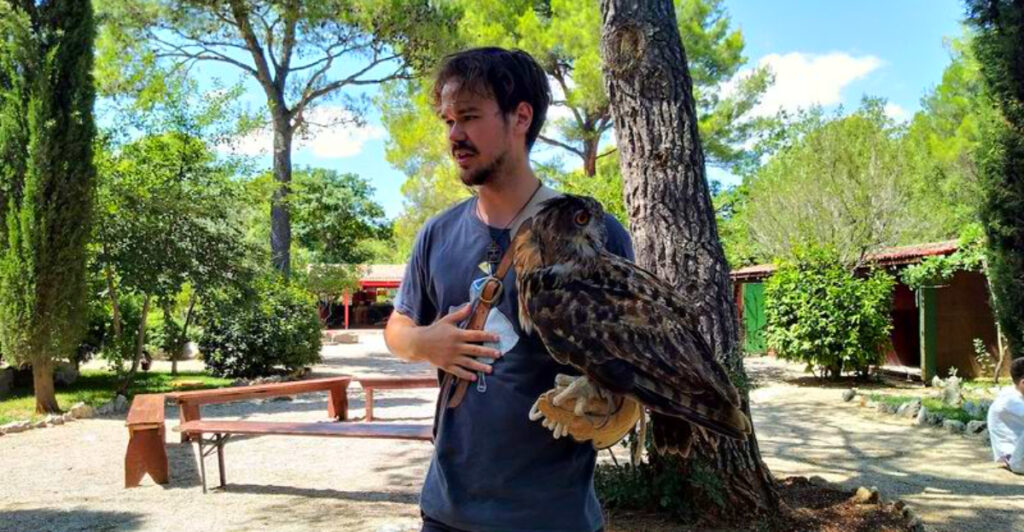
Falconry is one of the oldest partnerships between humans and wild animals, dating back at least 4,000 years. A trained falcon or hawk hunting alongside its handler is not a circus trick but a carefully built relationship that takes months of patient work. Today, UNESCO officially recognizes falconry as an Intangible Cultural Heritage of Humanity, shared by over 40 countries. Yet knowing that fact and actually watching a peregrine falcon drop out of the sky at 200 miles per hour are two very different experiences.
Across the world, a remarkable collection of hospitals, heritage centers, castle arenas, and archive libraries are making sure this art does not quietly fade away. Some of these places let you hold a bird on your own fist. Others guard centuries of handwritten manuscripts. All of them are doing something genuinely extraordinary.
Read on to find 12 of the best.
1. Abu Dhabi Falcon Hospital, Abu Dhabi, UAE
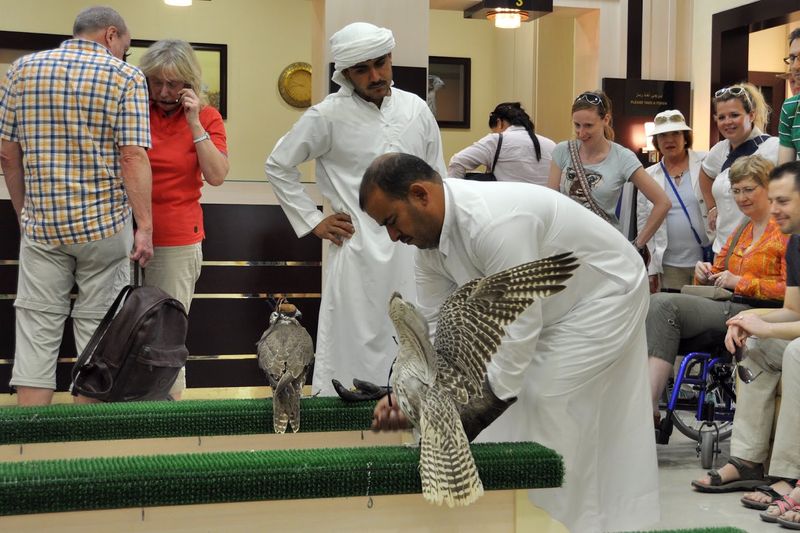
The world’s largest facility dedicated exclusively to falcons is not in a medieval castle or a remote wilderness but in the heart of a modern Gulf city. Founded in 1999, the Abu Dhabi Falcon Hospital treats roughly 11,000 birds every single year, with services ranging from routine check-ups to specialized eye surgery.
The tourism program launched in 2007 gives visitors a two-hour guided tour that covers a dedicated museum, traditional falconry equipment, and live flying demonstrations. Guests can hold a falcon on their gloved arm, which is the kind of photo opportunity that genuinely earns its place on a fridge door.
The hospital also runs the Sheikh Zayed Falcon Release Programme, rehabilitating wild birds for return to their natural migratory routes. Over 200 individual air-conditioned rooms house patients, a level of comfort that many humans would not complain about.
2. Hawk Conservancy Trust, Andover, England
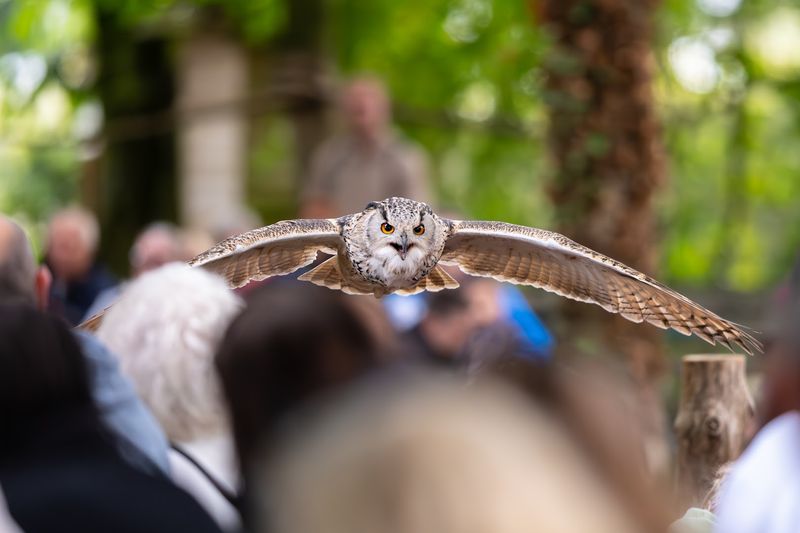
Few conservation charities put on a show quite like the Hawk Conservancy Trust near Andover, where eagles, vultures, owls, and falcons take to the Hampshire sky in multiple daily demonstrations. The Trust is a registered charity, which means every ticket sold feeds directly back into raptor rehabilitation, breeding programs, and international field research.
The flying displays are designed to reflect natural behavior rather than trained tricks, so audiences watch a vulture soar on thermals or a peregrine stoop at speed rather than a choreographed circus routine. Live commentary keeps the information accessible for children and genuinely interesting for adults.
On-site, the National Bird of Prey Hospital treats injured raptors year-round, and the breeding center has produced offspring of several endangered species. Educational programs run for school groups and aspiring falconers, giving the Trust a reach that extends well beyond its Hampshire postcode.
3. Acrobati del Sole, Cividale del Friuli, Italy
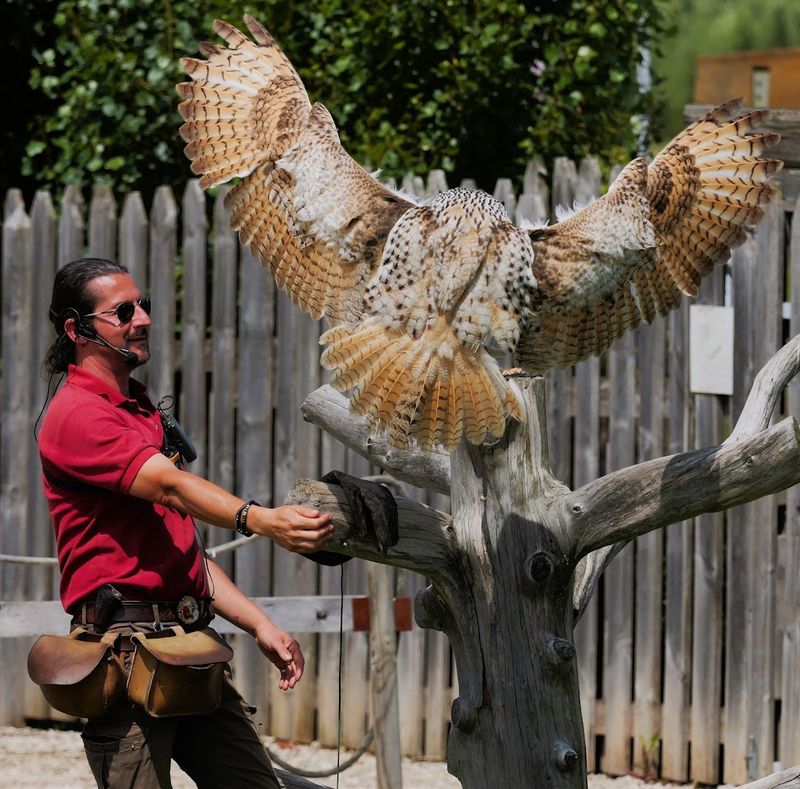
History does not sit still at Acrobati del Sole. Based in Cividale del Friuli, this Italian troupe specializes in historically researched falconry performances that reconstruct medieval practices with a level of accuracy that impresses both casual audiences and academic observers.
Performers wear period-appropriate costumes and use equipment modeled on historical designs, from hand-stitched hoods to traditional bells and jesses. The birds, including multiple falcon, hawk, and owl species, are trained to perform aerial sequences that reflect genuine medieval hunting techniques rather than modern showmanship conventions.
Acrobati del Sole regularly appears at historical festivals, castle events, and cultural reenactments across Italy and other parts of Europe, bringing falconry to audiences who might never visit a dedicated center. Animal welfare is central to their operation, and the educational content woven into each performance ensures that spectators leave knowing considerably more about raptors than when they arrived.
4. The Falconry Centre, Dubrava (Šibenik), Croatia
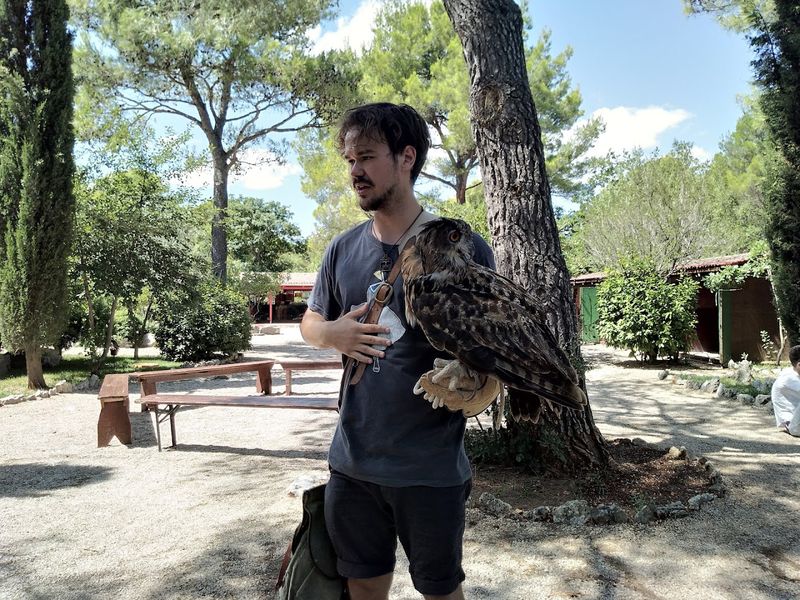
Croatia is better known for its coastline than its raptors, but the Falconry Centre in Dubrava near Šibenik is quietly changing that reputation. The center was built around a core mission of rehabilitating injured birds of prey and returning them to the wild, which gives every visit a conservation purpose that goes beyond entertainment.
Daily presentations feature owls, hawks, and falcons, and handlers walk visitors through diet, hunting technique, and the specific threats each species faces in the Croatian ecosystem. Guests can interact directly with some of the resident birds, holding them under careful supervision.
The setup is deliberately calm and low-key, prioritizing the birds’ welfare over theatrical spectacle. Founded by raptor specialist Emilikek, the center serves as a key educational resource for local schools and international tourists alike, making the case that understanding a predator is the first step toward protecting it.
5. The Falconry Centre, Hagley, England
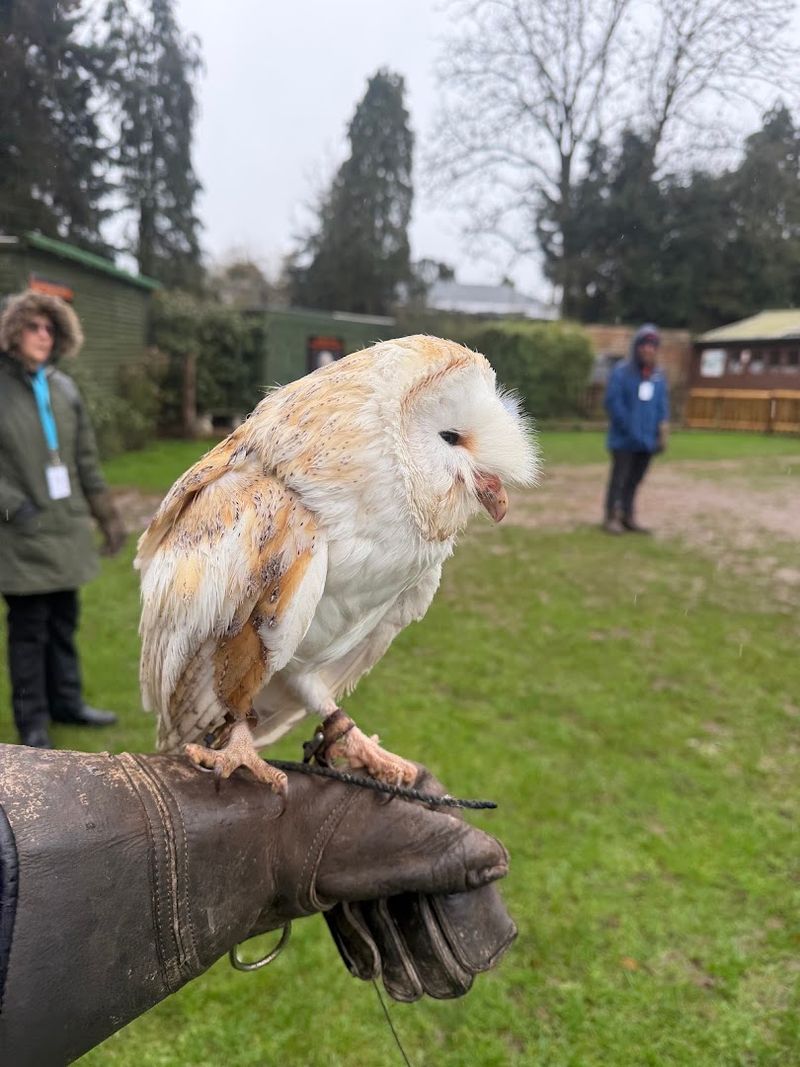
Hagley Hall is one of England’s finest Georgian stately homes, and the falconry center operating within its grounds adds an entirely different dimension to a visit. Rather than watching from behind a rope, guests at The Falconry Centre actually handle and fly the birds themselves, working through the basics of falconry under close professional supervision.
Programs range from two-hour introductory sessions to full-day courses, covering glove work, recall training, and the fundamentals of raptor care. Species available include Harris hawks, barn owls, and various falcons, each with distinct personalities and flight characteristics that instructors are skilled at explaining.
The parkland setting gives the birds genuine space to demonstrate their capabilities, which makes the experience feel authentic rather than staged. The center’s educational emphasis on conservation status and ethical husbandry ensures visitors leave with practical knowledge rather than just a memorable afternoon. It suits complete beginners and returning enthusiasts equally well.
6. Landskron Castle Eagle Arena (Adler Arena Burg Landskron), Villach, Austria
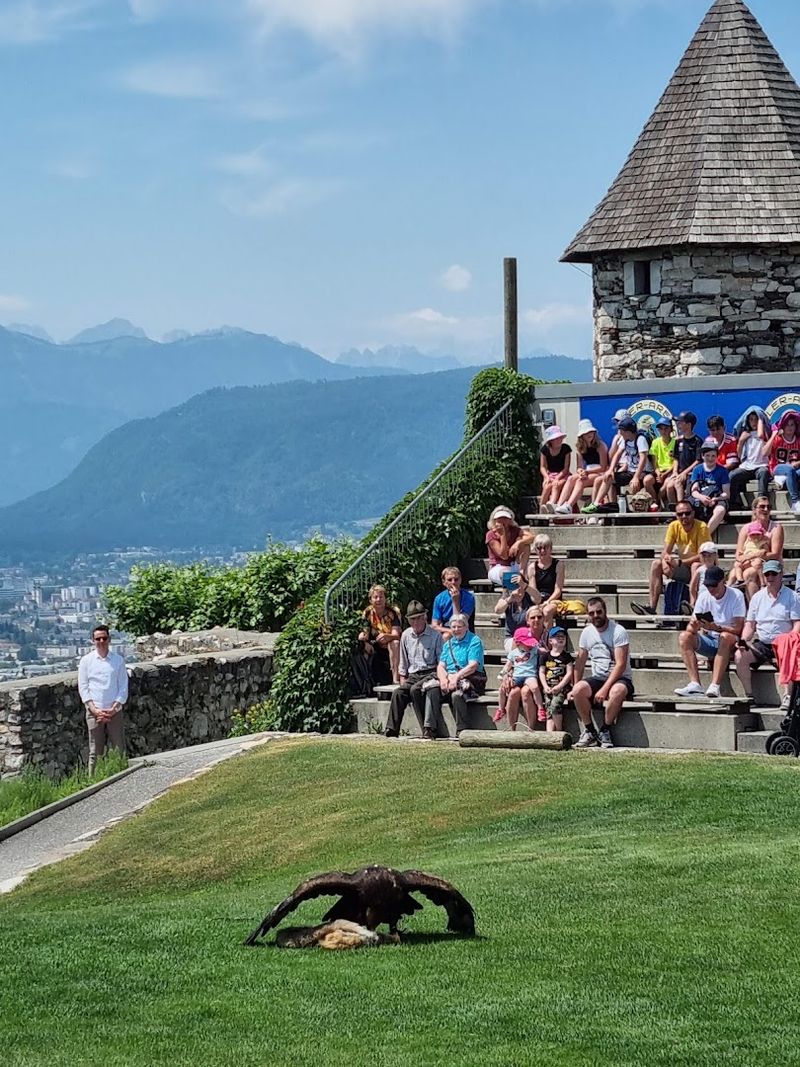
There are bird of prey shows, and then there is the Adler Arena at Landskron Castle, where a 900-year-old ruin perched above Lake Ossiach serves as the stage for some of the most visually striking raptor demonstrations in Central Europe. Eagles launch from ancient stonework and glide over audience heads with a wingspan that tends to prompt involuntary gasps.
Daily shows feature eagles, vultures, and hawks, with handlers explaining each bird’s natural history, migratory patterns, and conservation challenges. The open-air arena design means birds fly in genuinely wide arcs rather than short circles, which gives a much more honest impression of what these animals can do.
The castle grounds themselves are worth exploring between shows, adding a layer of historical context to the visit. Conservation education is built into every performance, and the center’s breeding program for several threatened species gives the entertainment a meaningful scientific purpose behind the spectacle.
7. Adlerwarte Berlebeck, Detmold, Germany
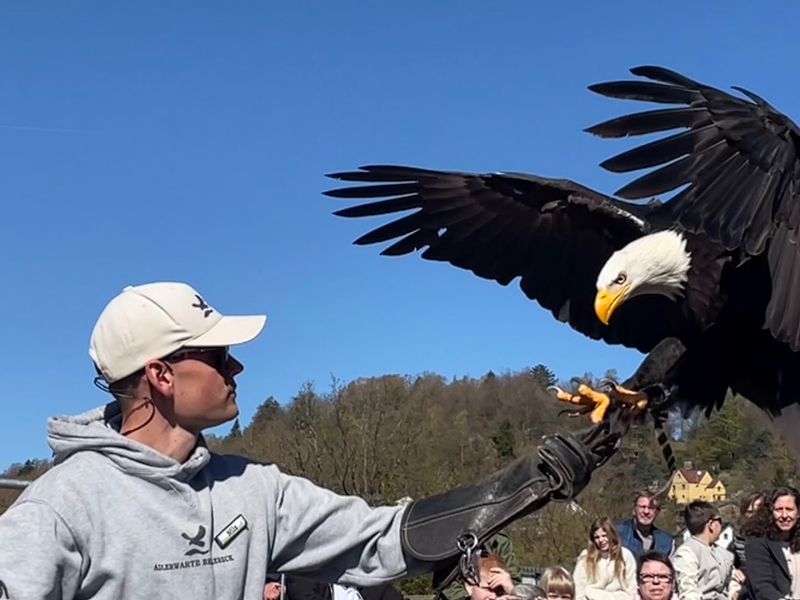
Germany’s Adlerwarte Berlebeck has been operating since 1929, which makes it one of the oldest bird of prey sanctuaries in Europe and gives its collection a depth that newer facilities simply cannot match. More than 160 birds from 48 species live here, including eagle owls, bearded vultures, bald eagles, and multiple falcon species, all housed in large, well-maintained aviaries.
Daily flight demonstrations take place in a natural amphitheater setting at the edge of the Teutoburg Forest, where birds have room to perform extended flights that reflect genuine hunting behavior. Handlers provide detailed biological commentary that rewards attentive listeners with real knowledge rather than surface-level facts.
Adlerwarte Berlebeck participates in European breeding programs for several endangered raptor species, making conservation a practical daily activity rather than a marketing statement. The combination of historical depth, species variety, and genuine scientific engagement puts this sanctuary in a category of its own among German wildlife attractions.
8. Cotswold Falconry Centre, Moreton-in-Marsh, England
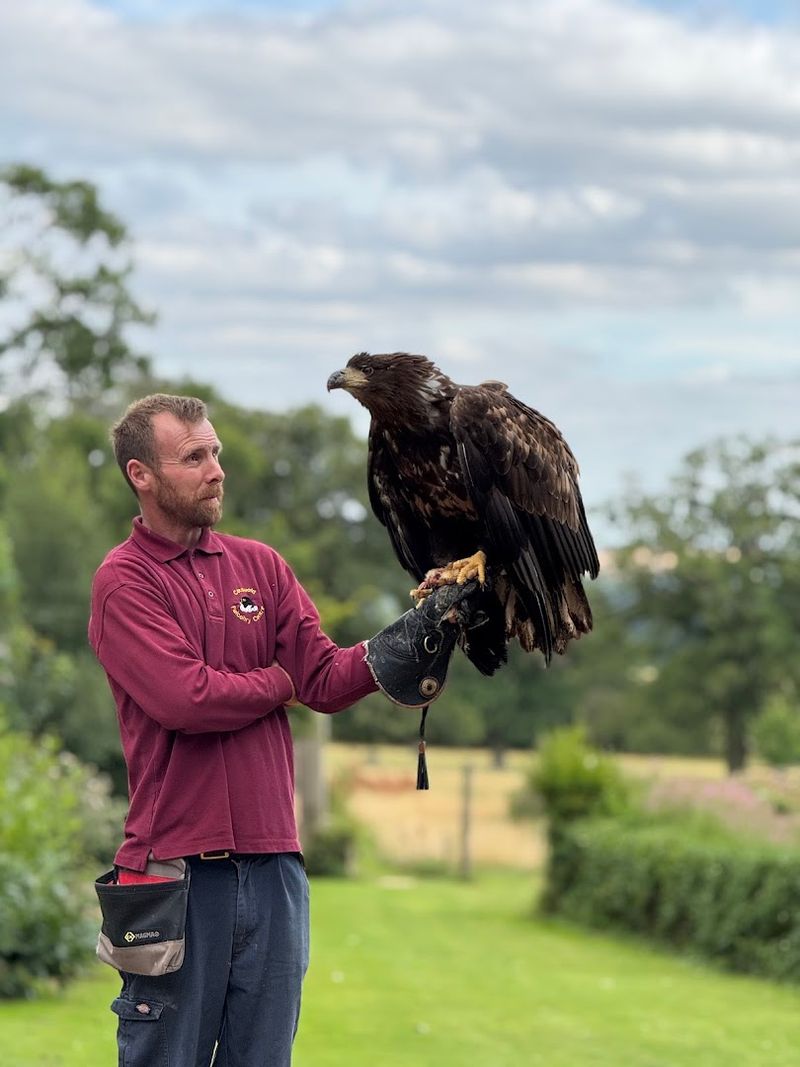
The Cotswold Falconry Centre near Moreton-in-Marsh runs four flying demonstrations a day, which is more than most comparable facilities in England and reflects a genuine commitment to keeping visitors engaged rather than just moving them through a gift shop. The collection covers falcons, hawks, eagles, and owls, giving each show a varied lineup that does not repeat itself.
Expert falconers provide commentary that balances humor with solid ornithological information, making the talks enjoyable for children without boring the adults standing next to them. Aviaries between show times allow guests to observe birds at close range and take photographs without the pressure of a timed display.
The center’s breeding program contributes to several species reintroduction projects, and its educational outreach extends to school visits and youth programs. The relaxed atmosphere and scenic Cotswolds setting make it an easy full-day destination, particularly for families who want learning to feel like a leisure activity rather than a classroom exercise.
9. Feathers and Fur Falconry Centre, Bracknell, England
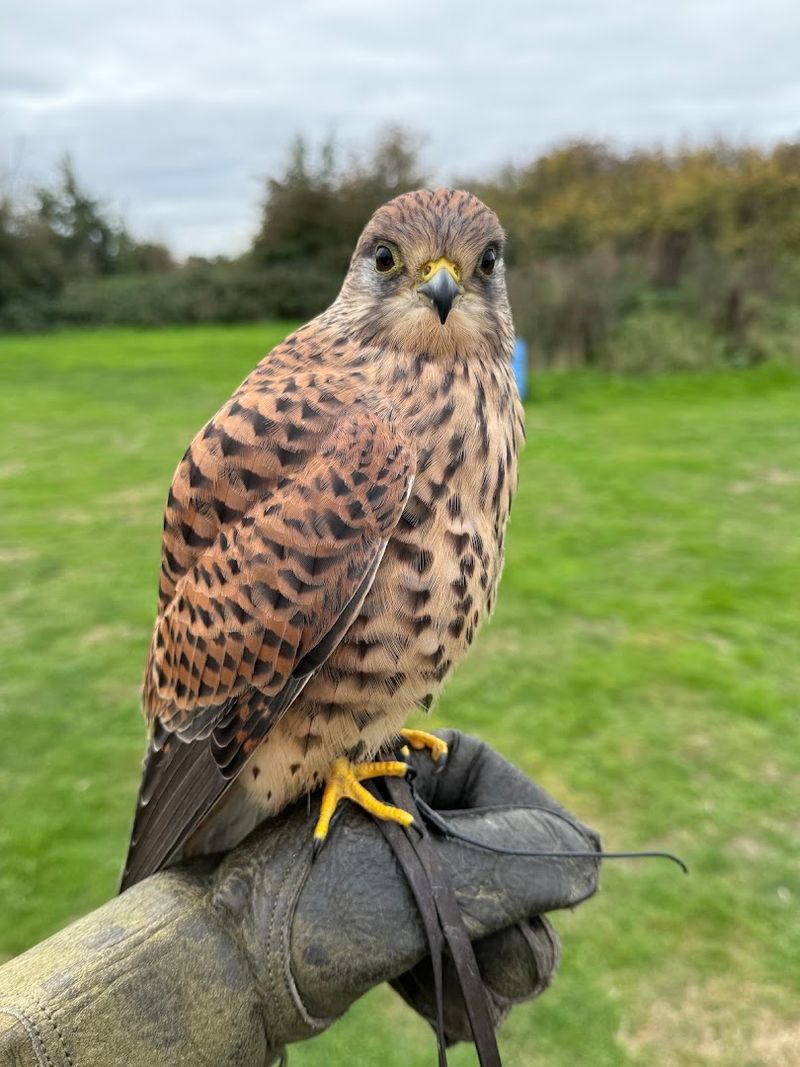
Feathers and Fur in Bracknell takes a deliberately personal approach that sets it apart from larger display-focused centers. Instead of stadium seating and overhead commentary, the center offers hawk walks, owl encounters, and full-day courses built around small groups or private bookings, which means the bird on your fist gets your full attention and you get the falconer’s.
Harris hawks, barn owls, and various falcons feature across the different experience packages, each chosen for their suitability to hands-on interaction with people who have no prior falconry background. Instructors explain training methodology, equipment, and raptor welfare in a way that feels like a conversation rather than a lecture.
The center’s strong animal welfare standards are evident in the condition and behavior of the birds, which are calm, well-socialized, and clearly accustomed to positive handling. For anyone who finds large public shows too distant and impersonal, this Berkshire center delivers a more direct and lasting introduction to falconry.
10. La Volerie des Aigles, Kintzheim, France
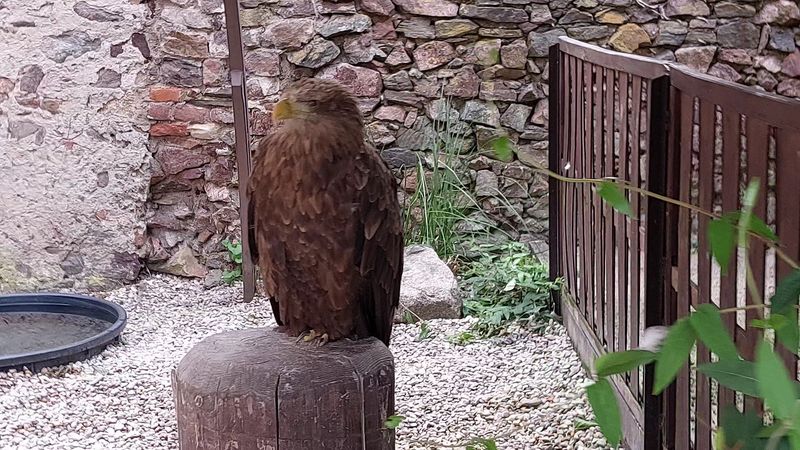
Kintzheim Castle in Alsace has stood since the 13th century, but its most dramatic chapter might be the one written every afternoon when vultures, eagles, kites, and falcons launch from its ramparts and circle above a crowd of upturned faces. La Volerie des Aigles has been staging these shows since 1968, long enough to have refined the format into something that feels genuinely theatrical without sacrificing authenticity.
Birds fly in wide, natural arcs over the open castle courtyard, sometimes dropping to within arm’s reach of the audience before climbing again. Handlers explain each species’ ecology, migratory range, and conservation status throughout the performance, keeping the educational content visible without interrupting the spectacle.
Active breeding programs for several threatened raptor species run year-round behind the scenes, giving the center a conservation record that matches its entertainment reputation. The castle setting, the quality of the birds, and the depth of expertise on display make La Volerie des Aigles one of the most complete falconry experiences in Western Europe.
11. Wingspan National Bird of Prey Centre, Rotorua, New Zealand
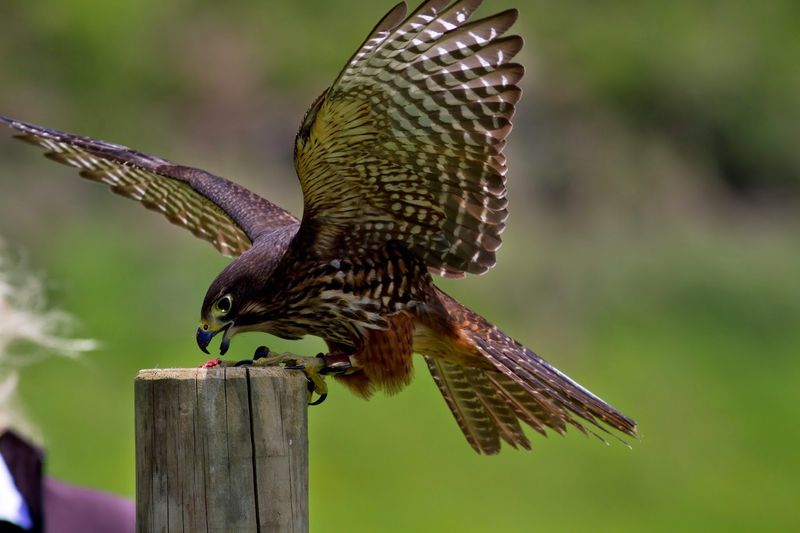
New Zealand’s only dedicated national bird of prey center combines ancient falconry traditions with modern conservation in a way few places anywhere in the world can match. Visitors can watch the popular Flight of the Falcon demonstration, where expert handlers showcase the remarkable speed and agility of the endangered New Zealand falcon, or kārearea, while explaining how falconry techniques help rehabilitate and train these remarkable birds.
Rather than presenting falconry purely as entertainment, Wingspan uses it as a tool for education, research, and conservation. The charitable trust breeds and rehabilitates native raptors, supports wild falcon populations, and introduces visitors to one of New Zealand’s rarest birds through close encounters, flying displays, and a small museum dedicated to the history of falconry. It is a unique experience found nowhere else in the country.
12. The Archives of Falconry, Boise, Idaho
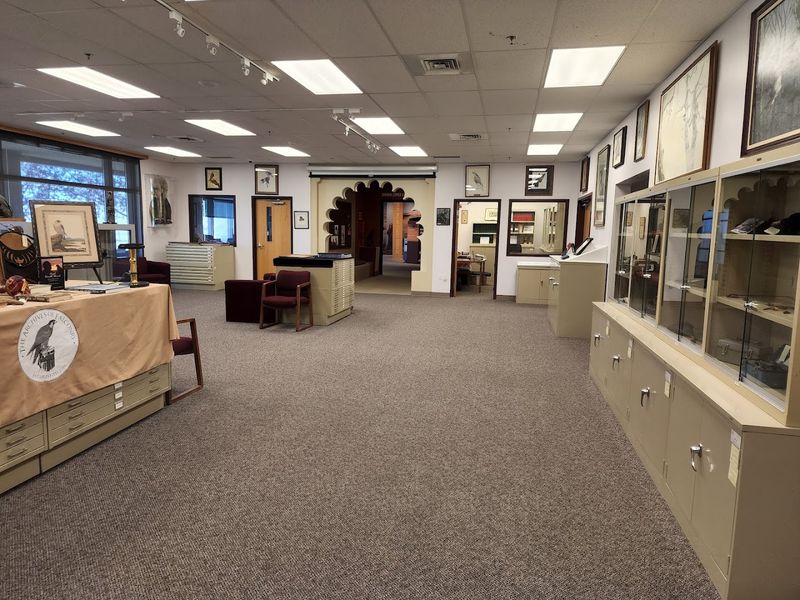
Most people do not associate Boise, Idaho with medieval manuscripts, but the Archives of Falconry housed at the World Center for Birds of Prey holds one of the most significant collections of falconry history anywhere on the planet. Books, journals, photographs, artwork, and artifacts from across centuries and continents are preserved here with the same care usually reserved for national treasures.
Researchers can explore rare texts written by royal falconers, personal diaries of 20th-century practitioners, and a photographic record spanning decades of the sport across multiple cultures. Physical equipment fills the collection too, including hand-stitched hoods, ornate lures, and traditional perches that connect visitors to the craft in a tactile way.
The Archives also supports ongoing academic research and links historical practices to modern conservation science. For anyone who wants to understand falconry as a cultural force rather than just a spectator sport, this is the essential starting point.
Share this story