Most people assume that wild animals and busy human settlements don’t mix, but the world keeps proving that assumption wrong. From deer that stroll through city parks to penguins that waddle past cafes, there are places on every continent where wildlife has decided that humans are simply part of the neighborhood. Some of these spots are famous tourist destinations, while others are just ordinary towns that happen to share their streets with extraordinary creatures. What makes these places so fascinating is that the wildlife doesn’t hide, doesn’t run, and doesn’t seem particularly bothered by the crowds.
Visitors often describe the experience as surreal, like stumbling into a nature documentary that nobody told them was filming. Whether you are a serious wildlife enthusiast or just someone who would enjoy watching a bison block traffic, this list has something genuinely surprising for every kind of traveler.
1. Nara Park, Nara, Japan
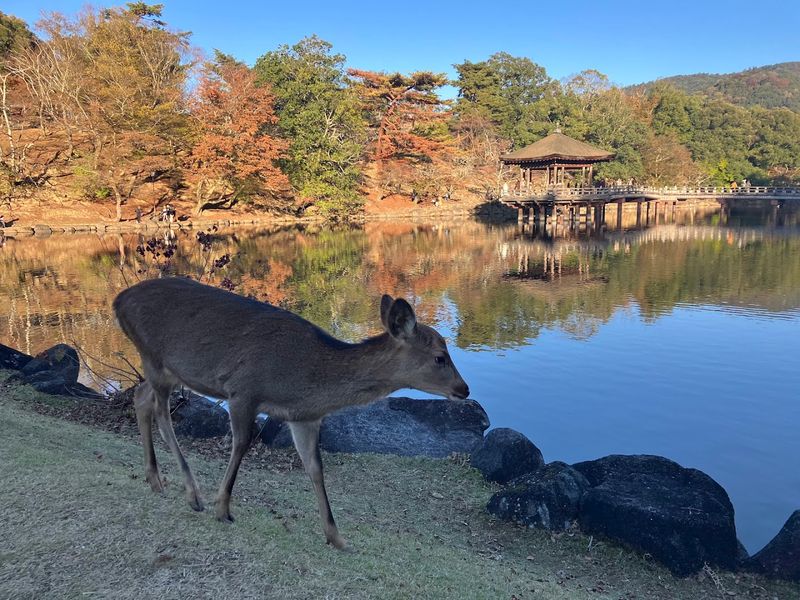
About 1,200 Sika deer roam Nara Park without fences, gates, or any real sense that they answer to anyone. They wander across temple grounds, sit on lawns, and occasionally help themselves to maps, snacks, or anything else left unattended near visitor walkways.
The deer are officially designated as national treasures in Japan, a title they seem fully aware of. Vendors sell special deer crackers called shika senbei, and the animals have learned exactly which people are holding them.
Nara Park covers around 660 hectares and includes famous landmarks like Todai-ji Temple, home to one of Japan’s largest bronze Buddha statues. The combination of ancient architecture and completely unbothered wildlife creates a setting that feels genuinely one of a kind. First-time visitors are often surprised by how assertive the deer can be when crackers are involved.
2. Sacred Monkey Forest Sanctuary, Ubud, Bali, Indonesia
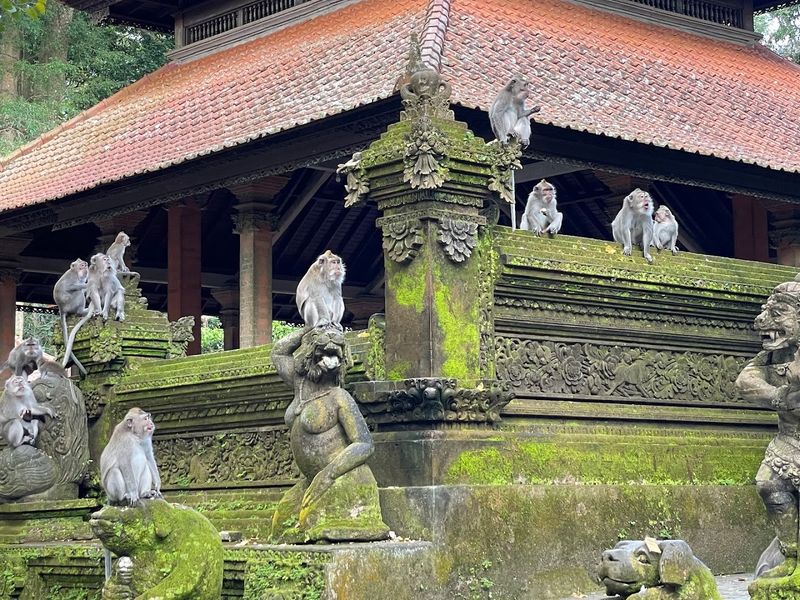
Right in the middle of Ubud, one of Bali’s most visited cultural hubs, around 700 long-tailed macaques treat a 12-hectare forest sanctuary as their personal kingdom. The sanctuary includes three Hindu temples, stone bridges, and winding jungle paths, all actively used by both monkeys and visitors.
The macaques are divided into social groups, each with its own territory within the forest. Watching them interact, groom each other, and occasionally steal bananas from distracted tourists is genuinely entertaining, though rangers are quick to advise visitors on what not to bring inside.
The sanctuary has real conservation and research value, with ongoing studies on the macaque population’s behavior and health. Entry fees support local community programs and forest preservation. It is one of those places where the line between a cultural site and a wildlife reserve is completely blurred, and that blurring is exactly what makes it worth a visit.
3. Jigokudani Monkey Park, Yamanouchi, Nagano, Japan
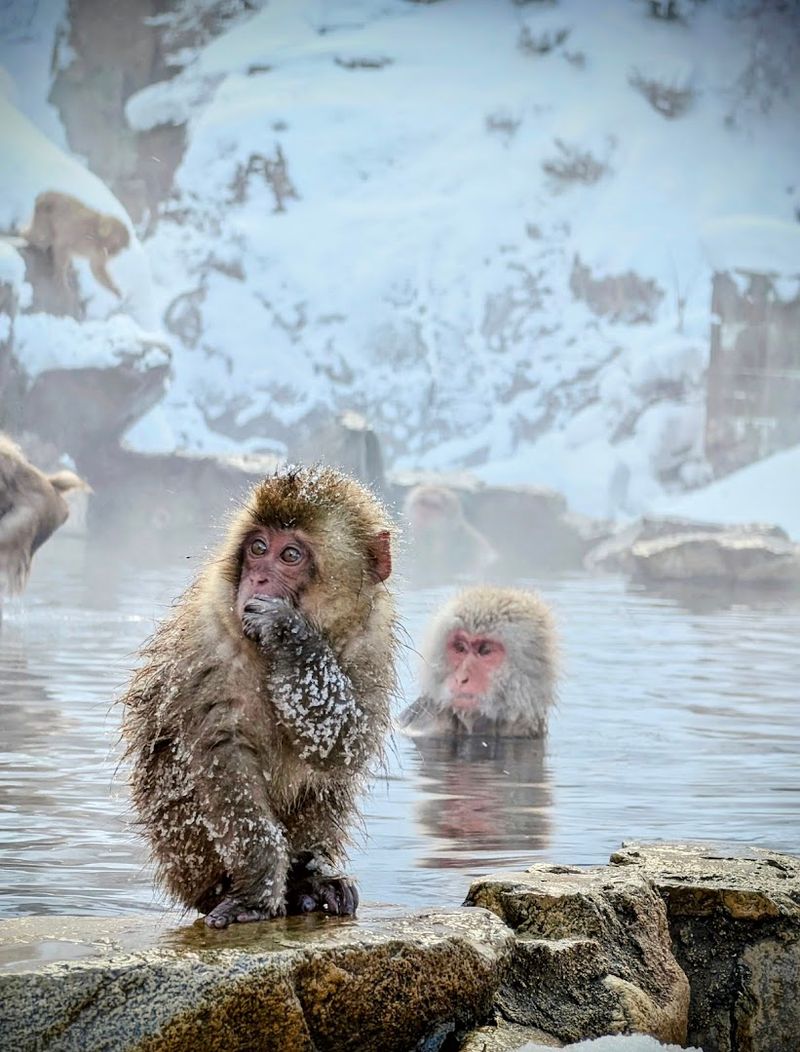
The name Jigokudani translates to Hell’s Valley, which sounds dramatic until you realize it refers to the steam vents and rugged terrain of the steep mountain valley rather than anything actually threatening. The Japanese macaques that live here have become globally recognized for their habit of sitting in natural hot spring pools during winter months.
Getting to the park requires a walk of around 1.6 kilometers through forested mountain terrain, with no vehicle access to the pool area. That walk filters out the least committed visitors and adds a genuine sense of arrival when the monkeys finally come into view.
The park is open year-round, but winter visits between December and March offer the most striking scenes, with snow covering the surrounding landscape while the monkeys sit completely at ease. Around 160 macaques are part of the resident troop, and they move freely between the valley and the surrounding forest throughout the day.
4. Boulders Beach, Simon’s Town, Western Cape, South Africa
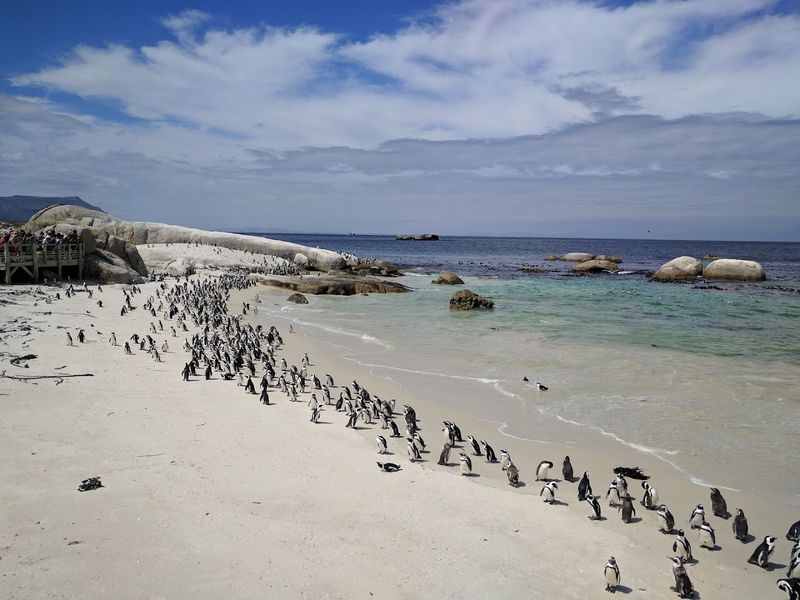
Simon’s Town is a working naval town with a main street full of cafes, shops, and ordinary daily life, and yet African penguins have been nesting just a short walk away since the mid-1980s. Boulders Beach, now part of Table Mountain National Park, protects a colony of around 3,000 of these birds.
African penguins are an endangered species, which gives a visit here more weight than a typical wildlife outing. The boardwalks built through the colony allow visitors to get surprisingly close without disturbing nesting areas, and the penguins show almost no concern about being watched.
The granite boulders that give the beach its name also create sheltered swimming areas with calm, clear water, making it genuinely possible to swim near penguins in the ocean. Few wildlife experiences anywhere in the world combine this level of accessibility with this level of ecological significance. Entry is managed through SANParks, with fees contributing to conservation efforts.
5. Itsukushima Island, Hatsukaichi, Hiroshima, Japan
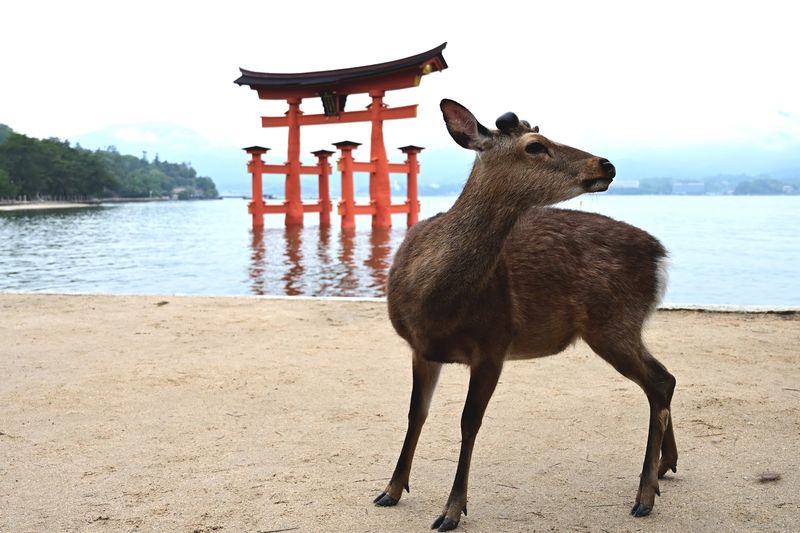
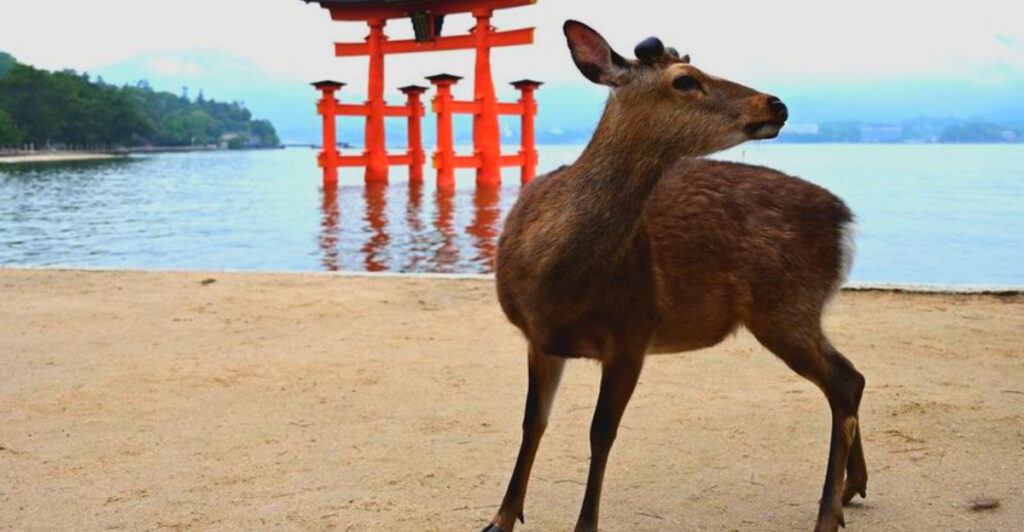
Miyajima Island gets millions of visitors each year for its iconic floating torii gate, but the deer that share the island’s narrow lanes and shrine approaches are equally unforgettable. They move through the shopping streets with a calm that borders on theatrical confidence.
Unlike Nara, feeding wildlife here is officially discouraged, which means the deer have developed a habit of simply taking whatever interests them. Paper maps, shopping bags, and unsecured snacks are all fair game in their view.
The island has no cars, which gives both the wildlife and the visitors an unusual amount of freedom to move around at their own pace. Ferries connect Miyajima to the mainland in about ten minutes, making it an easy day trip from Hiroshima. The combination of deer, forested hills, traditional architecture, and the famous gate makes this one of Japan’s most layered and memorable destinations.
6. Seal Bay Conservation Park, Kangaroo Island, South Australia
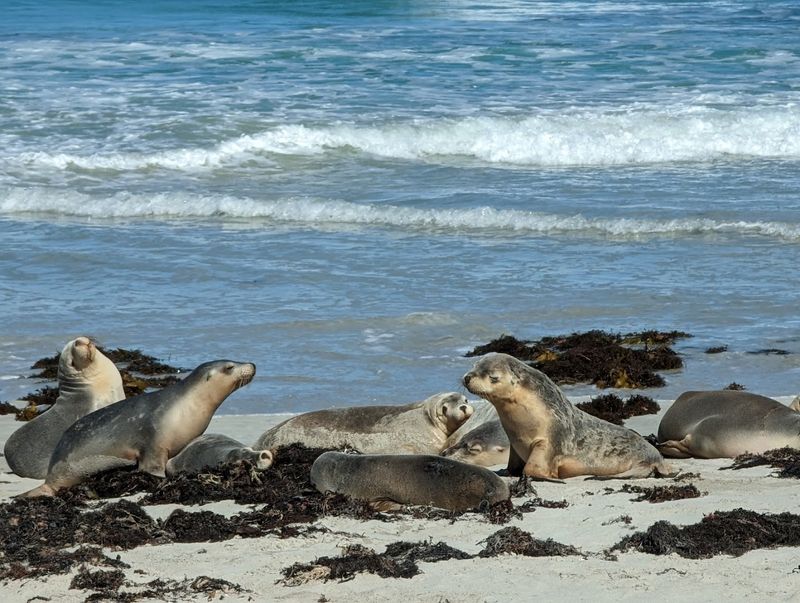
Kangaroo Island already has a reputation as one of Australia’s best wildlife destinations, and Seal Bay is one of the main reasons why. The park protects one of the largest accessible colonies of Australian sea lions in the country, with around 800 animals using the beach as a permanent base.
Australian sea lions are among the rarest sea lion species in the world, making this colony genuinely significant beyond its obvious visual appeal. Guided tours take small groups directly onto the beach, where the animals rest, nurse pups, and move around with complete indifference to human observers.
The beach itself is broad and windswept, with rolling dunes backing onto coastal scrub. A self-guided boardwalk option is also available for visitors who prefer to explore at their own pace. The park is managed by the South Australian Department for Environment and Water, and tour sizes are kept small to minimize impact on the colony.
7. Kaikōura Peninsula Walkway, Kaikōura, Canterbury, New Zealand
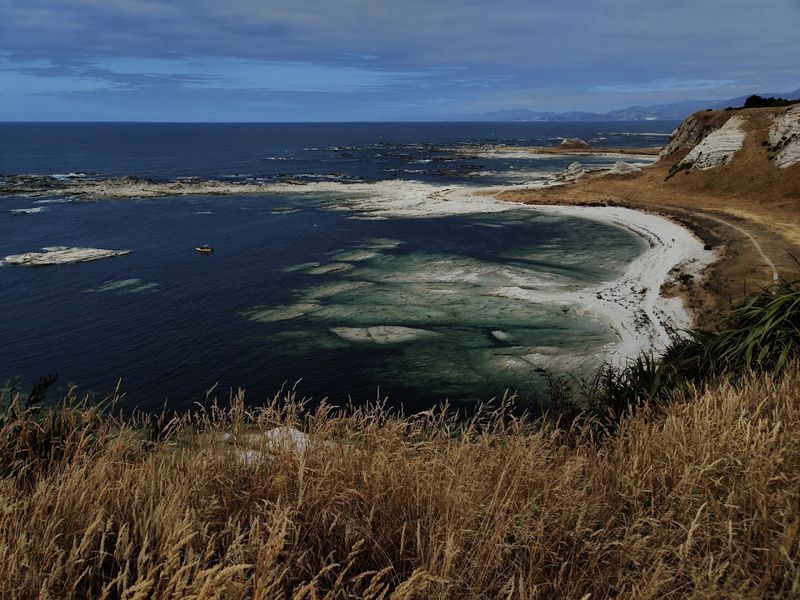
Kaikōura is a small coastal town in New Zealand’s South Island that punches well above its weight when it comes to wildlife. The peninsula walkway starts near the town center and runs along dramatic coastal cliffs and rock platforms for about 11 kilometers, with fur seals visible at close range along much of the route.
New Zealand fur seals haul out on the rocky platforms year-round, and the walkway passes within a few meters of resting animals at several points. Rangers and signage advise visitors to keep a respectful distance, as the seals are wild and can move faster than most people expect.
Beyond seals, the walkway also offers regular sightings of shearwaters, shags, and other seabirds. Sperm whales are present in the deep offshore canyon throughout the year, making Kaikōura one of the few places in the world where whale watching operates every month. The town’s compact layout means wildlife access begins almost immediately after arrival.
8. Assateague Island National Seashore, Berlin, Maryland, United States
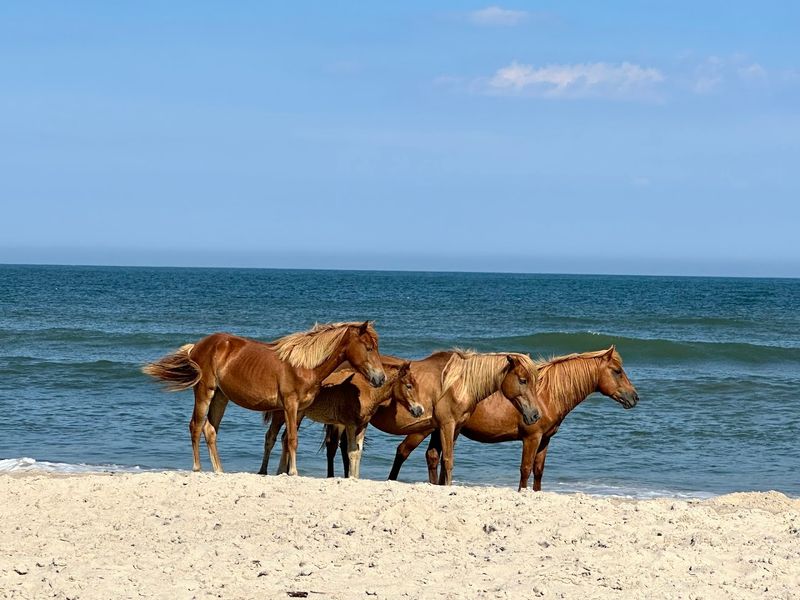
Assateague Island stretches along the Maryland and Virginia coastline, and it is home to two separate herds of wild horses that roam beaches, marshes, and roads as freely as if the national seashore belongs entirely to them, which, by most practical measures, it does.
The horses are not managed pets or trained animals. They are genuinely feral, descended from domestic horses that have lived on the island for centuries. The Maryland herd is managed by the National Park Service, while the Virginia herd is managed by the Chincoteague Volunteer Fire Company through an annual pony swim and auction that has taken place since 1925.
Campgrounds and visitor facilities sit right within the horses’ territory, so encounters happen constantly and without any planning required. The Atlantic shoreline setting adds a raw, open quality to every sighting. Visitors are firmly reminded not to feed or approach the horses, advice that the animals’ unpredictable behavior makes easy to follow.
9. Custer State Park, Custer, South Dakota, United States
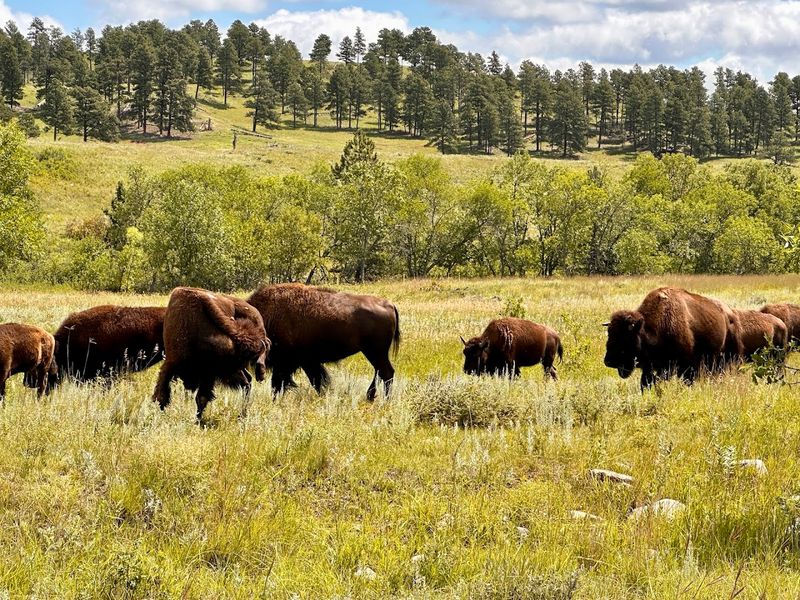
Custer State Park manages one of the largest publicly owned bison herds in North America, with around 1,300 animals spread across 71,000 acres of Black Hills landscape. The Wildlife Loop Road, a 18-mile scenic drive through the park’s open grasslands, is where most visitors encounter bison at very close range.
Traffic jams caused by bison crossing the road are a regular occurrence and are treated by most visitors as a highlight rather than an inconvenience. The animals are large enough that a standard car feels quite small beside them, which is a perspective adjustment that happens fast.
Beyond bison, the park also supports populations of elk, pronghorn, bighorn sheep, coyotes, and burros that have become famous for approaching vehicles in search of snacks. The park hosts an annual bison roundup each September, drawing large crowds who come to watch rangers and riders manage the herd. Campgrounds, cabins, and lodges make extended stays very manageable.
10. Richmond Park, London, England, United Kingdom
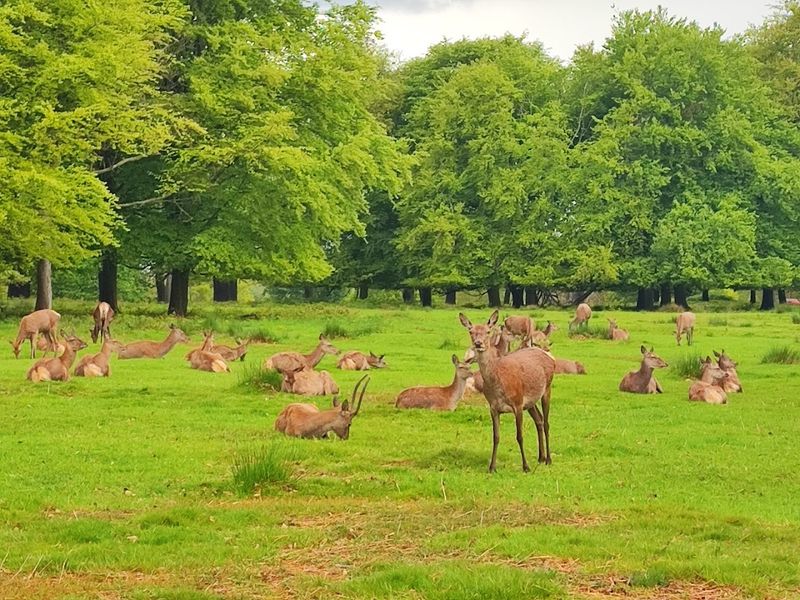
Richmond Park covers 2,500 acres inside Greater London, making it the largest of the Royal Parks and one of the most unlikely places in any major city to encounter wild deer. Around 630 red and fallow deer roam the park freely, as they have done since Charles I enclosed the land as a hunting ground in 1637.
The deer are genuinely wild animals and can be unpredictable, particularly during the autumn rutting season when stags become territorial. The park posts clear guidelines about maintaining distance, and rangers monitor the situation closely during peak periods.
What makes Richmond Park remarkable is the contrast it offers. Ancient oaks, open meadows, and deer herds exist just a short train ride from central London, with the city skyline occasionally visible in the distance. Isabella Plantation, a woodland garden within the park, adds another layer of interest for visitors who want more than wildlife watching during their visit.
11. St James’s Park, London, England, United Kingdom
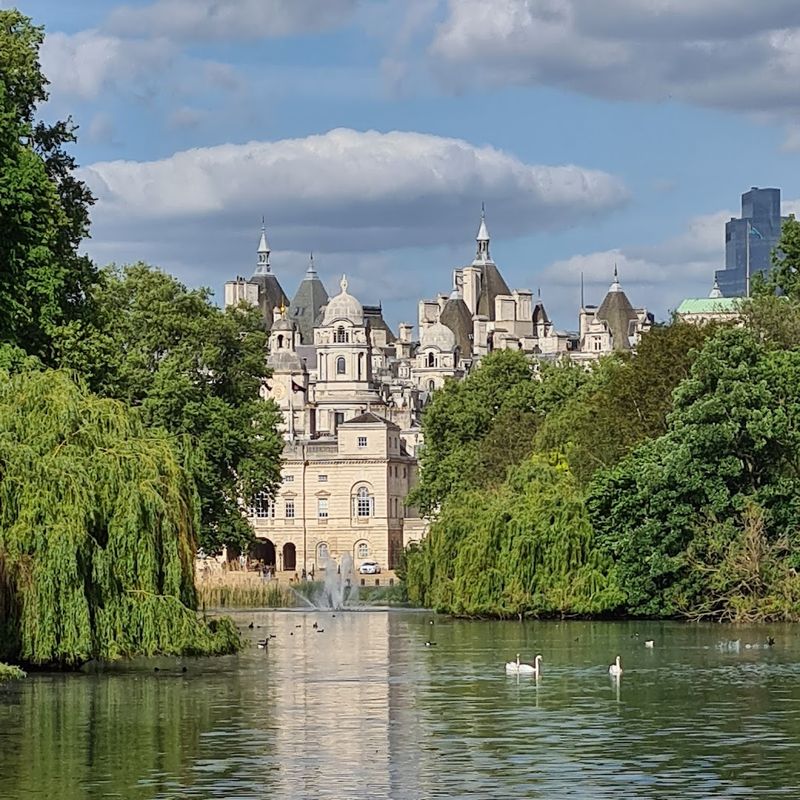
St James’s Park occupies 23 acres right at the center of London’s ceremonial district, bordered by Buckingham Palace, the Mall, and Horse Guards Parade. Despite its formal surroundings, the park has a surprisingly lively wildlife scene anchored by its famous resident pelicans.
The pelicans have lived in the park since 1664, when the Russian Ambassador gifted the first pair to King Charles II. The current birds are fed daily by park staff, and feeding sessions draw regular crowds of visitors who seem genuinely surprised that pelicans exist this close to a royal palace.
The lake also hosts over 15 species of waterfowl, including coots, moorhens, tufted ducks, and geese, many of which are remarkably comfortable around people. Grey squirrels move through the park’s trees and lawns throughout the day. For a park this small and this central, the variety of wildlife it supports on a daily basis is genuinely impressive.
12. Elk Island National Park, Lamont County, Alberta, Canada
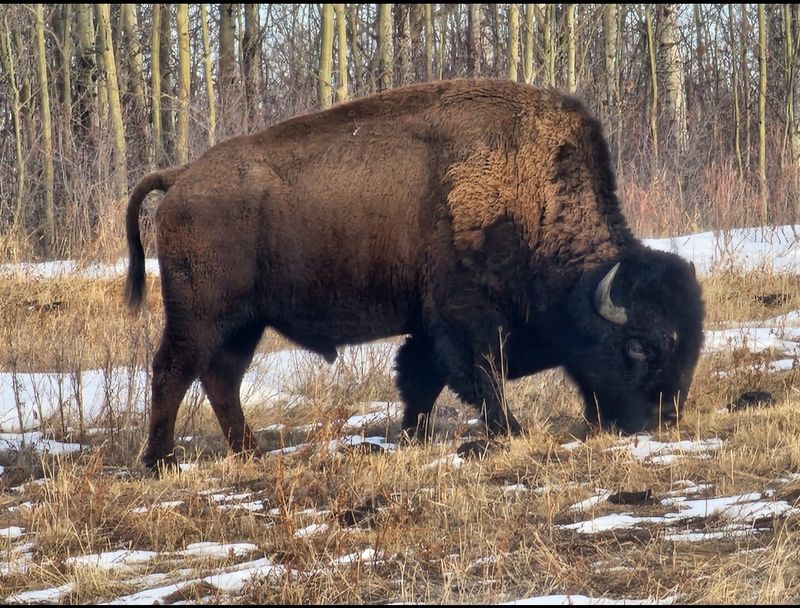
Elk Island National Park sits about 35 kilometers east of Edmonton, making it one of the most accessible national parks in Canada relative to a major city. The park is fully fenced, which means its populations of plains bison, wood bison, elk, moose, and white-tailed deer are contained within a defined area but still entirely wild in their behavior.
The park played a significant conservation role in the early 20th century, when it became a refuge for plains bison at a time when the species was near collapse. Today it manages separate herds of plains and wood bison, the latter being the larger and rarer of the two subspecies.
Driving or cycling the park’s roads frequently results in bison sightings at very short range, and the animals are under no obligation to move for anyone. Birding is also strong here, with trumpeter swans, loons, and over 250 other species recorded. Day trips from Edmonton are straightforward, and the park is open year-round.
13. Banff National Park, Banff, Alberta, Canada
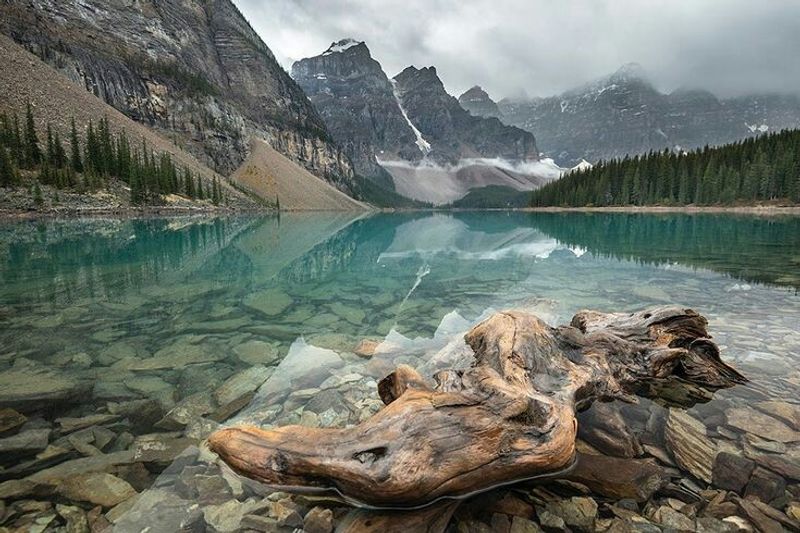
Banff is the only incorporated municipality inside a Canadian national park, which creates a permanent and fascinating tension between a fully functioning mountain town and the wild Rocky Mountain ecosystem surrounding it. Elk, in particular, treat the townsite as part of their range and appear on sidewalks, in hotel parking lots, and near school grounds on a regular basis.
Parks Canada manages wildlife corridors and crossing structures throughout the park to reduce conflict between animals and traffic on the Trans-Canada Highway. These underpasses and overpasses are used by wolves, bears, cougars, and elk, and have been studied internationally as a model for wildlife infrastructure.
The town of Banff has around 8,000 permanent residents and serves millions of visitors annually, yet bears are spotted within town limits each year during active seasons. Visitors are briefed on bear safety at most accommodation points. The park covers 6,641 square kilometers of protected Rocky Mountain habitat, making every drive through it a potential wildlife encounter.
14. Chobe National Park, Kasane, Chobe District, Botswana
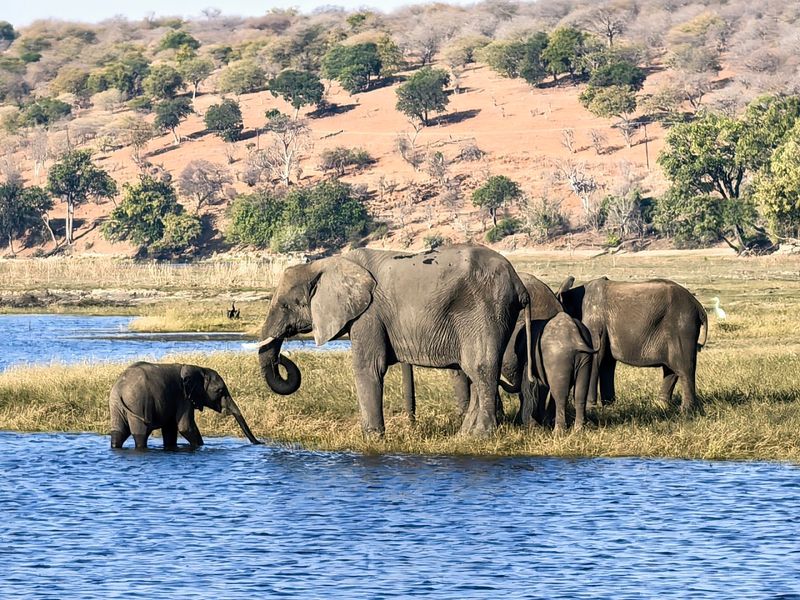
Chobe National Park has one of the highest concentrations of African elephants anywhere on the continent, with estimates suggesting the park and surrounding area support over 120,000 animals. The Chobe River forms the northern boundary of the park and flows directly beside the town of Kasane, meaning wildlife and daily human activity overlap at the water’s edge constantly.
Boat safaris on the Chobe River bring visitors within close range of elephants swimming across channels, hippos surfacing near the banks, and crocodiles basking on exposed sandbars. Game drives in the park’s interior cover different terrain and different species, including lions, leopards, wild dogs, and large buffalo herds.
Kasane itself is a small town with lodges, guesthouses, and a functioning border crossing shared with Zimbabwe, Zambia, and Namibia. The four-country junction nearby makes it a logical hub for regional safari travel. Unlike many major wildlife destinations, Chobe feels genuinely connected to its surrounding landscape rather than separated from it.
Share this story