Historic mills have found a remarkable second life as restaurants, blending centuries-old architecture with memorable dining experiences. Stone walls, exposed timber beams, and working water wheels create settings that offer far more character than a typical restaurant.
From restored grist mills to centuries-old riverside buildings, these 12 restaurants celebrate both history and great food. Each proves that some of the most unforgettable meals are served in places with stories as rich as the menu.
1. Ancaster Mill, Ancaster, Ontario, Canada
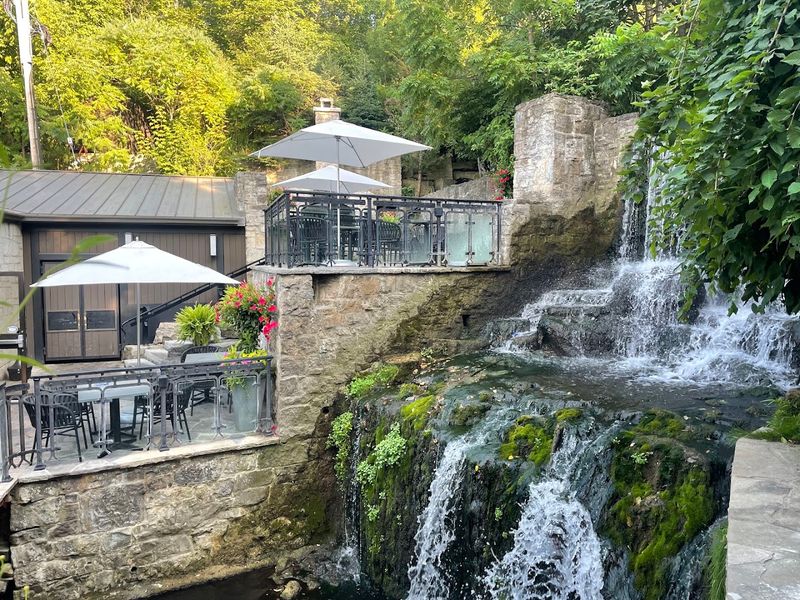
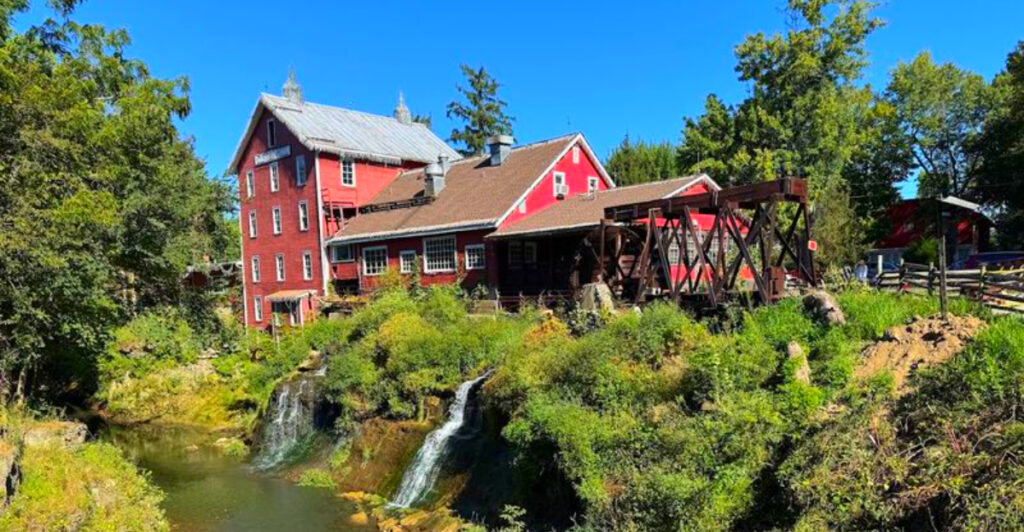
For more than two centuries, the sound of rushing water has defined this corner of Ancaster. Mills have stood on this site since the late 18th century, helping transform what became one of Ontario’s oldest communities, while the impressive limestone flour mill that stands today was completed in 1863 after several earlier mills were lost to fire. Painstakingly restored during the 1970s, the historic building reopened as Ancaster Mill in 1979, preserving its thick stone walls, exposed timber beams, and spectacular setting beside two cascading waterfalls that once powered the mill.
Today, the restaurant pairs its remarkable history with refined Canadian cuisine built around fresh, locally sourced ingredients. Seasonal menus feature dishes such as premium steaks, fresh seafood, handmade pastas, and creative farm-to-table specialties, while the famous Sunday brunch has become one of Ontario’s most sought-after dining traditions. Floor-to-ceiling windows overlook Ancaster Creek and the waterfalls below, giving nearly every meal a view that is just as memorable as the food. It is one of Canada’s finest examples of a historic flour mill finding a second life without losing the character that made it special in the first place.
2. The Old Mill Restaurant, Pigeon Forge, Tennessee
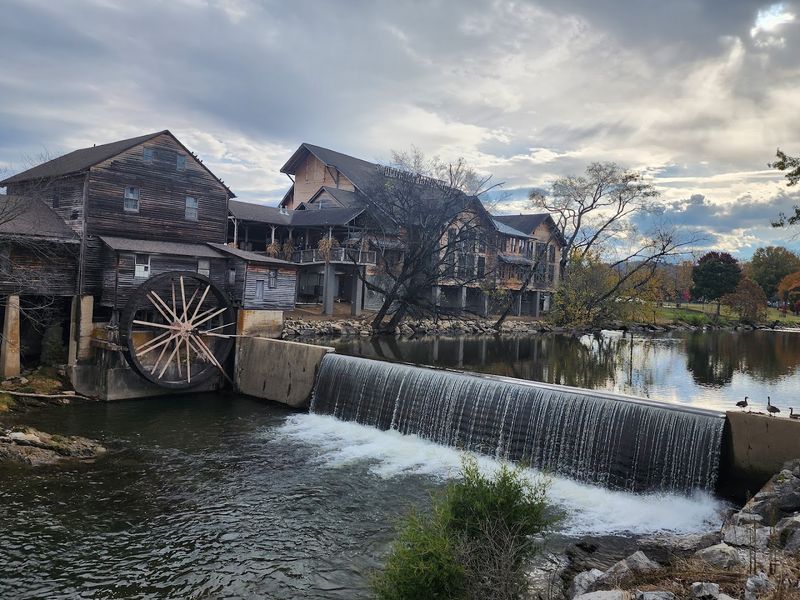
Built in 1830 by William Love, the Old Mill in Pigeon Forge has been grinding grain longer than Tennessee has had a state capitol building. The original mill once supplied electricity to the entire town until 1935, which makes it one of the most productive old buildings in the region.
Today it sits at the center of Old Mill Square, a cluster of shops and attractions that turns a meal into a full afternoon outing. The water wheel still turns, powered by the Little Pigeon River running right alongside it.
The menu leans hard into Southern comfort food. Breakfast brings stone-ground grits, buttermilk pancakes, and fresh biscuits, while dinner covers fried chicken, country ribs, and pecan pies baked from scratch daily. Every meal comes with a generous spread of classic Southern sides. The restaurant was listed on the National Register of Historic Places in 1977, and it earns long wait times during peak seasons without even trying.
3. Brommler Mühle, Gangelt, Germany
Brommler Mühle has spent centuries adapting to whatever the surrounding countryside needed. First documented in the early 14th century, the water-powered complex operated as both a grain mill and an oil mill before milling finally ended during the 20th century.
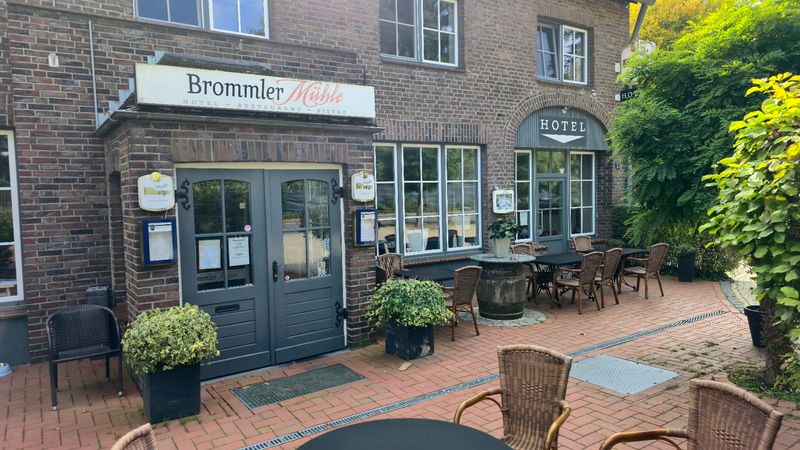
Today, the restored property functions as a hotel and restaurant while preserving the heavy timber beams, traditional architecture, and rural character of the former mill. The dining rooms feel warm and historic rather than overly polished, allowing the building’s age to remain an important part of the experience.
The restaurant serves regional German and European dishes, with seasonal menus that make use of fresh ingredients and familiar country flavors. Guests can also eat outside on the terrace when the weather cooperates, surrounded by the quiet landscape near the German-Dutch border.
Although the original milling machinery is no longer the focus, Brommler Mühle remains a genuine historic mill complex that has been successfully given a second life as a place to dine, stay, and slow down.
4. The Old Mill Restaurant, Mount Upton, New York
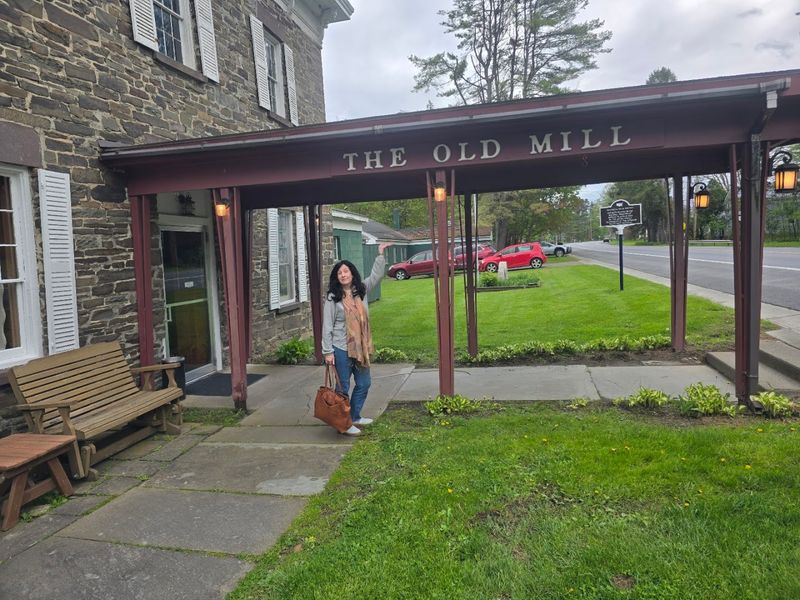
Few restaurants can claim their building made military uniforms for two separate wars, but this one can. The stone structure in Mount Upton dates to 1791, when Sullivan Reynolds built it as a pioneer grist mill. Over the following century it became a cotton mill, then a woolen mill, producing uniforms for soldiers during both the Civil War and the Spanish-American War.
After years of abandonment, it reopened as a restaurant in 1946. The Ford family has owned it since 1981, running it with the kind of consistency that earns a national reputation quietly and without fanfare.
A 1,500-pound grinding stone rests on the terrace outside, a direct nod to its milling past. The menu features house specialties that have barely changed since opening, including Chicken Old Mill, a casserole of boneless chicken and broccoli with Mornay sauce, and Shrimp Old Mill served over wild rice. Filet mignon, broiled haddock, and coconut shrimp round out a menu built on reliable classics.
5. Mlinica Old Mill, Stolac, Bosnia and Herzegovina
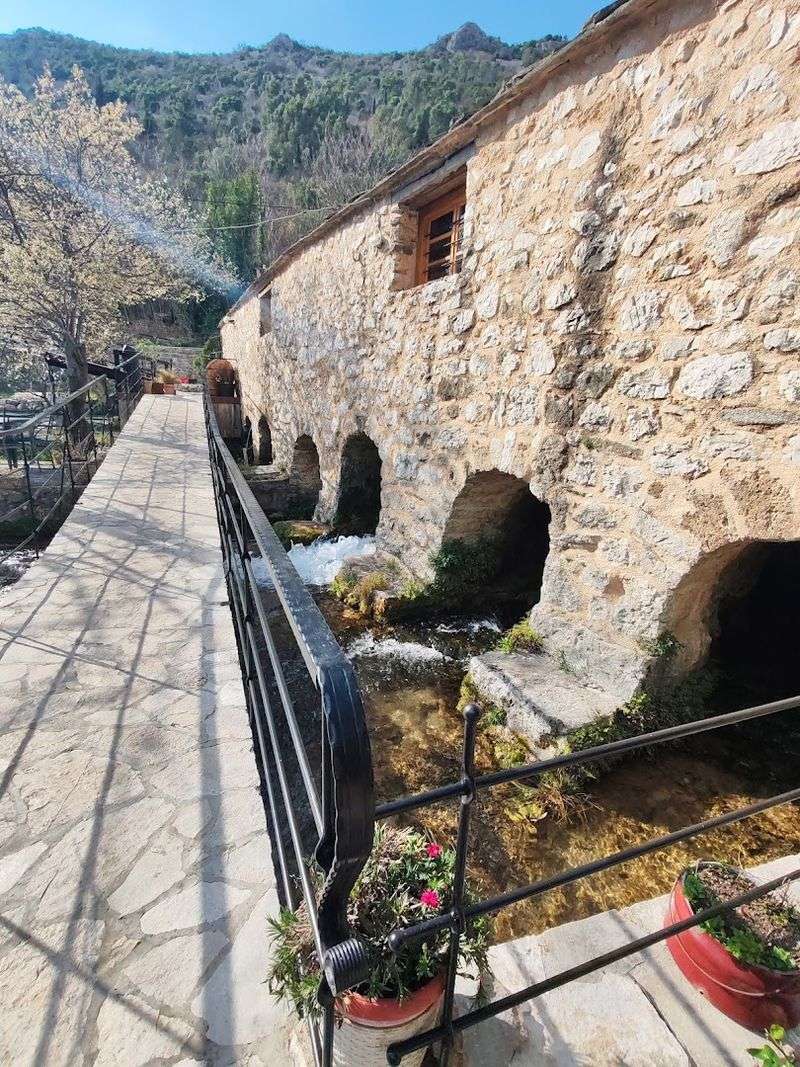
Stolac is one of the oldest continuously inhabited towns in Europe, with a human history stretching back 15,000 years. The Bregava River once powered as many as 22 watermills along its banks, according to 18th-century records. Today, most of those mills are gone, but Mlinica Old Mill remains as a restored example of what that era looked like.
Owner Ihrahim Batan Buzaljko led the restoration of this 15th-century mill with support from the European Union. The building sits directly on the Bregava River beside a waterfall, and its long arched structure is characteristic of the bridge-like mill architecture found throughout the Stolac region.
Outdoor seating under shade gives guests a direct view of the water, waterfalls, and surrounding mountains. The menu centers on traditional Bosnian and Mediterranean dishes, with fresh trout caught from the nearby river as the signature item. Cevapi, ribs, veal, and baklava for dessert complete a menu that feels rooted in the landscape around it. Prices remain accessible for both locals and visitors.
6. The Old Grist Mill Tavern, Seekonk, Massachusetts
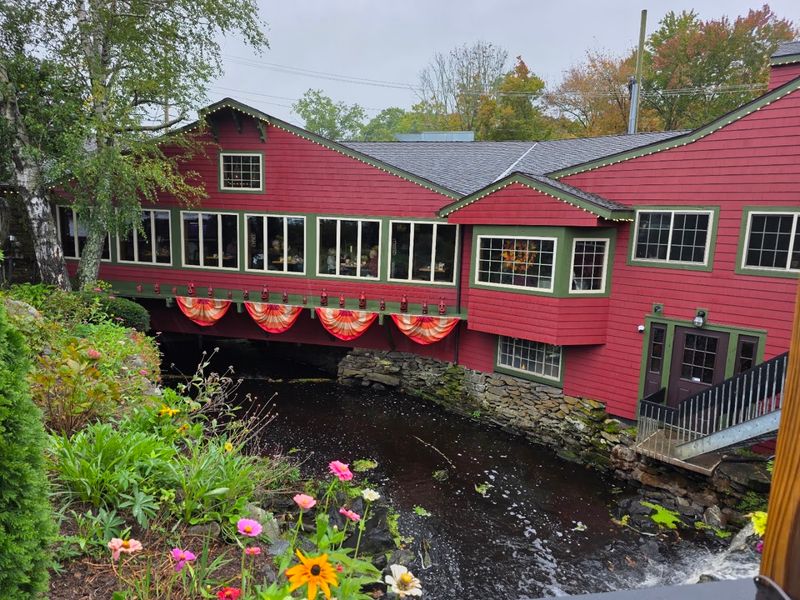
There is a genuine waterfall outside this restaurant, and the building is literally sitting on the dam that creates it. The Old Grist Mill Tavern in Seekonk has occupied this dramatic spot on the Runnins River since the mid-1930s, though the mill itself dates all the way back to 1745.
Local history includes a colorful chapter around 1845, when a blind miller named Dexter Chaffee ran the operation, earning it the nickname “Blind Man’s Mill.” One of the original granite grindstones now serves as a stepping stone at the entrance, which is a clever way to greet guests.
The interior features deep cypress walls and a long wooden bar that sets a classic New England tavern tone. The menu focuses on steaks and seafood, with prime rib available every single day, including an impressive 22-ounce cut. Fresh lobsters, Rhode Island calamari, and a salad bar with a devoted local following round out a menu that has kept this place full for decades.
7. Młyn Wielisław, Sędziszowa, Poland
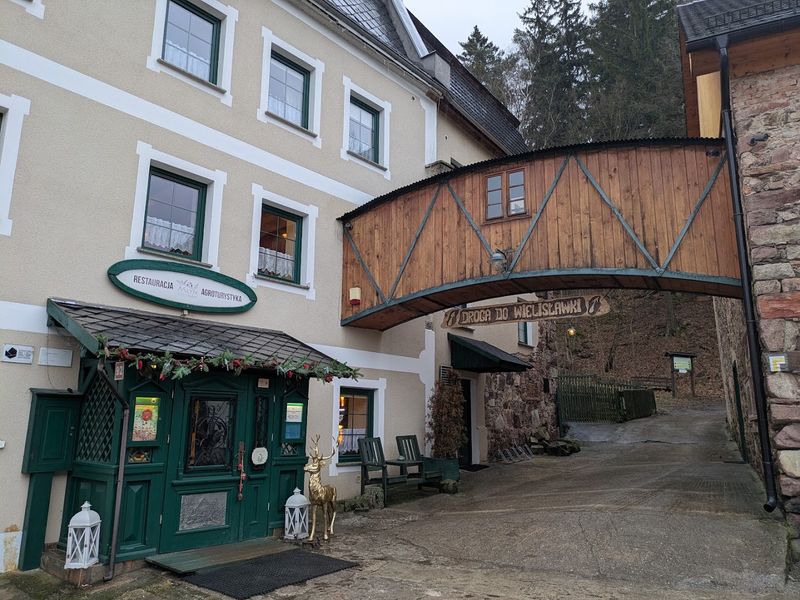
Built in 1872 on the banks of the Kaczawa River, Młyn Wielisław spent decades as a working watermill powered by the river before finding a second life as one of southwestern Poland’s most distinctive dining destinations. The beautifully restored mill still retains much of its historic character, and guests can even spot original mill machinery alongside the thick stone walls and exposed timber that recall its industrial past. The river now powers a small hydroelectric plant, preserving the site’s long connection to water-powered energy.
Today, the former mill combines a restaurant, guesthouse, and agritourism retreat in the heart of the Land of Extinct Volcanoes Geopark. The kitchen specializes in traditional Polish cuisine with an emphasis on regional ingredients, particularly goose dishes, alongside hearty soups, game, homemade desserts, and seasonal specialties. Surrounded by forests, volcanic hills, and hiking trails, Młyn Wielisław offers the rare chance to enjoy a meal inside an authentic 19th-century watermill while immersed in one of Poland’s most scenic landscapes.
8. Old Mill Inn Restaurant, Mattituck, New York
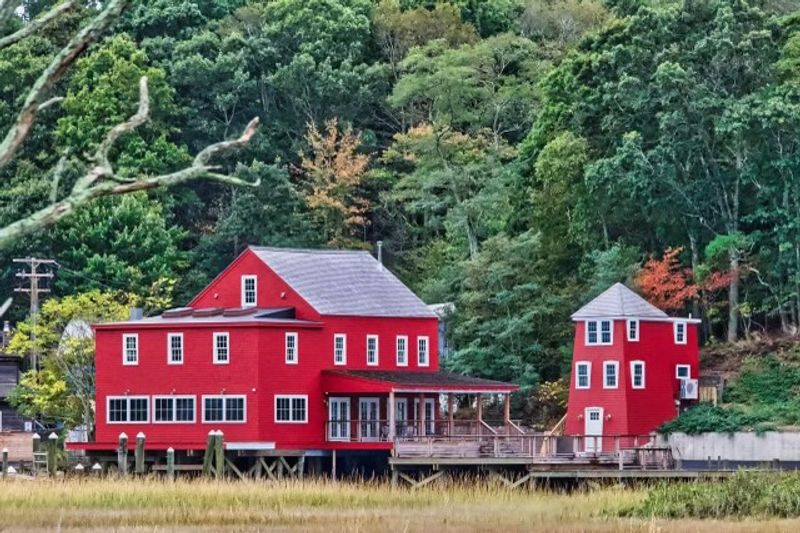
Samuel Cox built this tidal grain mill in 1820, and for decades it ran entirely on the ocean’s natural ebb and flow, using French limestone grinding wheels to process flour and animal feed for local farmers. The town even constructed a bridge across Mattituck Creek just to make the mill easier to reach.
After a steam-powered mill made it obsolete in 1902, the building became a fisherman’s pub and later a Prohibition-era speakeasy. Manhattan restaurateur Anthony Martignetti purchased it in 2019 and undertook a renovation so thorough that the entire structure was moved across the street, raised five feet, and fitted with new pilings, all while keeping centuries-old beams intact. It reopened in May 2025.
Chef Kyle Bloomer’s menu focuses on locally sourced seafood and North Fork produce. Fresh oysters, fluke ceviche, lobster rolls, and grass-fed burgers with house-made pickles anchor the offerings. The over-the-water deck and covered porch provide views of the creek and fishing boats, creating a setting that is relaxed but quietly impressive.
9. Restaurant Mlin, Vareš, Bosnia and Herzegovina
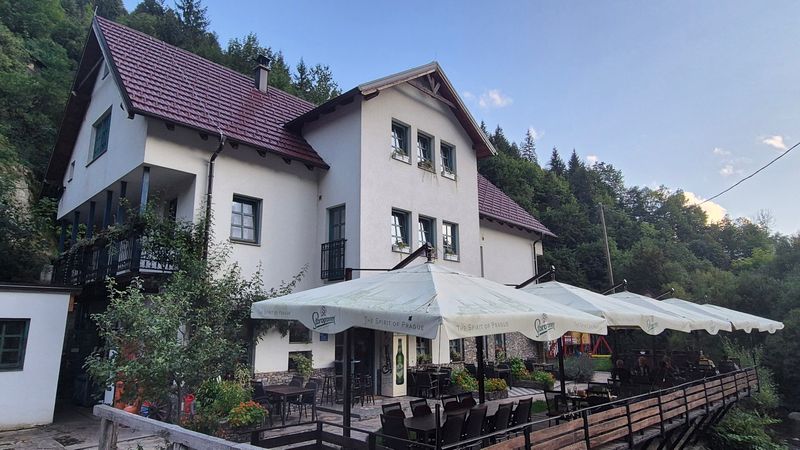
“Mlin” means mill in Bosnian, so this restaurant announces exactly what it is without any ambiguity. Located in Novakovići Street in Vareš, it occupies the only stream mill still operational within the town, a building estimated to be over 120 years old, built on the site of a former forge called a “Majdan.”
The Stavnja River runs right alongside the building, and a dam constructed to power the mill wheel creates a waterfall that is partly natural and partly engineered. A terrace built directly above the water puts guests as close to the river as possible without actually getting wet.
The kitchen focuses on traditional Bosnian homemade cooking. Bread is baked fresh in a wood-fired oven daily. Veal prepared in a traditional Oćevski sach cooking pot, brook trout from the restaurant’s own pool, local Vareš cheeses, and homemade dried meat are the standout dishes. Pizzas appear on Tuesday evenings as a weekly special.
The building also offers accommodation, with rooms and apartments sleeping up to 30 guests in total.
10. Stockport Mill Restaurant, Stockport, Ohio
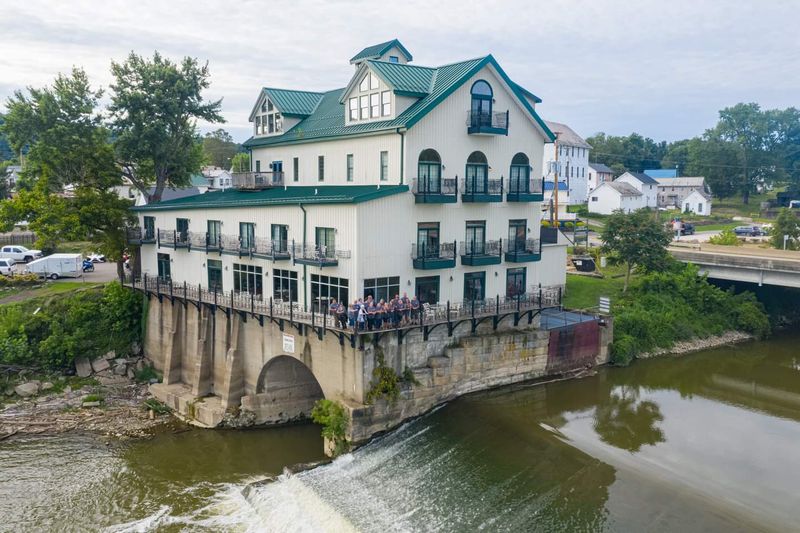
The Stockport Mill has burned down twice, survived a catastrophic flood in 1913, and still managed to outlast every other mill on this stretch of the Muskingum River. The current building went up in 1906 after the Dover brothers replaced the structure lost to fire in 1903, and by 1908 it was generating hydroelectric power for twelve village streetlights.
Milling operations ended in 1997, and the building reopened as the Stockport Mill Inn in 2000. In 2006, the original hydroelectric turbines were brought back online. The mill now powers the entire inn and restaurant and sells surplus energy back to the local grid, making it one of the more self-sufficient historic buildings in Ohio.
Located at 1995 Broadway Street at Lock 6 on the Muskingum River, the restaurant overlooks the river and its adjoining dam, which forms part of the mill’s foundation. The interior features antique furniture, exposed beams, and original wood floors. The menu covers home-style comfort food for breakfast, dinner, and a popular Sunday buffet, with a fresh salad bar available alongside the main courses.
11. Historische Wassermühle Birgel (Historic Watermill Birgel), Birgel, Germany
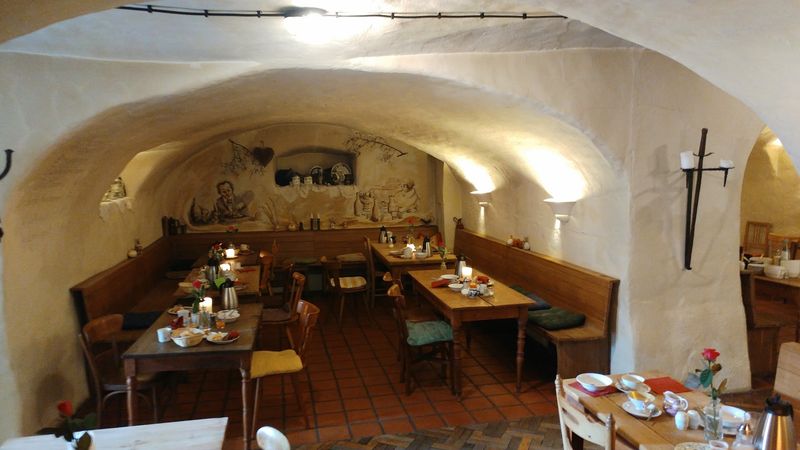
Stepping into Historische Wassermühle Birgel feels less like visiting a restaurant and more like wandering into a living museum where lunch just happens to be exceptional. The heart of the complex is a grain mill whose origins date back to the 13th century, making it one of the oldest surviving watermills in Germany. Today, the restored mill grounds include fully functioning grain, mustard, and oil mills, along with several restaurants housed among the historic buildings, all preserving the site’s centuries-old character.
The main restaurant, Wirtshaus zum Sägewerk, serves hearty regional dishes inspired by Germany’s Eifel region. Expect specialties such as schnitzel, game, fresh trout, homemade breads, and traditional desserts prepared with local ingredients, while the adjacent brewery pours its own handcrafted beers. Before or after the meal, visitors can tour the working mills, watch historic machinery in action, or stroll through the beautifully preserved complex, making this one of the rare places where the history of milling remains just as alive as the kitchen itself.
12. Historic Clifton Mill Restaurant, Clifton, Ohio
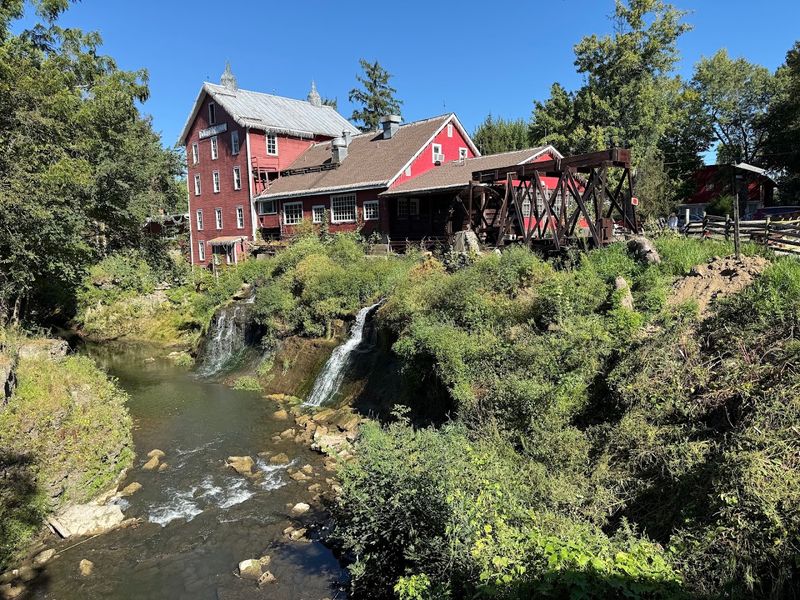
Owen Davis, a Revolutionary War veteran, built the first mill on this site in 1802. Of the six mills that once operated along this stretch of the Little Miami River and Clifton Gorge, only Clifton Mill is still standing and still grinding grain. That makes it less a restaurant and more a working monument.
The current building dates to 1869. It sat abandoned from 1948 until Robert Heller restored it, and the Satariano family has managed it faithfully since 1987. Tours of the inner workings are available, where water power still drives actual grinding stones.
The menu sticks to honest American comfort food, served all day. Breakfast runs from pancakes made with the mill’s own signature mixes to cornmeal mush and fresh-baked breads. Lunch covers sandwiches and homemade soups, while dinner adapts with the seasons. Cherry, apple, and pecan pies come out of the kitchen daily.
During the holidays, the grounds host the Legendary Lights of Clifton Mill, which draws crowds every year.
Share this story