Some buildings are too good to tear down, and too interesting to leave empty. Across the world, historic churches, old banks, and shuttered schools have been given a second life as full-service restaurants, and the results are genuinely worth a road trip. You can eat dinner where a congregation once gathered, order lunch inside a room that once held a bank vault, or enjoy a meal at the same desk where a teacher once handed out report cards. These 12 restaurants prove that the best dining experiences are not just about the food on the plate.
The building itself tells a story, and in each of these places, that story is part of what makes the meal unforgettable. Read on to find out which ones made the list.
1. The Preacher’s Son – Bentonville, Arkansas
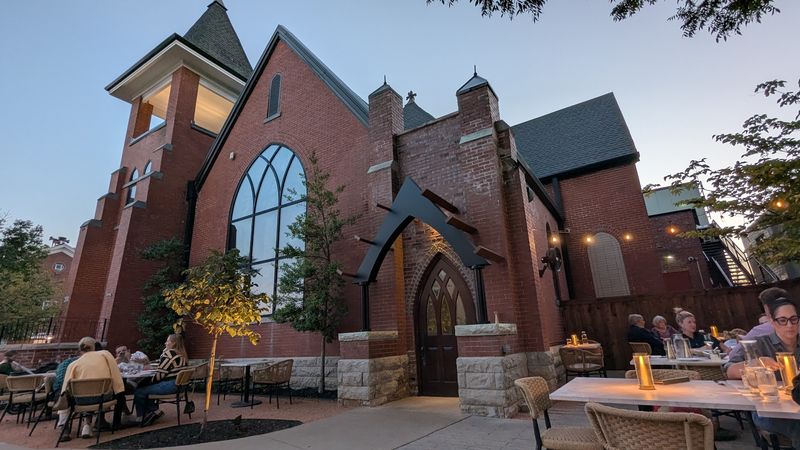
Built between 1898 and 1904 as the First Christian Church, this Gothic Revival building in Bentonville now serves dinner and lunch under the name The Preacher’s Son. The bell tower alone holds 288 gold bells, which says a lot about how seriously the owners took the renovation.
The apse, where the altar once stood, was transformed into a bar area using champagne brick. Natural wood and a monochrome palette run throughout the space, tying the old and new together without forcing it. Original architectural details remain prominent, allowing diners to appreciate the craftsmanship while enjoying a thoroughly modern setting.
The menu includes panisse, chicken meatballs, mushroom risotto, and smoked fried chicken. Part of the Ropeswing Hospitality Group, this place treats its history like a feature, not a footnote. Every room feels carefully considered, proving that preservation and contemporary dining can work side by side.
2. Church Brew Works – Pittsburgh, Pennsylvania
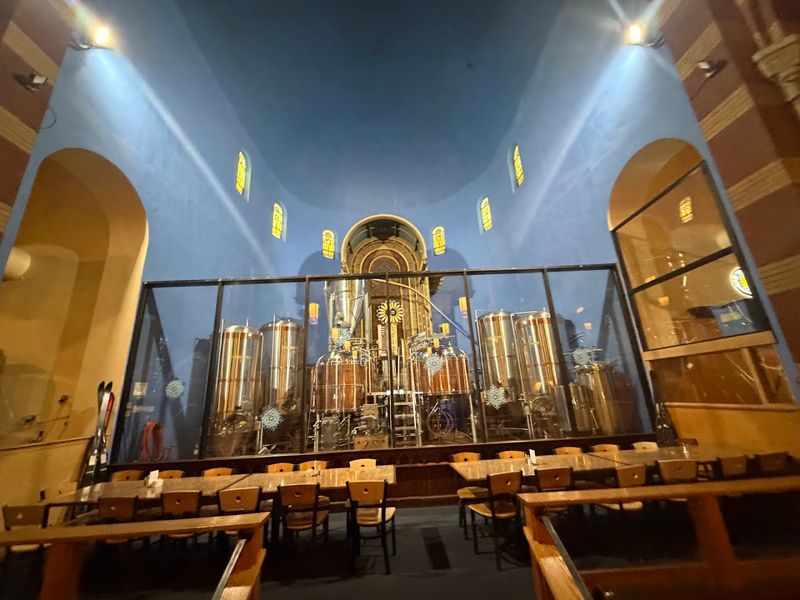
The motto here is “And on the eighth day Man created Beer,” which sets the tone immediately. Church Brew Works opened in 1996 inside the former St. John the Baptist Church, a building that served its congregation from 1902 until 1993 before being deconsecrated.
The original pews were cut and repurposed as dining seating, and leftover wood formed the bar. One confessional still stands intact and now holds merchandise. The brewery tanks sit in the apse where the altar once was, set against a sky-blue backdrop that makes the brewing equipment surprisingly elegant.
The menu covers wood-fired pizza, pierogies, and buffalo meatloaf. House-brewed beers remain the main attraction, with rotating seasonal releases complementing the permanent lineup.
The building became a Pittsburgh Historic Landmark in 2001, making every visit feel like a history lesson with a good meal attached. Few breweries make such effective use of their surroundings.
3. At The Chapel – Bruton, Somerset, England
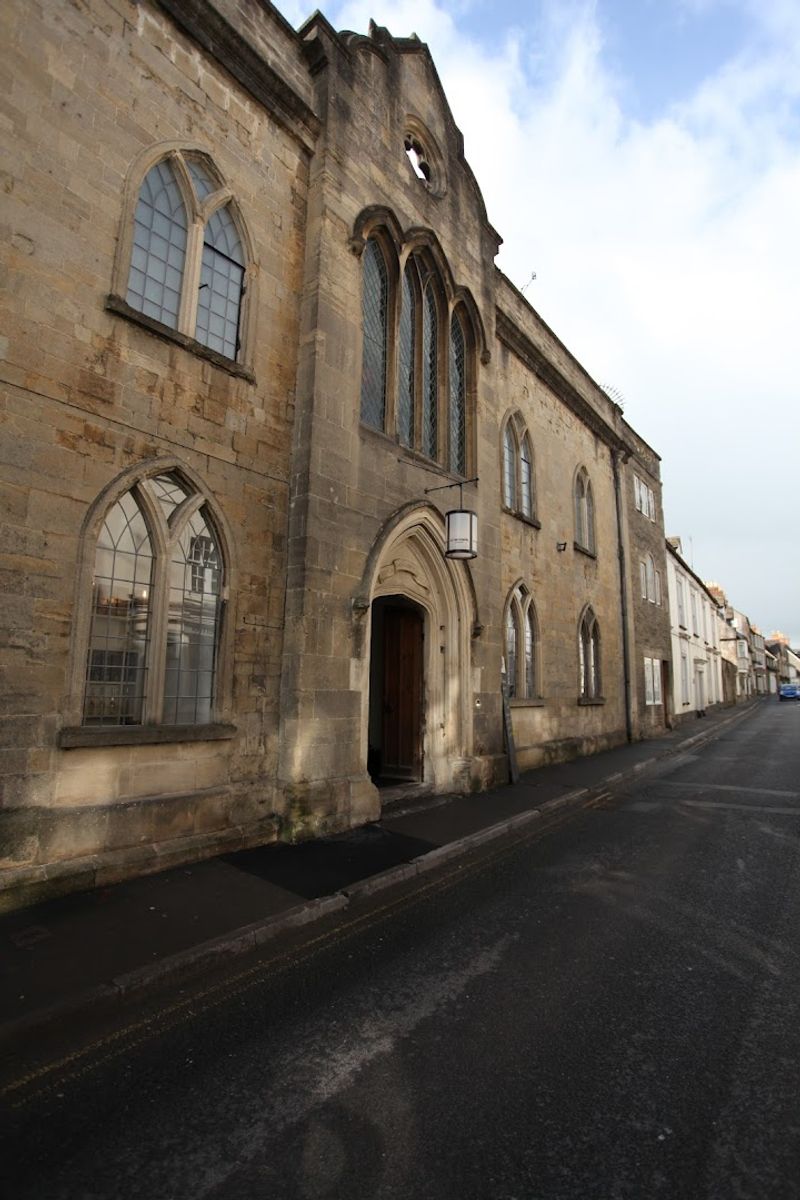
An 18th-century chapel in the Somerset town of Bruton does not sound like the most obvious place to find sourdough pizza and freshly baked croissants, but At The Chapel makes it work beautifully. The building was restored with care, keeping the two grand windows, soaring ceiling, and original character intact.
Beyond the restaurant, the space includes a bakery with a wood-fired oven built from restored cellar bricks, a wine shop, and ten hotel rooms, several of which retain original stained glass. Hotel guests receive freshly baked croissants delivered to their doors each morning, making the experience feel more like staying in a boutique retreat than a traditional hotel.
The menu blends modern British cooking with Mediterranean influence, using local West Country produce throughout. An outdoor terrace overlooks historic rooftops and a 12th-century dovecote, adding another layer of charm to an already memorable destination.
4. The Schoolhouse Restaurant – Camp Dennison, Ohio
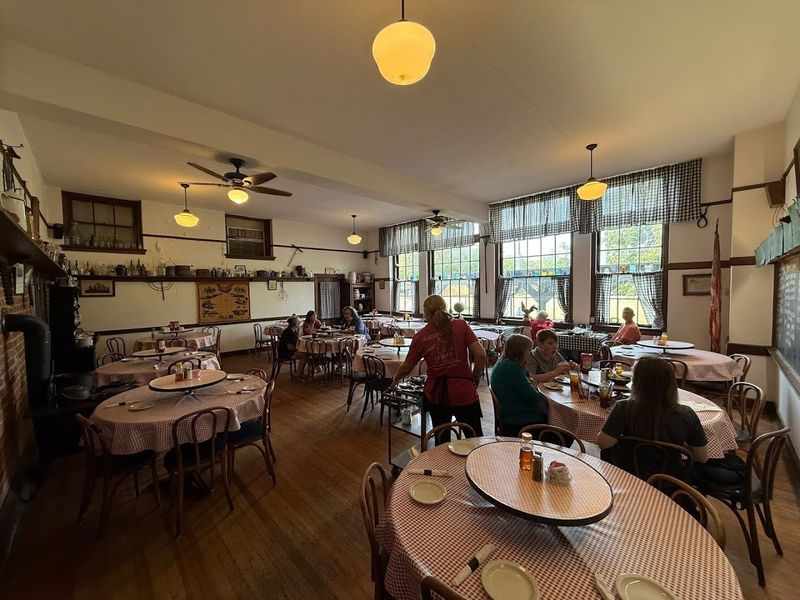
The Miller family saved this 1864 brick schoolhouse from demolition in 1961 and opened a restaurant here just one year later. That is over six decades of continuous operation, which makes The Schoolhouse Restaurant one of the most enduring examples on this entire list.
The original blackboards, windows, and wooden floors remain in place. The dining room occupies the former 5th through 8th grade classrooms, while the kitchen was once home to grades 1 through 4. The second floor now hosts private events.
Tables are fitted with lazy Susans, a nod to the Miller family’s own dinner traditions. The menu covers fried chicken, slow-roasted beef, cornbread, and blackberry cobbler, all written out on the dining room’s original blackboard.
5. SchoolHouse Tavern – Claridge, Pennsylvania
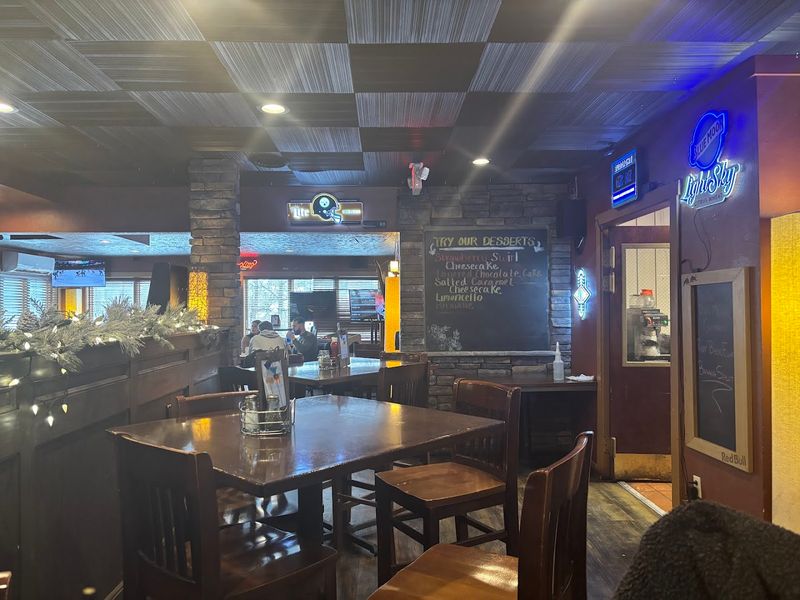
During the renovation of the Clarks Crossing Schoolhouse, built in 1896, the owners pulled back plaster and found original brick walls that now define the dining room. A chalkboard uncovered in the same process lists daily specials and draft selections in the bar area.
An old teacher’s desk was converted into a six-top dining table, and a child’s desk near the entrance holds coloring books and crayons for younger guests. These are not decorative gestures; they are working pieces of the restaurant’s daily operation.
The menu runs through burgers, pasta, pizza, and wings, plus the resurrected Zackel’s fish sandwich, a local favorite that the current owners learned to prepare directly from the Zackel family. The tavern also operates as a music venue.
6. The Schoolhouse – Sanger, Texas
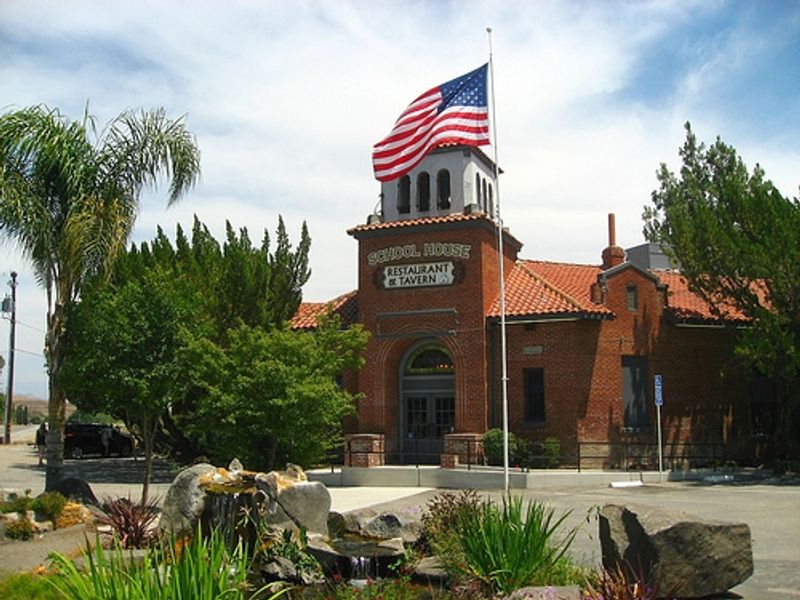
Small Texas towns have a habit of holding onto their history in ways that larger cities often cannot afford to. The Schoolhouse in Sanger is a good example of that tendency, operating as a restaurant and gathering place inside a renovated historic school building that the community clearly values.
Local listings continue to reference it as open, which is the kind of low-key confirmation that suggests a place with steady, loyal patronage rather than a flashy newcomer trying to get noticed.
The building’s original school architecture gives the space a solidity and familiarity that works well for a community restaurant. Sanger is a small city north of the Dallas-Fort Worth area, and The Schoolhouse functions as one of its recognizable dining landmarks.
7. The Vault (now The Vault Wine Bar & Bistro) – Blaine, Washington
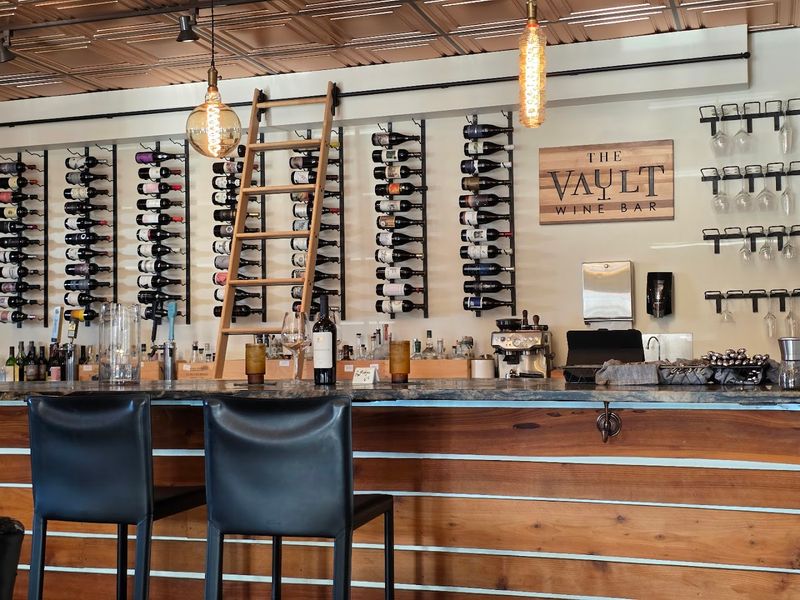
Banks are built to last, which is exactly why their buildings make such durable candidates for conversion. In Blaine, Washington, the former Bank of Blaine building now operates as The Vault Wine Bar & Bistro, and the original bank vault remains a physical feature of the space.
Blaine sits right on the Canada-U.S. border, which gives it a steady mix of local regulars and cross-border visitors looking for a meal before or after crossing. A wine bar and bistro format fits that kind of transient but curious crowd well.
The vault itself is the detail that makes this place memorable. Most restaurants have to work hard to create a talking point; this one had one built into the foundation before the first table was ever set.
8. Church and Union – Charleston, South Carolina
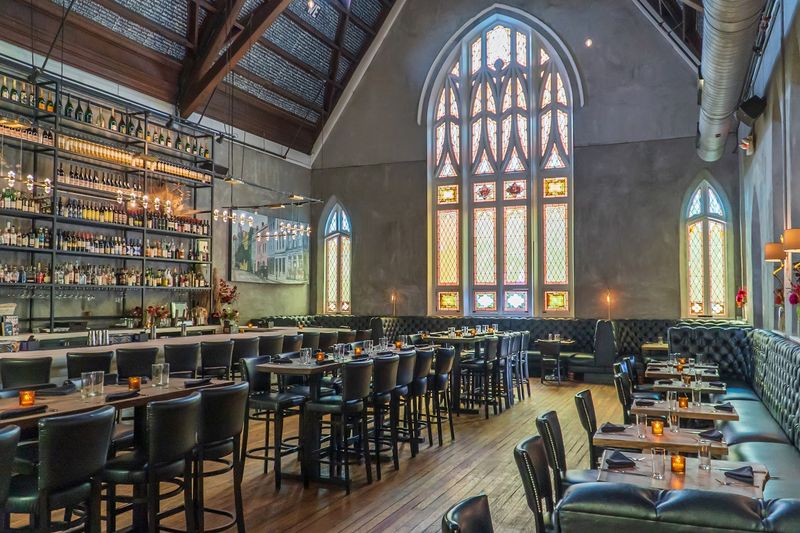
Right in the heart of Charleston’s historic Market Street district, Church and Union occupies a former church building that gives the dining room a scale most restaurants can only dream about. The address, 32b N Market Street, puts it squarely in one of the most visited corridors in the city.
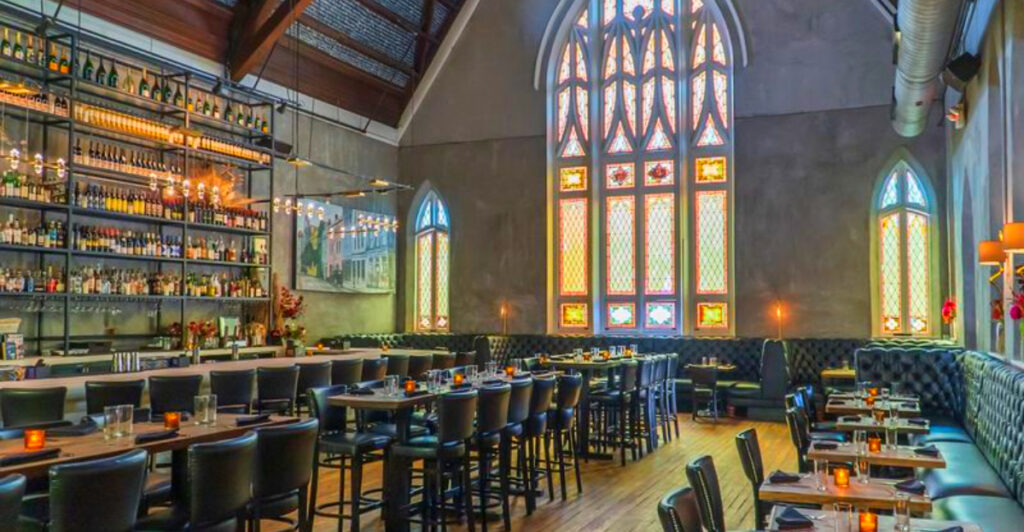
High ceilings, towering windows, and dramatic architecture create an atmosphere that feels grand without becoming intimidating. The historic structure provides a striking backdrop that naturally draws attention before the food even reaches the table.
The restaurant runs service for brunch, lunch, and dinner, making it one of the more flexible options on this list in terms of when you can actually show up. Charleston’s food scene leans hard into Southern comfort, and this spot delivers on that expectation.
The combination of a historic shell and a full daily menu makes Church and Union a reliable anchor for visitors who want substance alongside the scenery. It’s the kind of restaurant where the setting becomes part of the overall dining experience rather than just a novelty.
9. The Counting House – Glasgow, Scotland
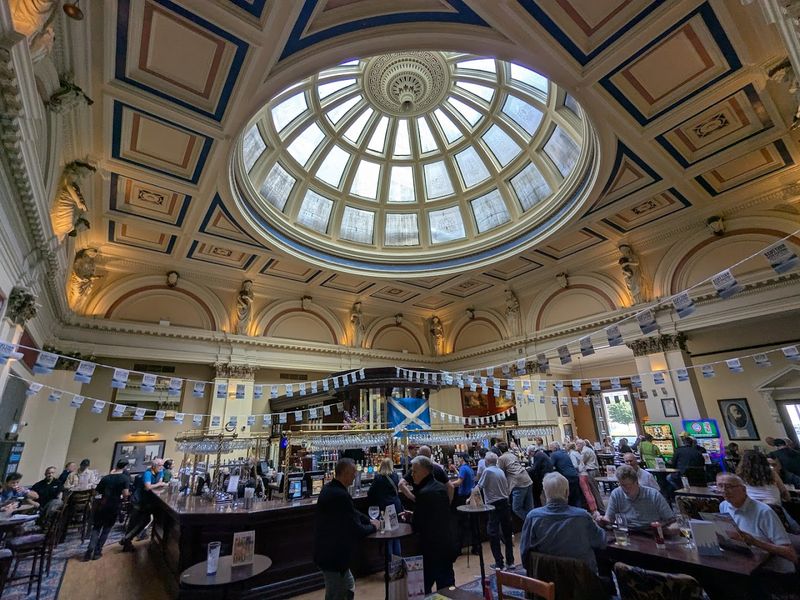
Category A Listed buildings in Scotland represent the highest level of architectural protection, and The Counting House occupies one of the most impressive examples in Glasgow. Designed by J.T. Rochead between 1867 and 1870 in the Italian Renaissance style, the building was the main Glasgow office of the Bank of Scotland.
Inside, the original banking hall keeps its marble columns, sculptures, and a central glass dome. The former bank safes have been turned into small private rooms, and the original vaults are accessible to visitors. An extensive collection of paintings and photographs depicting Glasgow’s history lines the walls.
As a Wetherspoon pub, it serves an all-day menu covering breakfast through dinner at accessible prices. The grandeur of the setting and the affordability of the menu make for an unlikely but genuinely satisfying combination.
10. The Standing Order – Edinburgh, Scotland
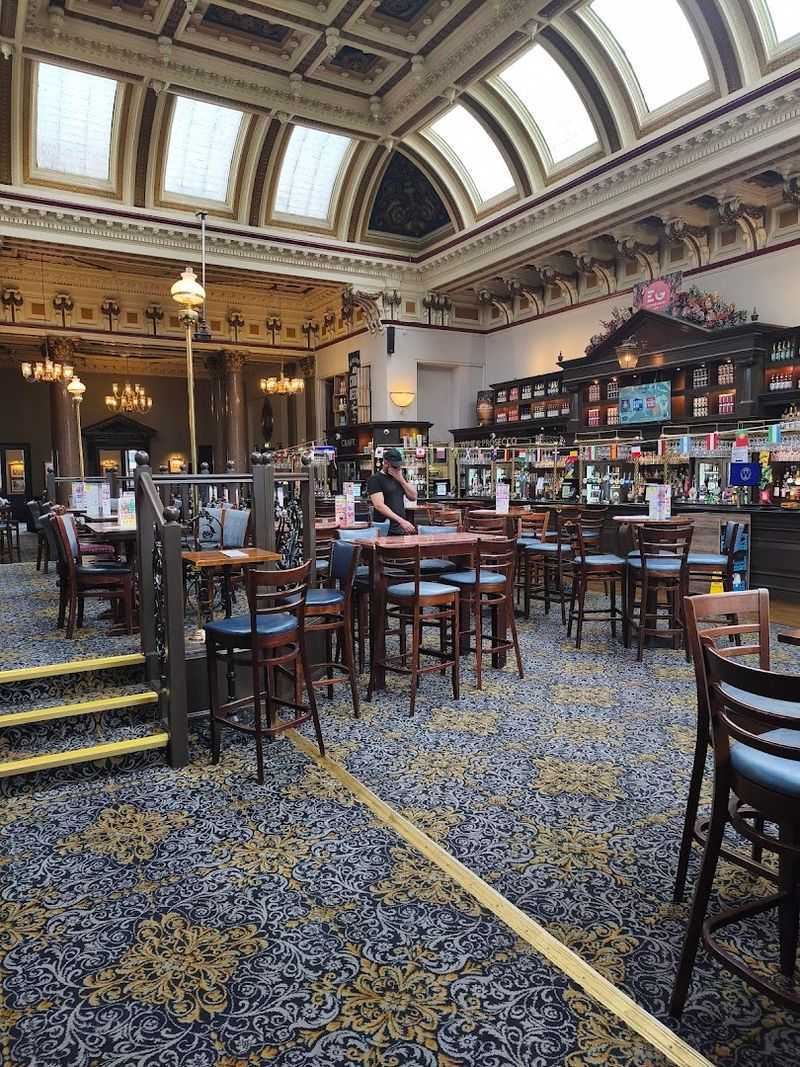
Edinburgh has no shortage of grand historic buildings repurposed for public use, but The Standing Order earns its place among them by occupying the former headquarters of the Union Bank of Scotland. That is not a branch office; it is the main building, which means the architectural ambition behind its construction was considerable.
The original bank vault remains a preserved feature of the space, giving visitors a direct connection to the building’s financial past. As a Wetherspoon establishment, the restaurant operates with an all-day menu and broad accessibility, making it a practical choice for visitors exploring Edinburgh’s city center.
The contrast between the grandeur of a former banking headquarters and the casual accessibility of the current operation is part of what makes The Standing Order worth noting. History and everyday dining coexist here without much fuss.
11. The Jane – Antwerp, Belgium
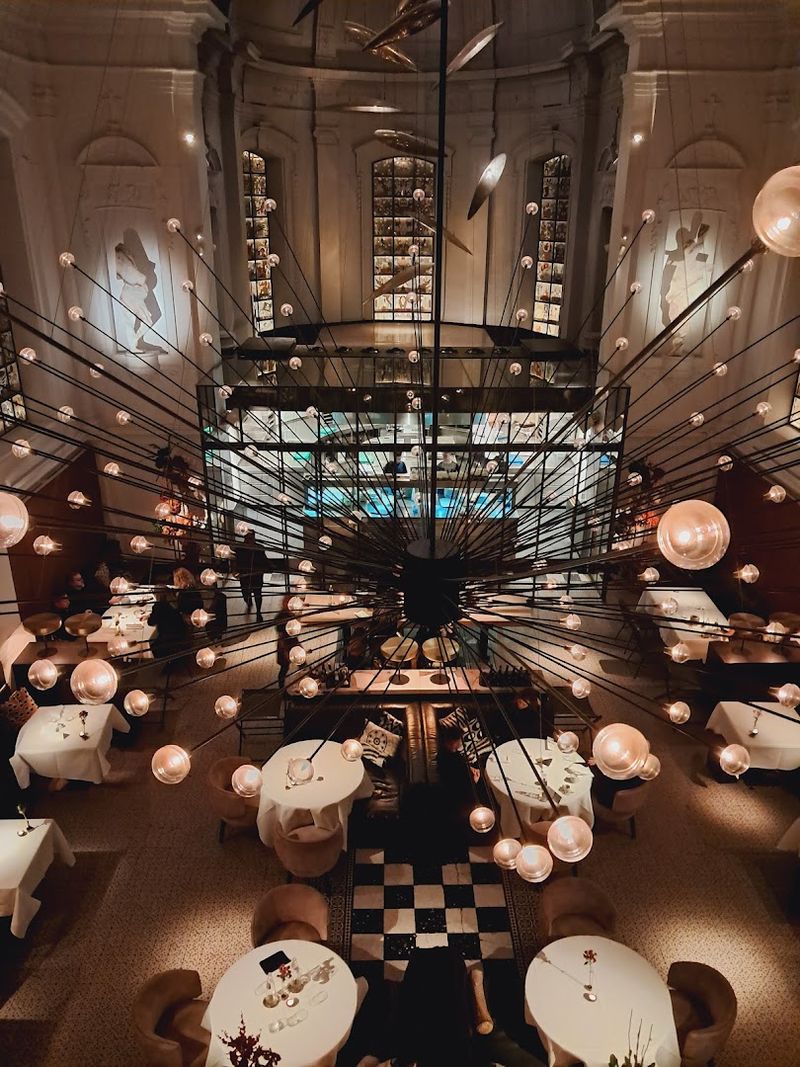
A three-year conversion project turned the deconsecrated chapel of a former military hospital in Antwerp into one of the most talked-about restaurants in Europe. The Jane opened in 2014, and its reputation has not dimmed since. The exterior keeps the city’s characteristic red brick; the interior is a different conversation entirely.
Studio Piet Boon and .PSLAB handled the contemporary design elements, which include modern stained-glass windows by Studio Job featuring apple cores and penguins. An 800-kilogram chandelier with over 150 lights hangs from the vault. The kitchen sits behind glass in the former altar space, fully visible to diners.
Chef Nick Bril leads a team delivering a two-Michelin-starred tasting menu that can run beyond four hours. An upstairs bar called Untitled offers a separate bistro concept with its own menu.
12. Candide – Montreal, Quebec, Canada
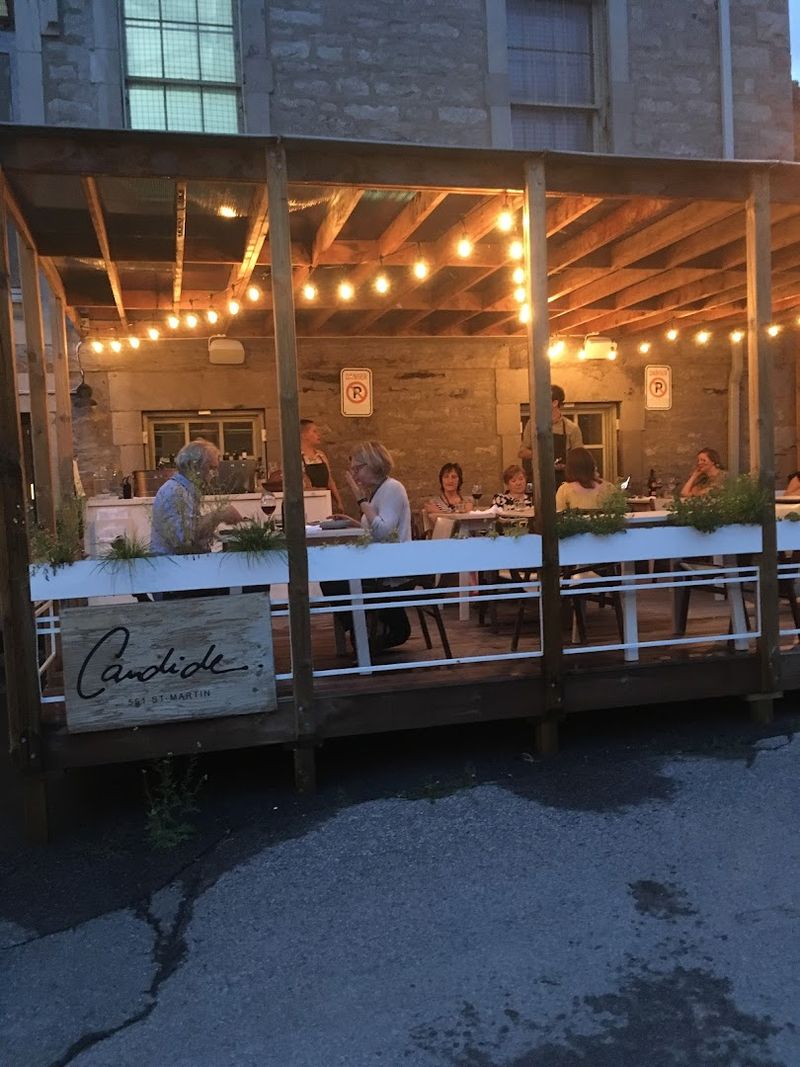
A presbytery is the residence attached to a church, which means Candide in Montreal occupies a building that was once someone’s home as well as a place of religious function. That dual history gives the space a domestic intimacy that most restaurants work hard to manufacture and rarely achieve.
The location beside St. Joseph’s Church on Notre-Dame Street West keeps the building in a historically layered part of Montreal. Candide operates as a small, focused restaurant with a commitment to local and seasonal ingredients, reflecting Quebec’s strong farm-to-table sensibility.
The modest footprint of a former presbytery suits the restaurant’s approach. This is not a place built for large groups or loud celebrations; it is a place where the food and the setting ask for your full attention, and that is a reasonable request.
Share this story