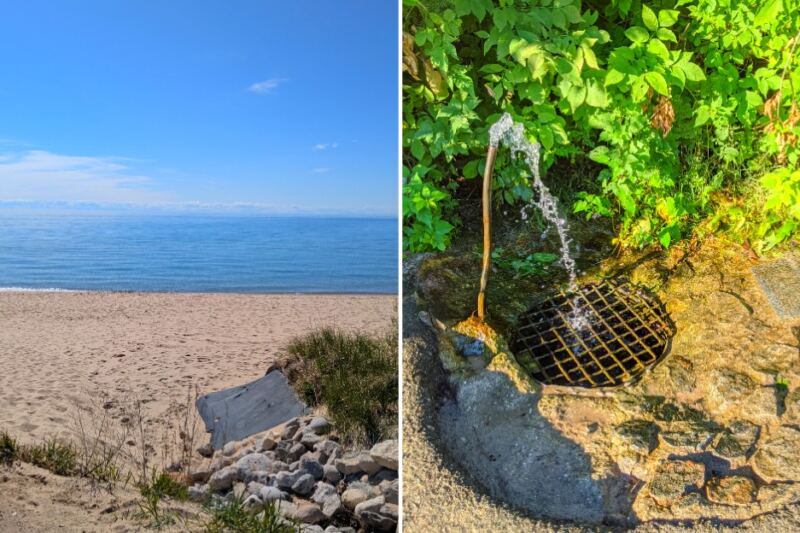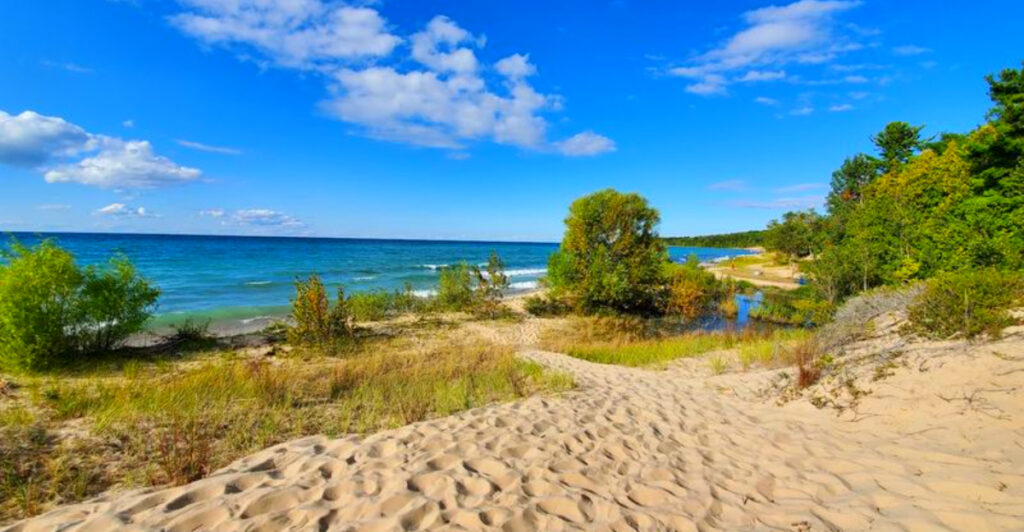
Northern Michigan still has stretches of Lake Michigan shoreline where you can skip the crowds and actually hear the waves. This park, located just a few miles from a small lakeside town, offers more than six miles of undeveloped beach, forest-covered dunes, and waterfront campsites that keep visitors coming back year after year.
The setting feels far more remote than it really is. Clear water, long quiet beaches, and dunes lined with birch and maple give the area a noticeably calmer atmosphere than Michigan’s better-known summer destinations.
Offshore, a small island adds another layer of curiosity, especially during periods of low water when visitors may be able to walk across to it.
Where Exactly This Park Sits and How to Find It
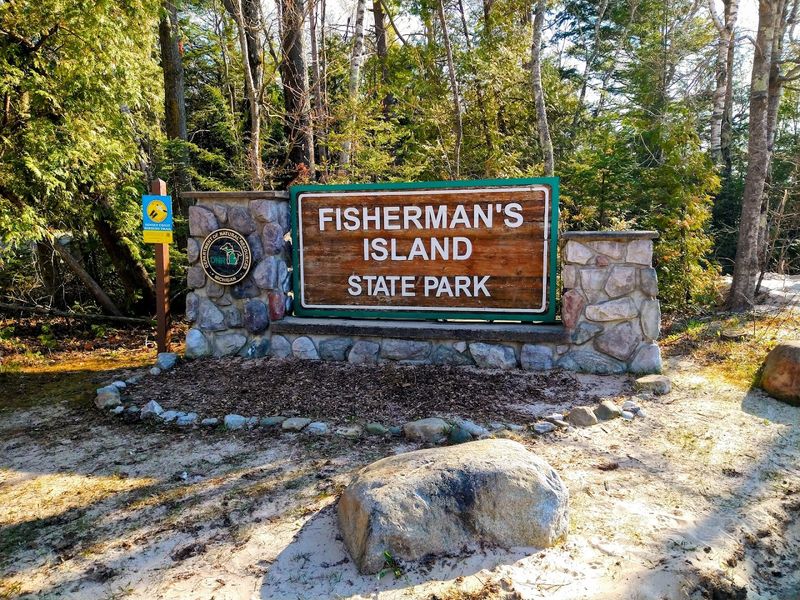
The address alone tells you something interesting: 16480 Bells Bay Rd, Charlevoix, MI 49720. That road name has a certain romance to it, and the drive in does not disappoint.
Fisherman’s Island State Park sits southwest of Charlevoix, Michigan, tucked along the western shore of the Lower Peninsula. The park covers 2,678 acres and borders Lake Michigan with more than six miles of completely undeveloped shoreline.
Getting there is straightforward from downtown Charlevoix, which is only about four miles away. You follow Bells Bay Road until the trees close in around you and the pavement gives way to something that feels more like a forest path than a public road.
The park is open daily from 8 AM to 10 PM, and you can reach the park office at 231-547-6641.
The Rustic Campground Setup That Sets the Tone
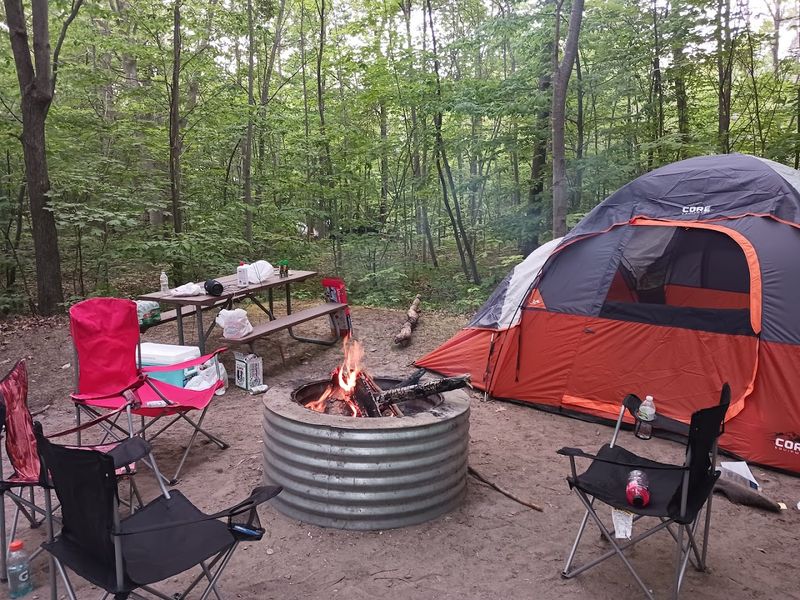
Forget glamping. This campground makes no apologies for being exactly what it is: raw, quiet, and wonderfully low-tech.
The park offers between 80 and 81 campsites spread across two campground loops. The sites are designed for tents and compact campers like pop-up trailers, and there are no electrical hookups, no modern restrooms, and no showers anywhere on the property.
Amenities include vault toilets and hand-pumped water, which gives the whole place a genuinely old-school feel that a lot of campers actually love. The sites are spaced well enough apart that you rarely feel like your neighbor is in your living room, and the shade from the surrounding maples and birches keeps things cool even on hot July afternoons.
About 15 of those sites sit directly on Lake Michigan, making them some of the most coveted spots in the entire state park system. Book those early, because they disappear fast once summer reservation windows open.
What Those Lakefront Campsites Actually Feel Like
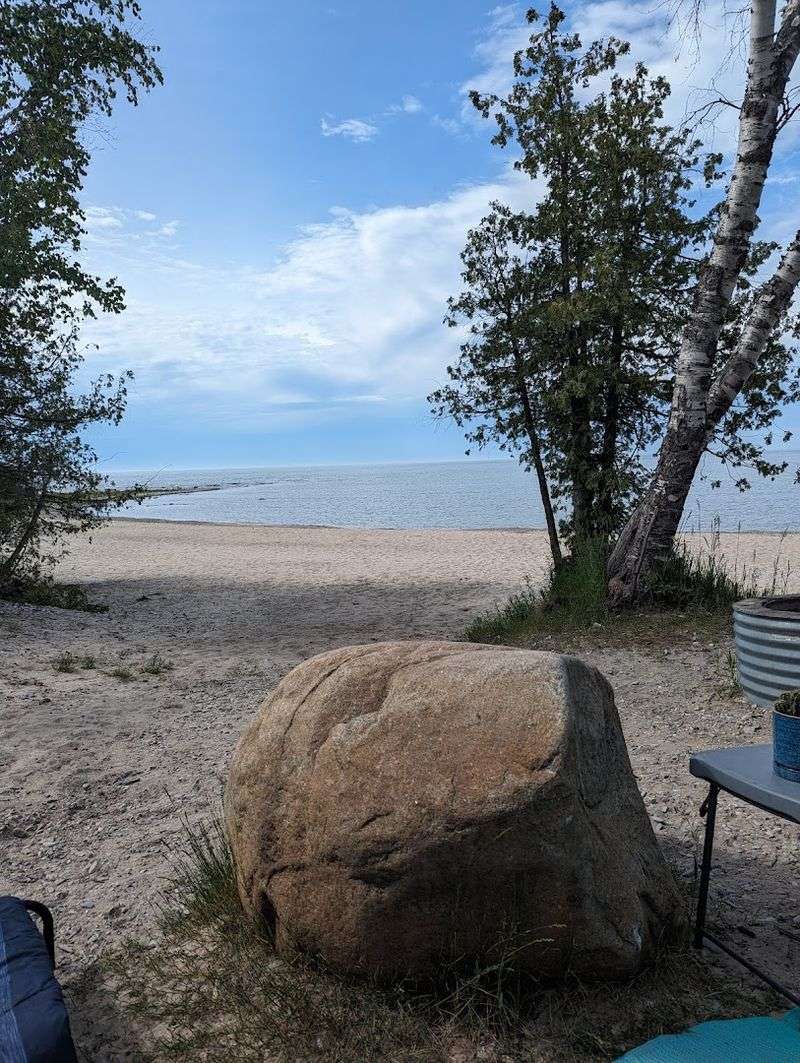
There is something almost surreal about waking up ten feet from Lake Michigan with no building, no boardwalk, and no crowd between you and the water. Roughly 15 campsites here offer exactly that.
The lakefront spots are the ones that generate the most buzz, and they are genuinely special. The water right outside your tent is crystal clear with a sandy bottom that extends several feet out, making it easy to wade in without stumbling over rocks.
Not every site labeled as lakefront is truly waterfront, though. Some require a short walk down an uneven path to reach the shore, so it is worth reading the site descriptions carefully before booking.
The southern campground tends to feel more isolated, while sites closer to the main loop get a bit more foot traffic from other campers heading to the beach.
Sunsets from any lakefront site here are genuinely hard to describe without sounding like you are exaggerating, so just trust the process and show up with a camera.
Six Miles of Shoreline and Almost No One On It
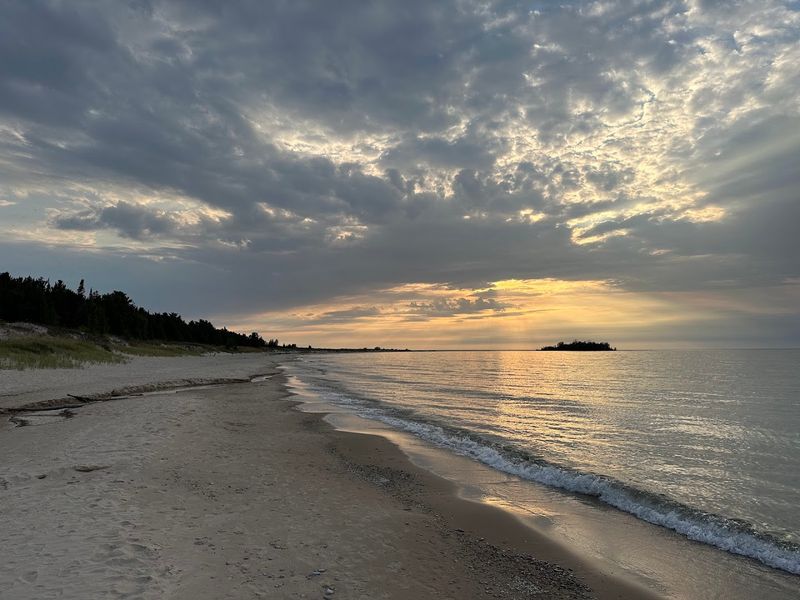
Six miles of undeveloped Lake Michigan shoreline sounds like a marketing claim, but it is just a fact here. Most of it stays quiet even during peak summer weekends.
The beach shifts character as you move along it. The northern end tends to be sandier and more forgiving underfoot, while the southern stretch gets rockier and more rugged.
Both are beautiful in completely different ways, and both reward exploration.
The water clarity is genuinely impressive. On calm days you can see the sandy bottom several feet out, and the color shifts from pale green in the shallows to a deep blue further out that looks more like somewhere tropical than the American Midwest.
Three separate parking areas provide beach access at different points along the shoreline, which helps spread visitors out naturally. Even on a busy summer Friday afternoon, the beach rarely feels crowded because the sheer length of it absorbs people easily.
That sense of having your own private stretch of shore is one of the park’s greatest selling points.
The Offshore Island You Might Actually Be Able to Walk To
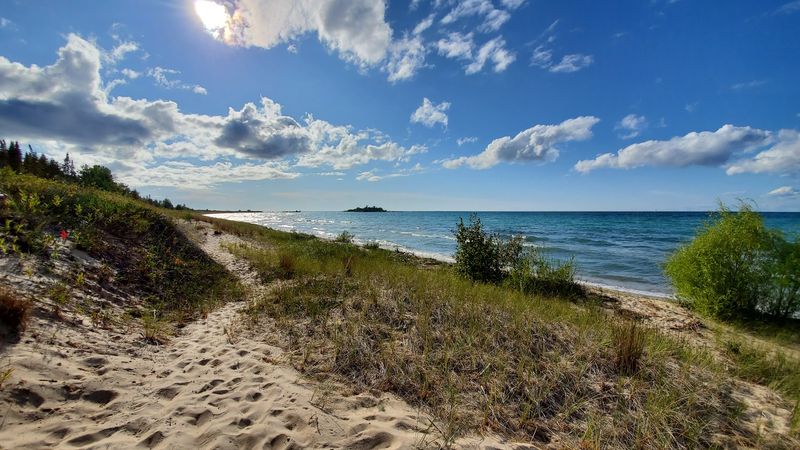
Here is one of the genuinely cool quirks of this park: there is an actual island out there, and sometimes you can walk straight to it without getting your feet wet.
Fisherman’s Island, the small landmass that gives the park its name, sits just offshore near the southern end of the park. During periods of lower lake levels, the water between the island and the mainland recedes enough to create a walkable connection, essentially turning the island into a peninsula.
When that happens, visitors can stroll right out to it and walk around its perimeter, which makes for a genuinely memorable afternoon. The island itself is small and tree-covered, with a wild, untouched feel that fits perfectly with the rest of the park’s character.
Lake levels vary from year to year, so there is no guarantee the crossing will be passable on any given visit. Checking conditions before you head out is a smart move, but even if the water is too high, the view of the island from shore is worth the trip on its own.
Rock Hounding Heaven: Petoskey and Charlevoix Stones
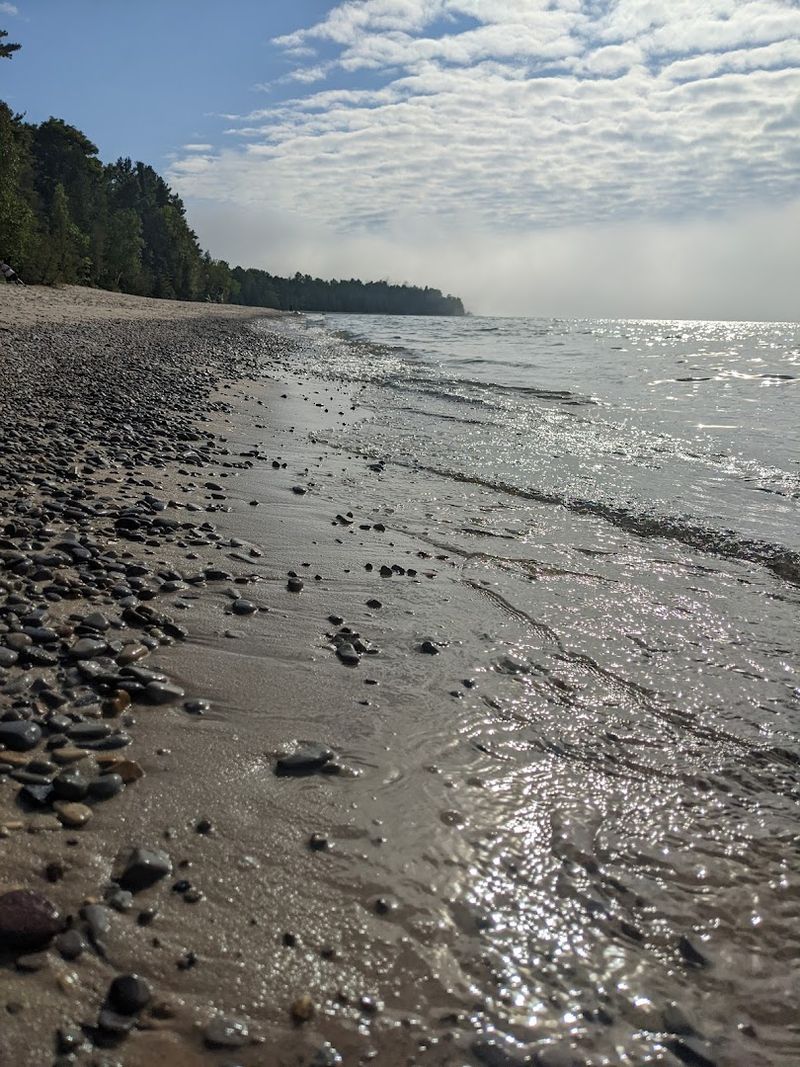
Rock hounding at this park is not a casual hobby. It is practically a competitive sport, and the beach is loaded with prizes for anyone willing to crouch down and look carefully.
Petoskey stones are the big draw, and they are genuinely here in abundance. These fossilized coral stones, Michigan’s official state stone, show a distinctive honeycomb pattern when wet and are found scattered across the rocky sections of the beach.
Charlevoix stones, a related fossil type, turn up frequently as well.
The variety goes well beyond those two. Visitors have found horn corals, brachiopods, crinoids, jasper, and even septarian nodules along this stretch of shore.
The southern end of the park tends to be rockier and richer for fossil hunters, with some areas described as genuine bedrock fossil zones.
The best time to hunt is early morning when the light is low and the beach is empty. Wet stones are easier to identify, so wading into the shallows a few inches gives you a real advantage over dry-land searching.
Hiking Trails Through Dunes, Forest, and Bog
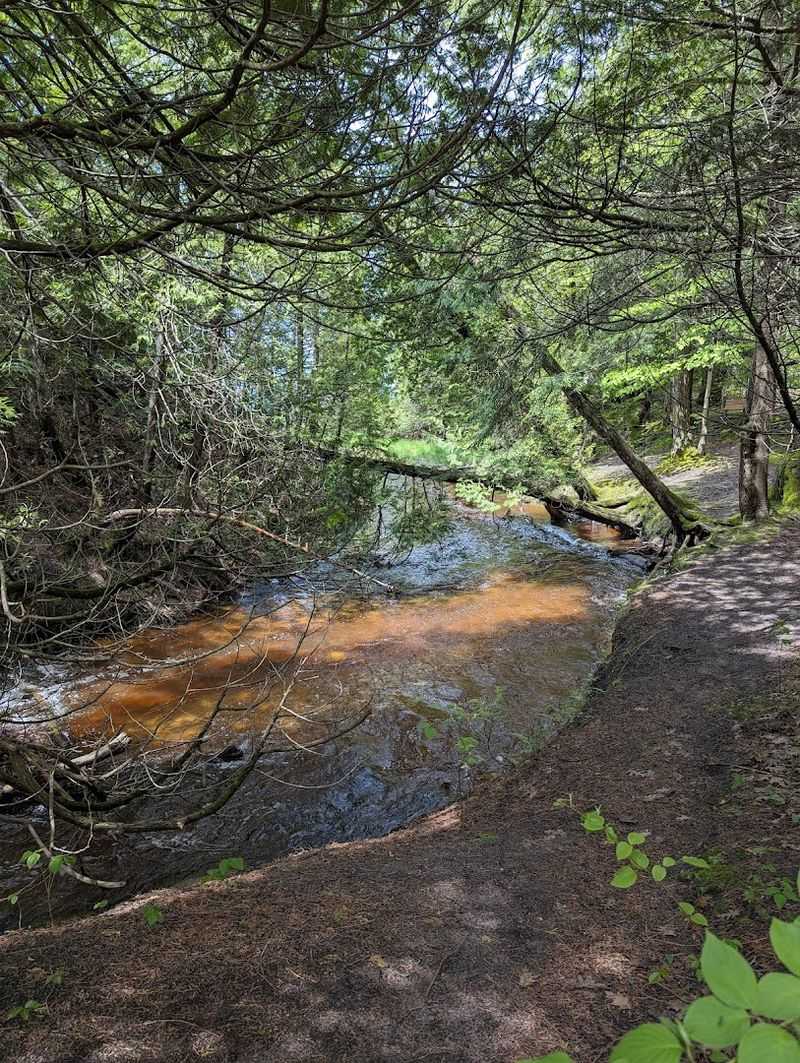
The terrain at this park is more varied than most people expect before their first visit. Beyond the beach, there is a whole landscape of rolling dunes, dense forest, and quiet bogs waiting to be explored on foot.
The park offers between 2.5 and 6 miles of trails depending on which route you choose. The main trail runs roughly parallel to the campground loops and connects through forested sections before opening up to shoreline views.
It is well-marked and manageable for most fitness levels.
The forest mix here is genuinely lovely. Maple, birch, and aspen cover the dune ridges, while lower areas transition into cedar and black spruce bogs that have a completely different, almost eerie atmosphere.
The contrast between the bright, airy forest and the dark, mossy bog sections keeps the hike interesting from start to finish.
A one-mile shoreline walk is also available for visitors who prefer to stay close to the water. The trail conditions stay solid through most of the season, though early spring can bring some muddy stretches near the bog areas.
Swimming and Paddling on Lake Michigan
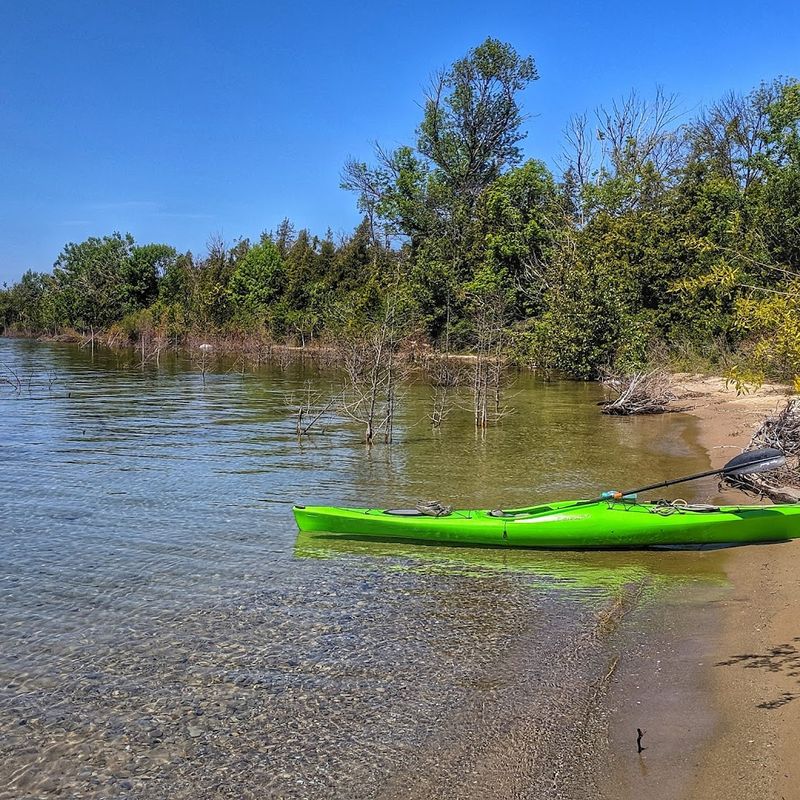
Lake Michigan gets a reputation for being cold, and that reputation is not entirely wrong. But the water here surprises people more often than not, especially later in summer when the shallows warm up considerably.
The sandy bottom near the shore makes wading and swimming genuinely pleasant. The water stays clear enough that you can see your feet easily in several feet of depth, and the gradual slope means young swimmers do not suddenly find themselves in deep water without warning.
Paddling is another great option here. Kayaks and canoes can be launched from the beach without any special infrastructure needed, and the calm sections of shoreline near the campground offer protected water on days when the open lake is too choppy.
Paddling toward Fisherman’s Island on a calm morning is one of those experiences that stays with you.
Water shoes are genuinely recommended for the rockier sections of beach, particularly near the southern end where the cobblestones can be slippery underfoot when wet.
Winter at the Park: Cross-Country Skiing and Snowshoeing
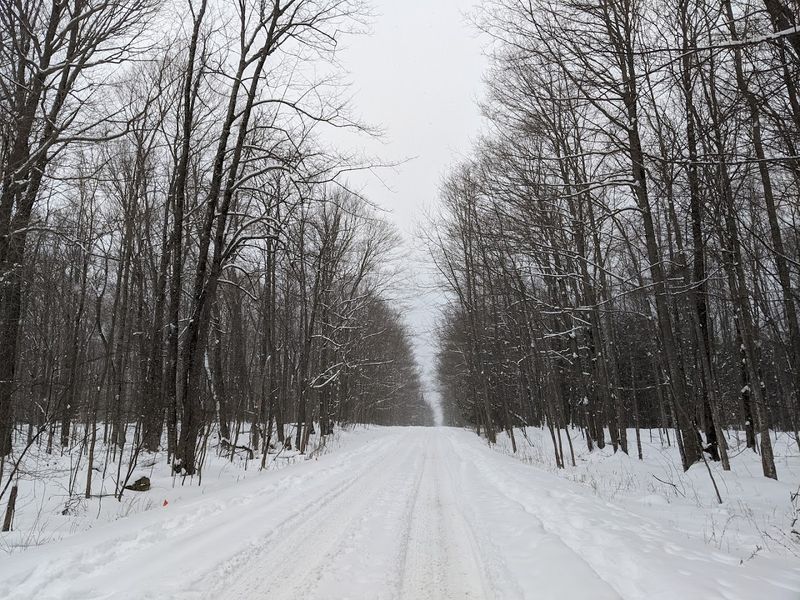
Most people close the chapter on this park after Labor Day, but that is honestly their loss. Winter here has a completely different kind of beauty that rewards the visitors willing to brave the cold.
The park stays open through winter and welcomes cross-country skiers and snowshoers on its trail system. The same forest paths that feel lush and green in July transform into something quieter and more dramatic once snow covers the dunes and the birch branches go bare.
Lake Michigan in winter is genuinely stunning. Ice formations build up along the shoreline during cold snaps, and the beach, completely empty of other visitors, takes on a stark, almost cinematic quality.
The silence is remarkable compared to the summer buzz.
The trails are not groomed for skiing, so conditions depend on natural snowfall. That means a bit of adventure is baked into any winter visit.
Snowshoeing works well even in lighter snow years, and the cedar bog sections of the trail feel especially atmospheric when frost covers the branches.
Wildlife, Atmosphere, and the Sounds of the Park
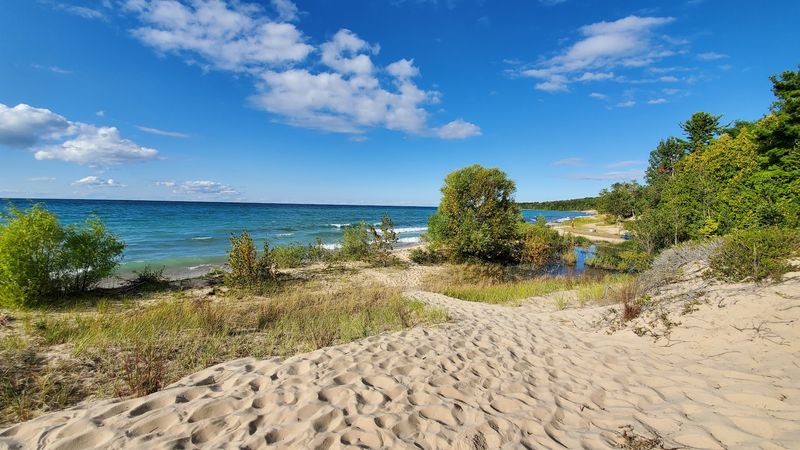
The absence of generators, air conditioners, and traffic noise from a crowded campground is something you notice almost immediately.
The forest here supports a healthy mix of wildlife. White-tailed deer move through the campground at dawn and dusk with remarkable regularity, and birds are constant company along the trail system.
The bog areas in particular attract species that are harder to spot in typical forest settings.
One honest note: the inland campsites can get buggy during humid summer evenings. Bringing a good insect repellent is not optional if you plan to sit outside after dark, especially near the cedar bog sections of the property.
There is also a cement factory nearby that produces a low, constant background hum audible from parts of the park, and small planes occasionally pass overhead on routes between Charlevoix and Beaver Island. Neither is overwhelming, but worth knowing before you arrive expecting complete silence.
Dog-Friendly Policies and Family Practicalities

Traveling with a dog in Michigan can sometimes feel like a negotiation, but this park leans in a welcoming direction. Dogs are allowed on the beach here, which immediately puts it ahead of many other Lake Michigan destinations.
The standard Michigan state park rules apply: dogs must be on a leash no longer than six feet at all times. That is easy enough to manage, and the beach is wide enough that leashed dogs do not feel restricted.
The rocky sections of shore actually seem to fascinate most dogs, who spend a lot of time sniffing through the stones.
For families with kids, the park is genuinely well-suited. The gradual beach entry, the rock hunting, the short hikes, and the island adventure all translate well for younger visitors.
Finding Petoskey stones is the kind of activity that keeps kids engaged for hours without any screens involved.
Pack your own food and water for day trips, since there are no concessions or stores within the park boundaries. The nearest town amenities are just a few minutes away in Charlevoix.
Planning Your Visit: Tips, Reservations, and What to Bring
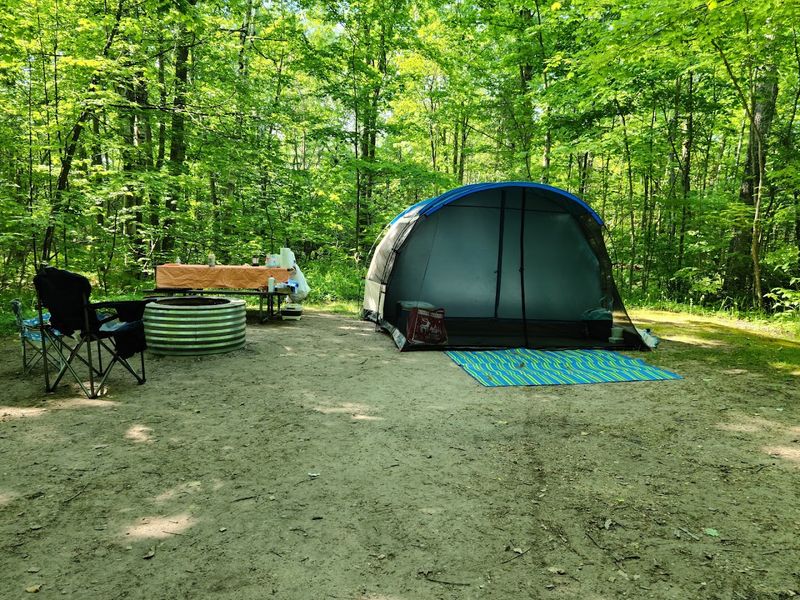
A little planning goes a long way at this park, especially if a lakefront campsite is on your wish list. Those roughly 15 waterfront spots book up fast, often weeks or even months in advance for summer weekends.
Reservations can be made online through the Michigan DNR reservation system or by phone. Showing up without a reservation mid-summer is a gamble, though the park does tend to have more availability than busier Michigan state parks, and walk-in spots sometimes open up on weekdays.
A Michigan Recreation Passport is required for entry, which costs a small fee and can be added when you register your vehicle. Day visitors should bring cash or a card for the fee station, along with everything they need for the day since there are no camp stores or food vendors on site.
Essentials to pack include water shoes for the rocky beach sections, insect repellent for evenings, a bag for rock collecting, and sunscreen. The park’s rustic nature is its charm, and arriving prepared lets you enjoy every bit of it without distraction.
Share this story