Somewhere between history and fantasy, there are places that make you feel like royalty without requiring a crown or a royal decree. Hidden in valleys, perched on clifftops, and tucked behind ancient walls, these castles and gardens carry centuries of stories in their stones and soil.
They are not the most advertised spots on the tourist trail, yet that is precisely what makes them special. Think secret passages, manicured hedges taller than most people, and gardens so perfectly arranged that you half expect to see a peacock strolling past.
This list covers twelve remarkable destinations across Europe where history, architecture, and extraordinary landscaping come together in ways that feel genuinely royal. Whether you are planning a bucket-list trip or simply daydreaming from your couch, these places are worth knowing about.
Read on, and prepare to be seriously impressed by what the world has been quietly hiding.
1. Château de Brissac – Loire Valley, France
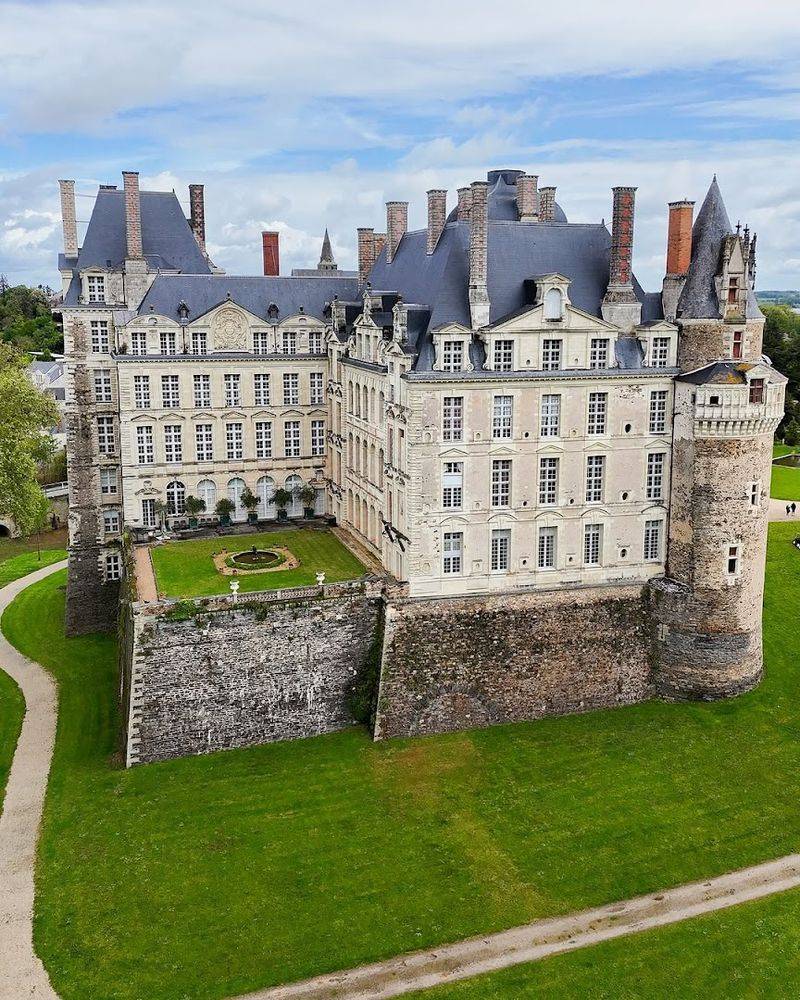
At eleven stories tall, Château de Brissac holds the title of the tallest castle in France, yet it somehow manages to feel more like a family home than a fortress.
Built in the fifteenth century and still privately owned by the same noble family after more than five centuries, this château offers guided tours through rooms filled with original tapestries, antique furniture, and genuine family portraits.
The gardens are calm and well-kept, with neat hedgerows, gravel paths, and an orchard that stretches toward the surrounding parkland.
Unlike the busier châteaux along the Loire, Brissac rarely draws enormous crowds, which means you can actually enjoy the grounds at your own pace.
The estate also produces its own wine, sold directly on-site, so picking up a bottle makes for a memorable souvenir. Visitors who enjoy historical architecture paired with genuine countryside quiet will find this one of the most rewarding stops in the entire Loire Valley region.
2. Egeskov Castle Gardens – Funen, Denmark
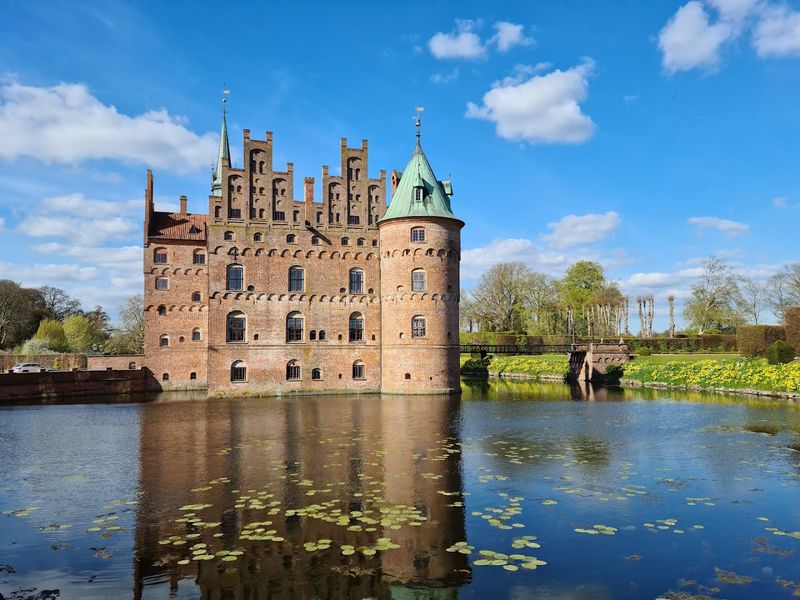
Rising straight out of a lake on a foundation of thousands of oak trees, Egeskov Castle is one of the best-preserved Renaissance water castles in all of Europe, and it has been standing since 1554.
The gardens surrounding it are just as impressive as the structure itself, covering around seventeen different themed areas that include a bamboo labyrinth, a Renaissance garden, a romantic garden, and a kitchen garden that still produces seasonal crops.
Each section has its own distinct character, so wandering from one to the next feels like flipping through chapters of a very well-illustrated history book.
The hedge maze is particularly popular with younger visitors, though adults tend to get just as lost and have just as much fun.
Egeskov also houses a collection of vintage cars, motorcycles, and aircraft in its on-site museums, making it a surprisingly full day out for anyone who visits the island of Funen.
3. Hluboká Castle – Czech Republic
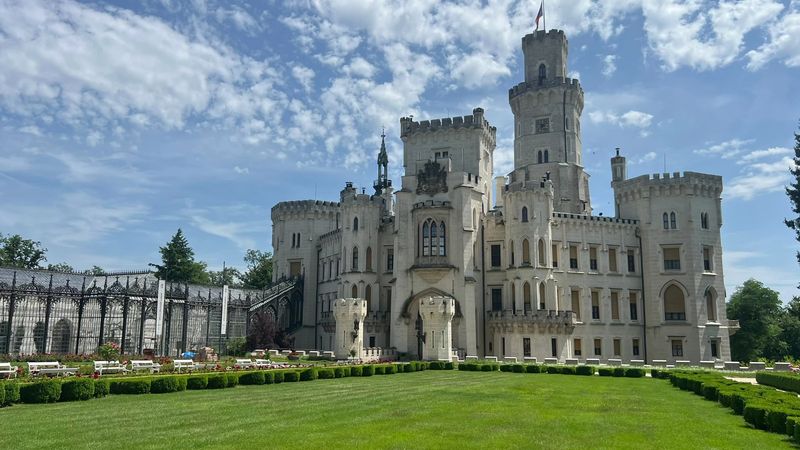
Modeled directly after Windsor Castle in England, Hluboká nad Vltavou stands as one of the most visually striking examples of neo-Gothic architecture in Central Europe.
The castle was redesigned in the mid-nineteenth century by the aristocratic Schwarzenberg family, who wanted something that matched the grandeur of the English royal residences they had admired during their travels.
The result is a white-walled, tower-studded structure that sits confidently above the Bohemian landscape, surrounded by an English-style park covering roughly 180 hectares.
Inside, the castle holds an impressive collection of Flemish tapestries, Gothic panel paintings, and hand-carved wooden ceilings that took craftsmen years to complete.
The surrounding grounds include forest walks, open meadows, and a riding school that dates back to the estate’s earlier centuries.
Spring visits are particularly rewarding, as the gardens fill with color just as the castle’s white exterior catches the clearest light of the year.
4. Ninfa Gardens – Cisterna di Latina, Italy
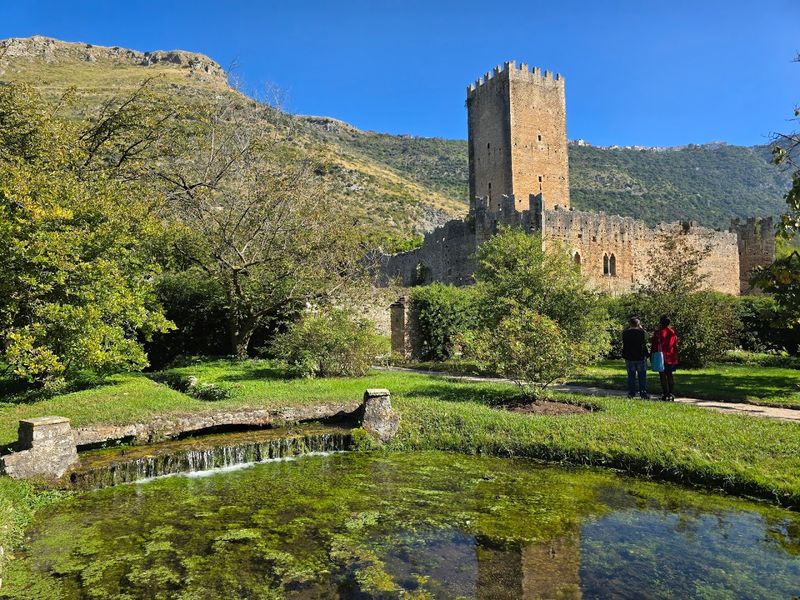
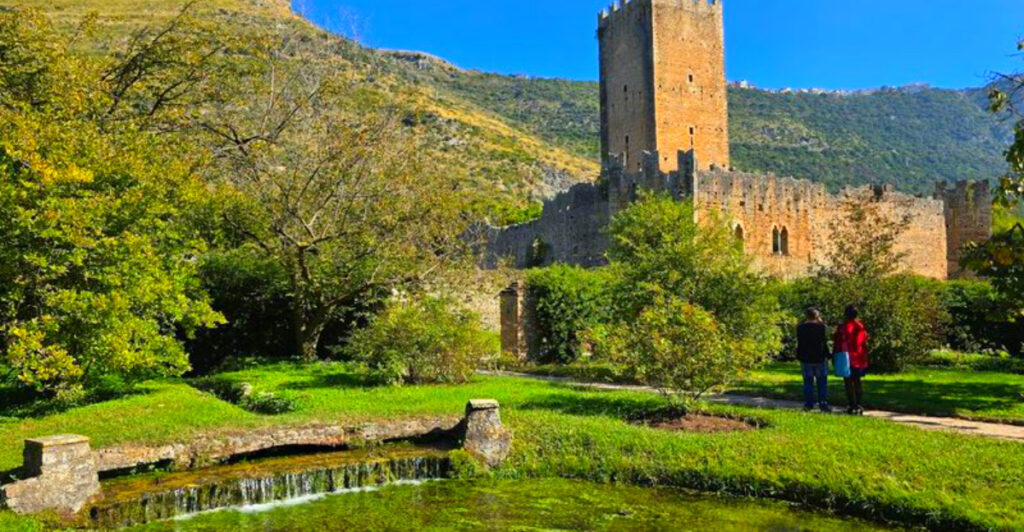
Built across the ruins of an entire abandoned medieval town, Ninfa Gardens in the Lazio region of Italy is one of the most genuinely unusual garden experiences in Europe.
The town of Ninfa was deserted in the fourteenth century, and over the following centuries, the Caetani noble family transformed its crumbling streets and roofless buildings into a sprawling landscape garden.
Today, visitors walk along paths that pass through the ruins of old churches, towers, and civic buildings, all of which are now draped in climbing roses, wisteria, and hundreds of other plant species.
A clear stream cuts through the entire garden, adding a reflective quality to the ruins that photographs never quite capture fully.
Access is strictly controlled to protect the ecosystem, meaning visitor numbers are limited and timed entry is required, which actually makes the experience feel more exclusive than most gardens.
Advance booking is strongly recommended, particularly for the popular spring and autumn openings.
5. Dunrobin Castle – Scottish Highlands
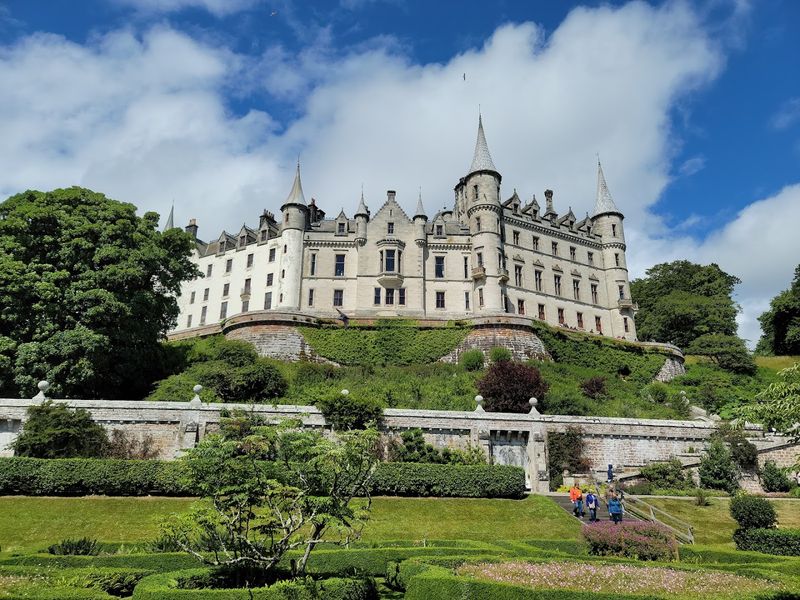
Dunrobin Castle looks like it was assembled by someone who wanted to out-do every other castle in Scotland, and honestly, they may have succeeded.
With 189 rooms, it is the largest house in the northern Highlands, and its distinctive fairytale spires are visible from a considerable distance along the Sutherland coastline.
The formal gardens that fan out below the castle were designed in the French style and draw a clear visual comparison to the gardens at Versailles, featuring geometric flower beds, clipped hedges, and a central fountain that anchors the whole layout.
The castle itself has been home to the Earls and Dukes of Sutherland for centuries, and parts of the original medieval structure still exist within the later additions.
A falconry display runs during the summer season on the lawn near the garden, which adds a genuinely dramatic touch to any afternoon visit.
The combination of coastal scenery, formal gardens, and towering architecture makes Dunrobin one of Scotland’s most complete castle experiences.
6. Alcázar of Segovia Gardens – Spain
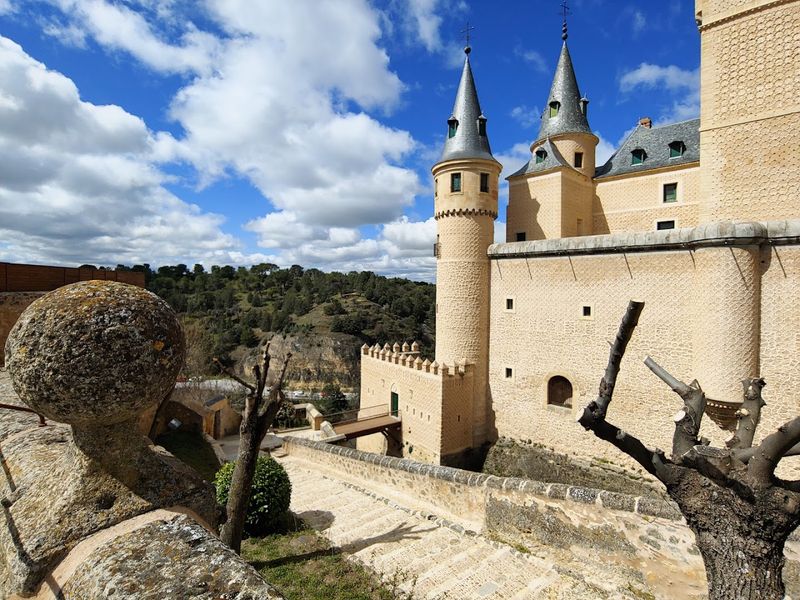
Most visitors to the Alcázar of Segovia spend their time inside admiring the throne room and the Hall of the Kings, but the gardens tucked around the outer walls deserve just as much attention.
The castle itself has served as a royal palace, a state prison, and a royal artillery school across its long history, and it is widely cited as one of the inspirations behind the design of Cinderella’s castle at Disney parks.
The garden areas sit just below the castle’s dramatic rocky promontory and offer unobstructed views across the Castilian plateau in multiple directions.
Because most tour groups focus on the interior, the outdoor spaces tend to be noticeably quieter, even on busy days.
The surrounding landscape changes dramatically with the seasons, from golden summer grasses to snow-dusted plains in winter, which gives the castle a different character depending on when you visit.
Early morning arrival is the best strategy for beating the crowds and getting the cleanest view of the towers from the approach road.
7. Schwerin Castle Gardens – Germany
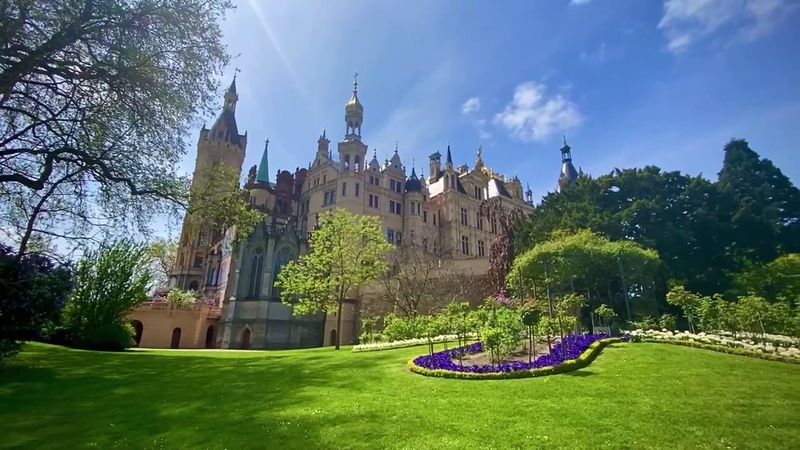
Germany’s Schwerin Castle sits on a small island in the middle of Lake Schwerin, connected to the mainland by a narrow causeway, which gives it the distinct appearance of floating above the water.
The castle’s current appearance dates largely from the mid-nineteenth century, when it was rebuilt in the Historicist style, drawing on elements from French Renaissance architecture and incorporating a collection of towers, turrets, and copper-topped domes.
The Baroque garden on the Burggarten island nearby is one of the most precisely maintained formal gardens in northern Germany, featuring symmetrical flower beds, topiary hedges, and a central orangery building that dates back to the seventeenth century.
Today the castle serves as the seat of the Mecklenburg-Vorpommern state parliament, which makes it one of the few working government buildings in the world that genuinely looks like a royal residence.
Guided tours run regularly and cover both the historic state rooms and the garden grounds, giving visitors a thorough picture of the estate’s layered history across different ruling periods.
8. Villa del Balbianello – Lake Como, Italy
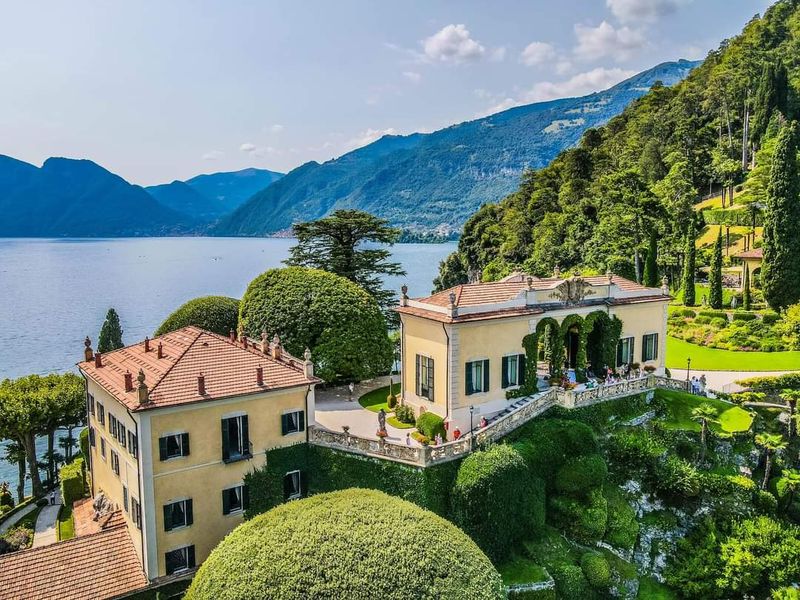
Perched on a narrow wooded headland jutting into Lake Como, Villa del Balbianello has appeared in two major films, including a James Bond movie and a Star Wars episode, and yet it still manages to feel like a well-kept secret.
The villa was built in the late eighteenth century on the site of a former Franciscan monastery, and its gardens were developed over the following decades into a series of terraced outdoor rooms filled with topiary, stone balustrades, and loggia-framed lake views.
The property is now managed by the Italian National Trust, which maintains both the villa interiors and the gardens with considerable care.
Access is available by boat from the town of Lenno or by foot along a lakeside path, and the approach from the water gives the first view of the villa’s distinctive silhouette above the tree line.
The garden layout follows the natural contours of the headland, so every terrace offers a slightly different angle on the surrounding water and mountains.
9. Lednice-Valtice Gardens – Czech Republic
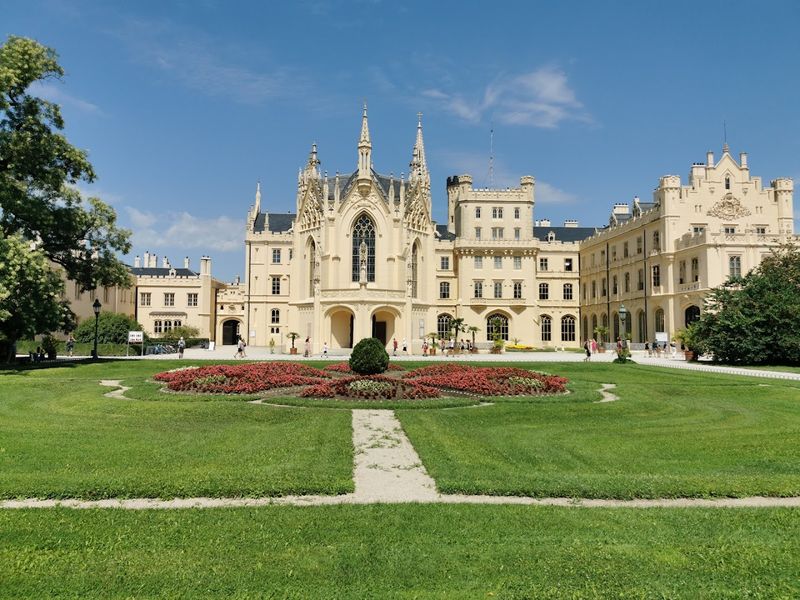
Covering roughly 283 square kilometers of the Moravian landscape in the southern Czech Republic, the Lednice-Valtice cultural landscape is not a garden in any ordinary sense of the word.
It is a UNESCO World Heritage Site and one of the largest artificially created landscape parks in Europe, assembled over several centuries by the powerful Liechtenstein noble family.
The landscape connects two main castle complexes, Lednice and Valtice, via a network of avenues, lakes, canals, and a series of decorative follies that include a Gothic minaret, a Roman triumphal arch, a circular temple, and several hunting lodges.
Cycling is the most practical way to explore the full estate, and rental bikes are available near both castle entrances.
The minaret at Lednice, completed in 1804, is the tallest of its kind in Central Europe and offers a panoramic view from its upper gallery that puts the whole landscape into perspective.
The sheer scale of the place genuinely rewards a full day of exploration rather than a quick visit.
10. Pena Palace Gardens – Sintra, Portugal
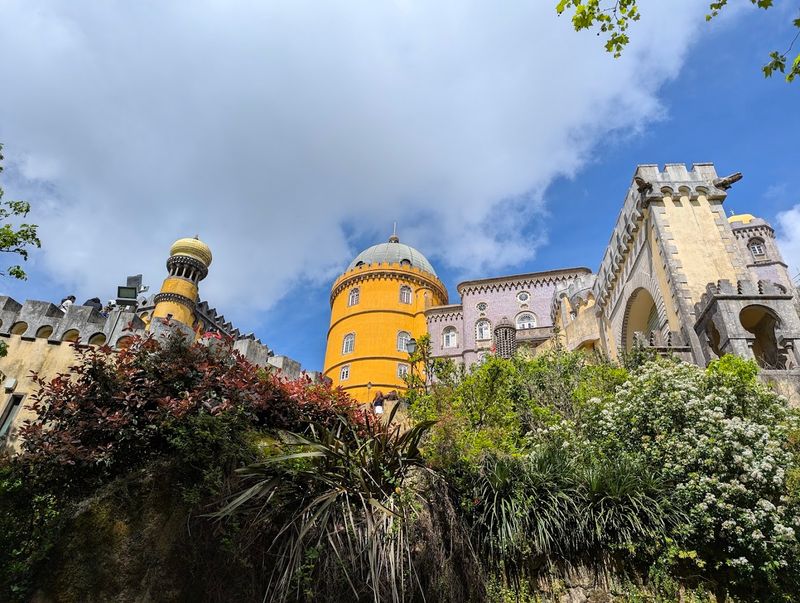
Pena Palace is the kind of building that makes architects either deeply inspired or quietly envious, painted in bold yellow and red across a hilltop above the town of Sintra.
Commissioned by King Ferdinand II in the 1840s, the palace was designed as a royal summer retreat and built in a dramatic Romanticist style that mixes Gothic, Moorish, Manueline, and Renaissance elements into one very confident structure.
The surrounding park covers around 200 hectares and was planted with over 500 species of trees and shrubs gathered from across the world during the nineteenth century, making it as much a botanical collection as a garden.
Hidden paths wind through the dense woodland and connect the main palace to smaller garden features, including a fern valley, a lake, and a series of ornamental fountains.
The park is significantly less crowded than the palace itself, which means that visitors who skip the interior queues and head straight into the gardens tend to have a much more relaxed experience overall.
11. Hever Castle Gardens – Kent, England
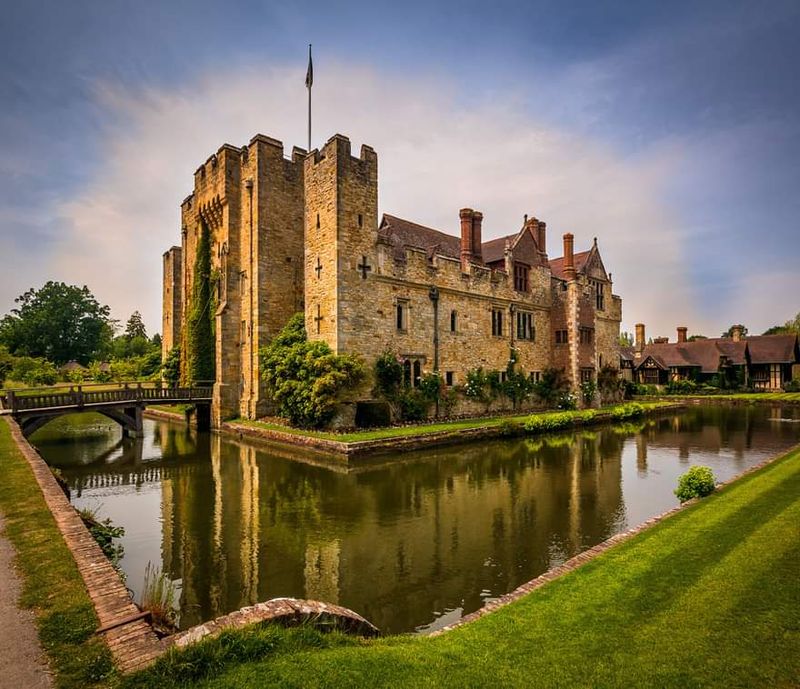
Before it became famous as the childhood home of Anne Boleyn, second wife of King Henry VIII, Hever Castle was already a well-established medieval fortified manor with a history stretching back to the thirteenth century.
The gardens visitors see today were largely created in the early twentieth century by American millionaire William Waldorf Astor, who purchased the estate in 1903 and spent the following years transforming the grounds into one of England’s most celebrated garden landscapes.
The Italian Garden alone contains an impressive collection of ancient Roman sculptures, while the rose garden is planted with over 4,000 rose bushes representing hundreds of different varieties.
A thirty-five acre lake was excavated by hand by a workforce of 800 men, a project that took several years to complete and permanently changed the character of the surrounding landscape.
The castle’s double moat is original and still filled with water, giving the approach to the main entrance a genuinely historic atmosphere that no amount of restoration work could manufacture.
12. Mirabell Gardens – Salzburg, Austria
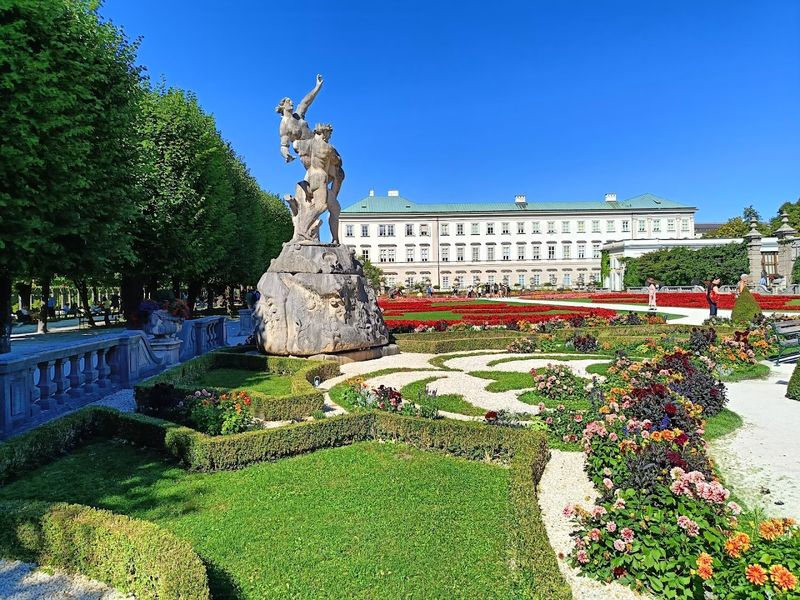
Archbishop Wolf Dietrich von Raitenau built the original Mirabell Palace in 1606 as a private residence, though the Baroque gardens that now define the property were redesigned in the early eighteenth century by court architect Johann Lukas von Hildebrandt.
The garden layout follows strict Baroque symmetry, with four large flower parterres arranged around a central fountain, bordered by stone statues representing characters from Greek mythology.
Hohensalzburg Fortress rises visibly in the background, framing the garden in a way that makes almost every photograph taken here look professionally composed.
Most tourists pass through the main central path, but the quieter outer sections of the garden, including the dwarf garden and the hedge theater, see far fewer visitors and reward those who take time to explore beyond the obvious route.
The hedge theater, one of the oldest surviving examples of its kind in Europe, was used for outdoor performances during the Baroque period and still hosts occasional concerts during the summer festival season.
Share this story