America’s history has always been tied to the water. Long before highways connected the country, rivers, harbors, and ocean routes powered trade, immigration, exploration, and naval defense.
Today, that history still lives on in preserved ships, coastal forts, working boatyards, and historic fishing towns scattered across the country. From Maine’s rocky harbors to Hawaii’s volcanic shores, these 13 maritime destinations offer a chance to experience the stories, people, and places that helped shape the nation.
1. Mystic Seaport Museum, Mystic, Connecticut
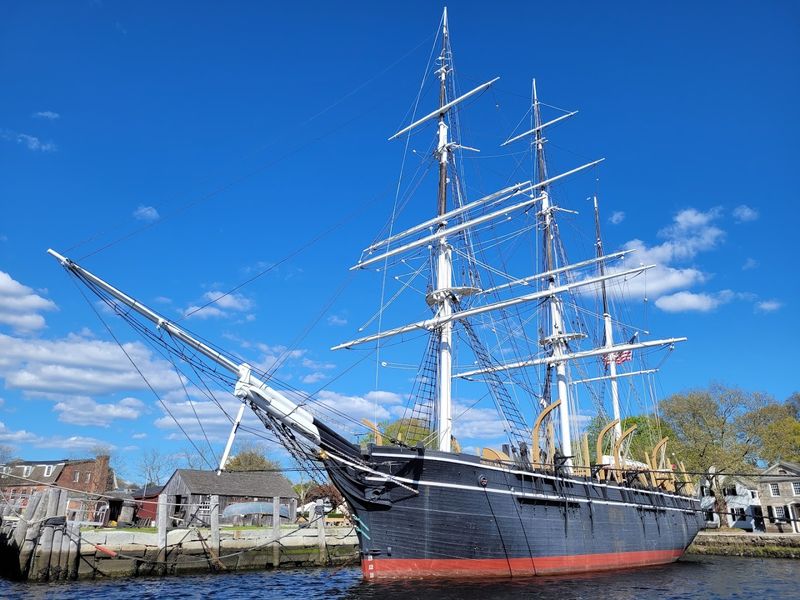
Spread across 19 acres of Connecticut waterfront, Mystic Seaport Museum is not just a museum, it is a fully reconstructed 19th-century coastal village that you can actually walk through.
The complex holds over 60 historic buildings, roughly 500 ships, 1 million photographs, and 2 million artifacts, making it one of the most densely packed history experiences in the country.
The star attraction is the Charles W. Morgan, built in 1841, and the last wooden whaling ship in the world still afloat.
You can climb aboard and explore the decks where real whalers once worked long, difficult voyages.
Other vessels include the steam-powered Sabino, which offers seasonal river cruises, and the fishing schooner L.A. Dunton.
Live demonstrations of blacksmithing and sail-making add a hands-on layer that most history museums cannot match.
2. USS Constitution Museum, Boston, Massachusetts
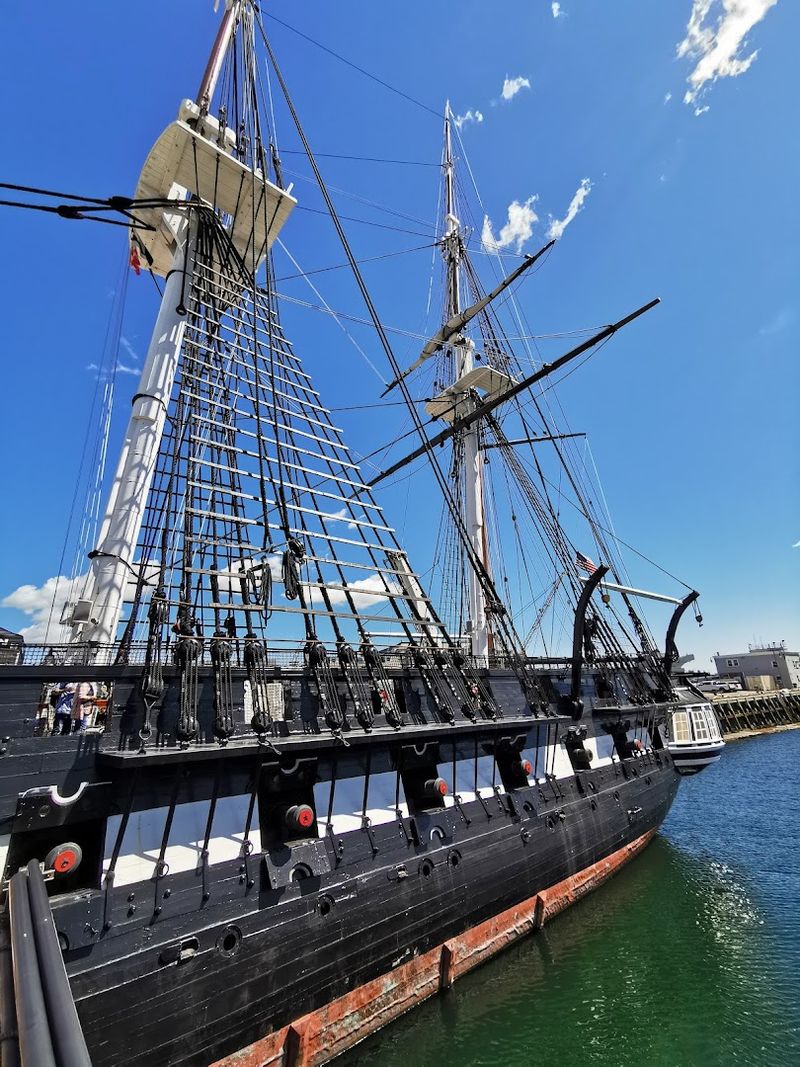
Launched in 1797 and personally named by President George Washington, the USS Constitution holds a title that no other ship in America can claim: the world’s oldest commissioned naval vessel still afloat.
Better known as Old Ironsides, the three-masted wooden frigate earned its nickname during the War of 1812, when enemy cannonballs reportedly bounced off its thick hull during battle.
The ship is docked at the Charlestown Navy Yard in Boston and is open for free visits as part of the Boston National Historical Park, which already makes it one of the best deals in American history tourism.
The nearby USS Constitution Museum adds interactive exhibits that put visitors in the shoes of sailors from the 1800s. Kids and adults alike can try their hand at ship tasks, making the whole experience feel more like participation than observation.
3. Independence Seaport Museum, Philadelphia, Pennsylvania
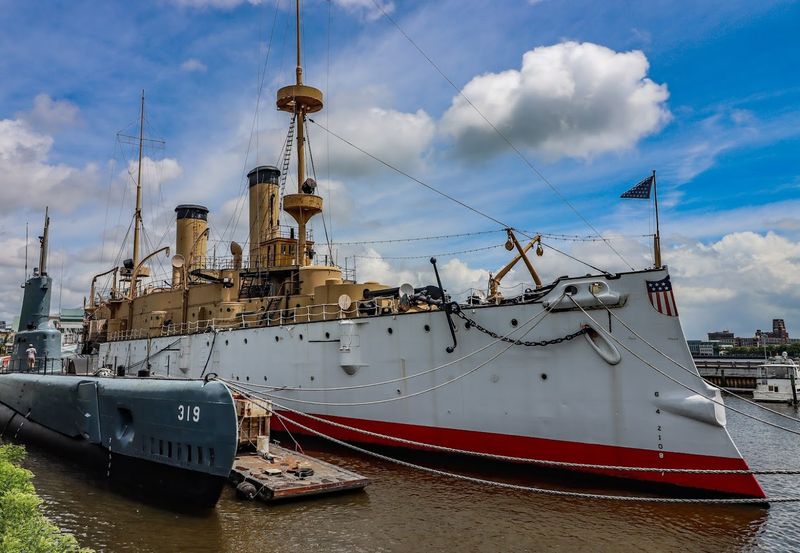
Philadelphia’s waterfront was once one of the busiest ports on the entire East Coast, and the Independence Seaport Museum does a thorough job of honoring that legacy without letting a single detail go to waste.
The museum sits along the Delaware River and features exhibits focused on shipbuilding, immigration, and the commercial trade that helped build early America. The collection includes maritime artifacts, historical records, and hands-on displays designed for all ages.
The biggest draw is the USS Olympia, a retired Navy cruiser from the Spanish-American War era that visitors can tour from bow to stern. Climbing through the ship’s compartments gives a real sense of how sailors lived and worked in a pre-modern naval fleet.
A submarine, the USS Becuna, is also docked nearby and open for tours. Between the two vessels, you get a solid cross-section of American naval history in a single afternoon.
4. Chesapeake Bay Maritime Museum, St. Michaels, Maryland
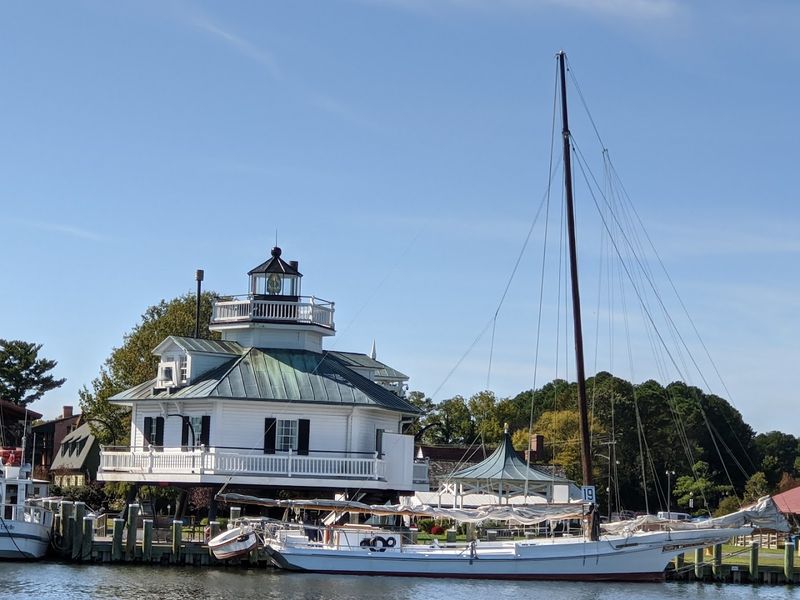
The Chesapeake Bay has supported fishing, oystering, and crabbing communities for centuries, and the Chesapeake Bay Maritime Museum in St. Michaels is built around telling that working-water story honestly and in detail.
The museum campus sits right on the Miles River and includes restored wooden boats, crab pots, oyster dredging equipment, and exhibits that trace how generations of Bay families made their livelihoods on the water. It is less about naval glory and more about everyday maritime life, which makes it genuinely different from most ship museums.
The Hooper Strait Lighthouse is the standout structure on the property. Built in 1879, it was moved to the museum site in 1966 and is now open for visitors to tour the interior.
The boatyard on the grounds is a working restoration facility, so visitors can watch craftsmen repair and rebuild traditional Bay vessels using old techniques that are rarely practiced today.
5. Battleship North Carolina, Wilmington, North Carolina
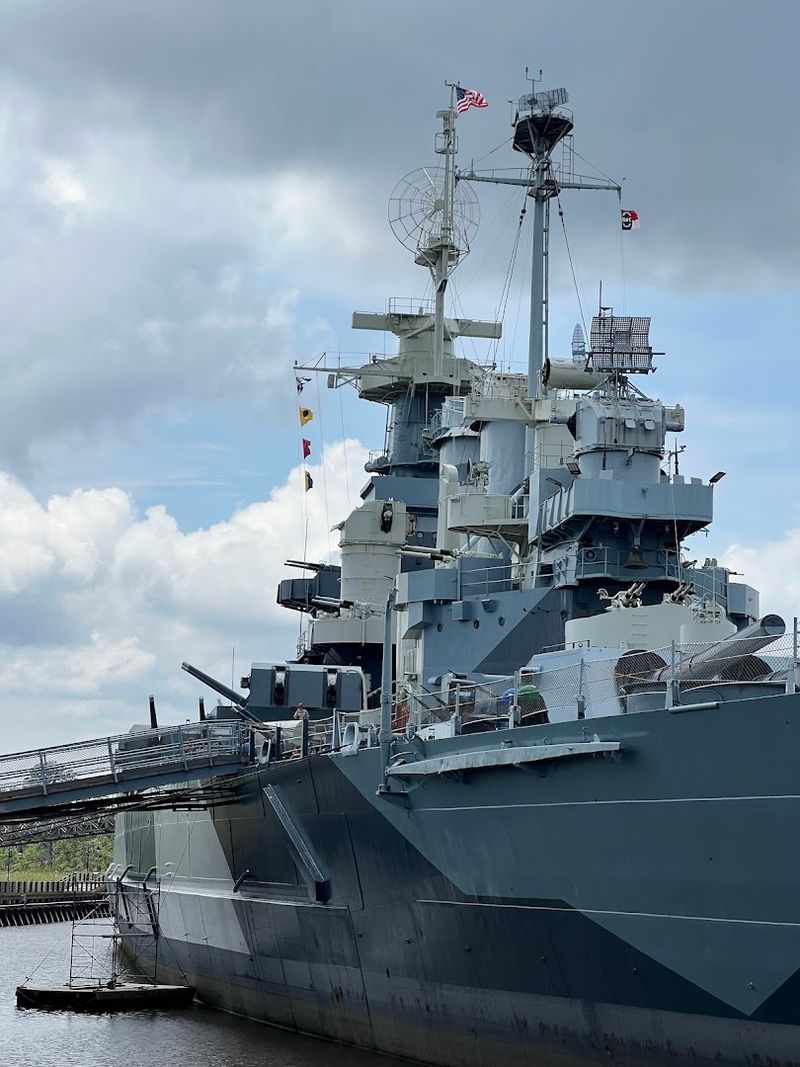
Moored on the Cape Fear River just across from downtown Wilmington, the Battleship North Carolina is one of the most decorated American warships from World War II, having earned 15 battle stars during its service in the Pacific.
The self-guided tour takes visitors through nine different decks, including cramped sleeping quarters, the massive engine rooms, and the main gun turrets that could fire shells weighing over 2,700 pounds. The sheer scale of the ship is something that photographs do not fully capture.
The North Carolina was commissioned in 1941 and saw action from the very first months after the United States entered the war. Its combat record includes surviving a torpedo hit that would have sunk a lesser vessel.
Admission is reasonably priced, and the tour typically takes two to three hours to complete thoroughly. An outdoor museum and memorial area flank the ship, adding historical context before you even step aboard.
6. Dry Tortugas National Park & Fort Jefferson, Florida
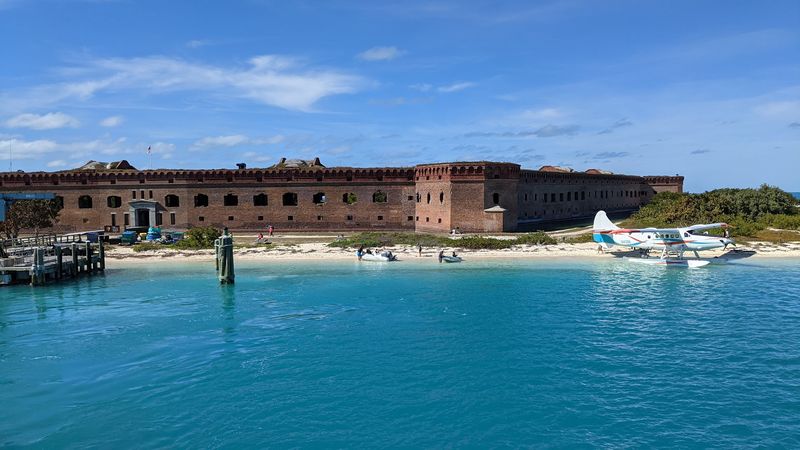
About 70 miles west of Key West, accessible only by ferry or seaplane, Fort Jefferson is the kind of place that makes you question why it does not show up in more history conversations.
Construction on the massive hexagonal brick fort began in 1846 and continued for 30 years, yet it was never fully completed. At its peak, the structure used over 16 million bricks, making it one of the largest masonry structures in the Western Hemisphere.
Fort Jefferson was built to control shipping lanes through the Gulf of Mexico, and its position made it strategically critical during the Civil War. The surrounding waters are also scattered with shipwreck sites that tell their own separate stories of commerce and conflict.
The national park status means the area is carefully preserved, and the ferry ride out gives visitors a clear sense of just how isolated and strategically important this remote island outpost once was.
7. National WWII Museum PT-305 Boat House, New Orleans, Louisiana
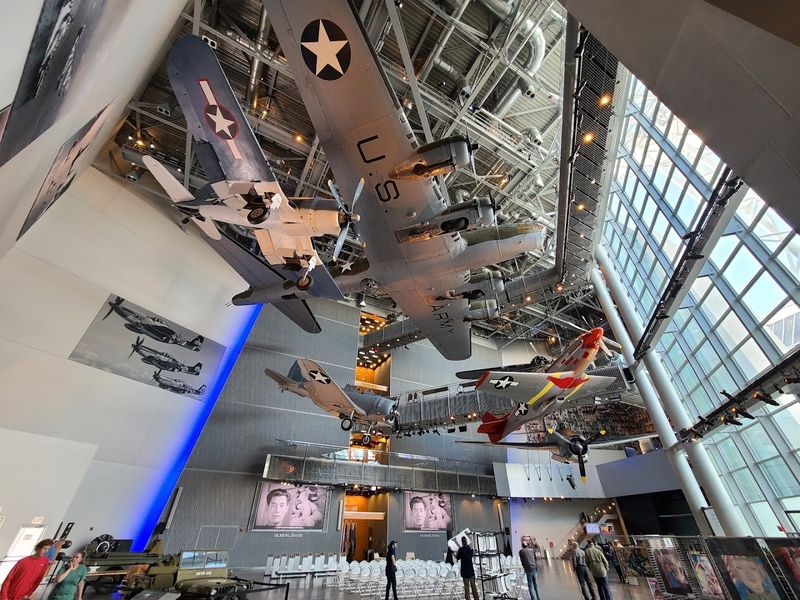
New Orleans contributed significantly to World War II shipbuilding, and the PT-305 Boat House at the National WWII Museum is one of the clearest reminders of that industrial effort.
The PT-305 is a fully restored World War II patrol torpedo boat, one of only a handful that survived the war and the only one in the country that has been returned to full operating condition. That last detail matters more than it sounds, because this boat actually goes out on the water.
Patrol torpedo boats were fast, lightweight, and used for coastal attacks and rescue operations. They required small crews and were built in large numbers at facilities across the country, including several shipyards right in Louisiana.
The restoration took years of dedicated work and used original wartime blueprints. Visitors can tour the boat at the dock and, on select dates, ride aboard it during special harbor cruises that bring the wartime experience to a whole new level.
8. San Francisco Maritime National Historical Park, California
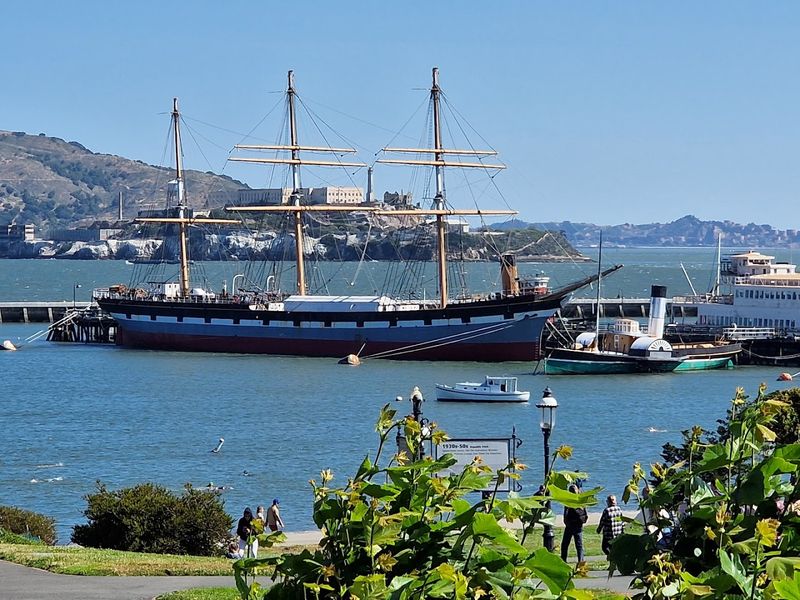
Hyde Street Pier in San Francisco holds one of the most impressive collections of historic vessels on the entire West Coast, and the views of the Bay do not hurt either.
The fleet includes the Balclutha, a square-rigged sailing ship built in 1886 that carried cargo between California and Europe; the Eureka, a side-wheel ferry that once transported commuters across the Bay; and the C.A. Thayer, a three-masted lumber schooner from 1895.
Each vessel tells a different chapter of California’s maritime past.
The park connects directly to San Francisco’s role during the Gold Rush, when hundreds of ships arrived in the Bay loaded with hopeful passengers and left loaded with supplies. Many ships were simply abandoned as their crews ran off to the goldfields.
The Maritime Museum building nearby features large WPA-era murals painted during the 1930s that document seafaring life in vivid detail. Admission to the pier is affordable, and the museum building is free.
9. Pearl Harbor National Memorial, Honolulu, Hawaii
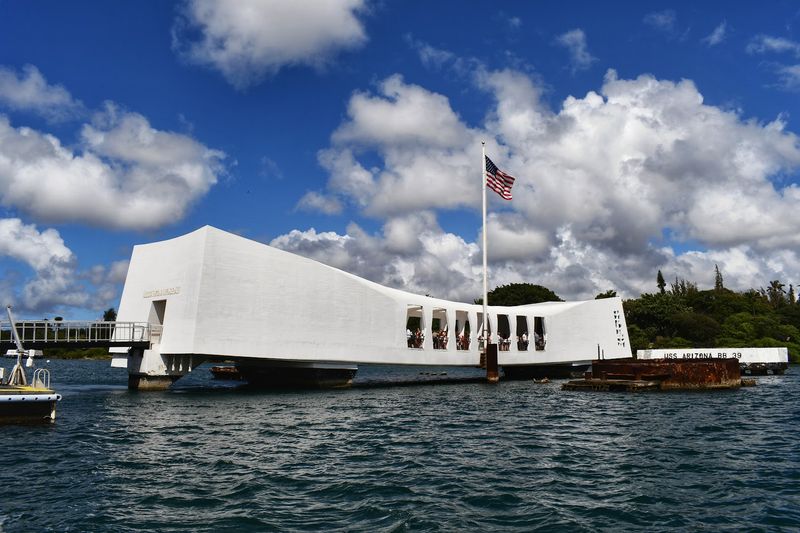
Few places in American history carry the kind of weight that Pearl Harbor does, and the national memorial there handles that responsibility with careful attention to detail and accuracy.
On December 7, 1941, a surprise military strike on the naval base at Pearl Harbor brought the United States into World War II. The USS Arizona alone accounted for nearly half of the total casualties that morning, and the ship still rests on the harbor floor today.
The USS Arizona Memorial sits directly above the sunken hull and is accessible by boat. The white structure was designed by architect Alfred Preis and opened in 1962, and it draws over one million visitors each year.
The broader memorial complex includes the Battleship Missouri, where Japan’s formal surrender was signed in 1945, plus the USS Bowfin submarine and the Pacific Aviation Museum. Together, they form one of the most complete World War II history experiences available anywhere in the country.
10. Great Lakes Shipwreck Museum, Whitefish Point, Michigan
Most people do not picture the Great Lakes when they think of dangerous open-water navigation, but Lake Superior alone has claimed over 350 ships and more than 1,000 lives throughout recorded history.
The Great Lakes Shipwreck Museum at Whitefish Point sits at the northern tip of Michigan’s Upper Peninsula and focuses on the dramatic, often tragic stories behind those losses. The most famous exhibit centers on the Edmund Fitzgerald, the freighter that went down in a November 1975 storm and became the subject of a well-known folk song.
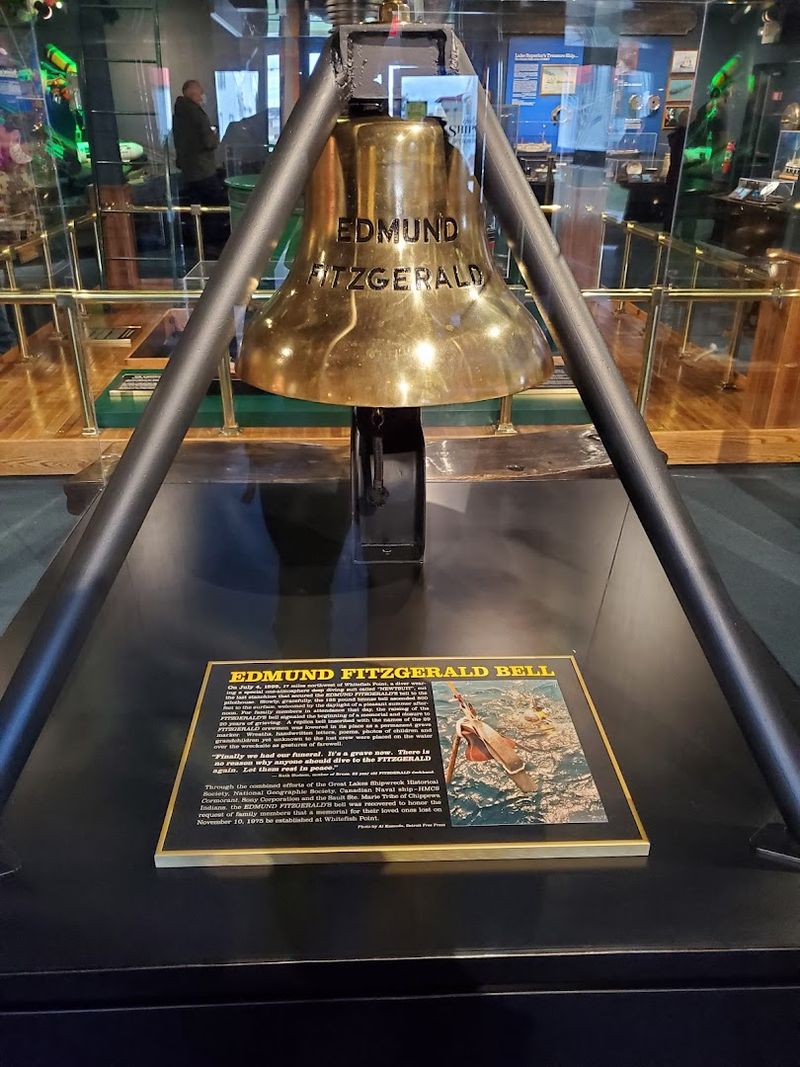
The museum displays the actual recovered bell from the Edmund Fitzgerald, which was brought up from the lake floor in 1995 and replaced with a replica bearing the names of the 29 crew members. That single artifact draws visitors from across the country.
The Whitefish Point Lighthouse, built in 1849, is the oldest active lighthouse on Lake Superior and stands right beside the museum, adding genuine historic structure to the experience.
11. Columbia River Maritime Museum, Astoria, Oregon
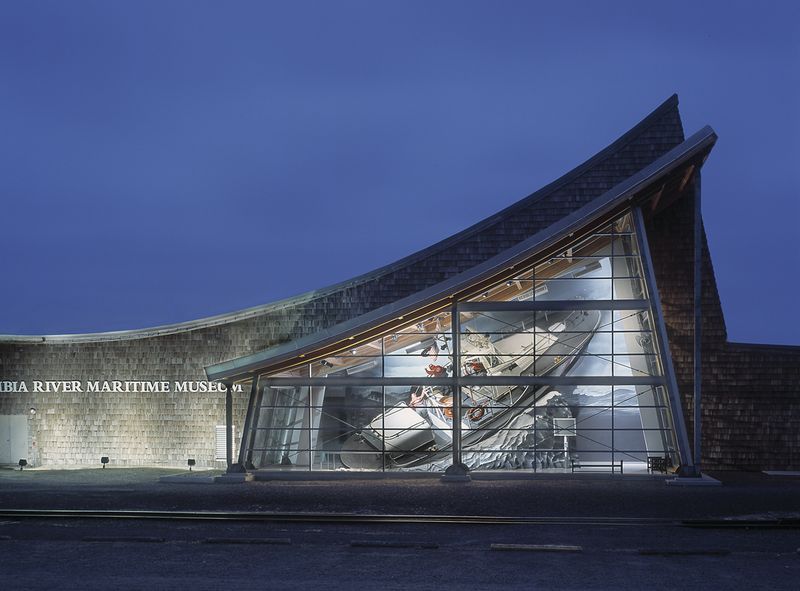
Astoria, Oregon sits at the point where the Columbia River meets the Pacific Ocean, a stretch of water so unpredictable and storm-prone that it earned the nickname the Graveyard of the Pacific long before the town had a proper museum to document the disasters.
The Columbia River Maritime Museum holds the largest collection of maritime artifacts in the Pacific Northwest, with over 22,000 pieces covering fishing, Coast Guard rescues, shipwrecks, and the treacherous bar crossings that challenged sailors for centuries. The Columbia River bar is still considered one of the most dangerous river mouths in the world.
A lightship is docked outside the museum and open for tours, giving visitors a look at how these floating navigational beacons functioned before modern technology made them obsolete. The museum also runs a 3D theater that puts the bar crossing experience into a format that makes the danger very easy to understand.
The research library contains over 35,000 historical photographs, making it a valuable stop for anyone tracing Pacific Northwest maritime ancestry.
12. USS Midway Museum, San Diego, California
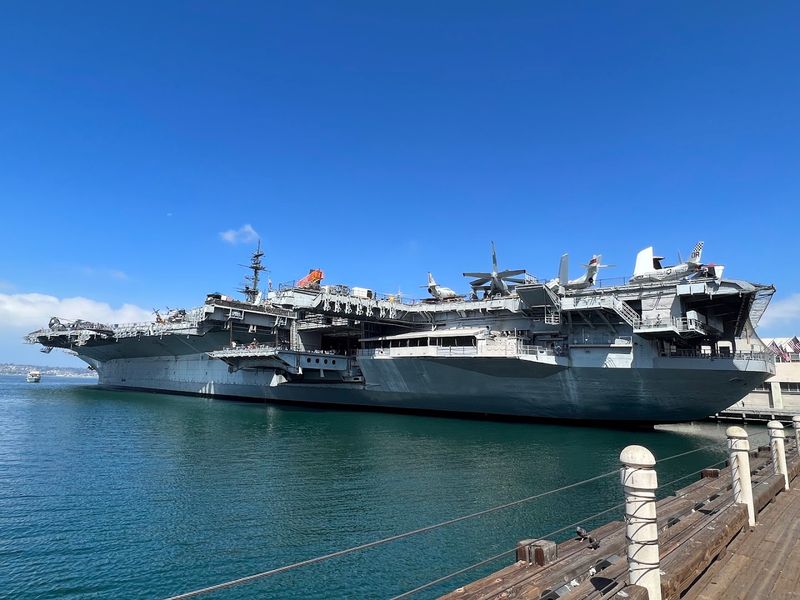
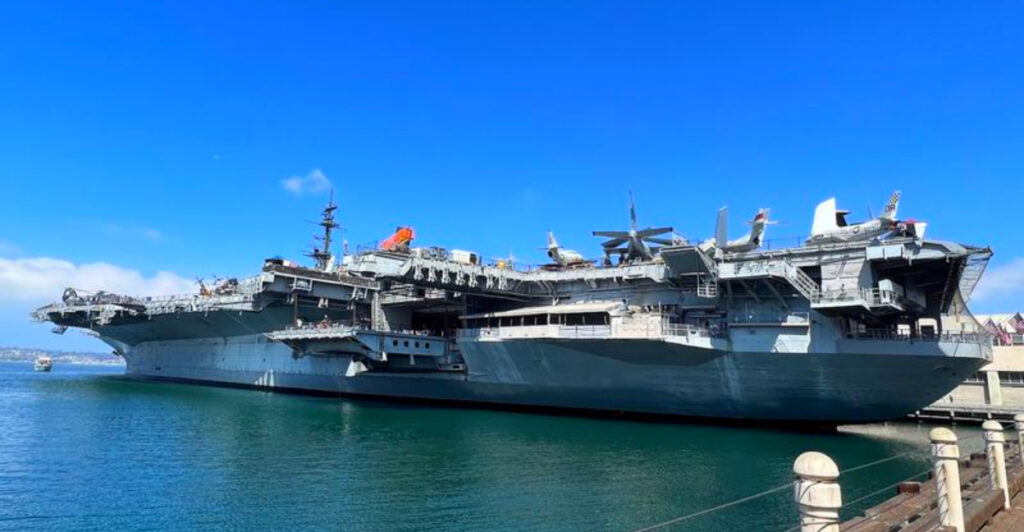
At nearly 1,000 feet long, the USS Midway is hard to miss in San Diego Harbor, and the museum that now occupies it is consistently ranked among the most visited in the entire country.
The Midway was commissioned in 1945 and served for 47 years, longer than any other American aircraft carrier of the 20th century. During that time, it participated in operations ranging from the Cold War to the Gulf War, and its flight deck hosted dozens of different aircraft types across multiple decades.
The self-guided audio tour covers over 60 exhibits spread across multiple decks, including the engine room, the brig, sleeping quarters, and the captain’s bridge. Over 29 restored aircraft are displayed on the flight deck, and volunteer docents, many of them former Midway crew members, are stationed throughout the ship to answer questions.
The harbor-side location means visitors can see modern naval vessels operating in the background, which creates an interesting contrast between the museum ship and current Navy operations.
13. Maine Maritime Museum, Bath, Maine
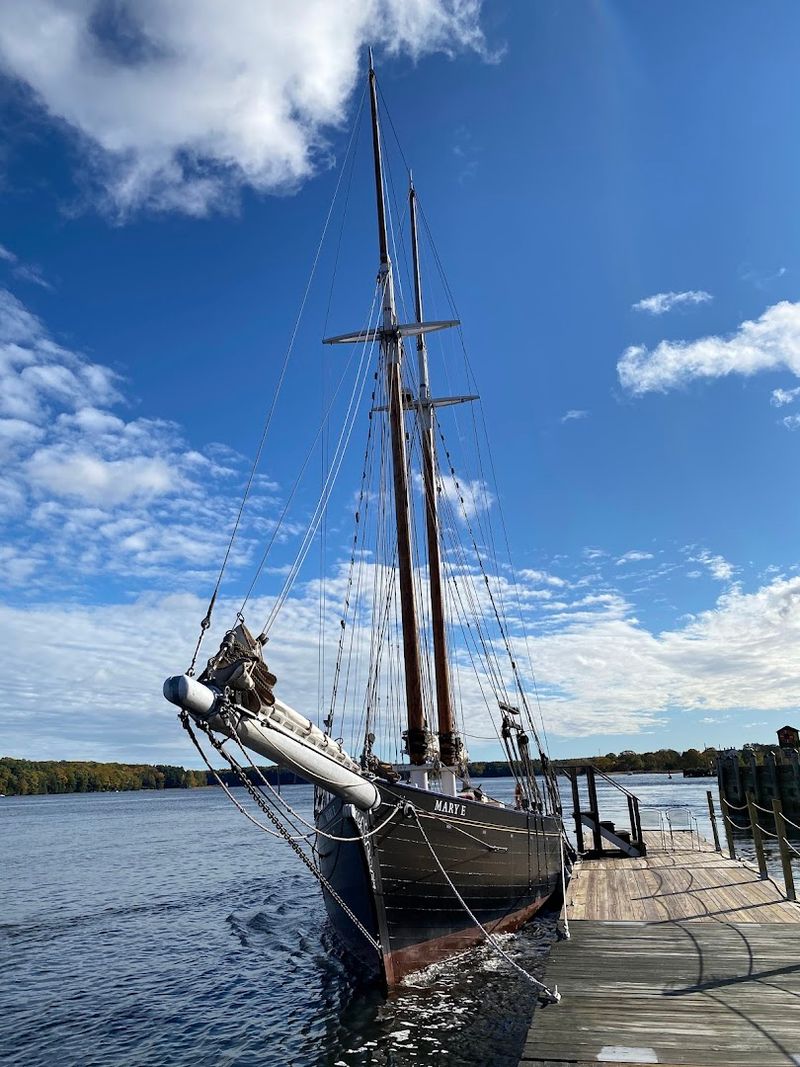
Bath, Maine once built more ships per capita than almost any other city in America, and for much of the 19th century, the Kennebec River was lined with shipyard after shipyard producing vessels that sailed to every corner of the globe.
The Maine Maritime Museum sits on 20 acres along that same river and preserves that tradition through exhibits, historic vessels, and a working boatyard where restoration projects are ongoing. The Mary E.
Schooner, built in 1906 and the last surviving vessel from the 850 schooners constructed in Bath, is one of the key vessels in the collection.
Exhibits cover shipbuilding techniques, Maine’s lobster and fishing industries, and Arctic exploration history, which connects Bath to some genuinely remarkable polar expeditions from the late 1800s.
During warmer months, the museum offers river cruises along the Kennebec, which gives visitors a water-level perspective on the same stretch of river that once launched hundreds of wooden ships into the world.
Share this story