 Unearth The Voyage
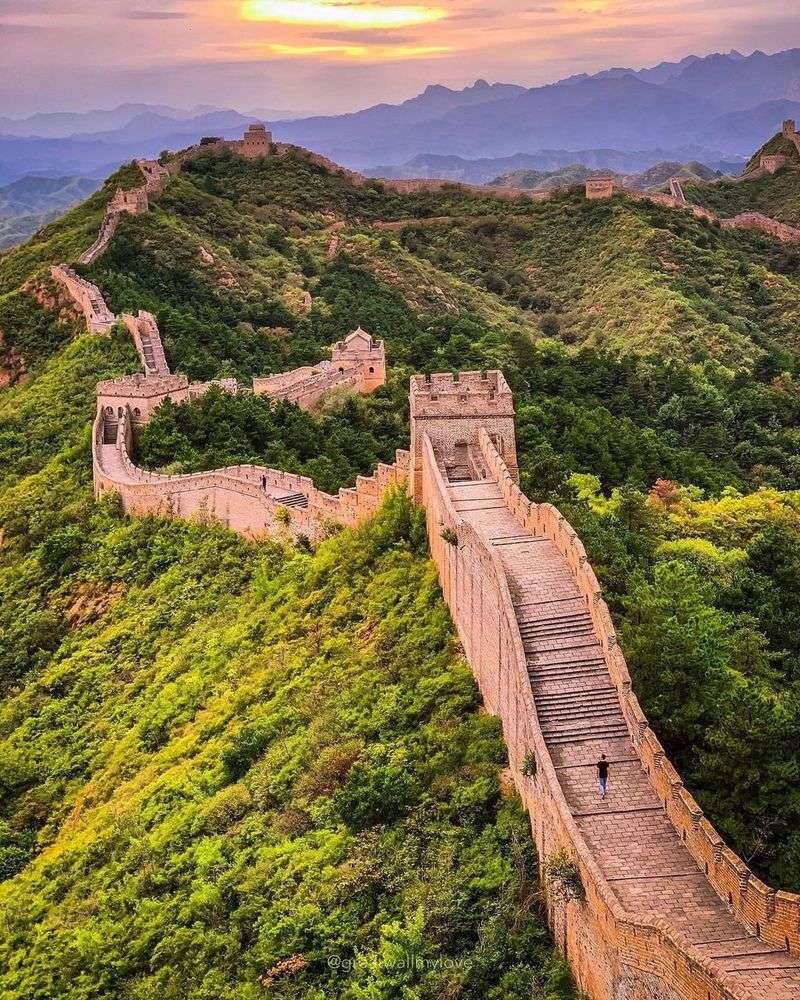
You have probably heard the line about the Great Wall being visible from the Moon. It sounds bold, romantic, and completely wrong.
Astronauts have corrected that myth for years, yet the truth is even more surprising. From space, the most eye-catching human-made sight is not ancient stone stretching across mountains, but something far more modern and unexpected.
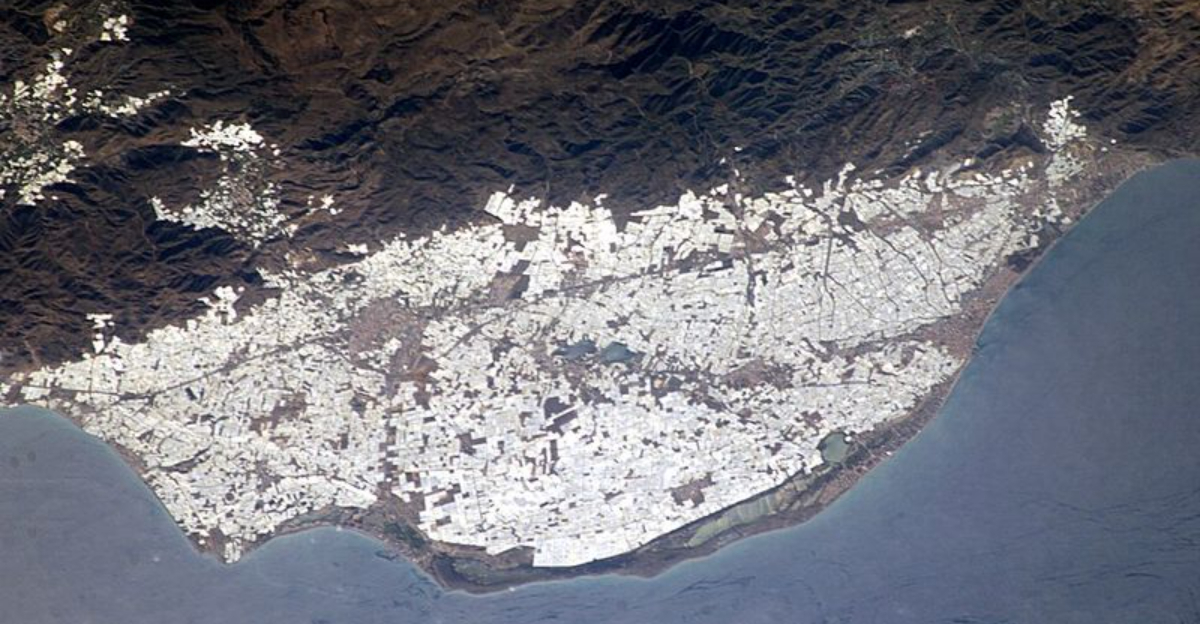
It gleams, it spreads, and under the sun it looks almost like a frozen ocean. Head to the coast of southern Spain, where a vast, shimmering sea of plastic outshines old legends – the greenhouses of Almería.
A whisper of dust on the path is the first clue that this story started long before rockets. Early writers, centuries back, squinted across maps and guessed wildly about what might be seen from impossible heights.
The Great Wall became the perfect boast, a tidy line to carry a tall tale further than any carriage.
Here is the twist you deserve: astronauts never started this rumor, readers did. Long before space travel, the idea took hold in salons and studies, and it clung stubbornly to guidebooks.
You arrive expecting a headline view from the Moon, then learn the headline was printed without a fact check.
Tip for travelers who love big claims: pack curiosity, not certainty. The Wall is massive, yes, but it behaves like the mountains it follows, blending into earth and scrub.
You will feel its scale under your boots rather than as a stripe in the sky, and that realization is oddly more satisfying.
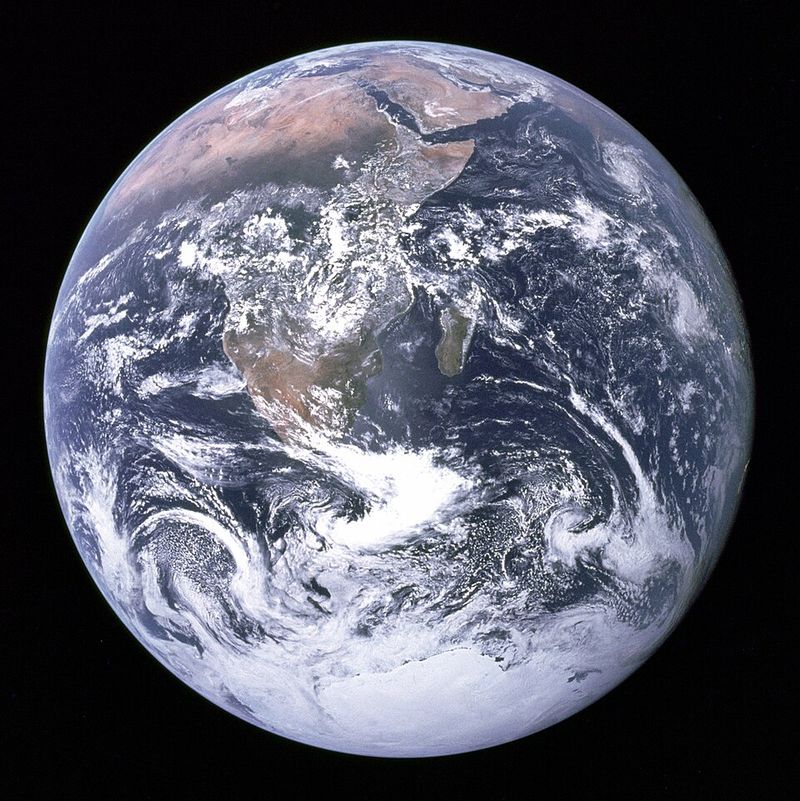
A radio crackle and a heartbeat of silence tell you everything about perspective. From lunar distance, the planet reads like bold strokes only: continents, oceans, cloud swirls sprawling like white brushwork.
No thread of masonry announces itself to the naked eye, only the living geometry of Earth.
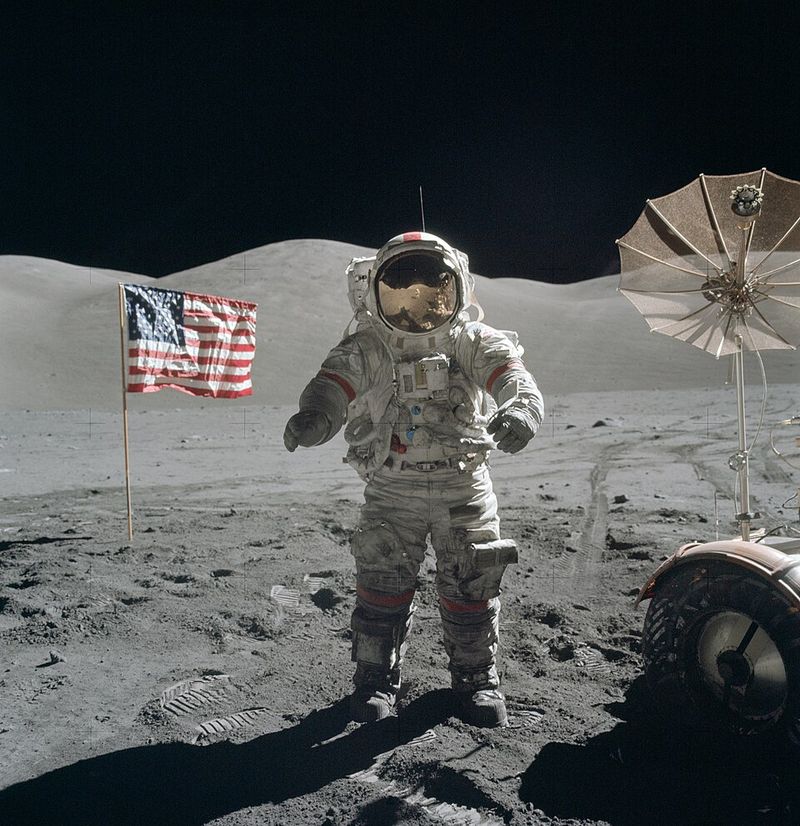
Apollo crews said it simply, and it keeps landing with authority. Neil Armstrong and company explained that human structures vanish at that scale, swallowed by distance and atmosphere.
You can almost hear the shrug across time: beautiful world, tiny details.
Here is a traveler’s takeaway you can use on the ground. When you stand in a museum under a moon rock, remember the view that dismissed our favorite brag.
Save your awe for what really shows up, and let that reset your sense of what counts as big.
A slant of golden light can make mountains whisper their edges. From the International Space Station, even that glow rarely teases the Great Wall out from the ridgelines.
Built from local stone and soil, it matches the palette so closely that your eyes skim past it.
A quirky truth surfaces once you stare: timing beats fame. Astronauts mention conditions like grazing light, dry air, and perfectly placed shadows, and even then it is a maybe.
Most of the time, haze and color mimicry erase the Wall into the folds of the terrain.
Learn this tip before you go chasing legends. Contrast is the ticket, not sheer length, and the Wall does not buy enough of it.
On the ground, its steps and watchtowers feel enormous underfoot, but the sky treats it like another wrinkle in a brown green quilt.
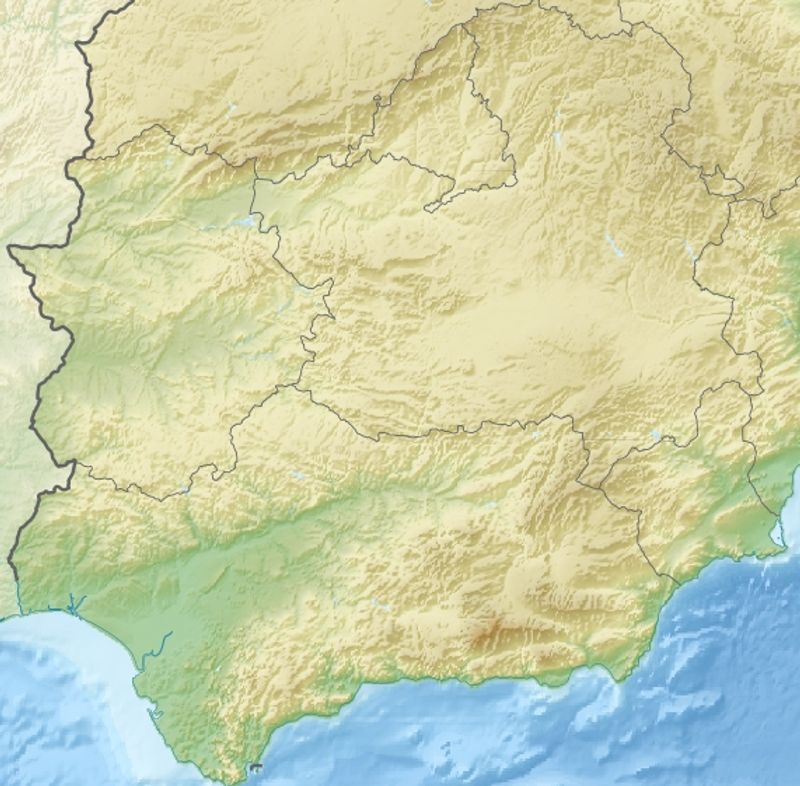
The first flash of white hits like sunlight off a mirror. Along Spain’s Mediterranean flank in Almeria, rectangles of greenhouse plastic tessellate into a bright expanse that refuses to be subtle.
From above, this patchwork becomes a luminous field screaming look here.
Locals call them Los Invernaderos de Almeria, and the name lands softly compared to the sight. Tens of thousands of hectares spread across valleys and flats, feeding Europe with tomatoes, peppers, and cucumbers.
You do not need a map to find it from orbit, just daylight and a clear line of sight.
I drove the coastal road once, and the view flipped my expectations like a postcard. Instead of rolling vineyards, the landscape wore a bright industrial coat.
It felt surreal yet purposeful, the kind of place that makes you pull over, blink twice, and admit space rumors forgot the Mediterranean.
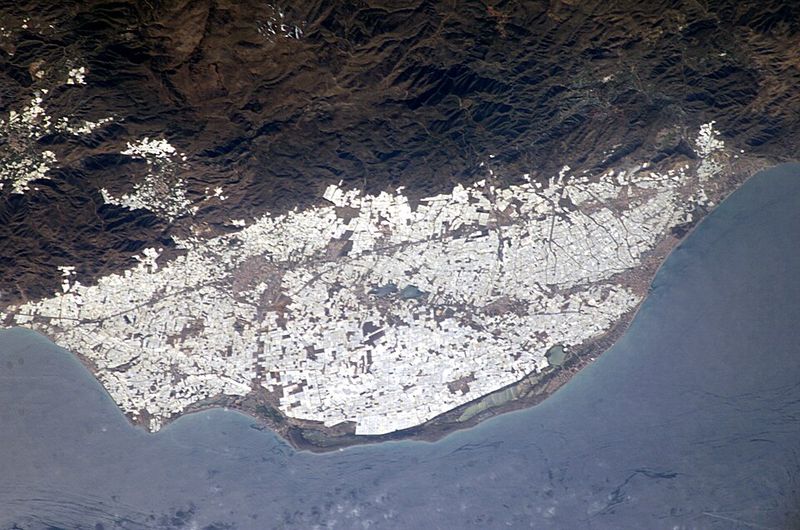
A glare leaps off the map the moment sunlight clears the limb of Earth. Astronauts have compared the greenhouse zone to a bright stain, a white splash that refuses to blend with the browns and greens around it.
That description is not poetic license, it is field notes from orbit.
Pedro Duque and others point to the area as a reliable landmark during passes. The geometry helps, with sharp edges and grid lines stacking like pages.
When the rest of the coast smudges into haze, this patch holds its shape.
Consider this a navigator’s gift on your own trip. Even on the ground, the uniform roofs guide your bearings like a pale compass.
You will move between glints and shadows, catching quick glimpses of farmers and trucks threading the lanes, while the sea winks from beyond.
The light bounces first, and that is the secret. White polyethylene roofs throw sunlight back with high albedo, turning each rectangle into a tiny mirror.
Multiply that by thousands, and orbit gets a chorus of glare rather than a whisper.
Contrast does the heavy lifting next. The greenhouses are brilliant white against olive hills, dusty gullies, and the blue shelf of the Mediterranean, so edges pop.
Your eyes follow the geometry without effort, like tracing chalk on slate.
Scale finishes the job in a way no rumor can match. We are talking about roughly thirty thousand to over forty thousand hectares, a concentration that grows vegetables by the millions of tons.
From a plane window it looks vast, from space it becomes unmistakable, from the ground it sounds like quiet work inside rows of plastic doors.
A hiss of irrigation lines cuts through the still air. This agricultural engine keeps Europe in produce, but the footprint presses hard on local resources.
Groundwater feels the strain, and plastic offcuts stack up if recycling lags behind ambition.
Ask around and you hear practical pride beside wary concern. Workers talk about steady paychecks, while researchers warn about aquifers and waste streams.
You can appreciate the logistics and still ask sharper questions at the same time.
Here is a traveler’s tip for conscience and curiosity. Seek tours that explain water saving methods, and support farms investing in reuse programs.
You will leave with sun on your shoulders and a clearer sense that visibility carries responsibility, whether you are peering from a highway turnout or from orbit.
A cool breath surprises you when the wind shifts off the plastic fields. Some studies suggest the greenhouses reflect enough sunlight to nudge local temperatures downward, a small cooling in a warming corner of Spain.
It is a counterintuitive footnote that makes you look twice at the glare.
Scientists point to albedo again, the bounce that robs the ground of heat. The effect is regional and modest, not a blanket solution, but it stands out in the data.
You can almost feel the numbers humming under the afternoon breeze.
Here is the lesson to pocket as you head for tapas by the harbor. Landscapes shaped by people can twist climate stories in unexpected ways, and this one has receipts.
Keep your eyes open, ask how design meets weather, and let the view from space sharpen what you notice on the street.



