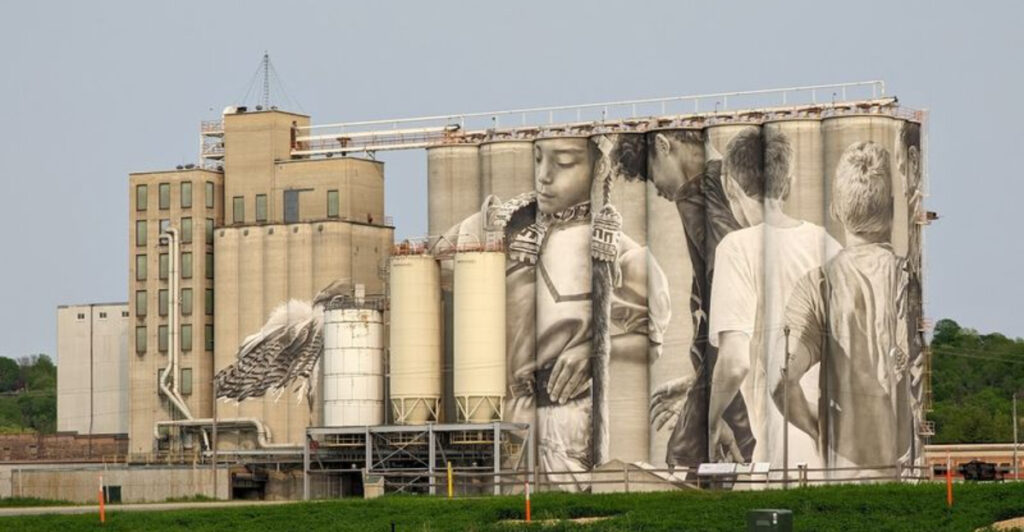
There is something genuinely surreal about rounding a corner in a mid-sized Minnesota city and suddenly finding yourself face-to-face with a towering mural that stretches 135 feet into the sky. These are not gallery walls or museum canvases.
They are working grain silos, painted with such precision and detail that you have to stop and remind yourself you are standing in an industrial district, not an open-air museum. The Silo Art in Mankato, Minnesota, has become one of the most talked-about public art experiences in the Upper Midwest, drawing visitors from across the country who come to see what happens when bold creativity meets raw industrial scale.
Behind the massive artwork lies a story of community pride, artistic vision, and transformation that has turned an ordinary landmark into a destination. Before you plan your visit, here’s what makes Mankato’s towering masterpiece so memorable.
Where to Find This Sky-High Canvas
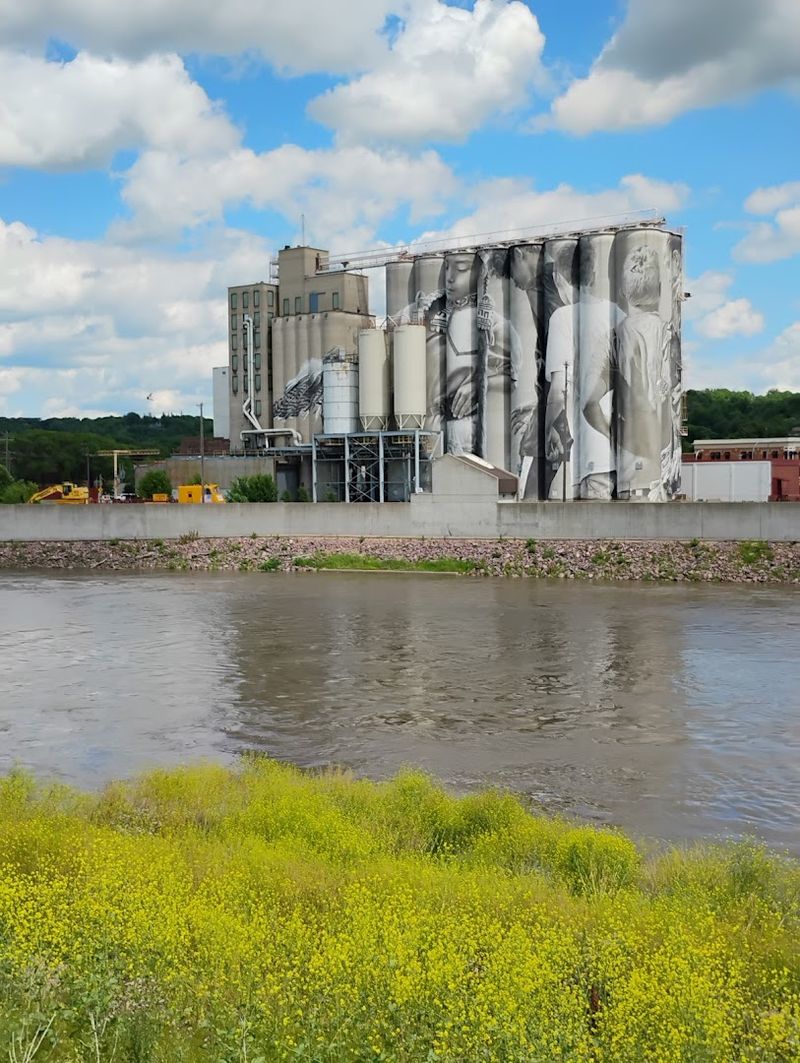
The Silo Art is located at 324 N Riverfront Dr, Mankato, right along the Blue Earth River in the heart of an active industrial zone. Mankato sits in southern Minnesota, roughly 85 miles southwest of Minneapolis, making it an easy day trip or a worthy stop on a longer road journey through the state.
The silos are part of a working grain elevator, so visitors cannot walk right up to the base of the structures. The best viewing area is from the surrounding riverfront blocks, where you can take in the full scale of the murals without obstruction.
Parking is available along Riverfront Drive, and the open-air nature of the site means there is no ticket booth, no gate, and no waiting in line. The address is easy to find with any navigation app, and the silos are so tall that you will likely spot them before you even arrive.
A Mural Project Born From Community Vision
The Silo Art project did not happen overnight. It grew out of a broader public art initiative led by City Art Mankato, an organization dedicated to bringing creative expression into unexpected corners of the city.
The goal was to transform a cluster of industrial grain silos into a landmark that would spark conversation and civic pride.
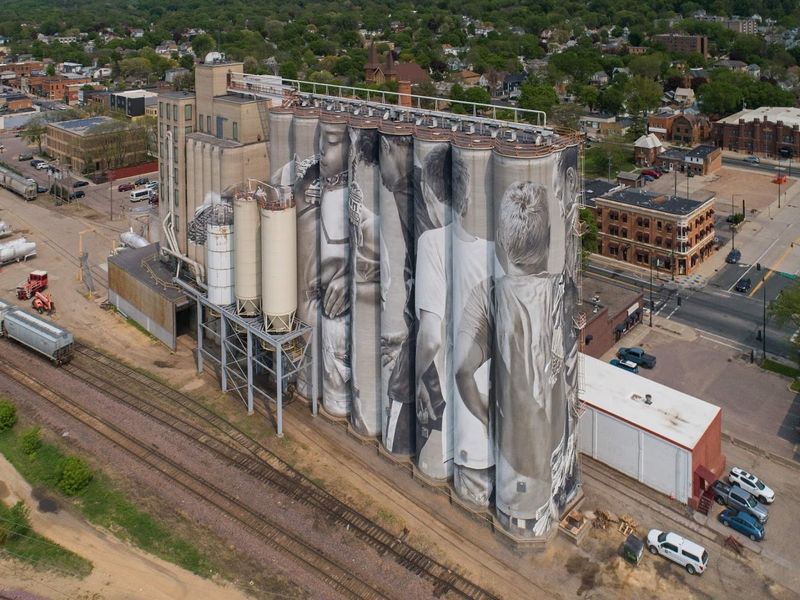
Local leaders and artists collaborated to create a mural that reflected the diversity and spirit of the Mankato community. The figures painted on the silos represent people from different backgrounds, all woven together in a composition that feels both personal and monumental.
What makes this project especially meaningful is that it did not replace the industrial purpose of the silos. The grain elevator still operates today, meaning the art lives alongside everyday commerce rather than replacing it.
That balance between function and creativity is exactly what makes this mural feel authentic rather than decorative.
The Sheer Scale Will Stop You in Your Tracks
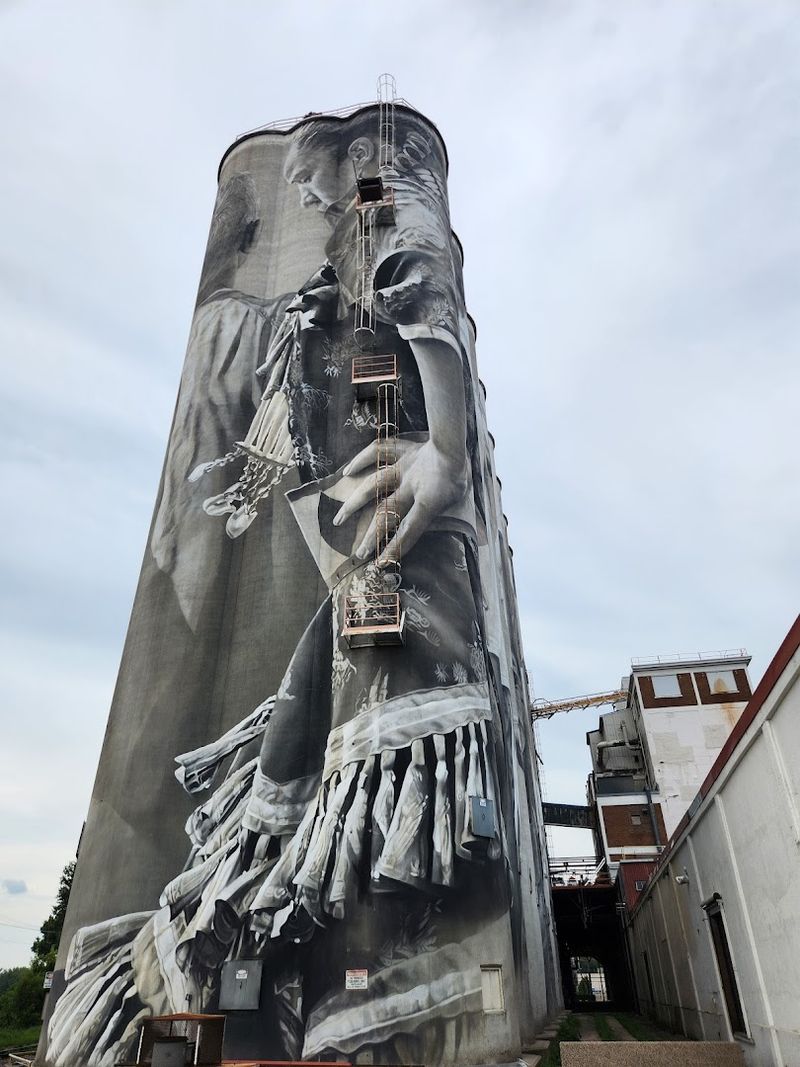
At 135 feet tall, the Silo Art is not something you appreciate with a quick glance. Your eyes need a moment to travel from the ground all the way to the top, and even then, you might feel like you are missing something at the edges.
The cylindrical shape of the silos adds a visual challenge that flat walls do not present. As you move around the site, the figures and patterns shift in perspective, creating the effect of a living composition that changes depending on where you stand.
Walking the surrounding riverfront blocks reveals new details and connections between the painted figures that are impossible to see from a single vantage point.
Most visitors spend far more time here than they planned, simply because there is always one more angle worth checking. The scale alone earns this spot a place on any Minnesota travel list, full stop.
The Artwork Celebrates Local Diversity

The central theme of the Silo Art mural is human connection across cultural backgrounds. The figures painted on the silos are diverse in appearance, clothing, and expression, and they are arranged so that they appear to reach toward one another as the composition wraps around the curved surfaces.
One of the most fascinating aspects of the design is how the figures stay visually connected even as they wrap around separate silo cylinders. From certain angles, two figures on different silos appear to be part of a single continuous scene, a feat of planning and artistic skill that required careful mapping before a single brushstroke was applied.
The mural does not carry a single explicit message but instead invites each viewer to find their own meaning in the figures and their relationships. That open-ended quality is part of what makes the artwork feel relevant to such a wide range of visitors who come from different places and perspectives.
Open Around the Clock, Every Single Day
One of the most visitor-friendly things about the Silo Art is that it never closes. The site is open 24 hours a day, seven days a week, with no admission fee and no reservation required.
That kind of accessibility is rare for a public art installation of this caliber.
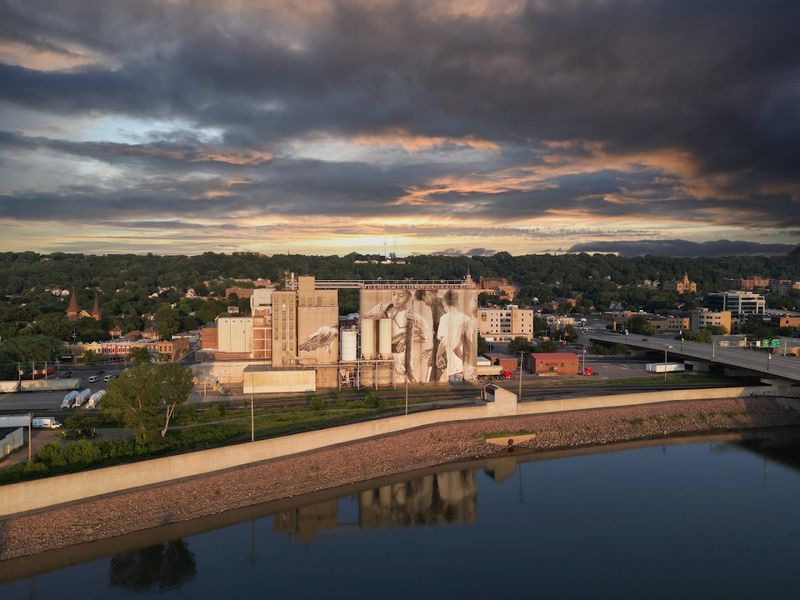
Early morning visits offer soft light that makes the colors on the silos look especially vivid, while sunset creates a warm glow that photographers particularly love. The open-air setting means weather and time of day play a big role in how the mural looks, so a second visit at a different hour can feel like an entirely new experience.
Night visits are also possible, though the lighting around the industrial area is limited, so daytime or golden hour remains the most rewarding time to go. The no-cost, no-schedule format makes it easy to fit a visit into any travel itinerary without stress.
Photography Tips for Capturing the Full Picture
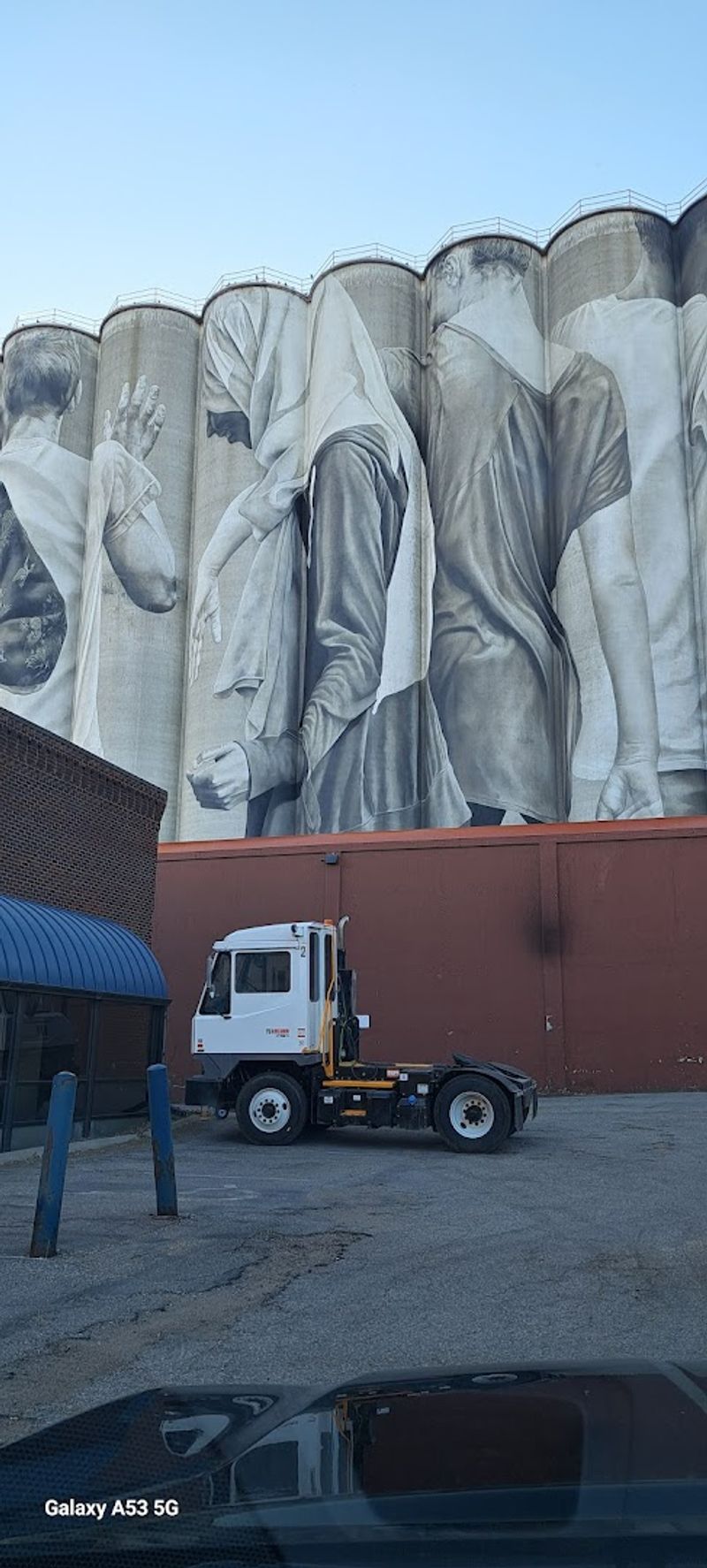
Getting a good photo of the Silo Art takes a little strategy. The silos are tall enough that a standard smartphone shot from close range will cut off the top of the mural, so backing up as far as possible along Riverfront Drive gives you the best chance of capturing the full height in one frame.
A wide-angle lens is a real advantage here, whether on a dedicated camera or a modern smartphone with an ultra-wide mode. Shooting during the golden hour, roughly 30 to 60 minutes after sunrise or before sunset, produces the richest colors and the most dramatic contrast between the painted figures and the sky.
Aerial shots taken with a drone or captured from a nearby elevated vantage point reveal how the mural wraps around the cylindrical silos in ways that ground-level photography simply cannot show. Check local drone regulations before flying, as the area is near the Minnesota River.
The Riverfront Setting Adds a Whole New Layer
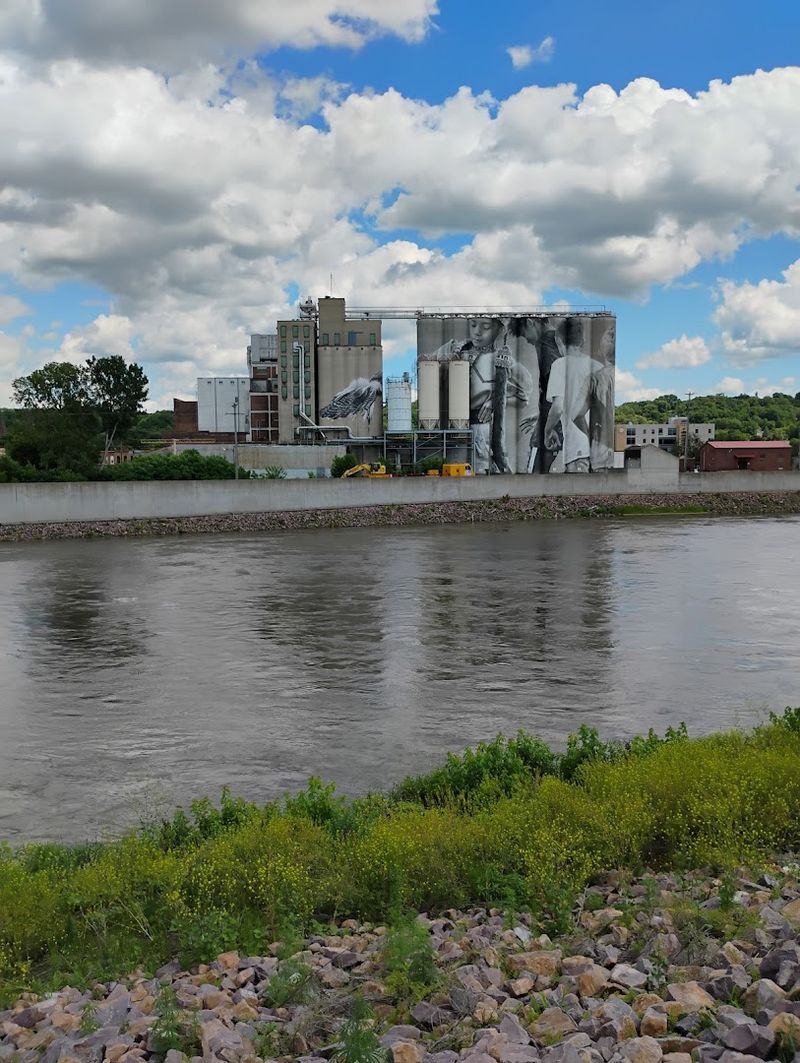
The location of the Silo Art along the riverfront is not just a geographic detail. It genuinely shapes the experience of visiting.
The Blue Earth River runs close by, and the combination of water, open sky, and industrial architecture creates a backdrop that feels cinematic in the best way.
Walking the riverfront blocks around the silos gives you a sense of how the mural fits into the broader landscape of Mankato. The industrial zone has its own rough-edged character, and the colorful mural stands out against that setting in a way that feels deliberate and powerful rather than out of place.
The riverfront path also offers a peaceful place to pause and take in the view from a distance, which is often the best way to appreciate the full composition of the artwork. Bringing a snack and spending a quiet half hour along the water is a perfectly good way to round out a visit.
What Makes This Different From Other Public Murals
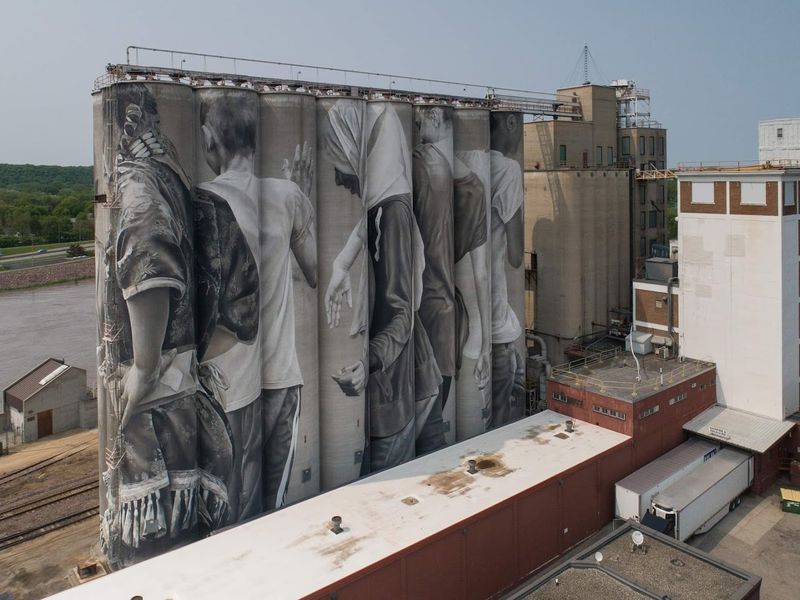
Most public murals are painted on flat surfaces, which means the artist works with a predictable canvas. The Silo Art project presented a fundamentally different challenge because the silos are round, and a design that looks cohesive on paper can distort dramatically when applied to a curved surface.
The artists behind this project had to think in three dimensions from the very beginning, mapping out how each figure would appear from multiple angles and ensuring that the composition held together visually as viewers moved around the structure. That kind of spatial planning requires a level of technical skill that goes well beyond standard mural work.
The result is a piece of public art that rewards movement and exploration in a way that flat murals rarely can. Every few steps along the riverfront blocks, the figures shift and rearrange themselves in your field of vision, making the experience feel dynamic rather than static.
Few murals anywhere in the Midwest can claim the same effect.
Mankato as a Destination Worth Exploring
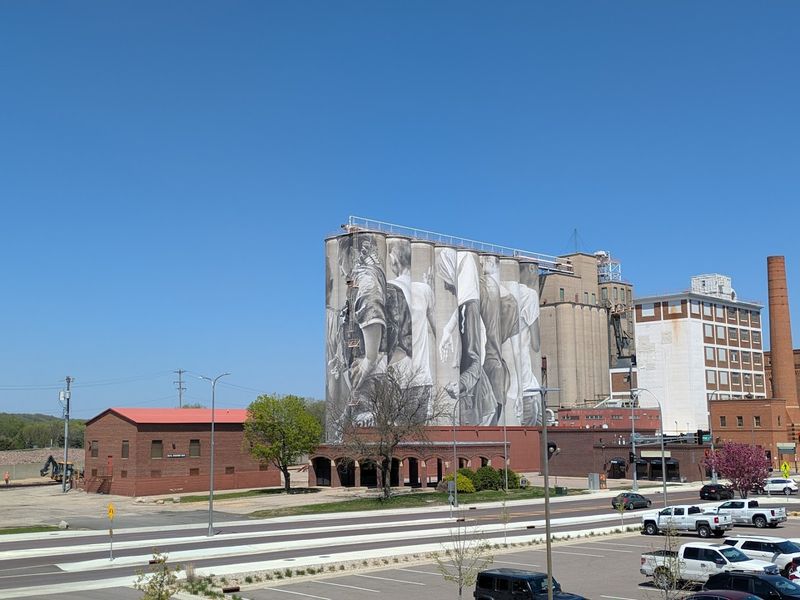
The Silo Art is a compelling reason to visit Mankato, but the city has plenty more to offer once you have taken in the murals. Mankato sits in the Minnesota River Valley, a region with a rich history tied to the Dakota people and early European settlement, and several museums and historic sites explore that layered past.
The downtown area has a lively mix of locally owned restaurants, coffee shops, and small businesses that make for a pleasant afternoon of wandering. Sibley Park, located just a short drive from the riverfront, offers walking trails and green space along the river that pairs nicely with the urban art experience of the silos.
Minnesota State University Mankato also brings a youthful energy to the city, and the campus itself has notable architecture and open spaces worth a stroll. The Silo Art fits naturally into a broader Mankato itinerary rather than standing alone as an isolated attraction.
How the Industrial Setting Shapes the Experience
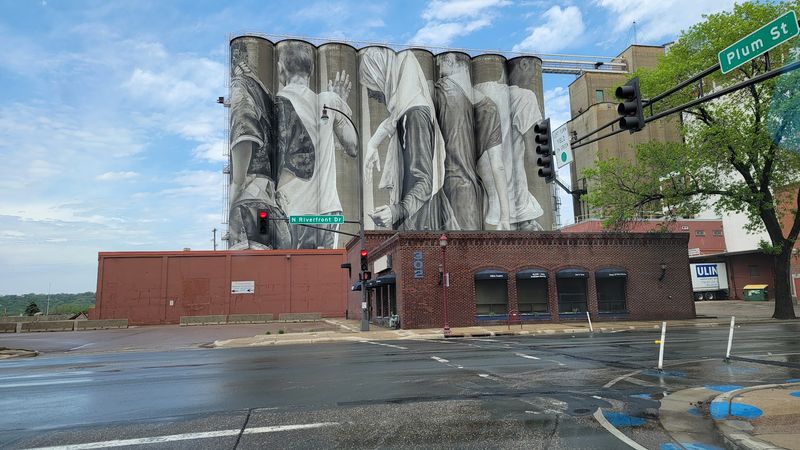
There is something honest about the fact that the Silo Art exists on a working grain elevator. The silos are not a preserved relic or a converted event space.
Trucks still arrive, grain still moves, and the machinery of agriculture still hums in the background while visitors stand on the sidewalk looking up at intricate painted figures.
That industrial context gives the mural a grounding that purely decorative public art sometimes lacks. The artwork is not asking you to forget where you are.
It is asking you to see something beautiful in a place that was never designed with beauty in mind, which is a more interesting proposition.
Because it is an active facility, visitors should respect the operational boundaries and stay on public sidewalks and streets rather than attempting to enter the elevator property. The best views are all available from public areas anyway, so there is no need to cross any lines to fully appreciate the artwork.
Visiting With Kids: What to Expect
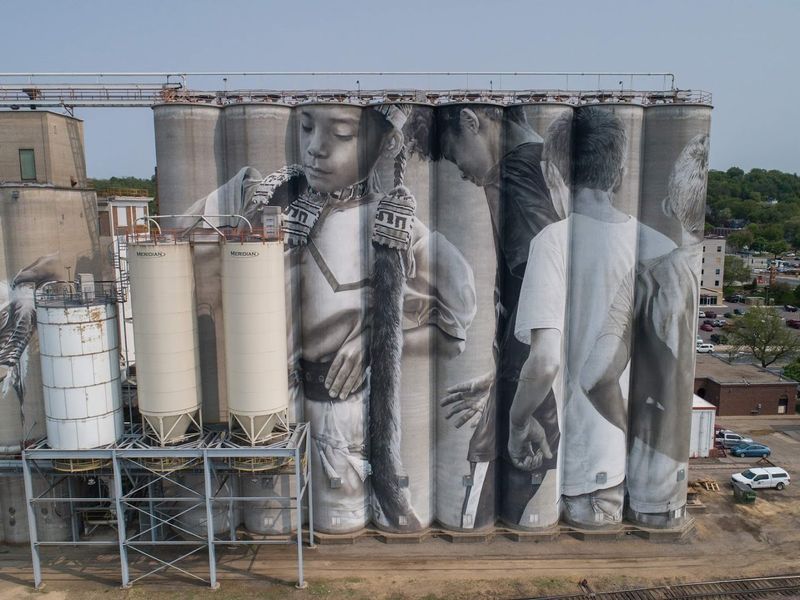
The Silo Art is a genuinely kid-friendly destination, not because it has activities or amenities designed for children, but because the sheer size and visual impact of the murals tends to produce an immediate and enthusiastic reaction from younger visitors. Kids who might glaze over in a traditional gallery setting tend to light up when confronted with a 135-foot painted figure looming overhead.
The open-air format means there are no quiet zones to maintain and no fragile exhibits to worry about. Children can walk around freely, point at details, ask questions, and generally experience the artwork on their own terms without the constraints of an indoor venue.
Parents should be aware that the surrounding area is an active industrial zone, so keeping younger kids close to the sidewalk is sensible. Beyond that, the visit is low-pressure, low-cost, and genuinely memorable, the kind of experience that tends to stick with kids long after the trip is over.
A Closing Look at What Makes This Place Linger in Your Memory
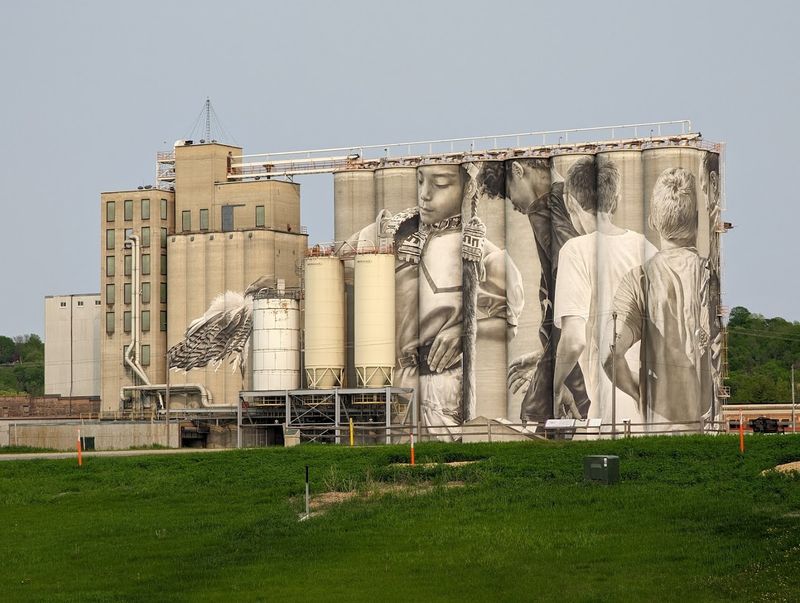
Long after you leave Mankato, the image of those painted figures stretching 135 feet into a Minnesota sky has a way of staying with you. It is not just the size, though the scale is genuinely hard to forget.
It is the combination of an unlikely canvas, a meaningful subject, and a setting that feels completely unpolished and real.
The Silo Art does not try to be a polished tourist attraction. It exists at the intersection of industry and creativity, and that tension is exactly what makes it compelling.
You are not visiting a theme park version of public art. You are standing in a working part of a real city, looking at something extraordinary that someone decided to put there anyway.
That spirit of placing beauty in unexpected places is what keeps this mural relevant well beyond its opening day, and it is the best reason to make the drive to Mankato and look up.
Share this story