There is a mountain in western North Carolina hiding a secret that most drivers pass right by on US-221. Beneath the rocky slopes of Humpback Mountain, a cave network stretches deep into the earth, dripping, glowing, and quietly doing what it has done for thousands of years.
I had heard about this place from a friend who visited as a kid and never stopped talking about it, so I finally made the trip out to Marion to see it for myself. What I found underground was one of those rare experiences that feels genuinely removed from the noise of everyday life, and I want to walk you through every part of it.
Finding the Entrance on US-221 in Marion, NC
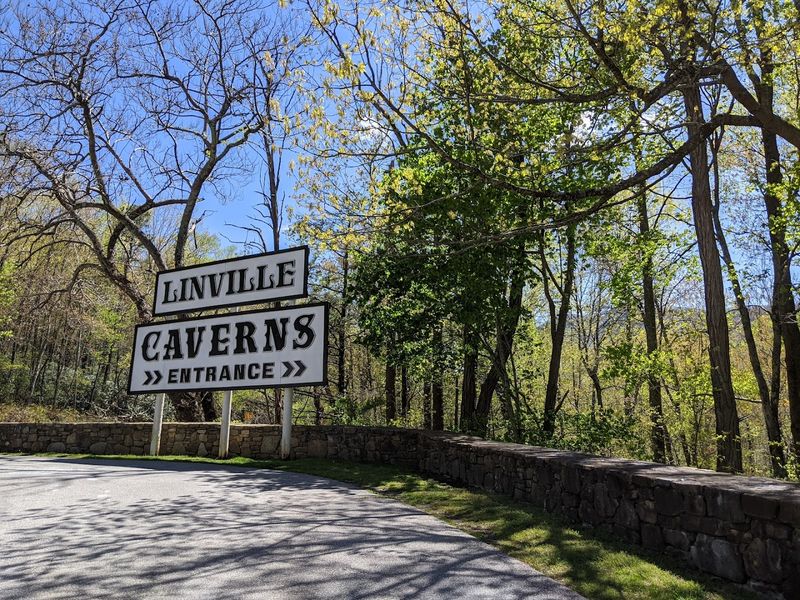
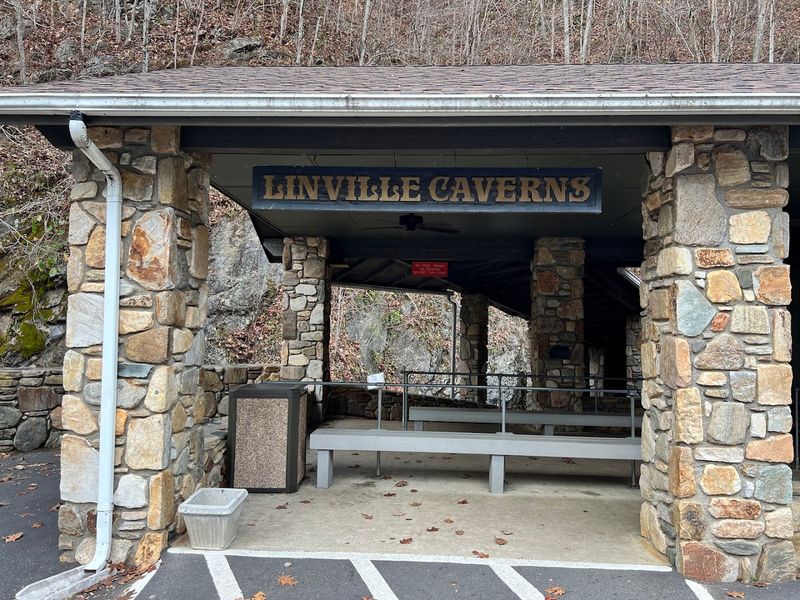
The address is 19929 US-221, Marion, NC 28752, and if you blink while driving through McDowell County, you might miss the turn. A modest sign marks the spot, and the parking area sits right at the base of Humpback Mountain, which towers above you in a way that makes you feel small before you even go underground.
The building at the entrance is unpretentious and welcoming. Tickets are affordable, tours start quickly, and the staff greets you with genuine warmth rather than the scripted cheerfulness you sometimes get at bigger tourist spots.
On the day I visited, a tour was already forming near the entrance, and within about ten minutes of buying my ticket, we were heading inside.
The caverns are roughly an hour from Asheville, making this a very doable day trip from the city. It also sits close to Grandfather Mountain and Linville Falls, so you can easily build a full day of exploration around this stop.
The drive along US-221 through the Blue Ridge foothills is scenic on its own, and arriving here feels like a natural reward for the journey.
The History That Started It All
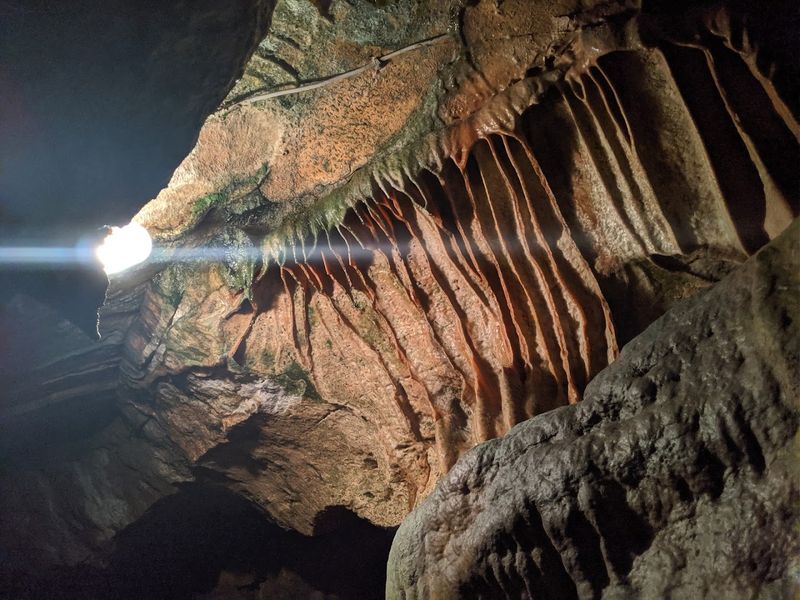
Long before tour groups and ticket booths, this cave was a mystery tucked inside a mountain. Local legend holds that Cherokee people knew of the caverns long before European settlers arrived, and fishermen in the early 1800s reportedly noticed trout swimming into the mountain through a small stream, which led to the discovery of the cave network hidden inside.
That detail alone is worth sitting with for a moment. Someone followed fish into a mountain and found one of North Carolina’s most remarkable natural formations waiting on the other side.
The caverns were later explored more formally and eventually opened to the public, becoming one of the oldest show caves in the region.
The guided tour does a solid job of weaving this history into the experience rather than just reciting dates. The guide I had clearly had genuine affection for the local story, and that enthusiasm made the history feel alive rather than like a textbook summary.
Learning that people have been discovering and rediscovering this place for over two centuries adds a layer of meaning that you carry with you through every chamber of the cave.
What the Underground Actually Looks Like
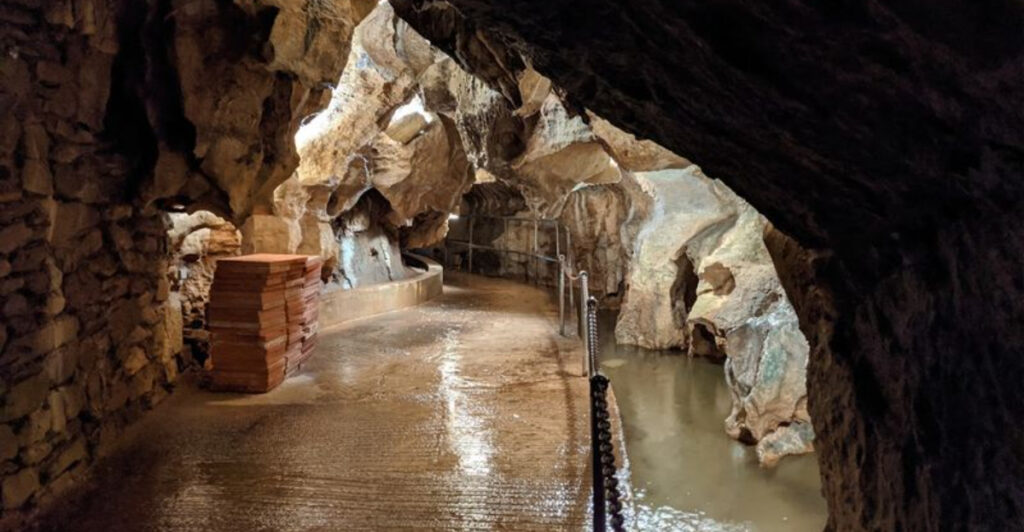
Nothing fully prepares you for the moment the cave opens up around you. The temperature drops noticeably as you move deeper in, settling into a cool, damp atmosphere that stays consistent year-round at around 52 degrees Fahrenheit.
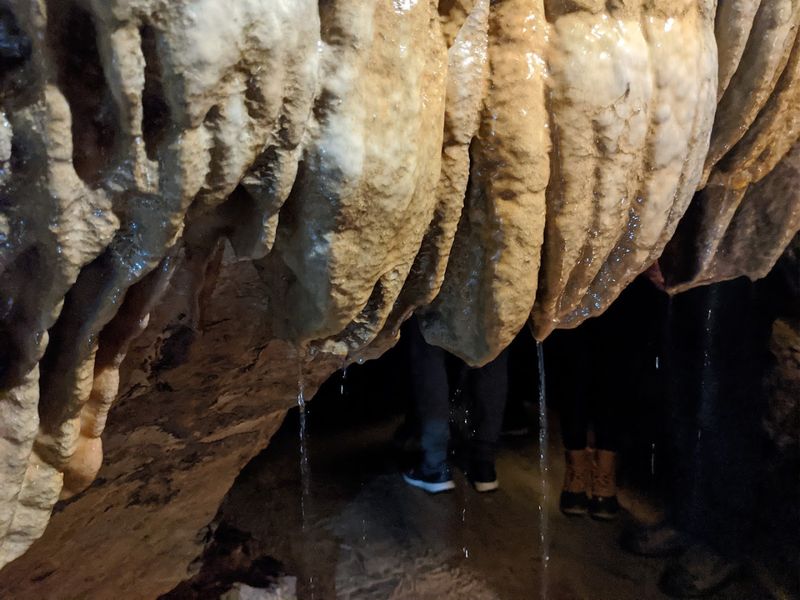
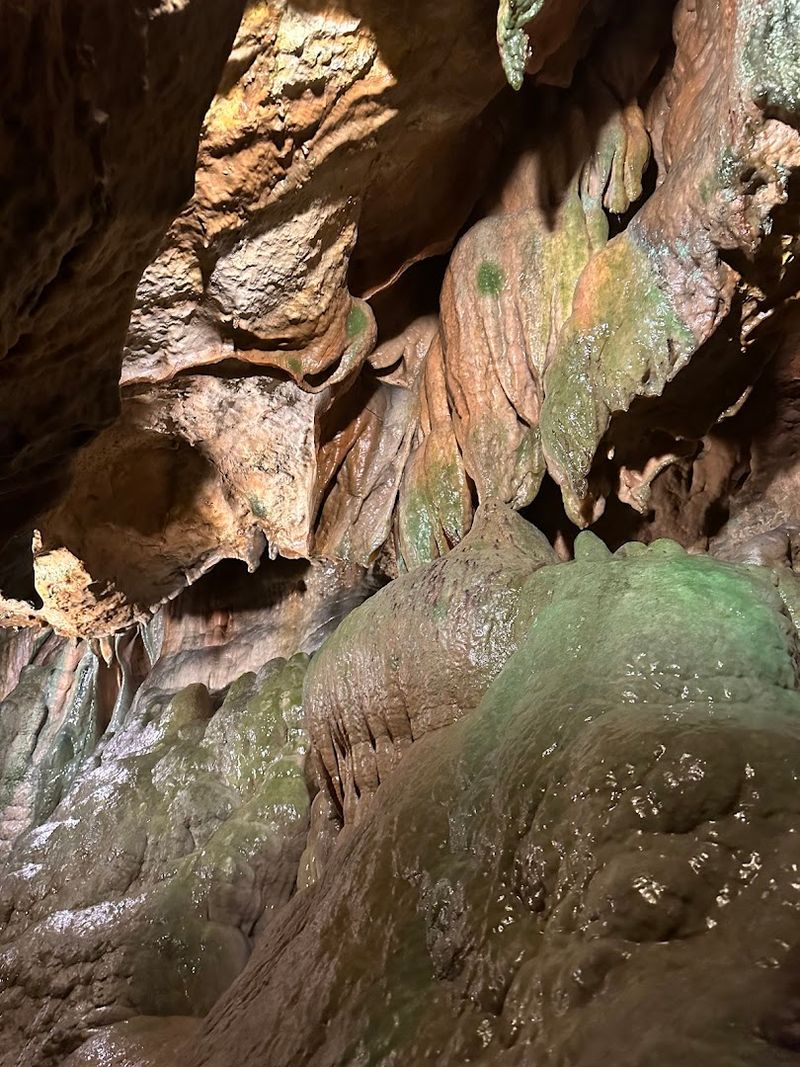
The walls glisten with moisture, and the formations seem almost sculpted by a patient, unhurried hand.
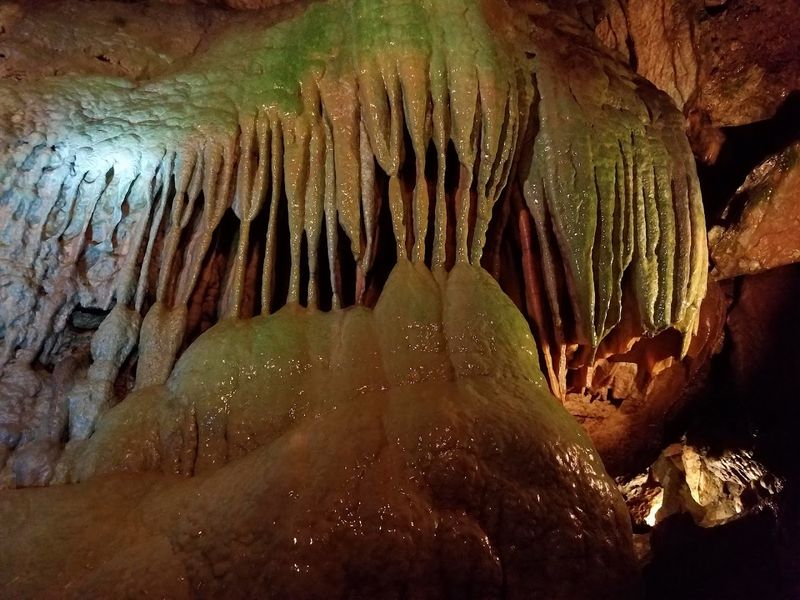
Stalactites hang from the ceiling in clusters, some thin as needles, others wide and ridged like curtains of stone. Stalagmites rise from the floor below them, and in some places the two have met in the middle, forming columns that look like they belong in a cathedral rather than a mountain.
Algae has grown on some of the rocks closest to the artificial lights, adding faint greens and yellows to an otherwise silver and gray palette.
A small stream runs alongside parts of the path, adding a quiet, constant sound that fills the silence between the guide’s words. The combination of the dripping ceiling, the flowing water, and the ancient stone formations creates an atmosphere that feels genuinely unlike anything above ground.
You do not need to be a geology enthusiast to feel moved by what is down here.
The Guided Tour Experience
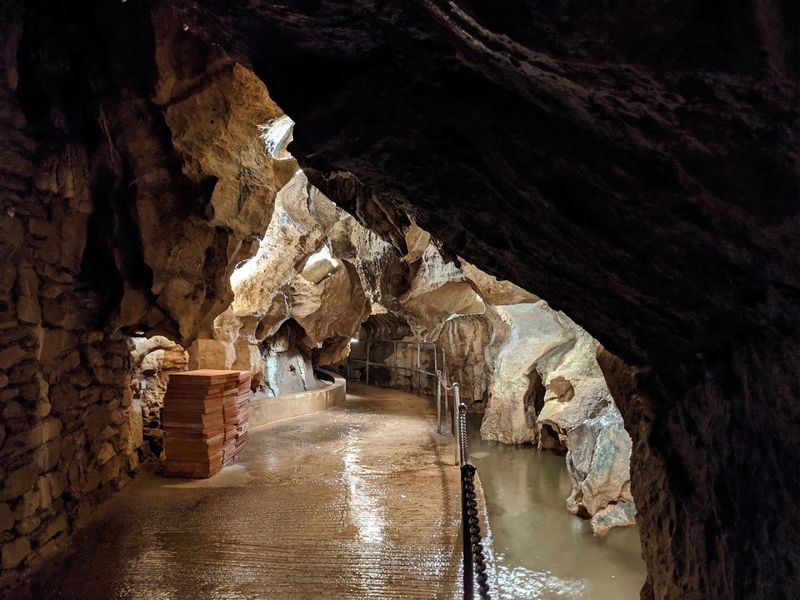
Tours at Linville Caverns run frequently, typically every ten to fifteen minutes, which means you rarely wait long after buying your ticket. Groups are kept small enough that you can actually hear the guide without straining, and the pace is relaxed rather than rushed.
The whole experience runs about 35 to 45 minutes, occasionally stretching close to an hour depending on how many questions the group asks.
The guides here earn their praise honestly. The one leading my group had an easy, conversational style that made the information stick rather than slide right past you.
Questions were welcomed, not just tolerated, and the answers went beyond the rehearsed script into genuine knowledge about the cave and the surrounding area.
One moment in the tour that everyone seems to remember is when the guide turns off the lights entirely. Standing in that absolute darkness, with no reference point for depth or direction, is a surprisingly powerful experience.
It is the kind of thing that sounds gimmicky on paper but lands completely differently when you are actually inside a mountain with zero light reaching your eyes. The cave earns every bit of its 4.5-star rating across thousands of reviews.
The Narrow Passages and What to Expect
Not every part of the cave is wide open and comfortable, and the tour is upfront about that. There is one section in particular, a narrow, dead-end passage, that the guide gives you the option to skip entirely.
That kind of transparency is genuinely appreciated, especially for anyone who knows they do not do well in tight spaces.
For those who do choose to go through, the tight section is brief but memorable. The walls press in close, the ceiling drops, and you move single-file through a passage that makes you very aware of the mountain above you.
It adds a real sense of adventure to the tour without crossing into anything dangerous or reckless.
The rest of the path is far more accessible. There are a few steps here and there, but no climbing or crawling is required.
Taller visitors should keep their heads up, literally, as some of the ceiling formations hang low enough to make contact if you are not paying attention. The cave floor can be wet and slippery in spots, so sturdy shoes with grip are a smart choice over sandals or smooth-soled sneakers.
Comfortable layers are equally important given the cool interior temperature.
The Stream, the Trout, and a Story Worth Knowing
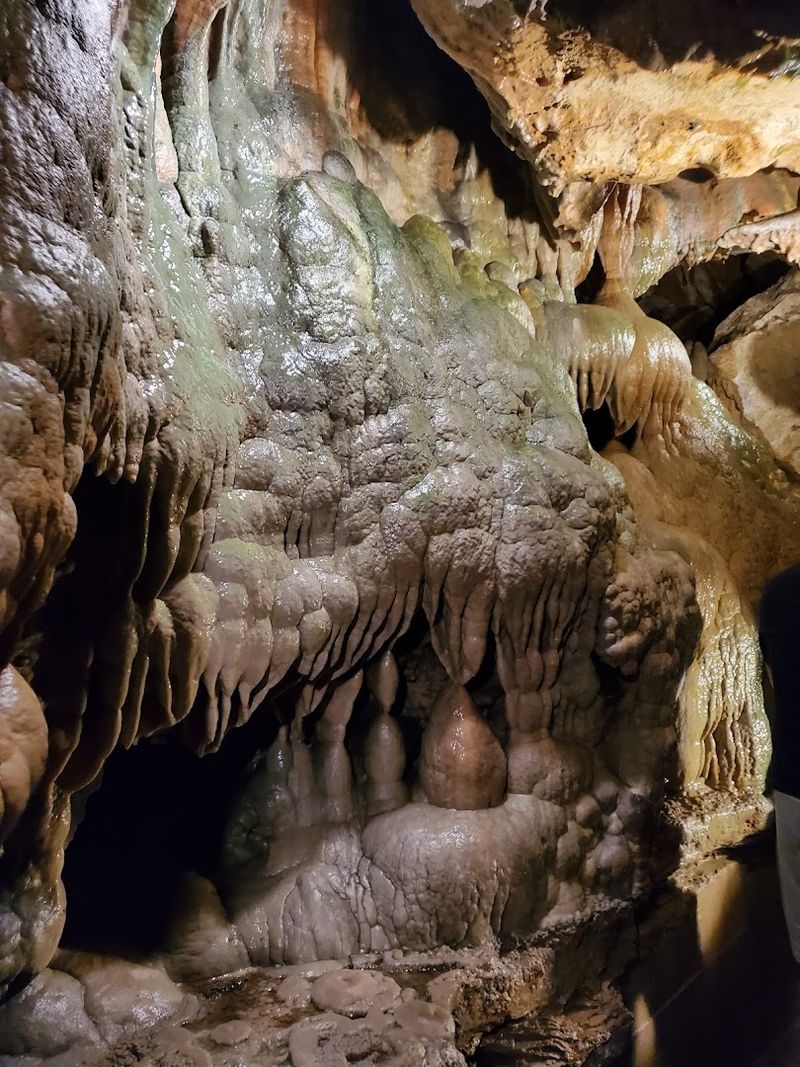
One of the most distinctive features of Linville Caverns has always been the stream that runs through it. Water moves along the cave floor throughout much of the tour route, and the sound of it trickling over smooth stone is one of those details that stays with you long after you leave.
The stream is also central to the cave’s founding story, since it was the sight of trout swimming into the mountain that first drew explorers to investigate.
For many years, blind trout lived in the stream inside the cave, a genuinely rare natural phenomenon that made Linville Caverns stand out from other show caves. Sadly, Hurricane Helene caused severe flooding in 2024 that washed the trout out of the cave.
The caverns sustained real damage from the storm, and the staff worked hard to restore operations and reopen to visitors.
The trout have not returned as of recent visits, and the guides acknowledge this honestly rather than glossing over it. There is something quietly moving about hearing that story told underground, in the very place where those fish once lived.
The staff remains hopeful that the trout will find their way back, and honestly, after learning this cave’s history, you would not bet against it.
Bats in the Mountain
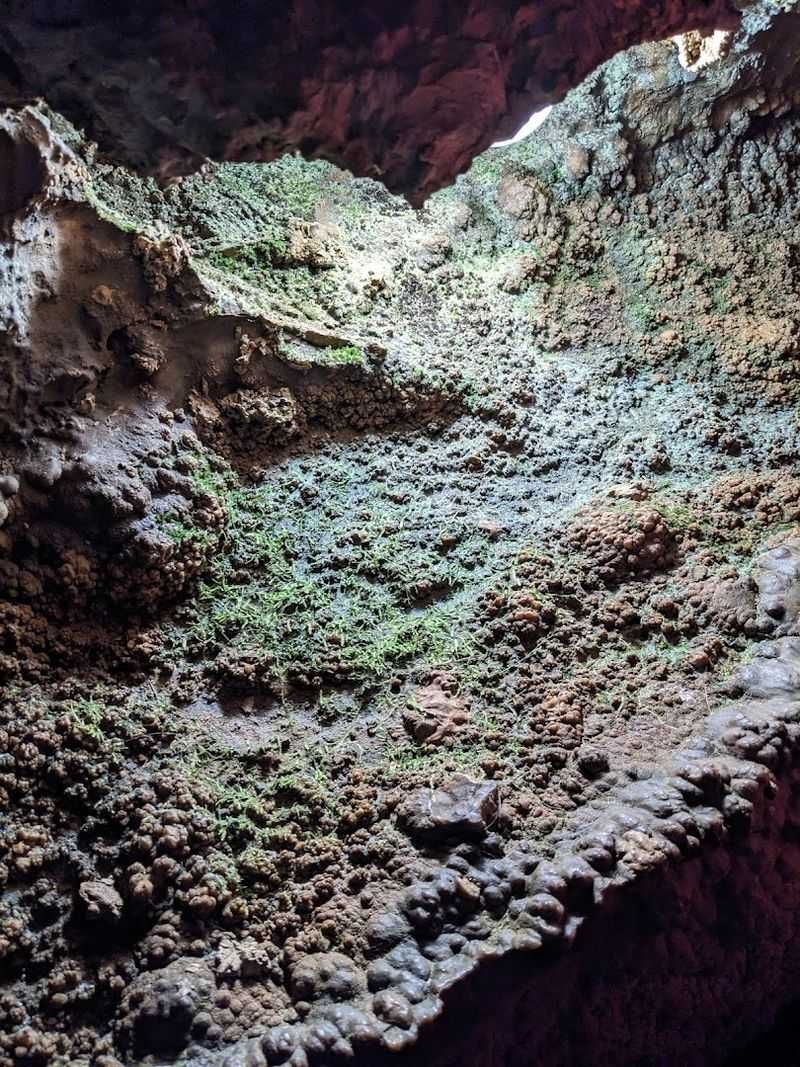
Linville Caverns is home to bats, which adds a layer of ecological interest to the visit that not every cave attraction can claim. The bats use the cave as a hibernation site, and the best time to spot them is between October and April when they are settled in for the colder months.
Summer visits are less likely to include a bat sighting, since the animals are out and active during warmer weather.
On the tour I took, no bats were visible, but the guide mentioned them naturally as part of the cave’s living ecosystem. Knowing that wild animals actually choose this cave as their home reinforces just how authentic and undisturbed the environment feels compared to more heavily commercialized attractions.
These are not props or decorations; they are real residents with their own seasonal routines.
The presence of bats also speaks to the health of the cave environment. After the flooding caused by Hurricane Helene, there was real concern about whether the bats would return, and the fact that they have continued to use the cave is genuinely encouraging news for the long-term vitality of the ecosystem.
Visiting during the fall or winter gives you a solid chance of seeing them clustered overhead.
What to Wear and Bring Along
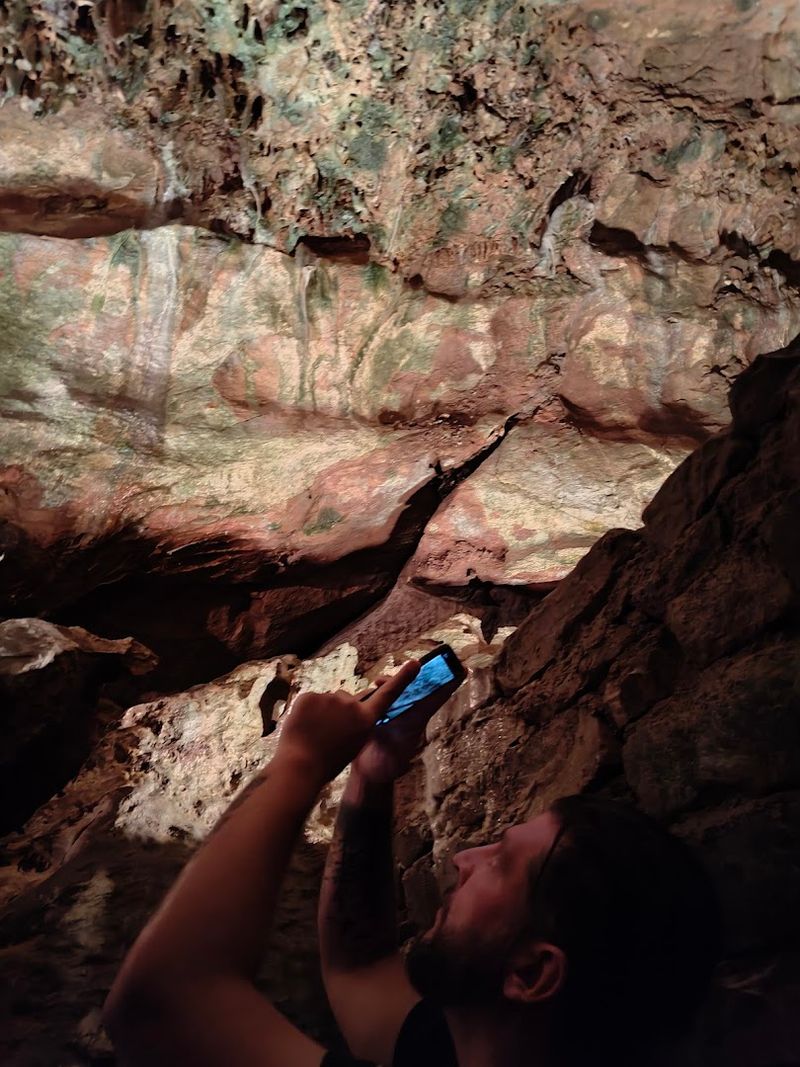
The cave holds a steady temperature of around 52 degrees Fahrenheit no matter what the weather is doing outside. On a hot summer day, that coolness feels refreshing at first, but after 40 minutes underground, most people start to feel the chill.
A light jacket is the single most useful thing you can pack for this visit, and a hooded one is even better if rain has fallen recently, since the ceiling drips steadily throughout the tour.
Footwear matters more than people expect. The path through the cave is wet in places, with puddles collecting near the stream and water pooling on the stone floor after rainfall.
Shoes with decent grip and closed toes are the right call. One visitor I spoke with mentioned her flared jeans were completely soaked at the hem by the end of the tour, so fitted pants or tucked-in layers are worth considering too.
Beyond clothing, there is not much you need to prepare. No special gear is required, no reservations are needed in advance, and the experience is accessible to most ages and fitness levels.
The main thing is to arrive with comfortable expectations and an openness to getting slightly damp, which honestly just adds to the charm of the whole underground adventure.
Bringing Kids Along for the Adventure
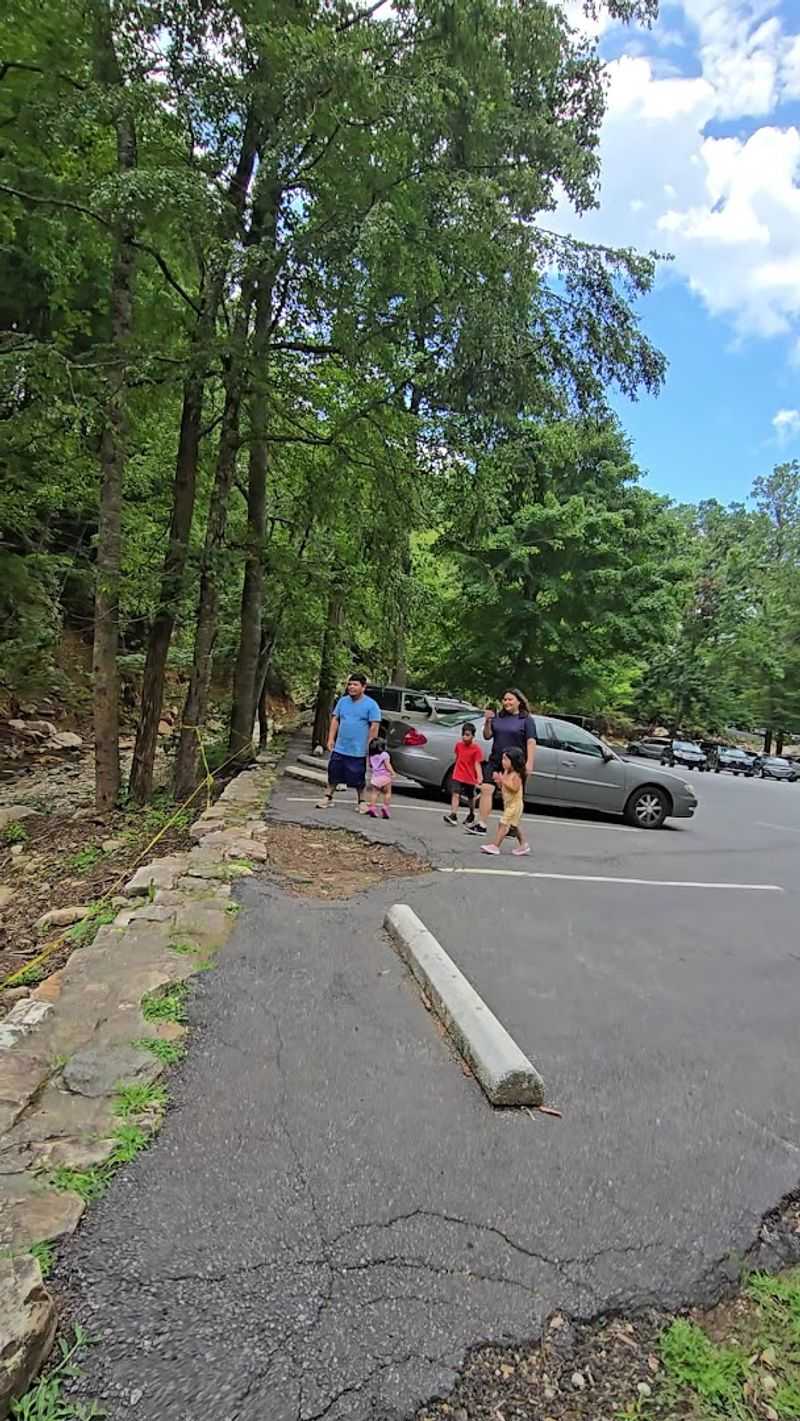
Families with children make up a huge portion of the visitors at Linville Caverns, and for good reason. The tour is short enough to hold a young child’s attention, the formations are visually dramatic without being overwhelming, and the total darkness moment tends to be the kind of thing kids talk about for weeks afterward.
Multiple families I observed during my visit had children ranging from toddlers to preteens, and the engagement level was high across the board.
That said, the cave does have some features that require honest assessment before bringing very young children. The narrow optional passage, the low ceiling in certain spots, and the complete darkness portion can be intense for kids who are sensitive to confined spaces or afraid of the dark.
The guides handle these moments with patience and give clear advance warnings so no one is caught off guard.
The cave is not wheelchair accessible, and the wet, uneven floor requires sure footing throughout. For kids who are old enough to follow directions and stay close to the group, this is a genuinely memorable outing.
The educational content is pitched at a level that makes sense for school-age children, and many families treat it as a complement to hiking Grandfather Mountain nearby.
The Gift Shop and On-Site Facilities
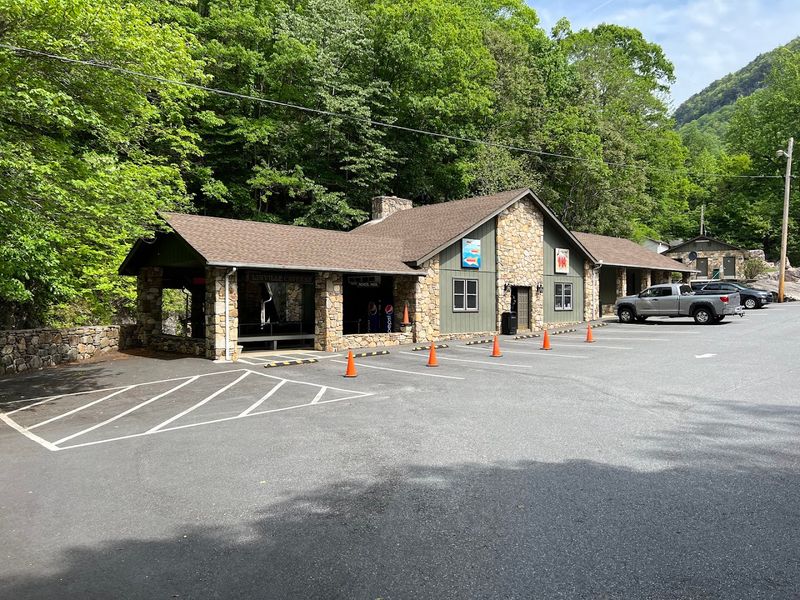
Right near the entrance, the gift shop offers a selection of souvenirs that ranges from T-shirts and postcards to rocks and novelty items. It is compact but browsable, and several visitors I talked to mentioned enjoying the shopping portion of the visit as a nice bookend to the tour itself.
The shop was heavily damaged by Hurricane Helene flooding in late 2024, but the team worked to restore it and has been actively expanding its selection of locally relevant items.
That effort to add more local and location-specific products is a welcome development. Generic gift shop merchandise is a common complaint at tourist destinations across the country, and the caverns management seems genuinely aware of this and motivated to offer something more meaningful.
A cave-themed item you picked up at the actual cave always feels more worth keeping than something you could have bought anywhere.
Bathrooms are available on-site, which is a practical detail that matters more than it sounds on a day trip with kids or elderly family members. The facilities have received mixed notes in reviews, but the management takes the feedback seriously.
Clean restrooms, a functional gift shop, and a short walk from the parking lot to the entrance make the logistics of a visit here genuinely low-stress.
After Hurricane Helene: Resilience Underground
Hurricane Helene hit western North Carolina hard in the fall of 2024, and Linville Caverns was not spared. The flooding damaged the gift shop, disrupted the cave’s stream ecosystem, and created significant logistical challenges for the small team that runs the attraction.
The fact that they recovered and reopened as quickly as they did reflects a real commitment to keeping this piece of North Carolina history accessible to visitors.
The blind trout that once lived in the cave stream were washed away by the floodwaters, and their absence is one of the most tangible reminders of the storm’s impact. The bat population has continued to return for hibernation, which offers some reassurance that the cave’s ecosystem is proving resilient.
Staff members speak about the recovery openly and without dramatizing it, which makes the whole story feel honest rather than performative.
Supporting Linville Caverns right now carries extra meaning. This is a small, independently operated attraction that has been welcoming visitors for generations, and the community around it clearly values its presence.
Buying a ticket here is not just purchasing a tour; it is contributing to the continuation of something that has outlasted quite a lot of storms, both literal and figurative, over its long history in the North Carolina mountains.
Planning Your Visit and Final Thoughts
Linville Caverns is open Thursday through Monday from 9 AM to 5 PM, and it is closed on Tuesdays and Wednesdays. No advance reservations are required, and tours depart frequently enough that walk-in visitors rarely face a long wait.
The phone number is 828-756-4171, and the website at linvillecaverns.com has current hours and pricing information worth checking before you go.
Ticket prices are genuinely reasonable for what you get. Adults pay around $14, and the value holds up well when you factor in the quality of the guided experience and the uniqueness of the destination.
The cave sits about an hour from Asheville and pairs naturally with Grandfather Mountain, the surrounding Blue Ridge Parkway, and the many hiking trails in the area.
Western North Carolina is extraordinary terrain, and Linville Caverns fits into it like it was always meant to be there, because it was. Whether you grew up visiting places like this or you are discovering it for the first time, the experience carries a quiet power that is hard to manufacture and impossible to replicate.
The mountain keeps its secrets well, but for about 40 minutes, it lets you in on this one.
Share this story