Arkansas has a talent for catching travelers completely off guard. You could be cruising past pine forests or Ozark ridgelines one moment, and the next you are standing in front of a 67-foot statue, digging for real diamonds in a state park, or touring a house decorated with thousands of rocks and fossils. The Natural State has quietly built a collection of attractions that feel almost too bizarre to be real, yet each one has a devoted fanbase and a fascinating backstory. Some were born from nature over millions of years, others from the sheer determination of one creative person.
A few have been puzzling visitors for over a century. This list covers 11 of the most head-scratching, jaw-dropping, and genuinely unforgettable spots Arkansas has to offer. Keep reading, because a few of these will make you question everything you thought you knew about a road trip through the South.
Quigley’s Castle, Eureka Springs, Arkansas
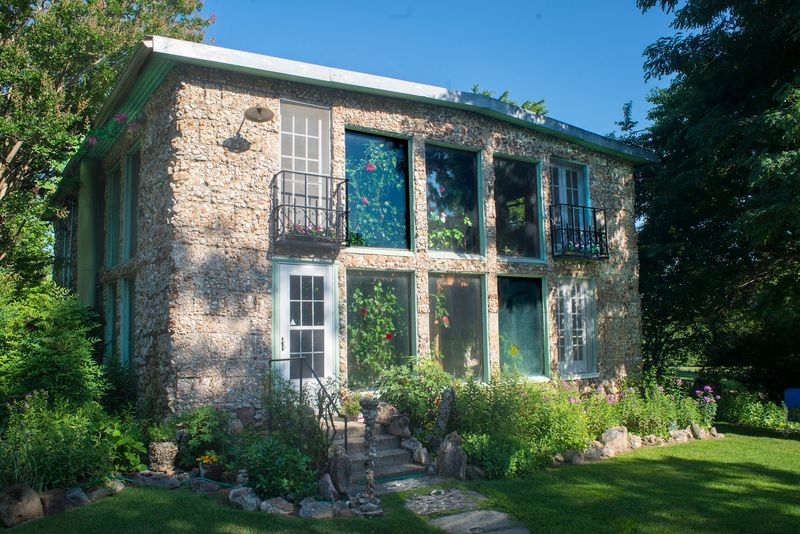
Elise Quigley did not ask for permission before demolishing her own home. While her husband was away, she tore down their original house and built a new one entirely according to her own vision, decorating every surface with rocks, crystals, fossils, and natural specimens she had collected over a lifetime.
The result is a structure unlike anything a standard architectural firm would produce. Tropical plants grow inside the house itself, winding through the interior as if the building and the garden agreed to share the same space.
Quigley’s Castle has earned the nickname “The Ozarks’ Strangest Dwelling,” and it is hard to argue with that title. Garden paths wind around lily ponds, and every corner of the property reveals another layer of her obsessive, wonderful collecting habit.
Visitors who come expecting a typical historic home tour leave with a very different story to tell. This is one of those places that makes you genuinely glad someone broke the rules.
Old Spanish Treasure Cave, Sulphur Springs, Arkansas
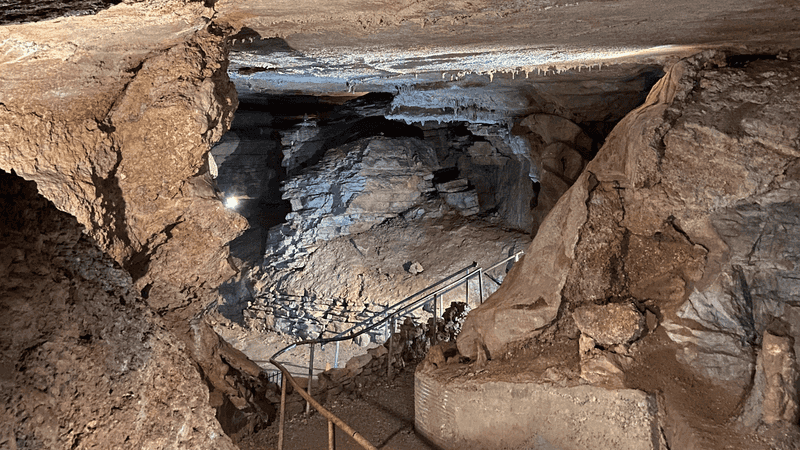
Somewhere inside this cave, according to legend, Spanish explorers hid a fortune in gold that has never been found. That story alone has been pulling curious visitors to Sulphur Springs for well over a century, and the cave has not gotten any less mysterious with age.
Guided tours wind through narrow, maze-like passages carved from ancient limestone. Along the way, guides share the history of the cave and the various treasure-hunting expeditions that have come and gone without success.
The rock formations are genuinely impressive on their own, with stalactites and unusual mineral deposits decorating the walls throughout the tour route. Even without the treasure angle, it would be a worthwhile underground adventure.
But the treasure angle makes it so much better. There is something about the idea of untouched Spanish gold sitting somewhere beneath your feet that turns an ordinary cave tour into something that feels like the opening chapter of an adventure novel.
Crater of Diamonds State Park, Murfreesboro, Arkansas
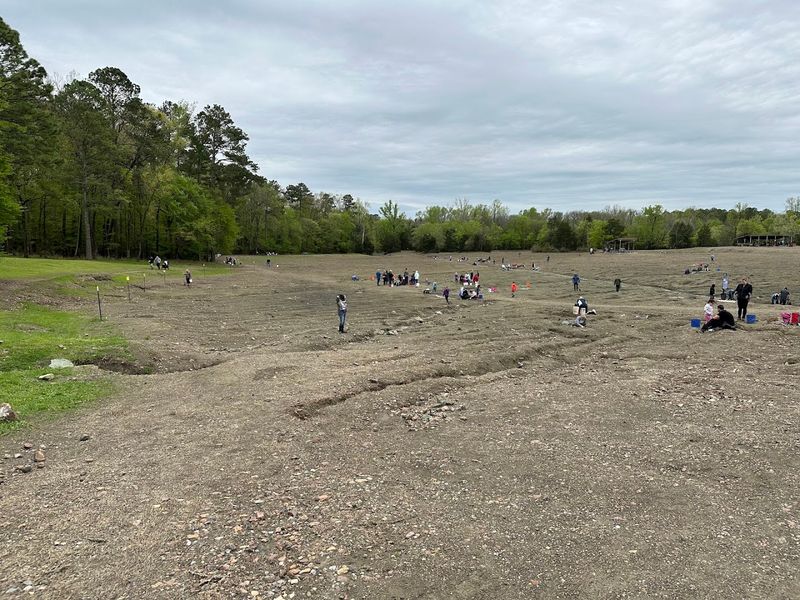
This is the only place in the world where the public can search for real diamonds and legally keep every single one they find. That is not a promotional tagline. That is the actual policy at Crater of Diamonds State Park, and it has been drawing hopeful visitors to Murfreesboro for decades.
The search area sits on top of an ancient volcanic crater, which is where the diamonds originate. More than 75,000 diamonds have been found since 1906, ranging from tiny chips to headline-making stones worth thousands of dollars.
Visitors rent tools at the park, spread out across the plowed field, and get to work. Some people find nothing. Some find something remarkable on their very first visit. That unpredictability is a big part of the appeal.
Park staff will help identify and certify any stones you find, so you leave with documentation along with your diamond. It is the only state park in America where the souvenir might pay for your entire vacation.
Thorncrown Chapel, Eureka Springs, Arkansas
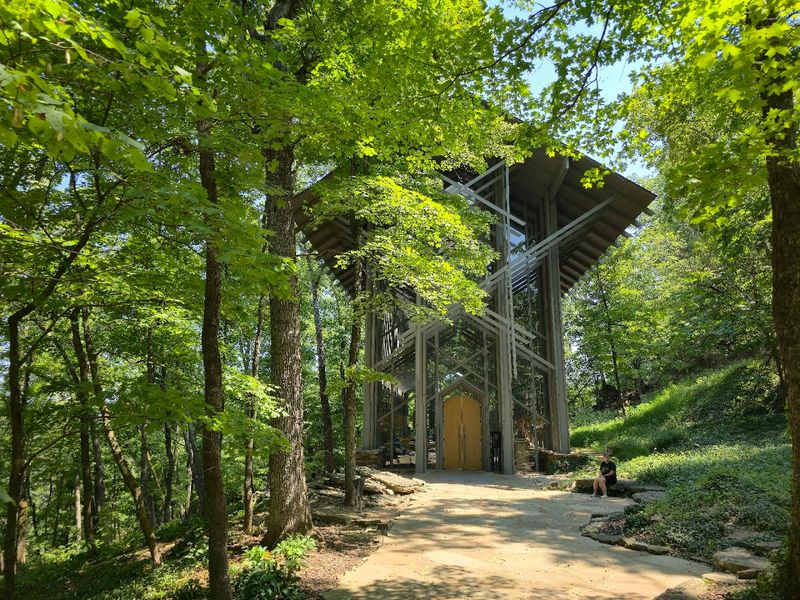
Architect E. Fay Jones designed Thorncrown Chapel with one clear goal: build something that belongs to the forest rather than sitting on top of it. The result is a 48-foot tall structure made almost entirely of glass and native wood that seems to dissolve into the surrounding trees when viewed from certain angles.
More than 400 windows are built into the frame, allowing natural light to fill the interior throughout the day. The chapel seats just 100 people, which keeps the experience intimate despite the structure’s dramatic scale.
It was named the fourth greatest building of the 20th century by the American Institute of Architects, placing it alongside some of the most celebrated architectural achievements in the country. For a chapel tucked into the Arkansas woods, that is quite a distinction.
Visitors of all backgrounds make the trip to Eureka Springs specifically to see this building. It is the kind of structure that photographs beautifully but rewards an in-person visit in a way that no image can fully capture.
Blanchard Springs Caverns, Mountain View, Arkansas
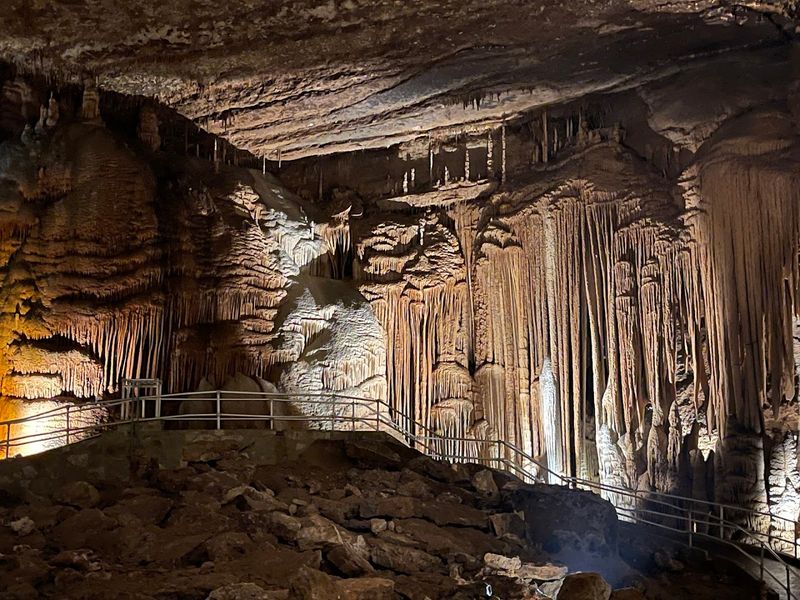
Most people do not expect to find one of the most spectacular cave systems in the country tucked inside the Ozark National Forest, but Blanchard Springs Caverns makes a habit of exceeding expectations. The caverns were formed over millions of years and were not discovered by the general public until the 1960s.
Three separate tour routes are available, ranging from a manageable walking tour to a more physically demanding wild cave experience. Each route reveals a different section of the system, with formations that include massive flowstones, delicate soda straws, and crystal-clear underground pools.
What sets Blanchard Springs apart from many other cave attractions is that it is still actively forming. Water continues to deposit minerals throughout the cavern, meaning the formations visitors see today are slightly different from those seen ten years ago.
The U.S. Forest Service manages the site, which keeps it well-maintained and scientifically monitored. Rangers lead every tour, and their knowledge of the geology adds real depth to the experience beyond simply admiring the scenery.
Christ of the Ozarks, Eureka Springs, Arkansas
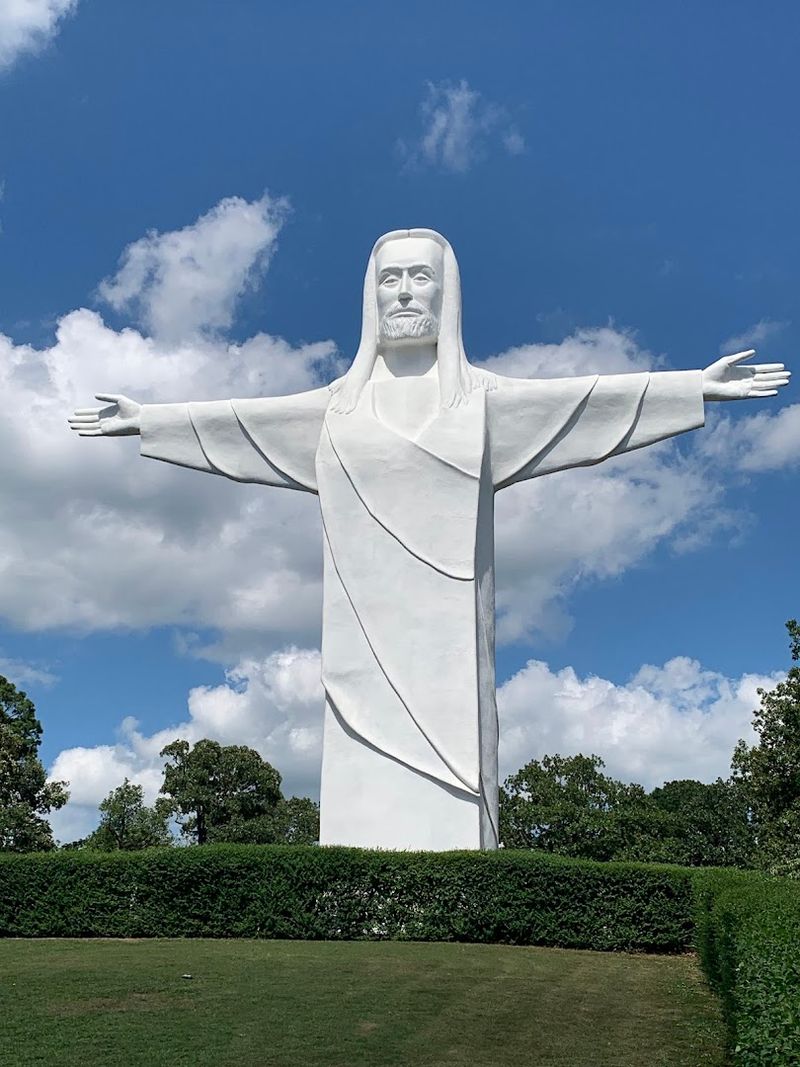
At 67 feet tall and bright white against the Ozark skyline, this statue is not exactly easy to miss. Christ of the Ozarks stands on Magnetic Mountain and ranks among the largest statues of Jesus in the entire United States, which is a fact that tends to stop first-time visitors mid-sentence.
The statue was created by sculptor Emmet Sullivan and completed in 1966. Its blocky, simplified form was intentional, designed to be visible from a great distance rather than to showcase fine artistic detail up close.
The surrounding grounds are part of the Great Passion Play complex, which includes an outdoor amphitheater, a Bible museum, and a recreation of a New Testament-era village. There is genuinely a lot going on up on that mountain.
Whether you are there for the religious significance or simply the spectacle of a seven-story statue rising above the treetops, this stop earns its place on any Arkansas road trip itinerary.
Arkansas Alligator Farm & Petting Zoo, Hot Springs, Arkansas
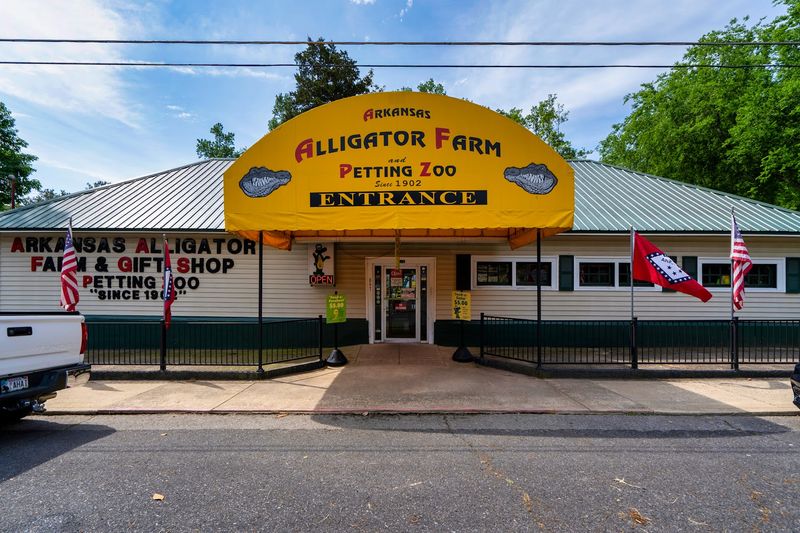
Since 1902, this Hot Springs institution has been introducing visitors to live alligators in a setting that feels like a genuine relic of early American roadside tourism. That makes it one of the oldest continuously operating attractions in the entire state, which is worth pausing to appreciate.
The farm houses a large collection of alligators in outdoor enclosures, and visitors can get surprisingly close during feeding demonstrations. Beyond the alligators, the zoo section includes a variety of other reptiles and animals that keep the visit from feeling one-dimensional.
One of the most talked-about exhibits is the preserved “Merman,” a classic sideshow curiosity that has fascinated generations of guests. It is exactly the kind of artifact that belongs in a place like this, equal parts bizarre and historically interesting.
The combination of genuine wildlife, old-fashioned carnival atmosphere, and over a century of operating history gives the Arkansas Alligator Farm a personality that modern, slickly produced attractions rarely manage to replicate. Some things get better simply by surviving long enough.
Cosmic Cavern, Berryville, Arkansas
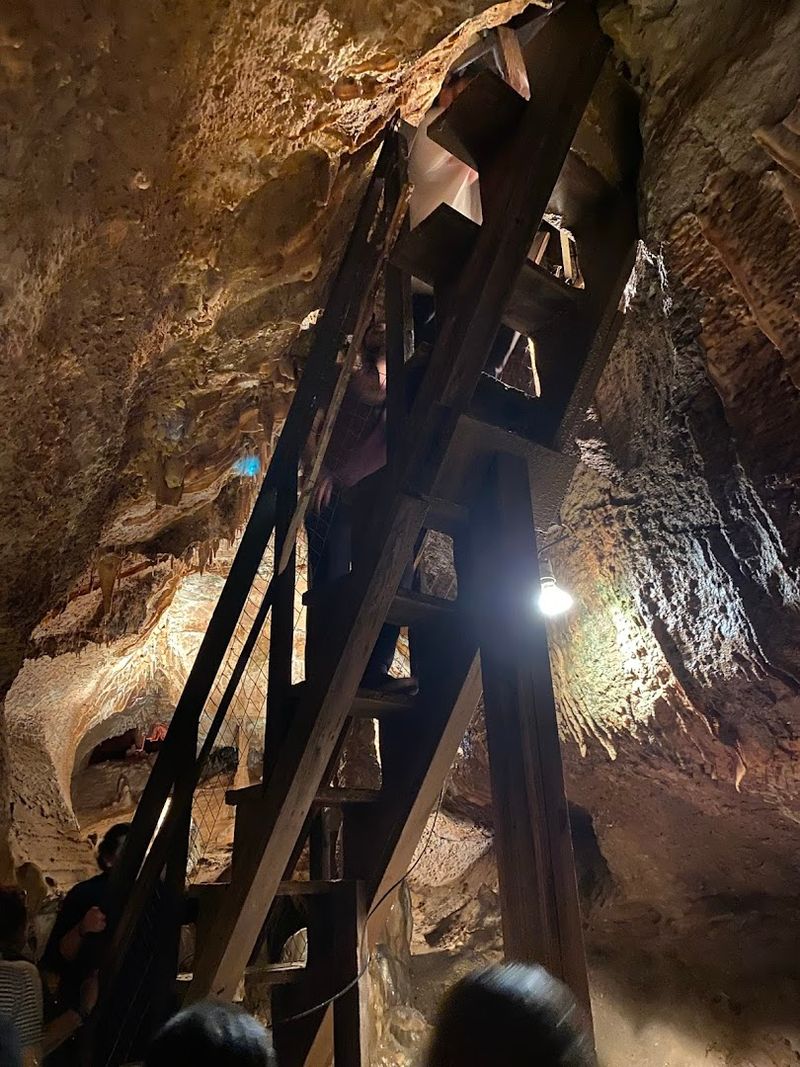
Two lakes sit inside Cosmic Cavern, and neither one has a known bottom. Researchers have probed both bodies of water without reaching the end, which gives the cavern a genuinely eerie distinction that most cave attractions cannot claim.
Beyond the lakes, the cavern is packed with formations that seem almost too detailed to have formed without assistance. Delicate soda straws hang from the ceiling in clusters, and helictites twist outward from the walls in directions that appear to ignore gravity entirely.
Cosmic Cavern holds the title of Arkansas’s largest privately owned cave, and its guided tours are known for being informative without being rushed. Guides cover the geology, the cave’s discovery history, and the ongoing scientific interest in those mysterious underground lakes.
The cave maintains a constant temperature year-round, making it a genuinely pleasant visit regardless of what the weather is doing above ground. That consistent climate has also helped preserve the formations in exceptional condition over the decades since the cavern opened to the public.
Josephine Tussaud Wax Museum, Hot Springs, Arkansas
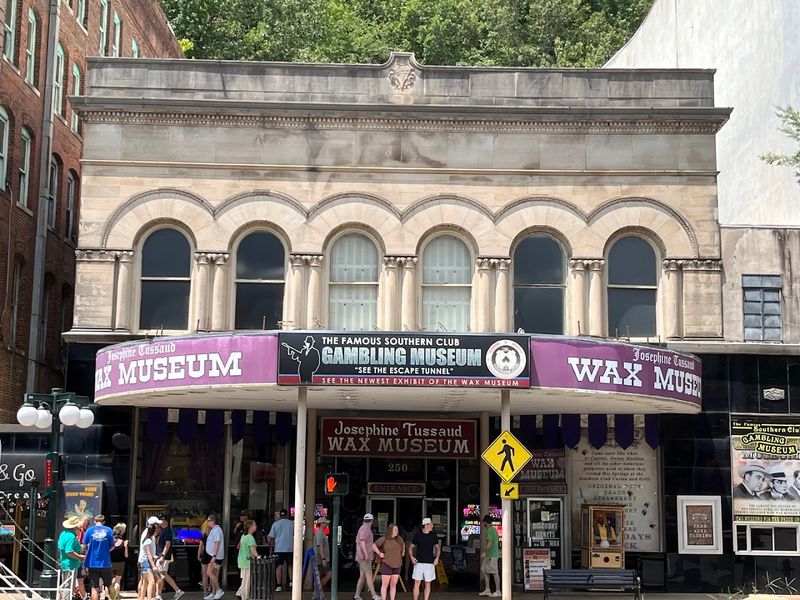
Wax museums are becoming an endangered species in American tourism, which makes the Josephine Tussaud Wax Museum in Hot Springs a more interesting stop than it might have been thirty years ago. This is a classic, old-school attraction that has held its ground while similar venues around the country have closed their doors.
The collection covers a wide range of famous figures, from historical leaders and political icons to entertainers and pop culture personalities. Each figure is handcrafted, and the level of detail varies from impressively lifelike to charmingly approximate, depending on the subject.
There is a nostalgic quality to the experience that modern interactive museums rarely replicate. No touchscreens, no augmented reality, just carefully posed wax figures in themed rooms that feel like time capsules from a different era of travel.
For families with children who have never experienced a traditional wax museum, this is a genuinely educational stop about both the famous figures on display and the lost art of roadside attraction-making itself. Hot Springs keeps delivering the unexpected.
Mammoth Spring State Park, Mammoth Spring, Arkansas
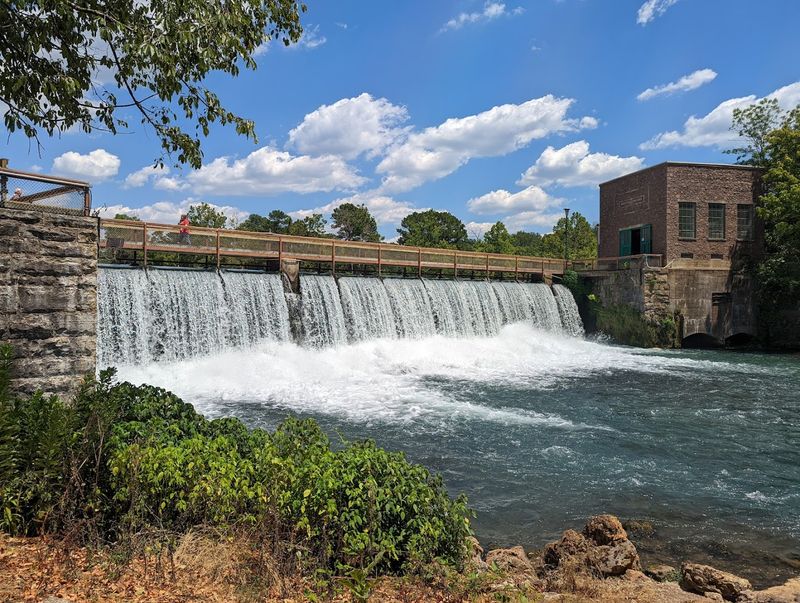
Nine million gallons of water surge from the ground at Mammoth Spring every single hour. That number is so large it almost stops making sense, but standing at the edge of the spring and watching the volume of clear water pouring out of the earth makes the figure feel completely believable.
Mammoth Spring is one of the largest natural springs in the United States, and it has been drawing visitors since the late 1800s when the railroad made the area more accessible. The town that grew up around the spring took its name directly from the source.
The state park surrounding the spring also includes a restored historic train depot that dates to that same railroad era. The depot now functions as a visitor center and small museum, giving the stop a historical dimension beyond the natural spectacle.
Walking paths connect the spring, the depot, and a scenic overlook of the Spring River, which the spring feeds. It is a compact park that manages to pack genuine natural wonder and local history into a single easy visit.
Eureka Springs Historic District, Eureka Springs, Arkansas
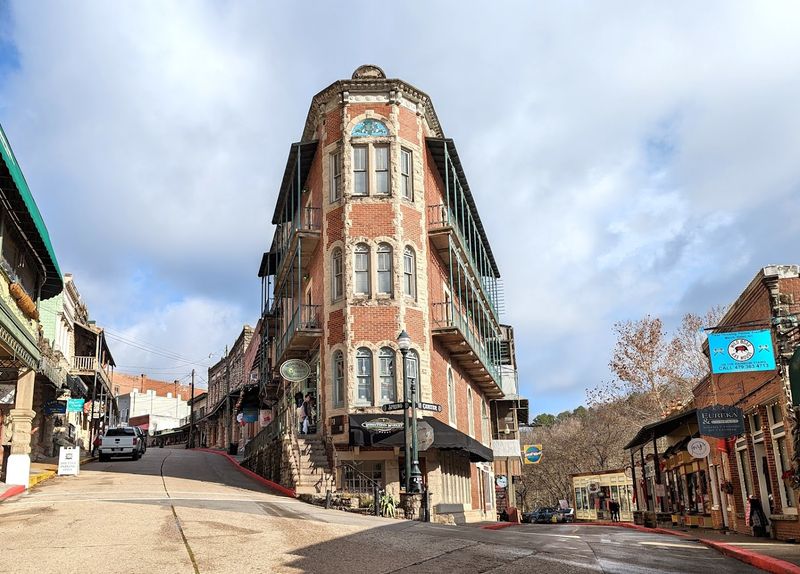
Eureka Springs was built on hillsides so steep that the town never bothered with a traditional street grid. The result is a layout that genuinely confuses first-time visitors in the best possible way, with roads that loop, climb, and dead-end without warning, and buildings that have front doors on completely different floors depending on which side you approach from.
The entire downtown area is listed on the National Register of Historic Places, and more than 60 historic structures survive in remarkably good condition. Victorian architecture dominates, but the variety of styles gives the district a patchwork quality that feels more like an evolving experiment than a planned town center.
Hidden staircases connect different levels of the city, and locals use them as regular shortcuts while visitors stumble upon them accidentally and feel like they have discovered something secret. That sense of discovery is built into the town’s physical structure.
Eureka Springs also has a long history as an arts community, which fills the historic district with galleries, studios, and independent shops that change the character of each block. No two streets feel quite the same, which is exactly why one visit is rarely enough.
Share this story