Pennsylvania has a well-earned reputation for history, rolling farmland, and big-city culture. But tucked between the covered bridges and colonial landmarks is a whole other side of the state, one that raises eyebrows, sparks debates, and makes people pull over on the highway just to take a second look.
From a house shaped like a giant boot to a field of rocks that ring like bells, the Keystone State is full of surprises that no travel brochure could fully prepare you for. This list covers 15 of the most genuinely bizarre, wonderfully odd, and surprisingly fascinating attractions Pennsylvania has to offer.
Some are famous landmarks with strange backstories, others are roadside oddities that barely show up on a map, but every single one of them is absolutely worth knowing about. Keep reading, because things are about to get delightfully weird.
1. Ringing Rocks Park, Upper Black Eddy, Pennsylvania
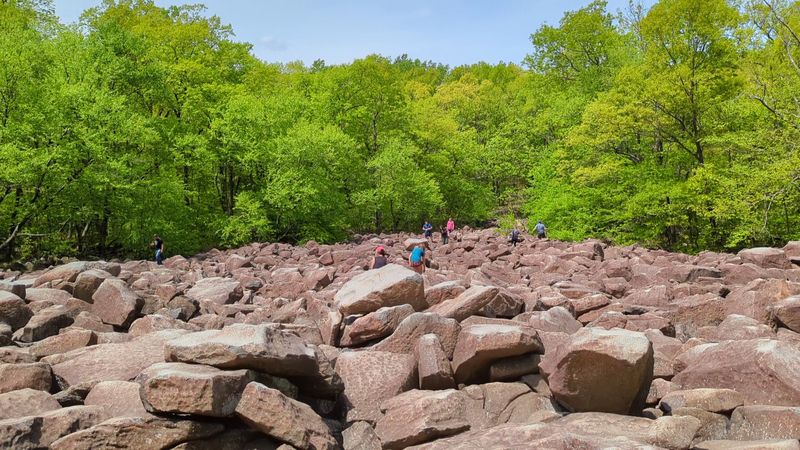
Most rocks just sit there and do absolutely nothing, which is exactly what makes Ringing Rocks Park so genuinely strange. Spread across a wide open field in Bucks County, the diabase boulders here produce clear, metallic tones when struck with a hammer.
Visitors are actually encouraged to bring tools and start tapping, turning the park into an impromptu outdoor percussion session.
Scientists have studied these rocks for decades and still cannot fully agree on why they ring. Leading theories involve internal stress within the rock structure, but no single explanation has closed the case.
A geologist named Dr. J.J. Ott performed a full musical concert here in 1890 using only the rocks, which is either impressive or deeply eccentric depending on your perspective.
2. Fallingwater, Mill Run, Pennsylvania
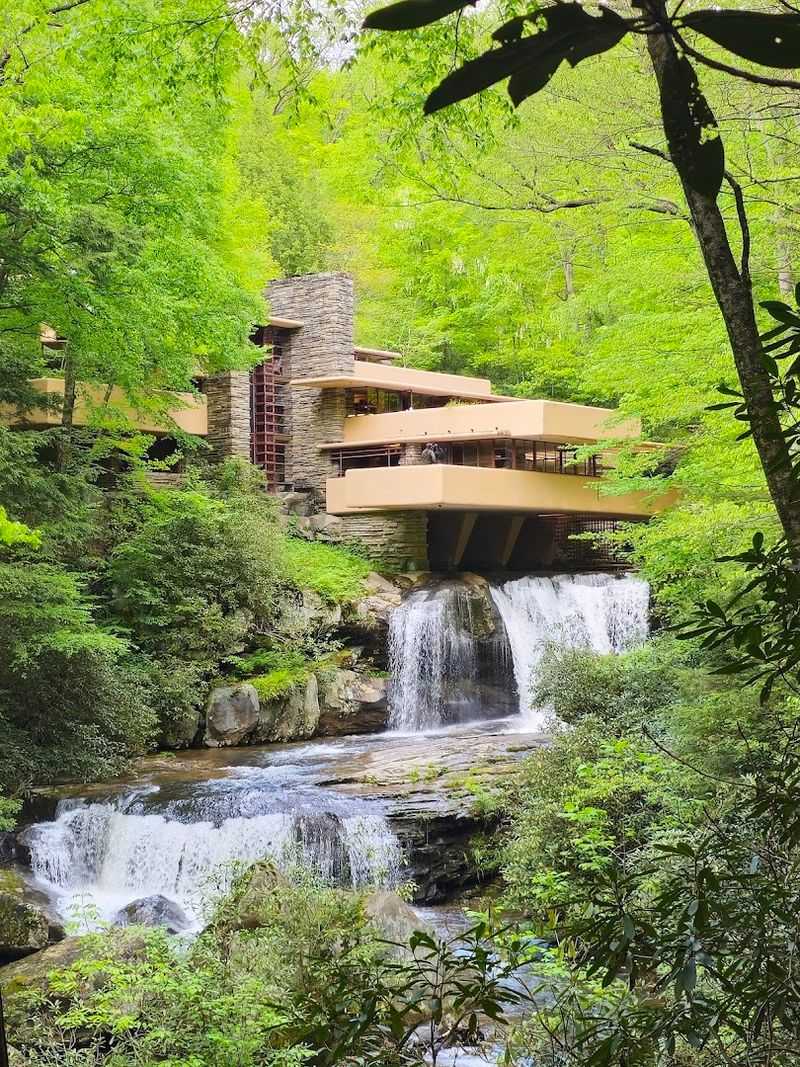
Architect Frank Lloyd Wright was asked to design a weekend home for the Kaufmann family in 1935, and he responded by placing the entire structure directly over a waterfall. Most architects would have built the house facing the waterfall.
Wright built it on top of it, which tells you everything you need to know about his design philosophy.
Fallingwater consists of a series of bold horizontal platforms that extend out over Bear Run stream in a way that still challenges basic engineering logic. The house is constructed from reinforced concrete, local sandstone, and large glass panels, and it has been called the greatest work of American architecture by the American Institute of Architects.
3. Philadelphia’s Magic Gardens, Philadelphia, Pennsylvania
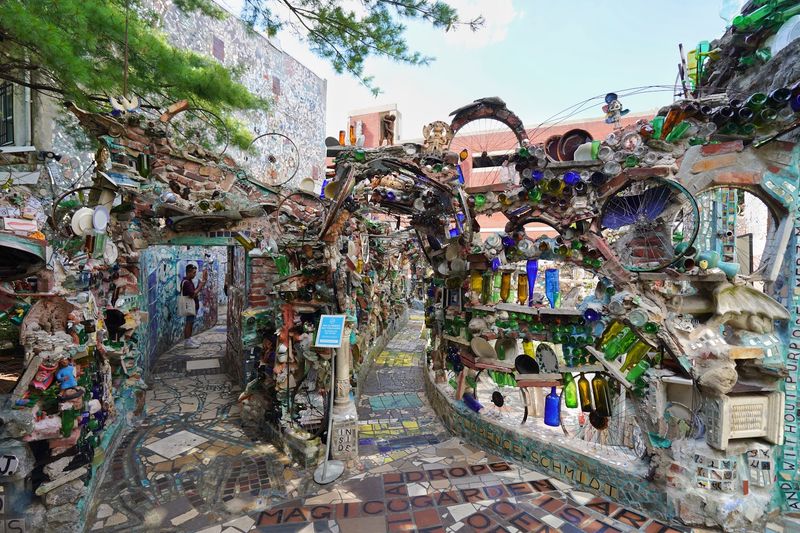
Artist Isaiah Zagar spent decades covering the walls, floors, and passageways of a South Street property with an extraordinary mosaic environment built from tiles, mirrors, bicycle wheels, bottles, and thousands of other found objects. What started as a personal creative project eventually grew into a full public attraction that now covers three indoor galleries and two outdoor spaces.
Philadelphia’s Magic Gardens officially opened as a nonprofit arts space in 2004 and draws visitors from around the world who come to study the intricate layering of imagery and material. Every surface tells a different story, and the sheer density of detail means repeat visits reveal things missed on the first trip.
4. Haines Shoe House, York, Pennsylvania
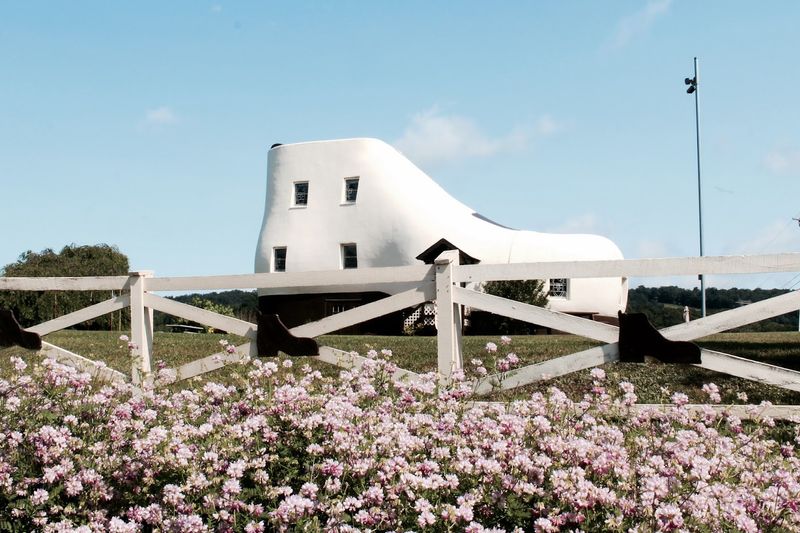
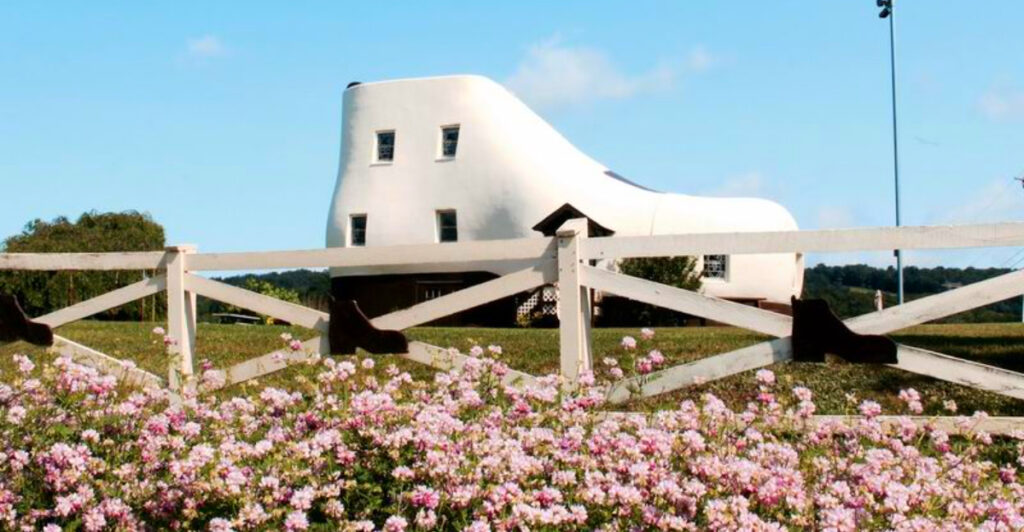
A shoe salesman once decided that the best advertisement money could buy was a house shaped like a giant boot, and honestly, he was not wrong. Mahlon Haines built this 25-foot-tall structure in 1948, and it has been turning heads ever since.
The building measures 17 feet wide and 48 feet long, making it one of the most impressively oversized roadside attractions in the country.
The layout is surprisingly functional. The living room sits in the toe, the kitchen occupies the heel, and bedrooms are tucked into the ankle and instep sections of the boot.
Haines originally offered it as a free vacation spot for newlyweds and elderly couples, which is a marketing move that most modern companies would never think to try.
5. Randyland, Pittsburgh, Pennsylvania
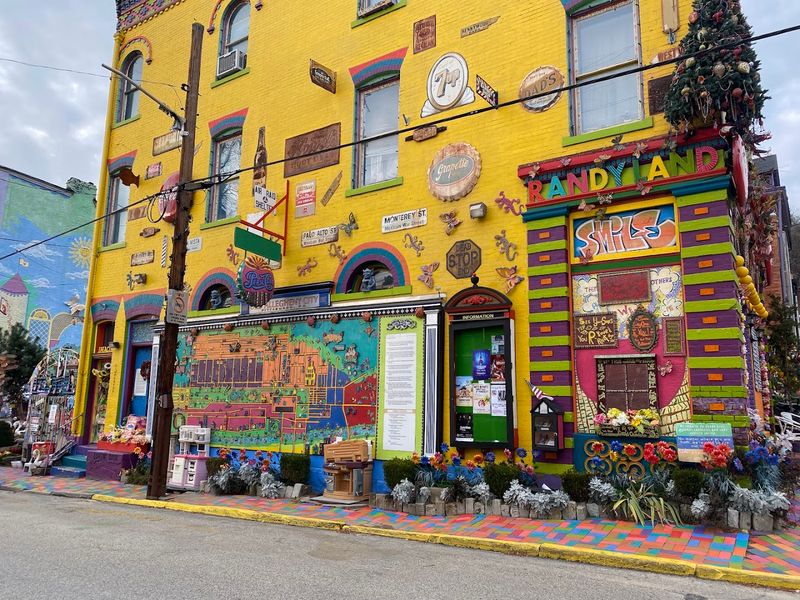
Randy Gilson bought a run-down property in Pittsburgh’s Mexican War Streets neighborhood in the 1990s for the price of one dollar, then spent the next several decades turning it into one of the most colorful outdoor art environments in the entire country. The result is Randyland, a place where recycled objects, painted murals, and found materials cover nearly every visible surface of the building and surrounding yard.
Gilson created the space as a gift to the community, and admission has always been free. He is often on-site himself, talking with visitors and explaining the story behind individual pieces.
The combination of accessibility and personal connection makes Randyland feel different from most art attractions.
6. Koziar’s Christmas Village, Bernville, Pennsylvania

William Koziar put up some holiday lights at his Berks County farm in 1948, mostly to cheer up his children, and things escalated considerably from there. Today, Koziar’s Christmas Village uses hundreds of thousands of lights spread across the property every season, covering buildings, trees, bridges, and decorative displays in a way that draws visitors from several states away.
The village operates exclusively during the holiday season, typically from late October through early January, and tickets are required for entry. The display includes animated scenes, festive characters, a gift shop, and a visit from Santa Claus on select nights.
The property is privately owned and operated entirely by the Koziar family, which gives it a personal quality that larger commercial attractions rarely match.
7. Mütter Museum, Philadelphia, Pennsylvania
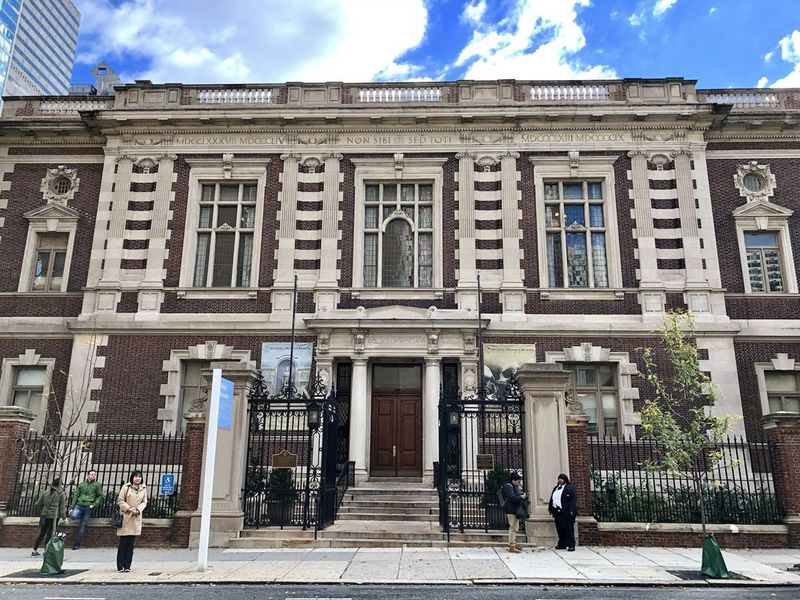
The College of Physicians of Philadelphia established the Mütter Museum in 1863, using a collection donated by Dr. Thomas Dent Mütter to help train medical students. Over 160 years later, the museum has grown into one of the most unusual and educational institutions in the country, housing thousands of anatomical specimens, antique medical instruments, and rare pathological examples.
Among the more well-known items in the collection are a section of Albert Einstein’s brain, a cast of the conjoined livers of famous conjoined twins Chang and Eng Bunker, and a wall of over 100 human skulls assembled by a 19th-century Viennese anatomist. The collection is presented seriously and respectfully, with a clear focus on medical education rather than sensationalism..
8. Mercer Museum, Doylestown, Pennsylvania
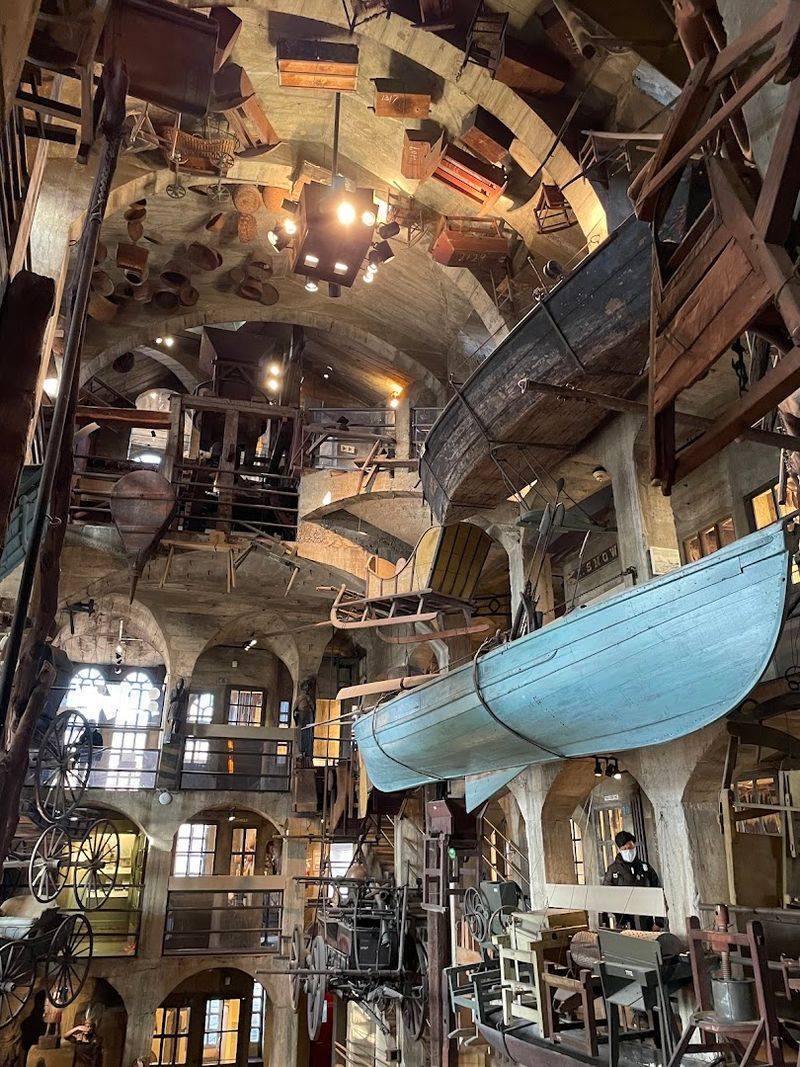
Henry Chapman Mercer built this enormous concrete structure between 1916 and 1916 using an unconventional method: he poured concrete around wooden forms, essentially sculpting a six-story castle by hand with a small team of workers. The result is a building that looks like it belongs in a European fairy tale but sits firmly in the middle of Bucks County, Pennsylvania.
Inside, the museum holds roughly 40,000 tools and everyday objects from pre-industrial America, many of which hang from the walls and ceilings in a way that creates an overwhelming but fascinating visual experience. Entire horse-drawn vehicles, a whaling boat, and a Conestoga wagon are suspended from the upper floors.
The collection covers trades from blacksmithing to printing, giving visitors a remarkably complete picture of how ordinary life functioned before the industrial era.
9. Penn’s Cave, Centre Hall, Pennsylvania
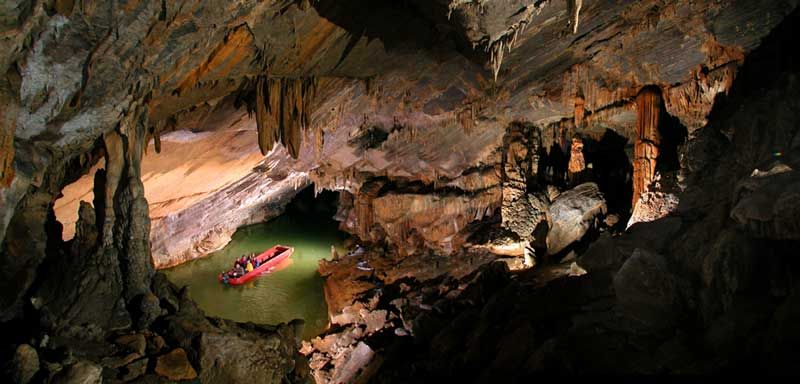
Penn’s Cave holds a distinction that very few natural attractions in North America can claim: it is an all-water cavern, meaning the entire tour takes place on a flat-bottomed boat. Visitors board the boat at the cave entrance and spend about an hour gliding through a series of underground limestone chambers without ever setting foot on dry ground inside.
The cave was formed by water carving through limestone over millions of years, and that same water still flows through its passages today. Guides point out named formations along the route, many of which have been given creative labels based on their shapes.
The cave maintains a constant temperature of around 52 degrees Fahrenheit year-round, so a light jacket is worth bringing regardless of the season.
10. Kecksburg UFO Monument, Kecksburg, Pennsylvania
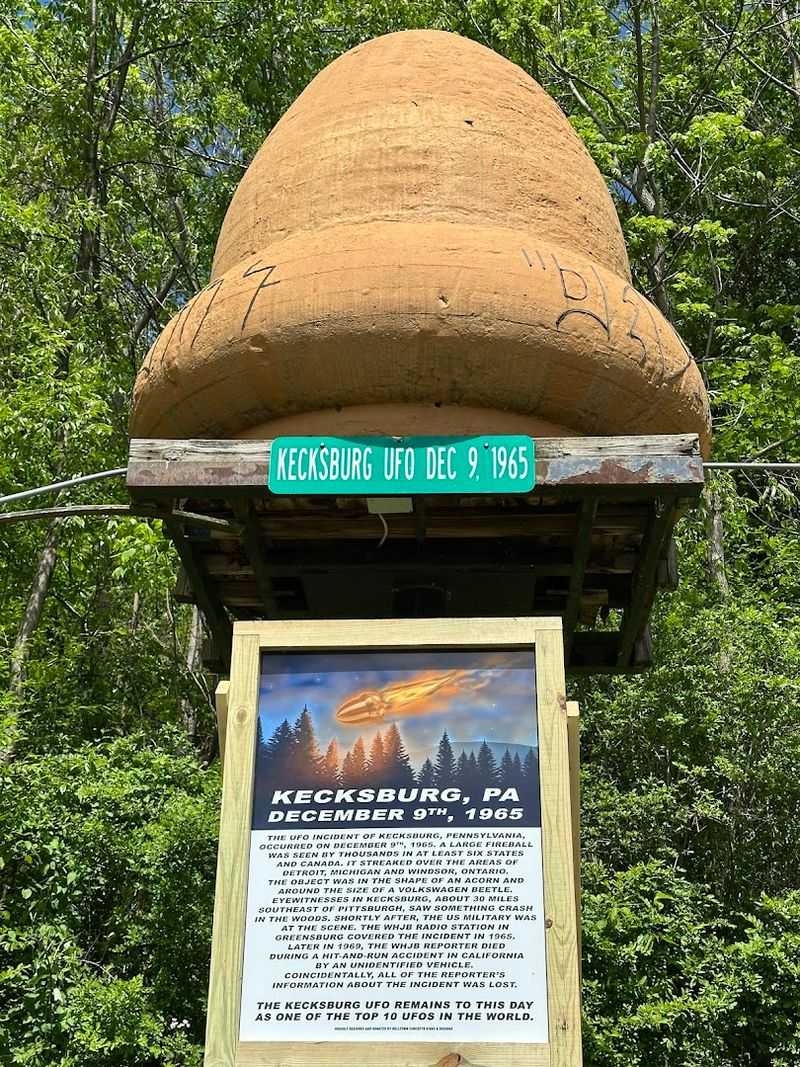
On December 9, 1965, thousands of people across multiple states and parts of Canada reported seeing a fireball streak across the sky before something came down in the woods near the small town of Kecksburg, Pennsylvania. Witnesses described an acorn-shaped object with strange markings around its base.
The U.S. military arrived quickly, cordoned off the area, and removed whatever was there before most people got a close look.
Official explanations have ranged from a meteor to Soviet space debris, but Kecksburg has never fully accepted any of them. The town eventually embraced its unusual claim to fame by installing a full-sized acorn-shaped replica of the alleged object outside the local fire station on Water Street.
The monument draws UFO enthusiasts, curious travelers, and documentary crews on a regular basis. The Kecksburg Volunteer Fire Department even hosts an annual UFO festival that brings in speakers, vendors, and visitors from across the country.
11. Eastern State Penitentiary, Philadelphia, Pennsylvania
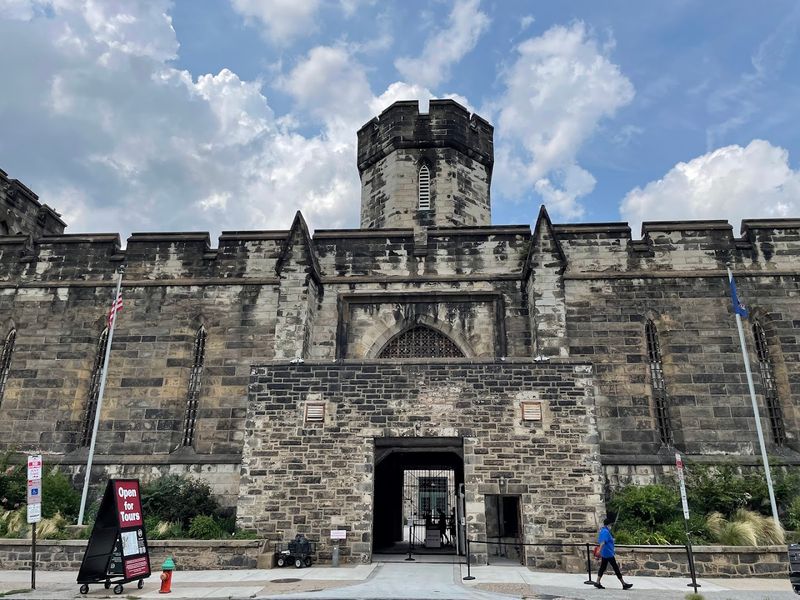
When Eastern State Penitentiary opened its doors in 1829, it was considered the most expensive building in the United States and was studied by prison reformers from around the world. The facility was designed around a radical concept called the Pennsylvania System, which required inmates to live in complete solitary confinement at all times, with the goal of encouraging personal reflection.
The prison held some notable names over its 142-year history, including Al Capone, who reportedly had a relatively comfortable cell decorated with furniture and artwork. The institution closed in 1971 and sat abandoned for two decades before reopening as a historic site in 1994.
12. Crystal Cave, Kutztown, Pennsylvania
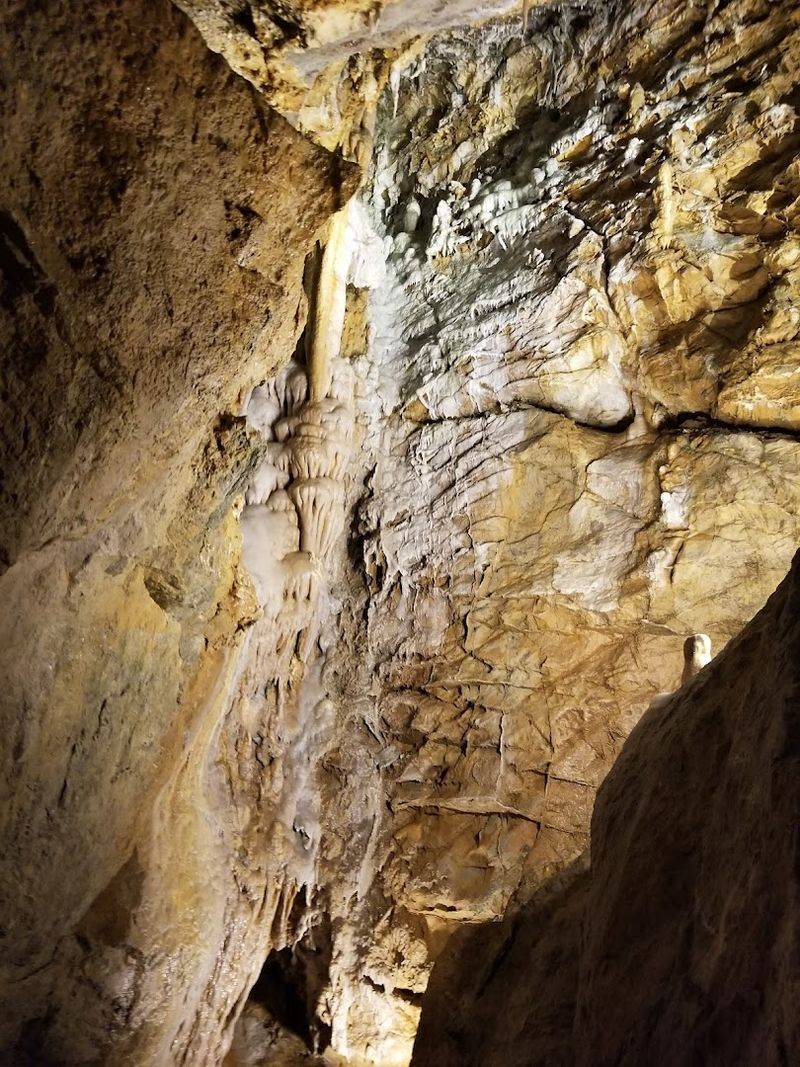
Crystal Cave was discovered in 1871 by workers quarrying limestone on a farm in Berks County, and it has been welcoming visitors ever since. The cave gets its name from the sparkling calcite formations that line its walls and ceilings, many of which have been building up for an estimated 10 to 15 million years.
Guided tours run approximately 45 minutes and cover about a third of a mile through the cave’s main passages. Highlights include formations with names like Pulpit Rock, the Wedding Cake, and the Crystal Ballroom, a wider chamber where the mineral deposits are particularly dense.
The cave maintains a year-round temperature of 54 degrees Fahrenheit, which makes it a surprisingly refreshing destination during hot summer months.
13. Laurel Caverns, Farmington, Pennsylvania
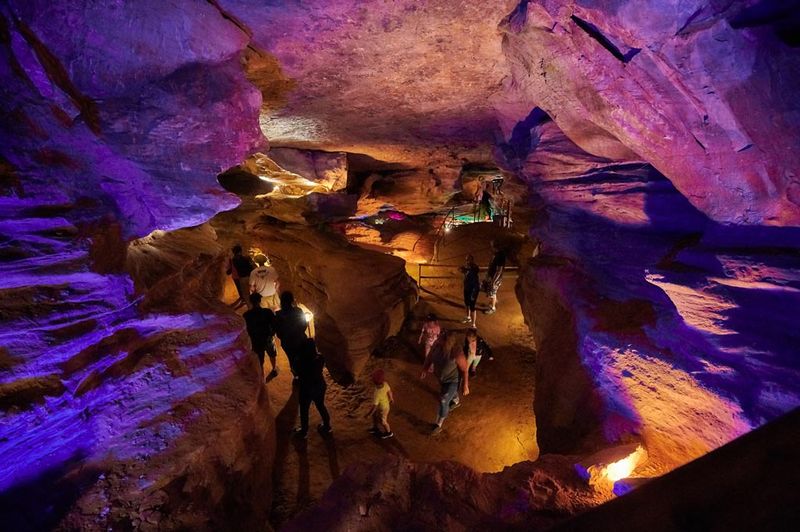
Stretching beneath Chestnut Ridge in Fayette County, Laurel Caverns holds the title of Pennsylvania’s largest cave system open to the public. The main cavern alone spans roughly 435 feet in length and reaches heights of up to 40 feet in certain chambers, giving it a scale that genuinely surprises most first-time visitors who expect something much smaller.
Standard geology tours follow a paved path through the main passages and take about 45 minutes to complete. For those who want more of a challenge, Laurel Caverns also offers wild caving experiences that take smaller groups into unpaved sections of the cave using headlamps and protective gear.
These adventure tours require advance booking and appropriate clothing.
14. The Reading Pagoda, Reading, Pennsylvania
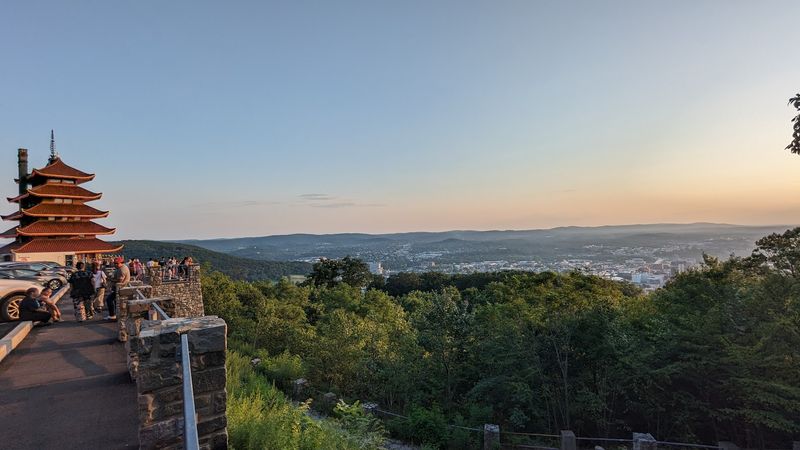
A seven-story Japanese-style pagoda sitting on top of a Pennsylvania mountain was not exactly what most people expected to find in Berks County at the start of the twentieth century, but here it stands. William Abbott Witman Sr. commissioned the structure in 1908, originally intending it to be part of a resort hotel that would attract visitors to the summit of Mount Penn.
The resort plan fell apart, but the pagoda survived.
The building stands 72 feet tall and features the traditional tiered roof design associated with Japanese architecture, complete with red and green exterior trim. Witman actually struggled to get a license to open the building and at one point offered to sell it to the city of Reading for one dollar.
The city eventually accepted.
15. Johnstown Inclined Plane, Johnstown, Pennsylvania
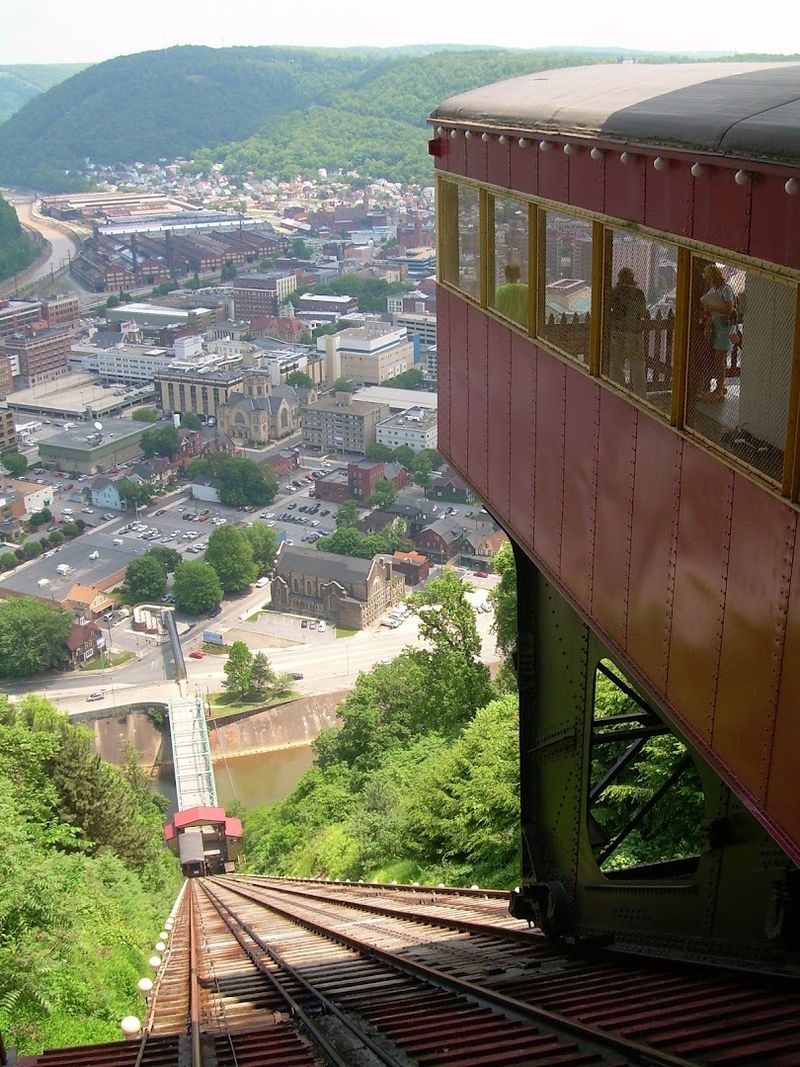
Built in 1891 in the aftermath of the devastating Johnstown Flood, the Johnstown Inclined Plane was designed to give residents a reliable escape route in case of future flooding. It worked by carrying people and even their vehicles up a steep hillside to the safer elevated community of Westmont above.
The engineering behind it was bold for its era and remains impressive today.
The incline operates on a grade of 70.9 percent, which makes it one of the steepest vehicular inclined railways anywhere in the world. Each car can carry multiple vehicles in addition to passengers, and the ride takes just a few minutes to complete.
The views of Johnstown from the upper station are expansive and worth the trip on their own.
Share this story