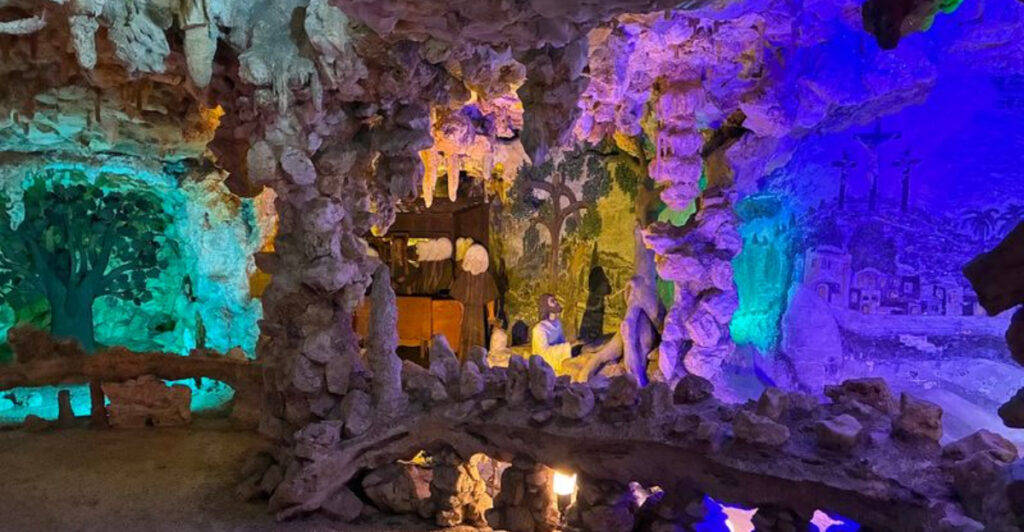
Tucked inside a working cemetery in Memphis, Tennessee, there is a hand-carved crystal cave that most people have never heard of. Built by one man over several decades, this underground grotto tells the story of Jesus through dioramas made entirely from crystals, quartz, and minerals.
It sits quietly off Poplar Avenue, free to enter, open every day, and almost completely off the tourist radar. This is the kind of place that makes you stop mid-step and wonder how something so detailed and dedicated even exists, and why more people are not talking about it.
The Only Man-Made Crystal Cave In The World
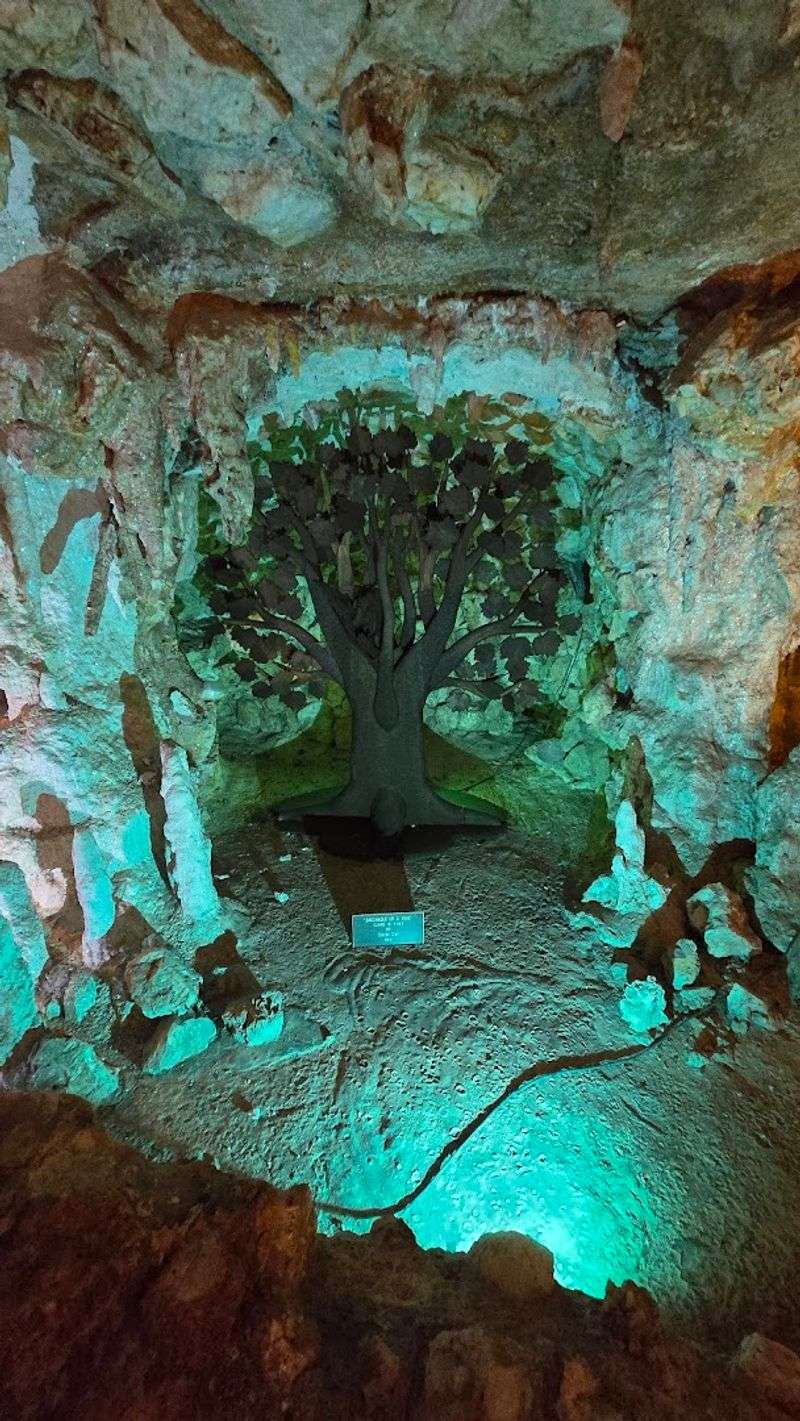
Bold claims deserve bold proof, and the Crystal Shrine Grotto delivers. It is widely described as the only man-made crystal cave of its kind in the world, a distinction that makes the free admission feel almost unreasonably generous.
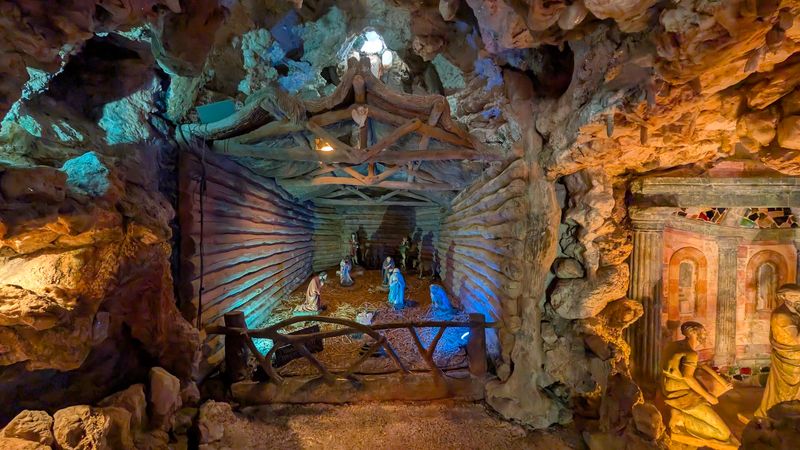
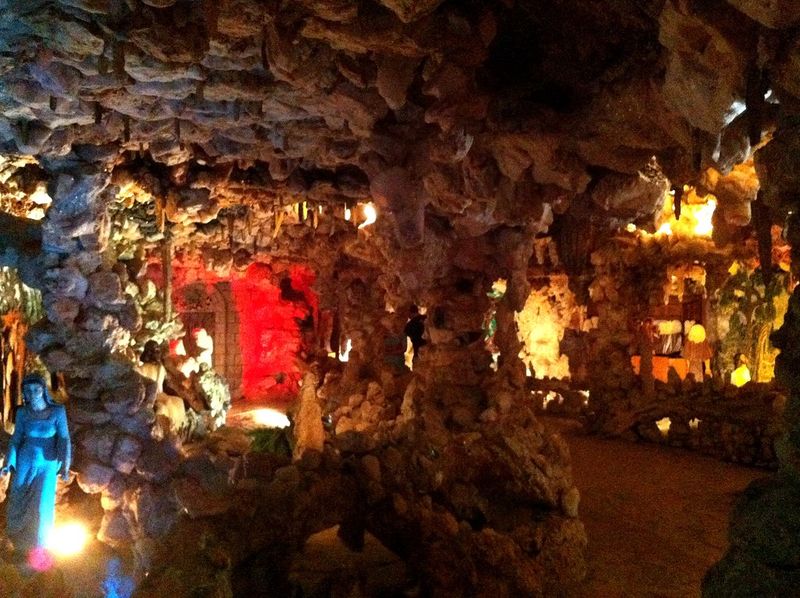
The cave walls are covered with thousands of crystals, geodes, stalactites, and minerals that were hand-placed over many years. Each section of the cave represents a different scene from the life of Jesus, from his birth through his resurrection, all told through three-dimensional dioramas built directly into the rock walls.
The ceiling is low in certain areas, which means taller visitors may need to duck slightly as they move through the space. The cave is compact, but the level of detail packed into every square foot is remarkable.
Lighting plays a significant role in how the crystals appear, with the displays catching and reflecting light in ways that make the mineral work stand out clearly against the darker cave walls.
Biblical Stories Carved Into Rock
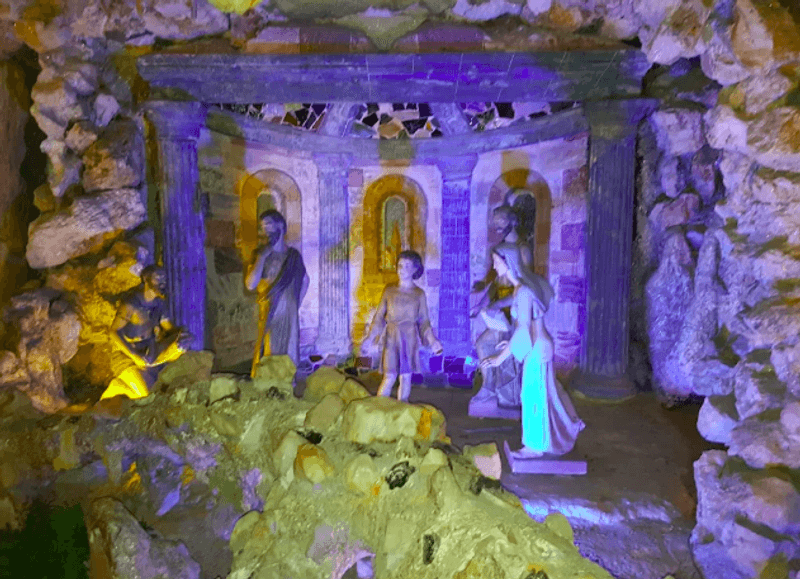
Each scene inside the grotto tells part of the same story, moving through major moments in the life of Jesus in a sequential, walkable format. The dioramas are built directly into the cave walls using crystals, minerals, and sculpted concrete, creating a three-dimensional narrative that visitors follow as they move through the space.
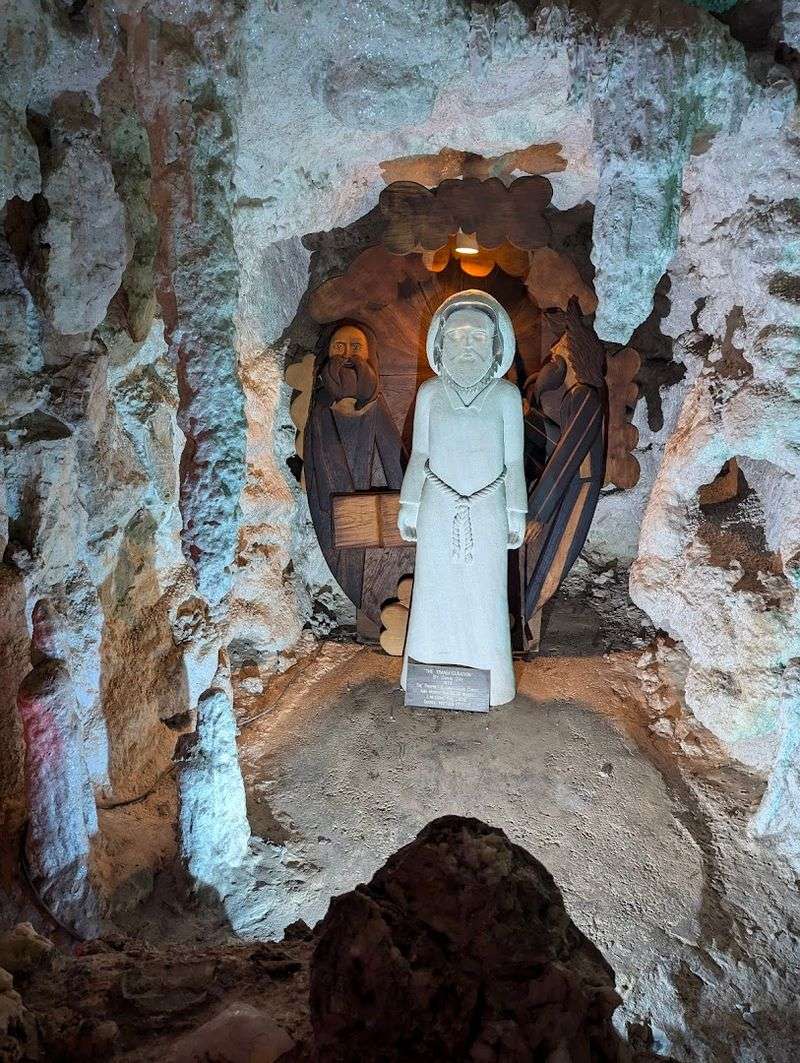
The scenes include the nativity, key moments from Jesus’s ministry, and the resurrection. A small shrine near the entrance features a figure of Jesus, and many visitors leave small donations there, though participation is entirely optional.
What makes the biblical storytelling here different from a painting or a stained-glass window is the physical depth of each scene. The materials used, including amethyst, quartz, and various geodes, give every moment in the story a texture and weight that flat artwork simply cannot replicate.
For those who follow the Christian faith, the grotto carries a deeply personal meaning that goes beyond its status as an artistic achievement.
Abraham’s Oak And The Grounds Outside
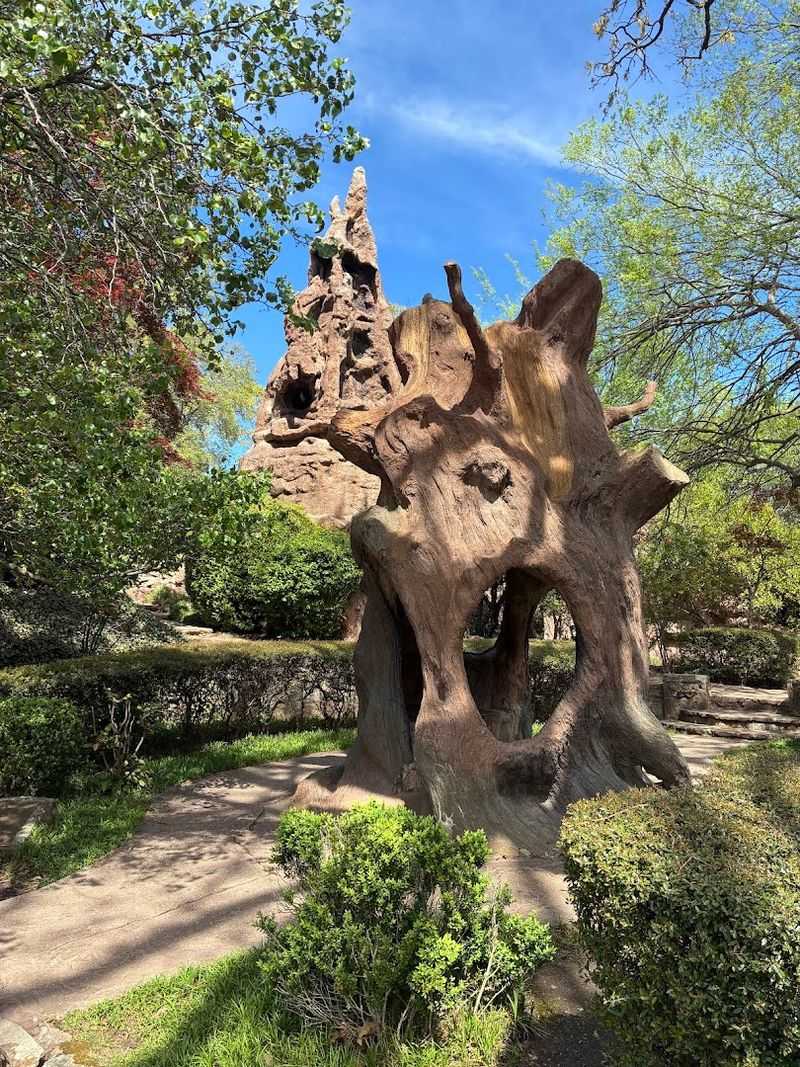
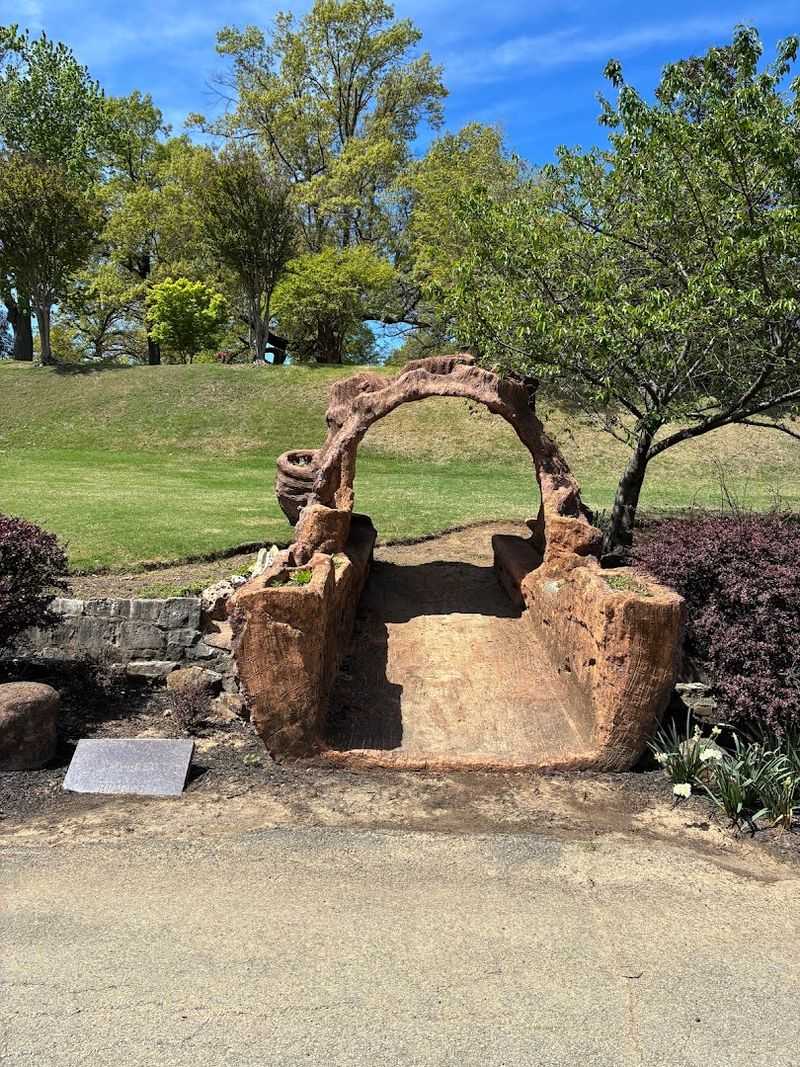
The grotto itself is the main draw, but the surrounding grounds hold their own quiet surprises. Just outside the cave entrance, visitors will find a concrete tree stump known as Abraham’s Oak, which is another example of Dionicio Rodriguez’s faux bois technique.
The stump is crafted with such detail that it convincingly resembles real weathered wood. It sits in a shaded area where instrumental hymn music often plays softly in the background, creating a calm environment for anyone who wants to sit and rest before or after exploring the cave.
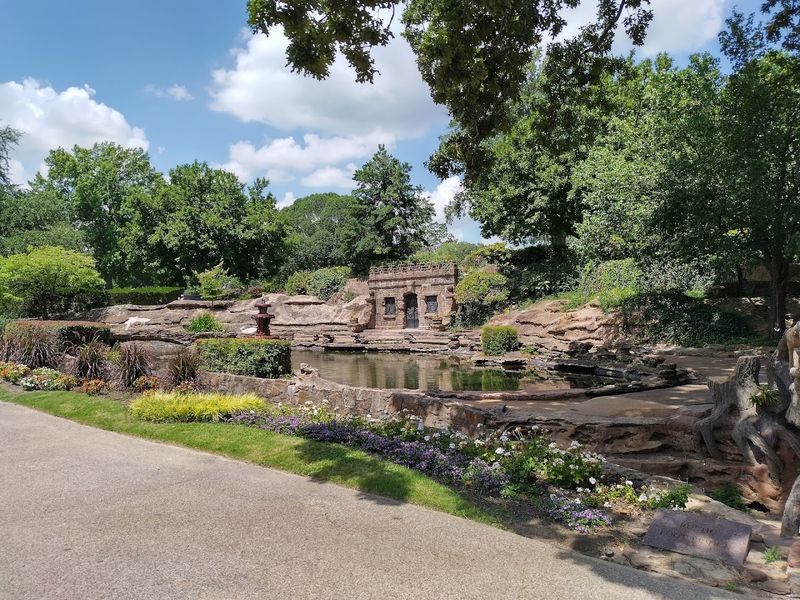
There is also a small area called God’s Garden nearby, a grassy open space that works well as a quiet resting spot. A small pond with a fountain completes the outdoor setting, and while the pond has some green water due to limited circulation, a few large koi fish can be spotted there.
The full outdoor area is small but thoughtfully arranged around the grotto as its centerpiece.
Completely Free To Visit, Every Day
Free attractions in major cities are rare, and free attractions of this caliber are even rarer. The Crystal Shrine Grotto charges no admission, requires no reservation, and is accessible 24 hours a day, seven days a week throughout the entire year.
For tourists exploring Memphis on a budget, or for locals who have simply never made the trip, the zero-cost entry removes every possible barrier. There is no ticket booth, no timed entry window, and no guided tour required.
Visitors simply walk in and explore at their own pace.
The lack of a fee does not reflect the quality of the experience in any way. What is inside the grotto represents decades of skilled labor and an enormous personal investment by the artist who built it.
The fact that it remains freely accessible to anyone who shows up is one of the more generous offerings Memphis has to offer. Short visits of around ten to thirty minutes are common, depending on how much time you spend with each scene.
A Landmark Hiding In Plain Sight
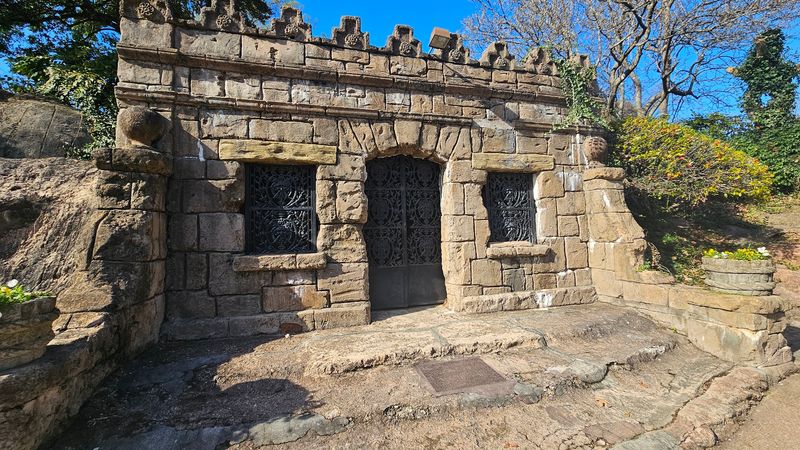
Most people driving down Poplar Avenue in Memphis have no idea that a hand-carved crystal cave is sitting just off the road. The grotto is located inside an active cemetery, which means it does not exactly advertise itself to passing traffic.
Word of mouth has historically been the main way people discover the grotto. Many first-time visitors arrive because a friend or family member mentioned it, and most leave with the same impulse to tell someone else about it.
That chain of personal recommendations has kept the grotto well-known among those who seek it out, even as it remains largely invisible to the broader tourist circuit.
The lack of prominent signage inside the cemetery makes finding the grotto a small adventure in itself. Once you cross a tiny bridge near the entrance area and follow the path through the grounds, the cave structure comes into view.
That moment of first discovery, after the quiet walk through the cemetery, gives the visit a character that a well-marked tourist attraction simply would not have.
What To Expect When You Arrive
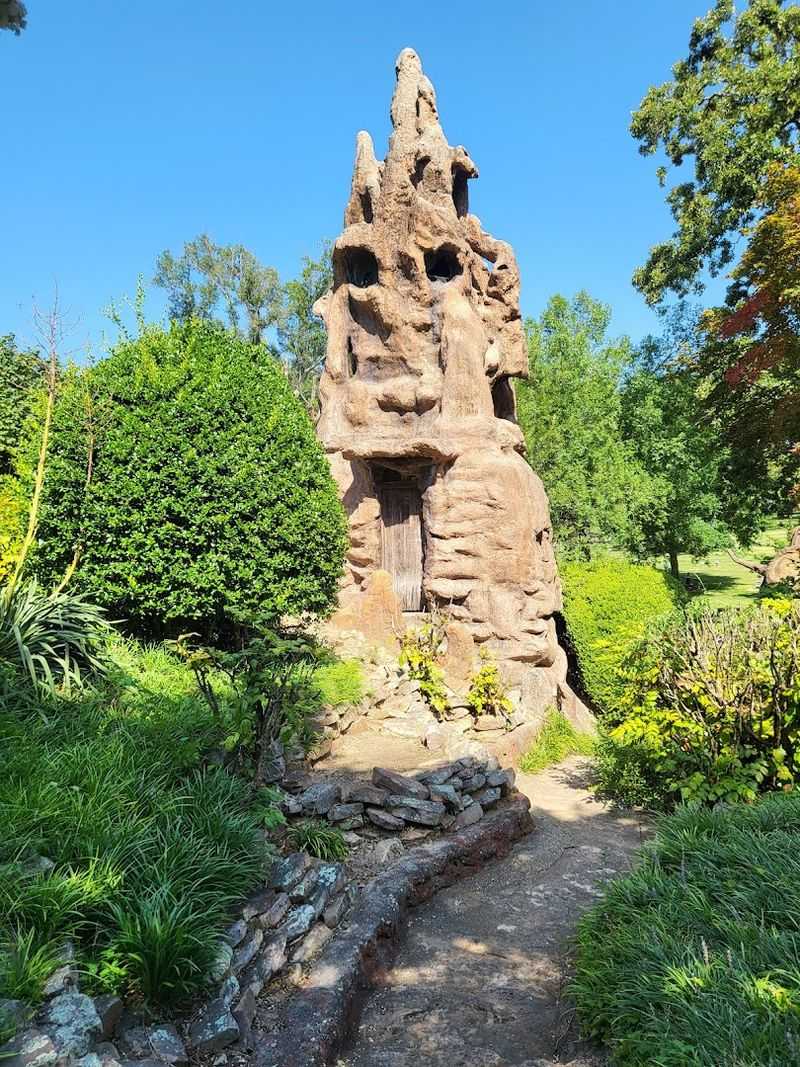
First-time visitors benefit from knowing a few practical details before they arrive. Parking is available along the roadside inside the cemetery, and spaces are limited, so arriving during quieter times of day helps.
The walk from the parking area to the grotto takes about five minutes on foot.
The cave entrance is narrow and the floor inside is uneven, which can make access challenging for anyone with mobility limitations. The ceiling drops in certain sections, so taller visitors should watch their heads.
There is no air conditioning inside the cave, which means summer visits can feel warm, especially during the hottest parts of the day.
The cave is on the darker side, with lighting focused on the crystal displays and dioramas. Some areas near the back of the cave are dimmer than others.
A sign near the entrance provides background information about the grotto’s history and the artist who built it, and reading it before entering adds meaningful context to everything you will see inside.
The Crystals And Minerals Up Close
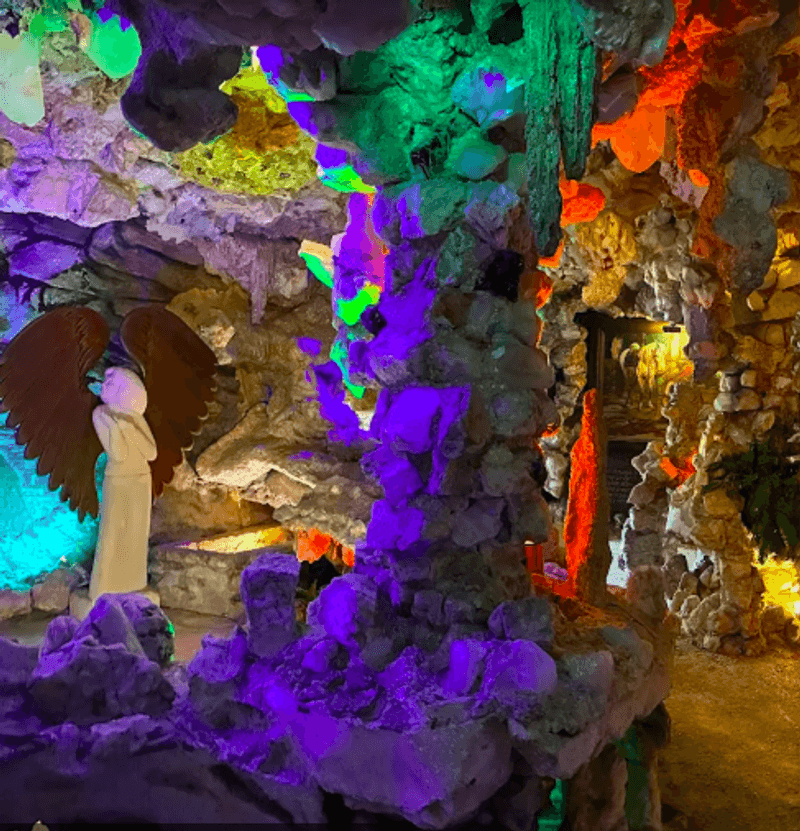
Rock enthusiasts and mineral collectors tend to have a particularly strong reaction to the Crystal Shrine Grotto. The sheer variety of materials used in the construction is one of the more impressive aspects of the whole project.
Amethyst, quartz, geodes, stalactites, and a wide range of other minerals are embedded throughout the cave walls and ceiling. Each biblical scene uses different combinations of crystals to create a distinct visual character, so no two sections of the cave look exactly alike.
The textures range from smooth and glassy to rough and jagged, and the lighting is arranged to bring out the natural color variations in each mineral.
Rodriguez sourced materials from various locations and worked them into the concrete structure by hand, piece by piece. The result is a wall surface that rewards close inspection.
Details that might not be obvious from a distance become much more intricate the closer you look. For anyone with an interest in geology or natural materials, the grotto doubles as an informal mineral display.
Kid-Friendly And Family-Approved
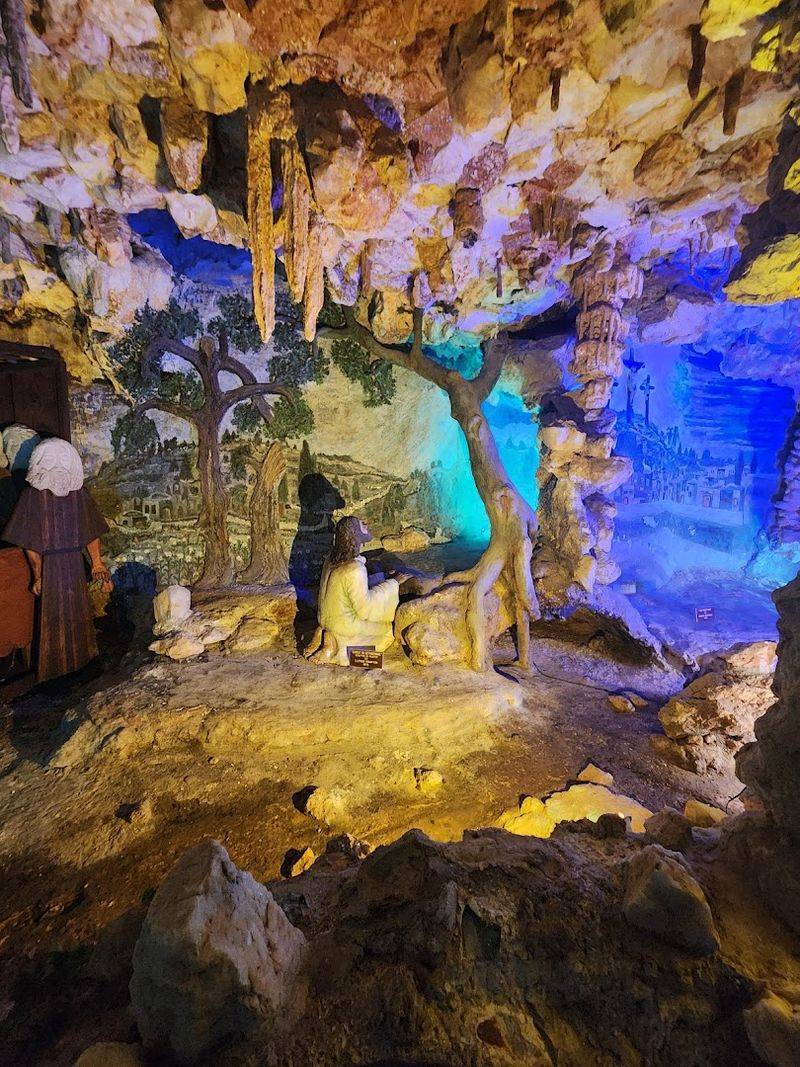
The Crystal Shrine Grotto works well as a family outing, particularly for families with school-age children who have some familiarity with biblical stories. The sequential, visual format of the cave makes the narrative easy to follow, and the crystal walls give kids something concrete and interesting to look at throughout the walk.
The visit is short enough to hold a child’s attention without becoming overwhelming. Most families complete the full walk through the cave in under thirty minutes, which works well for younger children with limited patience for long outings.
The grounds outside the cave also provide open space for kids to move around after the enclosed cave experience. The outdoor area near Abraham’s Oak and God’s Garden is calm and accessible.
Parents should note that the cave floor is uneven and the entrance is narrow, so strollers will not work well inside. Carrying younger children through the cave is the more practical option for families with toddlers.
The Spiritual Dimension Of The Space
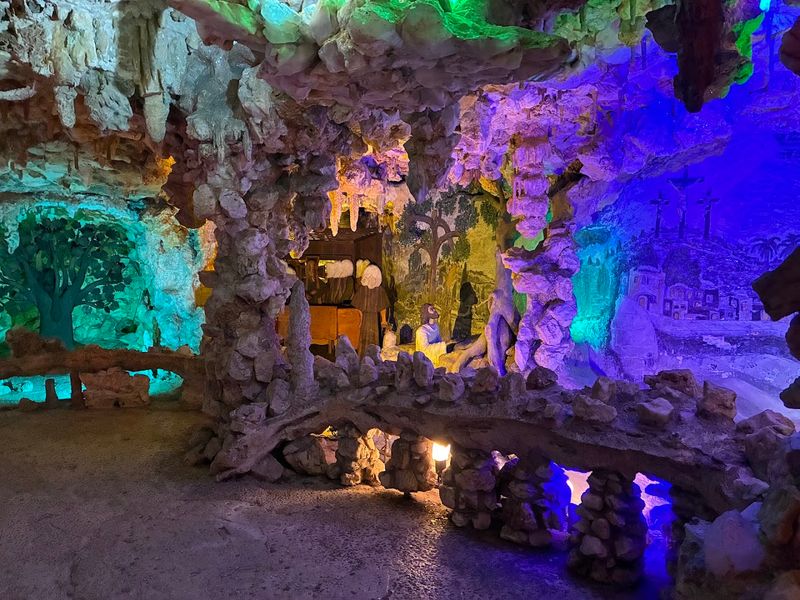
For many visitors, the Crystal Shrine Grotto is more than a historical curiosity or a piece of folk art. The space carries a spiritual weight that is hard to separate from its physical construction, partly because of the subject matter it depicts and partly because of the care that went into building it.
Near the cave entrance, a small shrine features a figure of Jesus, and visitors often leave coins or small offerings there. A sign-in book is available for those who want to leave their name and a short message.
Neither the donation nor the sign-in is required, and visitors of all backgrounds are welcome to explore the space on their own terms.
The combination of the enclosed cave, the crystal-covered walls, and the biblical narrative creates an environment that encourages quiet reflection. Whether or not a visitor shares the religious beliefs represented in the dioramas, the grotto communicates a clear message about the dedication of the person who built it and the story he wanted to preserve.
How Long Does A Visit Actually Take
Opinions on visit length vary more than expected for such a compact space. Some people move through the cave in about ten minutes, taking in each scene at a steady pace without stopping for extended periods.
Others spend closer to an hour, reading the informational sign at the entrance, examining the crystal work in detail, and spending time in the outdoor grounds after the cave walk.
The cave itself is small, so the time you spend there depends almost entirely on how deeply you engage with each diorama. A casual walk-through takes ten to fifteen minutes.
A more thorough visit that includes reading the background information, exploring the outdoor area, and sitting near Abraham’s Oak can easily stretch to forty-five minutes or more.
There is no rush either way. The grotto is open around the clock, and because it does not charge admission, there is no pressure to maximize any kind of paid experience.
Visitors set their own pace, which makes the whole outing feel relaxed regardless of how much time is available.
Memphis Has More Layers Than You Think
Memphis is most commonly associated with Beale Street, barbecue, and the birthplace of rock and roll. The Crystal Shrine Grotto represents a completely different layer of the city, one that has nothing to do with music or food but everything to do with craft, faith, and one person’s determination to create something lasting.
The grotto has been part of Memphis since the 1920s and has outlasted many of the city’s more publicized attractions. Its continued presence inside an active cemetery means it exists outside the usual tourist infrastructure, which is part of why it retains a quiet, unpackaged character that commercial attractions rarely manage to hold onto.
Travelers who make a point of finding places like this tend to leave with a more textured understanding of a city than those who stick to the main itinerary. Memphis rewards that kind of curiosity, and the Crystal Shrine Grotto is one of the clearer examples of what the city holds when you look past the obvious.
The Pond, The Bridge, And The Path In
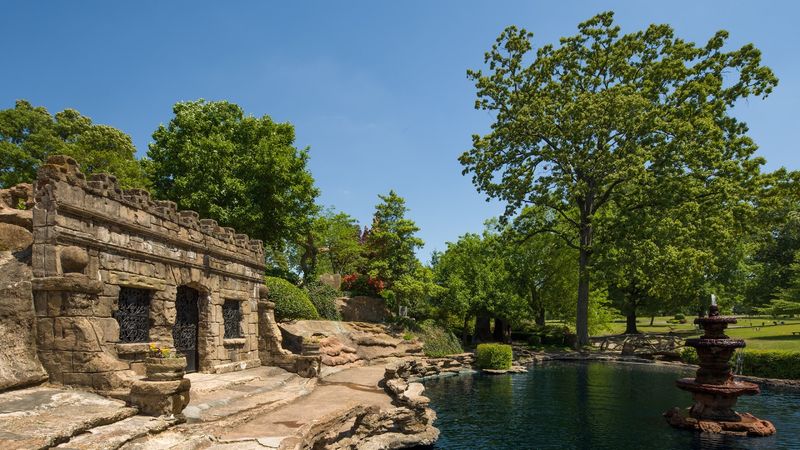
The approach to the grotto involves crossing a small bridge over a compact pond, which marks the transition from the open cemetery grounds to the grotto area. The pond has a fountain, and while the water runs green due to limited circulation, several large koi fish live there and can be spotted near the surface.
The bridge is narrow and adds a subtle sense of arrival to the visit. After crossing it, the path leads directly toward the grotto structure, with the outdoor features including the pond, Abraham’s Oak, and God’s Garden arranged around the central cave entrance.
The overall layout is small and walkable, covering an area that can be explored fully in a single short loop. The compact design means that even a brief visit covers everything the site has to offer.
For first-time visitors, taking a slow walk around the full perimeter before entering the cave gives a useful sense of how the different outdoor elements connect to the grotto itself.
Why This Place Deserves More Attention
There are not many places in the United States where a single artist spent decades hand-embedding crystals into a cave to tell a complete biblical narrative, and where the result has been preserved and kept freely accessible for nearly a century. The Crystal Shrine Grotto is genuinely unusual, and its low profile makes it even more worth seeking out.
The combination of factors that make it special, handmade construction, rare materials, spiritual content, free admission, and a location inside a working cemetery, adds up to something that does not fit neatly into any single category. It is part art installation, part religious monument, part geological display, and part historical landmark.
For anyone traveling through Memphis or living in the area who has not yet made the short drive to 5668 Poplar Ave, the grotto offers one of the more memorable free experiences the city has to offer. Some places earn their reputation quietly, over many years, and this is exactly that kind of place.
Where To Find This Hidden Grotto
The Crystal Shrine Grotto sits inside Memorial Park Cemetery at 5668 Poplar Ave, Memphis, TN 38120. The cemetery has been operating since 1925, and the grotto itself is one of its most defining features, though you would never guess it from the road.
Getting there requires a short drive through the cemetery grounds. GPS does not always drop you at the exact spot, so once you park along the roadside inside the cemetery, a short five-minute walk brings you to the center of the field where the grotto is located.
There are no large signs pointing the way, which adds a quiet, low-key character to the whole experience. The grotto is open 24 hours a day, every day of the week, and there is no admission fee.
For anyone passing through Memphis, this is the kind of stop that costs nothing but leaves a lasting impression.
Share this story