Deep in western Tennessee, there is a place where ancient people moved unimaginable amounts of earth by hand, without wheels, without metal tools, and without any of the technology we take for granted today. The result is a sprawling complex of earthen mounds that has stood for nearly 2,000 years, and it happens to be the largest Middle Woodland mound group ever found in North America.
Most people driving through Madison County have no idea this place exists, which makes it one of the most underrated historical destinations in the entire country. From a towering central mound that rises nearly 72 feet above the forest floor to a free museum packed with artifacts and a documentary that puts everything in context, this park delivers far more than anyone expects on a first visit.
The Scale of What Was Built Here
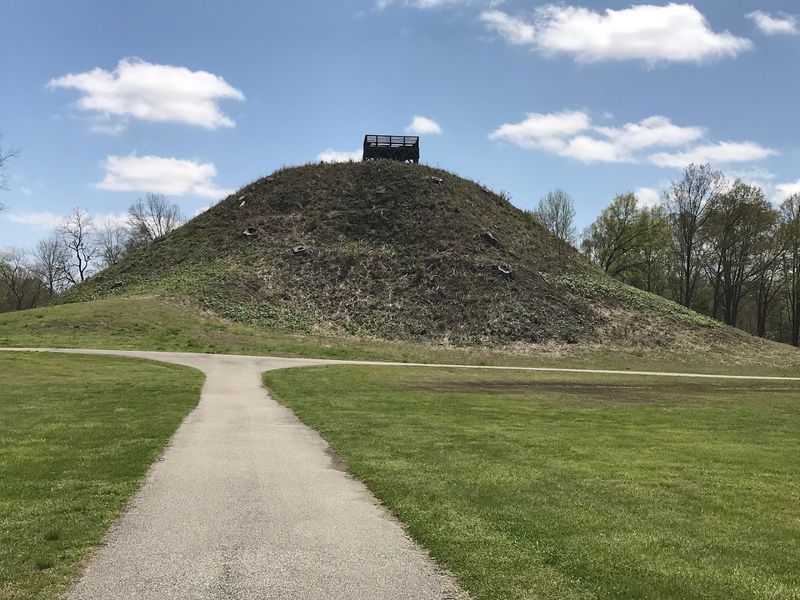
The numbers alone are enough to stop anyone in their tracks. Pinson Mounds contains at least 17 individual earthen mounds spread across its 1,200 acres, and the entire complex dates back roughly 2,000 years to the Middle Woodland period, roughly 1 AD to 500 AD.
What makes this site extraordinary on a national scale is that no other known Middle Woodland mound group in the United States comes close to matching its size. Archaeologists have studied the site for decades, and the consensus is clear: this is the largest of its kind anywhere in North America.
The people who built these mounds belonged to a culture that archaeologists call the Woodland tradition. They were not a wandering group but a sophisticated society with organized labor, ceremonial practices, and trade networks that stretched across a wide region.
The mounds themselves served ceremonial and burial purposes, not as permanent living structures.
Saul’s Mound: The Star of the Park
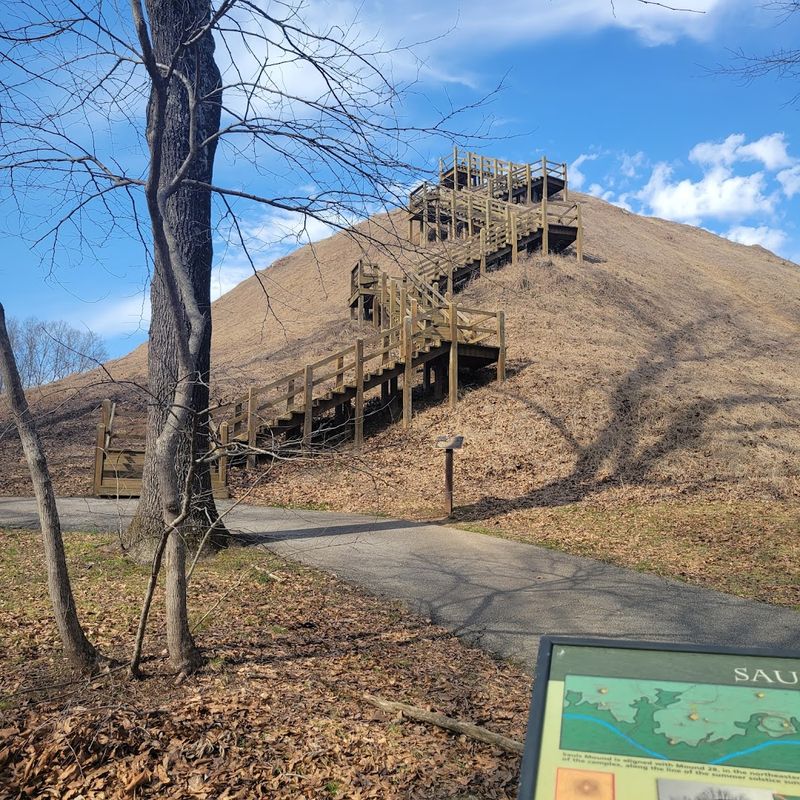
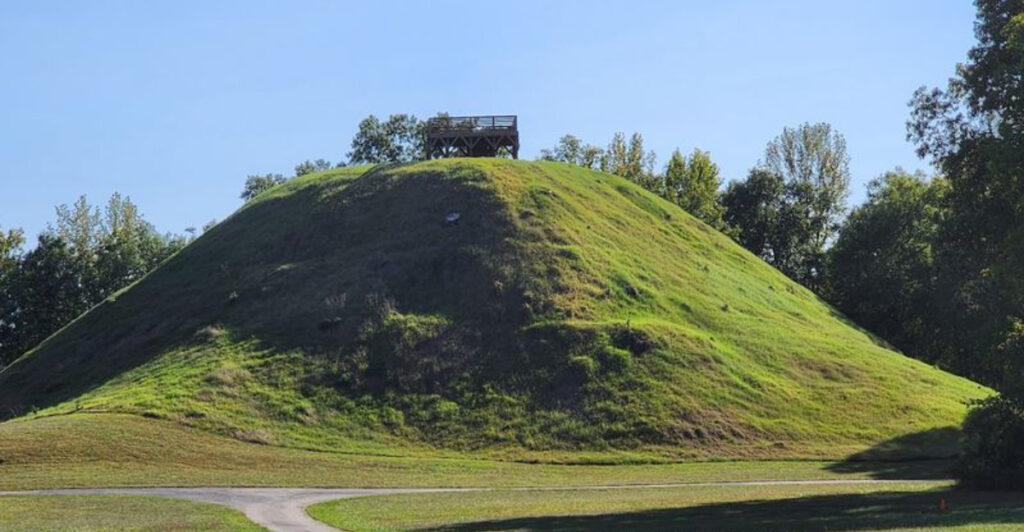
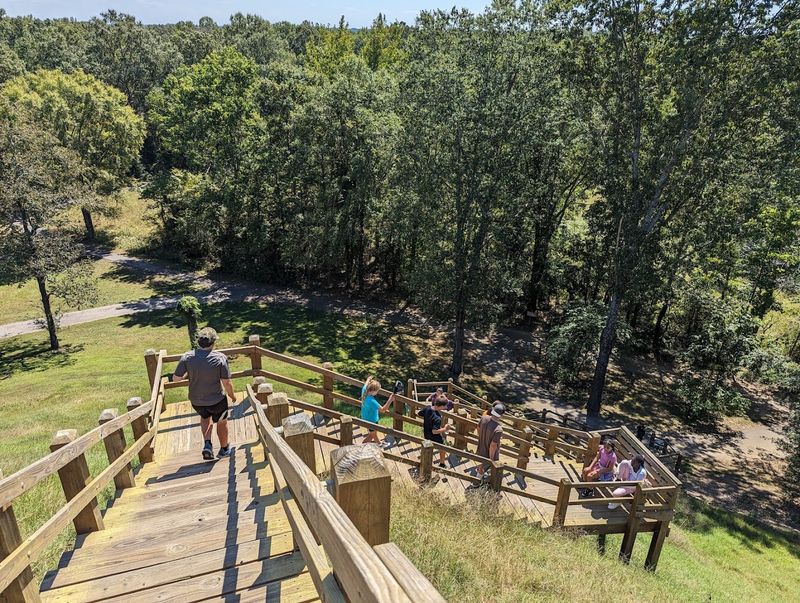
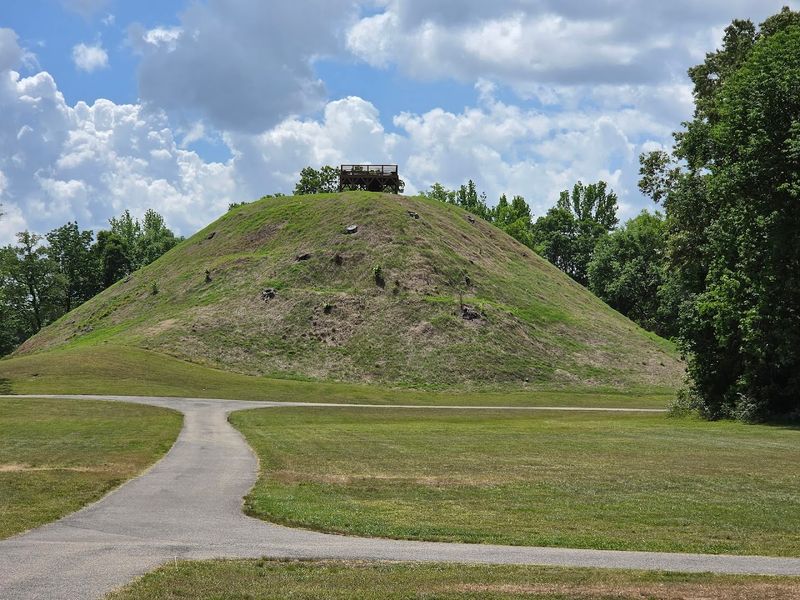
Standing at approximately 72 feet tall, Saul’s Mound is the centerpiece of the entire park and the second-tallest prehistoric mound in the United States. A wooden staircase with roughly 100 steps leads to the top, and there is a bench about halfway up for anyone who needs a rest.
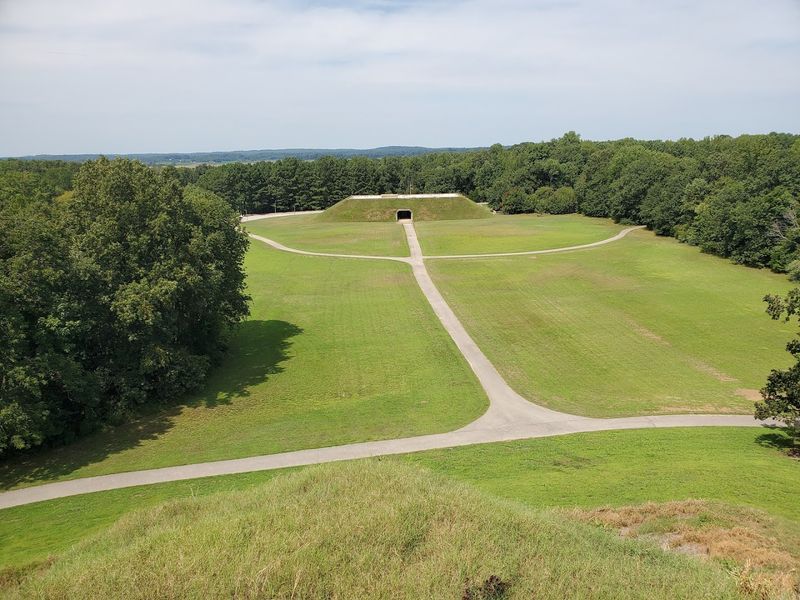
The climb is worth every step. From the top, the view stretches across the tree canopy in every direction, giving a perspective that connects the present moment to the people who shaped this land nearly two millennia ago.
The mound is wheelchair accessible up to a certain point via paved trails, and the staircase itself is well-maintained. Visiting in the early morning or late afternoon gives the best light for photos and helps avoid the heat during summer months.
Sturdy footwear is a practical choice for anyone planning to make the climb to the summit.
A Free Museum That Punches Above Its Weight
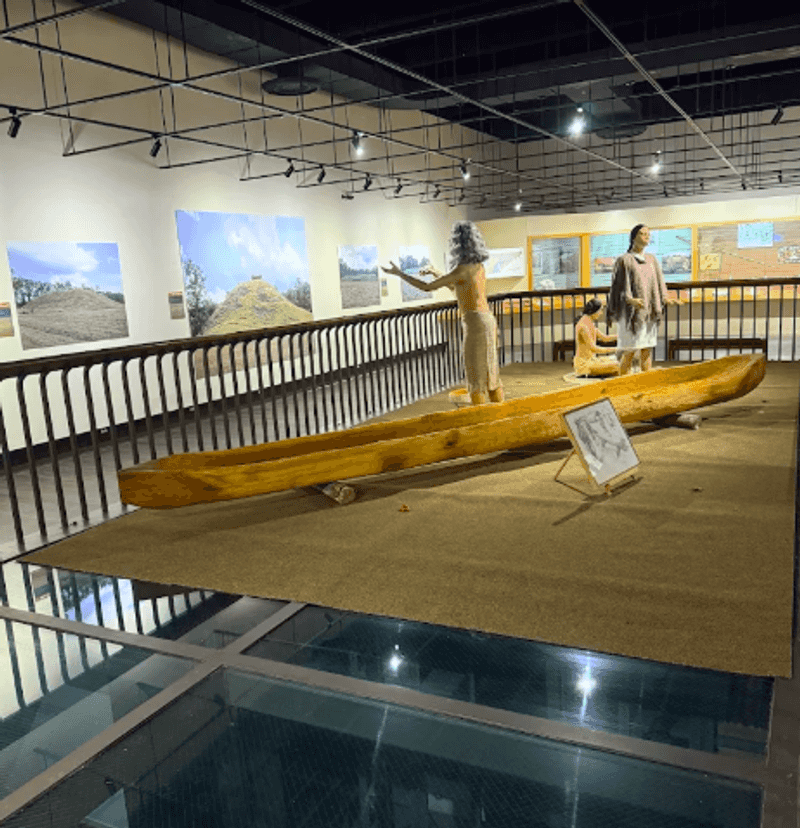
The on-site museum at Pinson Mounds is the kind of place that surprises people who expect something small and forgettable. The exhibits are well-organized, clearly labeled, and cover a broad range of topics from the tools and pottery used by Woodland people to the trade networks that connected them with distant cultures.
Artifact displays include items recovered from the mounds themselves, giving visitors a direct physical connection to the people who once lived and gathered here. Each display case is paired with explanatory text written at an accessible level, so the information lands clearly without requiring any background knowledge.
Admission to the museum is free, which is consistent with the park’s no-fee policy. Hours align with park hours, though the museum does close for the holiday period between Christmas and New Year’s Day.
Checking the park website before a winter visit is a smart move to avoid arriving during a scheduled closure.
The Documentary That Changes Everything
Before heading out on the trails, there is one stop that makes the entire visit more meaningful: the on-site theater. The park shows a documentary film that runs roughly 20 to 30 minutes and covers the history of the Woodland people, the purpose of the mounds, and the broader cultural context of the site.
The film does cover other mound-building locations beyond Pinson Mounds, which gives a wider picture of how widespread this tradition was across the eastern half of North America. For anyone who has never encountered this chapter of American prehistory before, the documentary is genuinely eye-opening.
Park rangers are often available after the screening to answer questions, and their depth of knowledge adds a layer of detail that no exhibit panel can fully replicate. The combination of the film followed by a ranger conversation is the most efficient way to get oriented before exploring the mounds and trails on foot.
Trails That Cover Every Skill Level
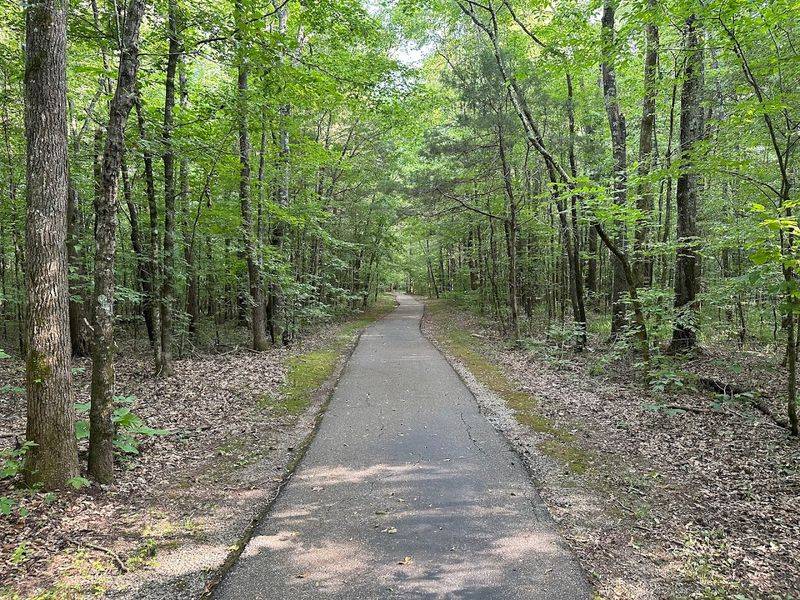
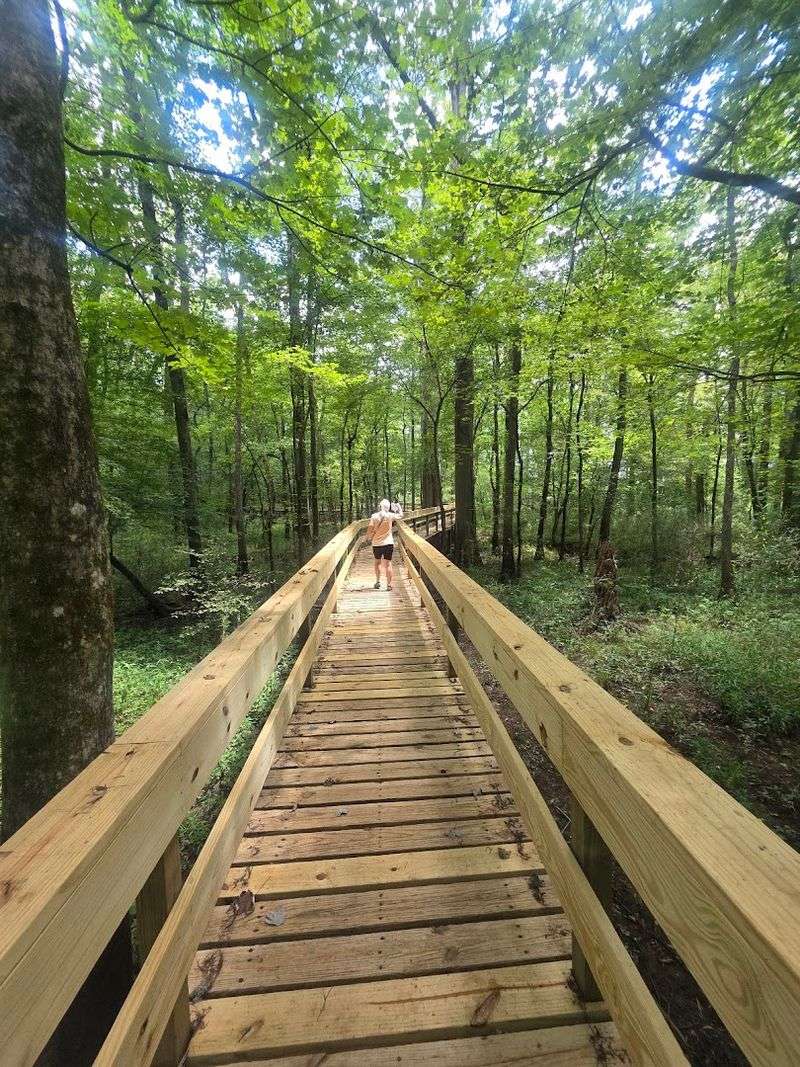
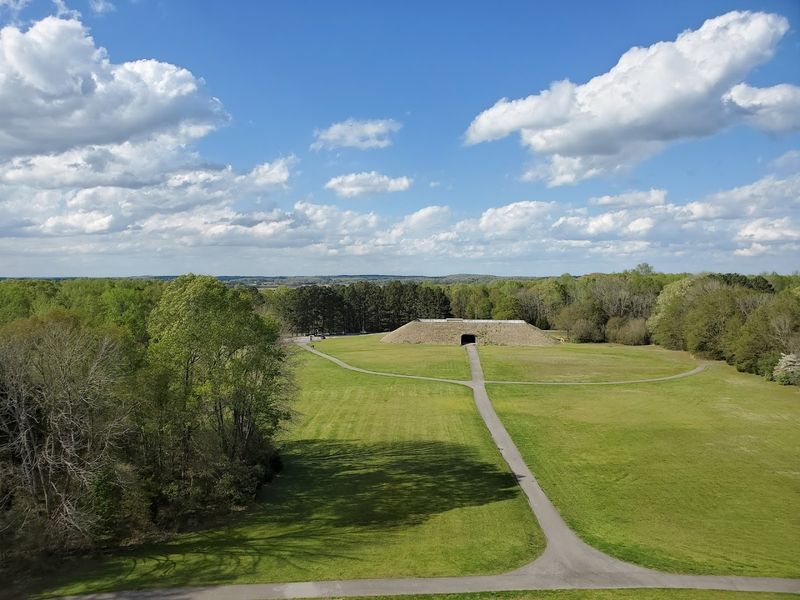
The trail system at Pinson Mounds offers more variety than most people expect from a site primarily known for archaeology. Paved paths run through the main areas of the park, making them accessible to strollers, wheelchairs, and anyone who prefers a flat, easy walk.
Bikes are also permitted on certain paved sections.
For those who want more of a workout, the wooded trails on the property include moderate hills and natural terrain. Covering all the trails in the park adds up to more than five miles of total hiking, which is a solid half-day of activity for anyone moving at a comfortable pace.
Each mound along the trail system is marked with an informational sign or plaque, so the walk doubles as a self-guided history lesson. Bug spray is strongly recommended during warmer months, as mosquitoes and horseflies are active in the wooded sections, particularly in late spring and summer.
The Archaeology Behind the Mounds
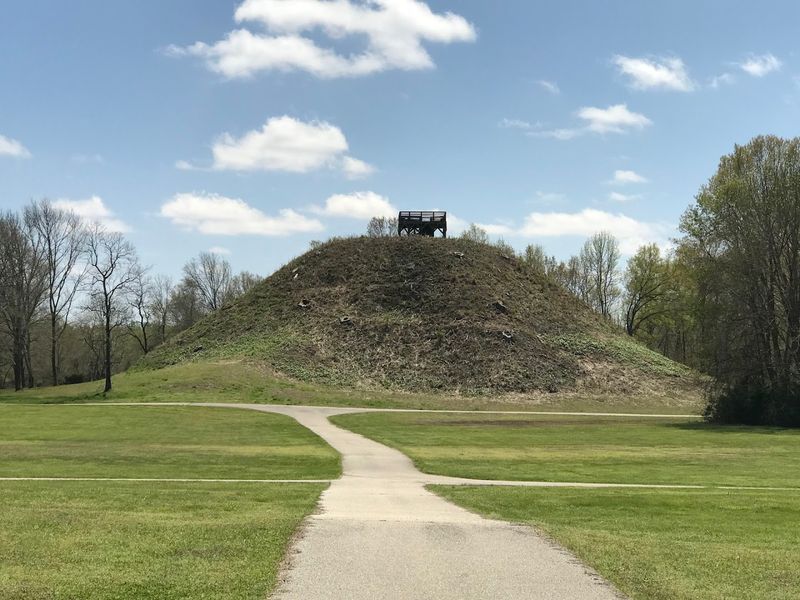
The Middle Woodland period in North America ran from roughly 100 BC to 500 AD, and the people of this era were far more organized and culturally complex than many history books suggest. At Pinson Mounds, the evidence of that complexity is on full display across 17 identified mound structures.
Archaeologists believe the site functioned as a ceremonial gathering place rather than a permanent settlement. Groups from a wide region would have traveled here for specific events tied to the seasons, burial rituals, and communal ceremonies.
The alignment of certain mounds with solar events like the summer solstice supports this interpretation.
Ongoing research at the site continues to refine the understanding of how and why the mounds were constructed. The sheer volume of earth moved by hand across the complex, without the use of metal tools or draft animals, remains one of the most remarkable engineering achievements in pre-Columbian North American history.
Twin Mounds and the Western Trail
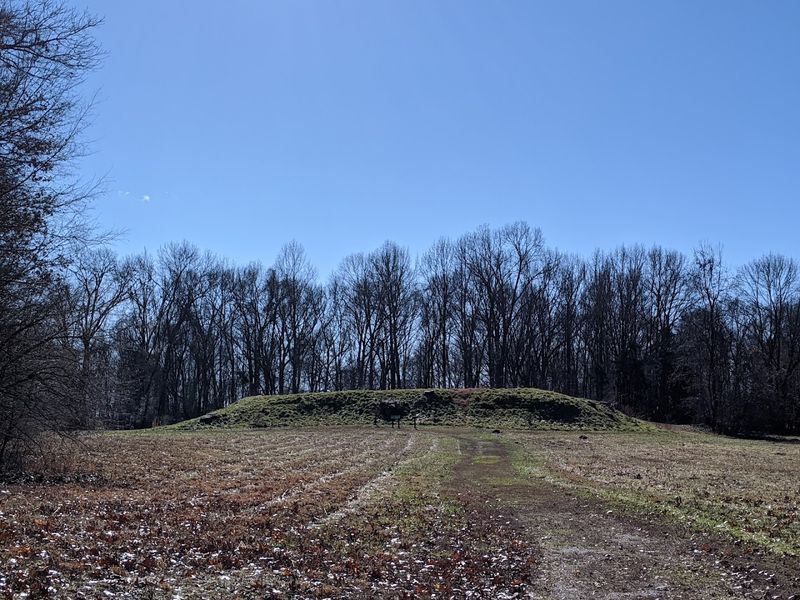
Near the far end of the park, accessed by a short gravel road close to the exit, sit two mounds that many visitors miss entirely. These structures are worth the extra few minutes it takes to reach them, and the informational signage at each one adds context that rounds out the overall picture of the site.
The western trail section of the park, which contains additional mounds, has experienced periodic closures for infrastructure improvements including parking lot construction. Checking the park website or calling ahead confirms whether that section is open before making the trip.
Even when portions of the western trail are unavailable, the main trail system provides more than enough to fill a full day of exploration. The park recommends hiking past all accessible mounds rather than stopping at just the largest ones, since each structure tells a slightly different part of the same long story of the people who built this place.
Picnic Areas, Playgrounds, and Family-Friendly Features
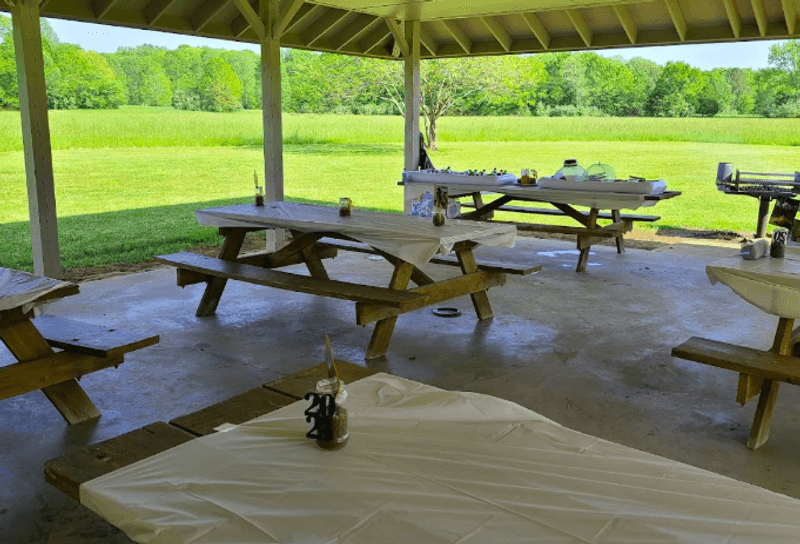
Pinson Mounds is not just a destination for history enthusiasts. The park includes two picnic pavilions, clean restroom facilities, and a playground that makes it a practical choice for families with young children who need a break from the trails.
The playground sits within easy reach of the main visitor area, and the picnic spaces are well-maintained with enough shade to make outdoor dining comfortable during warmer months. The combination of recreational facilities and historical content means the park can hold the attention of visitors across a wide range of ages and interests.
Pets are welcome in the park, which adds another reason for families to consider it as a full-day outing rather than a quick stop. The flat paved trails work well for leashed dogs, and the open grassy areas near the picnic zones give animals plenty of room to move around between the more structured parts of the visit.
Accessibility at a Historical Site
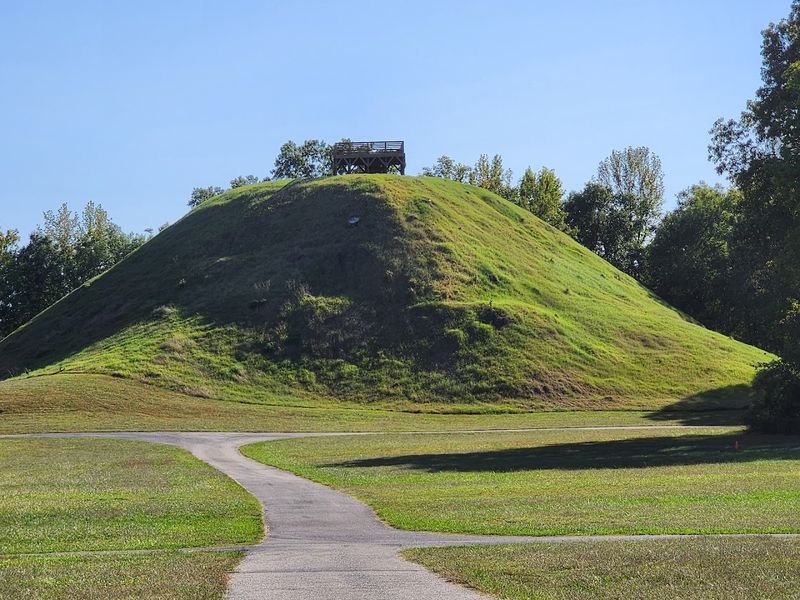
Accessibility at archaeological sites is often an afterthought, but Pinson Mounds has made a genuine effort to ensure the park works for visitors with limited mobility. The main paved trails are smooth and well-maintained, and wheelchair access extends to the base of the largest mound via these paths.
The museum and visitor center are also accessible, with facilities designed to accommodate a broad range of physical needs. Informational signage throughout the park is placed at readable heights, and the paved trail surfaces hold up well in most weather conditions.
The park’s accessibility features make it a strong option for multigenerational family visits where different members have different physical capabilities. A grandparent who cannot climb Saul’s Mound can still experience the museum, walk the main paved loop, and read the interpretive signs at each mound site, getting a full and meaningful visit without needing to tackle any difficult terrain.
Best Times to Visit and What to Expect
The park is open seven days a week from 7 AM to 5 PM throughout the year, which gives plenty of scheduling flexibility. Each season brings a different character to the landscape.
Fall is particularly striking when the tree canopy changes color across the 1,200-acre property, turning the trail walks into something visually dramatic.
Spring and early summer bring lush greenery but also the most active insect populations. Bug spray is not optional during those months; it is a practical necessity for anyone spending more than an hour on the wooded trails.
Late summer mornings, before the heat peaks, are a good window for visiting during July and August.
Winter visits are quieter and offer a different kind of appeal. The bare trees open up longer sight lines across the mound field, and the reduced crowds mean the park often feels like a private experience.
Just confirm museum hours before a winter trip, as the holiday closure runs from Christmas through New Year’s.
The Role of Park Rangers
The rangers at Pinson Mounds are one of the most consistent highlights of a visit to the park. Their knowledge of the site goes well beyond the basics covered in the museum exhibits, and they are genuinely enthusiastic about sharing that depth with anyone who asks.
Stopping at the visitor center before heading out on the trails is the best way to connect with a ranger. They can provide a free printed map of the park, point out which trails are currently open, and flag any sections under maintenance or seasonal closure.
That five-minute conversation often saves a lot of unnecessary backtracking later in the visit.
Rangers also run occasional special programming at the park tied to specific dates or seasons. The summer solstice, for example, is a date of particular archaeological significance at Pinson Mounds due to the alignment of certain structures.
Checking the park’s event calendar before a visit can turn a standard trip into something more memorable.
How This Site Fits Into American Prehistory
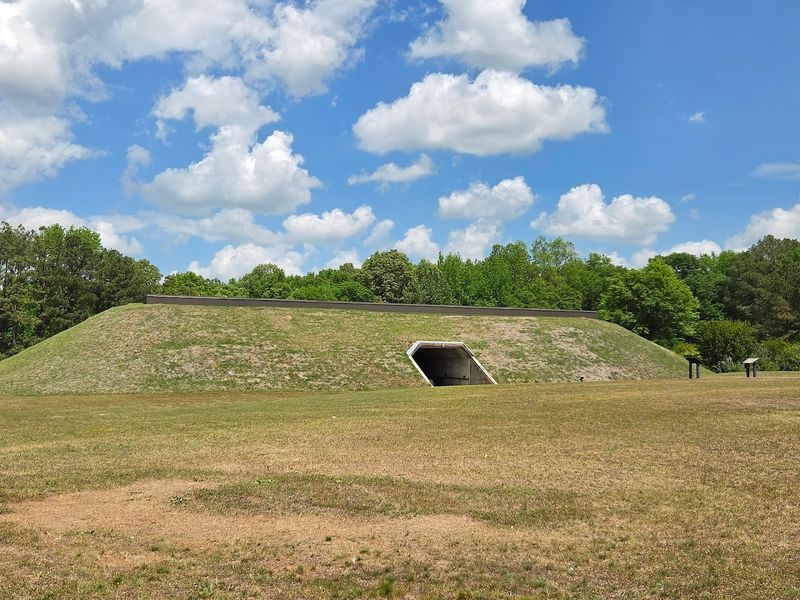
Most Americans learn about ancient mound builders through a handful of famous sites, but the broader story of mound-building cultures in North America is far larger and more complex than any single location can convey. Pinson Mounds fits into a regional network of Middle Woodland sites that stretched across much of the eastern United States.
The Hopewell tradition, which is the cultural framework most closely associated with Pinson Mounds, was characterized by long-distance trade, elaborate burial practices, and the construction of large earthworks. Artifacts found at Pinson Mounds include materials that originated hundreds of miles away, which confirms that the people here were connected to a wide cultural network.
Understanding this context transforms how the mounds read on the landscape. These are not isolated curiosities but physical evidence of a sophisticated, interconnected society that thrived for centuries before European contact.
That reframing is part of what makes the documentary and museum so valuable before heading out onto the trails.
Why This Park Deserves More Attention
For a site of this historical magnitude, Pinson Mounds remains remarkably under the radar. Tennessee has no shortage of well-known attractions, and that crowded field means places like this one get overlooked by travelers who do not know to look for them.
The combination of free admission, well-maintained facilities, strong educational programming, and genuinely significant archaeology makes Pinson Mounds one of the most complete and rewarding state park experiences in the region. There are very few places in the country where visitors can walk among 2,000-year-old earthworks, climb to the top of the second-tallest prehistoric mound in the nation, and watch a documentary about it all, completely free of charge.
The park rewards repeat visits as well. With over five miles of trails, multiple distinct mound sites, seasonal programming, and a gift shop with rotating inventory, there is always something new to explore.
For anyone within driving distance of western Tennessee, this is a destination that earns its place on the list.
Where to Find This Ancient Wonder
Pinson Mounds State Archaeological Park sits at 460 Ozier Rd, Pinson, TN 38366, tucked into the rolling landscape of Madison County in western Tennessee. The park covers roughly 1,200 acres and is open Monday through Sunday from 7 AM to 5 PM year-round, with the exception of a brief holiday closure around Christmas and New Year’s.
Getting there is straightforward from Jackson, Tennessee, which is about 10 miles to the north. The drive takes roughly 20 minutes from the Jackson area, making it a very manageable day trip from anywhere in the region.
There is no entrance fee to visit the park, which makes it one of the best free destinations in the state. The website at tnstateparks.com/parks/pinson-mounds offers a digital trail map that is worth downloading before arrival, especially for those who want to cover the full trail system across the property.
Share this story