 Unearth The Voyage
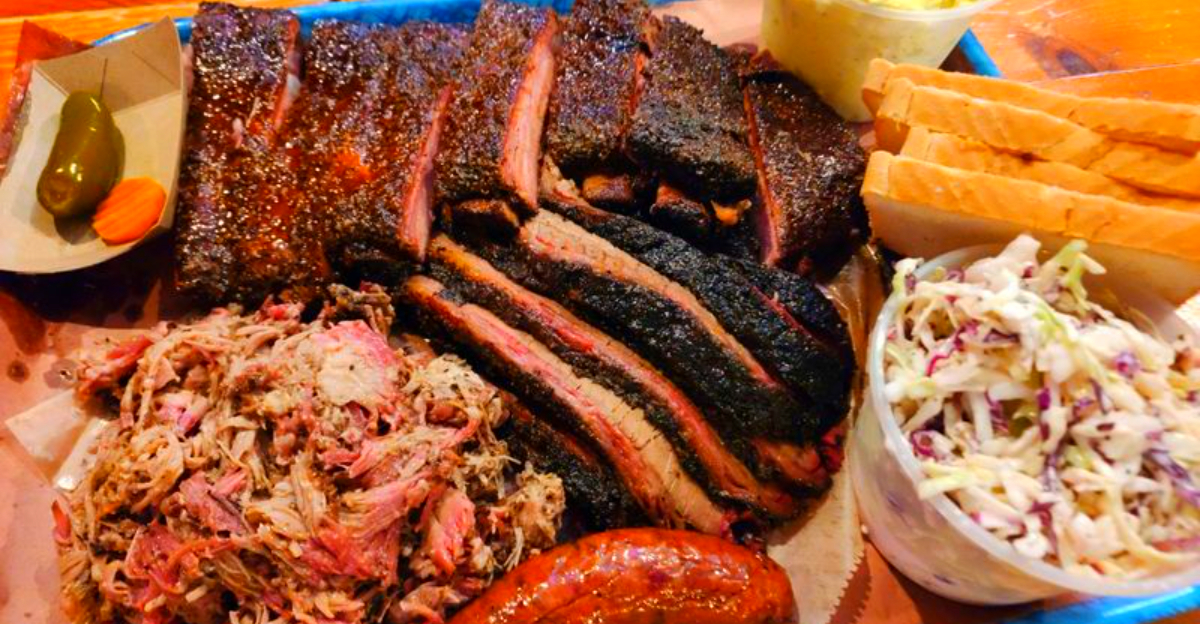
Step onto East 11th just after sunrise and you will smell it first: oak smoke curling around a line of people already swapping tips and counting the minutes. Franklin Barbecue is the rare place where waiting becomes part of the story, not a hurdle to the meal.
The doors open at 11, but the real show starts hours earlier at the pits, where patience coaxes fat into velvet and bark into thunderous crunch. If brisket has a summit, it is carved on this block in Austin.
Line Culture at Dawn

The line at Franklin begins as a quiet ribbon before sunrise, a dozen locals and travelers comparing notes on weather, wait times, and favorite cuts. Folding chairs appear like flags.
Someone pours coffee from a dented thermos, the steam catching oak smoke drifting from behind the building. It smells like pepper and promise.
Strangers become temporary neighbors, swapping playlists and sunscreen, learning the names of dogs on leashes that wag through the queue.
Staff make early rounds with clipboards, taking pulse checks on planned orders and giving gentle warnings about sell-out risk. There is relief in the choreography, a sense that your hunger has been seen and scheduled.
Lines usually thin after 1:30 pm on weekdays, but weekends can stretch beyond three hours. Bring water, a hat, and patience.
The wait becomes a primer, sharpening your senses so the first bite lands like a chord.
The Brisket, Slice by Slice
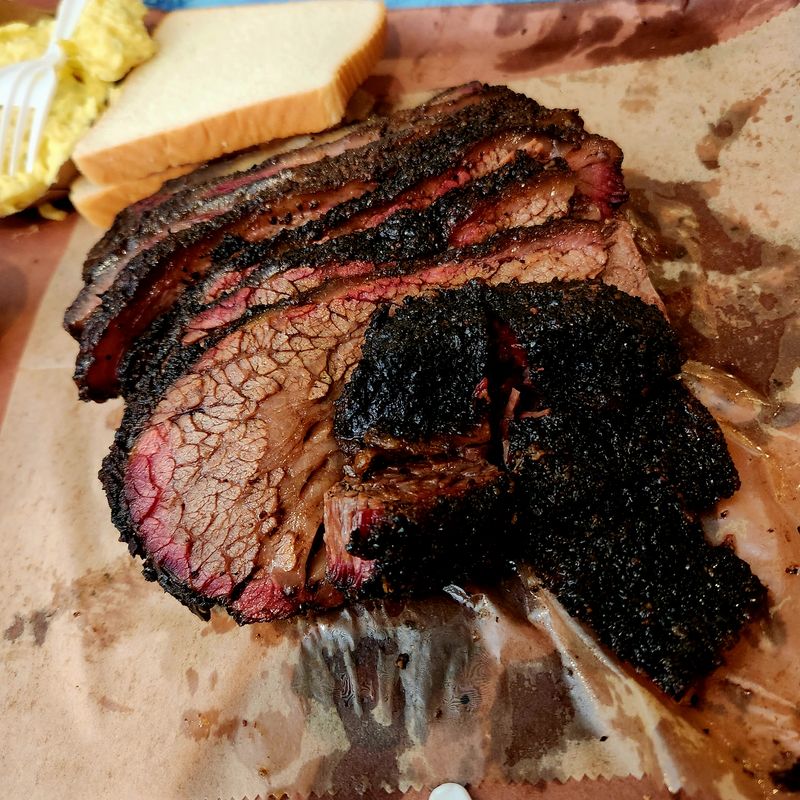
On the block, the brisket looks like a small meteor, bark blackened and peppery, edges glistening. A long knife glides through with almost no resistance, revealing a faint crimson ring and fibers that sigh apart.
Lean slices flex but do not crumble. Moist slices glimmer with beadlike fat that vanishes on the tongue.
The bark crunches, then dissolves into espresso-bitter, pepper-hot whispers.
Ask for a mix of lean and fatty. Notice how the smoke reads as oak, not campfire, round and clean.
Warmed beef tallow adds a gloss that feels decadent without tipping greasy, a final brushstroke that locks in heat and aroma. It is balanced enough that sauce becomes an accent, not a rescue.
The first bite is quiet, then widening, then you blink like you have adjusted to new light. Suddenly the hours outside make sense.
Inside the Pits: Oak, Fire, Patience
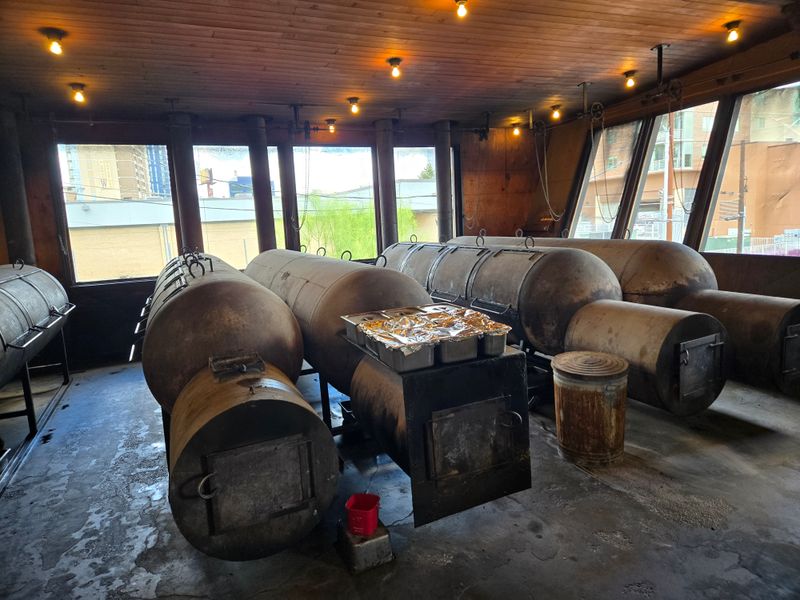
Back by the pits, post oak is stacked like books, pale and clean, split to a rhythm learned by feel. Fires sit low and steady, not roaring, coaxed with small adjustments that keep the draw even.
You hear a soft vacuum of air moving through steel. Lids lift and a cloud escapes, sweet and dry, not acrid.
Meat rests on grates with a certain hush, as if the heat negotiates rather than bullies.
Time is measured in texture, not minutes. Pit hands nudge splits with a poker, listening for that hollow note that means the wood is right.
Temperature lives at 250 to 275, a window wide enough for art but narrow enough for discipline. Hours pass.
Fat renders, collagen loosens, bark tightens, and the brisket carries its own weather inside. The smoke here writes sentences rather than headlines.
Ordering Like a Pro
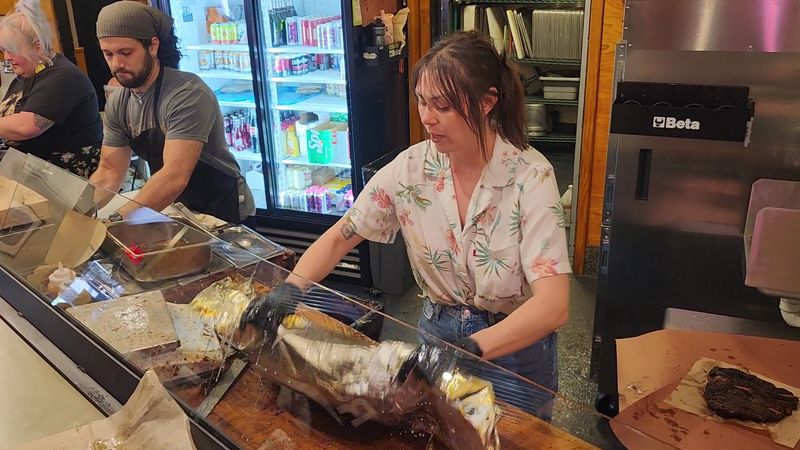
At the counter, everything moves with friendly precision. Meats are sold by the pound, so think in quarter-pound increments if you are sampling broadly.
A balanced tray: half pound brisket, one jalapeno cheddar link, two pork ribs, plus a scoop of beans. Add pickles, white onions, and bread for texture control.
Keep your order tight so you do not overcommit before the brisket has its say.
Weekday to-go orders from the trailer can skip the line but carry a five pound minimum, a splurge that works well for groups. Staff will check inventory while you wait and steer you away from anything fading fast.
Ask for end cuts if you love bark. If you catch the espresso sauce, try a fingertip taste before committing.
It is bold, not sugary, and plays well with the fatty slices.
Sausage, Ribs, and the Sleeper Turkey
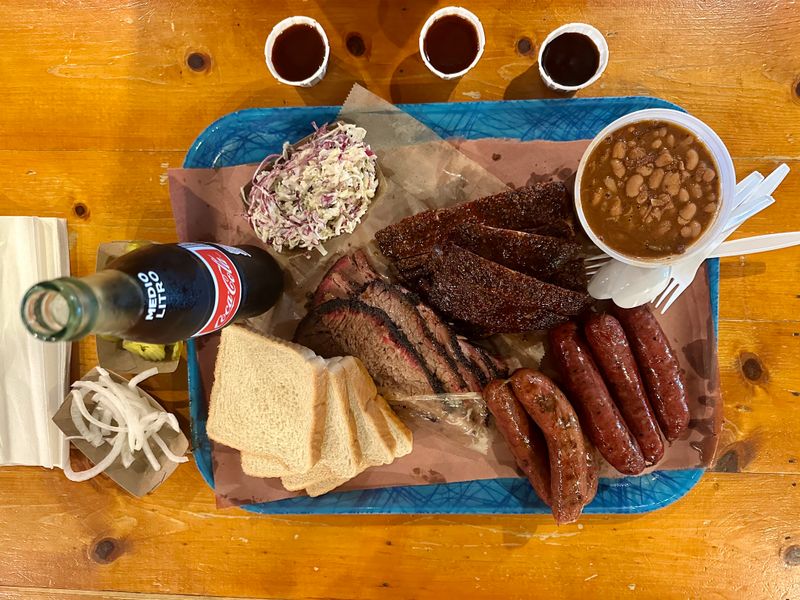
The jalapeno cheddar sausage snaps with a confident pop, cheese blooming into heat that lingers but never shouts. Pork ribs wear a mahogany sheen, tug-off-the-bone rather than collapse, with pepper and thyme poking through the smoke.
Turkey is the quiet assassin. Brined and kissed by oak, it slices almost translucent and drinks in sauce calmly.
Build a tray that zigzags between textures. Alternate sausage heat with brisket richness.
Break the rhythm with turkey’s clean lines, then return to ribs for chew. A simple white bread fold becomes a vehicle for balance.
Franklin is brisket first, yes, but the supporting cast raises the average bite so high you start negotiating with your future self about a second tray. That is how a lunch becomes a story you text people about from the table.
Sauces, Sides, and Small Luxuries
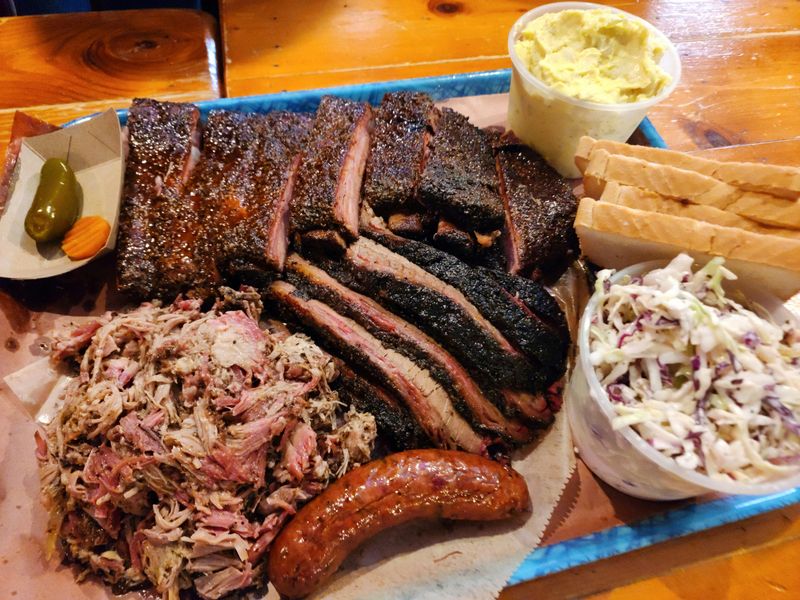
Franklin’s sauces behave like punctuation. The classic is tangy and light.
The spicy carries a clean burn that brightens fatty bites. The espresso sauce is the conversation starter, bittersweet and roasty, perfect for shredded brisket or turkey sandwiches.
Beans lean savory with little sparks of rendered fat. Potato salad is straightforward, cool and mustardy, not trying to steal the show.
Small luxuries matter. Fresh pickles and white onions reset the palate.
Bread buffers salt and smoke. A slice of key lime pie lands like a cool hand on a warm forehead, balanced and bright.
You will hear seasoned regulars say the meat needs no sauce, and they are not wrong, but a careful swipe can push a bite from great to calibrated. Think toolkit, not crutch, and you will eat smarter.
The Room: Retro Glow and Hum
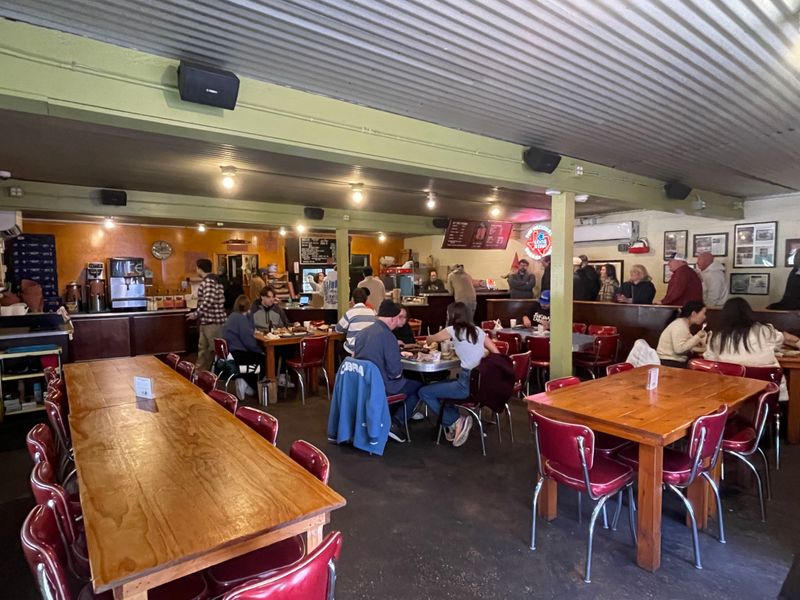
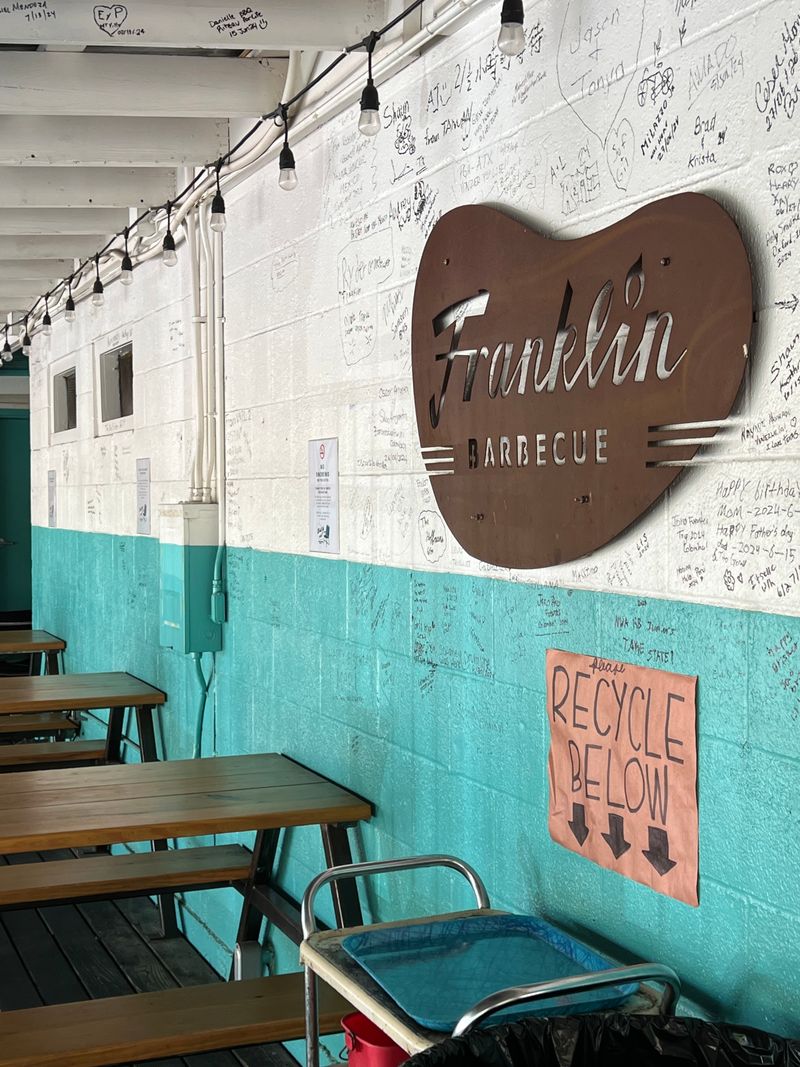
Inside, the teal walls catch daylight and bounce it into a soft, retro glow. The room hums with a steady clatter of trays, soft laughter, the rip of butcher paper.
Communal tables turn strangers into neighbors for a lunch’s length. It feels unpretentious, a place built for meat and conversation rather than performance.
Sauce bottles and napkin stacks sit like practical centerpieces.
You do not linger because of rules. You linger because finishing takes time when each bite demands attention.
Staff float through with the confidence of people who have solved the logistics puzzle a thousand times. It is efficient without being sterile.
If you are lucky, you will spot Aaron Franklin sliding between tables, answering questions with the patience of someone still in love with the process after all these years.
Why the Wait Is Worth It: Context and Cred
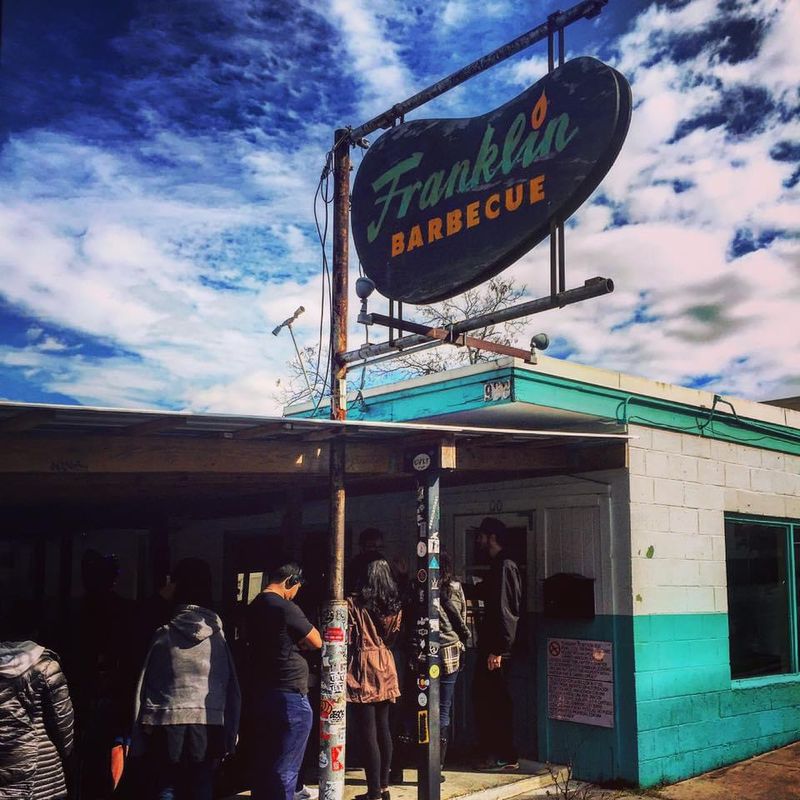
Franklin’s line is not a gimmick. It is supply meeting devotion.
Doors open 11 am to 3 pm, Tuesday through Sunday, or until sellout, and sellout happens often. Google’s 4.7 rating across nearly seven thousand reviews tracks with your conversations in line.
People fly in, schedule work trips around it, and go home plotting a return. The consistency is the headline.
Texas tourism data shows Austin hosting over 30 million domestic visitors annually in recent years, a current that carries new brisket pilgrims daily. Franklin sits inside that stream like a rock that shapes flow rather than fights it.
Awards brought attention. Execution kept it.
The math is simple. Limited hours plus meticulous cooking plus a fan base that treats lunch like a festival equals a line that doubles as proof of concept.
The wait becomes credential, not obstacle.
Smart Timing and Survival Tips
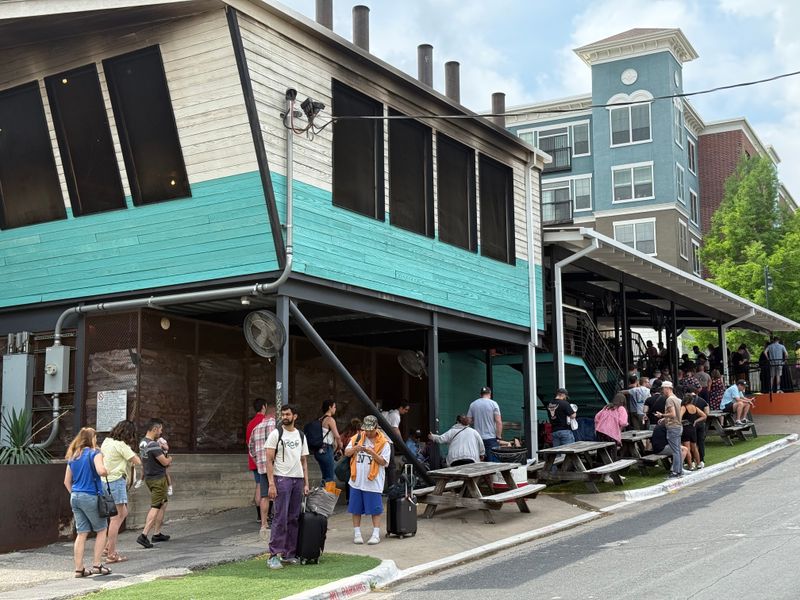
Arrive early. On weekends, 8 to 9 am lands you in the safer zone for full menu access.
Weekdays can be kinder, especially with bad weather, when waits sometimes slip under an hour. Bring a compact chair, water, sunscreen, and a small cooler if you plan to linger afterward.
A paperback beats your phone when the sun makes screens glare.
Split a tray with friends so you can taste widely without tapping out. Order quarter pounds, then add more if your eyes were honest about your stomach.
If you are tight on time, consider the to-go trailer’s minimum or pre-order catering for a bigger group. Staff will tell you what is nearly gone, so listen closely.
The best tip is embracing the wait as part of the flavor. Stress dulls smoke.
Patience sharpens it.
After the Tray: What Sticks
When the last slice disappears, the paper tells a story in grease constellations. Pepper freckles, a half ring of onion, the green echo of a lone pickle.
Your fingers smell faintly of oak and pepper even after a wipe. There is a hush that follows a great meal, a recalibration of appetite and mood.
Outside, the line has thinned. People still arrive, hopeful, scanning the SOLD OUT board.
Later, other briskets will be good, sometimes very good, but your memory keeps reaching back to this bark, this tenderness, this calm smoke. Franklin does not reset Texas barbecue.
It clarifies it. You will remember strangers who became line mates, the cheerful clipboard check, the first slice gliding loose and perfect.
That is what sticks: food that earns the hours, and a place that feels utterly confident in how it does so.



