 Unearth The Voyage
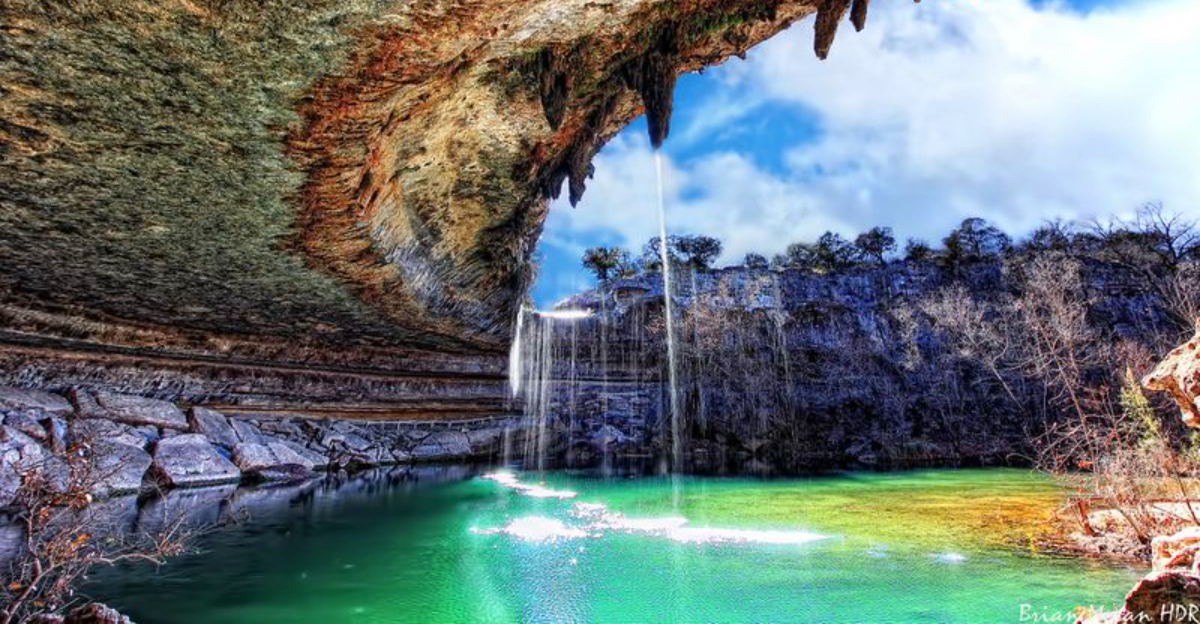
There is a place in Texas where the ground once caved in and left behind something so stunning that people drive hours just to catch a glimpse of it. A jade-green pool sits quietly inside a collapsed grotto, ringed by mossy limestone cliffs and fed by a waterfall that cascades nearly 50 feet down.
I had seen photos of it online for years, and honestly, I thought they were edited. They were not.
This spot is real, it is wild, and it is one of the most jaw-dropping natural settings I have ever visited in my life. Pack your bags, because this one is absolutely worth the trip.
Where Exactly You Will Find This Natural Wonder
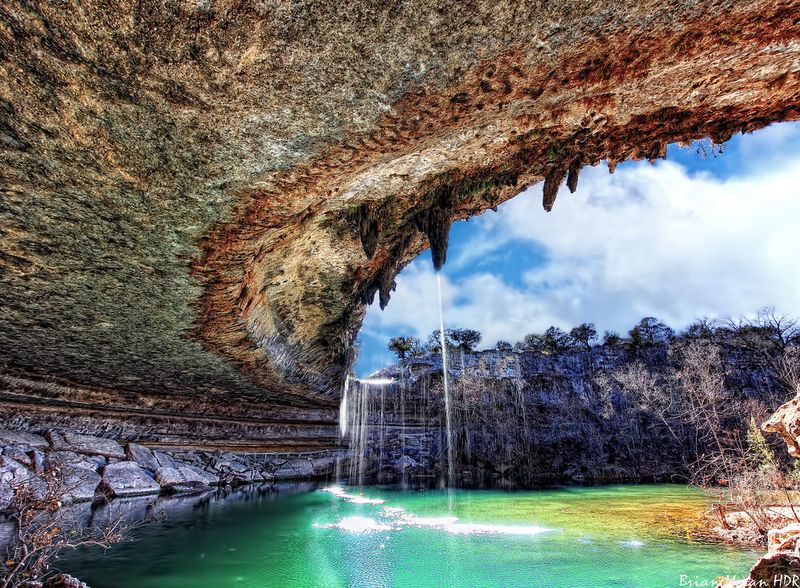
Tucked into the rolling Texas Hill Country, Hamilton Pool Preserve sits at 24300 Hamilton Pool Rd, Dripping Springs, TX 78620, about 23 miles west of Austin. The drive out there is half the experience, winding through cedar-covered hills and open ranch land that feels far removed from the city buzz.
The preserve is managed by Travis County, and it has earned a reputation as one of the most photogenic natural sites in the entire state. Visitors traveling from as far as Oklahoma have made the journey specifically to see this place, and most agree it was worth every mile.
The pool itself formed thousands of years ago when the ceiling of an underground grotto collapsed, leaving a dramatic amphitheater of rock with a natural pool at the bottom. The address is straightforward to find using GPS, and the road leading to the entrance is well-marked.
Parking is available on-site, shaded by mature trees, and the restrooms near the lot are kept reasonably clean. First-time visitors often say the setting feels nothing like what they expected from Texas, and that surprise alone makes it memorable.
The Geology Behind the Grotto
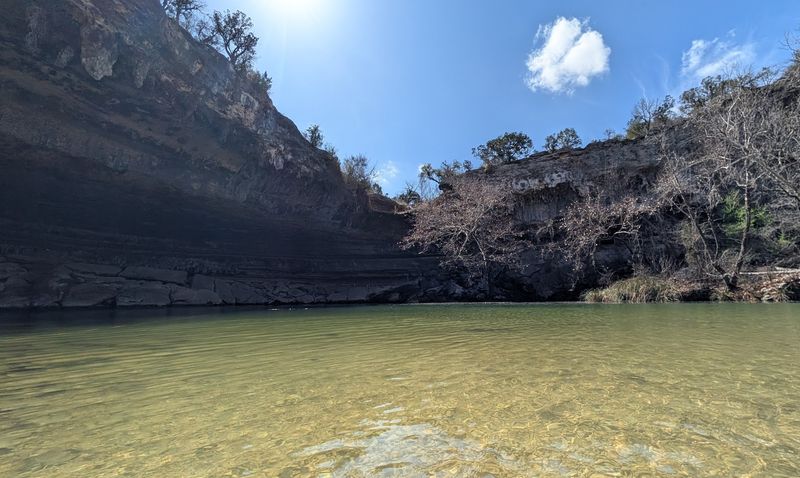
Long before anyone ever swam here, nature was quietly doing something extraordinary underground. The pool at Hamilton Pool Preserve exists because of a geological process that unfolded over millions of years, as water slowly dissolved the soft limestone beneath the surface of the Hill Country plateau.
Over time, an underground cavern grew large enough that its roof could no longer support its own weight. When that ceiling finally gave way, it left behind the horseshoe-shaped grotto you see today, with sheer walls of layered limestone rising on three sides and lush ferns clinging to every damp crack and ledge.
The overhanging rock that frames the pool is made of the same Edwards Plateau limestone that defines much of Central Texas. Geologists estimate the collapse happened tens of thousands of years ago, though the exact timeline is hard to pin down.
What remains is a cross-section of ancient earth history that you can actually stand inside and look up at. The rock layers visible in the cliff face tell a story of shallow seas, shifting sediment, and deep time that no museum exhibit could replicate as vividly.
The 50-Foot Waterfall and What to Expect
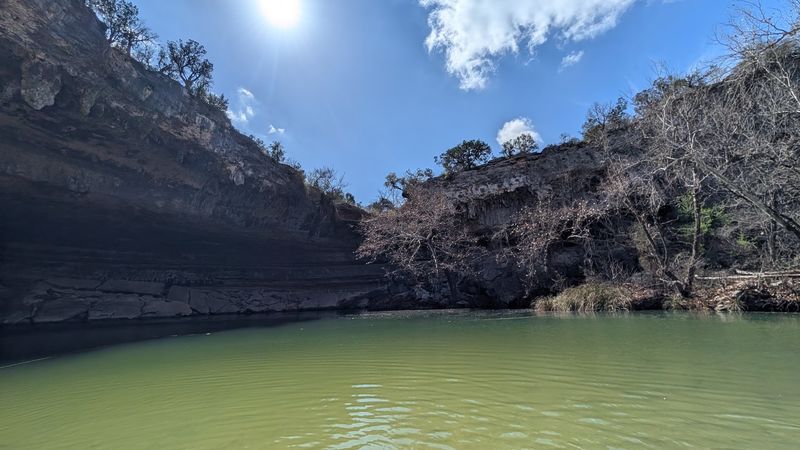
The waterfall at Hamilton Pool Preserve is fed by Whiting Creek, which flows over the edge of the grotto’s limestone lip and drops about 50 feet into the pool below. When the water is running strong, usually after good rainfall or during the spring season, the falls are genuinely breathtaking, filling the grotto with a soft roar and a cool mist that drifts across the surface of the pool.
Visitors who have come from Oklahoma and other distant states specifically to see the waterfall in full flow often describe it as one of the most peaceful natural sounds they have ever heard. The catch is that the waterfall is entirely rain-dependent, meaning it can slow to a trickle or nearly disappear during dry stretches and Texas droughts.
The best months to see the waterfall performing at its most impressive are typically March through May, when spring rains keep the creek well-fed. Summer visits can still be beautiful, but the falls may be reduced.
Checking recent visitor photos or the preserve’s official website before your trip gives you a realistic sense of current conditions. The waterfall frames every photo taken at this spot, even when it is running gently.
Swimming in the Pool: Rules, Conditions, and Tips
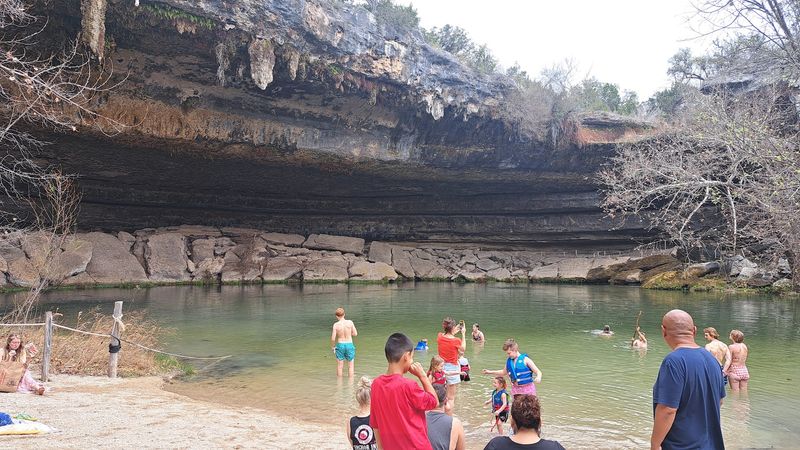
Getting into that turquoise water is the main reason most people make the reservation, and on the right day, it absolutely delivers. The pool is cool and clear, fed by the waterfall and spring-filtered water, and on warm summer days it feels like the most refreshing thing on earth.
Swimming is not always permitted, though. The preserve monitors water quality regularly, and if bacteria levels rise above safe thresholds, swimming gets suspended until conditions improve.
Water levels also fluctuate with rainfall, which can affect both clarity and depth. The preserve posts swim status updates online, so checking before you go saves disappointment.
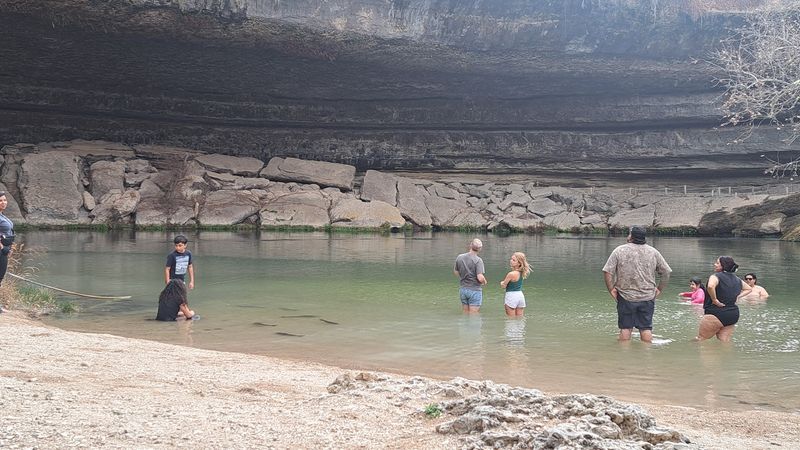
When swimming is open, the experience is genuinely special. Fish, including minnows, perch, and the occasional catfish, share the water with you without any fuss.
There are no lifeguards on duty, so swimming at your own risk is the standard. No glass containers, no pets, no drones, and no feeding the wildlife are among the firm rules enforced by staff.
Bringing a float is a great idea for lazy afternoons in the pool. The water tends to run colder in spring and warmer by midsummer, so packing a light layer for after your swim is always a smart move.
The Hike Down to the Grotto
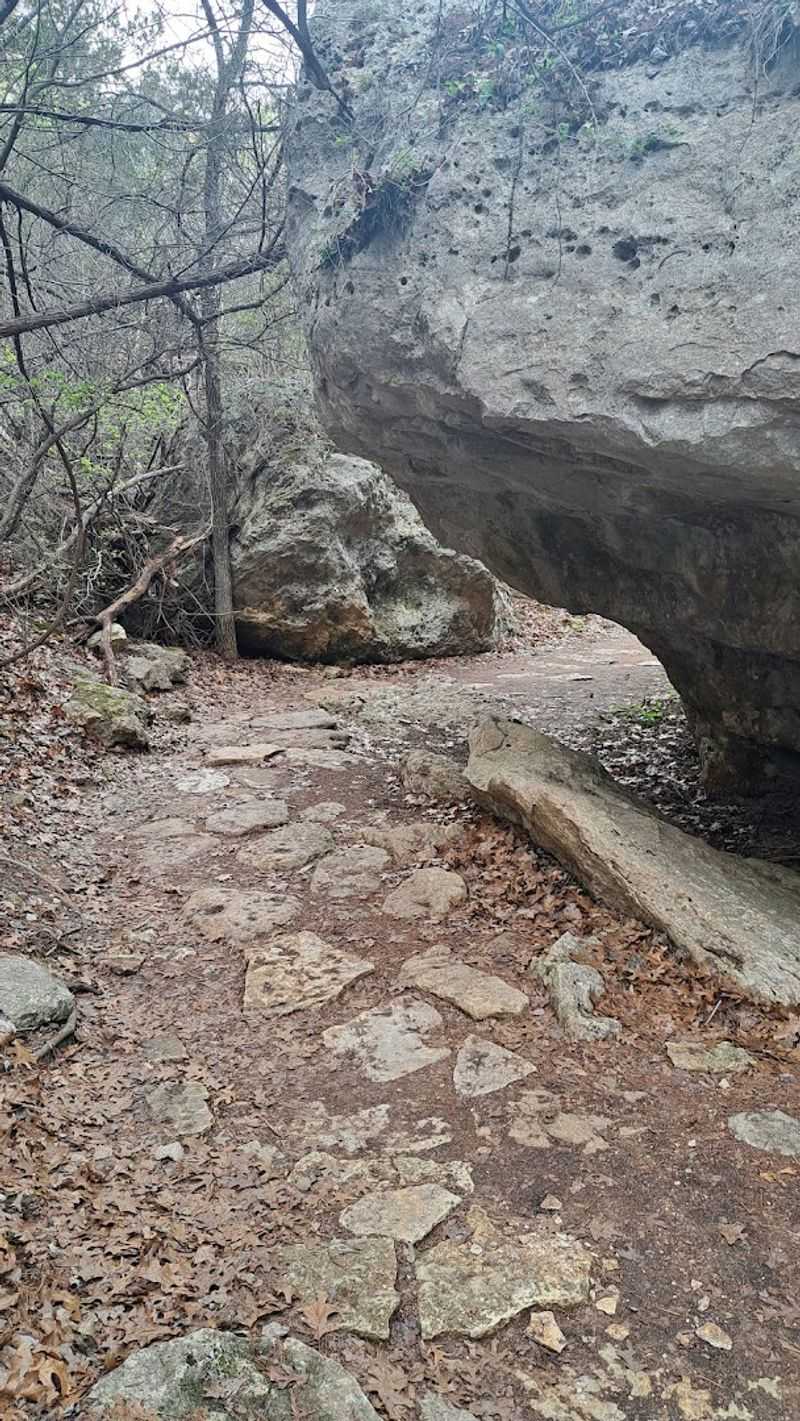
The trail from the parking lot down to the pool is short but earns its keep. At roughly a quarter mile one way, it does not take long to complete, but the path includes stone steps, natural rock obstacles, and a few sections that get slippery after rain.
Walking sticks are available at the trailhead entrance, and borrowing one is genuinely useful on the steeper sections.
The vegetation along the trail is lush and varied, with cedar, oak, and sycamore trees providing shade for most of the descent. Ferns line the lower sections near the creek, and the air gets noticeably cooler and more humid as you approach the grotto.
The sound of water starts to reach you before the pool comes into view, which builds anticipation nicely.
Families with young children should know that toddlers may need to be carried on parts of the trail, especially on the way back up, which is steeper than the descent feels. Sturdy footwear with grip is strongly recommended over sandals or flip-flops.
The whole round trip takes about 30 minutes at a relaxed pace, making it accessible even for visitors who are not regular hikers. The payoff at the bottom makes every careful step worthwhile.
The Trail to the Pedernales River
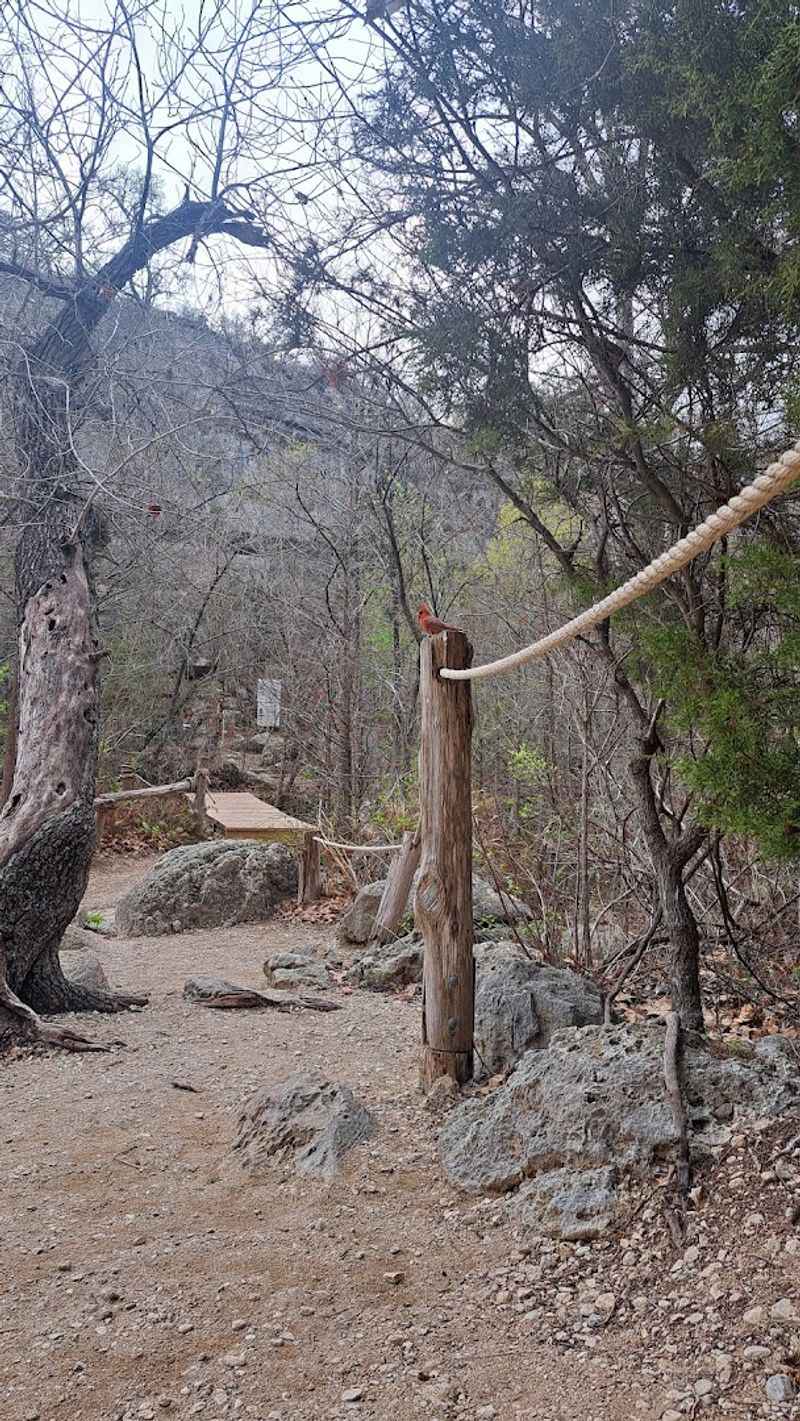
Beyond the pool, the preserve offers a second trail that runs roughly three-quarters of a mile along Hamilton Creek toward the Pedernales River. This extension adds a completely different texture to the visit, trading the dramatic grotto setting for a quieter, more open stretch of creek-side scenery.
The path winds through patches of wildflowers, past limestone outcroppings, and alongside the clear, shallow creek where small fish dart between rocks. Lizards sun themselves on warm stones, and birdsong fills the air in ways that feel genuinely removed from everyday noise.
Visitors who have made the trek from Oklahoma and other states often say this quieter section of the preserve is surprisingly rewarding.
At the river itself, the Pedernales offers a wide, gravelly beach area with shallow, clear water that is generally open for wading and swimming when conditions allow. The contrast between the enclosed drama of the grotto and the open sky above the river is striking.
The hike out and back to the river adds about an hour to a full visit, depending on pace. Bringing water and a snack for this section is a good call, especially on warm days when the sun hits the open creek stretches with full force.
Reservation System and Entry Fees Explained
One of the most important things to know before visiting is that reservations are absolutely required. There are no walk-ins, no exceptions, and no amount of charm at the gate will get you past the ranger without a confirmed booking.
The reservation system is managed through the Travis County Parks website, and spots fill up fast, especially on weekends and during peak season.
The reservation fee is currently $12 per vehicle and covers your parking slot for a designated time block. On top of that, there is an $8 per-person entry fee collected by the ranger at the gate, and this one needs to be paid in cash, so stopping at an ATM before you head out is genuinely necessary.
Seniors receive a reduced rate, which is a thoughtful touch.
The preserve operates on a morning and afternoon shift system, giving each group a set window of time inside. This approach keeps the pool from feeling overwhelmed, though busy days can still get crowded near the water.
Booking as early as possible, sometimes weeks in advance for popular dates, is the safest strategy. The total cost for a couple comes to about $28, which most visitors find reasonable for the experience on offer.
What the Grotto Looks Like Up Close
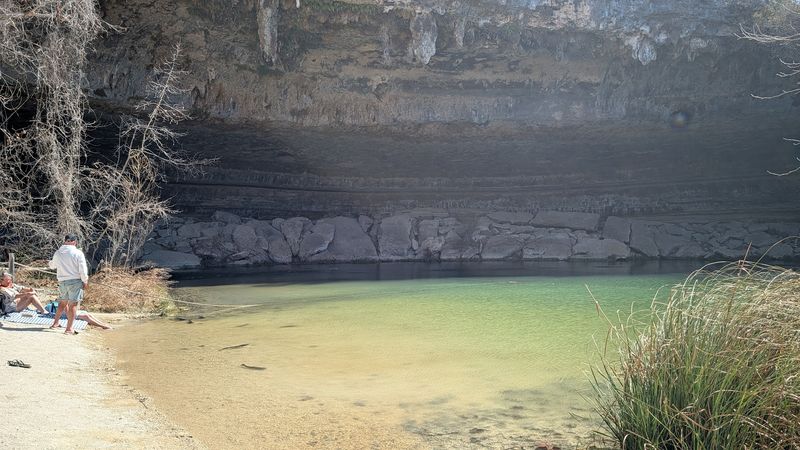
Standing at the edge of the pool and looking up at the grotto walls is one of those moments that genuinely stops you mid-thought. The horseshoe of limestone rises dramatically on three sides, and the rock face is draped with curtains of maidenhair fern, moss, and other moisture-loving plants that turn the walls a deep, vivid green.
The overhang creates a natural amphitheater effect, bouncing sound around and giving the whole space a hushed, almost reverent atmosphere. Light filters in from the open sky above the pool, casting shifting reflections across the water’s surface throughout the day.
Early morning visits, right when the gates open, tend to offer the most atmospheric lighting and the fewest people in the frame.
It is worth noting that the trail beneath the overhanging cliff section is currently closed due to falling rock hazards, which means the classic walk-behind-the-falls experience is off the table for now. Rangers enforce this boundary firmly and for good reason.
Even without that access, the view from the pool’s edge is stunning enough to fill a memory card several times over. The grotto rewards slow observation far more than a quick glance and photo.
Wildlife and Nature You Might Encounter
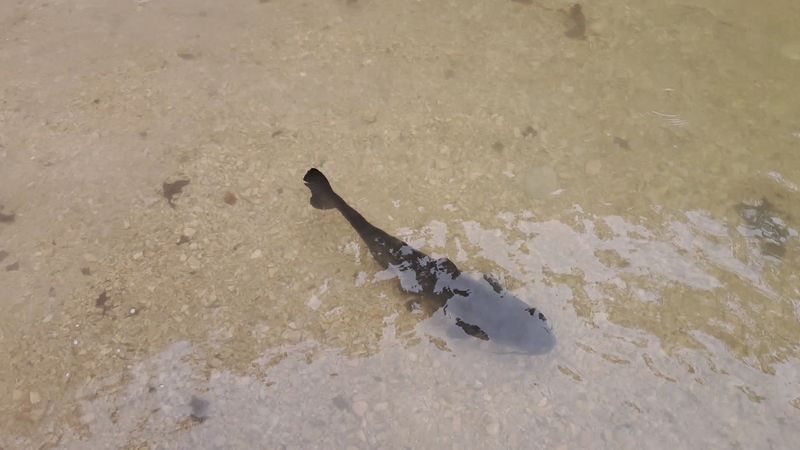
The preserve is not just a pretty pool. It functions as a legitimate nature sanctuary, and the wildlife here reflects that status clearly.
The creek and pool support a healthy fish population, with minnows, perch, catfish, and turtles all visible from the bank on calm days. Watching a turtle drift lazily across the pool while you sit on a warm rock is a particular kind of quiet joy.
Birders have good reason to get excited here. The cedar and oak habitat around the preserve supports a variety of species, including the golden-cheeked warbler, which is an endangered bird that nests exclusively in the Texas Hill Country.
Bringing binoculars adds a whole new layer to the visit. Lizards are practically everywhere on sunny days, darting across rocks and disappearing into crevices with impressive speed.
The wildflowers along the creek trail peak in spring and add splashes of color to an already scenic walk. White-tailed deer occasionally wander through the preserve in the early morning and late afternoon hours.
Visitors who arrive at opening time and move quietly tend to have the most wildlife encounters. The preserve strictly prohibits feeding any animals, which helps keep the natural behavior of the wildlife intact and authentic.
Best Times of Year to Visit
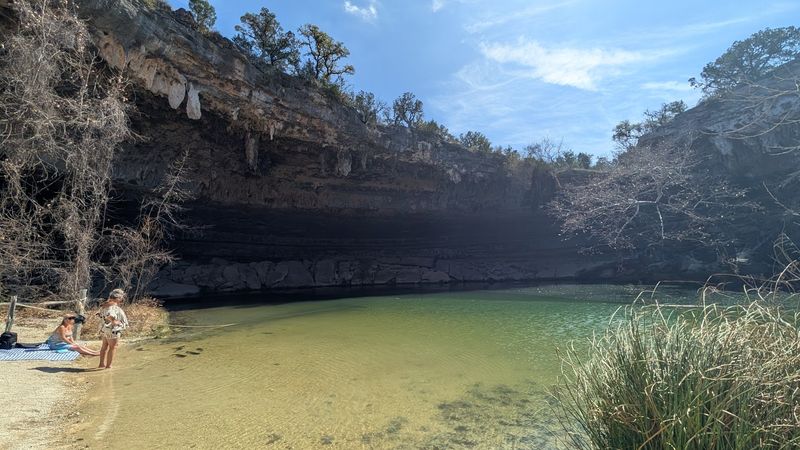
Timing a visit to Hamilton Pool Preserve takes a little strategy, because the experience changes dramatically depending on the season and recent weather. Spring, roughly March through May, is widely considered the best window.
Rainfall keeps the waterfall flowing, the wildflowers are blooming along the creek trail, and temperatures are comfortable enough to enjoy both hiking and swimming without overheating.
Summer visits from June through August are popular because swimming is more reliably permitted and the water temperature is more inviting. The trade-off is heat, crowds, and the possibility of reduced water flow if rainfall has been sparse.
Going early in the morning during summer, right at the 9 AM opening, makes a noticeable difference in both temperature and crowd levels.
Fall and winter visits are quieter and the scenery is still beautiful, but swimming is often restricted due to cooler water temperatures and lower flow. Visitors from Oklahoma and other neighboring states who plan road trips in the cooler months often combine the preserve with other Hill Country stops to make the most of the drive.
Checking the preserve’s official website for current swim status and water conditions before any visit, regardless of season, is always the smartest first step.
Practical Tips for a Smooth Visit
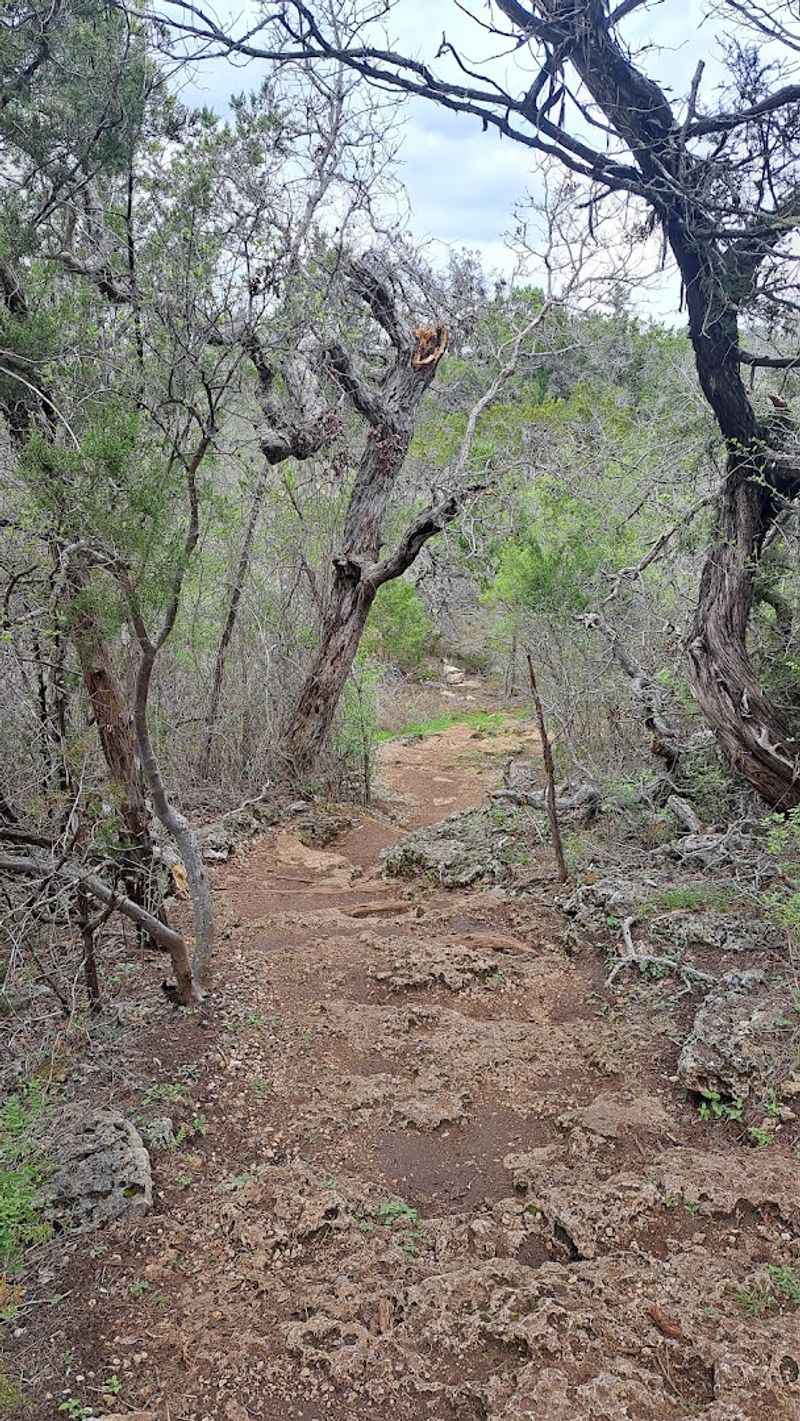
A few practical details can make the difference between a smooth visit and a frustrating one. Cash is essential, since the $8 per-person gate fee is not accepted by card.
Bringing exact change or small bills speeds up entry and keeps the line moving. Comfortable, closed-toe shoes with grip are strongly recommended over sandals, particularly if rain has recently fallen and the trail is slick.
The preserve does not allow pets, even on a leash, which catches some visitors off guard. Glass containers, drones, stoves, campfires, and camping are all prohibited.
Packing food in soft-sided containers and bringing a reusable water bottle keeps things simple and rule-compliant. Sunscreen and a hat are useful for the open sections of the creek trail, where shade is limited.
Portable chargers for phones are handy since there is no cell service in parts of the preserve. Arriving at the start of your time slot rather than midway through gives you the full benefit of your reservation window.
Visitors who have driven from Oklahoma and other states to see this place consistently recommend reading the preserve’s current conditions page on the Travis County Parks website the day before their visit, just to avoid any last-minute surprises.
Why This Place Stays With You Long After You Leave
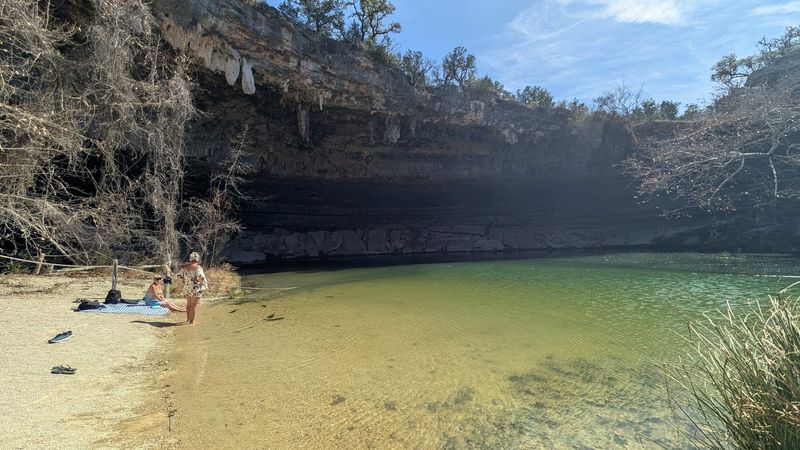
There are plenty of beautiful natural spots scattered across Texas, but Hamilton Pool Preserve occupies a different category. The combination of collapsed geology, a living waterfall, clear water, and dense green vegetation creates a setting that feels genuinely unlike anything else in the region.
It is the kind of place that earns a second visit almost before the first one is over.
People who grew up in Austin often say they wish they had come sooner, and visitors from further afield, including families who have driven up from Oklahoma, frequently describe it as a highlight of their entire Texas road trip. The preserve rewards those who slow down, sit quietly by the water, and let the place do its thing without rushing to the next item on a checklist.
Even on days when the waterfall is reduced to a seep and swimming is closed, the grotto still holds something worth seeing. The light changes through the morning, the ferns sway gently above the water, and the fish go about their day completely unbothered by the humans watching from the bank.
Hamilton Pool Preserve is the kind of natural place that earns its reputation honestly, and that quiet honesty is exactly what makes it so hard to forget.



