 Unearth The Voyage
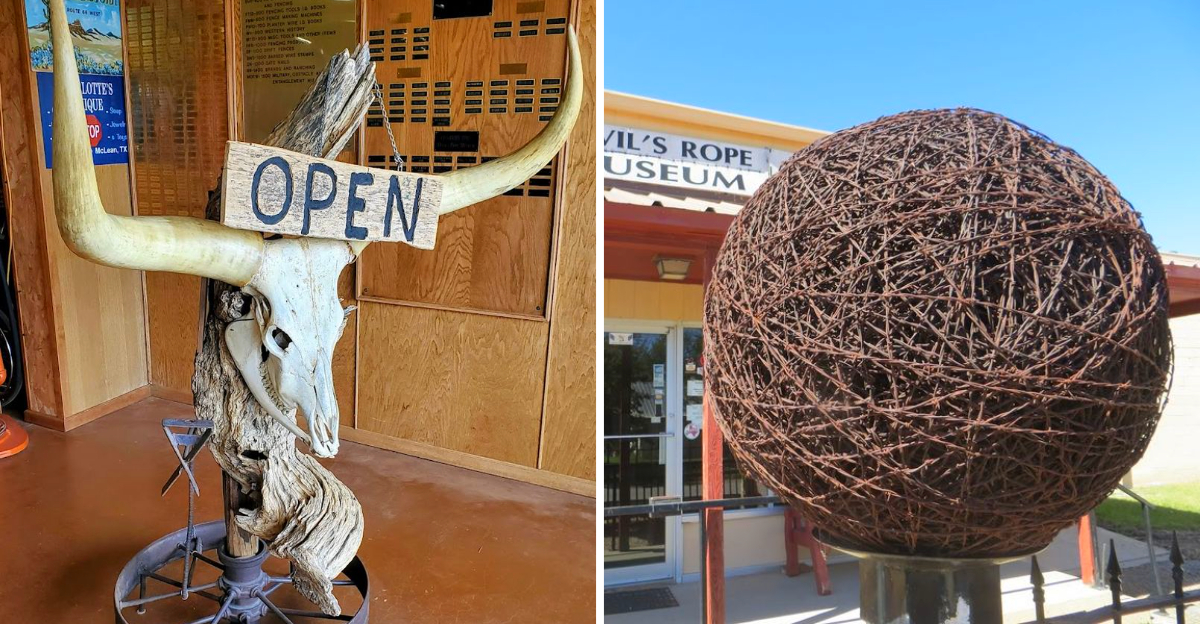
There is a small town in the Texas Panhandle where a single stretch of old highway holds more history than most people expect to find in an entire road trip. Tucked along what was once the busiest road in America, a quirky little museum sits waiting for curious travelers who are willing to slow down and look closer.
The star of the show is barbed wire, a material so sharp and so consequential that Native Americans once called it the devil’s rope. From the invention that changed the American West forever to haunting Dust Bowl photographs and a full Route 66 exhibit, this stop delivers a surprisingly rich experience that most drivers blow right past without a second glance.
Where to Find This Unexpected Treasure
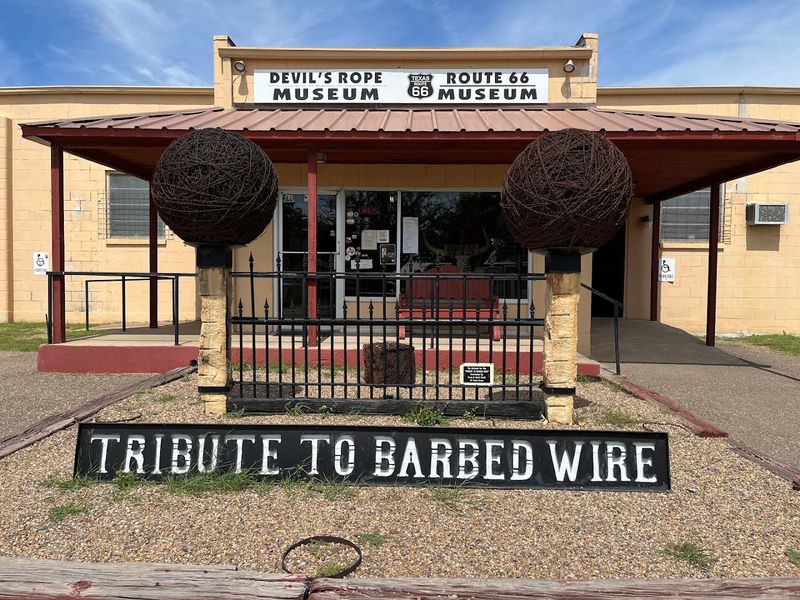
The Devil’s Rope Museum sits at 100 Kingsley St, McLean, TX 79057, a tiny Panhandle town that most GPS devices treat like a suggestion rather than a destination. McLean is one of those places that feels frozen in a very specific decade, and honestly, that is a big part of its charm.
The drive in from the east or west along old Route 66 already sets the mood before you even park.
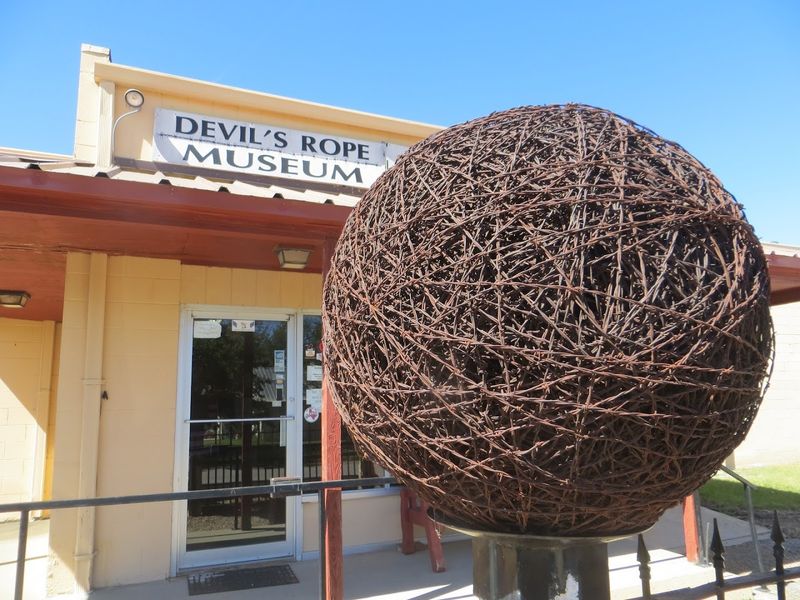
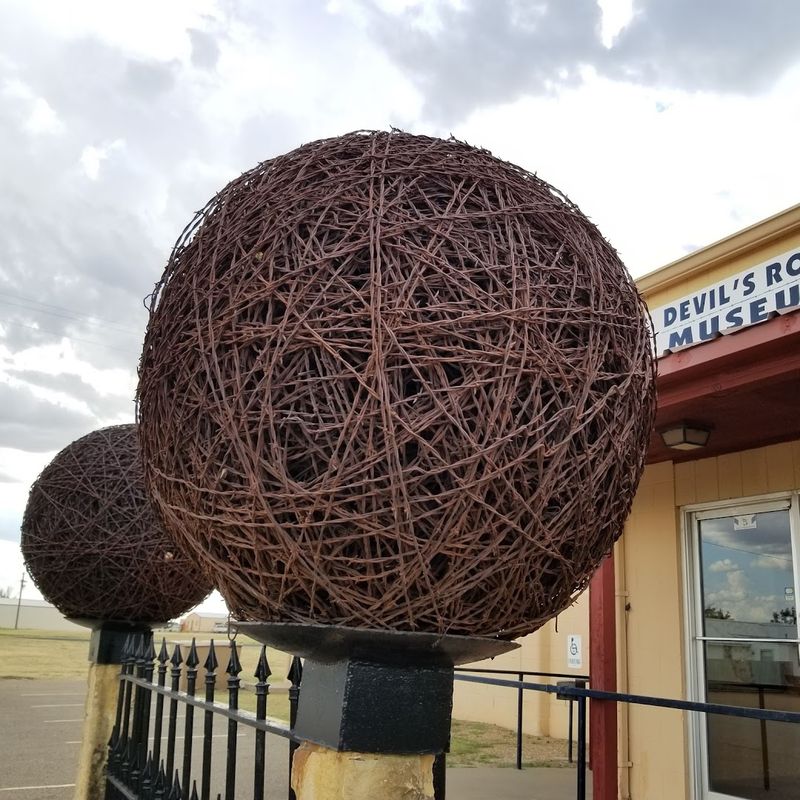
McLean sits roughly halfway between Amarillo, Texas, and the Oklahoma state line, which makes it a natural rest stop for anyone doing a serious Route 66 run. The museum itself is easy to spot because the building has that wonderfully no-nonsense look of a place that has never once tried to impress you from the outside.
You can reach the museum by phone at 806-779-2225, and the website at barbwiremuseum.com has useful planning details.
Hours run Tuesday through Saturday from 9 AM to 4 PM, and the museum is closed on Sundays and Mondays. Admission is free, though donations are genuinely appreciated and help keep the lights on.
Plan your arrival well before 4 PM so you have enough breathing room to actually enjoy what is inside.
Why They Called It the Devil’s Rope
Before barbed wire existed, the American frontier was essentially an open argument about who owned what land. Cattle roamed freely, fences were expensive, and disputes between ranchers and farmers were a regular part of life on the plains.
Then, in the 1870s, a few inventors figured out how to twist sharp metal points into wire strands, and the entire landscape of the American West changed almost overnight.
Native Americans who encountered the new fencing for the first time gave it a name that stuck: devil’s rope. The sharp barbs tore at clothing, caught animals, and carved up the open range that Indigenous peoples had traveled freely for generations.
It was a fitting name for something that felt both cruel and unstoppable at the same time.
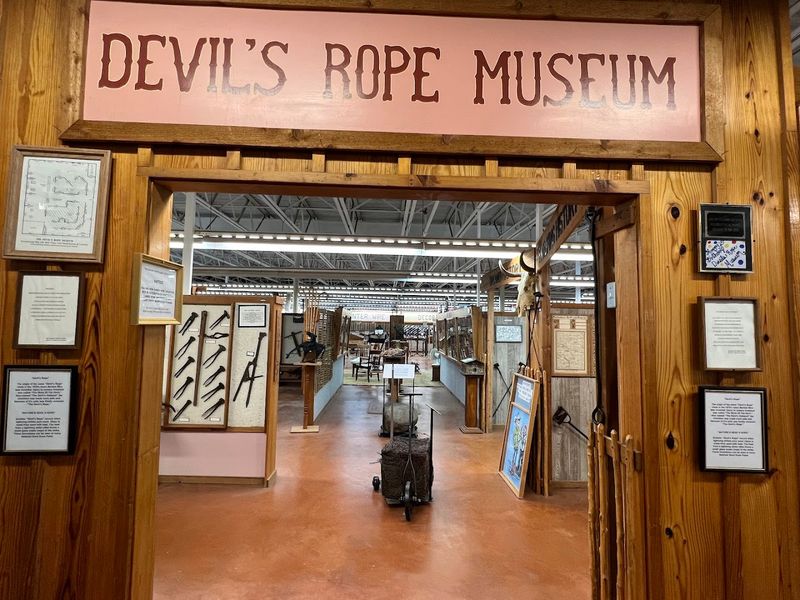
The museum traces this history with impressive detail, showing how different designs evolved over the decades and how the invention rippled outward into farming, ranching, military use, and even art. There are hundreds of wire samples on display, each one slightly different from the last, and reading the small labels next to each design turns into its own surprisingly absorbing activity.
Few objects tell the story of American expansion quite so bluntly.
A Collection That Defies Expectations
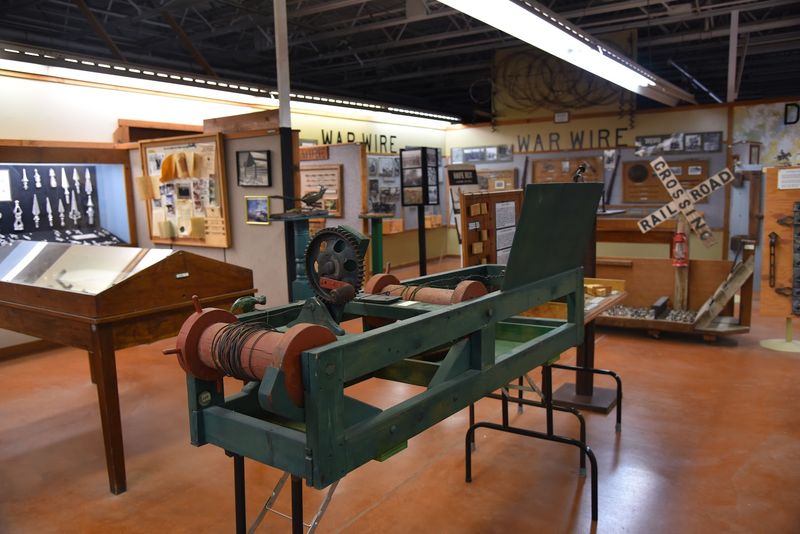
Most people drive up to this museum expecting a single room with a few wire samples tacked to a corkboard. What they actually find is a sprawling collection that takes serious time to work through properly.
The museum holds one of the largest documented barbed wire collections in the country, with hundreds of distinct designs representing different patents, manufacturers, and time periods.
Each wire sample is mounted and labeled, and the variety is genuinely striking once you start paying attention. Some designs look almost elegant, with small symmetrical barbs spaced at even intervals.
Others look downright aggressive, with long sharp points that make you understand exactly why ranchers and farmers treated this stuff with serious respect. The sheer number of variations on what seems like a simple idea is a quiet reminder of how much human ingenuity goes into solving practical problems.
Visitors who come in with low expectations tend to leave talking about how much longer they spent inside than they planned. Two hours can pass without much effort, and that is before you factor in the other exhibits waiting in the next rooms.
The collection alone justifies the stop, even if you have zero prior interest in wire manufacturing history.
The Dust Bowl Room That Stops You Cold
One section of the museum shifts the mood entirely, and it does so without any dramatic staging or fancy lighting. The Dust Bowl exhibit uses historical photographs to document what happened to the Texas Panhandle and surrounding regions during the 1930s, when years of drought and poor farming practices turned the land into a wasteland of blowing dirt and despair.
The photographs are the kind that stay with you. Giant walls of brown dust rolling toward small farmhouses, families packing everything they own into broken-down cars, and children with faces that carry a weight no kid should have to carry.
The region went without meaningful rain for stretches that lasted over two years, and the photos make that fact feel real in a way that a textbook paragraph simply cannot.
What makes this exhibit work so well is its restraint. There is no melodrama, no overselling of the tragedy.
The images and the sparse informational text do all the heavy lifting, and the result is a room that quietly demands your full attention. Visitors traveling through from Oklahoma often note that seeing this exhibit reframes everything they thought they knew about the region’s history.
It is a powerful reminder of how fragile the land beneath our feet actually is.
Route 66 History Packed Into One Room
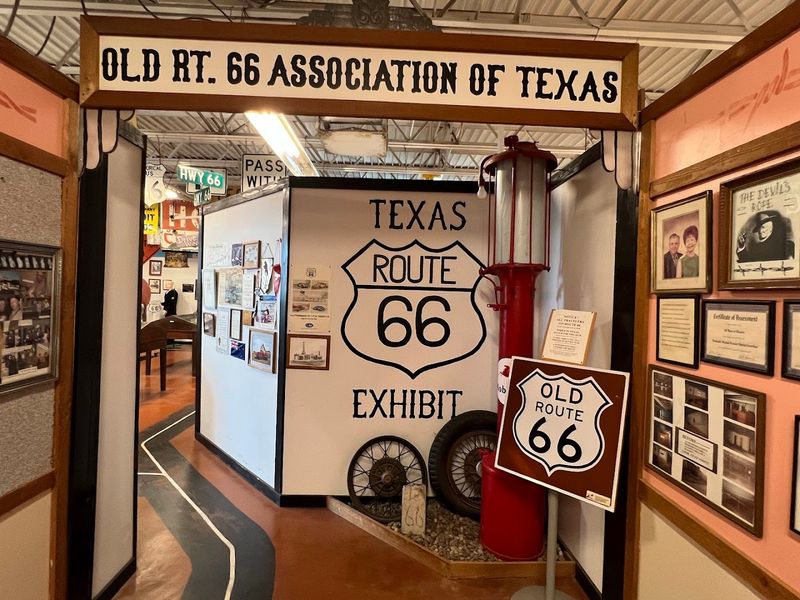
McLean has a legitimate claim to Route 66 history, and the museum honors that connection with a dedicated exhibit room that covers the highway’s rise, golden age, and eventual decline. The Mother Road ran right through this part of Texas, connecting Chicago to Los Angeles and carrying millions of travelers, migrants, and dreamers across the country for decades.
The exhibit features vintage photographs, road maps, signage, and artifacts that capture what it felt like to travel Route 66 during its peak years in the mid-20th century. There is something almost wistful about looking at photos of old diners, motor courts, and gas stations that no longer exist, knowing that this very town was once a regular stop on one of the most traveled roads in the country.
Travelers coming through from Oklahoma will find the exhibit especially resonant, since Oklahoma holds one of the longest remaining stretches of the original Route 66 pavement still in use today. The museum connects the Texas portion of the story to that broader Oklahoma and national context in a way that feels genuinely informative rather than just nostalgic.
Picking up a Route 66 passport or a commemorative coin here is a satisfying way to mark the occasion before rolling on down the highway.
Barbed Wire Art That Changes How You See the Material
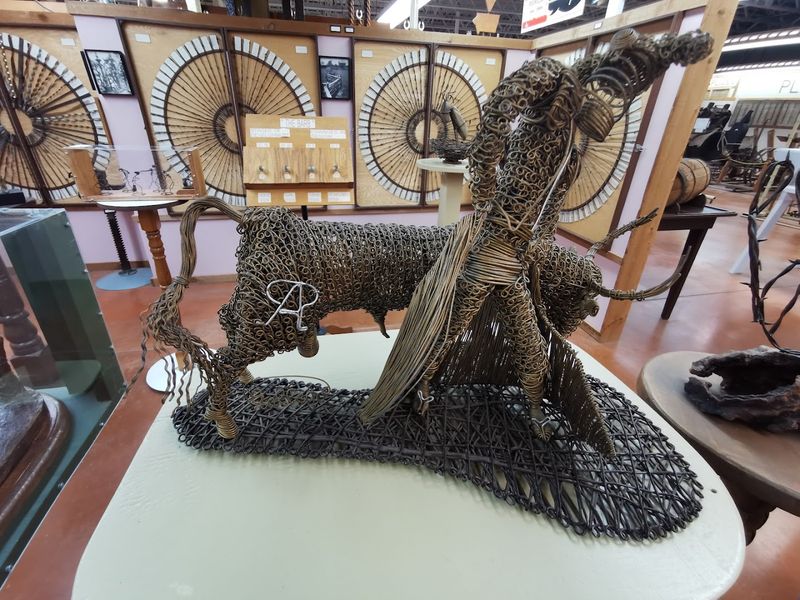
Somewhere between the historical displays and the informational panels, the museum takes a turn into territory that genuinely surprises most visitors: art made entirely from barbed wire. Local and regional artists have transformed this sharp, utilitarian material into sculptures, wall pieces, and decorative objects that are far more beautiful than the raw material has any right to be.
Seeing a delicate-looking piece of wall art constructed from the same wire that once divided the open range is a strange and satisfying experience. The artists work with the material’s natural tension and texture, using the barbs as design elements rather than obstacles.
Some pieces are available for purchase directly off the wall, which makes for an unusual but genuinely memorable souvenir.
The handmade western decor items made from rope and wire are also worth a long look, especially if you appreciate craft work that has a clear sense of place and purpose. These are not mass-produced trinkets.
They are objects made by people who understand the material’s history and are doing something creative with it. Walking out with one of these pieces feels more meaningful than grabbing a generic keychain from a highway gift shop.
The Gift Shop Is Worth the Browse
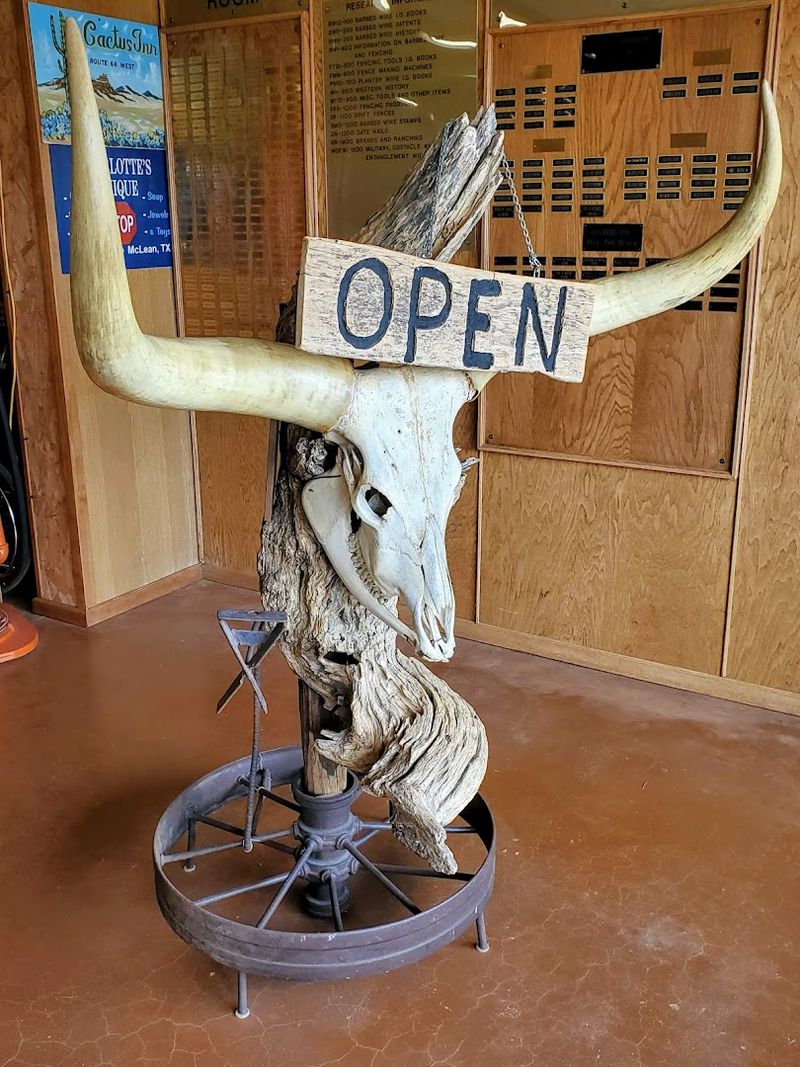
The gift shop attached to the museum punches well above its weight for a small-town operation. The selection leans heavily into Route 66 nostalgia and Texas Panhandle identity, with items that feel genuinely connected to the place rather than generic highway souvenirs.
Route 66 sodas, passport books, and commemorative coins sit alongside handmade western decor and wire art.
Hats and sweatshirts are available at prices that feel reasonable rather than tourist-inflated, which is a pleasant surprise. The handmade items sold here are the kind of thing you actually use or display at home rather than stuff into a drawer and forget about.
Buying something from the shop also functions as an indirect donation to the museum, which operates primarily on the goodwill of visitors rather than a ticket revenue stream.
The staff member working the shop during most visits is friendly and genuinely knowledgeable, happy to point out items of interest or share a bit of background on the museum’s history. Travelers who have been driving across Texas and Oklahoma for hours tend to appreciate that kind of unhurried, personal interaction.
Give yourself a few extra minutes here rather than rushing out the door as soon as you finish the exhibits.
Free Admission and the Donation Model
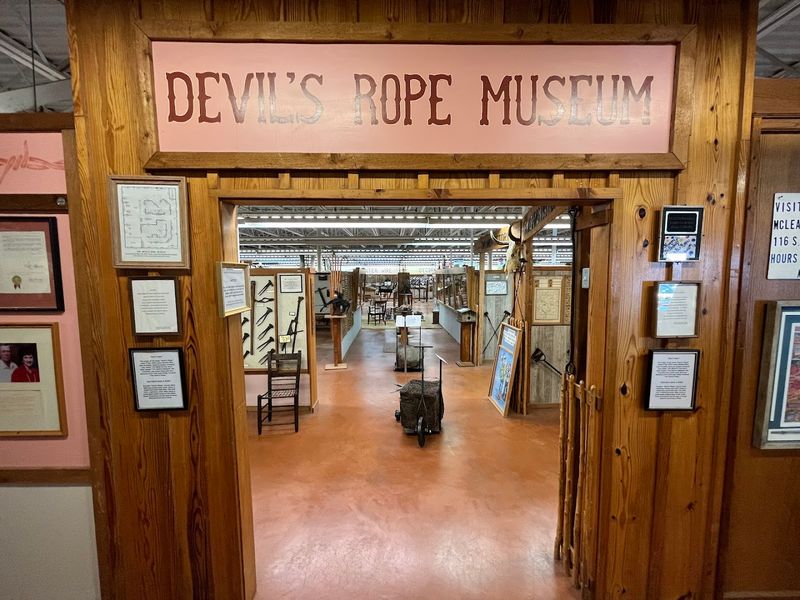
Free admission is one of the first things people mention when they talk about this museum, and it genuinely shapes the experience. There is no ticket counter, no price tier for special exhibits, and no upsell waiting at the door.
You walk in, and the entire place is yours to explore at your own pace without any financial pressure attached.
The museum runs on donations, which means its continued existence depends entirely on visitors choosing to contribute something before they leave. A small donation box sits near the entrance, and the spirit of the place makes it easy to want to leave something behind.
Most people who spend real time inside end up feeling like they got far more than they paid for, which tends to loosen the wallet in a way that a mandatory ticket price never quite does.
The model also keeps the atmosphere relaxed and welcoming in a way that paid attractions sometimes struggle to achieve. Nobody is rushing you through to make room for the next group, and nobody is tracking how long you have been standing in front of a particular display.
That unhurried quality is part of what makes this stop feel like a genuine discovery rather than a scheduled tourist obligation. Leave a donation and feel good about it.
Barbed Wire and the Military Connection
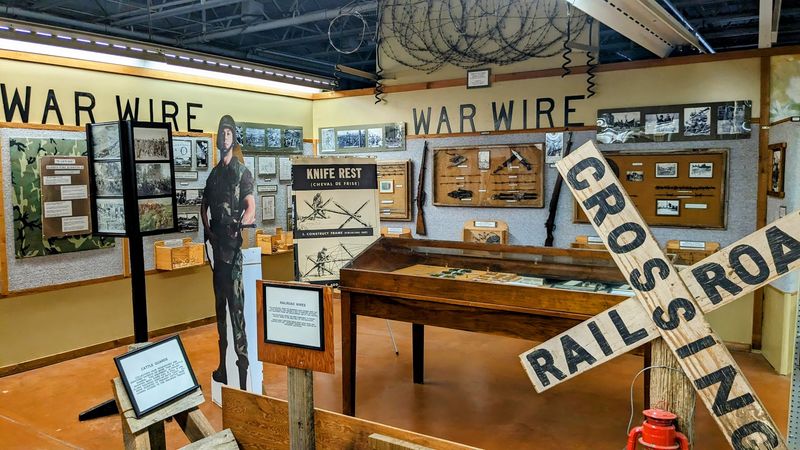
Most visitors come in knowing that barbed wire shaped the American ranching industry, but far fewer expect to find a section dedicated to its role in military history. The museum covers this angle with straightforward information that connects the humble ranch fence to some of the most significant conflicts of the past 150 years.
Barbed wire became a standard tool of military fortification from the late 19th century onward, used to slow enemy advances, protect trenches, and create barriers that were cheap to deploy and extremely difficult to cross under fire. The material that once divided Texas cattle ranges found itself on battlefields across Europe and beyond, doing a very different but equally consequential job.
Seeing this connection laid out clearly in the exhibit reframes the entire museum visit in an interesting way. What started as a practical solution to a ranching problem became woven into the fabric of modern warfare, and the museum traces that thread without sensationalizing it.
This is the kind of historical context that makes a seemingly narrow subject feel genuinely broad and important. It is also the kind of detail that keeps coming back to you long after you have left McLean and are back on the highway heading toward Oklahoma.
Tips for Planning Your Visit
A few practical details can make the difference between a smooth visit and a frustrating one. The museum is open Tuesday through Saturday from 9 AM to 4 PM and is closed on Sundays and Mondays.
Arriving at least an hour before closing gives you enough time to move through the exhibits without feeling rushed, and two hours is a more comfortable target if you want to see everything properly.
McLean sits along Interstate 40 in the Texas Panhandle, and the old Route 66 alignment runs right through town, making it easy to incorporate into a larger road trip itinerary. Travelers coming from the Oklahoma border will find McLean about 30 miles west of the state line, which makes it a logical first Texas stop after crossing over from Oklahoma.
The drive through this part of the Panhandle is flat and wide open, and the town appears almost suddenly on the horizon.
Cell service can be spotty in this area, so downloading offline maps before you arrive is a smart move. The museum’s website at barbwiremuseum.com has updated seasonal hours worth checking before you make the drive, since winter closures have caught some visitors off guard.
A quick phone call to 806-779-2225 on the day of your visit confirms everything is running as expected.
Why This Stop Deserves a Place on Your Route 66 Itinerary
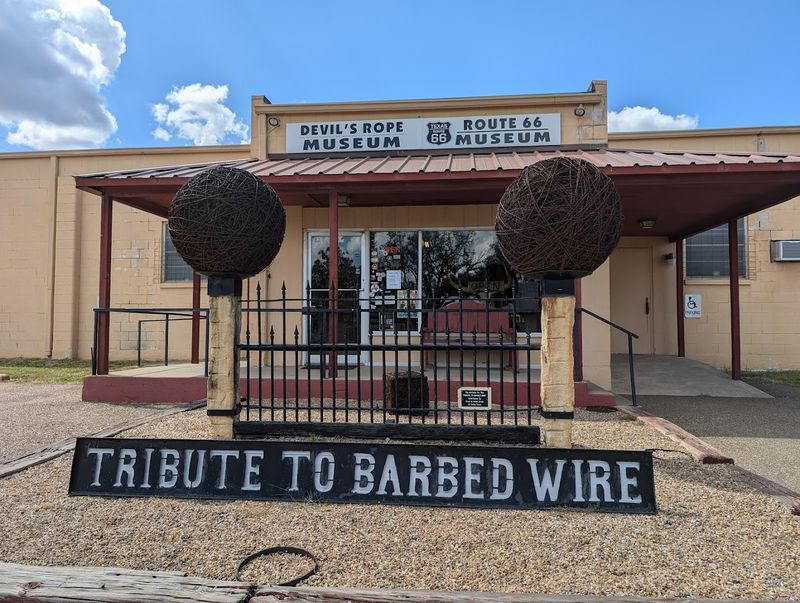
Route 66 is lined with stops that promise more than they deliver, so finding one that consistently exceeds expectations feels like a small victory. This museum earns its reputation not through flashy presentation or big marketing budgets, but through the genuine depth of its collection and the authenticity of its setting.
McLean has not been polished up for tourists, and that rawness is exactly what makes it feel real.
Travelers who have driven through Oklahoma and crossed into Texas along the old highway often say this is the stop that surprised them most. It is the kind of place that reminds you why people still drive Route 66 in the first place, not for the nostalgia performance of it, but for the actual history that still clings to these small towns and their stubborn little museums.
The combination of barbed wire history, Dust Bowl documentation, Route 66 artifacts, and handmade art creates a visit that covers more ground than the building’s modest exterior suggests. Free admission makes the decision to stop an easy one, and the friendly staff makes you feel like your visit actually matters to the people keeping this place alive.
That feeling is harder to manufacture than any exhibit, and this museum has it without even trying.



