Few things in music history hit as hard as a perfectly crafted guitar riff. From the mid-1950s through the late 1980s, rock guitarists rewrote the rules of popular music one power chord and blues lick at a time.
These riffs did not just define songs; they defined entire generations, shaped youth culture, and gave birth to whole new genres. Whether you grew up with a record player or discovered these tracks through a streaming playlist, the riffs on this list have a way of stopping you cold the moment they start.
Spanning blues-soaked grooves, psychedelic experimentation, and stadium-filling anthems, the fifteen riffs ranked here represent the most influential, most recognizable, and most culturally significant guitar moments in classic rock history. Each one carries a story worth knowing, and every single one changed the course of music in ways that still echo through today’s charts and concert halls.
1. Sunshine of Your Love – Cream (1967)
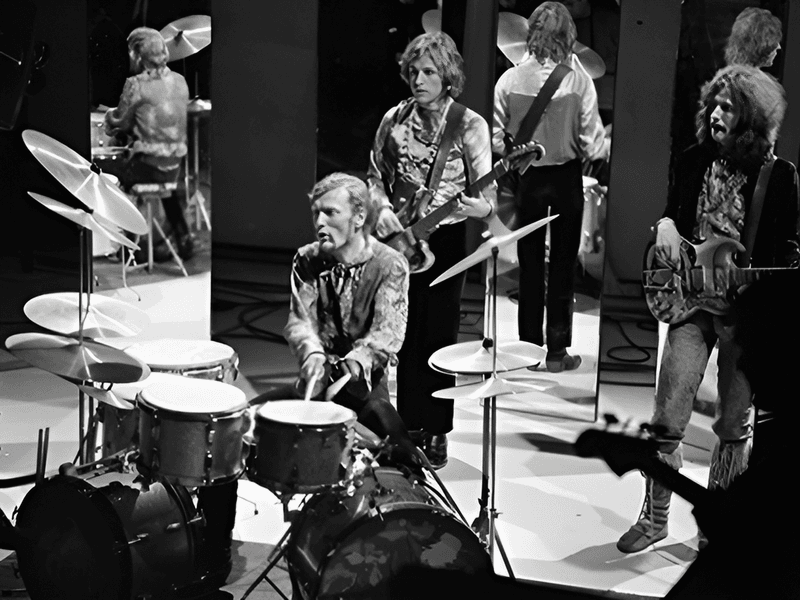
Jack Bruce reportedly sketched the bassline for this riff the night after watching Jimi Hendrix tear through a London performance in 1966, and Eric Clapton built the guitar part directly on top of it.
The result was a descending blues figure that felt simultaneously ancient and brand new, rooted in Delta blues but pointed squarely toward the coming era of hard rock.
Cream released it on their 1967 album Disraeli Gears, and it became an instant landmark. The riff runs at a slow, deliberate pace that gives every note room to breathe.
Producer Felix Pappalardi pushed the recording toward a denser, heavier sound than the band had previously attempted. That decision paid off enormously.
The track reached the top five in both the US and UK, and it remains one of the most-covered riffs in rock guitar history.
2. Smoke on the Water – Deep Purple (1972)
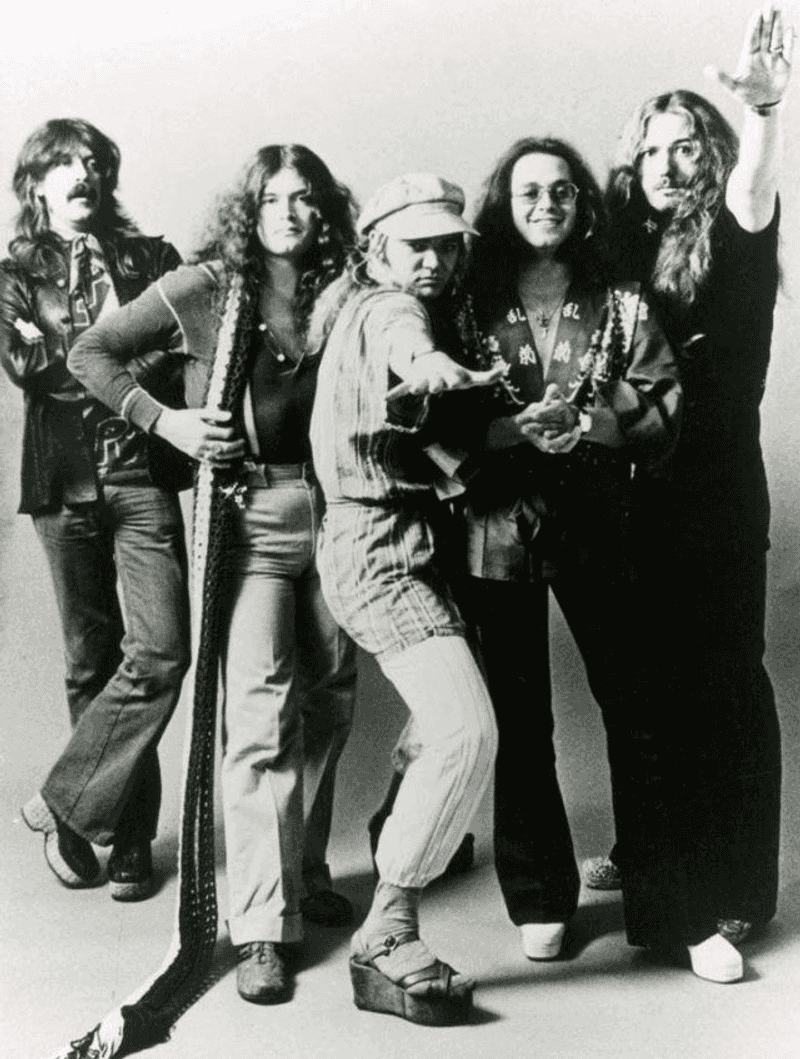
Ritchie Blackmore played the four-note riff on his 1968 black Fender Stratocaster, and the simplicity of the figure is exactly what makes it so durable. It uses a series of parallel fourths rather than standard chords, giving it an unusual, slightly hollow quality that stands apart from typical rock guitar.
The lyrics document a real event: the fire that destroyed the Montreux Casino in Switzerland during a Frank Zappa concert on December 4, 1971. Deep Purple witnessed it from across Lake Geneva while recording nearby.
That documentary detail gave the song an unusual credibility for a hard rock track. Released on Machine Head in 1972, it became the band’s biggest commercial success.
Guitar teachers worldwide have used it as a first lesson for beginners for more than fifty years, which is either a testament to its accessibility or proof that some riffs are simply inescapable.
3. La Grange – ZZ Top (1973)
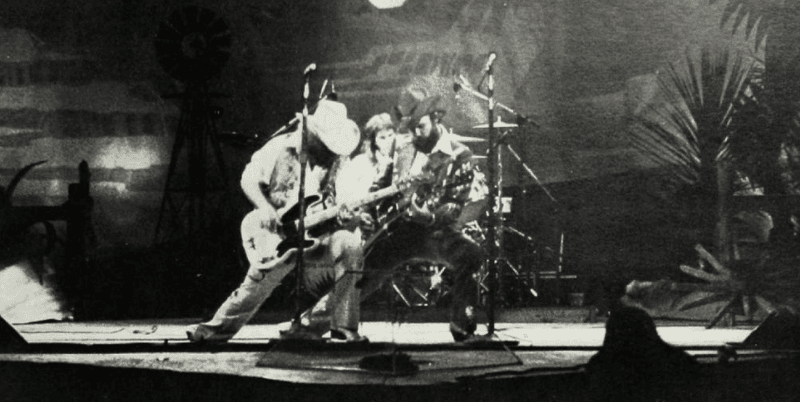
Billy Gibbons drew directly from John Lee Hooker’s 1948 recording “Boogie Chillen” when constructing the central groove of “La Grange,” a borrowing so transparent that Hooker’s estate later received songwriting credit.
That honesty about the blues lineage is part of what makes the track so compelling. Gibbons did not try to disguise the influence; he amplified it through a Marshall stack and turned it into something ferociously modern.
Released on Tres Hombres in 1973, the song opens with a sparse, finger-picked intro before the full shuffle groove arrives and takes over completely. The riff sits in a rhythmic pocket that few guitarists have matched since.
ZZ Top built their entire commercial identity on this kind of blues-to-rock translation, but “La Grange” remains the purest and most powerful example of what Billy Gibbons could do when he locked into a groove and refused to let go.
4. Layla – Derek and the Dominos (1970)
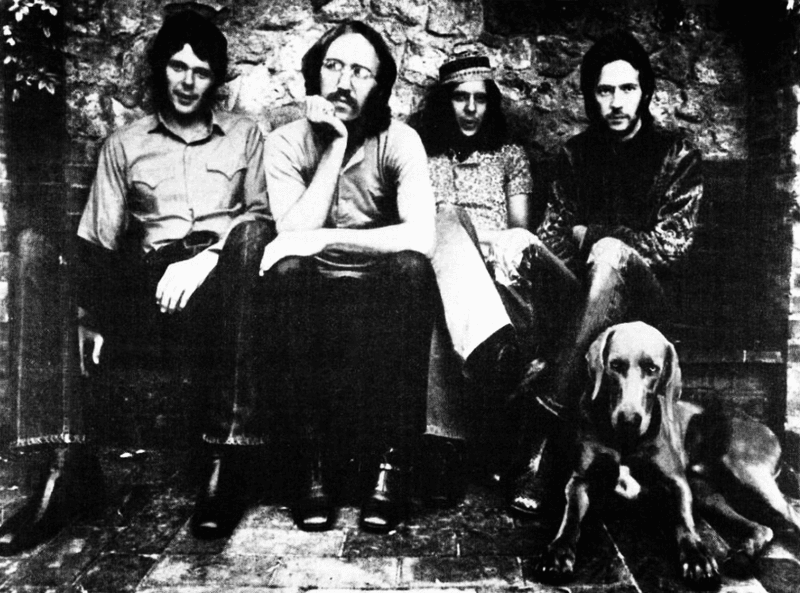
The opening riff of “Layla” is actually two guitar parts layered together: Eric Clapton’s lead line and Duane Allman’s slide guitar response, recorded at Criteria Studios in Miami during the fall of 1970.
Allman’s contribution transformed what might have been a straightforward rock track into something far more textured and emotionally urgent. The two guitarists pushed each other throughout the entire session, producing one of the most celebrated collaborative performances in rock history.
Clapton wrote the song during an intense personal period, inspired by Persian poet Nizami Ganjavi’s twelfth-century romantic epic Layla and Majnun. The literary source gave the track an unusual emotional depth for a rock record.
The album Layla and Other Assorted Love Songs was largely ignored on release but became a critical landmark within a few years. The riff itself has been cited by Rolling Stone magazine as one of the greatest guitar moments ever recorded.
5. Paranoid – Black Sabbath (1970)
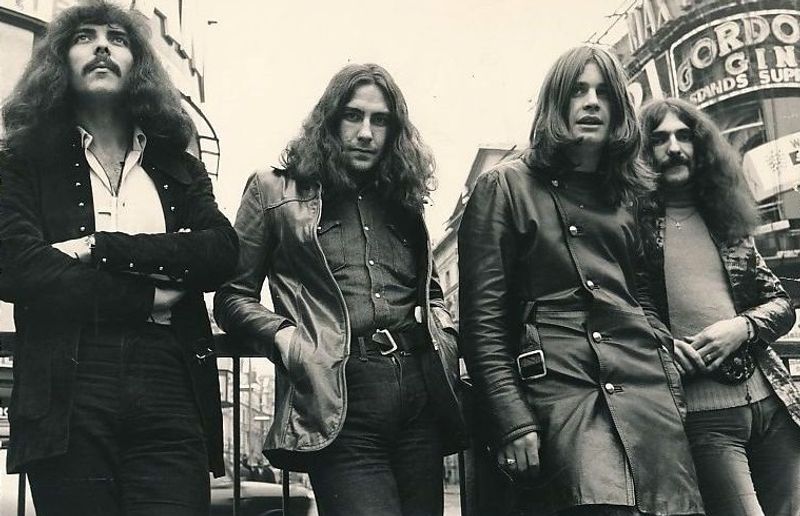
Tony Iommi wrote the riff for “Paranoid” in roughly five minutes to fill a gap at the end of the Paranoid album sessions, and the band recorded the entire track in about the same amount of time it takes to play it twice.
That backstory has become one of rock’s great ironies: the fastest, most carelessly written piece on the album became Black Sabbath’s only UK top-ten single and their most commercially successful song.
The riff moves at a frantic pace compared to the band’s usual dirge-like tempos, built on a descending E minor figure that drives forward without pause. It is aggressive without being complicated, which made it immediately accessible to a wide audience.
Heavy metal historians frequently cite “Paranoid” as one of the genre’s earliest and most influential templates. Bands from Metallica to Slayer have acknowledged its structural influence on the fast, riff-driven approach that defines thrash and speed metal.
6. Whole Lotta Love – Led Zeppelin (1969)
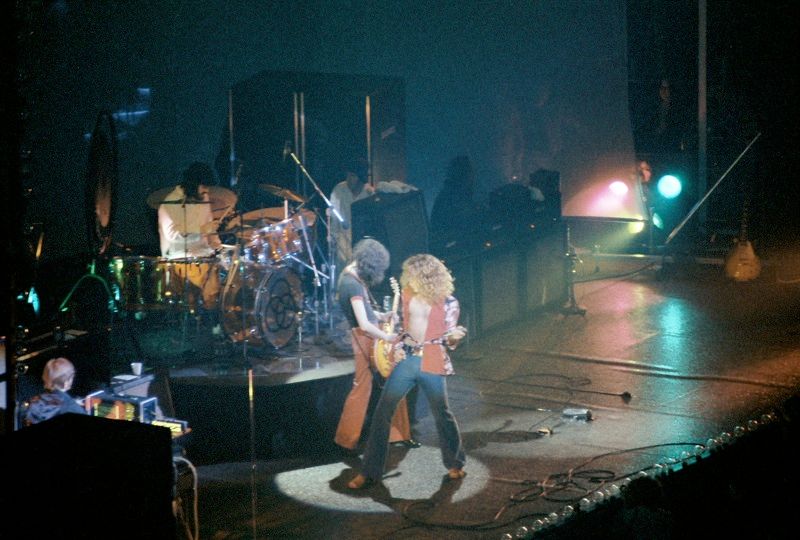
Jimmy Page constructed the central riff of “Whole Lotta Love” around a heavily distorted, syncopated guitar figure that draws from Willie Dixon’s blues catalog while pushing far beyond its source material in terms of sheer sonic force.
Dixon later filed a successful copyright lawsuit, and the songwriting credits were amended accordingly. That legal history adds an interesting layer to the riff’s origin story.
Released as the opening track on Led Zeppelin II in October 1969, the song became the band’s first US top-five single. The riff itself is built on a two-bar phrase that repeats with slight variations, giving Page room to add fills and accents without disrupting the groove.
Robert Plant’s vocal delivery on top of the guitar figure helped establish the template for hard rock frontman performance throughout the 1970s. Few opening riffs in rock history have commanded as much immediate attention as this one does within its first two seconds.
7. You Really Got Me – The Kinks (1964)
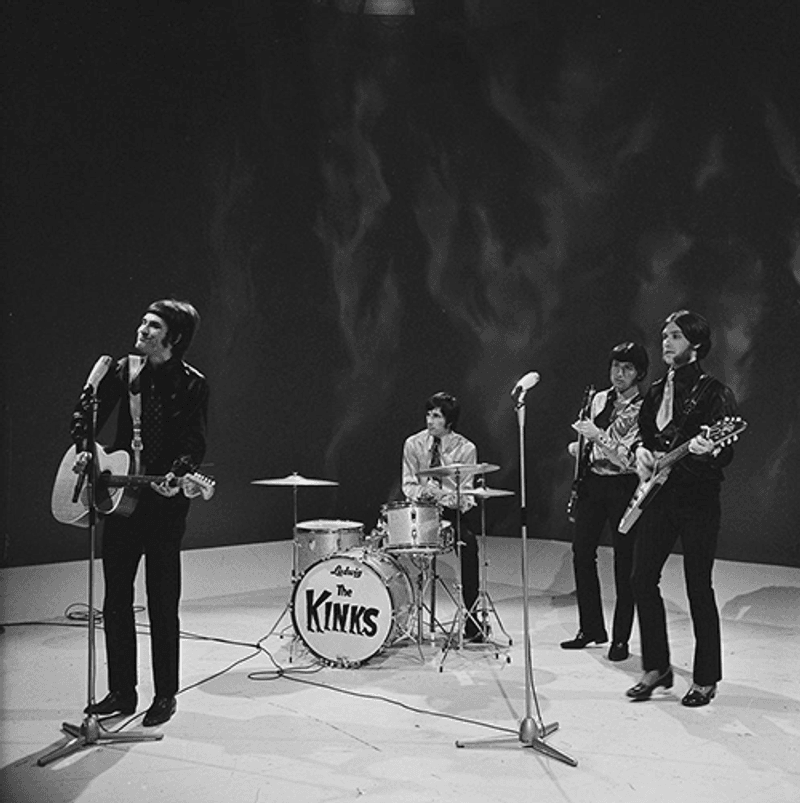
Dave Davies achieved the distorted tone on “You Really Got Me” by slashing the speaker cone of a small amplifier with a razor blade, then connecting it to a larger amp to boost the signal. The result was a grinding, broken sound that had never appeared on a mainstream pop record.
Released in August 1964, the song reached number one in the UK and broke into the US top ten, introducing American audiences to a level of guitar aggression that predated the heavier rock of the late 1960s by several years.
The riff itself is built on two power chords separated by a whole step, played with a driving rhythm that locks directly into the drumbeat. Its construction is minimal, but its impact was enormous.
Music historians regularly identify “You Really Got Me” as a direct ancestor of punk rock, hard rock, and heavy metal, making Dave Davies one of the most consequential teenagers in music history.
8. Money for Nothing – Dire Straits (1985)
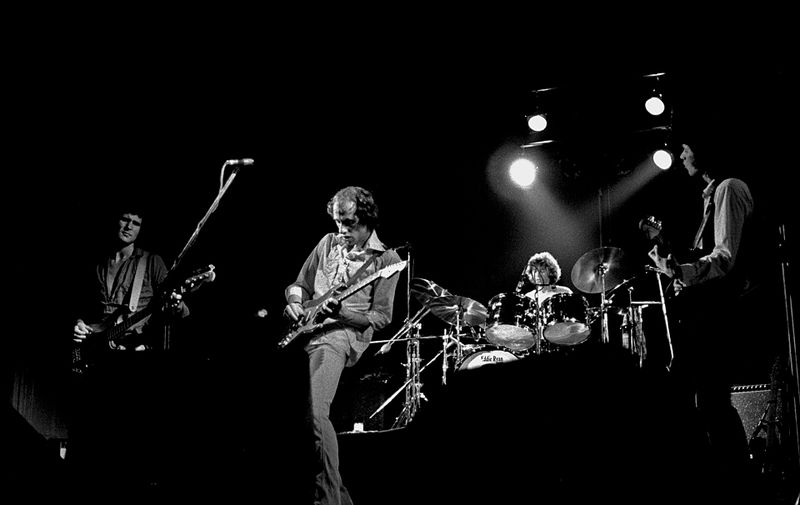
Mark Knopfler wrote the lyrics for “Money for Nothing” after overhearing two appliance store workers complaining about rock musicians they saw on MTV while Knopfler himself was shopping in the store. He scribbled their words down on a notepad and built the song around them.
The guitar tone on the riff was created using a 1958 Gibson Les Paul Standard run through a Mesa Boogie amplifier, producing a thick, midrange-heavy sound that became one of the most imitated tones of the mid-1980s.
Sting of The Police contributed the falsetto vocal hook and received a co-writing credit as a result. The combination of Knopfler’s gritty riff and Sting’s melodic line created a track that dominated both rock radio and early MTV simultaneously.
“Money for Nothing” won the Grammy Award for Best Rock Performance in 1986 and remains the defining commercial peak of Dire Straits’ career, built almost entirely on the strength of that opening guitar figure.
9. Back in Black – AC/DC (1980)
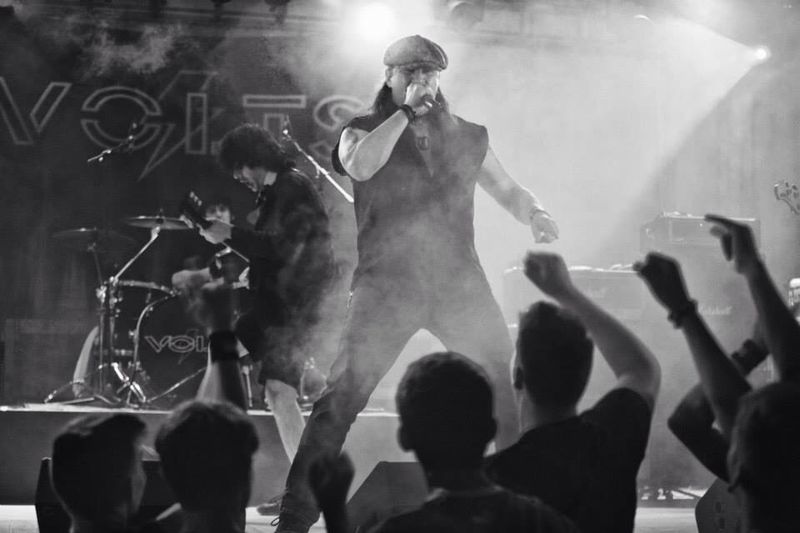
Angus Young wrote “Back in Black” as the opening statement of a new era for AC/DC following the passing of original vocalist Bon Scott in February 1980. The album was both a tribute and a declaration that the band intended to continue.
The riff is built around a four-chord sequence in E that balances raw power with rhythmic precision. Young plays it without any distortion pedals, relying entirely on his Gibson SG and Marshall amplifiers cranked to full volume for tone.
New vocalist Brian Johnson recorded the vocals in a single day at Compass Point Studios in the Bahamas, and the album was completed in just six weeks. Back in Black has since sold an estimated 50 million copies, making it the second best-selling album in recorded music history.
The riff’s opening bell toll followed by that first guitar strike remains one of the most instantly recognizable moments in rock, reproduced at sporting events and arenas on every continent for more than four decades.
10. Sweet Child O’ Mine – Guns N’ Roses (1987)
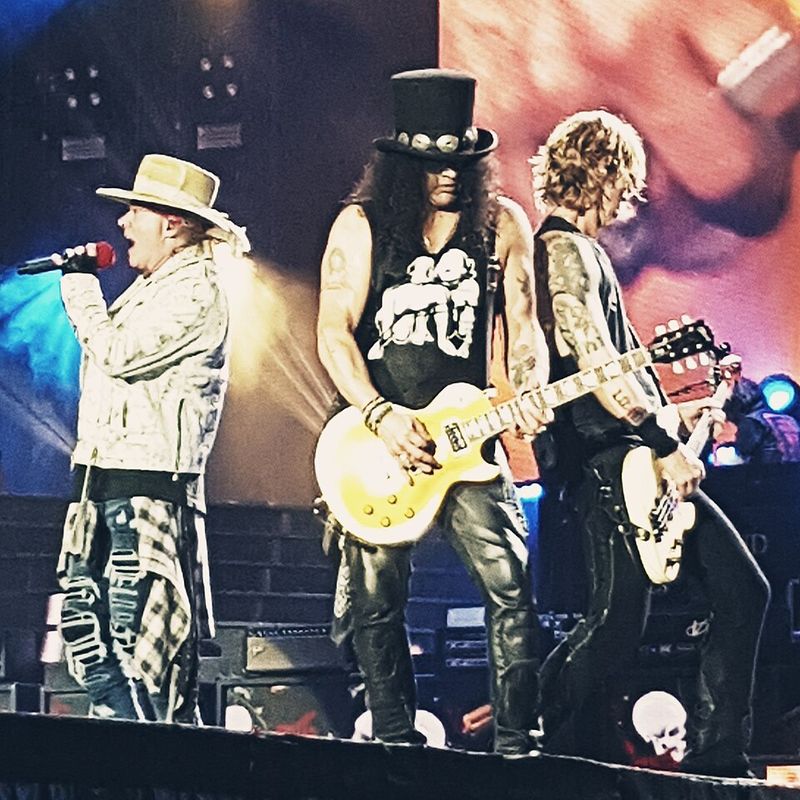
Slash has said in multiple interviews that he invented the opening riff of “Sweet Child O’ Mine” as a finger exercise, cycling through notes to warm up before a rehearsal session with no intention of turning it into a song.
Rhythm guitarist Izzy Stradlin heard it and immediately recognized its potential, and Axl Rose wrote the lyrics within minutes of the band locking in the arrangement. The track came together faster than almost any other song on Appetite for Destruction.
Released as a single in August 1988, it became Guns N’ Roses’ only US number-one hit, reaching the top of the Billboard Hot 100 and staying there for two weeks. The riff’s melodic quality set it apart from the harder, more aggressive tracks on the same album.
Guitar World magazine ranked it among the greatest riffs ever written, and it regularly tops reader polls for most recognizable rock guitar introductions recorded in the 1980s.
11. (I Can’t Get No) Satisfaction – The Rolling Stones (1965)
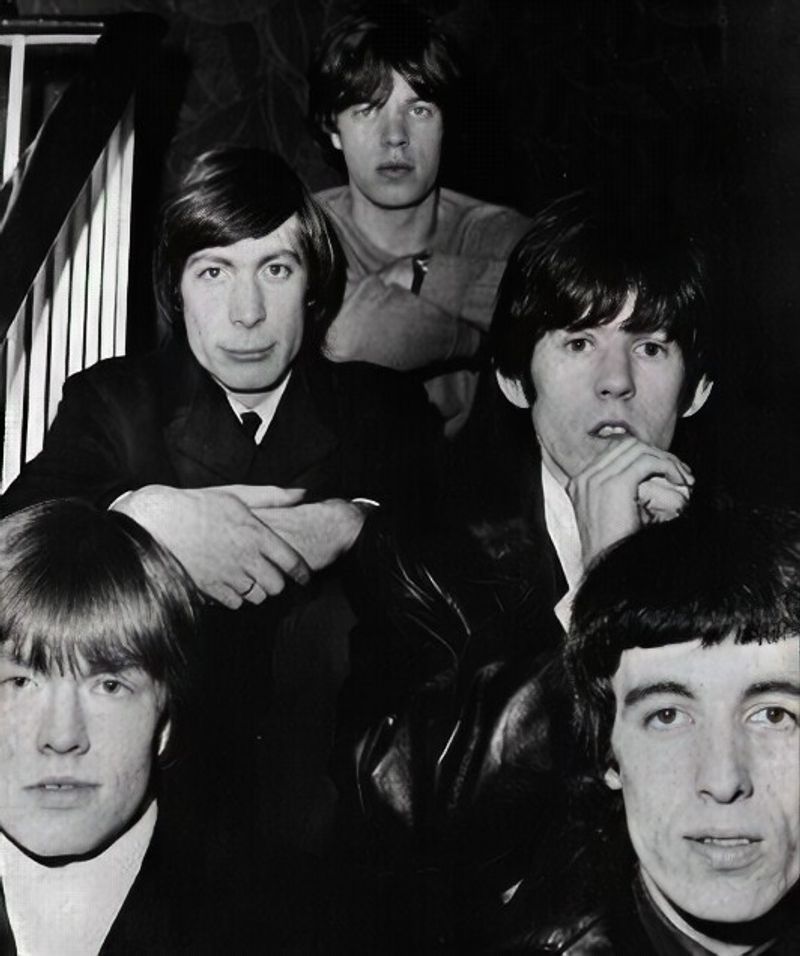
Keith Richards recorded the riff on a small portable tape recorder in a motel room in Clearwater, Florida, at roughly two in the morning on May 7, 1965. He woke up, played the figure into the recorder, and went back to sleep.
When he listened the next morning, the riff was there followed by forty minutes of him snoring.
The Maestro FZ-1 Fuzz-Tone pedal gave the riff its buzzy, aggressive character. Richards originally envisioned the part being played by horns on the final recording, but the fuzz guitar version stuck after producer Andrew Loog Oldham and the rest of the band voted to keep it.
“Satisfaction” reached number one in the United States in June 1965 and became the Rolling Stones’ commercial breakthrough in the American market. Rolling Stone magazine later ranked it the second greatest song of all time.
The riff is now studied in music programs worldwide as a case study in how a single melodic idea can anchor an entire cultural moment.
12. Iron Man – Black Sabbath (1970)
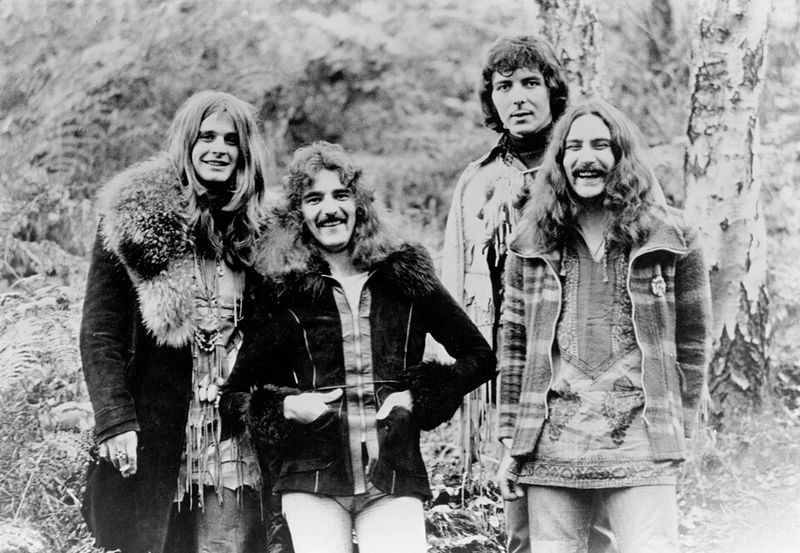
Tony Iommi tuned his guitar down a full step and a half to accommodate a hand injury he sustained in a sheet metal factory accident before Black Sabbath’s career began. That lower tuning gave “Iron Man” and much of the band’s early catalog its distinctively heavy, detuned quality.
The riff moves in slow, deliberate steps, each chord landing with maximum weight. Iommi has described the figure as an attempt to musically represent something large and mechanical moving forward, and the result matched the song’s science-fiction lyrical concept precisely.
Released on Paranoid in September 1970, the track did not chart as a single on its initial release but became one of the most-played album tracks on FM rock radio throughout the 1970s. Its cultural footprint grew steadily over decades.
The riff has been sampled, covered, and referenced so frequently across metal subgenres that it functions less as a single song and more as a shared reference point for the entire heavy metal tradition.
13. Johnny B. Goode – Chuck Berry (1958)
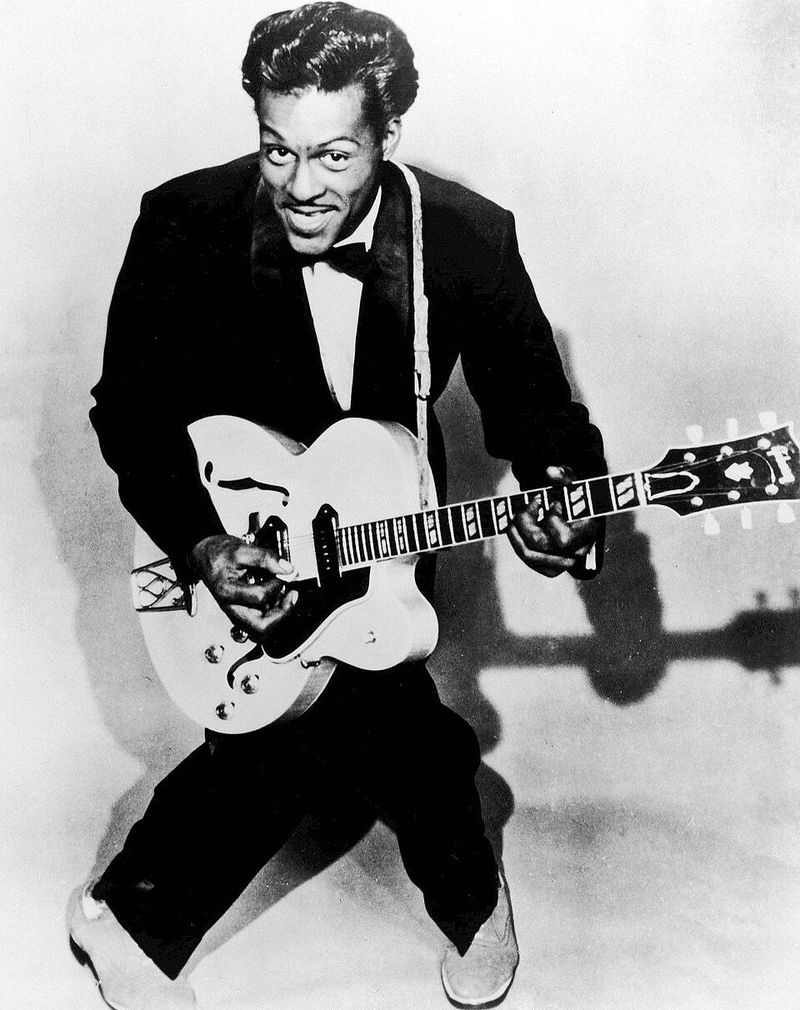
Chuck Berry recorded “Johnny B. Goode” at Chess Studios in Chicago in January 1958, playing a Gibson ES-350T archtop guitar through a small amplifier.
The opening riff combines elements of boogie-woogie piano lines with country guitar picking, a fusion that had never been packaged quite so cleanly for a rock and roll record.
Berry based the character of Johnny on his own childhood in St. Louis, though he originally wrote the lyric “colored boy” before changing it to “country boy” for broader radio play. That compromise helped the song reach a much wider audience than it might have otherwise.
“Johnny B. Goode” reached number two on the Billboard R&B chart and number eight on the pop chart, making it Berry’s biggest crossover success.
The song was later included on the Voyager Golden Record launched by NASA in 1977 as a representation of Earth’s music.
Virtually every foundational rock guitarist from Keith Richards to Jimi Hendrix cited Berry’s riff-based approach as a primary early influence.
14. Purple Haze – The Jimi Hendrix Experience (1967)
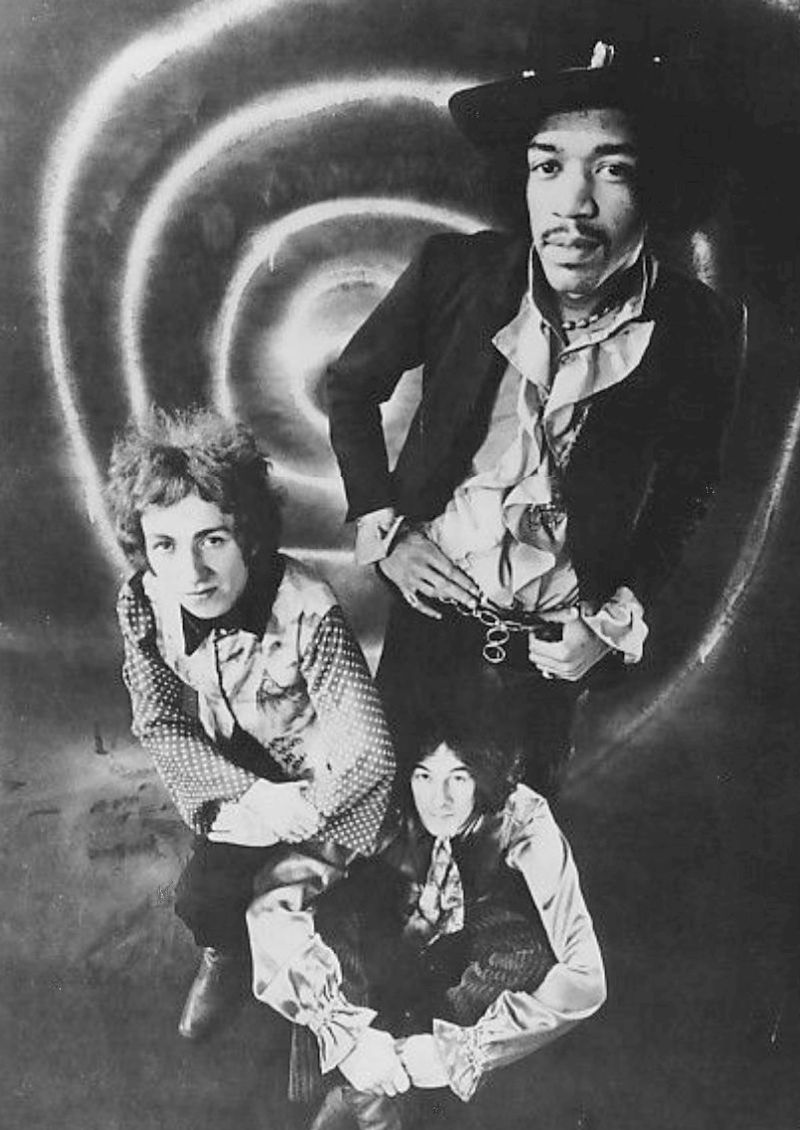
The opening interval of “Purple Haze” is a tritone, a dissonant interval historically called “diabolus in musica” by medieval music theorists who considered it so unstable it was banned from sacred compositions. Hendrix built his riff around that tension deliberately.
He recorded the track at De Lane Lea Studios in London in January 1967 using a Fender Stratocaster run through a Fuzz Face distortion unit and a Marshall amplifier. The combination produced a tone that had no real precedent in popular music at the time.
Released as the second Hendrix single in the UK in March 1967, it reached number three on the British charts. Its influence on rock guitar technique was immediate and comprehensive, pushing players toward distortion, feedback, and extended technique as standard tools rather than novelties.
Music educators today use “Purple Haze” as a primary example of how harmonic tension can drive a rock composition, making it as relevant in classrooms as it is on classic rock radio stations.
15. Stairway to Heaven – Led Zeppelin (1971)
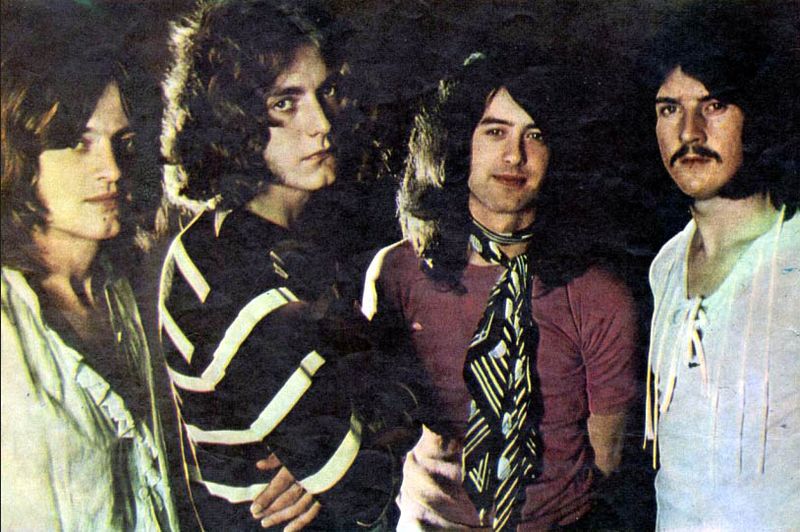
Jimmy Page wrote the guitar progression for “Stairway to Heaven” during a weekend stay at Headley Grange, a nineteenth-century workhouse in Hampshire that Led Zeppelin used as a rehearsal space. He composed the entire acoustic introduction in a single sitting while the rest of the band slept.
The song’s structure is unusual for rock: it begins with a fingerpicked acoustic guitar figure, adds instruments gradually across eight minutes, and builds to a hard rock conclusion before resolving quietly. No single moment defines the track; the architecture of the whole thing is the statement.
Released on Led Zeppelin IV in November 1971 without a commercial single, it became the most-requested song in FM radio history despite never charting as a standalone release. Guitar stores in the United Kingdom and United States reportedly posted signs asking customers not to play it during visits, a cultural footnote that speaks to its saturation.
Rolling Stone ranked “Stairway to Heaven” the third greatest song of all time, and it remains the definitive example of what a guitar-led rock composition can achieve at its absolute ceiling.
Share this story