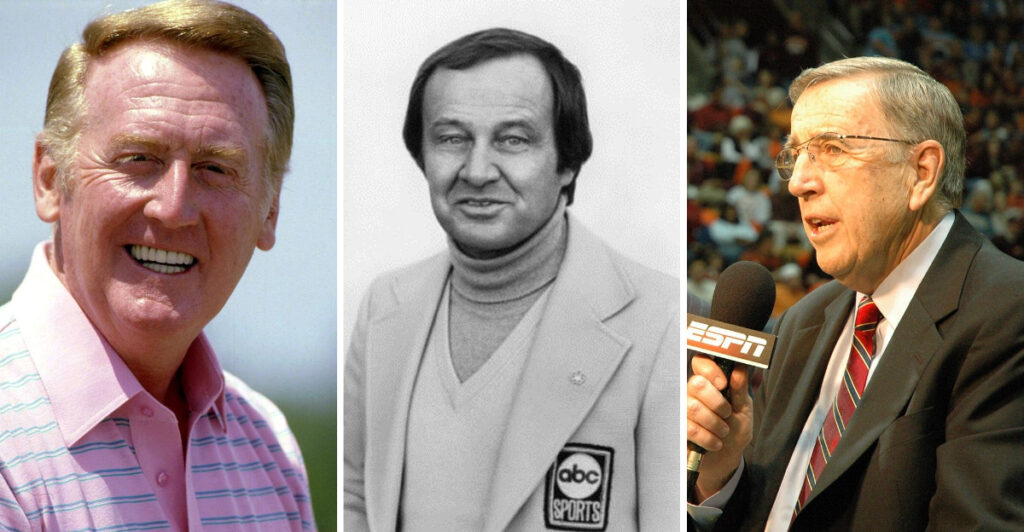
Some voices become so familiar that they feel like part of the game itself. The greatest sports broadcasters in American history did more than describe plays.
They told stories, created moments, and made fans feel like they were right there in the stadium. From baseball diamonds to Olympic arenas, these voices shaped how an entire nation experiences sports.
1. Vin Scully
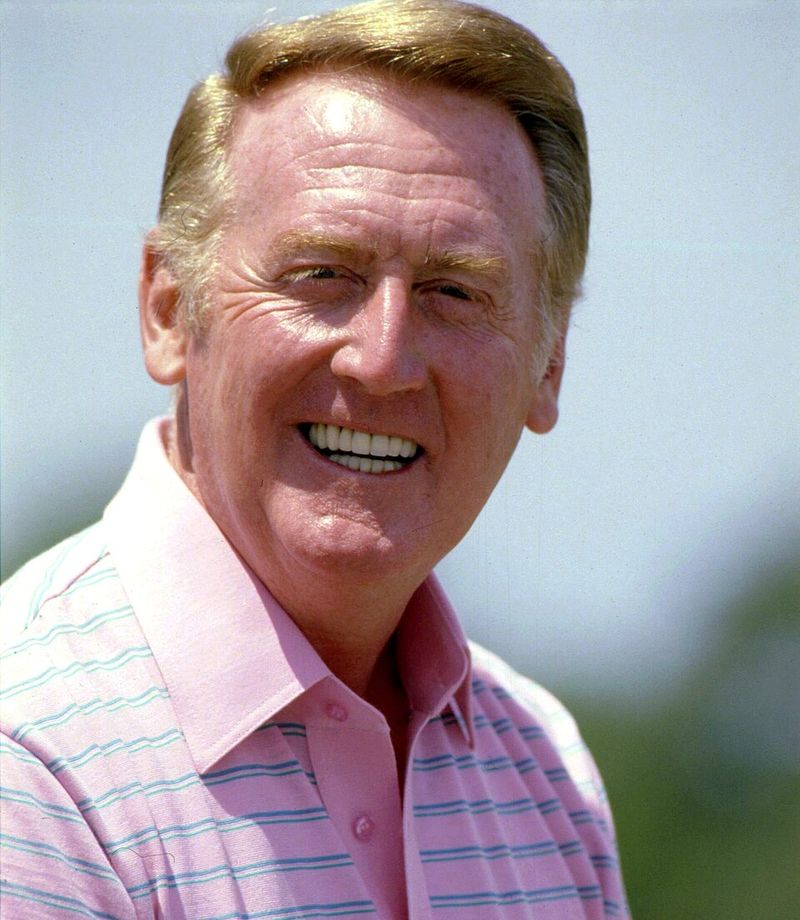
For 67 years, Vin Scully was the sound of summer in Los Angeles. His voice carried Dodgers games from Brooklyn to California, and millions of fans tuned in just to hear him talk.
He had a rare gift for making every listener feel like he was speaking directly to them.
Scully never needed a partner in the booth. He worked alone, weaving baseball statistics with personal stories, history lessons, and poetry.
His call of Hank Aaron’s 715th home run and Kirk Gibson’s 1988 World Series homer are considered two of the greatest moments in broadcast history.
He retired in 2016 at age 88, still sharp and still beloved. Scully won the Ford Frick Award from the Baseball Hall of Fame and countless lifetime achievement honors.
Many broadcasters who came after him openly say he was their reason for choosing this career.
2. Al Michaels
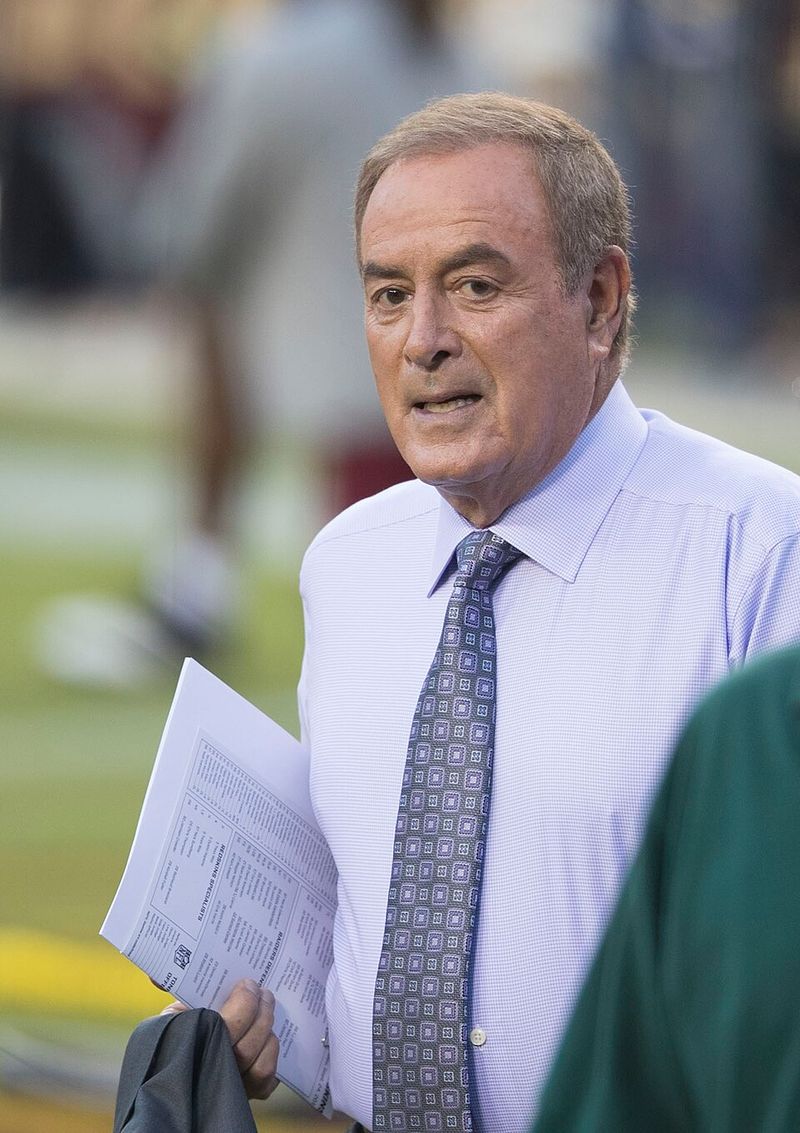
“Do you believe in miracles? YES!” Those six words, spoken by Al Michaels during the 1980 Winter Olympics, became one of the most replayed moments in American sports broadcasting history.
When the U.S. hockey team defeated the heavily favored Soviet Union, Michaels captured the emotion of an entire country in a single breath.
That call alone would cement most careers, but Michaels built a resume far beyond one moment. He called Super Bowls, World Series games, NBA Finals, and became the signature voice of Monday Night Football and later Sunday Night Football on NBC.
His strength is his calm under pressure. No matter how dramatic the moment, Michaels sounds like someone who has seen everything before.
That composure, combined with sharp wit and deep sports knowledge, makes him one of the most respected broadcasters across every generation of sports fans.
3. John Madden
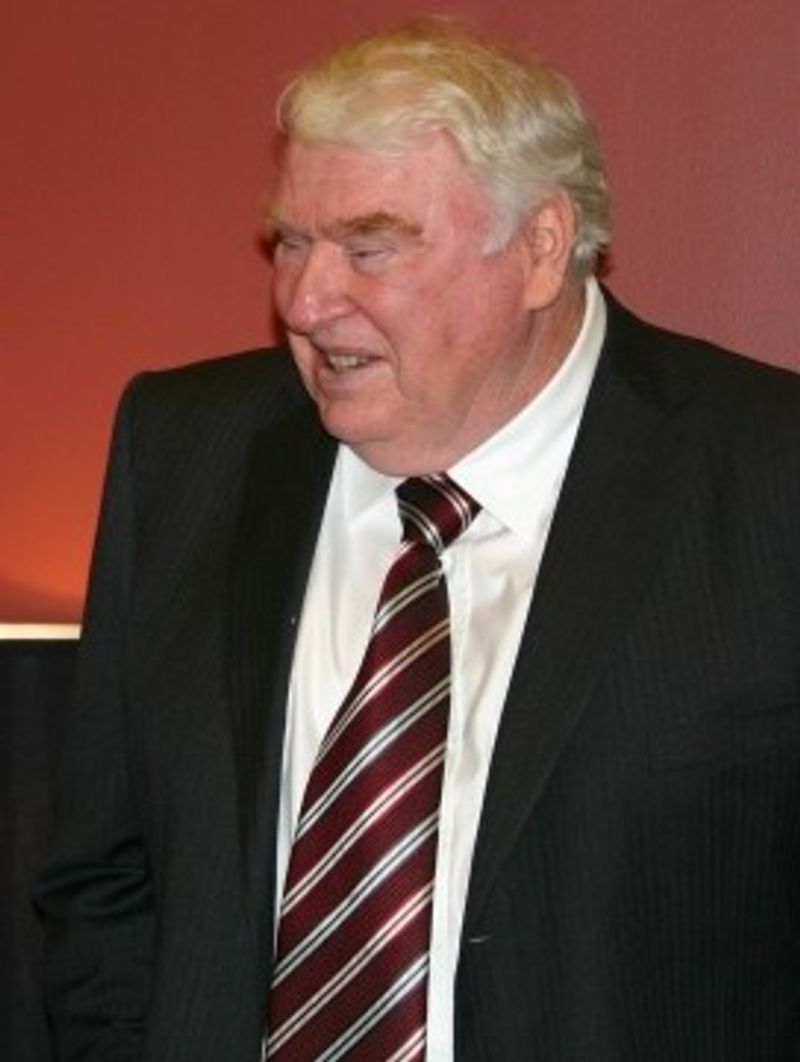
Before John Madden arrived in the broadcast booth, football commentary was stiff and formal. He changed everything.
Madden talked about football the way a fan at a backyard barbecue would, using plain language, enthusiasm, and humor that made even complicated plays feel obvious.
His telestrator drawings on screen became legendary. Watching Madden circle players and scribble arrows mid-play made football genuinely educational for casual viewers.
He worked alongside Pat Summerall for CBS and Fox, and that partnership became one of the most celebrated in broadcast history.
Of course, most kids today know the name Madden from the video game franchise that bears his name. But long before that, he was a Super Bowl-winning coach with the Oakland Raiders.
His broadcasting career earned him multiple Emmy Awards and a permanent place in both the Pro Football Hall of Fame and the American Sportscasters Hall of Fame.
4. Howard Cosell
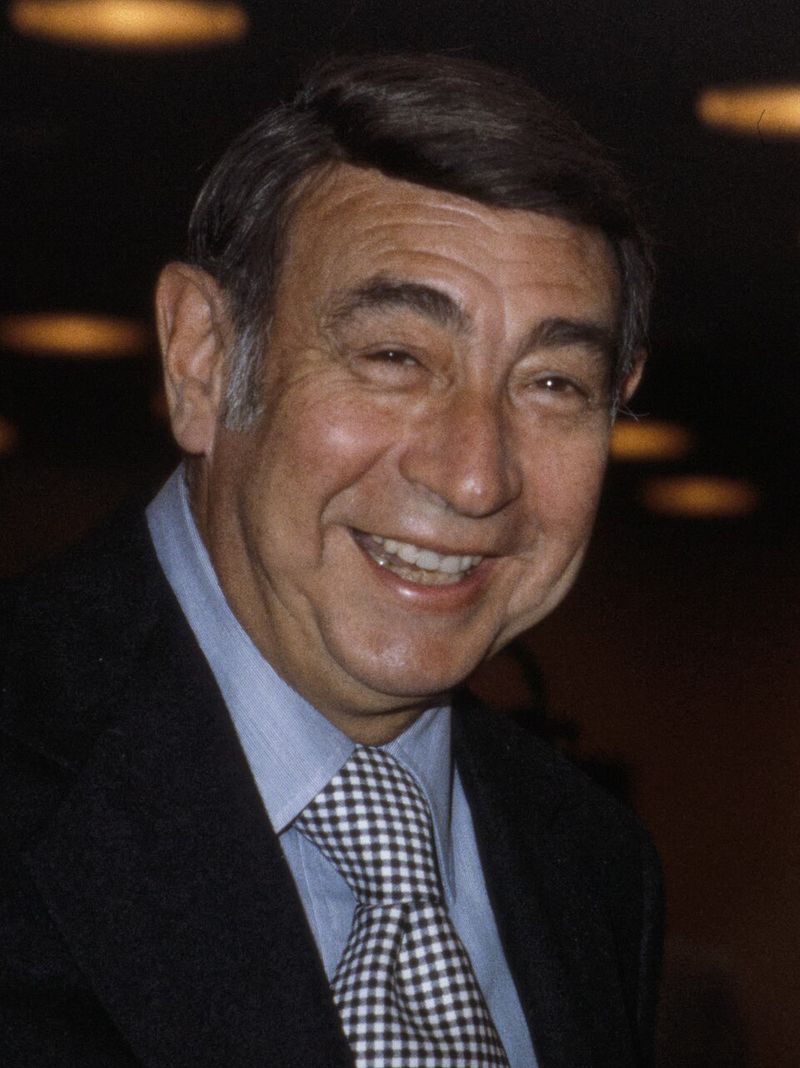
Love him or hate him, Howard Cosell made sports television impossible to ignore. He was brash, opinionated, and completely unlike anyone who had ever held a microphone before him.
Cosell believed sports journalists had a responsibility to speak the truth, even when the truth was uncomfortable.
He famously stood by Muhammad Ali when Ali refused military induction and faced public backlash. Cosell covered that story with fairness at a time when few broadcasters were willing to engage.
His work on ABC’s Monday Night Football alongside Frank Gifford and Don Meredith drew massive audiences throughout the 1970s.
Critics called him arrogant. Fans called him honest.
Either way, nobody changed the channel when Cosell spoke. He proved that a broadcaster could have a strong point of view and still be taken seriously.
His influence on the relationship between sports media and social issues continues to be felt today.
5. Keith Jackson
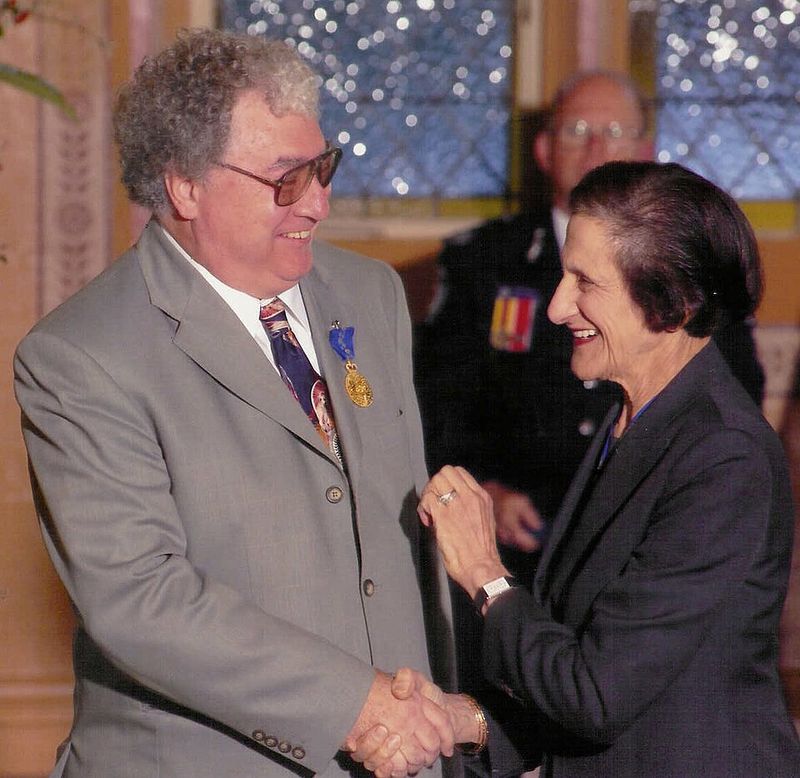
“Whoa, Nellie!” Nobody else could have made those two words famous. Keith Jackson brought a folksy, down-home charm to college football that made Saturday afternoons feel like a national celebration.
His voice had warmth and authority in equal measure, and fans trusted every word he said.
Jackson worked at ABC Sports for decades, becoming the definitive voice of the Rose Bowl and college football as a whole. He called some of the most memorable games in college football history, including several Heisman Trophy winners and national championship moments.
What made him special was his genuine love for the college game. He turned down opportunities to call professional football because he believed college sports had a purity worth protecting.
Jackson received the Ford Frick Award and was inducted into the American Sportscasters Hall of Fame. His voice still echoes through highlight reels that fans revisit every football season.
6. Chick Hearn
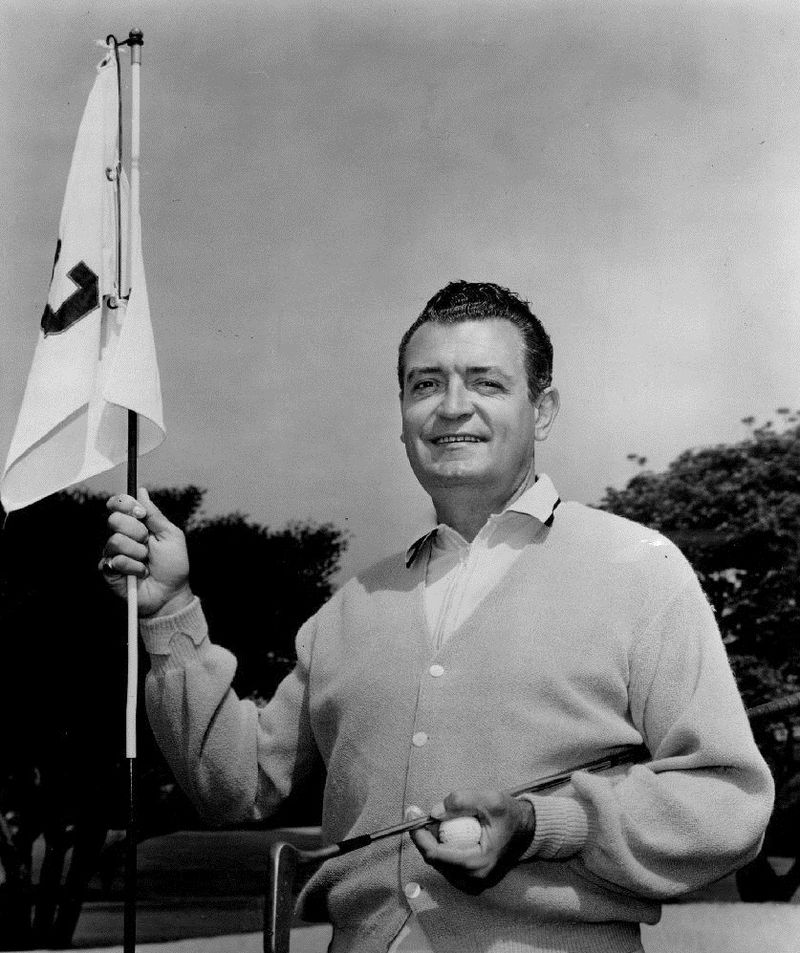
Chick Hearn did not just call Lakers games. He invented a language for basketball.
Terms like “slam dunk,” “air ball,” “no-look pass,” and “frozen rope” all came from Hearn’s colorful vocabulary. Before he popularized those phrases, they simply did not exist in the sport’s everyday conversation.
Hearn worked as the Lakers broadcaster for 42 seasons, calling an astonishing 3,338 consecutive games without missing a single one. That streak ran from 1965 to 2001, a record that no broadcaster in any sport has come close to matching.
He was present for every Laker championship team during that incredible era.
His quick-fire delivery and sharp humor made him a fan favorite who was just as entertaining as the players on the court. When Chick said the “game is in the refrigerator,” fans knew it was over.
He was inducted into the Basketball Hall of Fame in 2003.
7. Pat Summerall
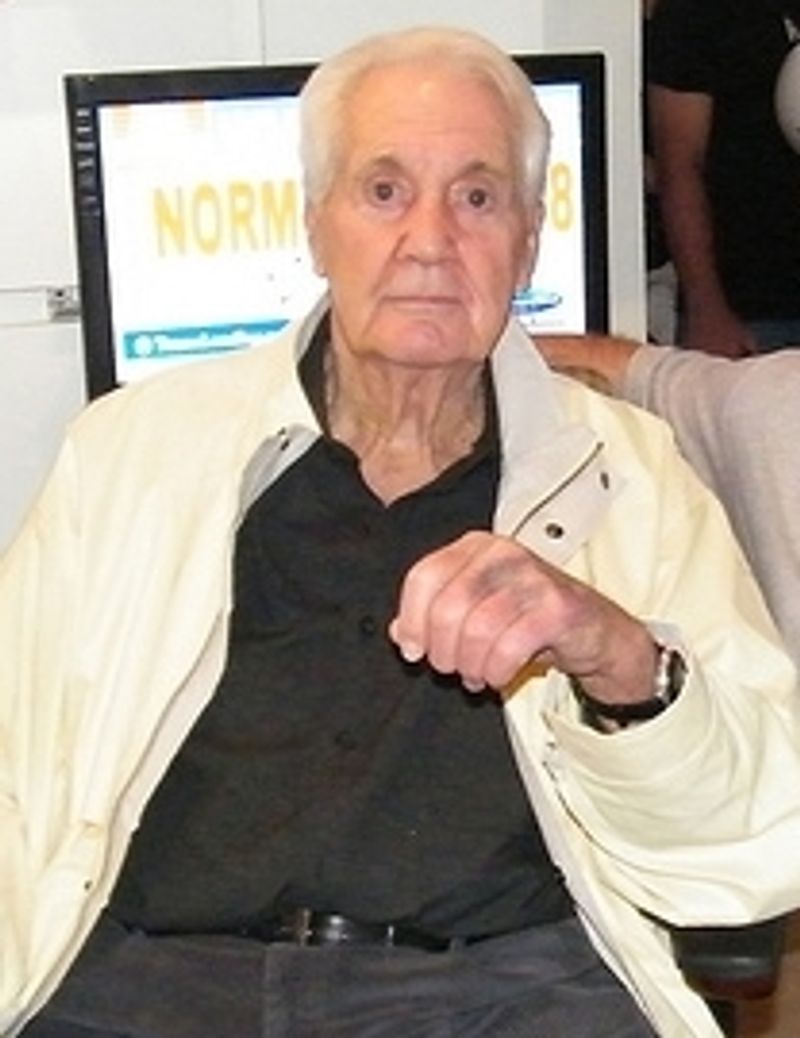
Pat Summerall understood something most broadcasters never learn: silence can be more powerful than words. He was known for saying exactly what needed to be said and nothing more, letting the game breathe.
That restraint made him one of the most respected voices in NFL history.
Summerall called 16 Super Bowls during his career, more than any other broadcaster. He worked for both CBS and Fox alongside John Madden, and their partnership is widely regarded as the gold standard for football broadcasting teams.
Their chemistry felt effortless, with Summerall’s calm professionalism balancing Madden’s exuberant energy perfectly.
Before his broadcasting career, Summerall was an NFL kicker and tight end, giving him a player’s perspective that added credibility to his commentary. He received the Pete Rozelle Radio-Television Award from the Pro Football Hall of Fame.
His understated style proved that quiet confidence can leave the deepest impression on an audience.
8. Jim McKay
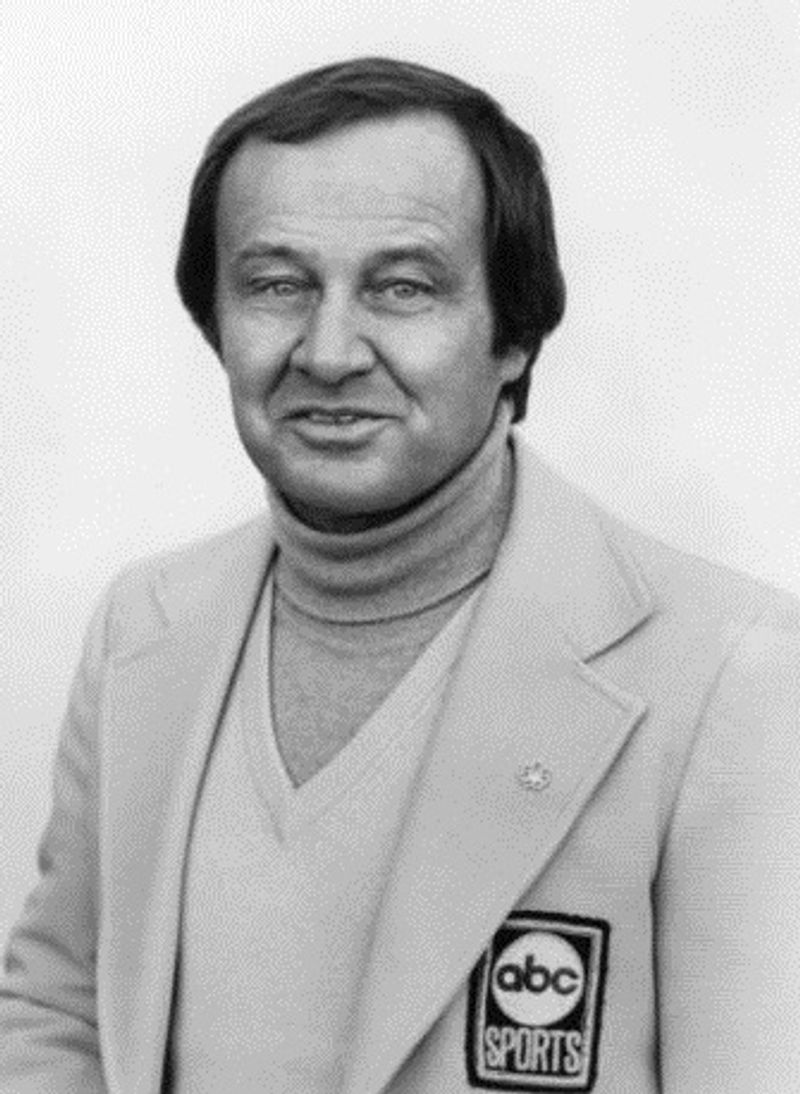
Jim McKay hosted ABC’s Wide World of Sports for 37 years, introducing American audiences to sports from around the globe that they had never seen on television before. His famous opening line about “the thrill of victory and the agony of defeat” became one of the most recognized phrases in television history.
But McKay’s greatest moment came under the most tragic circumstances. During the 1972 Munich Olympics, Palestinian terrorists took Israeli athletes hostage.
McKay anchored ABC’s coverage for nearly 16 hours straight, delivering the heartbreaking news with composure and humanity that earned him worldwide respect.
His words, “They’re all gone,” when announcing the deaths of the Israeli athletes, remain one of the most somber moments in broadcast journalism. McKay won 13 Emmy Awards and two Peabody Awards throughout his remarkable career.
He showed the world that sports broadcasting could carry the weight of real human tragedy with dignity.
9. Bob Costas
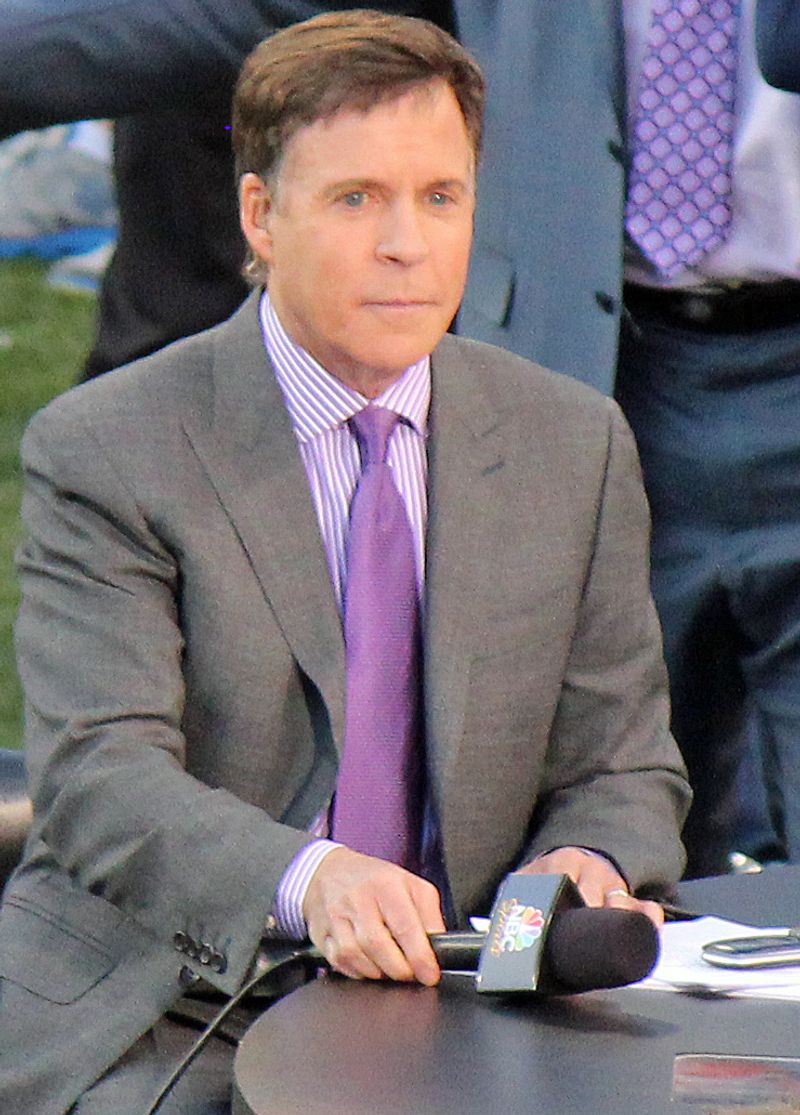
Bob Costas is the broadcaster other broadcasters study. His preparation is legendary in the industry.
Before any interview or broadcast, Costas researches his subject so thoroughly that guests are often surprised by the depth of his knowledge. That preparation shows on air every single time.
He hosted 11 Olympic Games for NBC, becoming the face of America’s Olympic coverage for an entire generation of viewers. His baseball commentary, particularly on NBC and MLB Network, is considered among the most insightful in the sport’s history.
He also conducted some of the most memorable interviews in sports television.
Costas has won 28 Emmy Awards, a number that puts him in a category almost by himself. He is equally comfortable discussing a pennant race, a heavyweight title fight, or a complex social issue connected to sports.
His intelligence and willingness to tackle difficult topics set a high standard for broadcast journalism.
10. Marv Albert
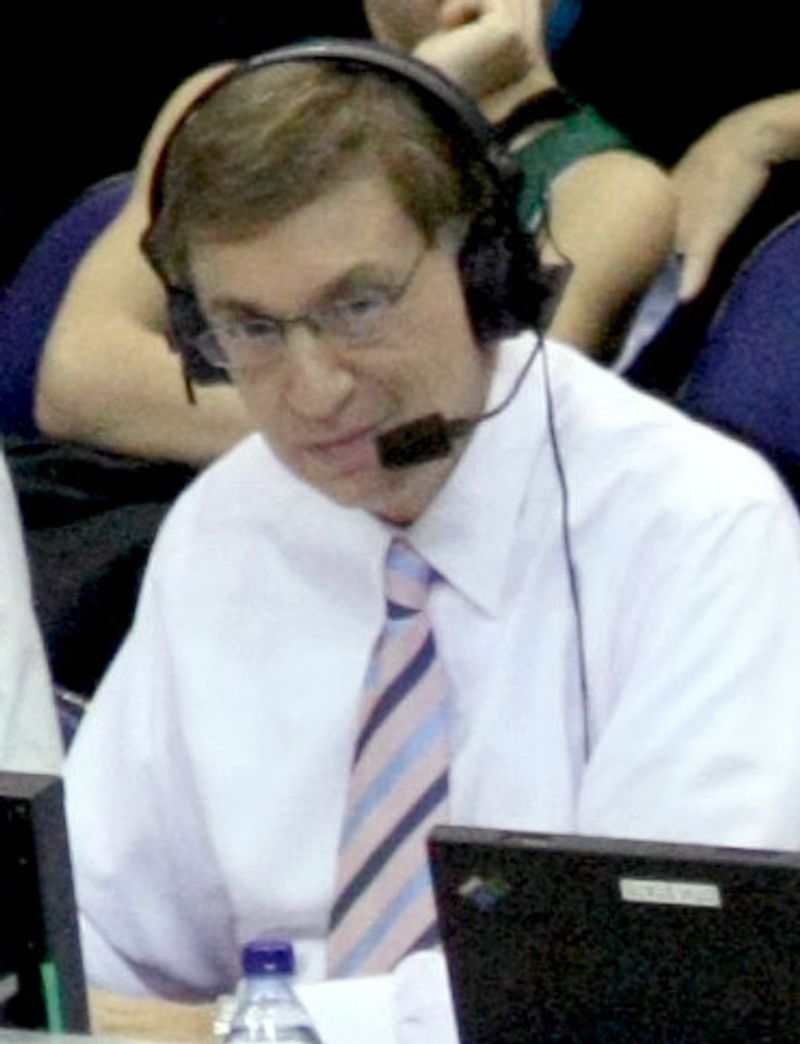
“Yes! And it counts!” Nobody delivered a basketball call with more electricity than Marv Albert.
His voice was the soundtrack of the NBA for decades, and his enthusiasm was genuinely contagious. Watching an NBA playoff game with Marv Albert calling it felt like watching something important happen in real time.
Albert began his career as a ballboy for the New York Knicks before eventually becoming their radio broadcaster. He went on to call NBA games for NBC and TNT, covering some of the greatest players in basketball history including Michael Jordan, Magic Johnson, and Larry Bird during their prime years.
Beyond basketball, Albert also called NFL games, boxing matches, and major sporting events across multiple networks. His voice is instantly recognizable to anyone who watched sports between the 1970s and 2010s.
He was inducted into the American Sportscasters Hall of Fame and remains one of the most imitated voices in sports media history.
11. Dick Enberg
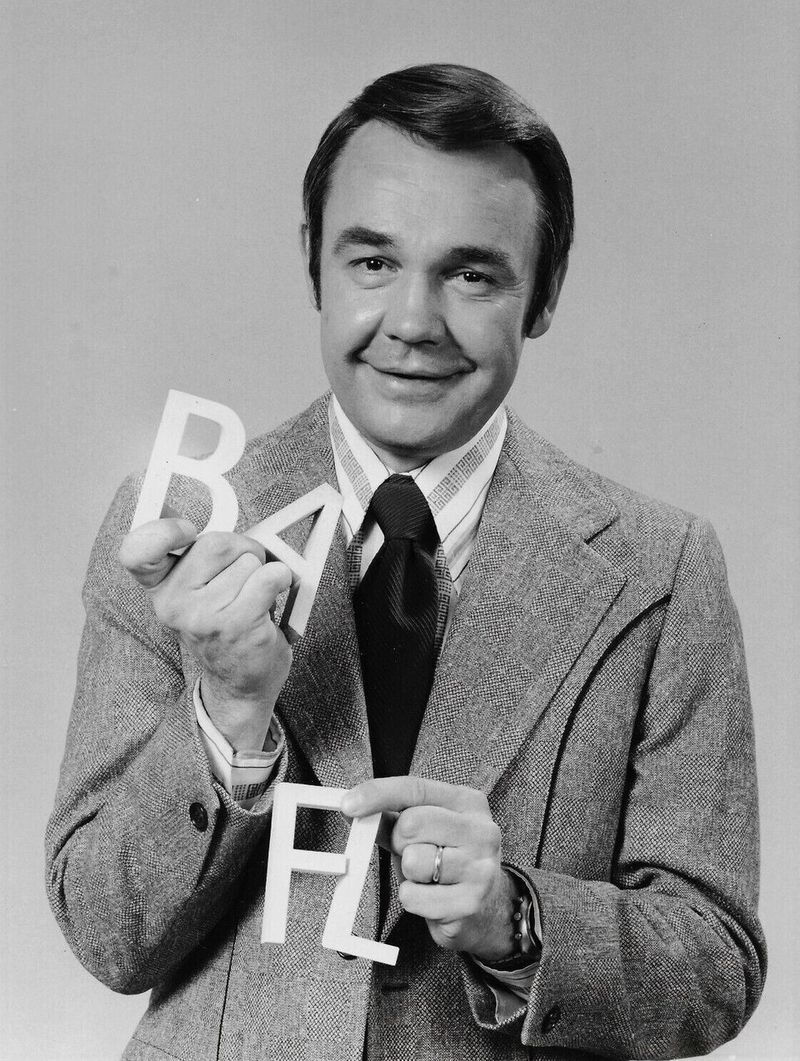
“Oh my!” Two simple words, but when Dick Enberg said them, fans knew something extraordinary had just happened. Enberg had a warm, inviting broadcast style that made every viewer feel welcome, whether they were a lifelong sports fan or a casual observer catching a game on television for the first time.
His versatility was remarkable. Enberg called NFL games, Wimbledon tennis, college basketball, the Super Bowl, and baseball for the San Diego Padres.
He won 13 Emmy Awards and received the Ford Frick Award from the Baseball Hall of Fame. Very few broadcasters have excelled across that many different sports at such a high level.
Enberg was also known for his genuine kindness toward colleagues and athletes. Former players often described him as one of the most respectful broadcasters they ever worked with.
He passed away in 2017, leaving behind a legacy of warmth, professionalism, and an unmistakable enthusiasm for every sport he covered.
12. Jack Buck
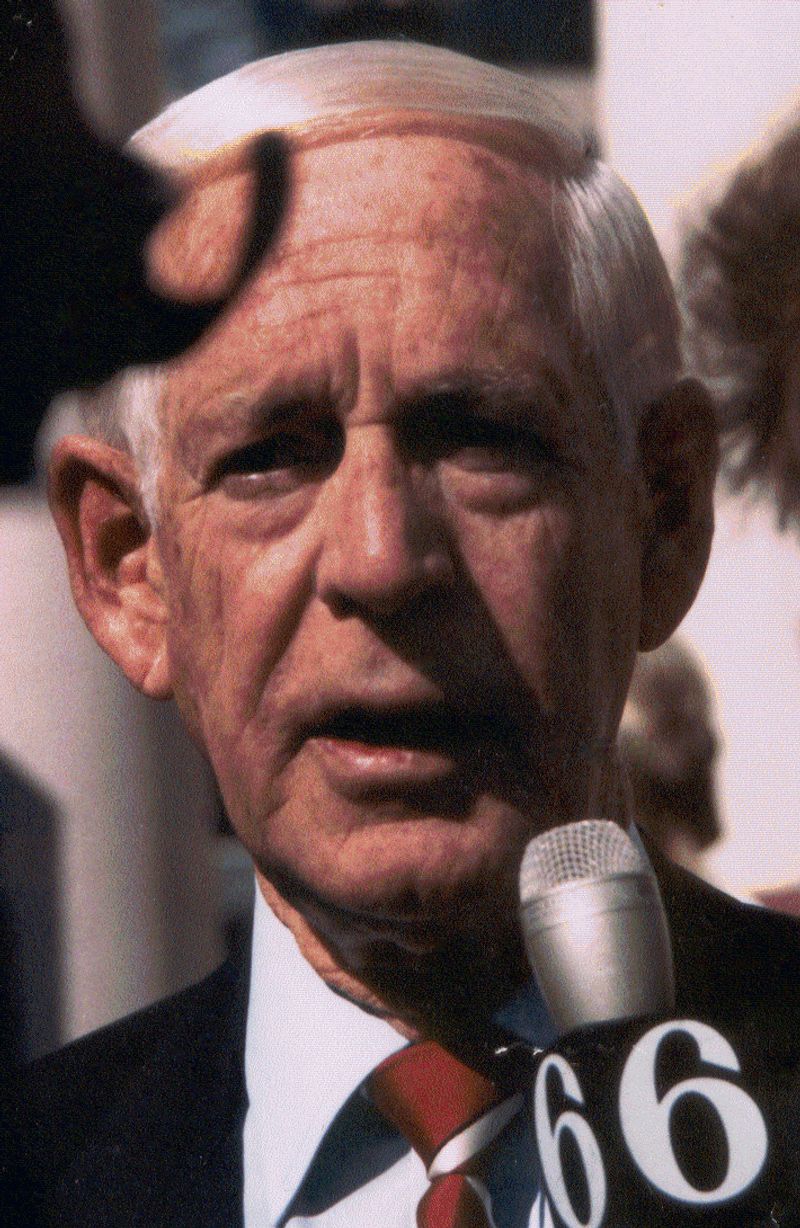
Few broadcasters have delivered more memorable calls than Jack Buck. His voice carried Cardinals baseball for decades on KMOX radio in St. Louis, and his dramatic postseason calls became part of American sports folklore.
When Ozzie Smith hit a walk-off homer in the 1985 NLCS, Buck shouted, “Go crazy, folks, go crazy!” and the phrase stuck forever.
Buck also worked NFL games for CBS, calling multiple Super Bowls with the same steady authority he brought to baseball. His son Joe Buck followed him into broadcasting, but Jack’s legacy stands entirely on its own impressive foundation.
He was inducted into both the Baseball Hall of Fame and the American Sportscasters Hall of Fame.
After the September 11 attacks, Buck read an original poem on the field before a Cardinals game that moved the entire crowd to tears. That moment showed that the greatest sports voices can speak to something much larger than the game itself.
13. Brent Musburger
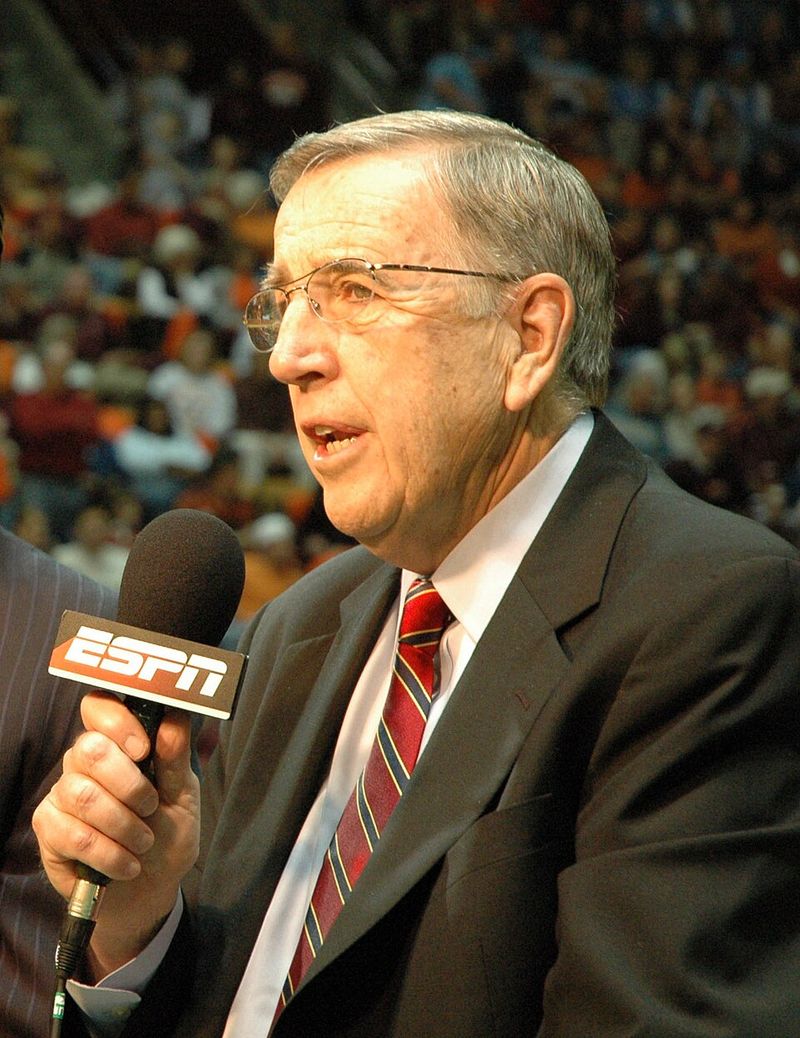
“You are looking live at…” Those words, spoken every weekend for decades, signaled to millions of sports fans that something exciting was about to begin. Brent Musburger had a commanding presence that made every broadcast feel like an event worth watching.
He could build anticipation better than almost anyone in the business.
Musburger spent years at CBS before moving to ABC and ESPN, calling college football, the NFL, the NBA, and major boxing matches along the way. He was particularly beloved by college football fans, who associated his voice with the biggest games of the season.
His enthusiasm never faded, even after decades behind the microphone.
He also worked March Madness coverage for CBS, helping to build college basketball into the cultural phenomenon it is today. Musburger retired from ESPN in 2017 but briefly returned to broadcasting in Las Vegas.
His career spanned more than five decades and touched nearly every major sport in America.
14. Doc Emrick
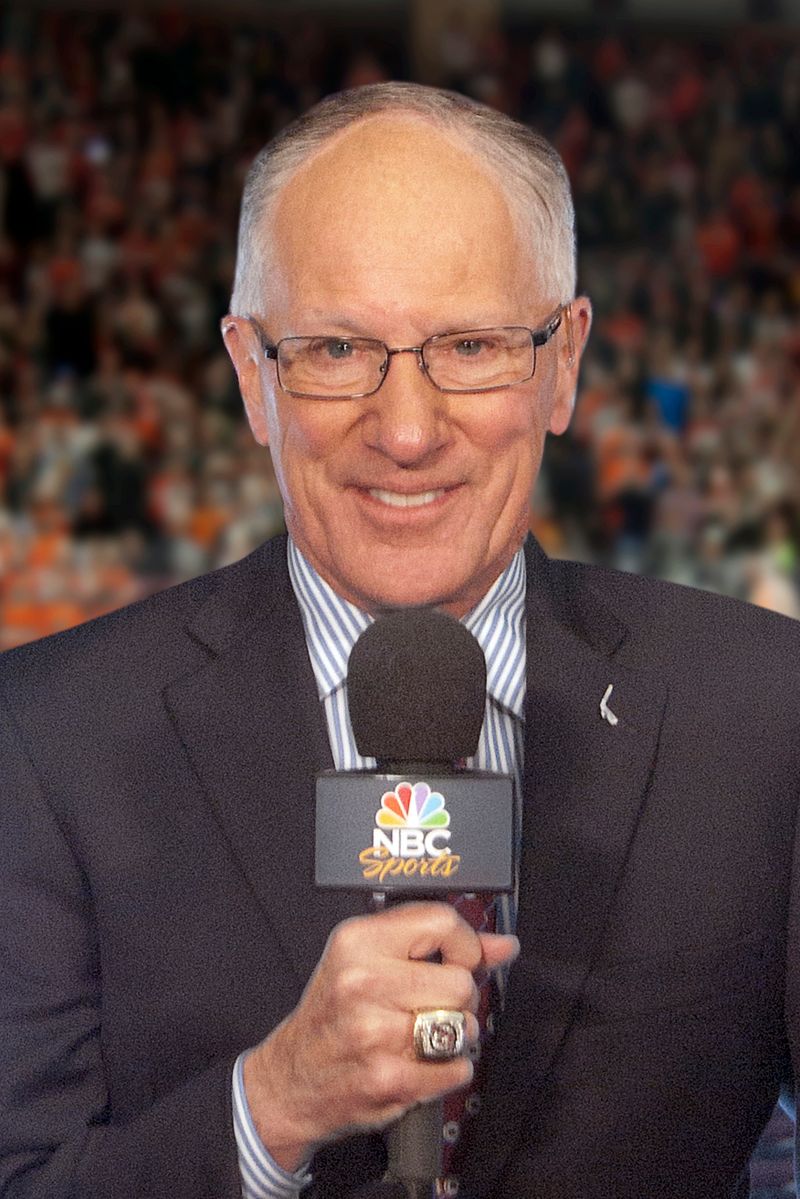
Mike “Doc” Emrick called hockey the way a jazz musician improvises: fast, fluid, and completely in the moment. His vocabulary was so extensive that researchers once counted more than 150 different verbs he used to describe puck movement during a single broadcast.
No other sports announcer in any sport has demonstrated that kind of linguistic creativity.
Emrick worked for NBC and the New Jersey Devils for many years, calling Stanley Cup Finals and Olympic hockey with equal brilliance. He received four Emmy Awards and the Foster Hewitt Memorial Award from the Hockey Hall of Fame, considered the highest honor in hockey broadcasting.
His calls during overtime playoff games are legendary among hockey fans.
He retired in 2020 after more than 3,500 professional hockey broadcasts. Players, coaches, and fellow broadcasters lined up to praise him upon his retirement.
For an entire generation of American hockey fans, Doc Emrick’s voice was simply what hockey sounded like.
15. Mike Breen

Every time a three-pointer swishes through the net at a crucial moment, NBA fans around the world are already waiting for it: “BANG!” Mike Breen’s signature call has become one of the most recognized sounds in modern sports broadcasting. It is short, sharp, and perfectly captures the electricity of a big shot landing.
Breen has been the lead NBA broadcaster for ABC and ESPN since 2006, calling every NBA Finals during that stretch. He also called New York Knicks games for MSG Network throughout his career, building a deep connection with one of basketball’s most passionate fan bases.
His style blends clean play-by-play with genuine emotional investment in the game. Breen respects the history of basketball broadcasting while creating his own legacy in real time.
He has worked alongside Jeff Van Gundy and Mark Jackson for years, forming one of the most familiar commentary teams in current sports television.
Share this story