 Unearth The Voyage
Some cafés are more than places to sit and sip. They are living archives where revolutions were whispered, art movements were sketched, and economies rose and fell outside fogged windows. You will meet rooms that kept their chandeliers bright through blackouts and booms alike, serving warmth when the world felt cold. Step inside and feel time bend as porcelain cups clink against saucers that have outlasted empires.
1. Caffè Florian – Venice, Italy (est. 1720)
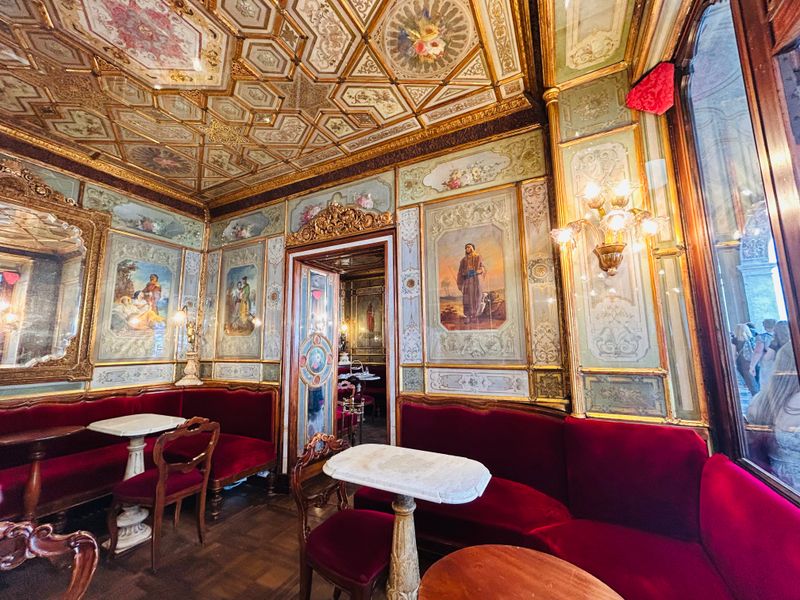
Step beneath the arcades of St. Mark’s Square and you feel centuries gather at your table. Caffè Florian survived sieges, floods, and fickle fashions, yet its gilded salons still glow with mirrors and frescoes. Musicians play while waiters glide, carrying silver trays like small ceremonies.
You taste Venice’s talent for beauty and endurance in every demitasse. Wars came and water rose, but the café kept its poise, welcoming artists, travelers, and dreamers. Sit facing the piazza, and time seems to peer back kindly. Your bill includes history, charm, and the pleasure of being part of a long, unbroken conversation.
2. Café Procope – Paris, France (est. 1686)
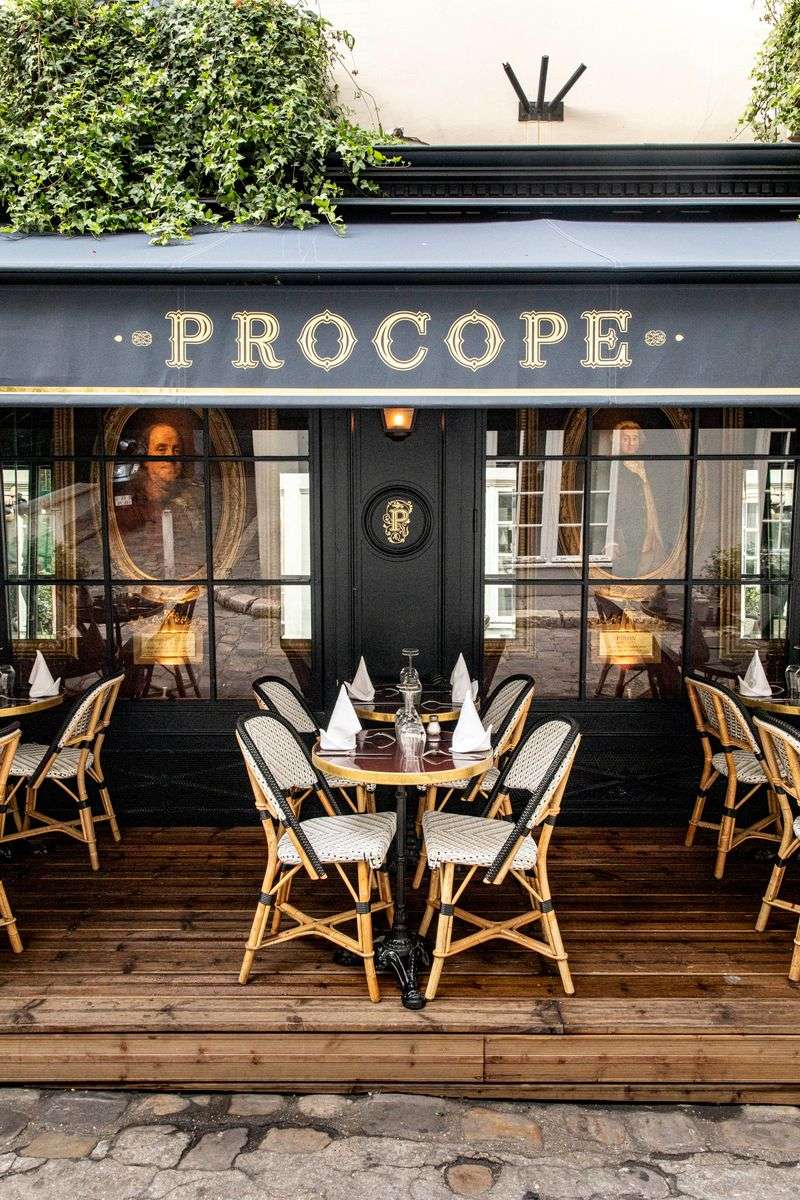
At Café Procope, the lamps throw a learned glow over glass cases of relics and portraits of philosophers. Voltaire supposedly downed chocolate here, and revolutionaries sharpened ideas between sips. The menu nods to tradition while the paneling whispers names you studied in school.
You feel welcomed into a salon without needing a manifesto. Paris has remade itself countless times, but Procope keeps a steady heartbeat for debate, gossip, and lingering meals. Chairs creak approvingly as you join the lineage. Order something classic, sit a little straighter, and let the centuries tutor your curiosity in the most delicious way possible.
3. Zum Arabischen Coffe Baum – Leipzig, Germany (serving since 1711)
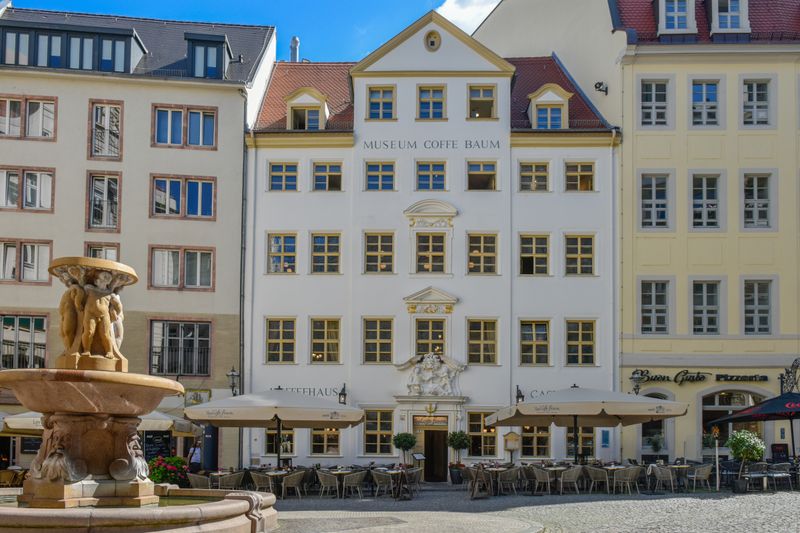
Leipzig’s Zum Arabischen Coffe Baum has poured cups through baroque courts, empires, and reunification. In wood-paneled rooms, exhibitions trace coffee’s European journey, while locals swap news under carved ceilings. Bach, Goethe, and thinkers of the trade city once paused here between rehearsals of history.
You sense a merchant city’s pulse, resilient and practical, softened by aroma. Wartime scars and political shifts never erased the welcome at these sturdy tables. Order a slice of cake, feel the museum upstairs beckon, then return to your seat wiser. The past tastes rich, and the present sits comfortably beside it, spoon tapping porcelain.
4. Antico Caffè Greco – Rome, Italy (est. 1760)
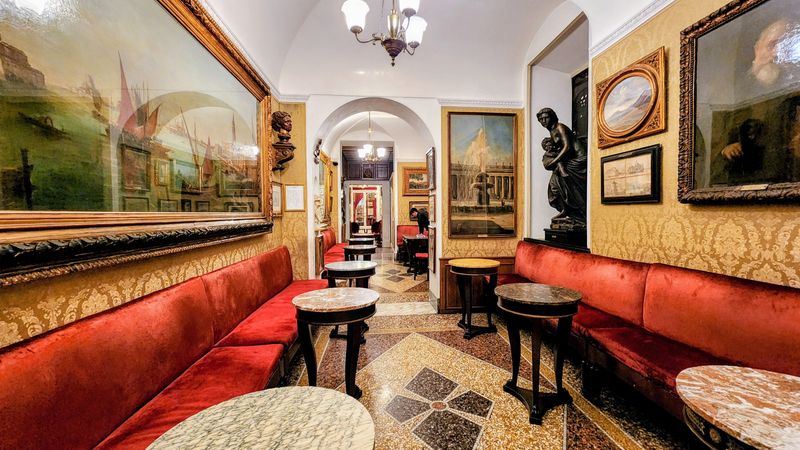
Antico Caffè Greco unfurls along Via dei Condotti like a crimson-velvet gallery. Paintings crowd the walls, and small rooms hold echoes of Goethe, Keats, and Casanova. The staff carries Roman ceremony lightly, letting the espresso speak in concise poetry.
You perch on a worn banquette and watch elegance pass by the doorway. The café has weathered political storms and fashion stampedes, yet its conversation remains measured and civilized. Order a caffè, practice restraint, and notice how the city slows here. Heritage is not staged, it is lived, one porcelain cup at a time, beneath golden frames.
5. Café Tortoni – Buenos Aires, Argentina (est. 1858)
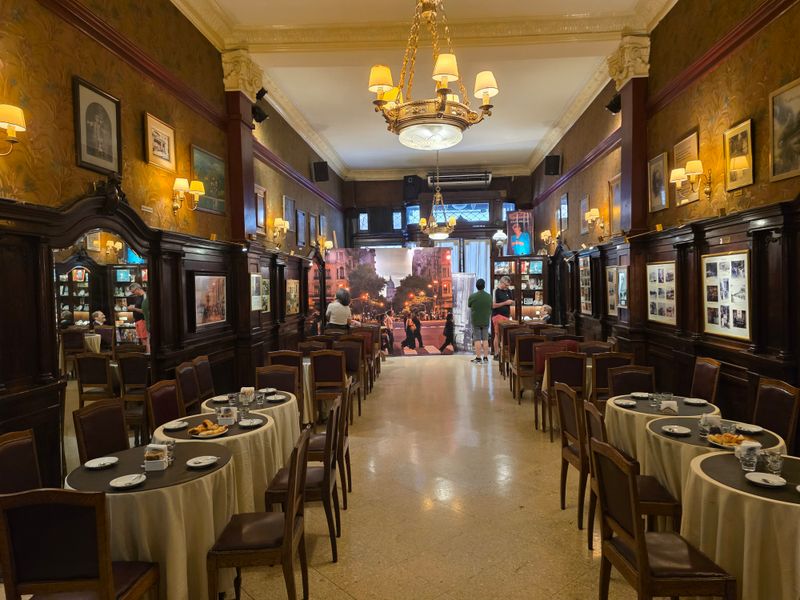
Under stained glass and polished wood, Café Tortoni stages Buenos Aires at its most nostalgic. Tango whispers through photographs while marble tables gather poets, retirees, and curious travelers. The city’s crises and revivals have passed like storms, but Tortoni keeps its lights warm.
You order churros with thick hot chocolate and feel the room steady your stride. Artists once sketched manifestos here, and you can still taste ambition in the dulce sweetness. The waiters are guardians of ritual, delivering comfort like news. Step outside to Avenida de Mayo, and the bustle feels friendlier after such deliberate hospitality.
6. Café Central – Vienna, Austria (est. 1876)

Café Central greets you with soaring vaults, polished columns, and newspapers on wooden holders. Once a second home to Freud, Trotsky, and poets, it remains a stage for ideas dressed in pastry. The counters glitter with tortes while coffee arrives with quiet ceremony.
You settle into a Thonet chair and hear the city’s waltz slow to a thoughtful tempo. Empires fell and maps redrew, but the café kept debating calmly in porcelain tones. Order a melange, split a slice of sachertorte, and let conversation unfurl. The room makes everyone sound wiser, including you, especially after the second cup.
7. Les Deux Magots – Paris, France (est. 1812)
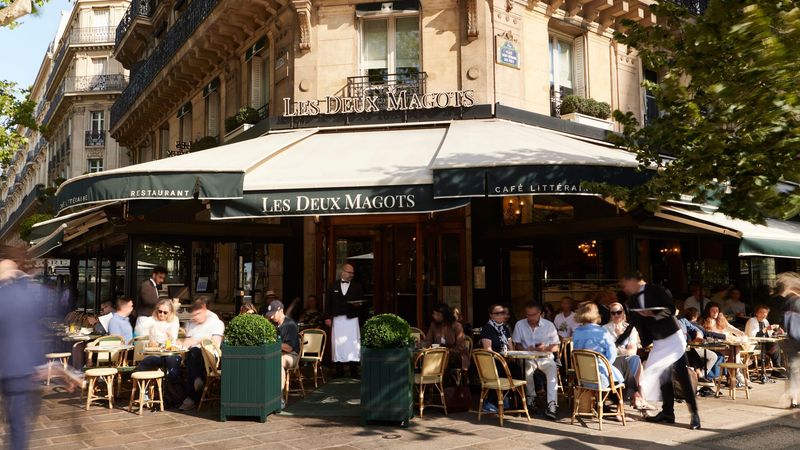
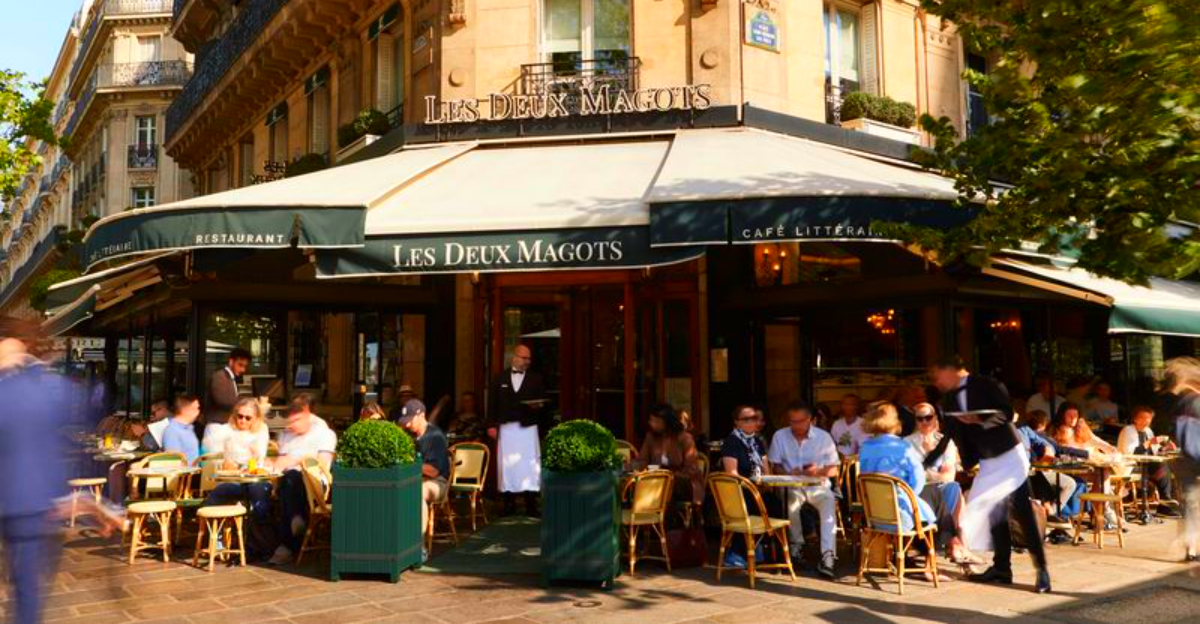
Les Deux Magots looks out over Saint-Germain-des-Prés like it invented the sidewalk table. Sartre and de Beauvoir once fenced with sentences here, and their bravado lingers in the awning’s shade. The green chairs wait patiently for another argument worth eavesdropping on.
You can order a croissant and pretend the page in your notebook might matter. The café survived occupations, shortages, and the fad cycle that eats lesser places. It still feels both public and intimate, a theater for glances and beginnings. Sit long enough, and the rhythm of cups and conversations becomes your metronome.
8. Café de Flore – Paris, France (est. 1887)
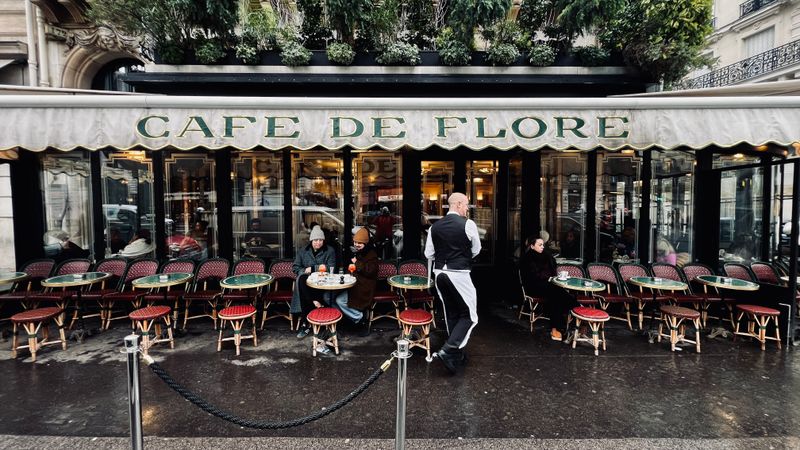
Across the boulevard, Café de Flore keeps its glossy red booths and mirrored poise. Surrealists, jazz lovers, and fashion editors have all claimed a corner. The waiter sets your café crème down like a punctuation mark that invites the next thought.
You notice how time layers kindly here, turning regulars into landmarks. Flore has ridden economic waves and cultural revolutions without losing its temperature. Order eggs or a simple tartine and watch the parade of scarves and notebooks. The terrace is a gallery of gestures, and every table feels like a small editorial meeting with destiny.
9. Café Gijón – Madrid, Spain (est. 1888)
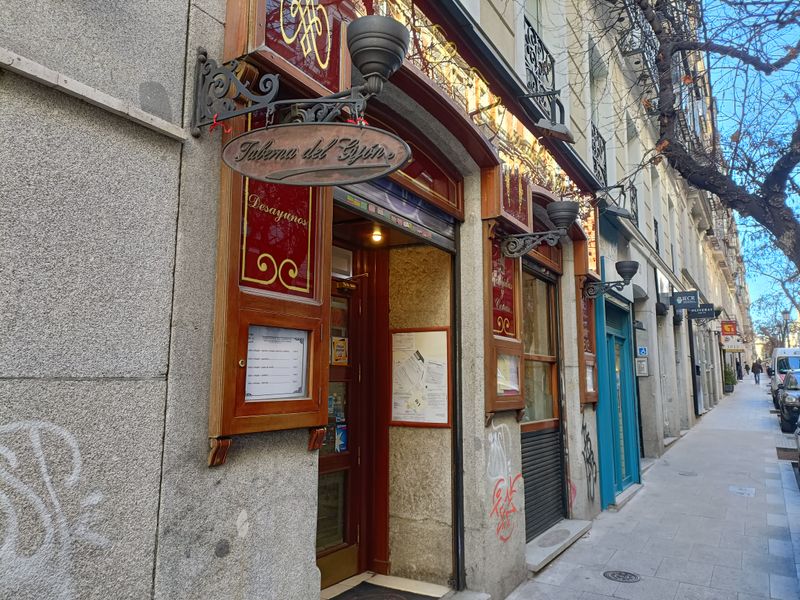
Café Gijón carries Madrid’s literary pulse under its striped awning. Poets, playwrights, and exiles once sharpened lines between sips, and the mirrors remember them kindly. Political winters and civil storms passed, yet the café poured steady warmth.
You feel the city’s stubborn optimism in the clatter of saucers and the shine of the wood. Even its closure news echoes like a cautionary tale about fragility and fame. Order café con leche, breathe in the history, and toast to perseverance. Culture survives in places like this, where conversations become chapters before anyone notices.
10. Café Tomaselli – Salzburg, Austria (est. 1703)
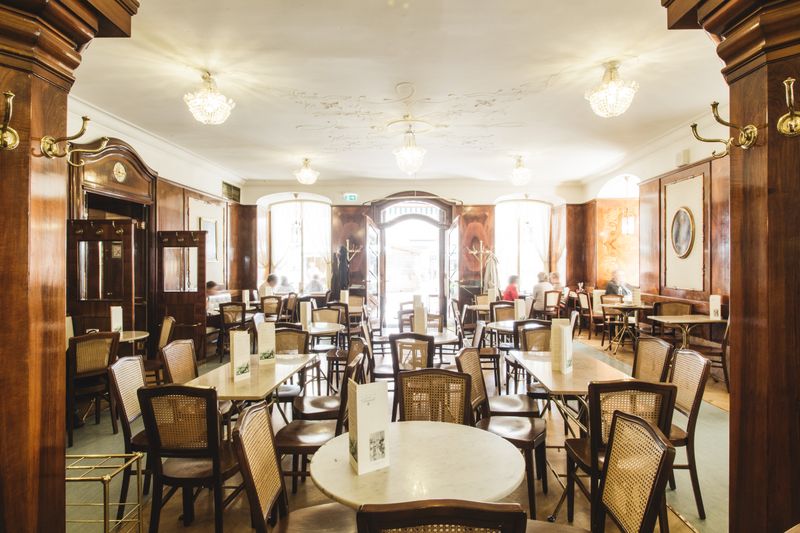
Café Tomaselli sits on Old Market Square like a gracious host who never tires. Trays of cakes are presented tableside by servers who treat selection like ceremony. Mozart once lived nearby, and music still seems to lift the teaspoons.
You stand at the glass case, torn between slices that look like well-behaved sins. Empires shifted, wars rumbled, and yet the balcony kept catching afternoon light. Choose a newspaper, take your time, and let Salzburg’s rhythm slow your own. Tradition here is gentle and sweet, delivered on porcelain with a wink.
11. Cafe Chris – Amsterdam, Netherlands (est. 1624)
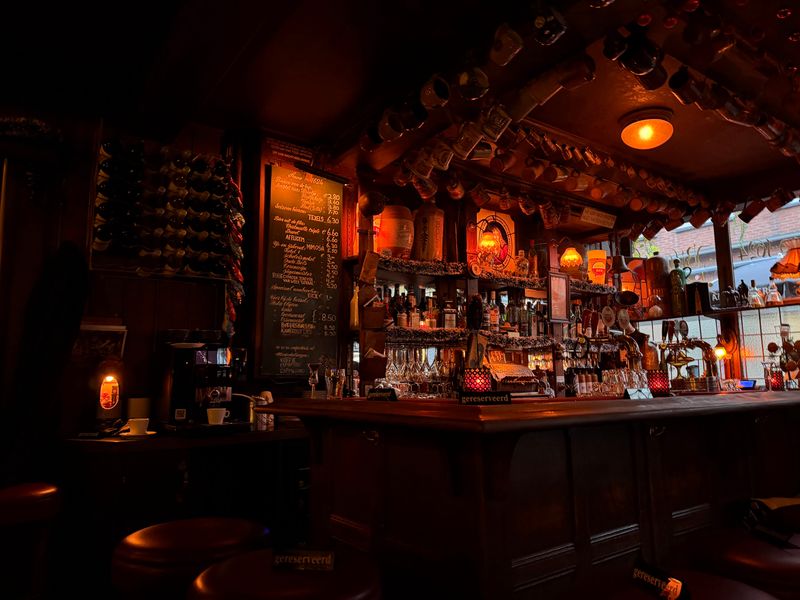
Cafe Chris is compact, wood-scented, and older than many countries. Candles and brass fixtures glow against worn tables where dockworkers and locals once traded stories. The Jordaan neighborhood reshaped itself countless times, yet this room kept its stubborn charm.
You order a simple coffee and feel Amsterdam’s maritime past press close. No fuss, just friendly gravity and a good pour. Through recessions and booms, the door kept opening for neighbors. The ceiling beams creak like old sailors, and you find balance in the steady amber light, grateful for places that do not overthink survival.
12. Caffè Fiorio – Turin, Italy (est. 1780)
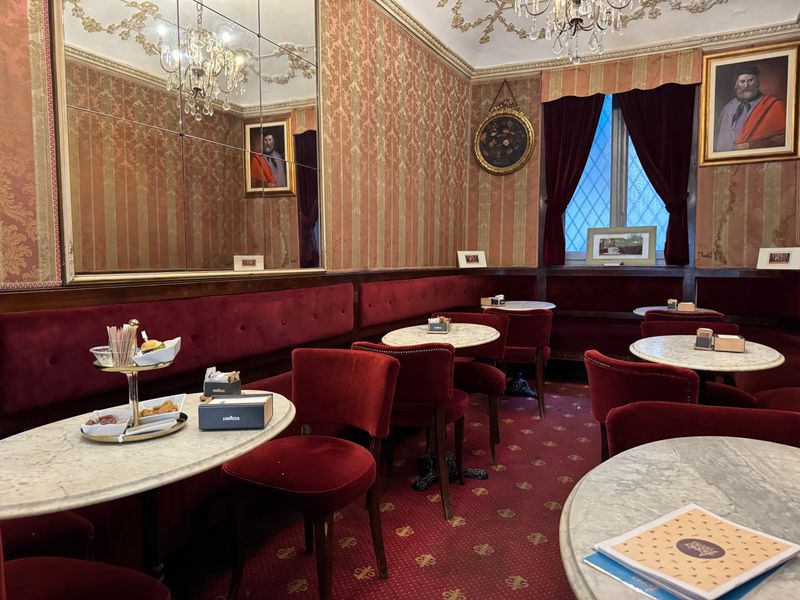
Caffè Fiorio wears its Piedmont elegance with a conspiratorial smile. Politicians and philosophers once plotted under its stucco and mirrors, stirring sugar into strategy. The gelato is as serious as the gossip, both beautifully presented.
You take a seat and watch the city glide past porticoes outside. Unification, world wars, and reinventions crossed this threshold without shaking the spoons. Order a bicerin or a scoop and linger over the civilized tempo. History here comes with whipped cream and a pointed eyebrow, reminding you that ideas are tastier when served graciously.
13. Café Slavia – Prague, Czech Republic (est. 1844)
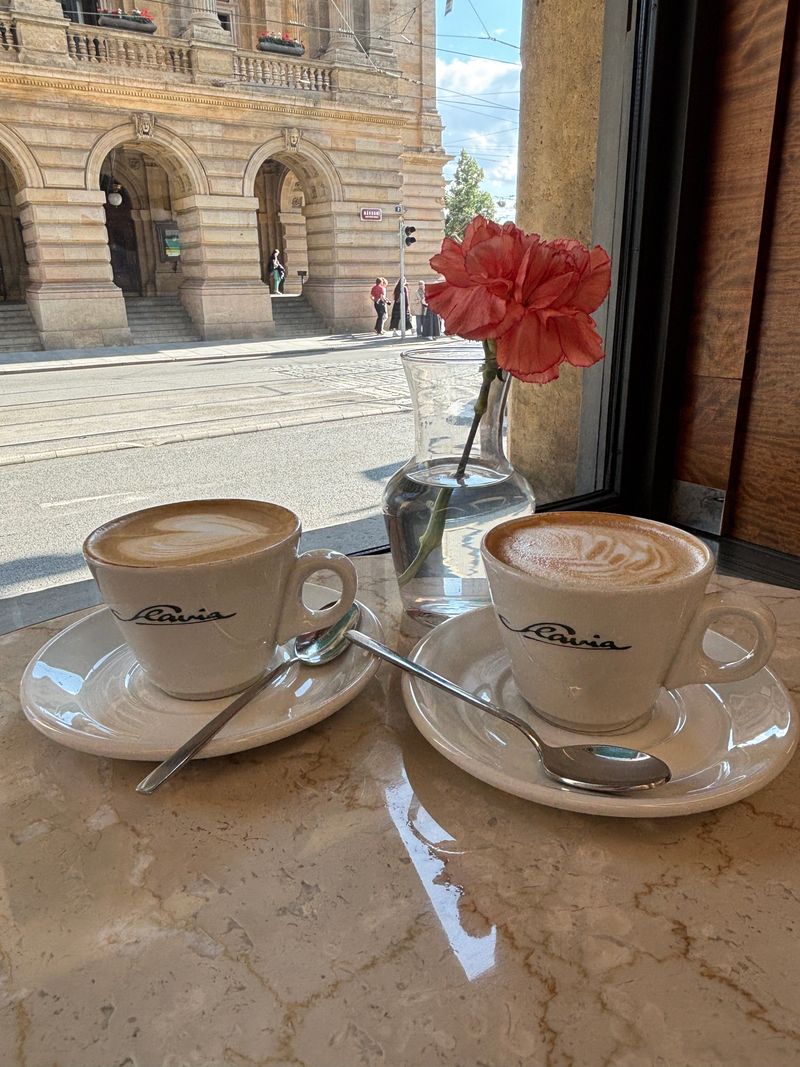
Café Slavia sits across from the National Theatre, watching the Vltava move like a patient storyline. Writers and dissidents once found refuge at its windows, sketching futures on napkins. The Art Deco touches still glow, even after regimes rose and fell.
You order absinthe or coffee and find the city’s melancholy hospitable. Outside, trams stitch the riverbanks together; inside, conversation mends other breaks. The café endured closures and comebacks, yet kept a seat open for stubborn hope. By the time you leave, Prague feels both grand and intimate, like a confidant.
14. Café Martinho da Arcada – Lisbon, Portugal (est. 1782)
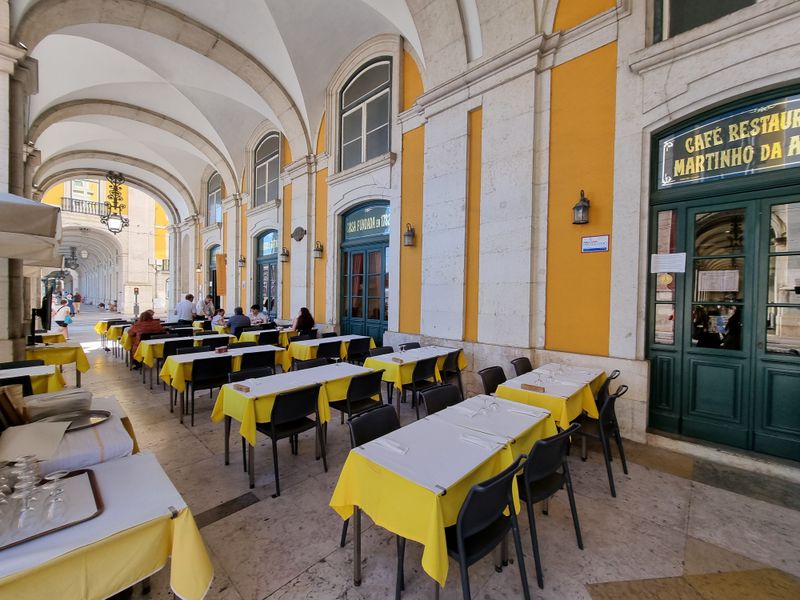
Under arcades on Praça do Comércio, Café Martinho da Arcada keeps Lisbon’s salt-light in its cups. Fernando Pessoa wrote here, and the air still cradles a thoughtful hush. Tiles, wood, and brass conspire to make time slow politely.
You taste the Atlantic in the breeze as you stir your bica. Revolutions, restorations, and austerity passed, but the tables stayed loyal to regulars. Order a pastel and let conversation meander like the Tagus. The city’s saudade becomes friendly company, and you leave steadier, convinced endurance can be soft-spoken and bright.
15. Café de la Paix – Cairo, Egypt (enduring classic)
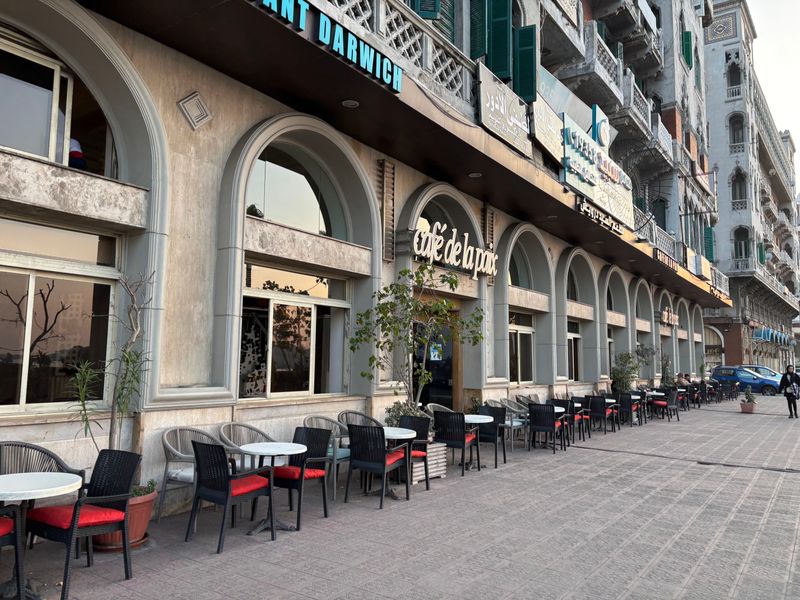
Café de la Paix in Cairo gathers tobacco curls and neighborhood stories under its awning. The clink of glasses and backgammon dice keeps steady time while traffic weaves outside. Traditional coffee arrives dark and generous, inviting long conversations.
You can feel how a café becomes a map of loyalties and routines. Through political and economic turns, regulars kept showing up, anchoring the room with laughter. Order something sweet, watch the evening soften, and listen as languages braid together. Survival here feels communal, a daily renewal written in steam and streetlight.



