 Unearth The Voyage
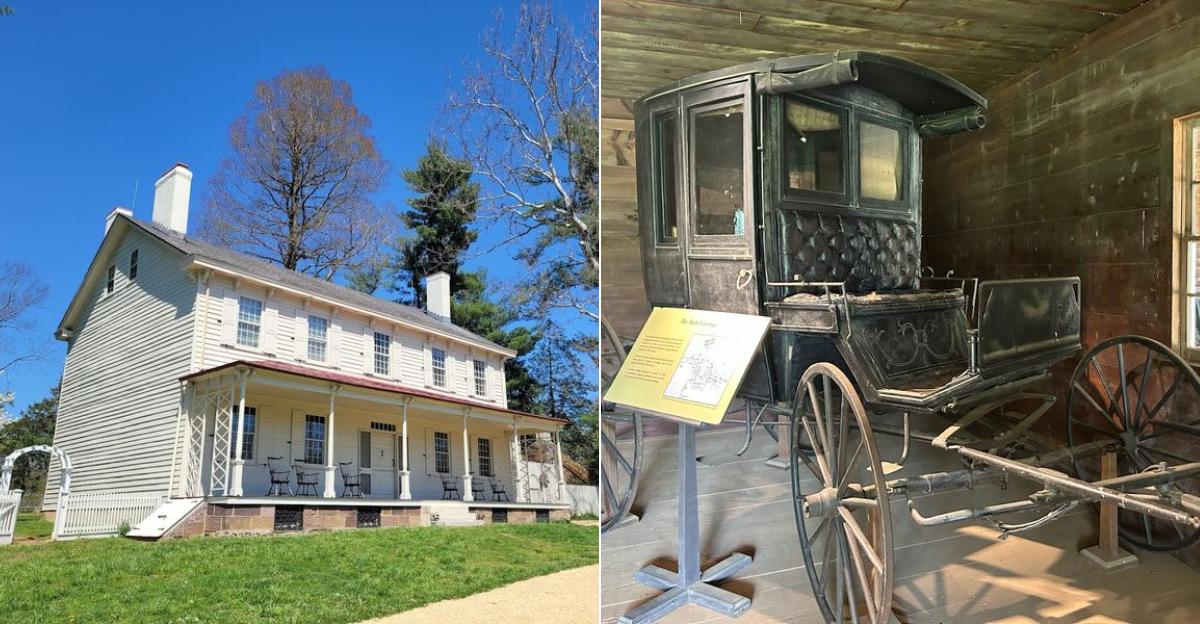
Most people blasting down Route 539 through Monmouth County have no idea they are passing one of the most quietly fascinating historic sites in all of New Jersey. Tucked behind old farm fields and a winding creek, this preserved 18th-century village has been sitting here for over 250 years, largely off the radar of the average road tripper.
It has ten historic buildings, a working grist mill, and a family story that stretches across five generations and two centuries. Once you know it exists, it becomes one of those places you will want to come back to again and again.
Where History Actually Lives
Historic Walnford sits at 62 Walnford Rd, Allentown, NJ 08501, tucked inside Upper Freehold Township in Monmouth County. The property is managed as part of the Monmouth County Park System, and admission is completely free, which makes it one of the most accessible historic sites in the state.
The park is open every day of the week from 9 AM to 4 PM, making it easy to plan a visit on almost any schedule. Whether a Tuesday morning or a Sunday afternoon works better, the gates are open and the grounds are ready to explore.
The surrounding landscape adds a lot to the experience. Open farm fields stretch out around the property, and a creek runs alongside the historic structures.
The whole setting feels far removed from the busy highways nearby, which is exactly what makes the first few minutes of arrival feel like stepping into a completely different chapter of New Jersey history.
A Quaker Family’s 250-Year Legacy
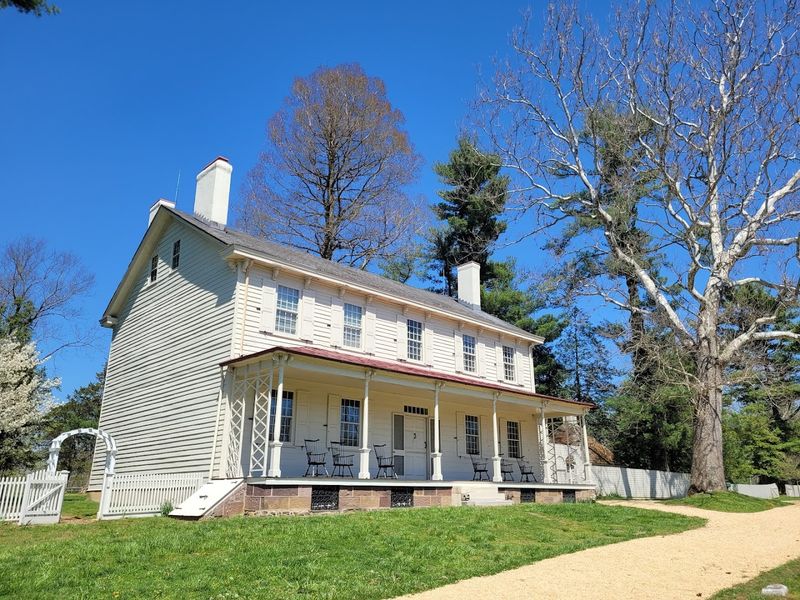
The story of Historic Walnford begins in the mid-1770s when a Quaker family named Waln established the property and began building what would become a thriving rural estate. The family maintained ownership and operation of the land for more than two centuries, which is a remarkably rare thing in American history.
What makes this legacy even more compelling is the human drama woven into it. In the late 1800s, a family member named Sarah Waln made the unusual decision to leave the estate to her longtime African-American employee rather than to her own daughter.
The move caused significant legal conflict, and while the employee did receive the property, it was eventually sold back to another member of the Waln family.
That single chapter of the property’s history speaks volumes about the social tensions of the era. It is the kind of real, complicated story that no textbook quite captures the way a place like this can.
The Grist Mill That Still Works
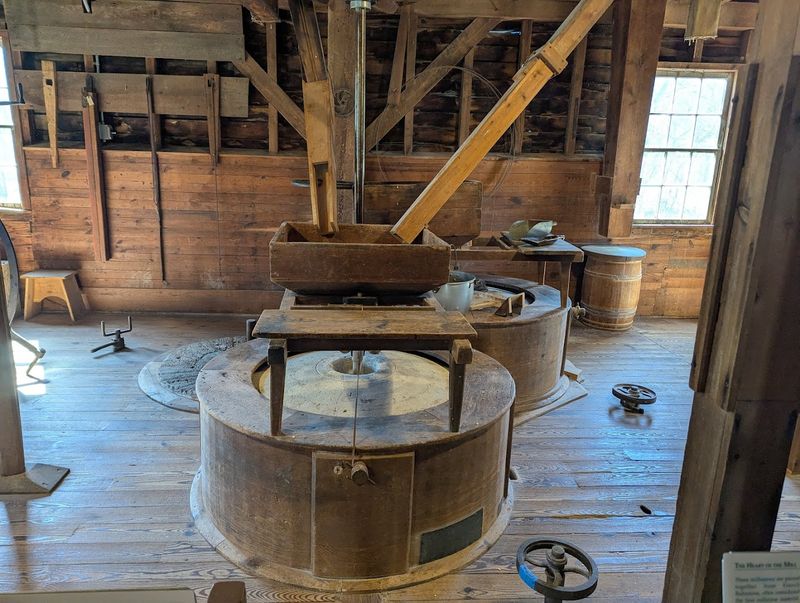
The grist mill at Historic Walnford is the kind of thing that makes people stop mid-sentence and just stare. Large belts loop around heavy gears, the machinery rattles and hums, and dried corn goes in one end and comes out the other as fine cornmeal.
On weekends from April through November, staff power up the mill for public demonstrations.
The mill was originally driven by a water turbine, and the old turbine mechanism is still on display in a shed across from the mill building. The current demonstrations use electricity to run the system, but the mechanical process itself is unchanged from how it operated generations ago.
Staff have been known to personally power up the mill for curious groups even outside of scheduled demonstration times. The inner workings of the mill, with all its moving parts operating together in one coordinated system, remain one of the most talked-about features of the entire property.
Ten Buildings Worth Exploring
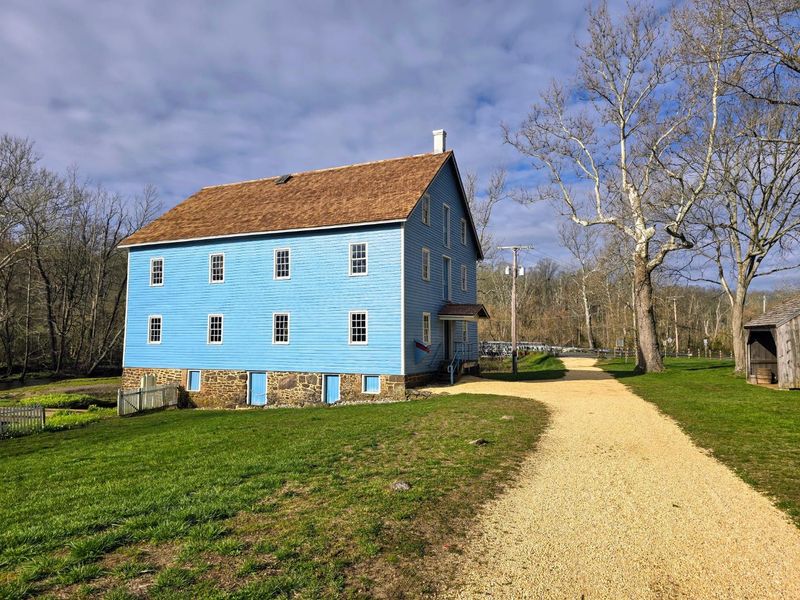
Ten separate buildings make up the Historic Walnford complex, and each one has its own story and exhibits. The main mansion is a highlight, featuring a large collection of period furniture, original photographs, and household items that belonged to the Waln family across multiple generations.
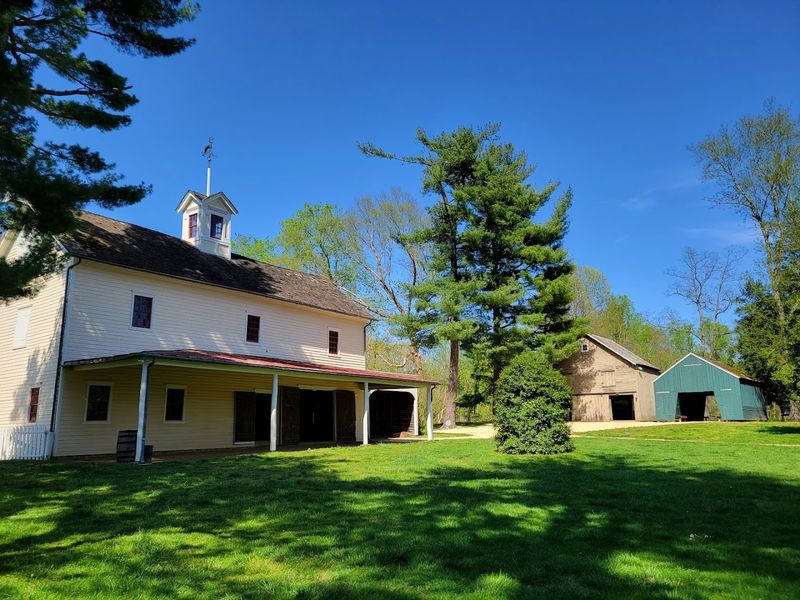
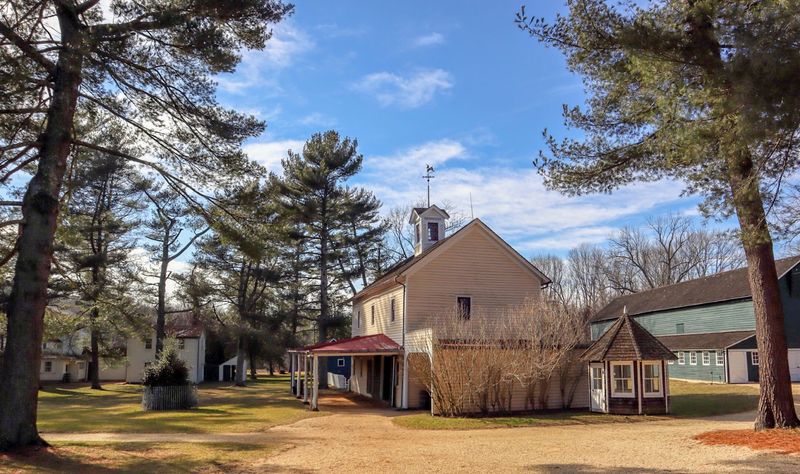
The outbuildings include a carriage house, stables, and various agricultural structures that have all been fully restored and filled with time-period artifacts. Every structure on the property has been maintained with obvious care, and the overall condition of the site is consistently noted as being far above average for a free public park.
A second-floor exhibit in the main house has featured rotating historical displays, including a detailed World War One exhibit that drew considerable interest. The mix of permanent family history and rotating special exhibits means that returning visitors often find something new to engage with, making repeat trips genuinely worthwhile rather than just a nostalgia loop.
The Loyalist Who Kept His Land
Among the more unusual footnotes in New Jersey history is the story of a Loyalist landowner connected to the Walnford estate who, after being imprisoned during the Revolutionary War, managed to retain ownership of the property even after Britain lost the conflict. That is a genuinely rare outcome for a Loyalist in post-war America.
Most Loyalists who sided with the British Crown during the Revolution either fled to Canada or had their properties seized. The fact that the Walnford estate survived intact under its original ownership is something historians and history enthusiasts find particularly striking.
This piece of the property’s backstory adds a layer of national significance that goes well beyond local interest. The estate predates the founding of the United States, which means its walls have been standing longer than the country itself has existed.
That alone is worth pausing to think about the next time you pass through Monmouth County.
Special Events That Draw a Crowd
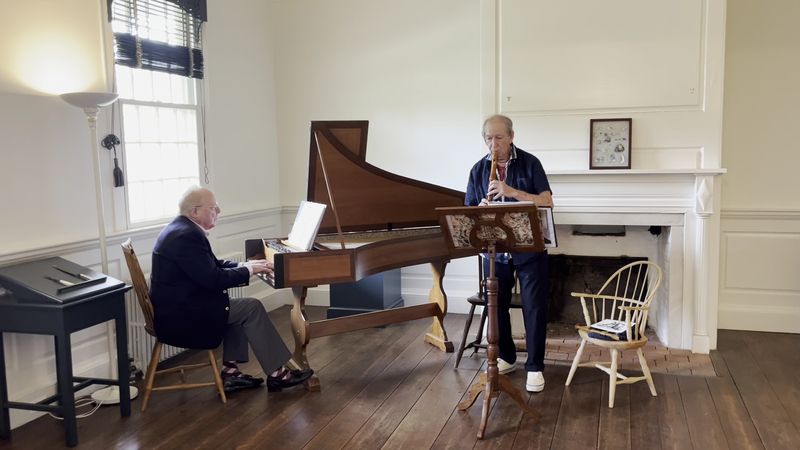
Walnford Day is the property’s signature annual event, and it brings a full lineup of traditional activities to the grounds. Blacksmithing demonstrations, basket weaving, loom weaving, line dancing, and quilting are all part of the day, along with mule-driven wagon rides and live music both inside the mansion and out on the lawn.
The event draws a broad audience, from young children to older adults, and the variety of hands-on activities means there is genuinely something for everyone in a group. Knowledgeable demonstrators are stationed throughout the grounds, ready to explain their craft and answer questions in detail.
Beyond Walnford Day, the property hosts other scheduled events throughout the year, including old-fashioned ice cream making where the finished product is handed out to attendees. Checking the Monmouth County Parks website at monmouthcountyparks.com before visiting is the best way to time a trip to coincide with one of these special programming days.
The Creek, the Dam, and the Bridge
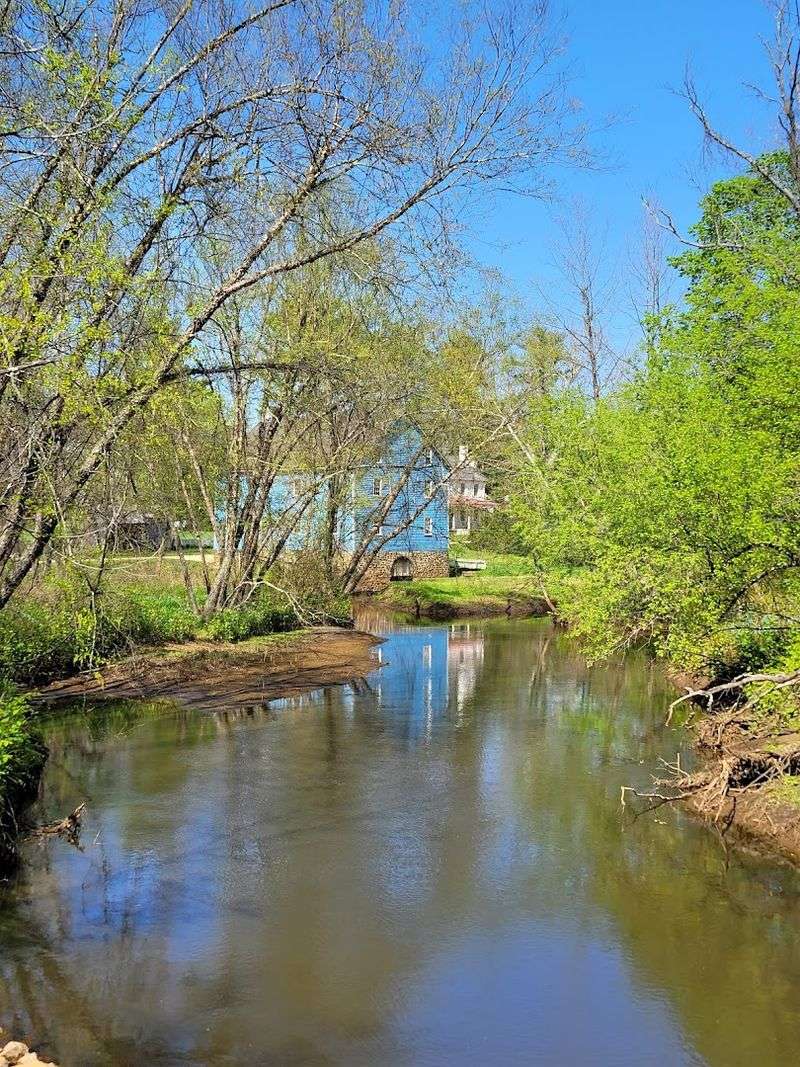
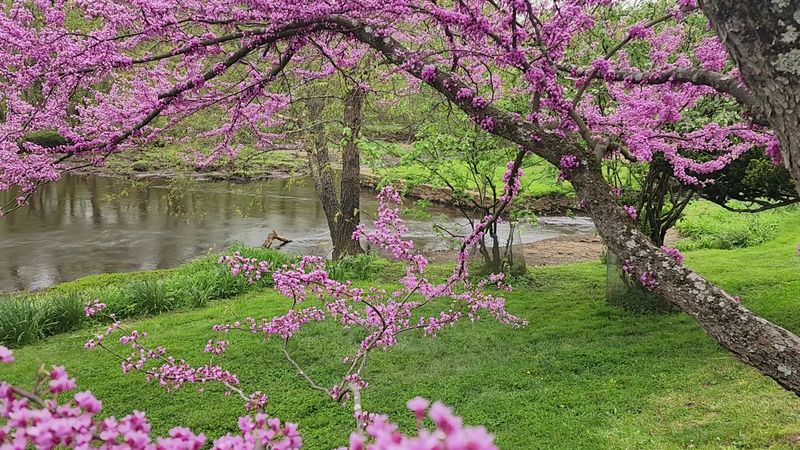
A creek runs through the Historic Walnford property, adding a natural element that ties the whole landscape together. The waterway was essential to the original function of the grist mill, and remnants of the old dam are still visible on the far side of the property, accessible by walking across a bridge.
The creek and its surroundings are well-maintained and clean, and the property allows dogs on leash, making it a popular destination for locals who want to combine a history walk with an outdoor outing. The mix of open fields, mature trees, and running water creates a setting that feels genuinely rural even though the property is relatively compact.
Seasonal changes affect the look of the grounds considerably. Late spring through early fall tends to show the property at its most photogenic, with greenery and wildflowers filling out the landscape.
A winter visit after snowfall produces a completely different kind of atmosphere, with the historic structures standing stark and dramatic against a white backdrop.
The Carriage House and Its Residents
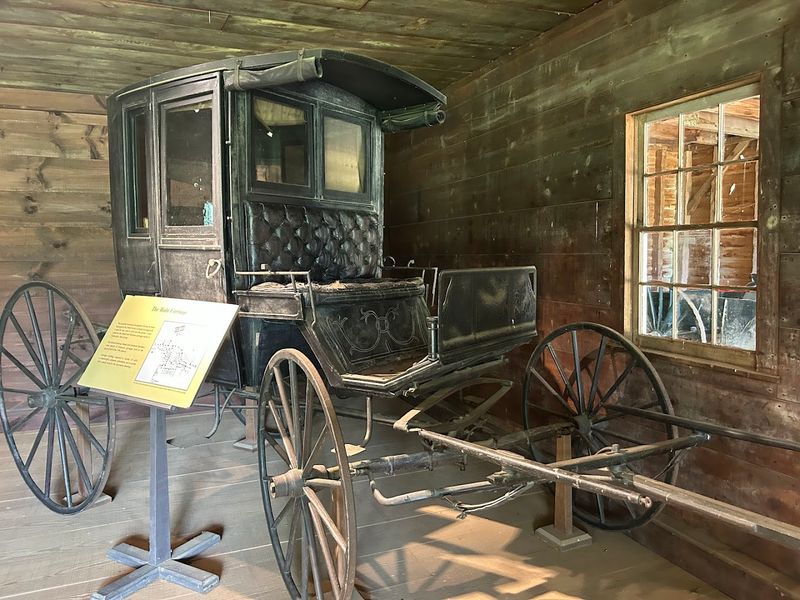
The carriage house at Historic Walnford holds more than just old wagons and farm equipment. Barn swallows have made the structure their home, and a dedicated section of the building allows visitors to observe the birds nesting up close.
It is a small detail that turns an already interesting building into something a little more alive.
A resident cat also calls the carriage house home, greeting visitors who wander through the outbuildings. That kind of low-key charm is hard to manufacture, and it fits the overall personality of the property well.
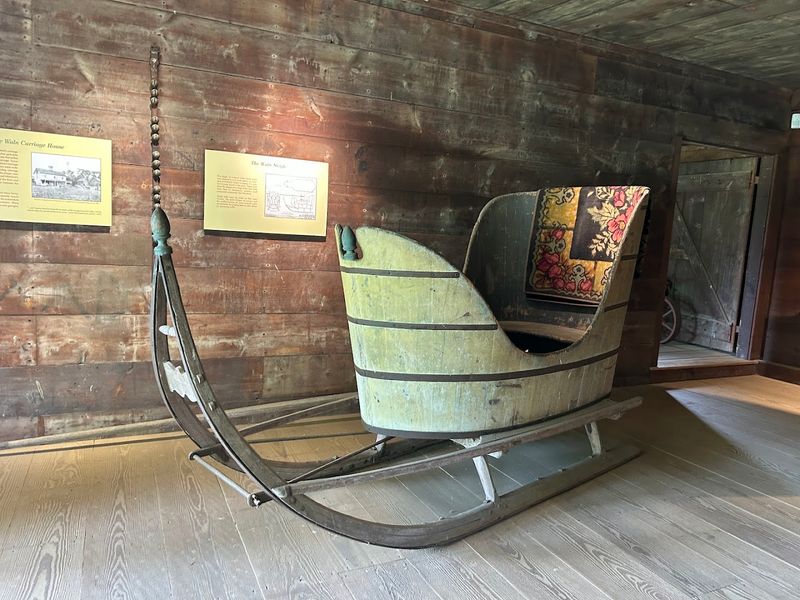
The wagons and agricultural tools on display in the carriage house give a concrete sense of what daily work looked like on a functioning 18th and 19th-century farm. Horse-drawn wagons, snow sleds, and other equipment fill the space with the kind of physical history that photographs in a book simply cannot replicate.
The building itself is in excellent structural condition, consistent with the rest of the property’s upkeep.
Photography, Weddings, and Special Occasions
Historic Walnford has become a venue for weddings and other special occasions, with the grounds and mansion providing a setting that is hard to match anywhere else in Monmouth County. The property holds the distinction of hosting the first official indoor wedding ever held at the site, and couples have continued to use it for ceremonies since then.
Commercial photography, including paid wedding photography, requires a permit and fee arranged through the Monmouth County Park System. Personal photography, on the other hand, is entirely welcome and free of charge.
The grounds offer a wide range of backdrops, from the mill and creek to the mansion’s front arbor and the open farm fields.
The combination of natural and architectural elements makes the property particularly appealing for outdoor portrait sessions. Autumn tends to be the most popular season for photography given the foliage, but the property holds visual appeal across all four seasons depending on what kind of atmosphere a photographer is looking for.
Planning Your Visit to Walnford
Getting to Historic Walnford is straightforward from most parts of central New Jersey. The address is 62 Walnford Rd, Allentown, NJ 08501, and the park is open every day from 9 AM to 4 PM.
GPS navigation works well for the approach, though a bridge on the far side of the property has occasionally caused minor routing issues with some navigation apps.
A typical visit runs anywhere from one to three hours depending on how much time is spent inside the buildings and whether a mill demonstration is available. Packing a lunch is a smart move given the picnic tables on-site and the lack of any food vendors or gift shop on the property.
Spring through early fall offers the best overall conditions for a visit, with the mill demonstrations running on weekends from April through November. The Monmouth County Parks website at monmouthcountyparks.com has current event schedules and any updates on seasonal programming worth checking before heading out.



