A mountain biking trail system in the forested hills of West Michigan has earned a devoted following for its flowing singletrack, varied terrain, and carefully maintained routes. Built around a wooded valley in Muskegon County, the network offers enough interconnected trails to keep riders exploring for hours without constantly retracing the same sections.
What makes the system stand out is how well it serves different skill levels. There is a short loop for kids and beginners, faster intermediate trails with smooth flow, and newer technical sections designed for experienced riders looking for a challenge.
Local volunteers and trail groups continue to expand and maintain the network, helping turn this once under-the-radar riding spot into one of the region’s most respected trail systems.
Where Exactly This Trail System Lives
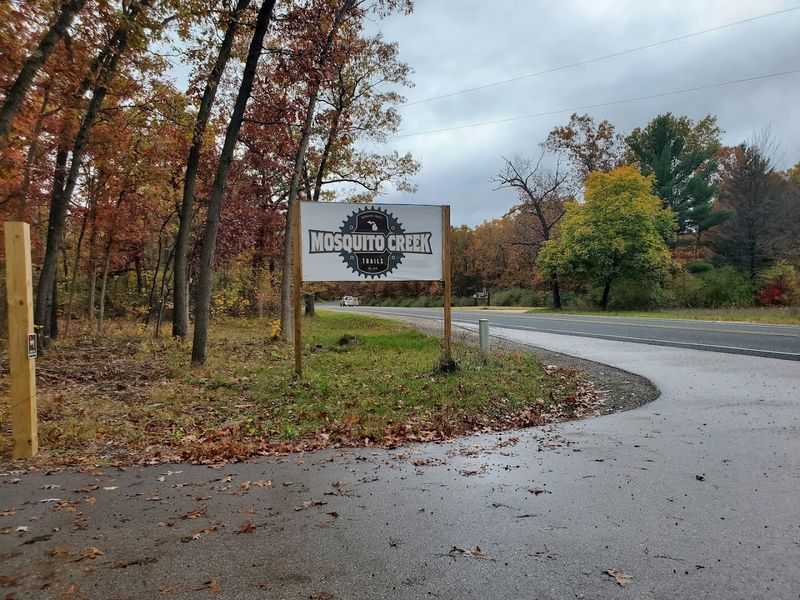
The address is 2190 N Maple Island Rd, Twin Lake, Michigan 49457, and that alone tells you something about this place. Twin Lake is not exactly a household name outside of West Michigan, which is part of what makes the trails here feel like a reward for those willing to seek them out.
Muskegon County surrounds the property, and the location puts you roughly 15 minutes from both Muskegon and Fremont. Grand Rapids riders can reach it in about 40 minutes, making it a realistic weekday evening option when the daylight is long enough.
The trailhead sits in a forested valley that spans 500 to 550 acres, and a dedicated parking lot with restrooms greets you on arrival. The setup feels intentional and welcoming rather than improvised, which sets a confident tone before you even clip in.
Keep reading, because the trail network itself is where things get really interesting.
The Story Behind the Trails and Who Built Them
Most great trail systems have an origin story worth telling, and this one starts with a partnership that took shape around 2017. Muskegon County teamed up with Michigan’s Edge Mountain Biking Association, known as MEMBA, to transform a large forested property into a purpose-built riding destination.
Professional trail builders from a company called Dirt Artisans handled the design and construction, which explains why the flow and grade of each trail feels so deliberate. These are not paths that happened by accident.
Every berm, every bench cut, and every transition was placed with intention.
Volunteers have contributed enormous hours over the years, and the development has continued in phases with new features added as recently as 2023. That kind of sustained community investment is rare, and you can feel it in the quality of the surface and the thoughtfulness of the layout.
The trail did not just appear overnight, and that patience shows in every pedal stroke.
How the Trail Network Is Organized
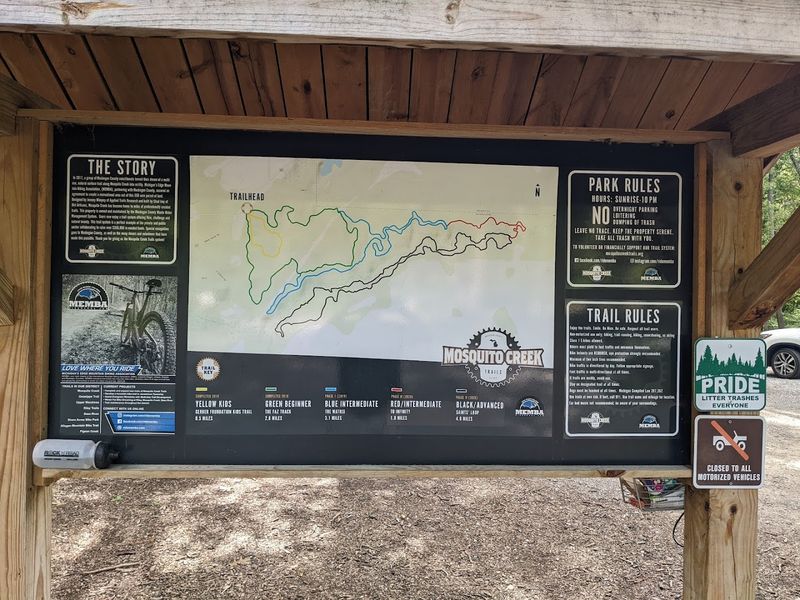
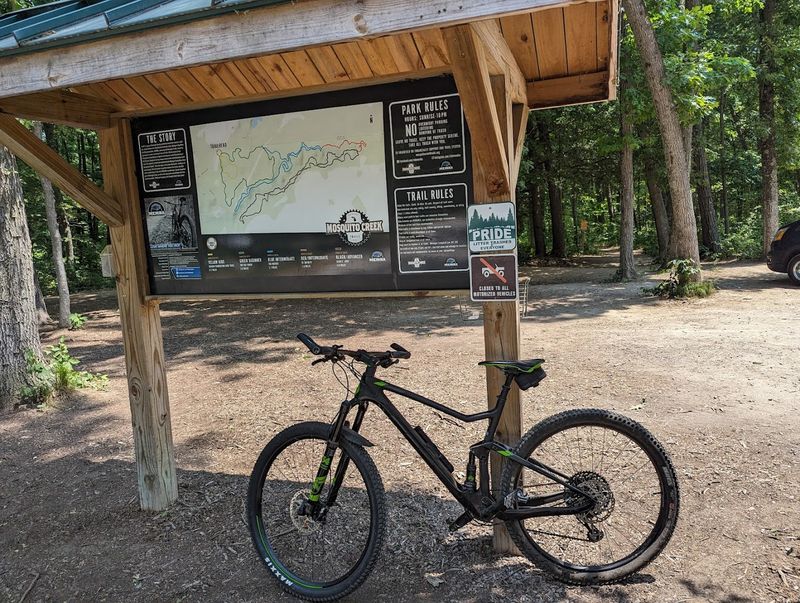
The trail system uses a concentric loop format, which is one of the smartest ways to design a multi-level network. Riders can choose their challenge level before they start and then exit the system when they have had enough, without needing to backtrack over difficult terrain.
Green, blue, and red color codes mark the difficulty of each section, and the signage throughout the property is clear enough that getting turned around feels nearly impossible. The direction of travel actually changes depending on the day of the week, so paying attention to the posted signs keeps everyone moving safely in the same direction.
In total, the system offers somewhere between 10 and 12 miles of singletrack, which is enough to fill a solid half-day ride without feeling repetitive. Community toolboxes placed along the trail let riders handle minor mechanical issues without hiking back to the car.
Night riding is also permitted, which opens the door for warm-weather evening sessions after work.
The Faz Track: Where New Riders Find Their Confidence
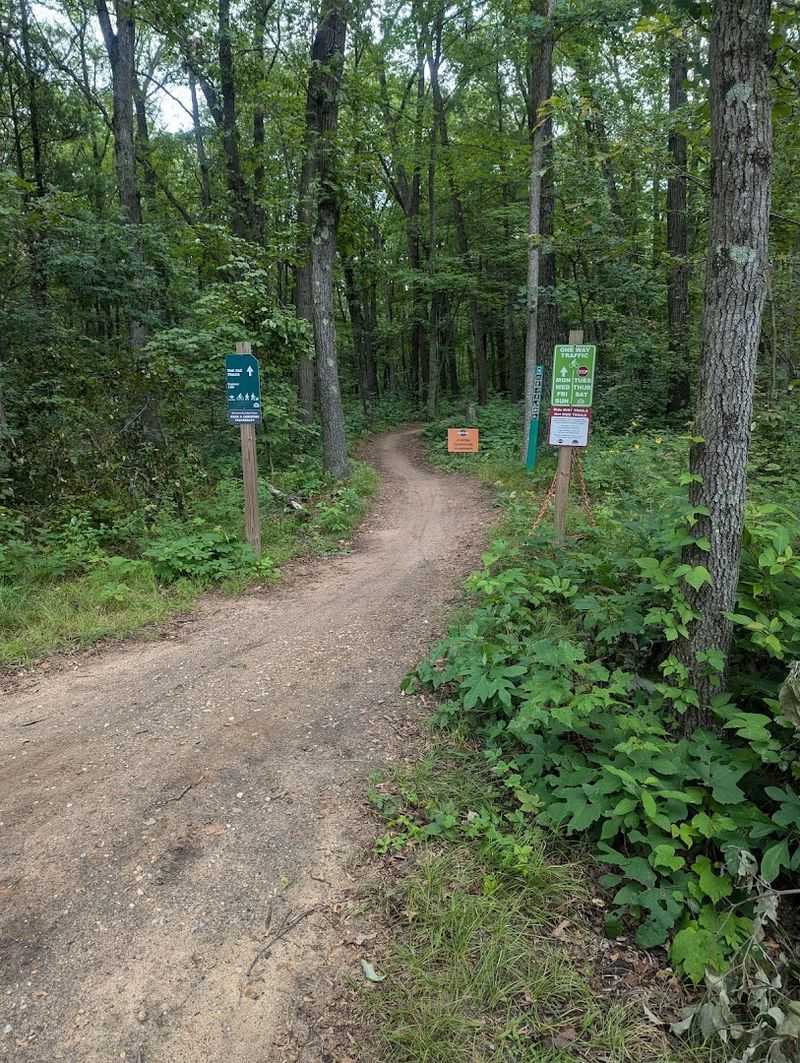
Every trail system needs a place where beginners feel welcome rather than overwhelmed, and the Faz Track delivers exactly that. Running approximately 2.6 to 3 miles, this beginner loop is wide, smooth, and forgiving, with low elevation changes that let new riders focus on building skills rather than surviving terrain.
The surface runs about three feet wide, which gives riders enough room to correct a wobble without panic. The flow is fast and satisfying even at modest speeds, and the trail is suitable for young children on smaller bikes.
Fat biking on the Faz Track during winter months is also a popular option when the grooming crew has done their work.
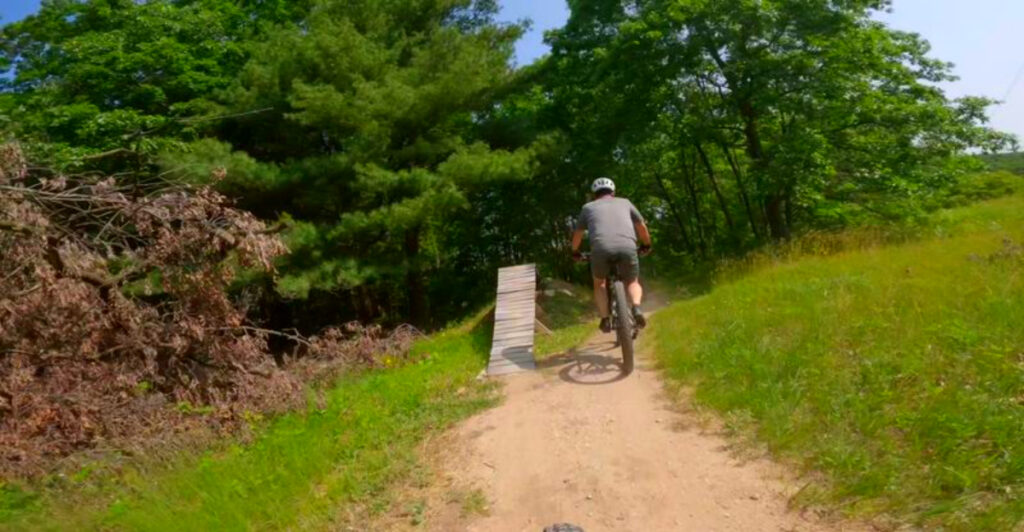
A small downhill section near the middle features a jump at each end and a wood-bermed curve at the bottom, but a clearly marked bypass trail lets hesitant riders skip it entirely. That kind of thoughtful design is what separates a good beginner trail from a great one.
The Matrix loop waits just beyond.
The Matrix: The Trail That Keeps Intermediate Riders Coming Back
Ask regular visitors which trail they ride most often, and the answer is almost always the Matrix. This intermediate loop stretches roughly 3 to 3.2 miles and delivers the most elevation gain in the entire system, climbing 328 feet and descending 371 feet across its length.
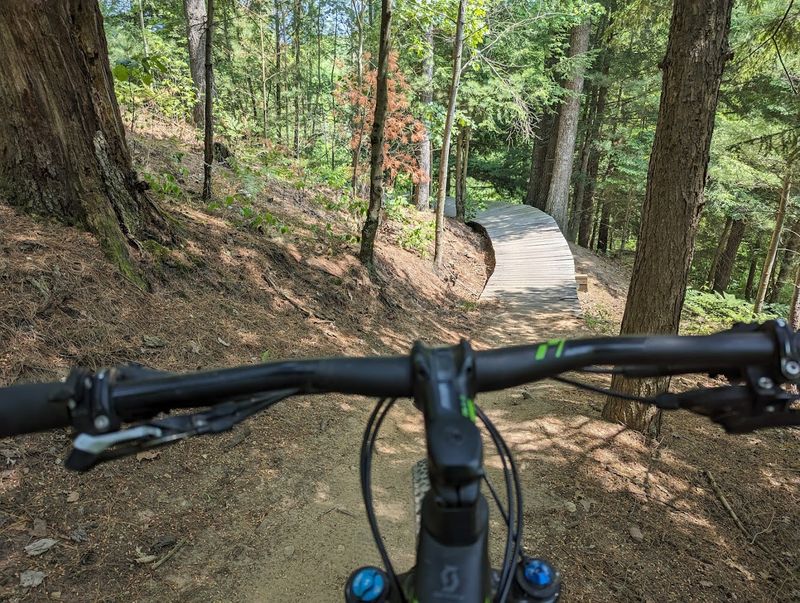
The bench-cut construction gives the trail a sculpted, almost mountain-like character that surprises riders who expected flat Midwest terrain. Off-camber rollers, flowy twists, and a banked wood-plank curve keep attention sharp throughout, and the jumps that appear along the route can all be rolled over by riders who prefer to keep both wheels on the ground.
The trail holds up remarkably well after rain, and some regulars argue that the riding is actually better when the dirt is slightly damp and the sand has settled. The Matrix manages to feel both accessible and genuinely exciting at the same time, which is a combination that most trail designers spend years trying to get right.
Saints Loop is the next step up.
Saints Loop: The Red Route That Earns Its Reputation
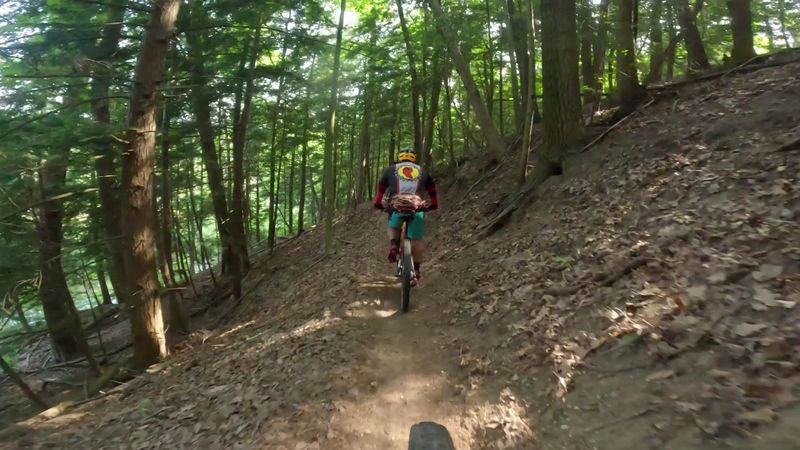
Saints Loop carries a reputation among locals as the trail that separates confident intermediate riders from those who are genuinely ready for advanced terrain. Running approximately 4 to 5 miles, this red-rated loop starts with a connector trail that drops down to Mosquito Creek itself before climbing back into the hills.
The creek crossing area offers a natural pause point with genuine scenery, and the sound of water moving through the valley is a welcome contrast to the focused riding that surrounds it. After the bridge, the trail returns to directional-by-day rules, so sign awareness remains critical throughout.
High-speed cliff-side sections with narrow two-way connectors demand full attention, and a steep flagstone descent on certain days requires careful speed management. Families with young or inexperienced riders are better served by the lower loops, but for those who are ready, Saints Loop delivers a sustained, rewarding challenge that covers real ground.
The trail can stretch a full ride to around 9 miles when combined with earlier loops.
Double Torsion: The Expert Section Added in 2023
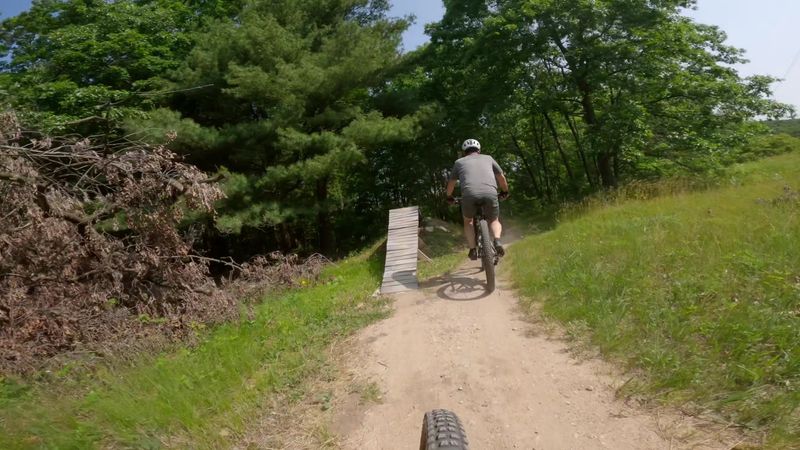
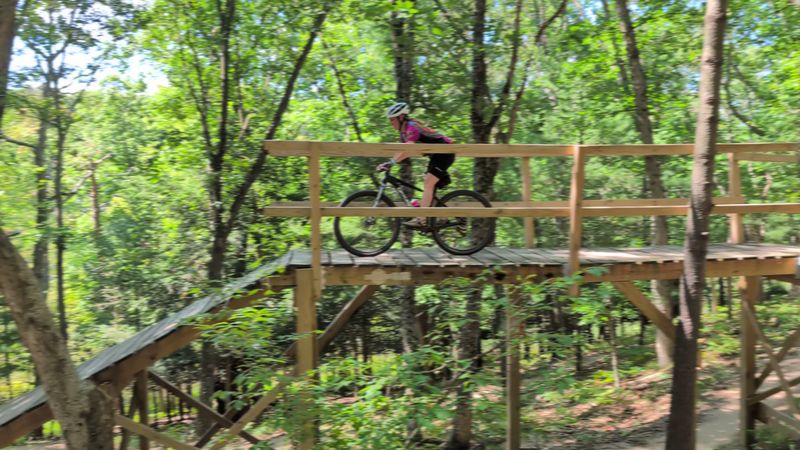
Added in 2023, Double Torsion is the newest and most technical section of the entire network. Designed specifically for advanced riders who want a bike-park-style experience, this loop includes a flyover, table-top jumps, switchback berms, a wood wall, drops, and an elevated skinny that demands real commitment.
The feature list reads like a wishlist from a rider who has spent years wanting more challenge at the end of an already satisfying trail day. Double Torsion is not meant for beginners or younger riders, and the trail does not apologize for that.
The difficulty is the point.
What makes the addition significant is that it rounds out the system so completely. There is now a meaningful progression from the Gerber Foundation Kids Trail all the way to Double Torsion, covering every skill level in between.
That full spectrum is rare in a single trail system, and it is a big part of why Mosquito Creek Trails keeps pulling riders back for return visits.
The Gerber Foundation Kids Trail and What It Means for Families
A half-mile loop designed for striders and young riders might seem like a small detail in a system this size, but the Gerber Foundation Kids Trail represents something genuinely important. It signals that this place was built for families, not just fast solo riders chasing personal records.
The trail is short, smooth, and completely manageable for children who are just learning to balance on two wheels. Parents can ride alongside without worrying about terrain that outpaces a child’s developing confidence.
That kind of purposeful design creates memories that bring families back year after year.
The broader trail system echoes this inclusive spirit throughout. Bypass options on the Faz Track, rolled-over jumps on the Matrix, and clearly marked signage all reflect a philosophy that prioritizes welcoming new riders rather than filtering them out.
A donation is recommended to support ongoing maintenance, which feels like an easy ask given how well the entire property is cared for. The trails hold up even under heavy use.
Trail Features That Make Every Ride Feel Different
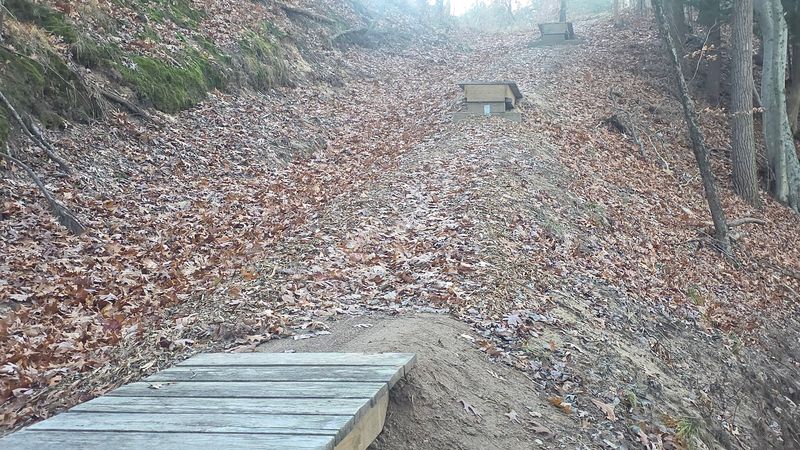
Berms, bridges, jumps, wall rides, ladder bridges, rock gardens, and a teeter-totter near the entrance give the trail system a texture that changes depending on which loops you combine on a given day. No two rides through this network feel identical, which is a significant achievement for a trail system in a relatively flat Midwest state.
The bench-cut construction that defines much of the trail creates a distinct riding sensation, almost like the trail is carved into the landscape rather than laid on top of it. That technique keeps the surface draining well and gives the trail a sculpted quality that riders often describe as feeling like riding in the mountains.
Sandy sections appear in drier conditions, particularly on the Faz Track, and a tire width of at least two inches is the general recommendation for handling those patches comfortably. Gravel bikes are not the right tool for this terrain.
A proper mountain bike with reliable brakes and reasonably wide tires will make the experience far more enjoyable across all skill levels.
Multi-Use Trails and How Hikers Fit Into the Picture
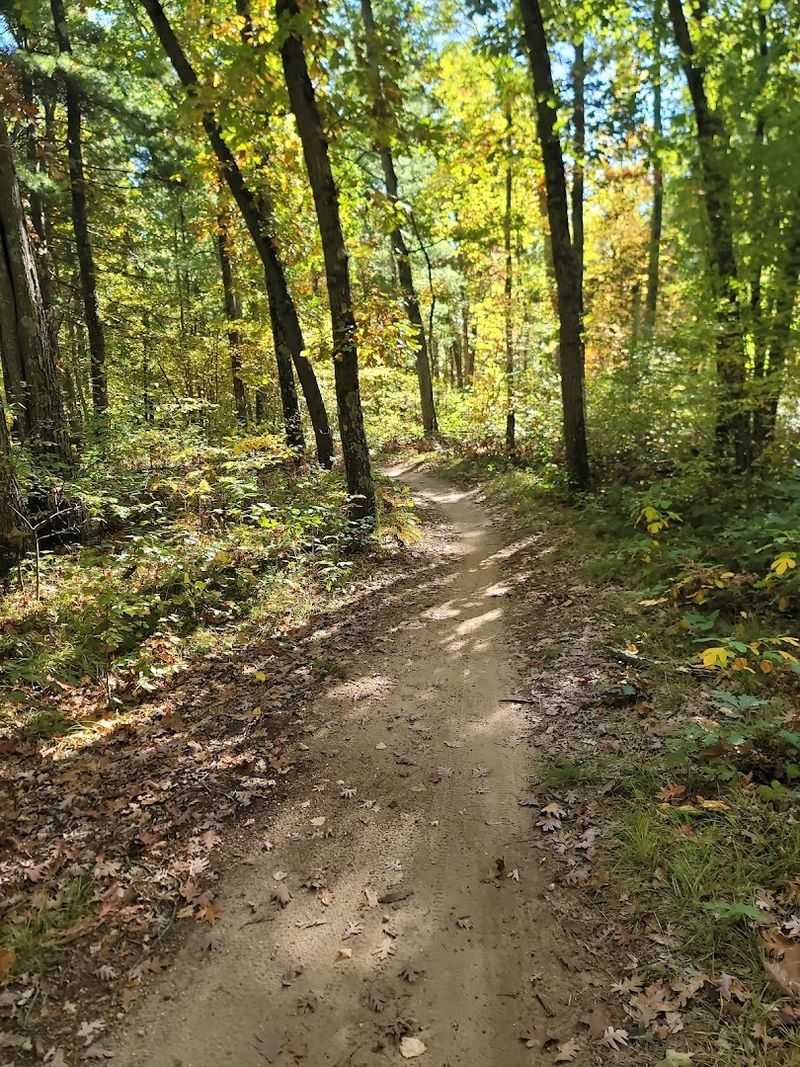
Mountain biking is the primary draw at Mosquito Creek Trails, but hikers, trail runners, and snowshoers are all welcome on the property. The multi-use nature of the system means that trail awareness matters for everyone who shows up, regardless of what is carrying them down the path.
Hikers who prefer to see cyclists coming before they arrive tend to walk against the flow of bike traffic, giving themselves a clear sightline and enough time to step aside. The directional-by-day system helps manage traffic flow significantly, but staying alert remains good practice throughout the visit.
Benches overlooking Mosquito Creek appear at various points along the trail, and the sound of the creek running through the valley adds a peaceful quality that hikers tend to appreciate more than riders moving at speed. Birdsong is a consistent companion on quieter mornings, and the deep woods setting blocks enough sunlight to keep the temperature comfortable even on warm summer days.
The trail offers something worth slowing down for.
Winter Riding and Fat Biking on Groomed Trails
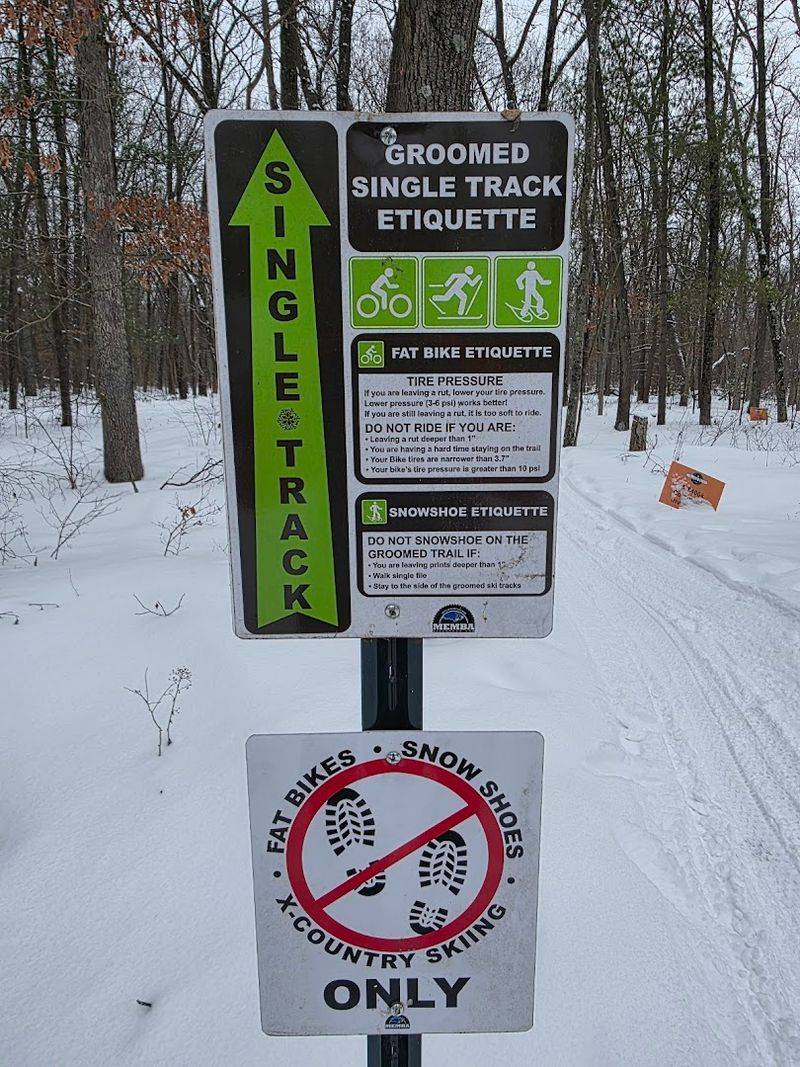
When the snow arrives in West Michigan, most trail systems close up and wait for spring. Mosquito Creek Trails takes a different approach.
The Faz Track is groomed for fat biking during winter months, turning what is already a satisfying beginner loop into one of the more scenic snow rides available in the region.
Fat tires measuring at least 3.5 inches wide are the minimum recommendation for snow conditions, and riders are asked to be mindful of trail conditions to avoid damaging the groomed surface. The effort that goes into grooming is visible and appreciated, and treating the trail carefully during fragile conditions is part of being a responsible member of the community.
Winter riding here has a quality that is genuinely hard to describe without doing it. The forest is quieter, the air is crisp, and the groomed track through snow-covered trees creates a riding experience that feels completely separate from the summer version of the same loop.
Mosquito Creek Trails earns its reputation year-round.
Why This Trail System Keeps Drawing Riders Back
A 4.8-star rating across 90 reviews is not the kind of score a trail earns by accident. Mosquito Creek Trails has built that reputation through consistent maintenance, thoughtful design, and a community that genuinely cares about the experience of every rider who shows up, regardless of skill level.
The trail holds up well after rain, the signs are clear enough to prevent confusion, and the concentric loop format lets riders customize their experience on the fly. Night riding is permitted, the parking lot is well-organized, and restrooms are available at the trailhead.
Those details matter more than they sound when you are planning a trip from an hour away.
Riders who discover this trail often describe a reluctance to tell others about it, which is perhaps the most honest compliment a trail can receive. That protective instinct eventually gives way to enthusiasm, because a place this well-built deserves to be shared.
The drive to Twin Lake is worth every mile.
Share this story