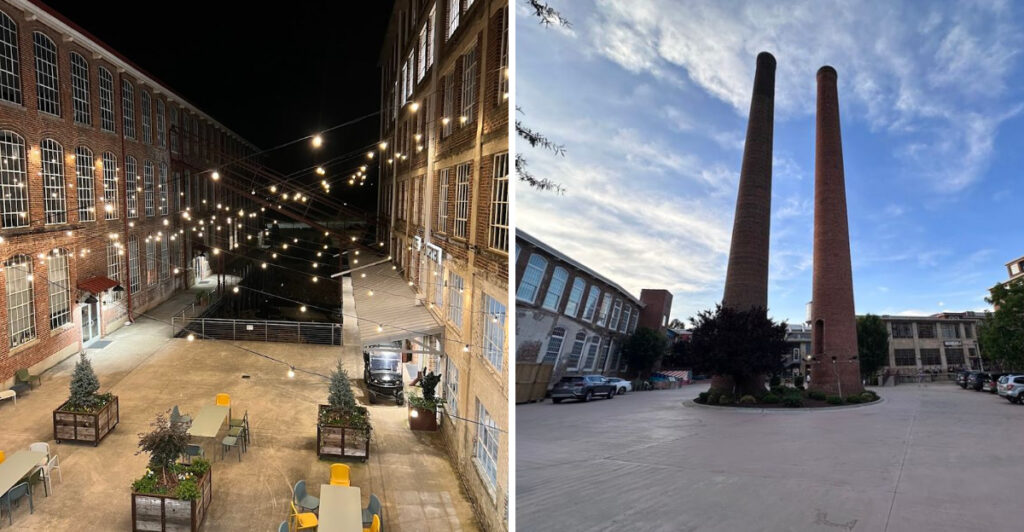
There is a place in Greensboro, North Carolina, where red brick walls still carry the memory of humming looms and the smell of cotton, yet today those same walls echo with the sounds of coffee grinders, art conversations, and the footsteps of people who call it home. A massive industrial complex that once powered the textile economy of the American South has been reborn as one of the most creative and community-driven destinations in the region.
Every corridor holds a story, every courtyard hides a surprise, and every visit tends to reveal something you missed the last time. This is not a museum frozen in time but a living, breathing neighborhood where history and modern life share the same address.
A Grand Industrial Address With Deep Roots
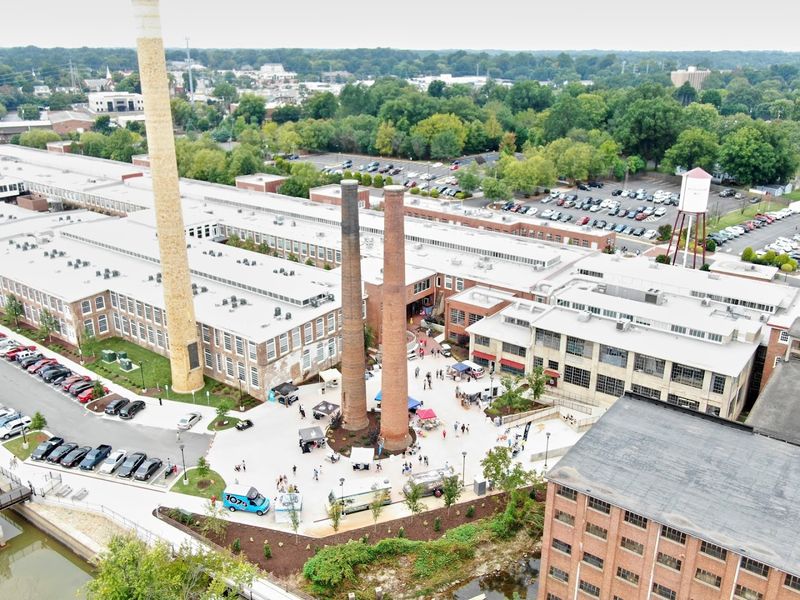
The full address is 1250 Revolution Mill Drive, Greensboro, NC 27405, and that street name alone tells you something about how seriously this place takes its identity. The complex sits in the northeastern part of Greensboro, a city in the Piedmont Triad region of North Carolina that grew significantly during the textile boom of the late 19th and early 20th centuries.
Revolution Mill was originally built as a cotton and denim manufacturing facility, and for decades it was one of the economic engines that kept Greensboro running. The sheer scale of the property is something you feel immediately when you arrive.
Buildings stretch in multiple directions, connected by long interior corridors and open outdoor spaces that invite exploration.
Three towering chimney stacks rise above the roofline like landmarks you can spot from a distance, and Buffalo Creek winds around and beneath parts of the foundation, adding a natural, almost unexpected touch to the industrial setting. The property holds a rating of 4.7 stars from visitors, which speaks volumes about how well the transformation has been received.
First-time visitors often spend more time just looking up than they planned.
The Textile History That Started It All
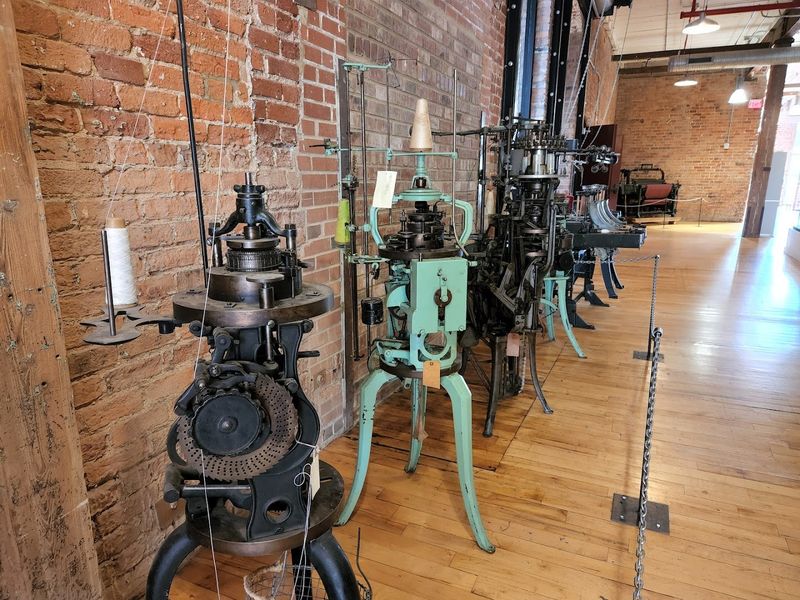
Long before it became a destination, this property was a place of serious labor. The mill produced denim and cotton fabric on a large scale, employing generations of workers from the surrounding neighborhoods and contributing directly to the growth of Greensboro as an industrial city in North Carolina.
What makes the current experience so compelling is that the history has not been erased or hidden. Some of the original equipment is still standing throughout the complex, including fabric machines and large air compressors that now serve as both decor and educational touchpoints.
The brickwork throughout the buildings is original, and you can see the craftsmanship of workers from over a century ago in every arch and column.
There is also a dedicated historical space within the complex that shares the story of the mill, the mill houses where workers lived nearby, and the broader community that formed around this industry. Visitors who make time for this area tend to leave with a much deeper appreciation for what the redevelopment project actually preserved.
History here is not a footnote but a foundation that the entire community is built upon.
How a Forgotten Factory Became a Thriving Community
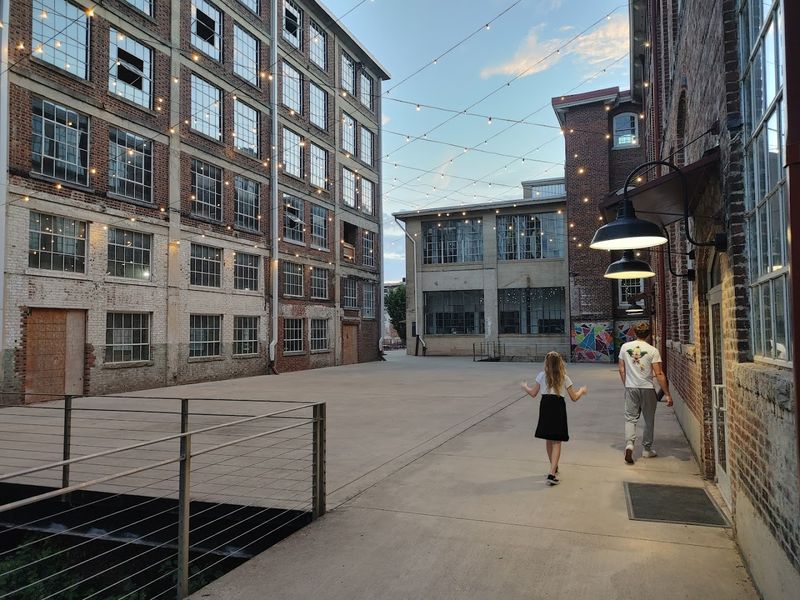
The transformation of Revolution Mill from an abandoned industrial site into a live-work-play community is one of the more remarkable urban redevelopment stories in the Southeast. The project took a property that could have been demolished and turned it into a mixed-use campus that now includes apartments, offices, restaurants, studios, retail shops, and event venues all within the same historic walls.
The concept of adaptive reuse, which means repurposing old buildings for new functions rather than tearing them down, is exactly what happened here. Developers preserved the architectural bones of the original mill while updating the infrastructure to meet modern needs.
The result is a campus that feels both historic and completely relevant to 21st-century life.
Residents who live in the apartments on the property can walk to work if their office is also in the complex, grab food from one of the eateries, and visit an art gallery all without leaving the grounds. That kind of walkable, self-contained neighborhood energy is rare anywhere, and the fact that it exists inside a century-old textile mill makes it genuinely one of a kind.
Greensboro did not just save a building; it created an entirely new kind of community anchor.
Art and Creativity at the Heart of the Complex
Art is not an afterthought at Revolution Mill. The Central Gallery is a dedicated exhibition space within the complex where local artists regularly display their work, and the quality and variety of what you find there can genuinely surprise you.
Paintings, photography, and mixed media pieces rotate through the space, giving the walls a constantly changing personality.
Several artists have studio spaces within the complex as well, meaning the creative process itself is happening right alongside the viewing experience. Visitors walking the long interior corridors might pass a working studio and catch a glimpse of something being made in real time, which adds an authenticity that a traditional gallery setting rarely offers.
The cooperative and flexible nature of the art programming at Revolution Mill has been a consistent point of pride for the community. Artists who have shown work there describe the staff as genuinely supportive and the space itself as beautiful in a way that enhances rather than competes with the work on display.
The combination of industrial architecture and fine art creates a visual tension that actually works in the best possible way. Every hallway becomes its own small gallery, and every visit adds a new layer to what you notice.
Food Worth the Trip on Its Own
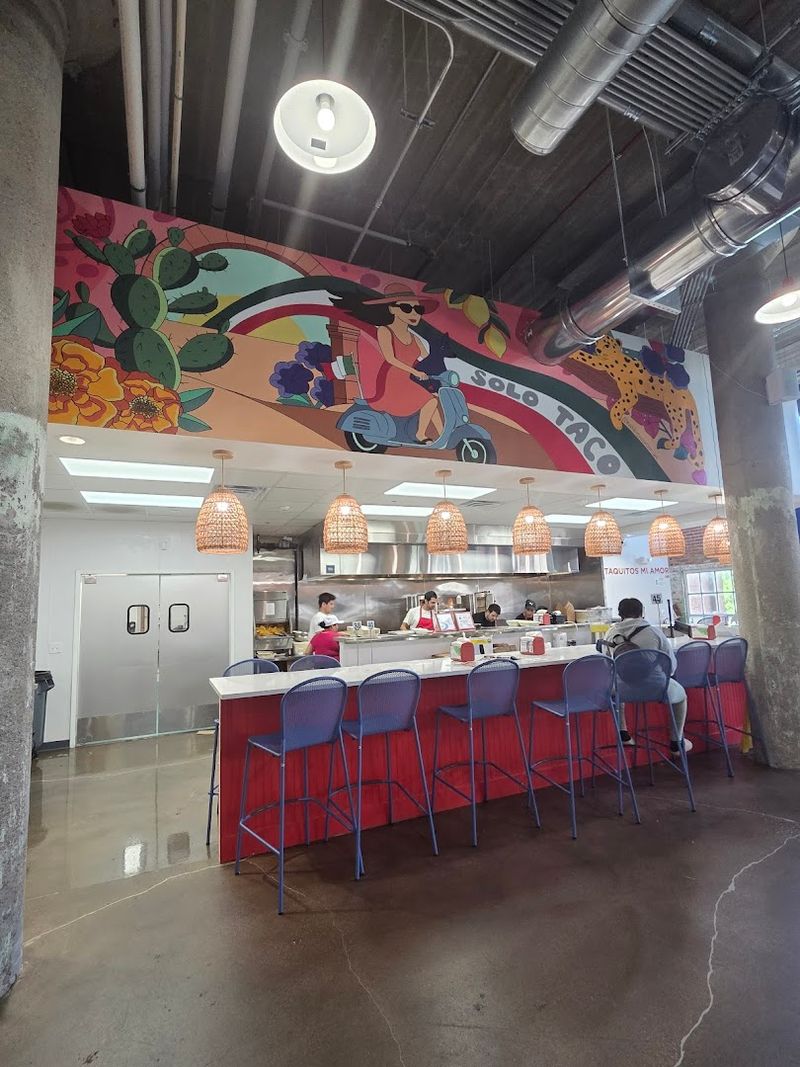
The food options at Revolution Mill have become a serious draw for visitors who might not otherwise make the trip to this part of Greensboro. From pizza to tacos to full sit-down dining restaurants, the variety packed into this one complex is genuinely impressive for a property that started life as a textile factory.
The aromas that drift through the interior corridors on a busy afternoon are part of the experience. Bakeries, coffee shops, and full kitchens all contribute to an atmosphere that feels warm and welcoming from the moment you step inside.
The pizza spot in particular has developed a loyal following among both residents and regular visitors who make the drive specifically for it.
What works especially well about the food scene here is that it does not feel forced or overly curated. The restaurants and eateries have their own identities and feel like real local businesses rather than concept installations designed to match a theme.
Residents of the apartments on the property have noted that the variety makes it genuinely possible to eat out every night without leaving the grounds, which is either a great convenience or a serious temptation depending on how you look at it.
Living Inside a Piece of History
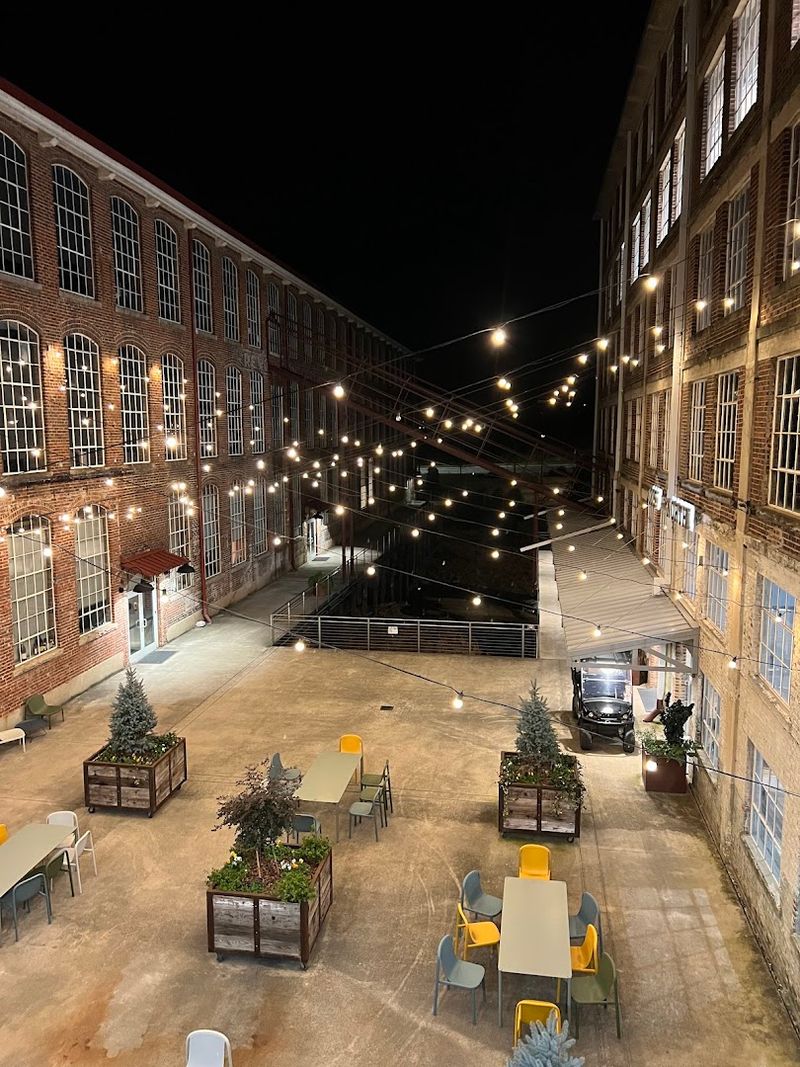
The residential component of Revolution Mill is one of the most distinctive aspects of the entire project. Living in an apartment here means waking up inside a building that has been part of Greensboro’s story for over a century, with exposed brick walls, high ceilings, and architectural details that no new construction can replicate.
The leasing team has earned consistent praise from residents for their responsiveness and genuine care. The professional and attentive approach to tenant communication makes the process of moving in feel supported rather than stressful, which matters a great deal when you are making a decision as significant as where to live.
Residents describe the atmosphere inside the complex as creative, relaxed, and inspiring, which is a combination that is harder to manufacture than it sounds. The fact that your neighbors might include artists, small business owners, medical professionals, and remote workers creates a community with real variety and energy.
Buffalo Creek runs near the property, and the surrounding grounds include a hidden courtyard that residents can access and enjoy. Calling this place home means you are never really done discovering it, and that sense of ongoing discovery is something that long-term residents consistently mention as one of the best parts of living here.
Office Space That Actually Inspires You
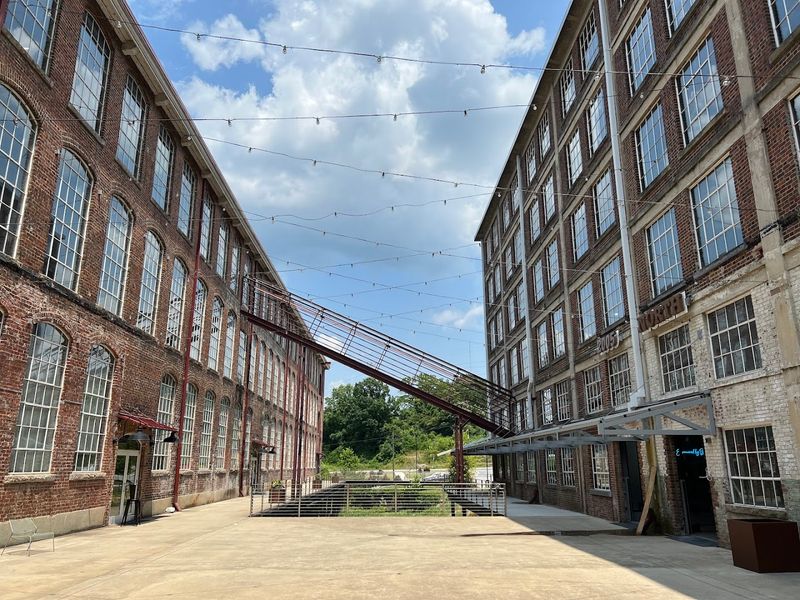
Renting office space inside a converted textile mill sounds like a novelty until you actually work there for a week and realize the environment genuinely affects how you think. The combination of natural light, high ceilings, original brick, and a surrounding community of creative and professional businesses creates a work atmosphere that is hard to replicate in a standard office park.
Revolution Mill offers office rental options that have attracted a wide range of tenants, from law practices and medical offices to photography studios and design companies. The variety of businesses operating under one roof means that networking happens organically, and the shared spaces feel collaborative rather than competitive.
The management team has consistently been praised by office tenants for going above and beyond in accommodating specific needs and maintaining the property at a high standard. Visiting clients tend to react positively to the setting, which is an underrated advantage for businesses that rely on in-person impressions.
The complex is open for office use Monday through Friday from 9 AM to 5 PM, with the phone number 336-235-2393 available for inquiries. Working here does not feel like clocking in; it feels more like being part of something that was built to last.
Events and Weddings in an Unforgettable Setting
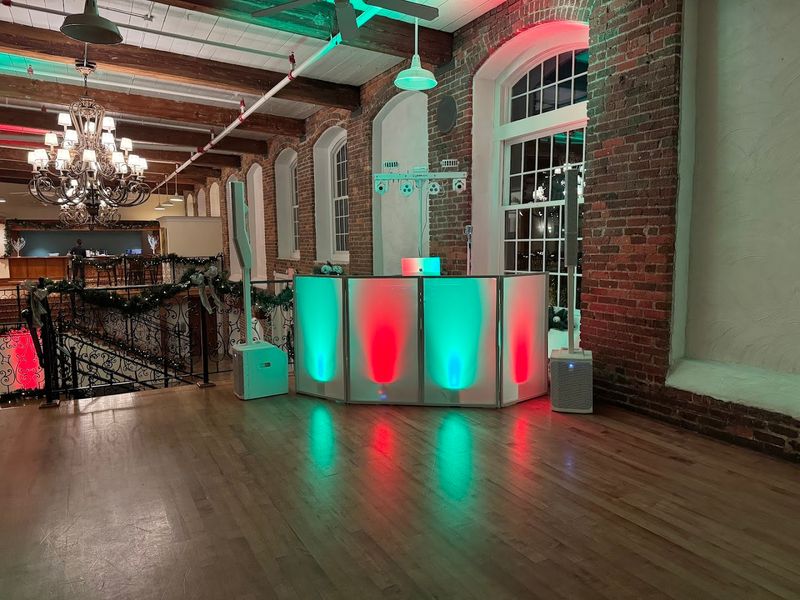
Few event venues in North Carolina can offer what Revolution Mill brings to a wedding or special occasion. The combination of original industrial architecture, warm brick interiors, and carefully maintained grounds creates a setting that photographs beautifully and feels genuinely special to guests who have never seen anything quite like it before.
Indoor reception areas are spacious and flexible, and the staff approach to event coordination has earned high marks for professionalism and attention to detail. The team handles unexpected situations quietly and efficiently, which is exactly what couples and event planners need when the stakes are high.
Vendors and photographers who work events here consistently note how well they are treated from the moment they arrive.
One practical note worth passing along to anyone planning an outdoor ceremony on the property: the nearby train tracks can produce significant noise at unexpected moments, and the sounds of downtown Greensboro are also audible outside. This is not a dealbreaker for most couples but is definitely worth factoring into your planning.
Indoor spaces eliminate that concern entirely and offer their own dramatic backdrop. The complex has hosted everything from intimate gatherings to large-scale receptions, and the flexibility of the space means it can accommodate a wide range of visions.
Exploring the Grounds and the Hidden Courtyard
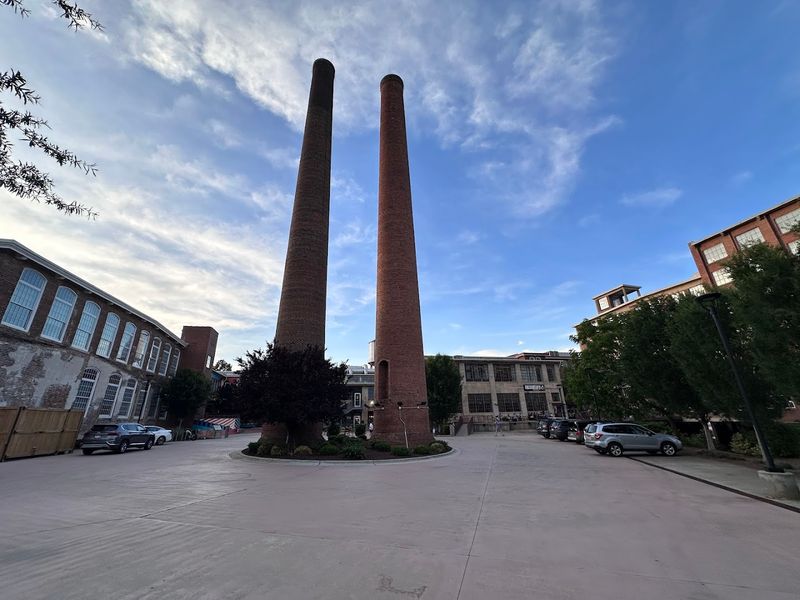
One of the quiet pleasures of visiting Revolution Mill is simply walking the property without any particular agenda. The grounds reward that kind of unhurried exploration in ways that a single focused visit might miss entirely.
Long interior corridors connect different sections of the complex, and each turn tends to open onto something unexpected, whether that is a new mural, a business you had not noticed before, or a view of the creek below.
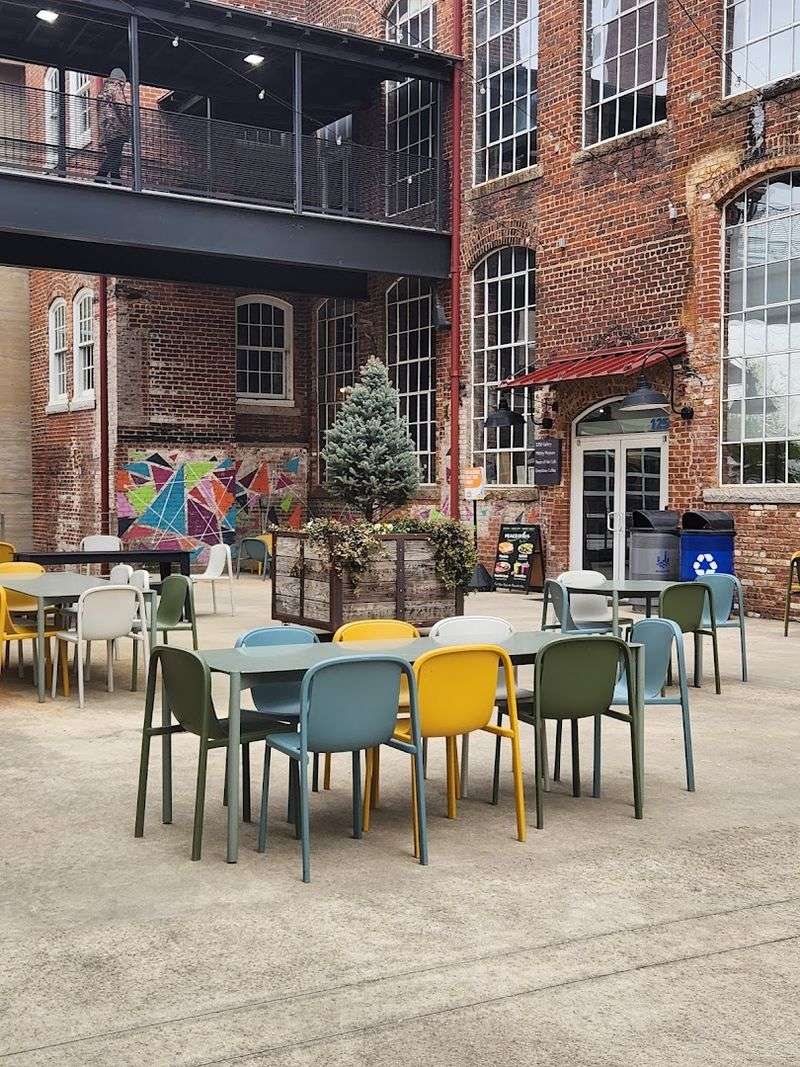
The hidden courtyard is a particular favorite among regular visitors. Tucked between sections of the brick buildings, it offers a calm and sheltered space that feels separate from the busier parts of the complex.
The three towering chimney stacks are visible from multiple vantage points on the grounds and serve as constant reminders of the industrial scale of what this place once was.
Buffalo Creek runs around and beneath parts of the foundation, and depending on recent rainfall, it can be a gentle trickle or a genuinely impressive rush of water. The combination of brick, water, greenery, and sky makes this an exceptional spot for photographers, and the natural light throughout the grounds shifts in interesting ways at different times of day.
A slow lap around the full property takes about thirty minutes and is worth every step.
Why Revolution Mill Matters Beyond Greensboro
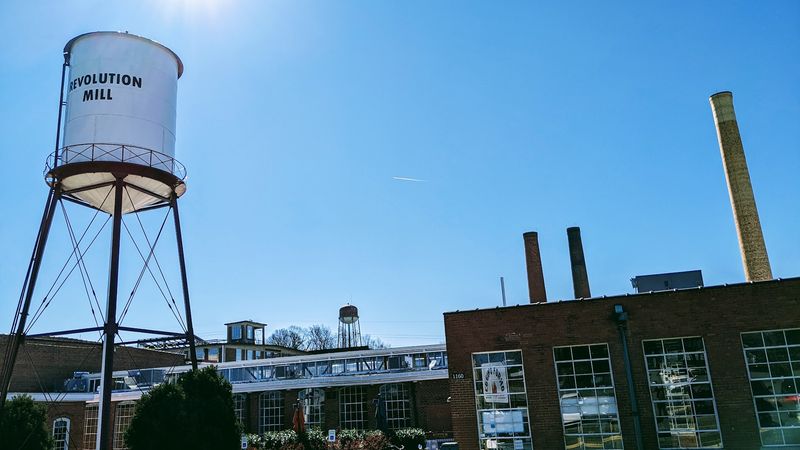
Projects like Revolution Mill matter beyond the local community because they demonstrate what is possible when historic buildings are treated as assets rather than liabilities. The textile industry shaped cities across the American South, from North Carolina to South Carolina and beyond, and many of those old mill buildings have been left vacant or torn down entirely.
This project shows a different path.
The fact that a single property now houses apartments, offices, restaurants, art galleries, yoga studios, medical practices, hair salons, boutiques, event spaces, and a living history exhibit is remarkable by any measure. Each of those functions serves a different segment of the community, which means the complex genuinely belongs to a wide range of people rather than catering to one narrow audience.
For anyone traveling through North Carolina, Revolution Mill represents the kind of destination that changes how you think about what a city can do with its past. Greensboro has built something here that other cities in the region, and honestly cities as far away as those in Oklahoma, could look to as a model for how adaptive reuse can anchor an entire neighborhood.
The mill that helped build Greensboro is now helping reimagine it, and that story is far from finished.
Share this story