 Unearth The Voyage
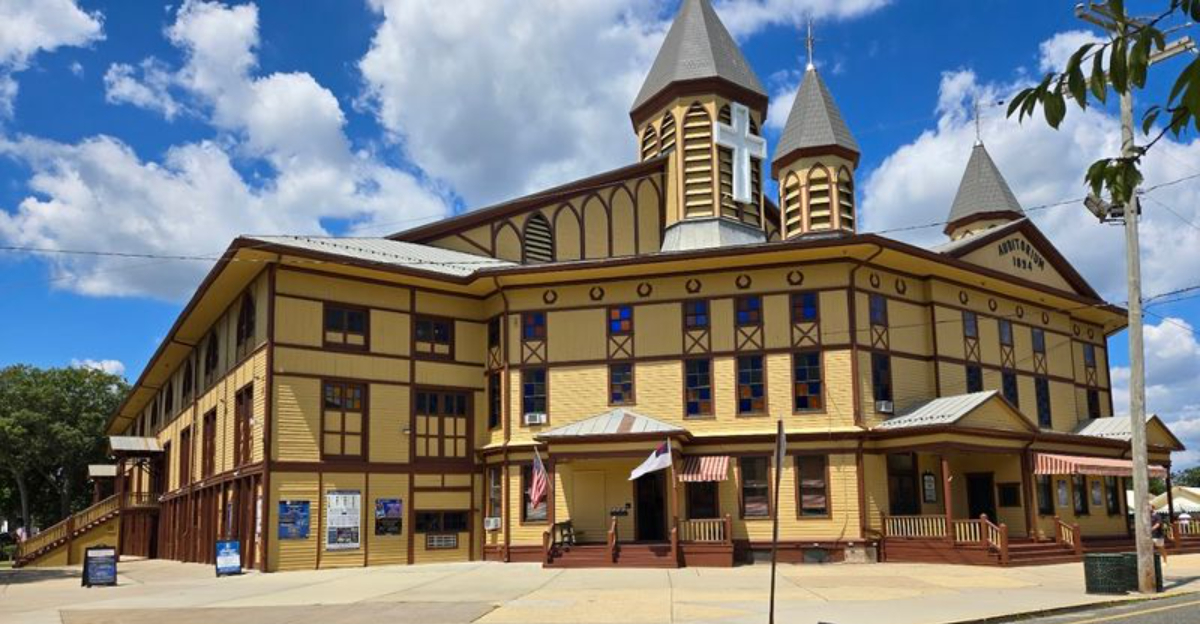
Along the Jersey Shore, tucked just a short walk from the Atlantic Ocean, there is a wooden structure so large and so old that most people who see it for the first time cannot believe it is still standing. Built in 1894, this auditorium has hosted seven U.S. presidents, world-class musicians, and thousands of worshippers over more than a century of continuous use.
It is not a concert hall in New York City or a cathedral in Europe. It sits right in Ocean Grove, New Jersey, and it has one of the most layered histories of any building on the East Coast.
From its jaw-dropping architecture to its legendary pipe organ, there is far more going on inside those wooden walls than most people expect. Keep reading, because this landmark is about to earn a permanent spot on your must-visit list.
Where It All Begins: Address and Location
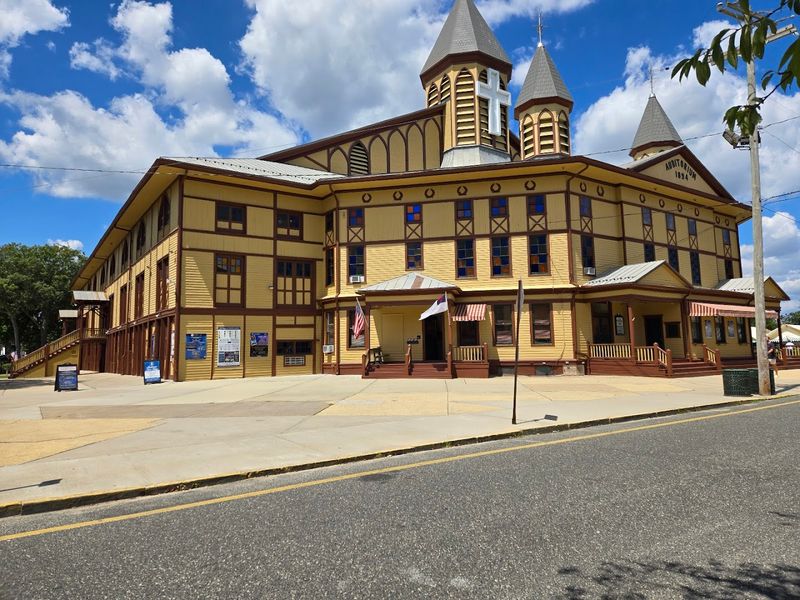
The Great Auditorium stands at 21 Pilgrim Pathway, Ocean Grove, NJ 07756, right in the heart of a Victorian seaside community that feels unlike anywhere else on the Jersey Shore.
Ocean Grove is a small borough in Monmouth County, bordered by Bradley Beach to the north and Asbury Park to the west, with the Atlantic Ocean just a short walk to the east.
The building sits near the center of town, close enough to the beach that you can reach the boardwalk on foot in just a few minutes.
The surrounding streets are lined with Victorian cottages, canvas tent homes, and manicured pathways that give the whole neighborhood a preserved, almost frozen-in-time quality.
Parking is available nearby, and the town is compact enough to explore entirely on foot. Whether you are coming from the Garden State Parkway or driving along the coast, Ocean Grove is an easy and rewarding detour.
Built in 1894: A Wooden Giant That Refused to Age
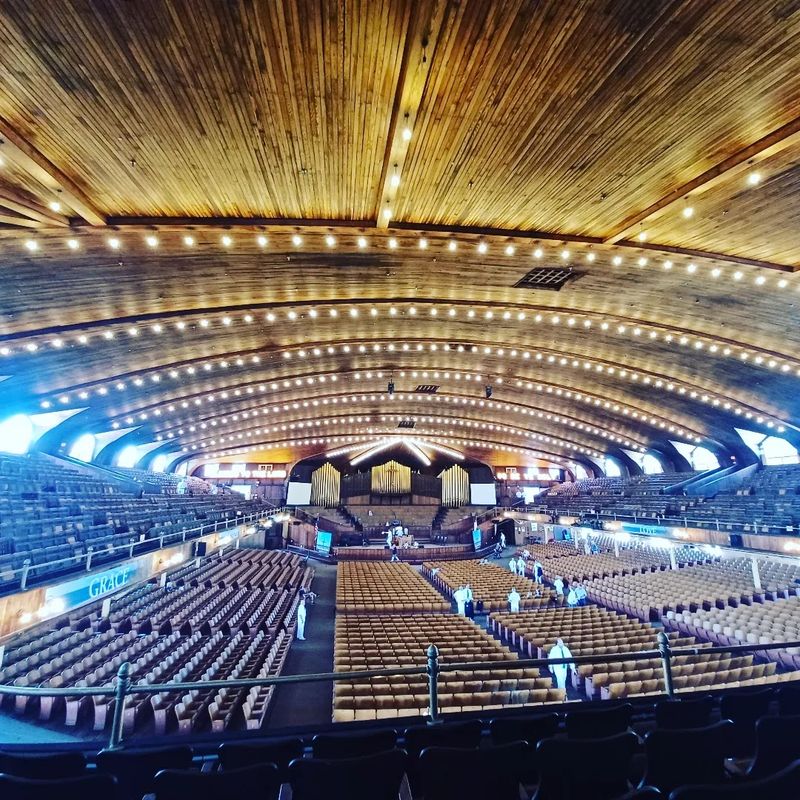
Most wooden buildings from the 1800s have long since been replaced by concrete and steel, yet The Great Auditorium has held its ground for well over 130 years.
Construction was completed in 1894, and the building was designed to hold thousands of people under one roof without a single interior support column blocking the view of the stage.
That open-span design was a genuine engineering achievement for its era, and it remains impressive by any modern standard.
The structure was built to serve the Camp Meeting Association of Ocean Grove, a Methodist organization that had been gathering on this stretch of shoreline since 1869.
The wood has been maintained and restored carefully over the decades, keeping the building structurally sound and historically intact.
For a building that predates the automobile, it holds up remarkably well, and that staying power is a big part of what makes it such a compelling stop along the Jersey Shore.
Seven Presidents Walked Through Those Doors
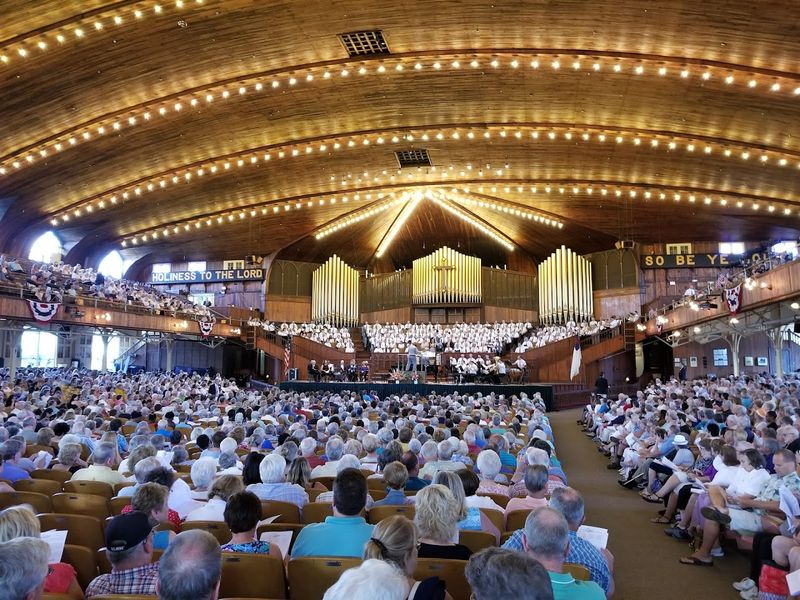
Not many auditoriums in the country can claim to have hosted seven sitting or former U.S. presidents, but The Great Auditorium is one of them.
Ulysses S. Grant, Theodore Roosevelt, and Richard Nixon are among those who took the stage or addressed crowds within these walls, spanning more than a century of American political history.
The auditorium became a natural gathering point for public figures because Ocean Grove itself drew massive summer crowds during the late 19th and early 20th centuries.
At its peak, the Camp Meeting season brought tens of thousands of people to this small New Jersey town, making it one of the most attended religious gatherings in the United States.
A platform that could reach that many people, in a setting that combined moral authority with public spectacle, was exactly the kind of stage that politicians and leaders wanted to stand on.
That presidential legacy alone makes the auditorium a genuinely significant piece of American history.
Enrico Caruso and a Stage Built for Legends

In 1910, one of the most celebrated voices in the history of opera filled the wooden interior of The Great Auditorium when Enrico Caruso performed on its stage.
Caruso was the defining vocal talent of his era, and the fact that he chose Ocean Grove as a performance venue says a great deal about the auditorium’s standing in the cultural world of the time.
The building’s acoustics made it a practical and appealing choice for performers at every level, from local choral groups to internationally recognized artists.
The stage has welcomed a remarkable range of talent over the decades, including contemporary Christian artists, classical musicians, organists, and vocalists of every genre.
That breadth of programming is part of what keeps the auditorium relevant year after year, long after many comparable venues have closed or been repurposed.
A stage that once held Caruso still holds performers today, and that continuity of excellence is something worth appreciating.
The Hope-Jones Organ: A Mechanical Marvel
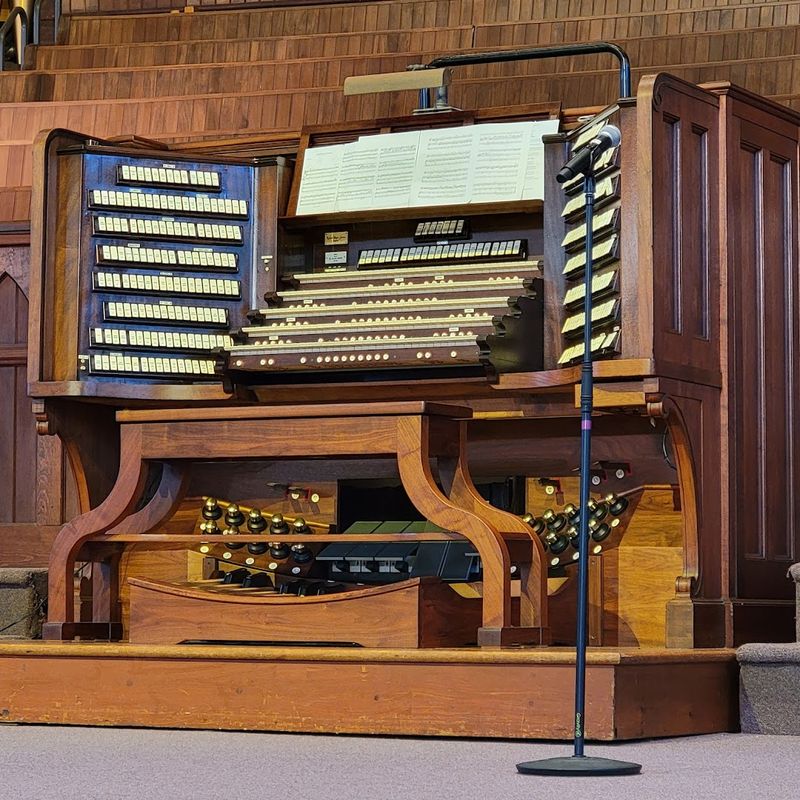
Among the many remarkable features inside The Great Auditorium, the Hope-Jones organ stands out as a landmark within a landmark.
Robert Hope-Jones was a pioneering organ builder whose designs fundamentally changed how pipe organs were constructed, and the instrument he installed in Ocean Grove remains one of the most historically significant in the country.
The organ has been expanded and updated over the years while preserving its original character, and it continues to be used in regular performances and recitals throughout the summer season.
Organ recitals at the auditorium draw dedicated audiences who travel specifically to hear this instrument played in its original setting, which is one of the few places in the world where a Hope-Jones organ can still be experienced live.
For music enthusiasts, the organ alone justifies the trip to Ocean Grove.
It is the kind of instrument that commands full attention the moment it begins to play, filling every corner of the vast wooden hall with layered, resonant sound.
No Air Conditioning, No Problem
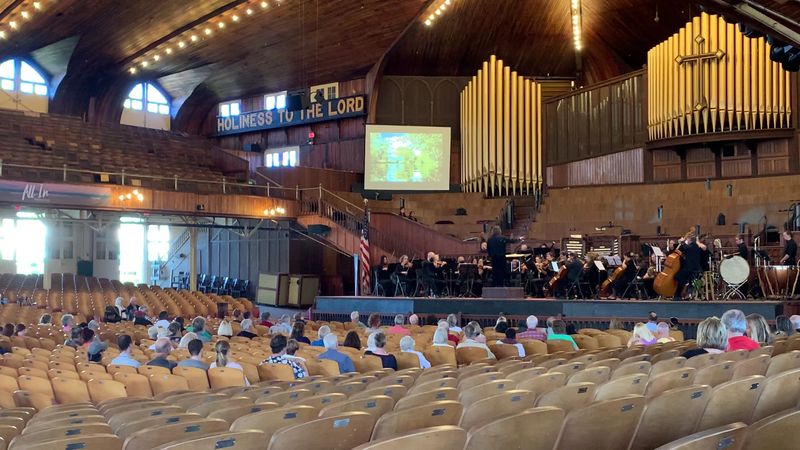
One of the more surprising things about attending an event at The Great Auditorium during the summer is the cooling system, which is essentially the Atlantic Ocean doing its job.
The building has no air conditioning. Instead, the design relies on a series of large doors that open on multiple sides of the structure, allowing ocean breezes to flow through the entire hall during performances.
This natural ventilation system was not an accident. The original designers understood the local climate and built the auditorium to work with it rather than against it.
The result is a cross-breeze effect that keeps the interior comfortable even during warm summer months, which is a genuine achievement for a building that seats thousands of people.
It also means that attending an event here has a different quality than sitting in a sealed, climate-controlled concert hall.
The outdoor world stays present throughout, which adds a layer of connection to the setting that most modern venues simply cannot replicate.
A Starring Role in Woody Allen’s Film
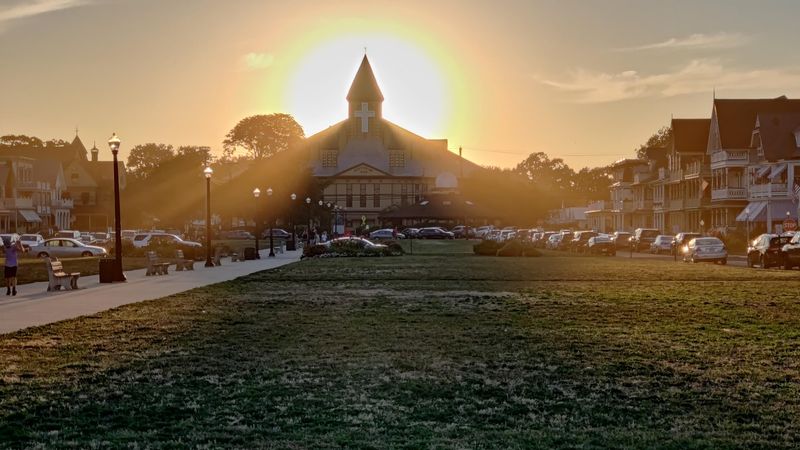
Not every historic auditorium has a film credit, but The Great Auditorium appeared prominently in Woody Allen’s 1980 film “Stardust Memories,” which brought the building to a wider national audience.
The exterior of the auditorium was used as a filming location, and its distinctive Victorian architecture gave the film a visual quality that matched the period-influenced tone Allen was going for.
Ocean Grove as a whole has attracted filmmakers and photographers over the years because the town’s Victorian streetscapes are so well preserved that they require almost no set dressing to look like a different era.
The auditorium’s appearance in a major motion picture adds a layer of cultural significance that goes beyond its religious and musical history.
It is the kind of detail that surprises people who visit and then do a little research afterward.
A building that shows up in both American presidential history and American cinema is, by any measure, a genuinely fascinating place to spend an afternoon.
Summer Events That Keep the Calendar Full

The Great Auditorium runs a full schedule of events from late spring through early fall, covering everything from Sunday worship services and choir festivals to rock concerts and classical organ recitals.
The summer worship series is a long-standing tradition that draws guest speakers and performers from across the country, with services held weekly throughout the season.
Events like the Choir Festival and the Messiah Spectacular have become anchor points on the auditorium’s annual calendar, drawing large audiences who return year after year.
Contemporary Christian artists have also performed here, including groups like We The Kingdom and Jeremy Camp, which shows the range of programming the auditorium supports.
Many events are free to attend, with a free-will offering taken in lieu of ticket sales, which keeps the auditorium accessible to a broad audience.
For events that do require tickets, advance purchase is strongly recommended, since the auditorium fills up quickly for popular performances.
Checking the schedule at oceangrove.org before a visit is always a smart move.
The Architecture That Stops People in Their Tracks
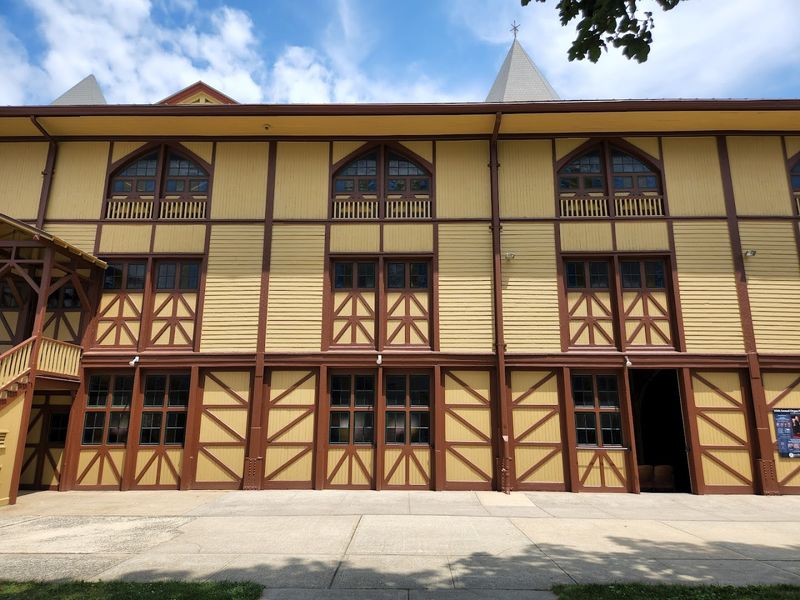
The scale of The Great Auditorium is the first thing that registers when you see it up close, because the building is simply much larger than the surrounding neighborhood suggests it should be.
The wooden frame rises to a height that dominates the modest Victorian streetscape of Ocean Grove, and the open arched entrances give the facade an almost cathedral-like presence without any of the stone or masonry typically associated with that scale of construction.
The interior follows through on that promise, with a vast open floor plan, tiered seating, and a stage that feels appropriately grand for the history it has hosted.
Some observers have noted a resemblance between the auditorium’s design and Richard Wagner’s Festspielhaus in Bayreuth, Germany, in terms of the way the space is organized around an unobstructed view of the stage.
Whether or not that comparison holds up architecturally, the auditorium is unquestionably a serious piece of design work.
It was built to impress, and more than 130 years later, it still does exactly that.
Guided Tours: History Delivered in Person
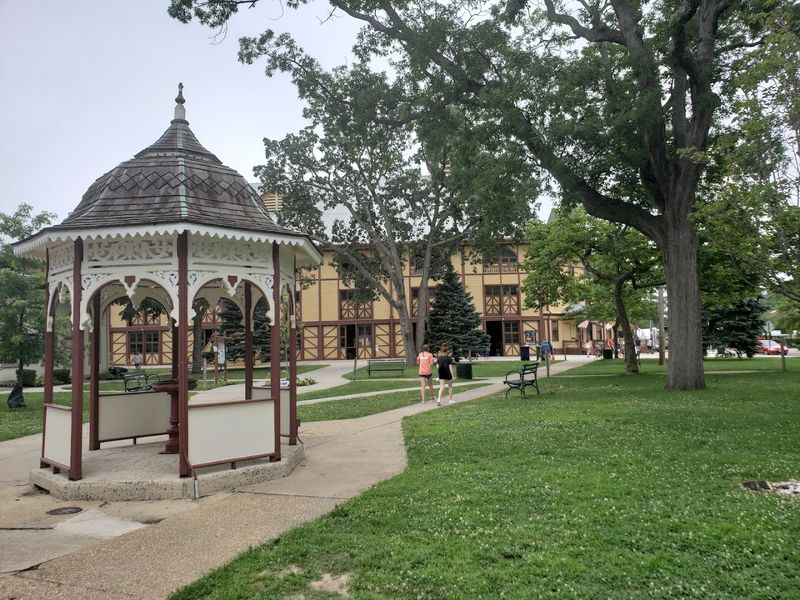
During the summer months, The Great Auditorium offers guided tours on weekday mornings, giving visitors a structured way to learn about the building’s history, architecture, and cultural significance.
The tour format is low-key and accessible. Groups gather in the front seating area, and a knowledgeable guide walks through the key stories associated with the auditorium and the surrounding community of Ocean Grove.
Topics covered typically include the founding of the Camp Meeting Association, the construction of the auditorium itself, the notable figures who have performed or spoken here, and the ongoing role of the building in the life of the town.
The guides are well-prepared and clearly engaged with the material, which makes the experience genuinely informative rather than just a recitation of dates.
For anyone who wants to get more out of a visit than a quick walk-through, the tour is the most efficient way to absorb the full story of this remarkable building.
It typically runs about an hour and requires no advance reservation.
The Tent Community Next Door

One of the most distinctive aspects of visiting The Great Auditorium is the neighborhood that surrounds it, because Ocean Grove is home to one of the last remaining tent communities in the United States.
Stretching out from the auditorium in a semicircle, the tent city consists of small canvas structures mounted on wooden platforms, many of which have been in continuous use by the same families for generations.
The tents are not rough camping setups. They are fully furnished seasonal homes, some with small front porches and personal decorations, that have been part of the Ocean Grove Camp Meeting tradition since the 1800s.
Walking through this neighborhood is a genuinely unusual experience, because nothing else quite like it exists anywhere along the Eastern Seaboard.
The combination of the auditorium, the Victorian cottages, and the tent city creates a layered historical environment that rewards slow exploration.
It is a place where the 19th century is not just remembered but actively maintained.
Practical Tips Before You Go
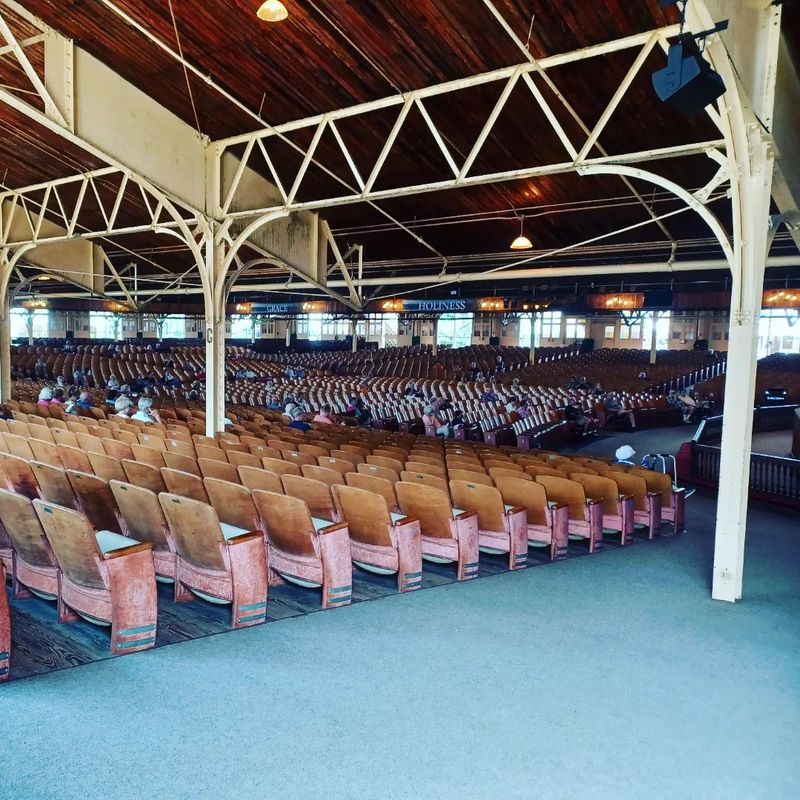
A few practical details can make a visit to The Great Auditorium go much more smoothly, and the most important one is timing.
The building is not open year-round. The primary season runs from late spring through early September, with most events, tours, and services concentrated in July and August.
Restrooms are located in a separate facility directly across the street from the auditorium, which is worth knowing before you arrive with children or after a long drive.
Parking in Ocean Grove can be limited during peak summer weekends, so arriving early or on a weekday gives you a better chance of finding a spot nearby.
The official website, oceangrove.org, maintains an up-to-date calendar of events and ticketing information, which is the most reliable source for planning purposes.
Some events are free, while others require tickets that sell out in advance.
Bringing a light layer is a good idea for evening performances, since the open-door design means the temperature inside tracks closely with the outdoor conditions.
A Community That Takes Preservation Seriously
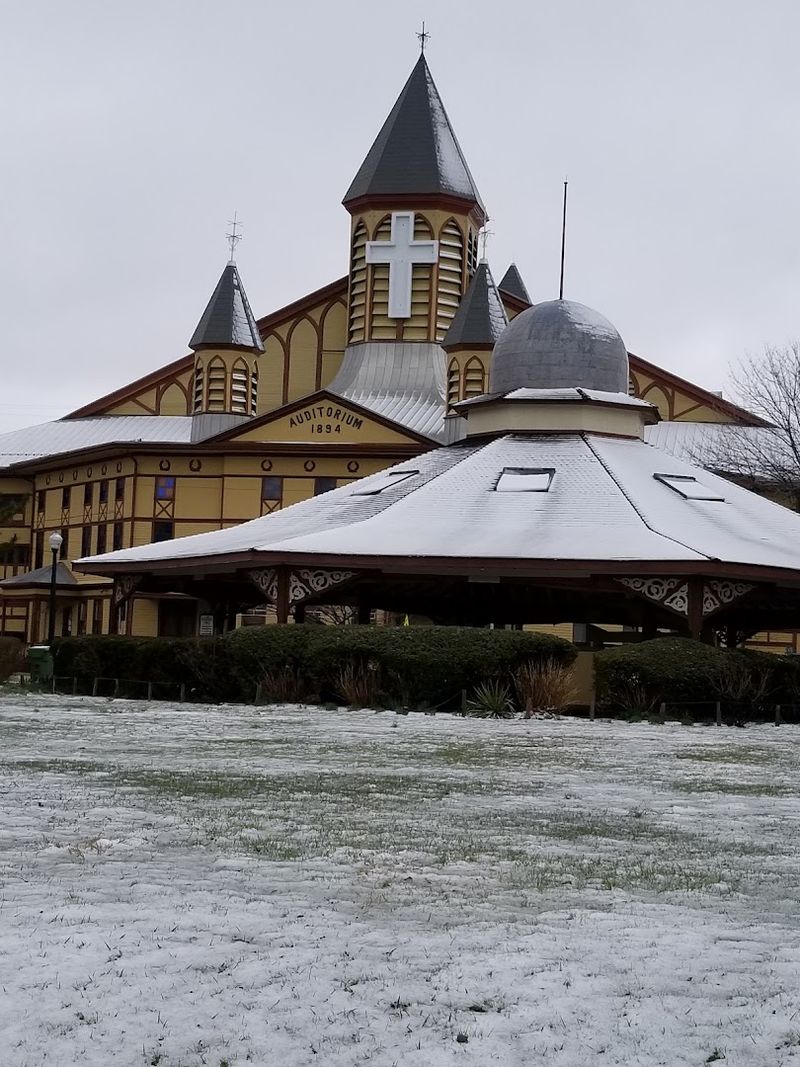
The fact that a wooden building from 1894 still hosts thousands of people each summer is not an accident. It is the result of consistent, deliberate preservation work carried out over many decades by the Ocean Grove Camp Meeting Association.
The organization has maintained ownership and stewardship of the auditorium since it was built, which has kept decision-making about the building’s future in the hands of people who are deeply invested in its survival.
Ocean Grove itself is listed on the National Register of Historic Places as a historic district, which provides an additional layer of recognition and protection for the buildings and streetscapes within its boundaries.
That designation reflects the unusual completeness of the town’s Victorian character, which has been maintained more thoroughly than almost any comparable community on the East Coast.
Preservation here is not a passive activity. It requires active maintenance, fundraising, and community commitment year after year.
The auditorium’s continued existence is a direct reflection of how seriously that commitment is taken.
Beyond the Auditorium: The Beach Is Right There
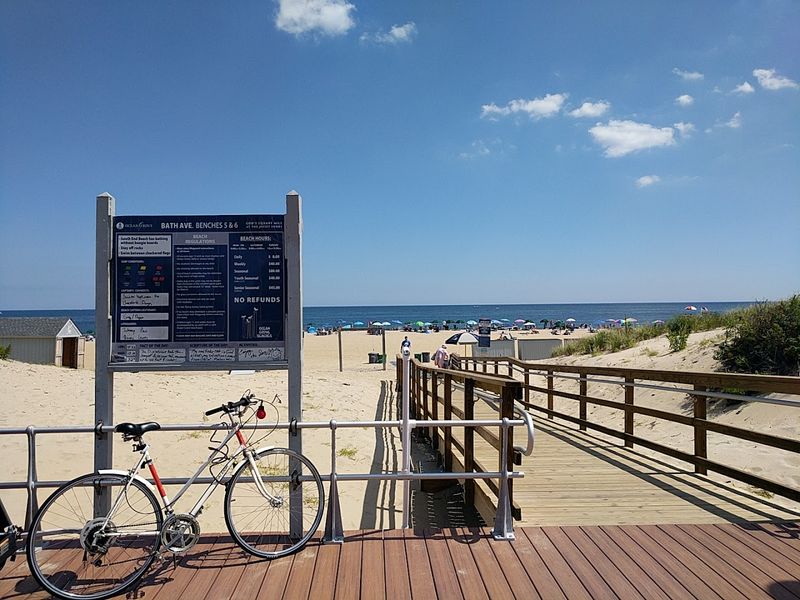
The Great Auditorium gets most of the attention, but Ocean Grove also happens to sit right next to one of the cleaner and less crowded stretches of beach along the Jersey Shore.
The town’s beach is known for its well-maintained boardwalk and relatively calm atmosphere compared to the busier resort towns nearby.
Asbury Park sits just to the north, offering a broader range of dining, shopping, and entertainment options for visitors who want to extend their day beyond Ocean Grove.
Bradley Beach is to the south, providing another quiet beach option within easy walking distance.
The combination of a historic auditorium, a Victorian streetscape, a tent city, and direct beach access makes Ocean Grove an unusually well-rounded destination for a day trip from anywhere in the tri-state area.
Most people who visit expecting to spend an hour end up staying most of the day, because the town keeps offering new things to look at and think about.
The beach just makes it easier to stay even longer.
Why This Place Earns Its Spot on Any Jersey Shore Itinerary
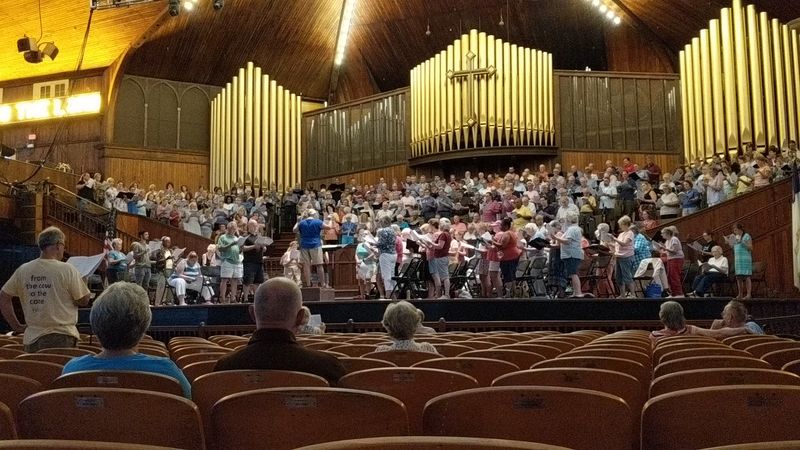
The Great Auditorium is the kind of place that tends to surprise people, not because it is hidden or obscure, but because its full story is so much richer than a quick glance suggests.
A 130-year-old wooden building that has hosted presidents, opera legends, and rock bands, that appeared in a major film, that contains one of the most historically significant pipe organs in the country, and that still fills its seats on a regular basis is not a relic. It is a living institution.
The surrounding community of Ocean Grove adds depth to every visit, offering Victorian architecture, a functioning tent city, and a beach that rivals anything else on the Shore.
Tours, concerts, worship services, and festivals give visitors multiple reasons to return across different seasons and years.
For anyone building a Jersey Shore itinerary that goes beyond the usual boardwalk stops, The Great Auditorium belongs near the top of the list.
Some landmarks earn their status over time, and this one has had well over a century to make the case.



