 Unearth The Voyage
You know that feeling when a city looks perfect, but something about it feels staged? That hit me fast here.
I was one bridge in, already dodging selfie sticks, and wondering where the real life had gone.
Then I noticed who wasn’t rushing. A couple of older men leaning into a doorway.
A woman stepping off a boat with groceries like it was just another Tuesday. I started following that pace instead of the noise, and Venice quietly changed shape.
This isn’t about splurging on gondolas or ticking off the big sights. It’s about learning the small moves that locals use to keep their city livable.
The right vaporetto pass so you stop overpaying. A simple bacaro-hopping route that feels effortless.
A few islands where the air shifts and the streets go still. If you’ve only seen Venice from the main drag, you’re about to meet another version.
Ride Vaporetto Line 1 like it’s a moving balcony
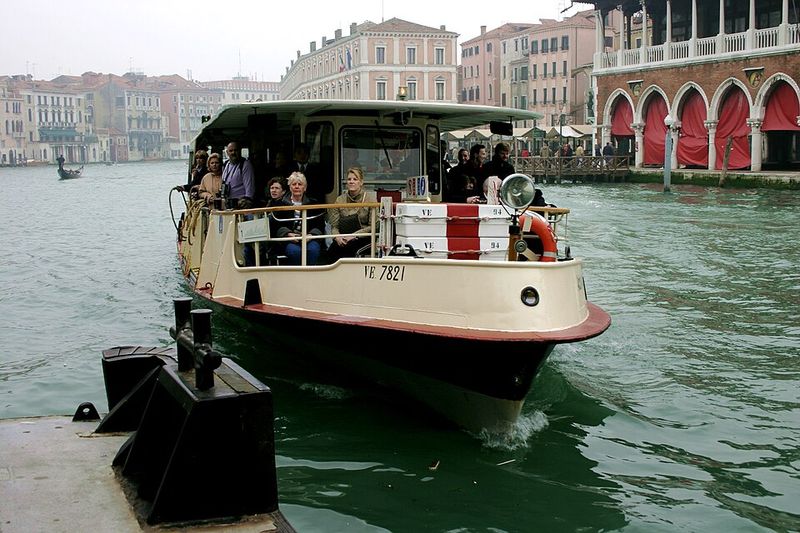
Line 1 is basically Venice’s slowest, most scenic bus route, except it floats. It chugs along the Grand Canal, stopping at nearly every major landmark, and costs the same as any other vaporetto ride.
Tourists pay triple for a gondola selfie while you’re getting the same view for pocket change.
I took this route on my first morning in Venice, half-asleep with an espresso in hand, and watched the city wake up from the water. Palazzos glowed in early light.
Delivery boats zipped past. It felt like I’d unlocked a cheat code.
Grab a seat at the back or stand at the front rail if you want the full cinematic effect. The ride from Piazzale Roma to San Marco takes about 45 minutes, but nobody’s rushing.
Locals use it as commuter transport, so you’ll see students, grocery bags, and the occasional dog.
Pro tip: ride it twice, once in the morning for golden light, once at sunset for the magic-hour glow. Skip the
Use Lines 1 & 2 to actually move like a Venetian
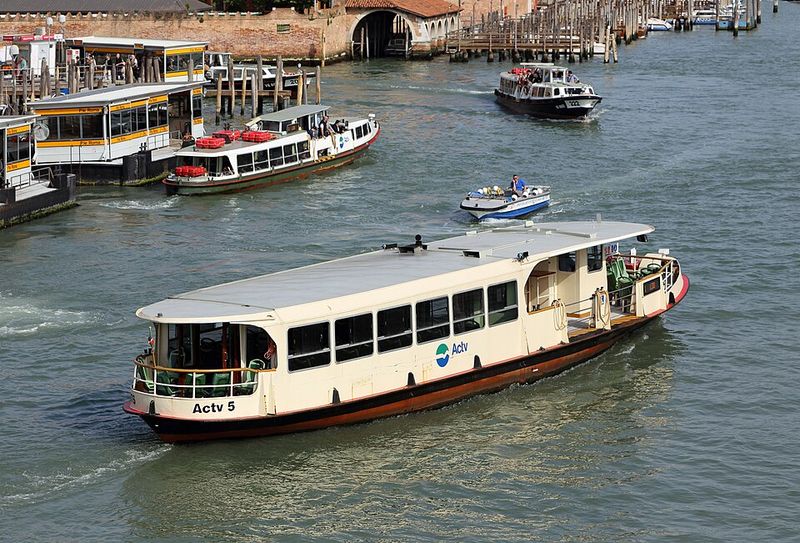
Venetians don’t wander aimlessly, they vaporetto-hop with purpose. Lines 1 and 2 are the arteries of the city, connecting Piazzale Roma, the train station, Rialto, San Marco, and Giudecca.
Master these two lines and you’ll move through Venice like you live there.
Line 1 is the slow, scenic crawl. Line 2 is the express version, skipping some stops and looping around the city faster.
Together, they form a transit system that actually makes sense once you stop thinking of Venice as a walking-only maze.
I watched a local grandmother board Line 2 with two shopping bags, a folding cart, and zero hesitation. She knew exactly which stop, which side to stand on, and when to elbow her way to the exit.
That’s the energy you want.
Buy a multi-day pass if you’re staying more than 48 hours, it pays for itself fast. Single rides cost around €9.50, but a 72-hour pass is roughly €40 and includes unlimited rides.
Suddenly, hopping across the lagoon for lunch becomes a no-brainer.
Take the traghetto – Venice’s 2-minute gondola
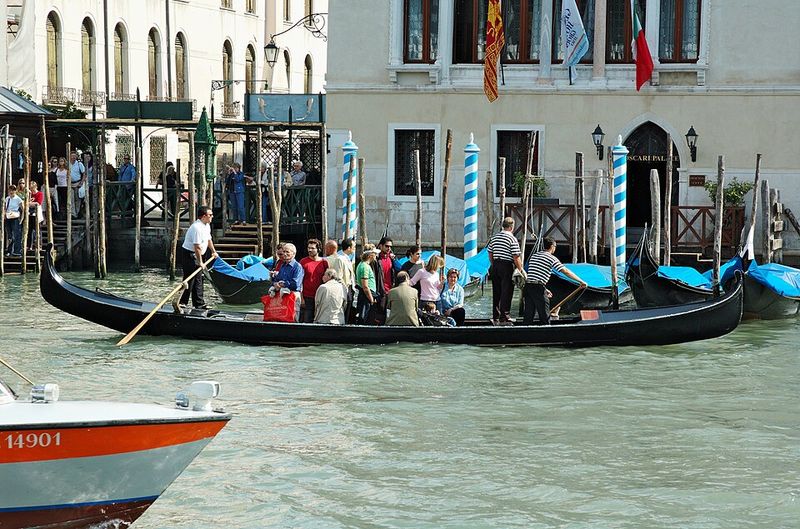
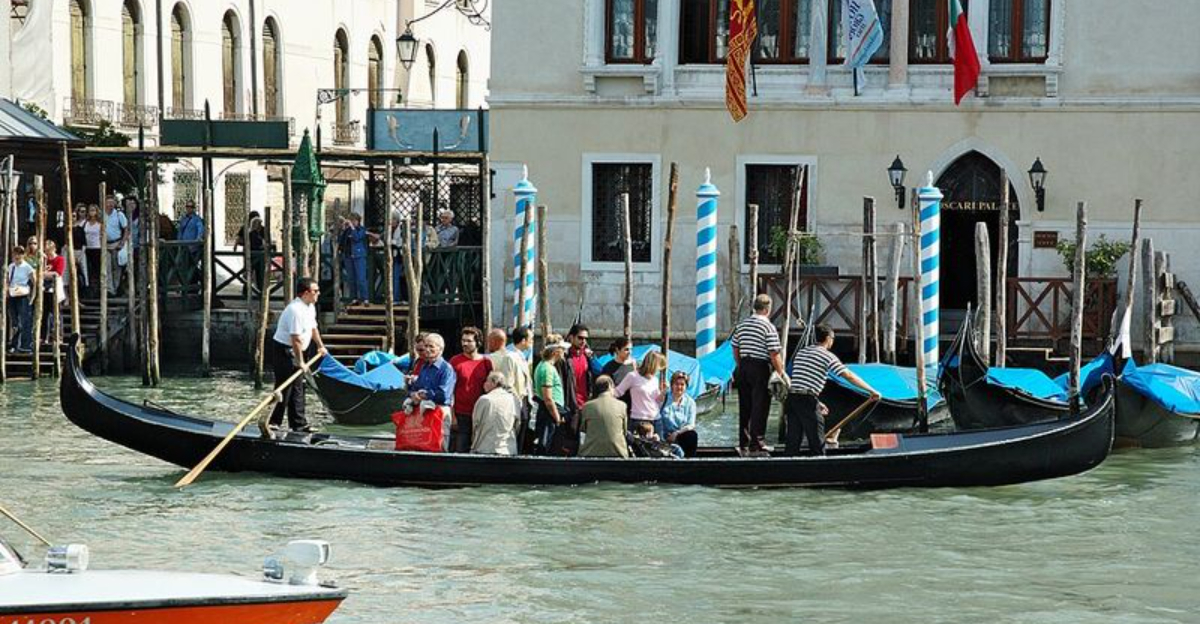
Forget the €80 gondola ride, locals cross the Grand Canal on a traghetto for about two euros. It’s a standing-room-only gondola ferry that shuttles people from one side to the other in under three minutes.
No singing. No romance.
Just functional Venetian genius.
There are only a handful of traghetto crossings left, and they operate on a
Do cicchetti + spritz the bacaro way
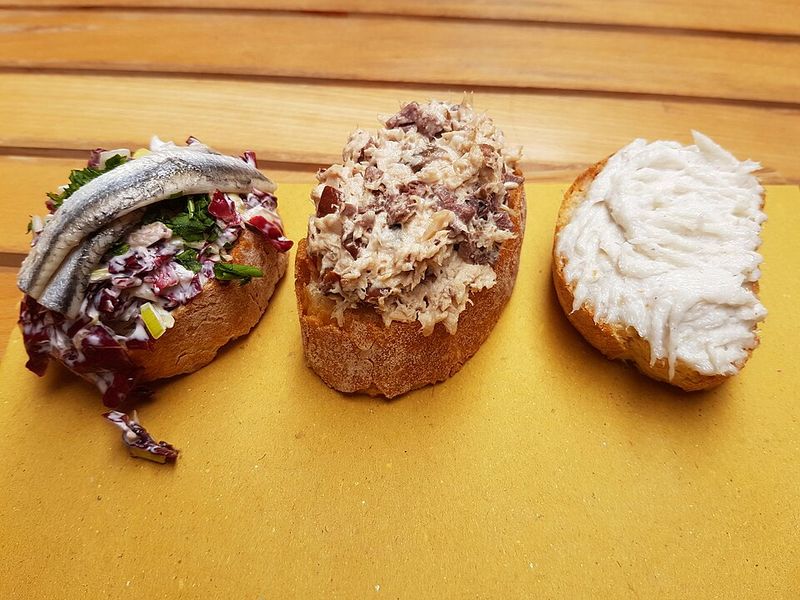
Bacari are Venice’s answer to tapas bars, except better because they come with spritz and zero pretension. You walk in, point at the cicchetti behind the glass, order a drink, and eat standing at the bar or a tiny corner table.
Then you move to the next bacaro and do it again.
Cicchetti are small bites, think crostini with baccalà, fried seafood, marinated vegetables, or polpette (meatballs). They cost between one and three euros each, so you can graze your way through an entire neighborhood without blowing your budget.
Pair them with a spritz or an ombra, which is just a small pour of house wine.
The bacaro crawl is peak Venetian social life. Locals hop between three or four spots in an evening, chatting with bartenders and friends along the way.
It’s casual, it’s communal, and it’s way more fun than sitting down for a formal dinner at 7 p.m.
Start in the Rialto or San Polo areas where bacari are packed tight. Don’t overthink your order, just point and taste.
Half the fun is trying something you can’t pronounce.
Shop Rialto Market early, before Venice turns on

Rialto Market is where Venice’s real heartbeat lives, before the cruise ships dock and the selfie sticks multiply. Show up by 8 a.m. and you’ll see vendors setting up fish stalls, locals haggling over zucchini flowers, and chefs picking through the day’s catch.
It’s loud, colorful, and unapologetically alive.
The fruit and vegetable market runs Monday through Saturday starting at 7 a.m., while the fish market operates Tuesday through Saturday. Both wrap up by early afternoon, so timing matters.
This isn’t a tourist attraction—it’s a working market where Venetians actually shop.
I bought a bag of cherries here once and ate them while watching a fishmonger gut a sea bass with surgical precision. The whole scene felt like stepping into a different century, except everyone had smartphones and espresso cups.
Wander slowly. Take photos, but don’t block the aisles.
Buy something small if you can – a piece of fruit, a handful of olives, just to participate in the rhythm. Then grab a coffee at one of the nearby bars and watch the market energy spill into the surrounding streets.
Follow the market mood into San Polo – then vanish into side lanes
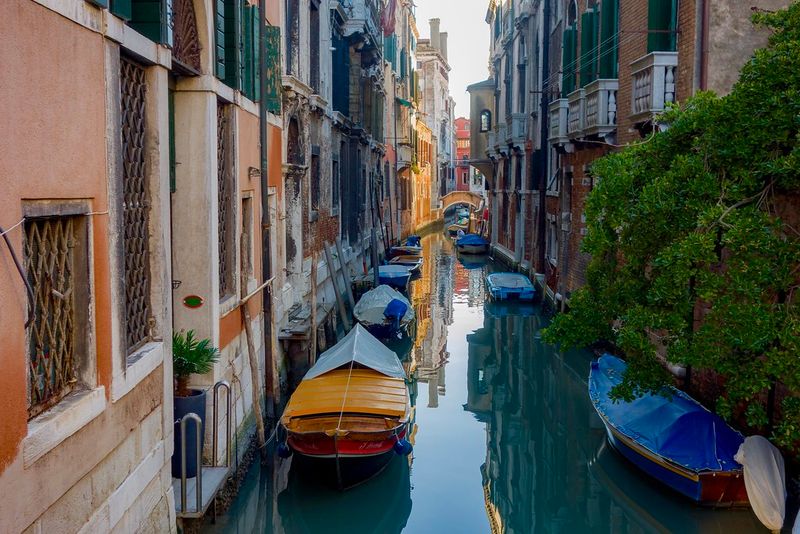
San Polo wraps around Rialto like a maze designed to lose tourists on purpose. The main streets near the market buzz with energy, but one turn into a side calle and suddenly you’re alone with cats, laundry lines, and the smell of someone’s grandmother making pasta.
This is where Venice rewards curiosity. No map, no plan, just follow the quietest path and see where it spits you out.
You’ll stumble onto tiny campi (squares) with wells in the center, churches you’ve never heard of, and bars where locals drink mid-morning prosecco without irony.
I got hopelessly lost here once and ended up in a courtyard so silent I could hear my own footsteps echo. Two minutes later, I turned a corner and was back at Rialto Bridge surrounded by a thousand people.
That’s the San Polo trick, it hides Venice inside Venice.
Don’t stress about getting lost. You’re on an island.
You’ll eventually hit water or a recognizable landmark. The joy is in the wandering, not the destination.
Let the calli swallow you for an hour and you’ll understand why locals guard this neighborhood fiercely.
Make Cannaregio your evening Venice
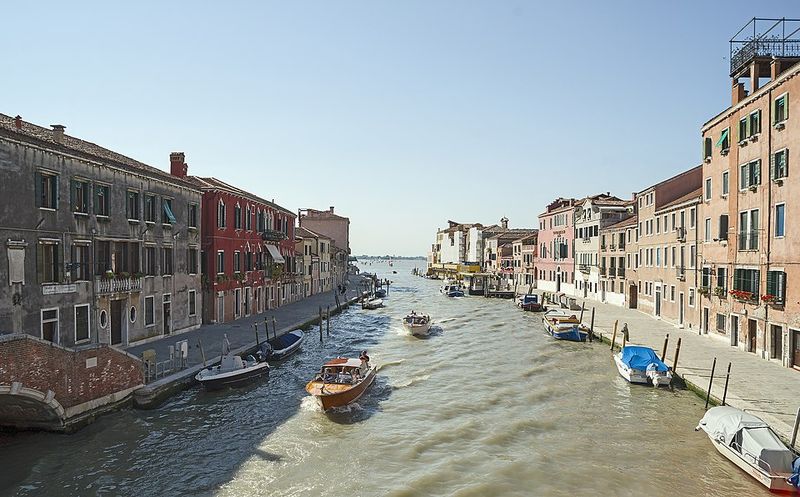
Cannaregio is where Venetians go when they want to feel like Venice still belongs to them. It’s residential, quiet after dark, and packed with canals that reflect streetlights instead of camera flashes.
This is evening Venice, the version that doesn’t perform for tourists.
The neighborhood stretches north from the train station and includes the Jewish Ghetto, Fondamenta della Misericordia (a canal-side strip of bars and restaurants), and endless residential streets. Locals walk their dogs here.
Kids play soccer in campi. Life happens at a human pace.
I spent an entire evening here once, hopping between wine bars along the Misericordia canal and watching locals do the same. Nobody was in a hurry.
Nobody was Instagramming. It felt like I’d finally cracked the code on how to be in Venice without performing being in Venice.
Stay here if you can, or at least spend an evening wandering. Grab dinner somewhere off the main drag, then walk the canals until you’re blissfully, quietly lost.
This is the Venice that exists after the day-trippers leave, and it’s worth every extra minute.
Visit the Jewish Ghetto with context, not just a photo stop
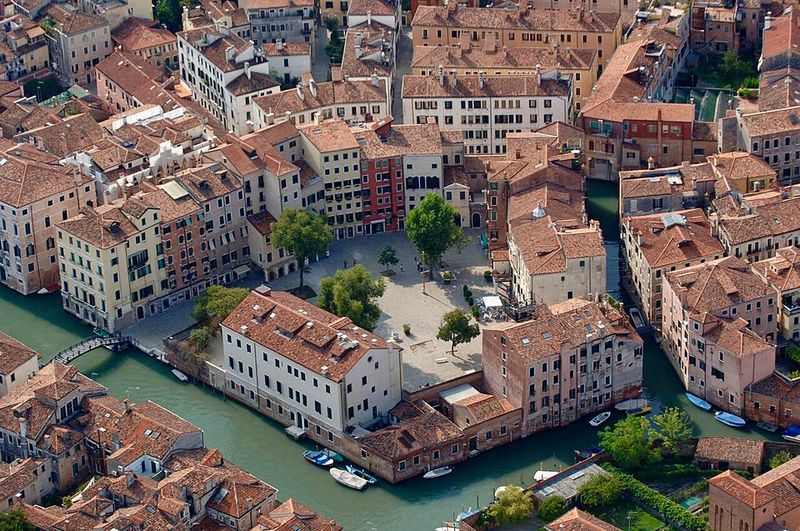
The Venetian Ghetto dates back to 1516 and is widely considered the oldest in Europe and the origin of the word “ghetto” itself. Walking through it without understanding that weight feels like missing the entire point.
This isn’t Instagram scenery. It’s living history.
The campo is small and quiet, surrounded by unusually tall buildings that were built upward when the Jewish community wasn’t allowed to expand outward. Synagogues are tucked into upper floors, memorial plaques mark deportations during World War II, and the neighborhood still functions as a cultural and religious center today.
I visited on a weekday afternoon and spent an hour just sitting in the square, reading plaques and watching people come and go. A tour group passed through in ten minutes, snapped photos, and left.
They missed everything.
Take a guided tour if you can, several organizations offer walks led by historians or community members. If not, at least spend time reading the memorial plaques and visiting the Jewish Museum.
Respect the space. Learn the context.
This is one of the most meaningful walks you can do in Venice, but only if you slow down enough to let it sink in.
Go to Giudecca for skyline views without the chaos
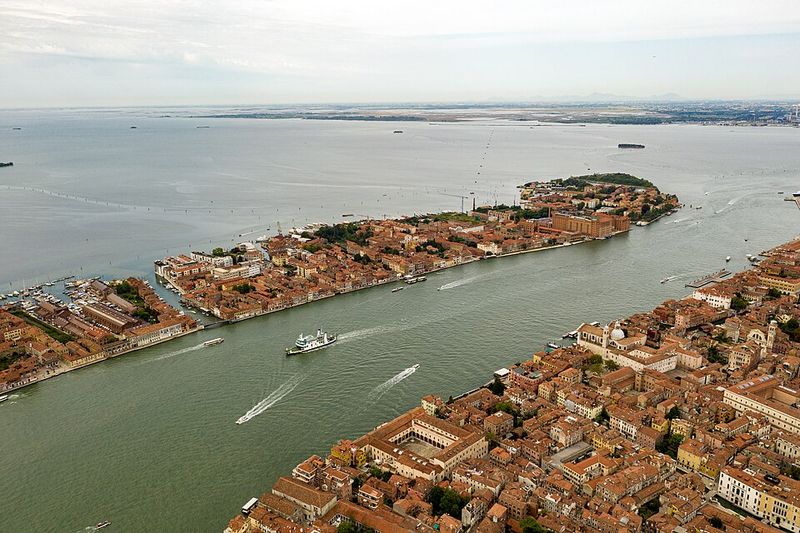
Giudecca sits across the water from the main Venice crush, close enough to see the skyline but far enough to breathe. It’s quieter, more residential, and full of locals who’ve chosen peace over proximity to San Marco.
The views back toward Venice are ridiculous, especially at sunset.
The island stretches long and narrow, with a waterfront promenade that runs nearly its entire length. Walk it in either direction and you’ll pass churches, small bars, and locals sitting on benches watching the vaporetto traffic.
It’s Venice without the performance anxiety.
I took the vaporetto here one afternoon just to escape the crowds and ended up staying for three hours. I grabbed a spritz at a corner bar, walked the fondamenta, and watched the light shift over the Doge’s Palace across the water.
Nobody bothered me. Nobody was selling anything.
It was perfect.
Stay here if you want a local-feeling base, or just visit for an afternoon reset. The vaporetto ride takes five minutes from San Marco, so it’s not some far-flung adventure, it’s just Venice’s quieter twin, hiding in plain sight across the Giudecca Canal.
Swap day trip to nowhere for Lido beach time
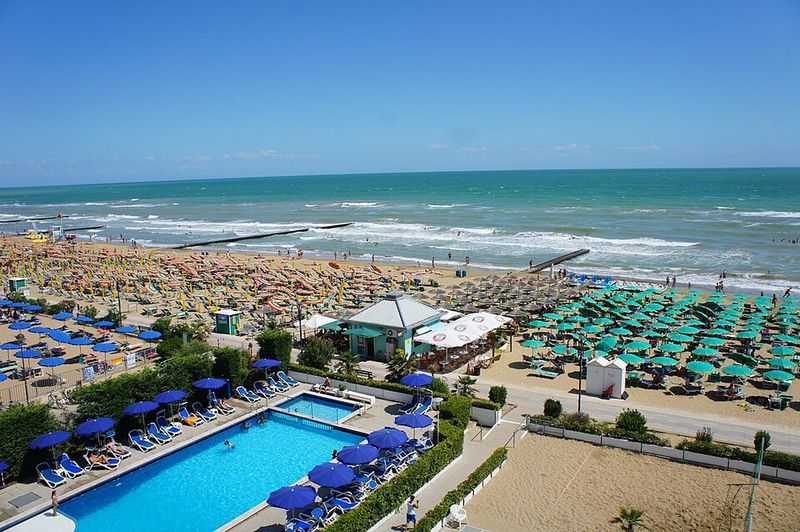
When Venice starts to feel like a stone maze with no oxygen, locals point you toward the Lido. It’s a skinny barrier island with actual beaches, bike lanes, and space to stretch your arms without elbowing a tourist.
The vibe is completely different, more Adriatic summer resort than Renaissance labyrinth.
The Lido is reachable by vaporetto in about 15 minutes from San Marco, and it’s where Venetians go to swim, bike, and remember what horizontal space feels like. There are public beaches, fancy beach clubs, and quiet stretches where you can just sit and stare at the sea.
I spent a morning here once, rented a bike, and rode the length of the island with zero plan. I passed Art Nouveau villas, stopped for gelato, and ended up at a nearly empty beach where I watched windsurfers for an hour.
It felt like a different planet from the Venice I’d left that morning.
Pack a towel, grab a sandwich, and give yourself half a day. The Lido isn’t about sightseeing, it’s about resetting your brain and remembering that Venice exists in a lagoon, not a postcard.
Sometimes the best thing you can do is leave the city without actually leaving the city.
Take the vaporetto out to the lagoon islands beyond the big three
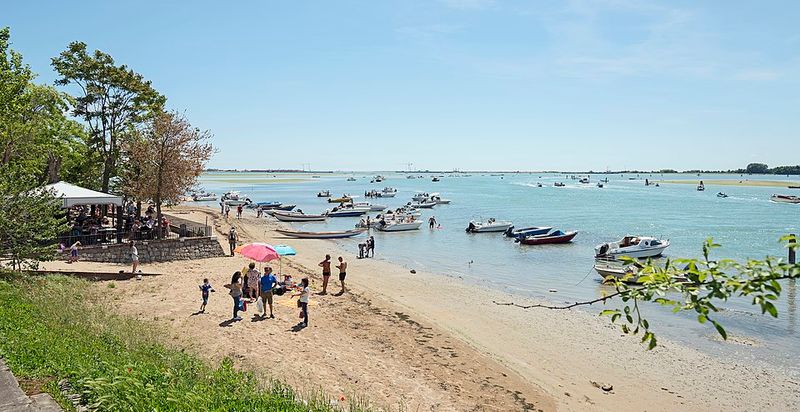
Everyone hits Murano, Burano, and Torcello, the lagoon’s greatest hits. But locals know the real magic lives on the quieter islands: Sant’Erasmo (Venice’s vegetable garden), San Servolo (former monastery turned university campus), and others scattered across the water.
These islands give you “I can’t believe this is still Venice” energy without the crowds.
VeneziaUnica’s lagoon lines connect these spots, and they’re all included in your vaporetto pass. Sant’Erasmo is flat, green, and full of farms, locals bike around buying produce directly from growers.
San Servolo has historic buildings and a park where you can picnic with lagoon views. Both feel like secret Venice.
I spent an afternoon on Sant’Erasmo once, biking past artichoke fields and stopping at a tiny bar where the owner grew his own vegetables. I was the only non-local there.
Nobody spoke English. It was one of my favorite Venice days.
Check the ACTV lagoon line schedule before you go, boats run less frequently than the main routes. Pack snacks, bring a book, and give yourself time to explore without rushing.
These islands reward slow travel and curiosity, not checklist tourism.
Use the official ACTV stop map to build your own Venice
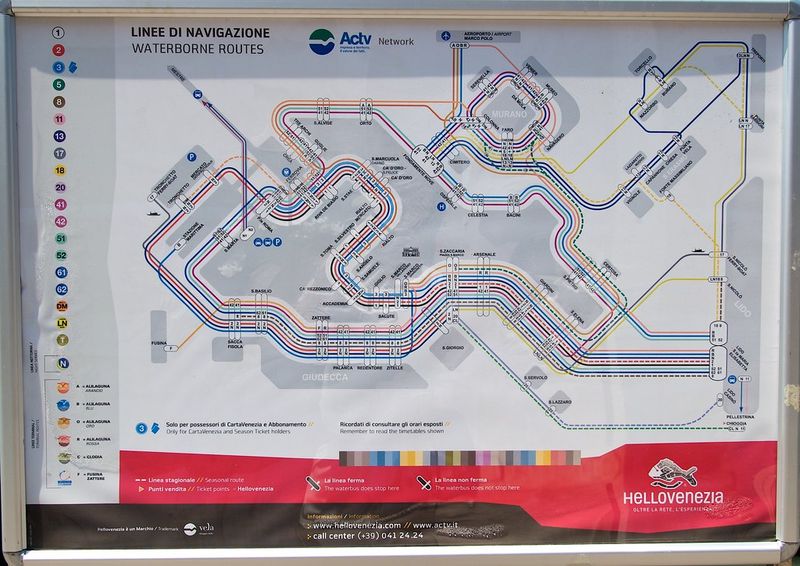
This sounds like homework, but hear me out, the ACTV vaporetto map is secretly the best Venice travel hack. It shows every major stop (Piazzale Roma, Ferrovia, Rialto, San Marco, Lido, Murano, Burano) and how they connect, so you can design a day that flows instead of backtracking through the same crowded calli over and over.
Most people treat Venice like a walking city and exhaust themselves by noon. Locals treat it like a waterbus city and glide between neighborhoods without breaking a sweat.
The map shows you how to think like them, – how to hop from Cannaregio to Giudecca to the Lido without ever touching Piazza San Marco.
I printed the map on my second Venice trip and spent an hour highlighting routes I wanted to try. It turned a chaotic, overwhelming city into a puzzle I could solve.
Suddenly, I wasn’t lost – I was just connecting dots on water.
Download the map from the ACTV website or grab a paper copy at any ticket office. Study it for ten minutes.
Circle the stops near places you want to visit. Then let the vaporetto do the work while you enjoy the ride.
Venice gets way more fun when you stop fighting the canals and start using them.



