There is a small parking lot tucked along a quiet road in Passaic County, New Jersey, that most people drive right past without a second thought. Behind it lies a network of trails cutting through dense forest, rocky terrain, cascading waterfalls, and lookout points with views stretching all the way to the New York City skyline.
Norvin Green State Forest does not announce itself with flashy signs or crowded visitor centers. What it offers instead is the kind of raw, unpolished outdoor experience that keeps hikers coming back weekend after weekend.
The Otter Hole Parking Lot on Glenwild Avenue in Bloomingdale is the gateway to all of it, and once you know what waits beyond that trailhead, a small gravel lot with room for about a dozen cars suddenly feels like the most valuable piece of real estate in the Garden State.
Where the Adventure Actually Starts
The address is 582 Glenwild Ave, Bloomingdale, NJ 07403, and at first glance, it looks like nothing more than a gravel clearing beside a two-lane road. The Otter Hole Parking Lot sits at the edge of Norvin Green State Forest, a 5,000-plus-acre preserve in the Ramapo Mountains of Passaic County.
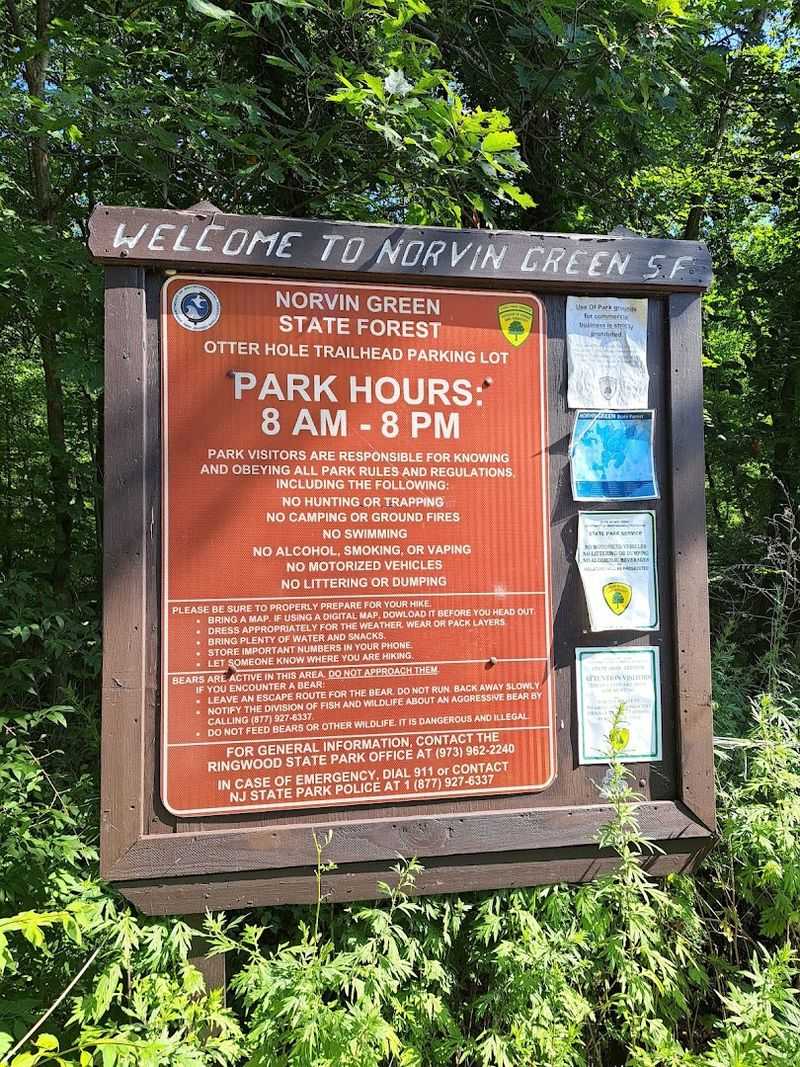
An information board stands on the west side of the lot, giving hikers a quick overview of the trail system before they head in. The lot holds roughly ten to twelve cars, which fills up faster than most people expect, especially on weekend mornings.
Operating hours run from 8 AM to 8 PM daily, and parking before or after those hours can result in a ticket from local police. Arriving right at opening time is the most reliable way to secure a spot and avoid any surprises before the hike even begins.
The Parking Situation Is Worth Taking Seriously
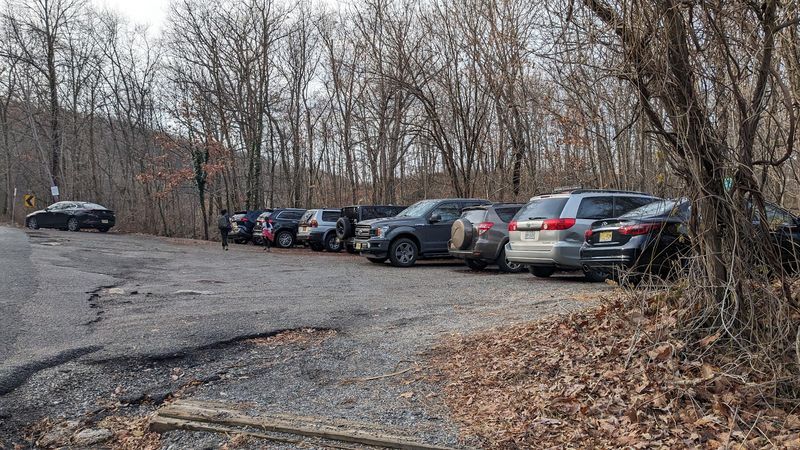
The lot at Otter Hole is genuinely small, and that is not an understatement. With space for only about ten to twelve vehicles, it reaches capacity quickly on weekends and holiday mornings, sometimes before 9 AM during peak season.
An overflow lot is available a short distance down Glenwild Avenue on the same side of the road. The trade-off is that hikers using the overflow lot need to walk back up to the main trailhead, adding extra distance before the trail even begins.
Parking along the roadway itself carries a real financial consequence. Local enforcement has been active in ticketing vehicles parked outside designated areas, and the fine is no small inconvenience.
The most practical advice from those who hike here regularly is simple: arrive early, use the designated lots, and check the hours before heading out so the day starts on a good note rather than a frustrating one.
A Trail System Built for Exploration
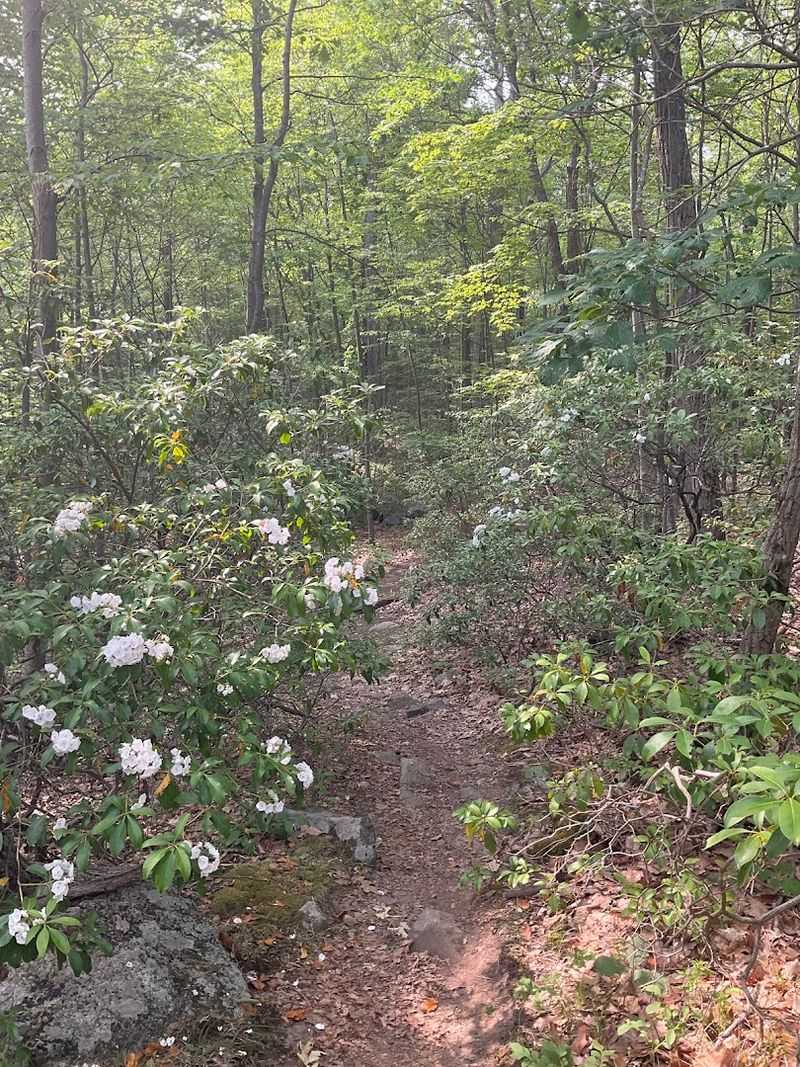
Norvin Green State Forest offers a web of color-coded trails that branch out from the Otter Hole area in multiple directions. Blue, white, yellow, and red trails each offer different distances, difficulty levels, and destinations, giving hikers real options depending on their energy and goals for the day.
The blue trail is the most talked-about route from this parking lot. It climbs steadily through boulder fields and dense canopy, passing multiple lookout points before reaching the high ground where the terrain opens up dramatically.
What makes the trail system here genuinely interesting is how quickly the character of the land shifts. One stretch might be a relatively flat path through thick forest, and the next involves navigating large rocks and uneven ground that demands full attention.
The variety keeps the experience engaging from start to finish, and the well-marked trails mean getting turned around is unlikely as long as hikers pay attention at forks.
Chikahoki Falls and the Hike to Get There
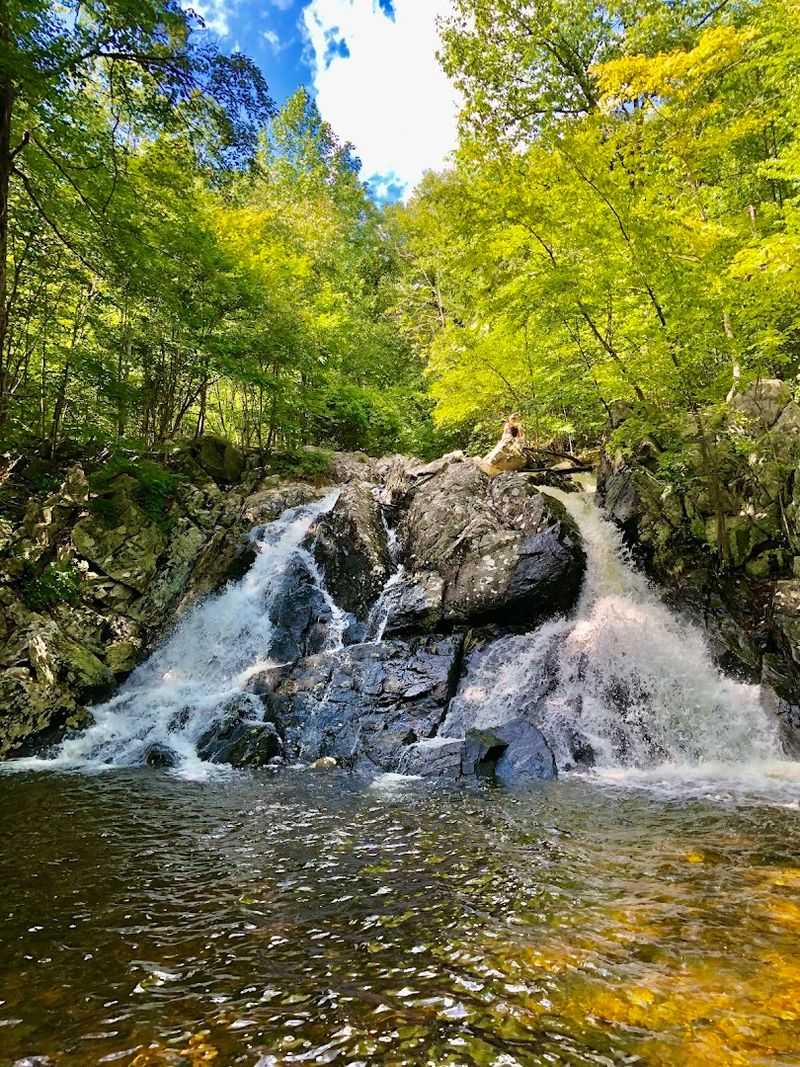
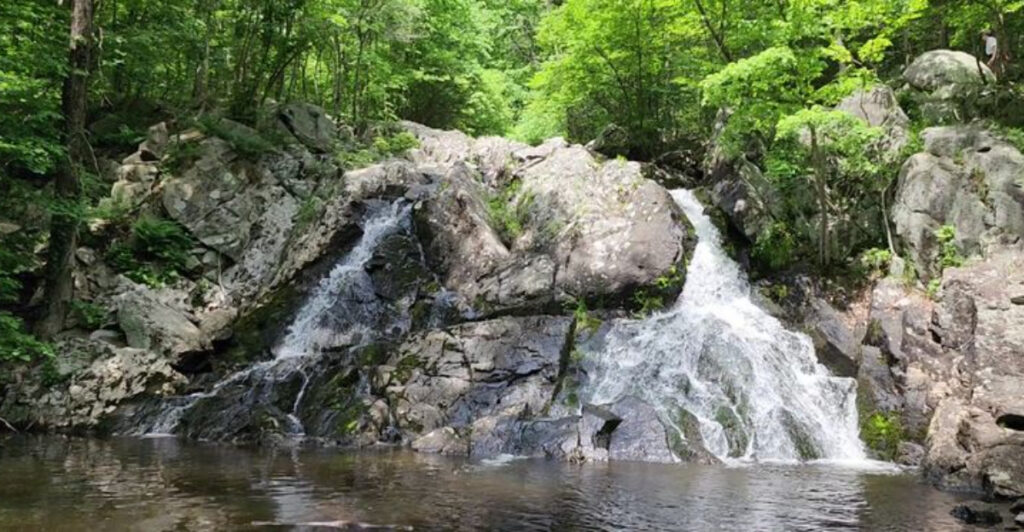
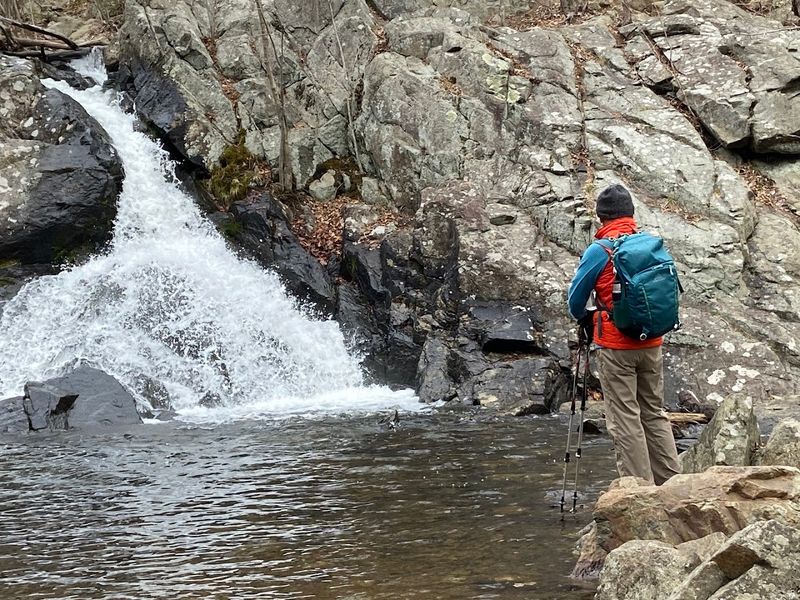
Chikahoki Falls is the waterfall that draws many hikers to the Otter Hole Parking Lot in the first place. The route follows the double blue trail until it forks toward the white trail, which eventually leads to the falls themselves.
The distance from the parking lot to the falls runs closer to 1.5 miles than the one mile listed on the trailhead sign. Elevation gain is also steeper than some sources suggest, with a climb of over 500 feet between the lot and the falls.
There is an unmarked fork slightly before the mile point that leads to a small cascade, but that is not Chikahoki Falls. Continuing past the yellow trail turnoff and taking the white fork is the correct route.
Three stream crossings are part of the journey, each navigated via rock steps. The falls are best appreciated from below, and in late spring, the flow is typically strong and worth every step of the climb.
The Boulder Fields That Define This Forest
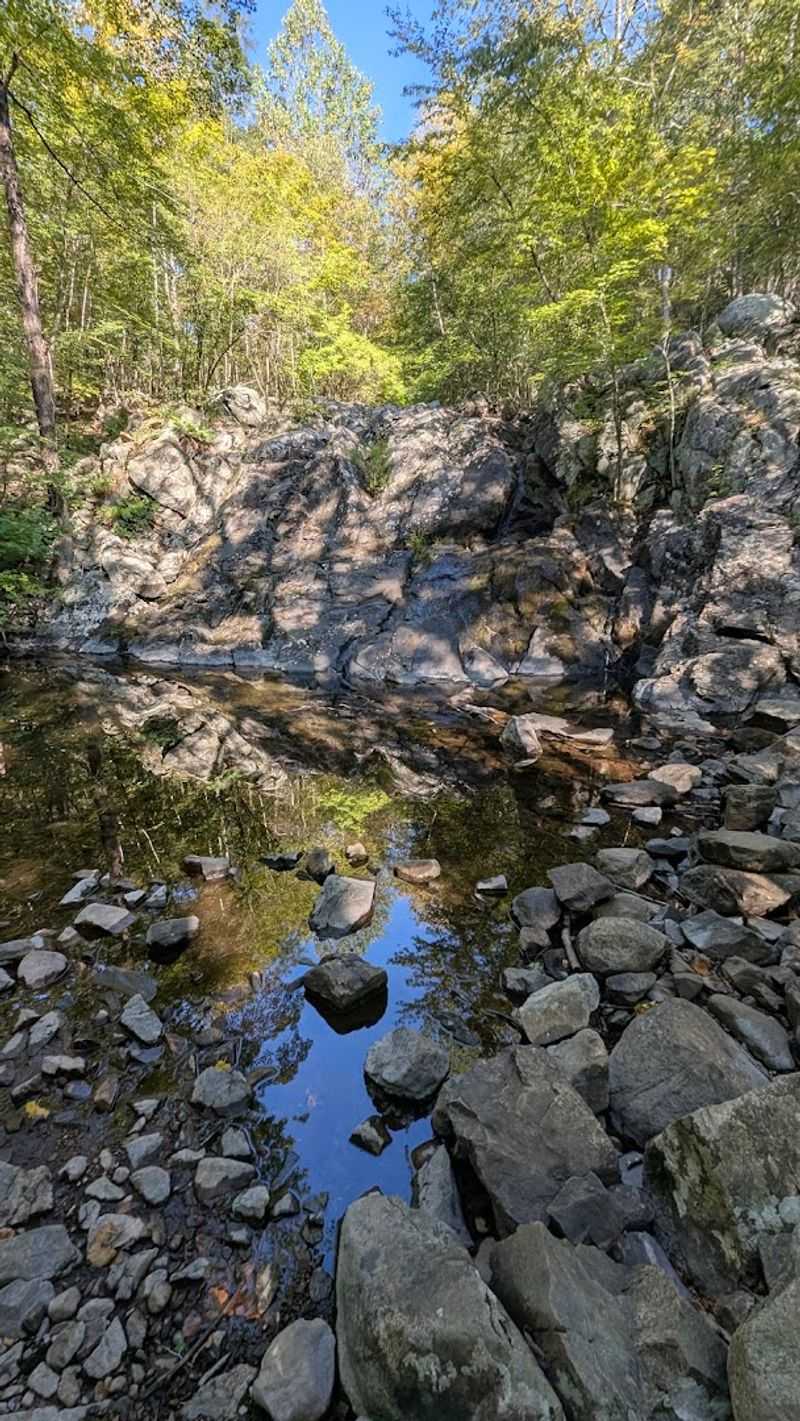
Rocky terrain is not just an occasional feature at Norvin Green, it is the defining characteristic of nearly every trail that branches out from the Otter Hole area. Large boulders, exposed rock faces, and stretches of trail covered in loose stones are consistent companions throughout most routes.
For hikers who enjoy technical footwork and physical challenge, this is genuinely appealing terrain. The combination of bouldering sections, tree roots crossing the path, and uneven ground keeps the body working and the mind focused.
Trekking poles make a noticeable difference on the steeper descents and boulder crossings, particularly for anyone who has not hiked rocky terrain before. The difficulty level is generally considered moderate rather than easy, despite what some trail descriptions suggest.
That honest assessment helps hikers prepare appropriately, bring the right gear, and leave the parking lot with realistic expectations rather than a false sense of how casual the day ahead will actually be.
Views From the Top That Justify the Climb
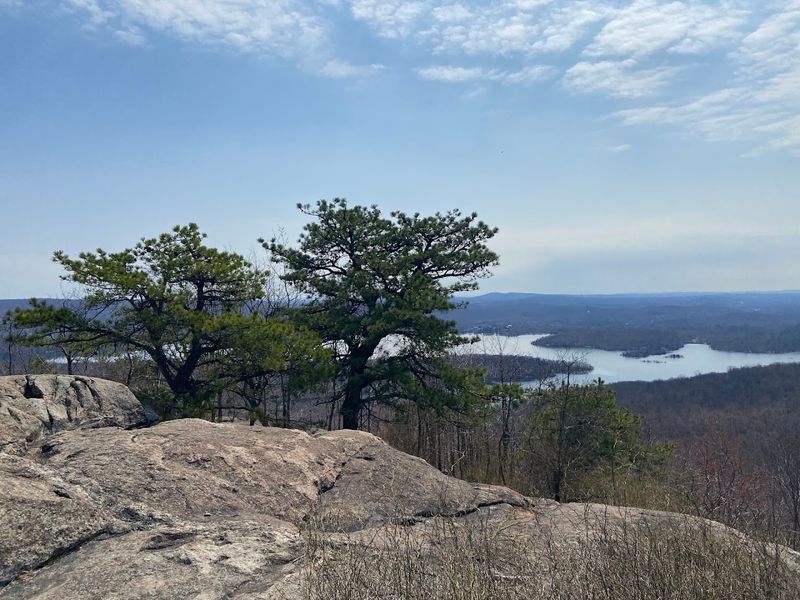
The payoff for grinding through boulder fields and steep climbs is a view that genuinely surprises people. From the higher points along the blue trail, hikers can see across miles of forested ridgeline, and on clear days, the New York City skyline appears in the distance.
Hi-Point, one of the notable high spots accessible from the Otter Hole area, sits at an elevation that delivers sweeping views of the surrounding Ramapo Mountains. The blue trail route covering Hi-Point and Chikahoki Falls together runs approximately 6.5 miles with around 1,250 feet of elevation gain, making it a full day for most hikers.
Fog adds a different quality to the experience entirely, turning the usual landscape into something layered and atmospheric. Multiple lookout points are scattered along the trail, so the views are not limited to a single summit push.
Each clearing in the canopy offers a slightly different angle on the same expansive terrain below.
Wildlife and the Living Forest Around You
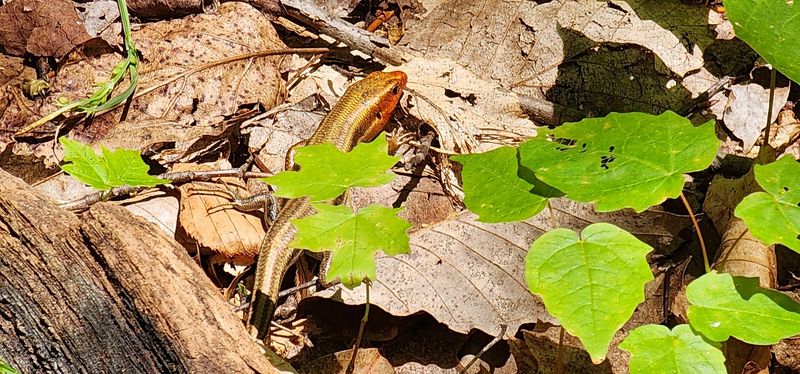
Norvin Green State Forest is genuinely dense with wildlife, and the trails from Otter Hole pass through habitat that supports a wide variety of species. Bird activity throughout the forest is constant, with the canopy providing cover for dozens of species that can be spotted on any given morning.
Rat snakes have been encountered on the trails, particularly in warmer months when they move through the rocky terrain. Bear prints have been spotted in snow during winter months, a reminder that the forest is active year-round and shared with animals that are very much at home here.
Poison ivy is another presence that hikers should prepare for before heading out. It grows along many sections of trail, and long pants tucked into socks offer real protection.
The biodiversity of this forest is part of what makes it feel genuinely wild rather than manicured, and that rawness is exactly what draws people back to this corner of New Jersey repeatedly.
Stream Crossings That Add to the Adventure
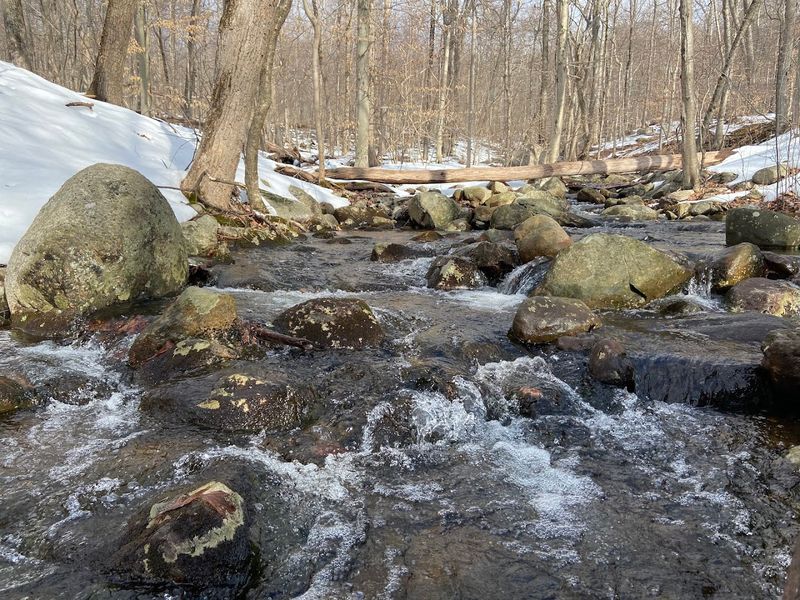
Water is a recurring theme throughout the Norvin Green trail system. Numerous streams cut through the forest, and several trail routes require crossing them directly, using rocks as stepping stones rather than bridges.
The route to Chikahoki Falls involves three water crossings, each one navigated on rock steps that are manageable for most hikers with reasonable balance and footwear. When water levels are higher after rain, those crossings demand a bit more care and attention.
Beyond the designated crossings, streams appear throughout the forest in various forms, from narrow trickles running between mossy rocks to wider flows that create small cascades along the trail corridor. The density of moving water through the forest is part of what makes the landscape feel dynamic rather than static.
A small cascade appears near an unmarked fork before the main falls, offering an early preview of what the terrain is capable of producing when water and rock meet in just the right configuration.
Seasonal Changes That Shift the Whole Experience
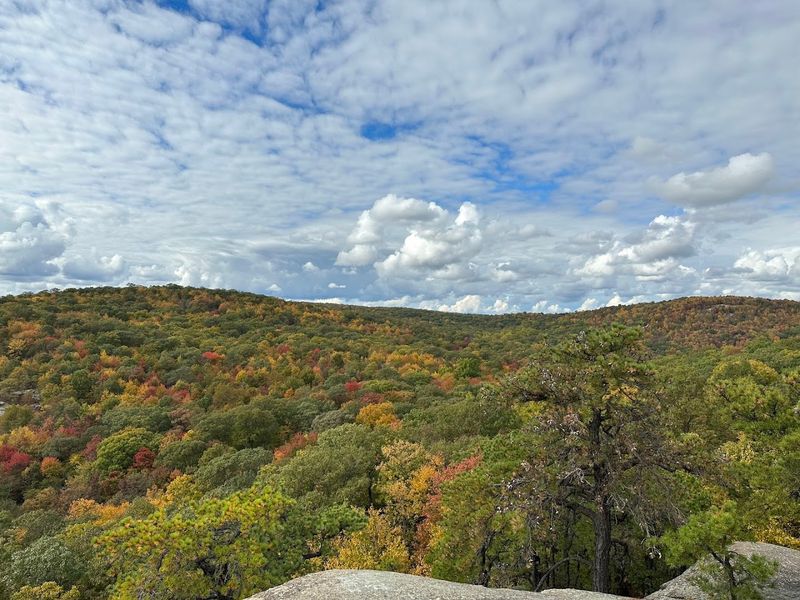
Norvin Green State Forest looks and feels noticeably different depending on the time of year. Each season brings its own set of conditions, and hikers who return across multiple seasons often describe it as feeling like a different forest each time.
Late spring is particularly well-regarded for the waterfall hike, as snowmelt and spring rain keep the flow at Chikahoki Falls strong and visually impressive. Fall brings dense foliage color to the canopy, and the views from the high points take on a different character when the surrounding ridgelines turn orange and red.
Winter visits reveal a quieter version of the forest, with animal tracks visible in the snow and the trail structure easier to read without summer undergrowth. Summer offers full shade cover across most routes, which makes the midday heat more manageable than on exposed trails.
The forest operates seven days a week from 8 AM to 8 PM year-round, making it accessible across all four seasons without seasonal closures.
Geology That Makes Every Step Interesting
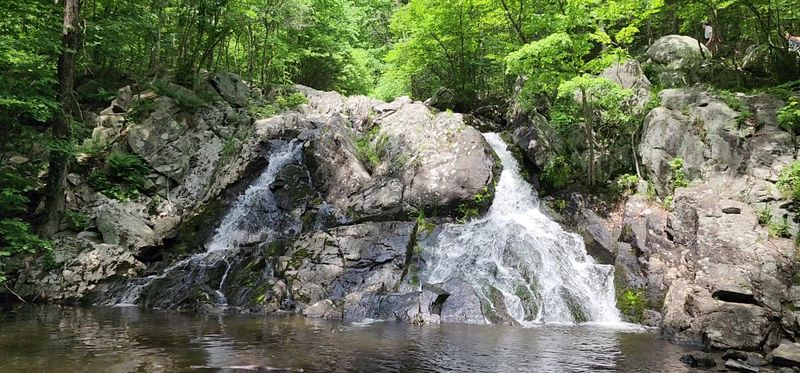
The geological character of Norvin Green State Forest sets it apart from many other hiking areas in New Jersey. The Ramapo Mountains are among the oldest geological formations in the eastern United States, and the rock visible throughout the trails reflects that ancient history in its texture and scale.
Exposed bedrock, massive boulders deposited by glacial movement, and fractured rock faces appear consistently along the routes from Otter Hole. The combination of these features with flowing streams creates a landscape that feels layered and complex underfoot.
Hikers with an interest in geology will find plenty to observe at a close level, from the lichen-covered surfaces of large boulders to the way water has carved channels through solid rock over long stretches of time. The unique geological features here are frequently mentioned as a highlight that distinguishes Norvin Green from the more straightforward trail experiences available elsewhere in the region, and rightly so given how visually distinct the terrain actually is.
Trail Markings and Navigation Tips
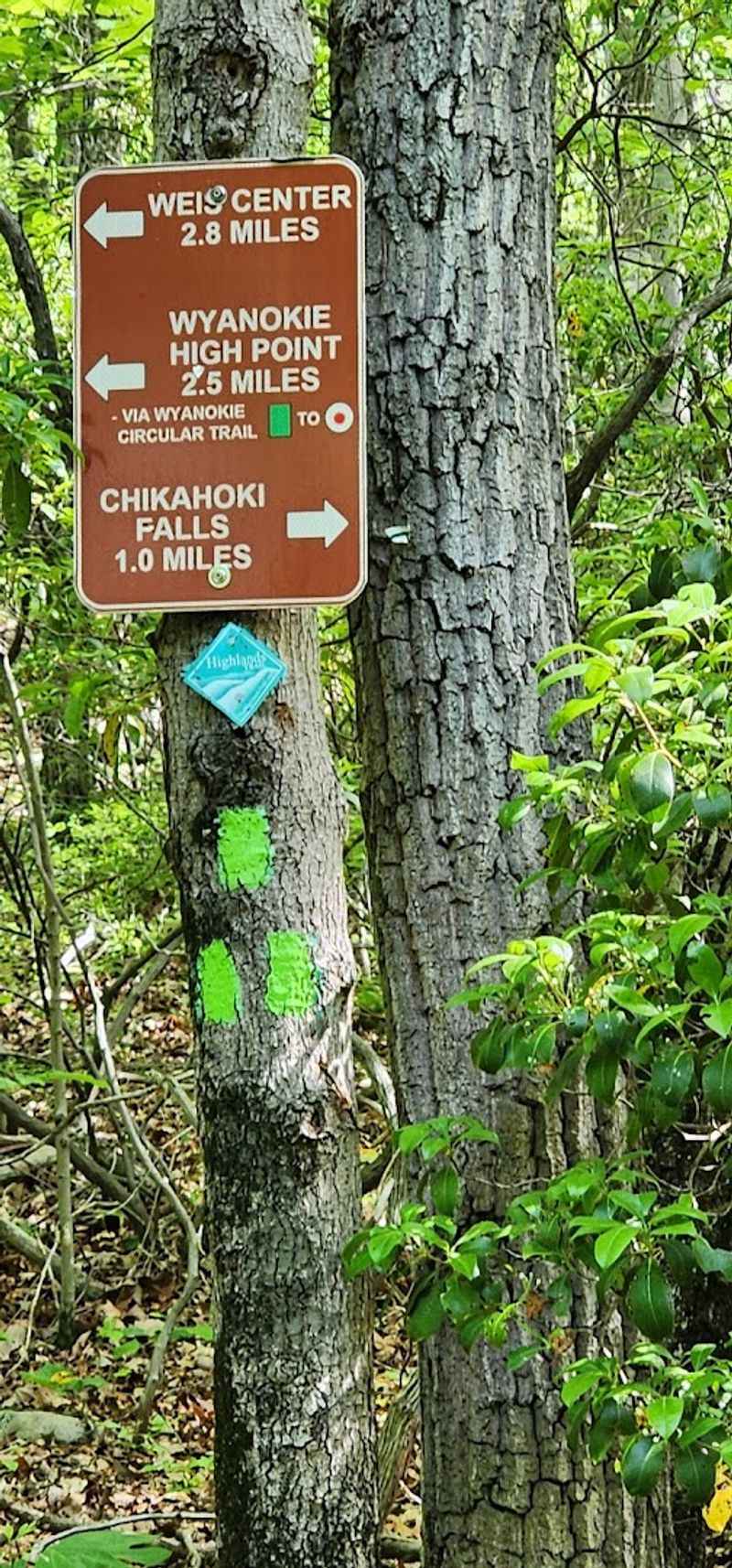
The trail system at Norvin Green is color-coded and generally well-marked, but a few spots require attention to avoid heading in the wrong direction. The route from Otter Hole to Chikahoki Falls uses the double blue trail before transitioning to white, and the fork between the two is easy to miss if hikers are moving quickly.
An unmarked fork appears before the one-mile point and leads to a small cascade that is not the main waterfall. A trail sign at that junction would eliminate confusion, but until one is added, the key is to continue past the yellow trail turnoff and take the white fork when it appears.
Carrying a printed trail map or downloading the route to a GPS device before leaving the parking lot is a practical precaution. The trails are narrow in places, and some sections look similar enough that a quick reference to a map saves time and prevents unnecessary backtracking through terrain that is demanding enough without adding extra mileage by mistake.
What to Bring and How to Prepare
The trails from Otter Hole are not the kind of routes where casual footwear and a half-empty water bottle will carry the day. The terrain is demanding enough that preparation makes a real difference in how comfortable and safe the experience turns out to be.
Sturdy hiking boots with ankle support are strongly recommended given the boulder fields, root-covered paths, and stream crossings throughout the trail system. Trekking poles reduce strain on the knees during steep descents and provide stability on rocky sections that would otherwise require careful hand placement.
A full water supply, trail snacks, sun protection, and a basic first aid kit round out the essentials. Long pants protect against poison ivy, which grows along multiple sections of trail.
Downloading the trail map before arrival rather than relying on cell coverage in the forest is a smart move, as signal can be unreliable in the denser sections of the preserve. Arriving early covers the parking challenge and leaves the full day available for the trails ahead.
Share this story