 Unearth The Voyage
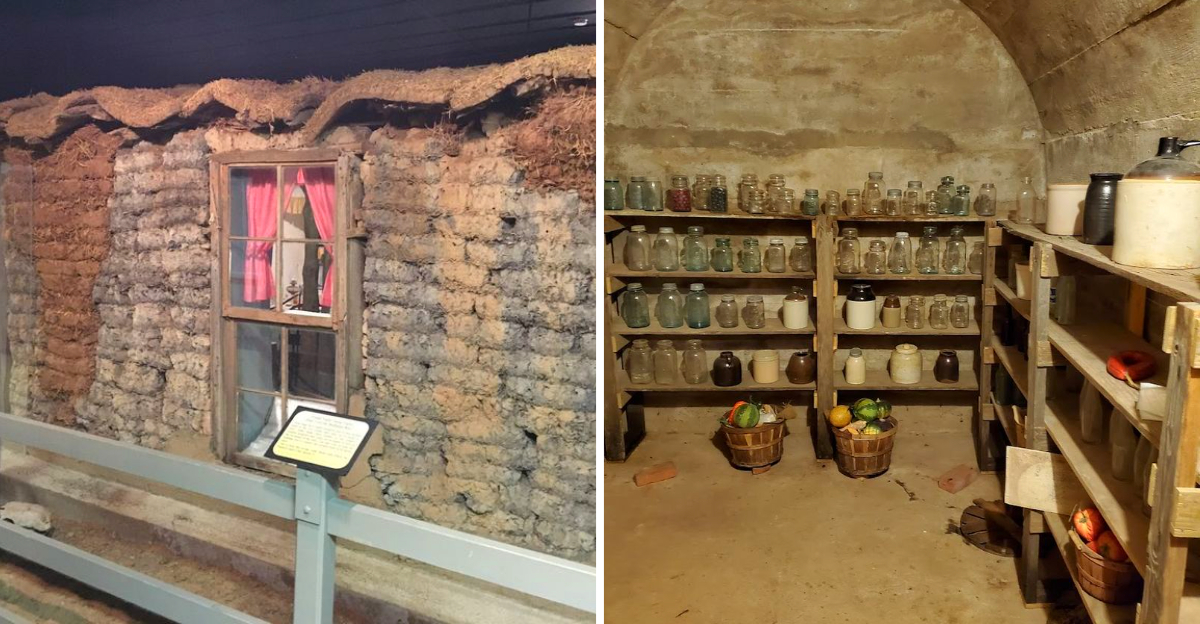
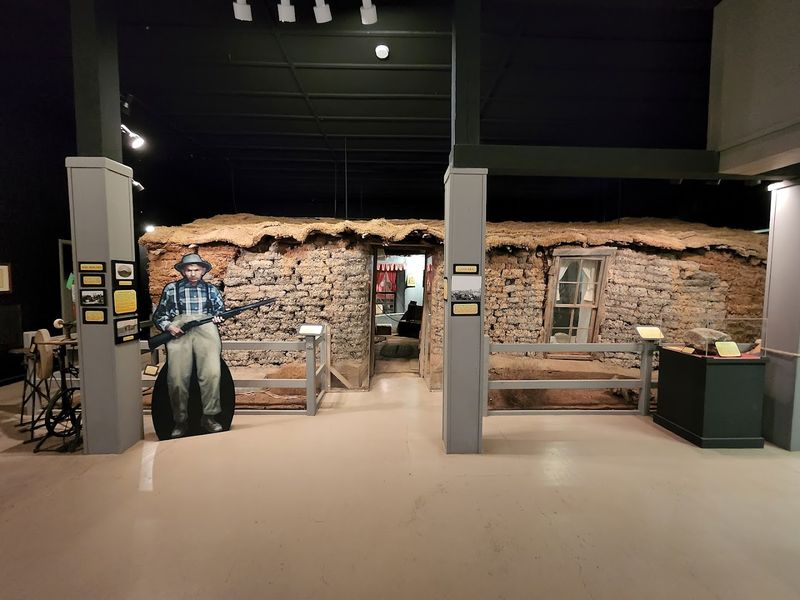
There is a house in northwest Oklahoma built entirely from blocks of dirt, and it has been standing for well over a century. Most structures made of soil and grass roots would crumble within a few years, but this one defied every expectation and survived long enough to become one of the most fascinating historical sites in the entire state.
The story behind it involves the Oklahoma Land Run, a determined pioneer family, and a building material that settlers had no choice but to use because timber was nearly impossible to find on the open prairie. What you find when you visit this place is not just a quirky old building but a deeply personal window into what frontier life actually looked and felt like for the people who lived it.
Where Exactly You Will Find This Dirt-Built Wonder
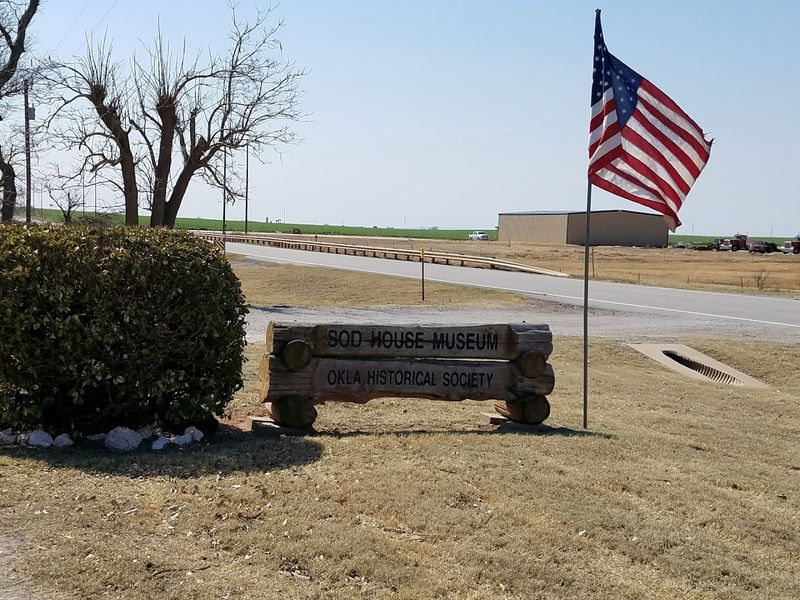
The Sod House Museum sits at 4628 OK-8 in Aline, Oklahoma, a small farming community tucked into the rolling plains of Alfalfa County in the northwestern part of the state. Getting there feels like a road trip through a postcard of the American heartland, with wide open skies and flat fields stretching in every direction.
The museum is operated by the Oklahoma Historical Society, which means it is part of a statewide effort to preserve the most important pieces of the state’s past. The address is easy to find on any map app, and the drive itself is part of the experience since the landscape gives you a real sense of why settlers had to get creative with building materials.
The museum is open Tuesday through Saturday from 9 AM to 5 PM and is closed Sunday and Monday. The phone number is 580-463-2441 if you want to call ahead.
Cash or check is the only payment accepted at the door, so plan accordingly before you make the trip out to this corner of Oklahoma.
The Man Who Built a Home Out of the Ground Itself
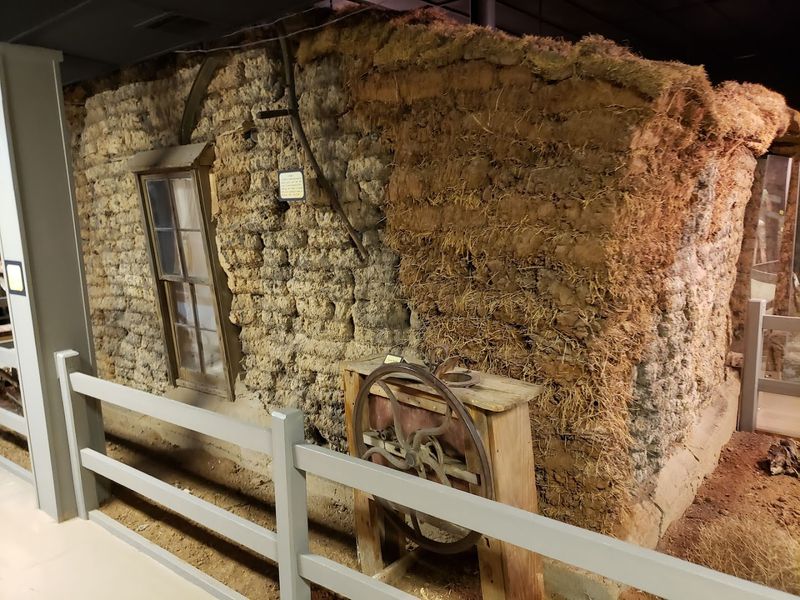
Marshall McCully built the sod house in 1894, just a few years after the Land Run of 1893 opened up the Cherokee Strip to settlers. He staked his claim on the Oklahoma prairie and, like thousands of others around him, faced an immediate and very practical problem: there were almost no trees.
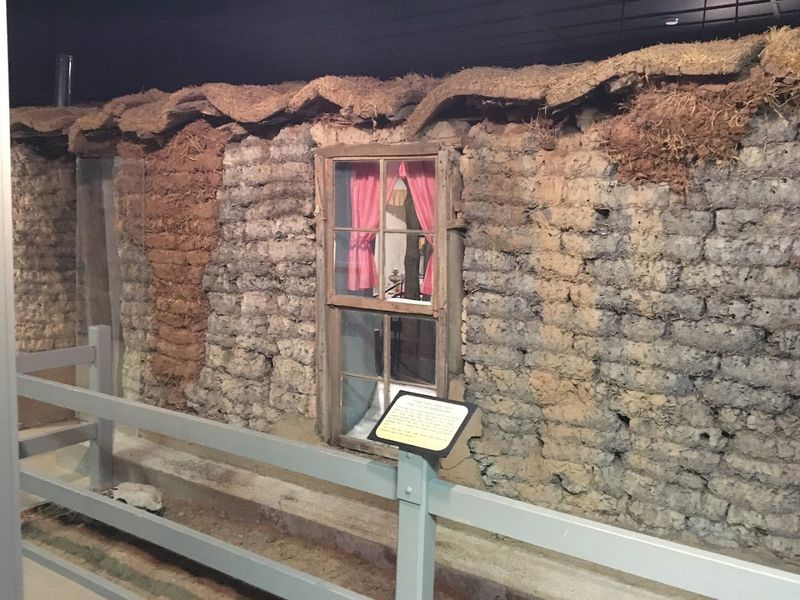
Without timber, building a traditional wooden house was simply not possible. McCully turned to the land itself, cutting thick blocks of sod from the earth and stacking them like bricks to form walls that were surprisingly thick and sturdy.
The grass roots held the blocks together in a way that gave the structure real staying power.
What makes the McCully connection even more compelling is that the museum’s tour guide has personal family ties to the man who built the original structure. That kind of living link to history turns a museum visit into something that feels far more personal than reading a textbook ever could.
McCully’s practical ingenuity is the reason this story still exists to be told today.
How Sod Houses Were Actually Constructed
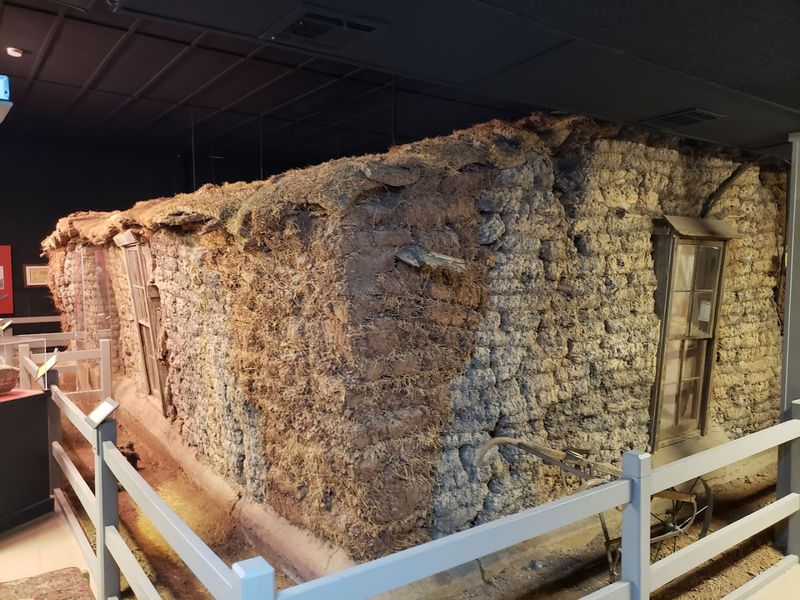
Building a sod house was not a simple afternoon project. Settlers had to use a heavy plow to cut strips of dense, root-bound earth from the prairie floor, then slice those strips into individual blocks that could be stacked row by row to form walls.
The blocks were typically about two feet wide and four inches thick, and the grass roots acted like a natural binding agent that held everything together once the blocks dried and settled. Walls were often two or three feet thick, which made the interior surprisingly cool in summer and warm in winter, a practical bonus that settlers genuinely appreciated on the exposed plains.
Roofs were the trickiest part of the whole operation. Most sod house roofs used a combination of wooden poles, brush, and additional sod layers, but they were notorious for leaking when it rained.
The McCully house managed to survive all of that and more, which is part of what makes it so remarkable. Experts originally estimated that a structure like this should not have lasted more than five years, yet here it stands, more than a century later.
The Only One Left Standing in the Entire State
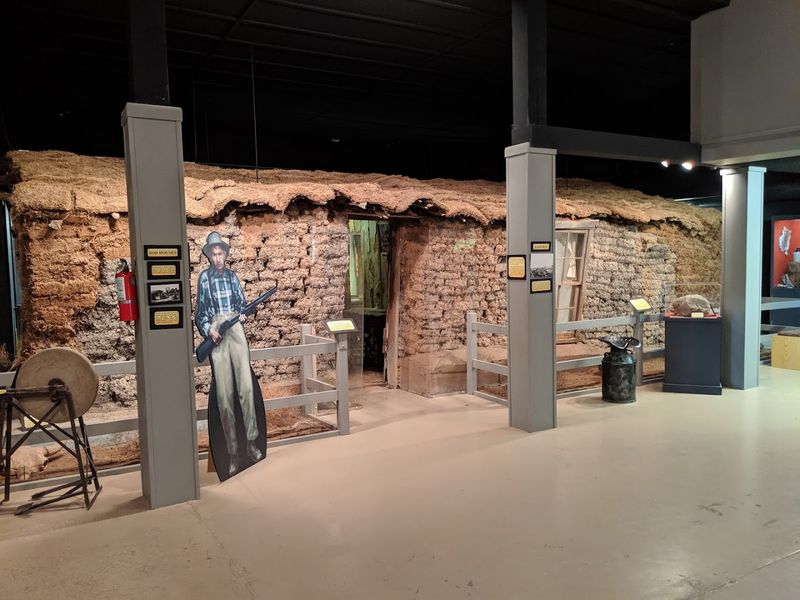
Out of all the sod houses that once dotted the Oklahoma prairie during the Land Run era, this is the last one still standing. That fact alone makes a visit feel significant, like you are seeing something that should not technically exist anymore but somehow does.
Thousands of families built similar structures across the territory in the 1890s, using them as starter homes while they worked to establish their farms and save up for something more permanent. Most of those earthen homes dissolved back into the ground within a generation, worn down by rain, wind, and time.
The McCully house endured because of a combination of factors, including the quality of the original construction, the protective shelter built around it by preservationists, and the ongoing care of the Oklahoma Historical Society. The museum now houses the structure inside a climate-controlled building that shields it from the elements that claimed every other sod house in the state.
Standing next to those thick, dark walls and knowing you are looking at the sole survivor of an entire building tradition is a feeling that is genuinely hard to put into words.
A Museum Full of Prairie Life Artifacts
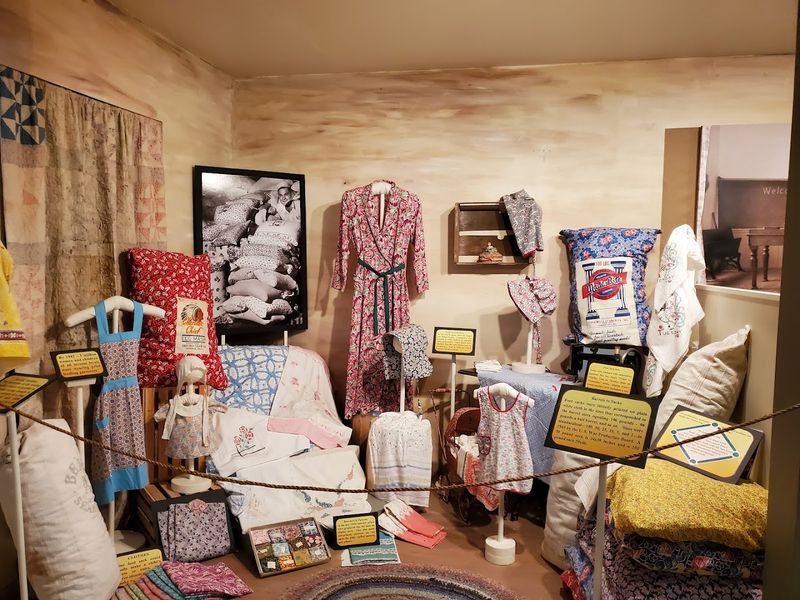
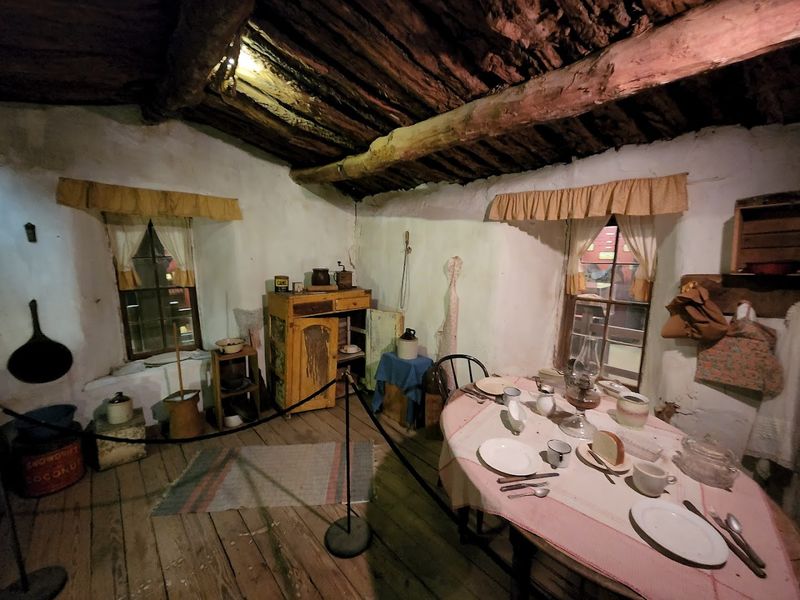
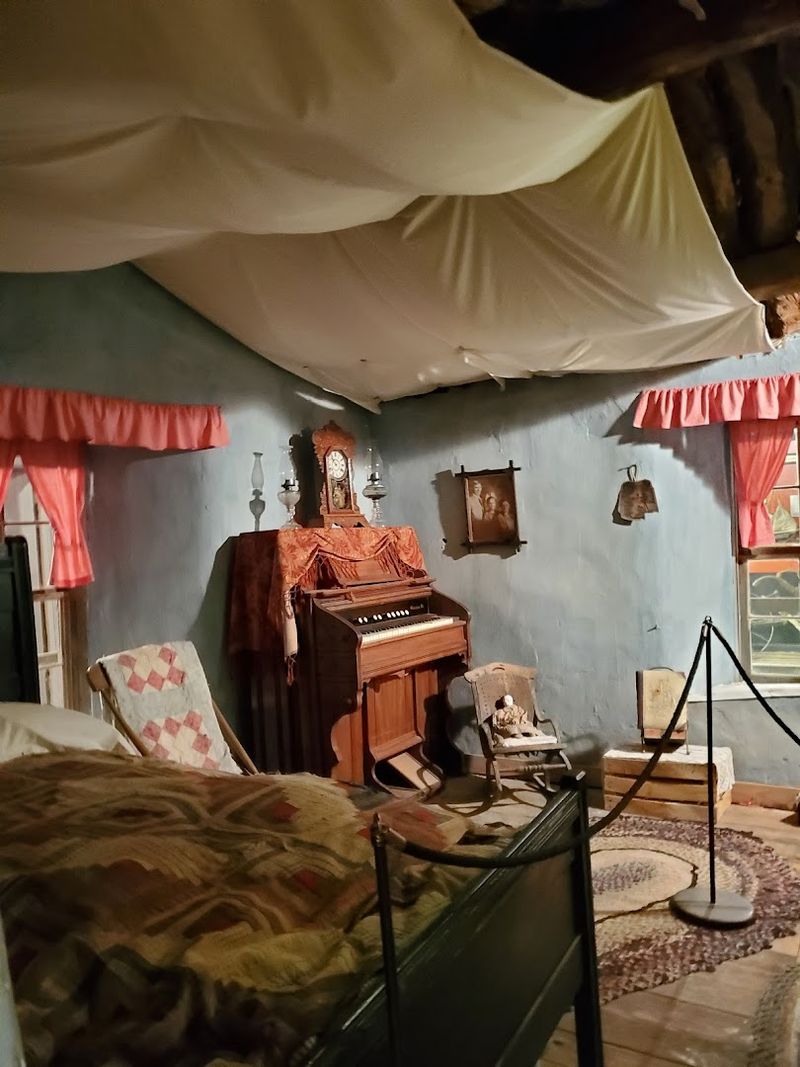
Beyond the sod house itself, the museum is packed with artifacts from the Oklahoma Land Run period that give real texture to the stories being told. Tools, furniture, cooking equipment, and personal belongings from the late 1800s fill the display cases in a way that feels curated with genuine care rather than just randomly collected.
Many of the objects on display are the kind of everyday items that people actually used in their homes and on their farms, which makes them feel more intimate than grand museum pieces. Seeing a cast iron pot or a hand-stitched quilt from that era and knowing it belonged to a real family who lived through those difficult years adds a layer of meaning that photographs alone cannot provide.
Several visitors have mentioned recognizing objects in the displays as things their own grandparents or great-grandparents owned and used regularly. That sense of personal connection transforms the museum from a collection of old things into a living record of real human experience.
The exhibits are laid out thoughtfully, and the staff clearly put serious effort into making sure each item has context and a story attached to it.
The Root Cellar That Adds Another Layer to the Story
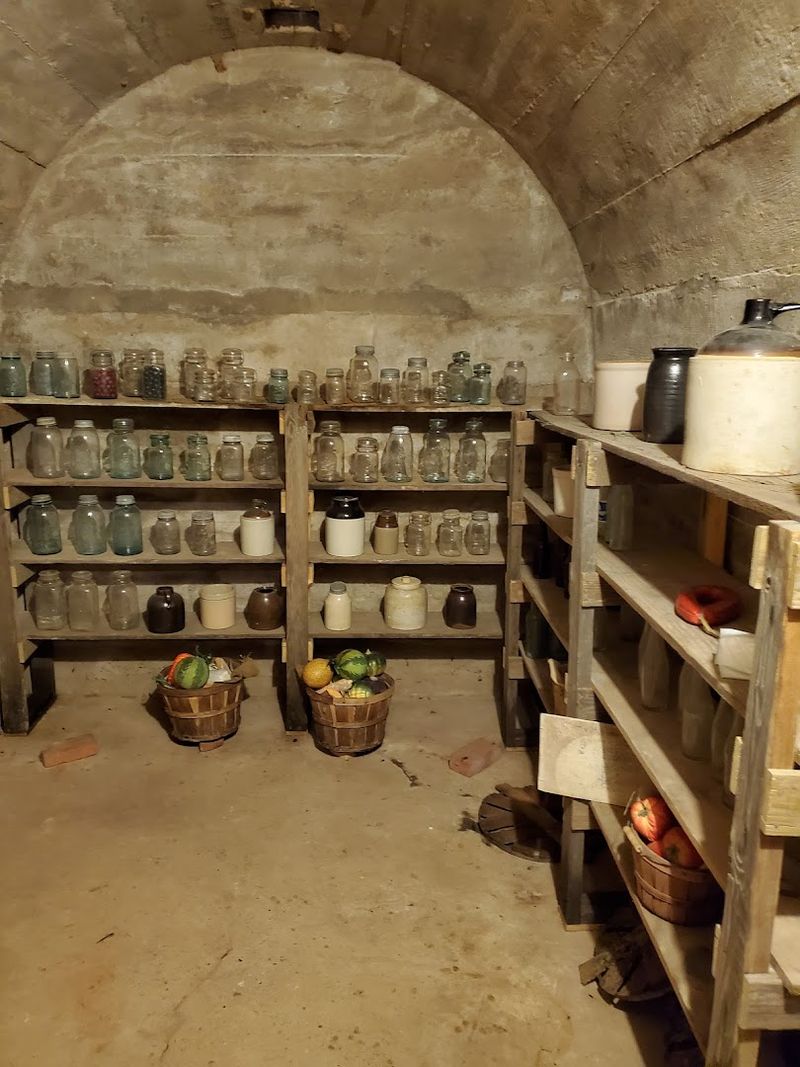
Most people come to see the sod house, but the root cellar on the property deserves just as much attention. Root cellars were a standard feature of pioneer homesteads, used for storing food through the harsh winter months and as a refuge during the violent storms that swept across the Oklahoma plains.
The cellar at the Sod House Museum is original to the property, which makes it a rare surviving example of a structure type that was once common across the territory. Earthen storage chambers like this one kept vegetables, preserved foods, and other supplies at a stable cool temperature year-round without any refrigeration technology at all.
Tours of the museum typically include a look at the root cellar, and the guides explain its function in a way that helps visitors understand just how carefully planned a successful homestead had to be. Every element of the property, from the sod walls to the underground storage, tells part of the same story about survival, resourcefulness, and the very human determination to build a life in an unfamiliar and unforgiving landscape.
The root cellar is a small space with a big role in that narrative.
What Life on the Prairie Actually Looked Like Day to Day
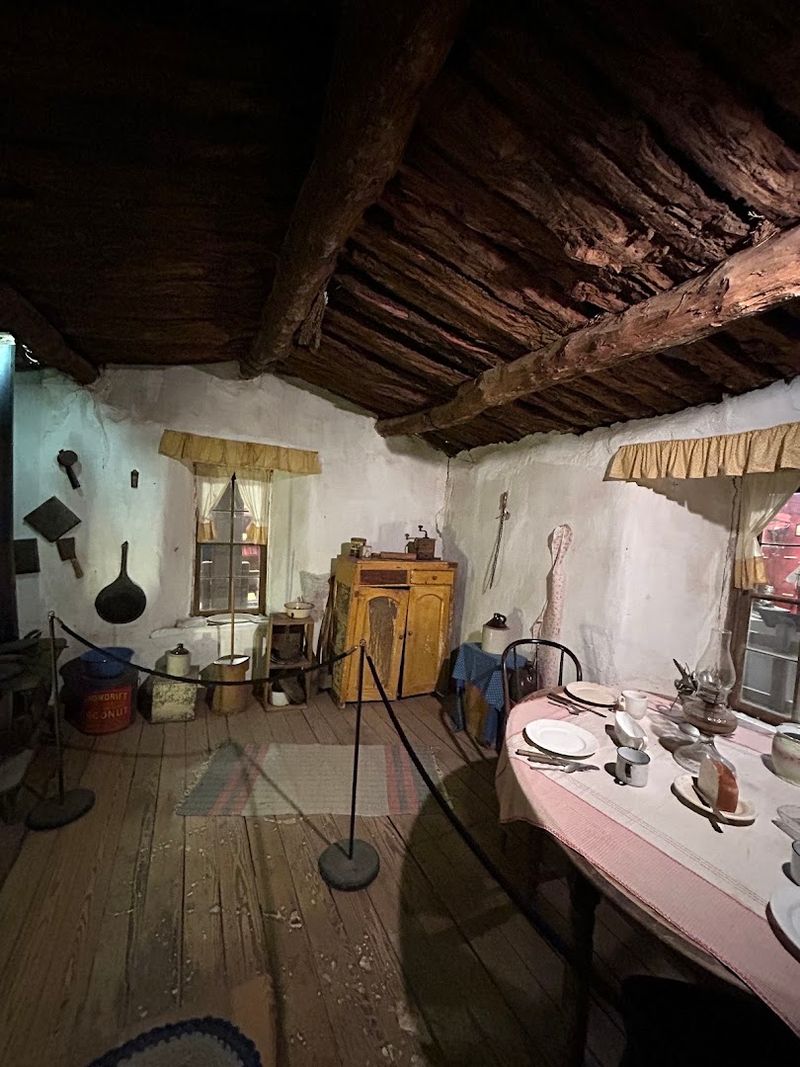
Life inside a sod house was genuinely hard in ways that are difficult to fully appreciate from a modern perspective. Families slept on pallets on the floor, managed without running water or electricity, and dealt with insects and moisture seeping through the earthen walls on a regular basis.
The museum does an excellent job of showing what daily routines actually looked like during this period. Morning chores started before sunrise and did not stop until after dark, with everyone in the household contributing to tasks like hauling water, tending livestock, cooking over open fires, and maintaining the structure itself.
Children in these households had very different childhoods from anything we experience today. There were no days off from chores, no convenience foods, and no climate control.
The museum presentations make these realities vivid without being preachy about them, letting the artifacts and the structure speak for themselves. Visitors often leave with a new appreciation for the small comforts of modern life, which is exactly the kind of perspective shift that a good history museum is supposed to create.
The experience stays with you long after you drive back down OK-8.
The Tour Experience and the People Who Bring It to Life
The guided tours at the Sod House Museum are one of the highlights of the entire visit, and that is not something you can say about every small-town museum. The staff members who lead the tours are genuinely knowledgeable, enthusiastic, and skilled at making historical information feel relevant and engaging rather than dry or distant.
The curator and docents clearly pour real personal investment into the museum and its mission. One of the tour guides has a direct family connection to Marshall McCully, the man who built the original sod house, which adds an almost unbelievable layer of personal history to the storytelling.
Hearing someone describe the construction of a building while knowing their own ancestor helped build it is a rare kind of experience.
The tours move through the exhibits at a comfortable pace, covering the history of the Land Run, the specifics of sod construction, the daily life of the McCully family, and the long process of preserving the structure for future generations. The whole experience typically takes around an hour, which feels like exactly the right amount of time to absorb everything without rushing.
You leave knowing more than you expected to, and that is the mark of a truly well-run museum.
The Oklahoma Land Run Connection That Makes It All Make Sense
To fully appreciate the sod house, you need to understand the Land Run that created it. The Cherokee Strip Land Run of September 16, 1893, was one of the largest land rushes in American history, with an estimated 100,000 people racing to claim parcels of territory that the federal government had opened up for settlement.
Settlers who won their claims found themselves on raw, unbroken prairie with almost nothing to work with. There were no towns, no stores, no established infrastructure of any kind.
People had to figure out shelter immediately, and for most of them, the ground beneath their feet was the only building material available in any real quantity.
The sod house was not a romantic choice. It was a practical one made under pressure by people who had just committed everything they had to a piece of land they had never seen before the day they claimed it.
The museum captures this context beautifully, with exhibits about the Land Run period that help visitors understand the full sweep of what was happening across the territory at the time. The McCully house is the physical result of that moment in history, and it is still here to prove it.
Practical Tips for Planning Your Visit
A few practical details can make the difference between a smooth visit and a frustrating one, so it is worth knowing them before you go. The museum is open Tuesday through Saturday from 9 AM to 5 PM, and it is closed on Sundays and Mondays, so plan your trip accordingly.
Payment is cash or check only, with no card reader on site. Adult admission is a modest fee, students get a discounted rate of four dollars, and veterans get in free, which is a genuinely appreciated policy.
Bringing small bills is a smart move since the ticket desk is not set up for large purchases.
Aline is a small community, so there are limited dining options immediately nearby. Packing a lunch or snacking before you arrive is a reasonable strategy, especially if you are making a day trip from a larger city.
The museum pairs well with nearby attractions like the Great Salt Plains State Park and Little Sahara State Park, both of which are within a reasonable driving distance. Combining all three into a single day makes for a full and satisfying Oklahoma road trip that covers history, nature, and landscape in one sweep.
Why This Small Museum Punches Well Above Its Weight
Small museums in rural areas sometimes struggle to make a lasting impression, but the Sod House Museum consistently earns high marks from everyone who makes the trip out to Aline. The 4.6-star rating across more than 150 reviews is a reliable indicator that something genuinely worthwhile is happening here.
What sets it apart is the combination of an irreplaceable physical artifact, a well-designed exhibit space, and staff members who care deeply about what they are presenting. You are not just looking at old objects behind glass.
You are standing next to a structure that has outlasted every expectation, inside a museum that treats its subject with intelligence and respect.
Families with children find it especially valuable because the hands-on nature of the storytelling and the sheer strangeness of a house made of dirt captures kids’ attention in a way that more conventional museums sometimes fail to do. History buffs, road trippers, and anyone with roots in Oklahoma or the broader prairie states will find something here that resonates on a personal level.
The Sod House Museum is the kind of place that reminds you why preserving history matters, and it does that without ever feeling like a lecture.



