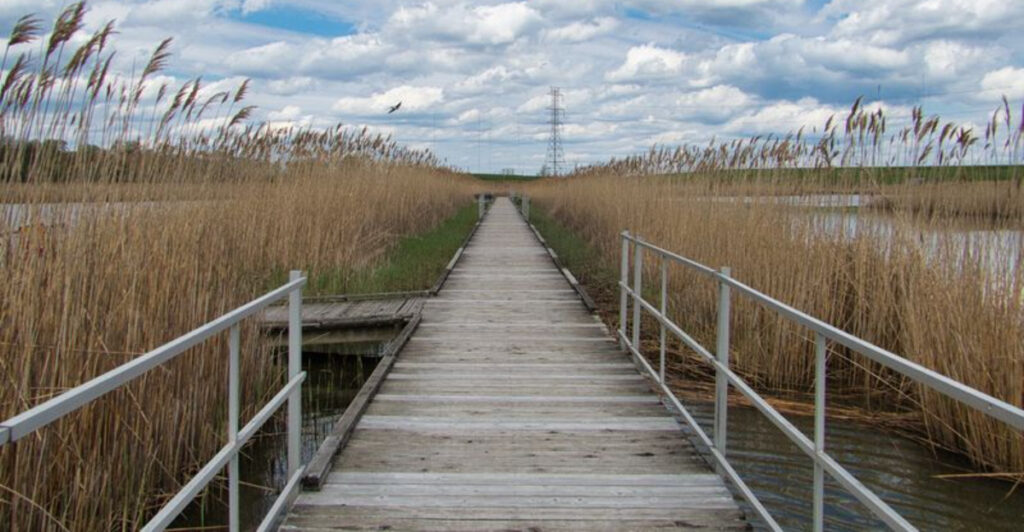
There is a stretch of land in northern New Jersey that developers once had very different plans for, and the fact that those plans never fully materialized is something worth celebrating. Tucked between busy highways and the New York City skyline, this park sits on ground that was once used as a landfill, which makes what it has become all the more remarkable.
Today, it draws bird watchers, casual walkers, families, and photographers who come for the trails, the marsh views, and the unexpected quiet. The transformation is real, and the walk through this place tells that story better than any sign ever could.
A Landfill That Became a Living Landscape
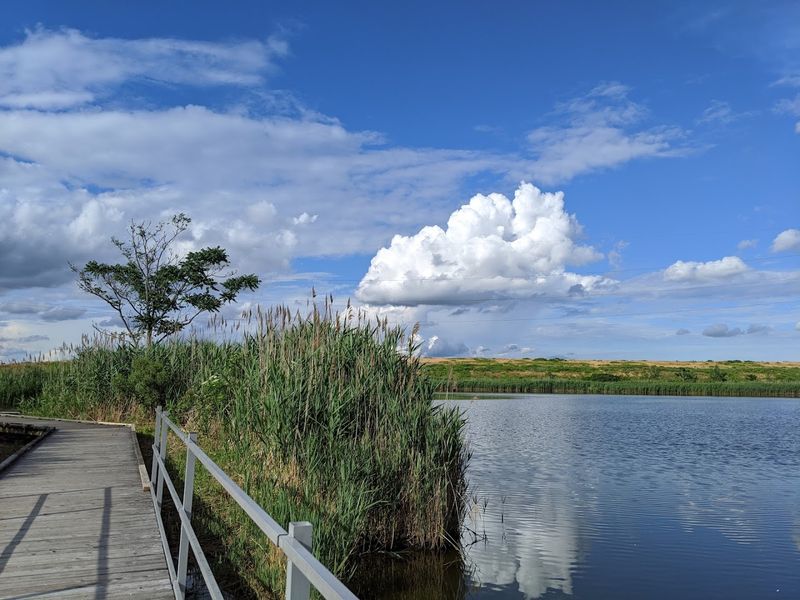
The ground beneath DeKorte Park has a past that most parkgoers would never guess. For decades, portions of the Meadowlands were used as dumping grounds, and this particular site absorbed years of landfill use before conservation efforts shifted the direction entirely.
The New Jersey Meadowlands Commission, now operating under the New Jersey Sports and Exposition Authority, began a long-term effort to restore the wetlands and convert the area into usable green space. What resulted was one of the more dramatic environmental turnarounds in the state’s history.
The park now covers roughly 105 acres of restored wetland habitat within the larger Hackensack Meadowlands ecosystem, which spans about 8,400 acres across 14 municipalities. That broader context matters because DeKorte is the public-facing centerpiece of a much larger conservation effort.
The landfill-to-landscape story is not just a feel-good footnote; it is the foundation of everything the park represents today.
The Trails That Make It Worth the Drive
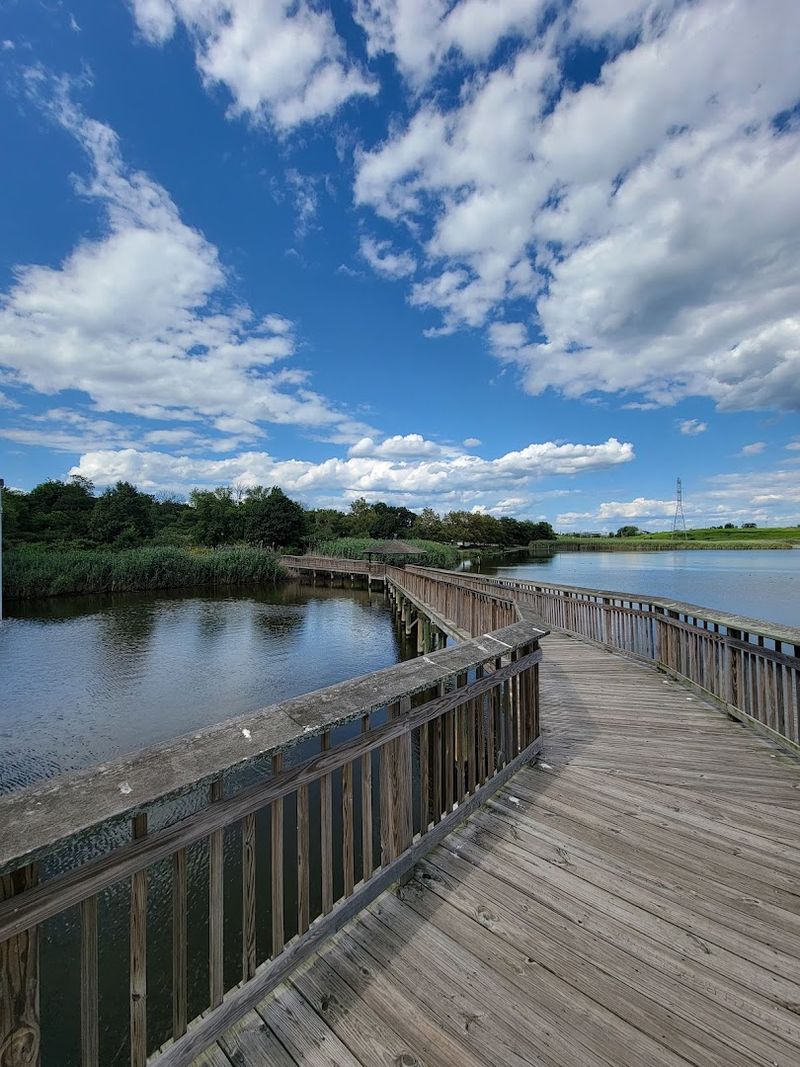
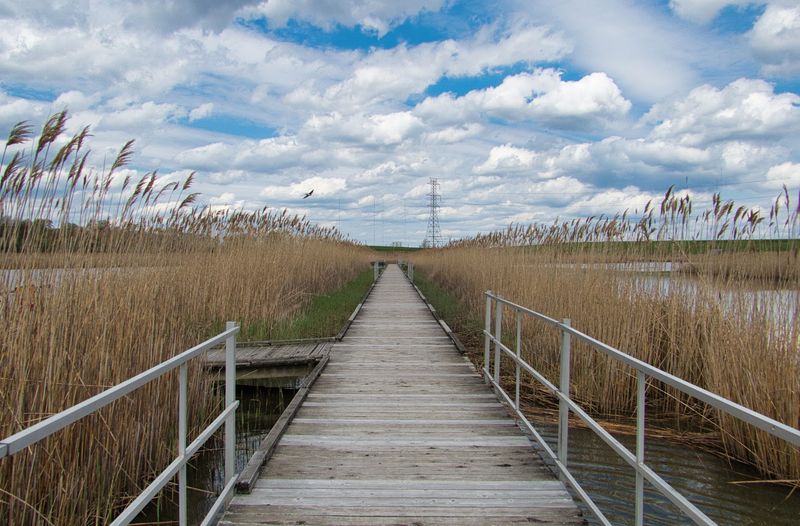
The trail system at DeKorte Park is compact but well-organized, offering a few distinct routes that collectively cover around 1.5 to 3 miles depending on which paths are connected. The most popular feature is the looped boardwalk that cuts through the marsh, putting walkers directly above the water and vegetation.
The Transco Trail, the Kingsland Overlook Trail, and the Mill Creek Marsh Trail each offer a different perspective on the wetland environment. Some sections are paved, others are packed gravel, and the boardwalk portions require a bit more attention to footing, especially after rain.
Most of the trails are rated easy, making them accessible for older adults, young children, and anyone who wants a relaxed outing rather than a strenuous hike. A full loop of the main boardwalk area takes around 20 to 30 minutes at a comfortable pace, though spending an hour or more is easy when the bird activity is high.
Bird Watching That Punches Well Above Its Weight
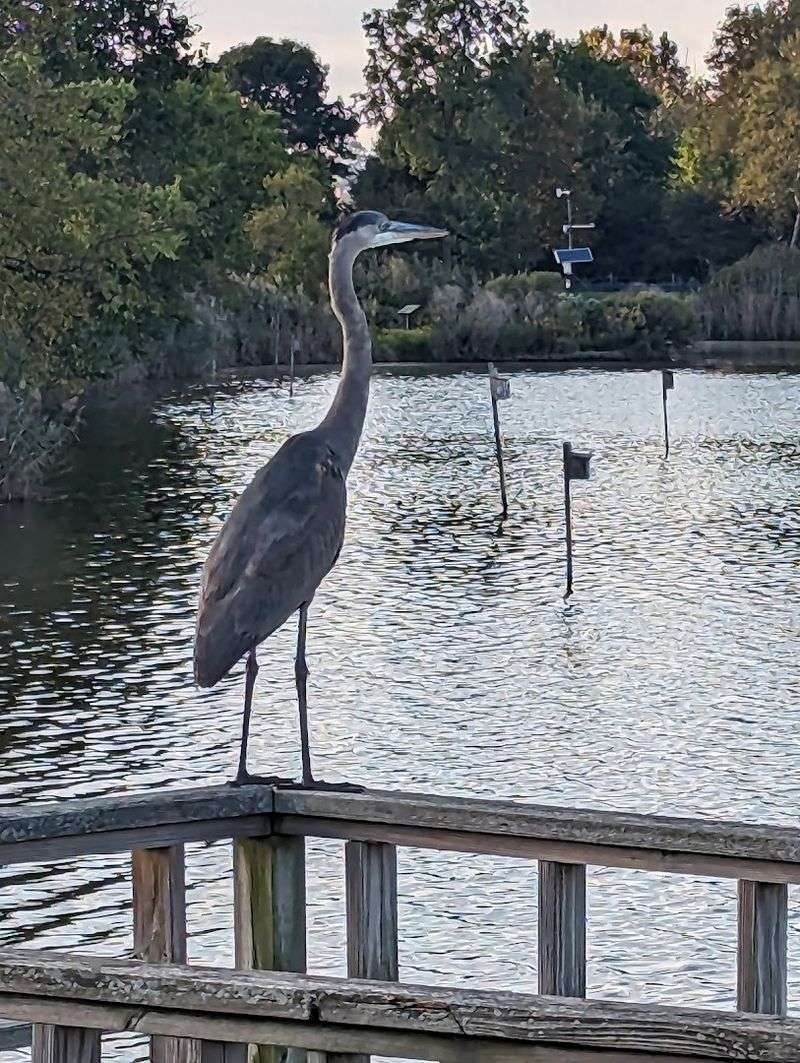
Bird watching is the main draw for a large portion of DeKorte Park regulars, and the diversity of species documented here is genuinely impressive for a site its size. The park sits along the Atlantic Flyway, the major migration corridor that runs along the East Coast, which means the bird population shifts dramatically with the seasons.
Shorebirds, wading birds, raptors, songbirds, and waterfowl all cycle through depending on the time of year. Bald eagles have been spotted here with enough regularity that they are no longer considered a rare sighting.
Spring and fall migration periods bring the highest variety, but even a midwinter visit can produce unexpected finds.
The viewing blinds positioned along the boardwalk trail are particularly useful for close-range observation without disturbing the birds. Photographers with long lenses have found these structures especially helpful.
Bringing binoculars is strongly recommended, and a field guide app on a phone can help with identification on the spot.
That View of New York City Nobody Expects
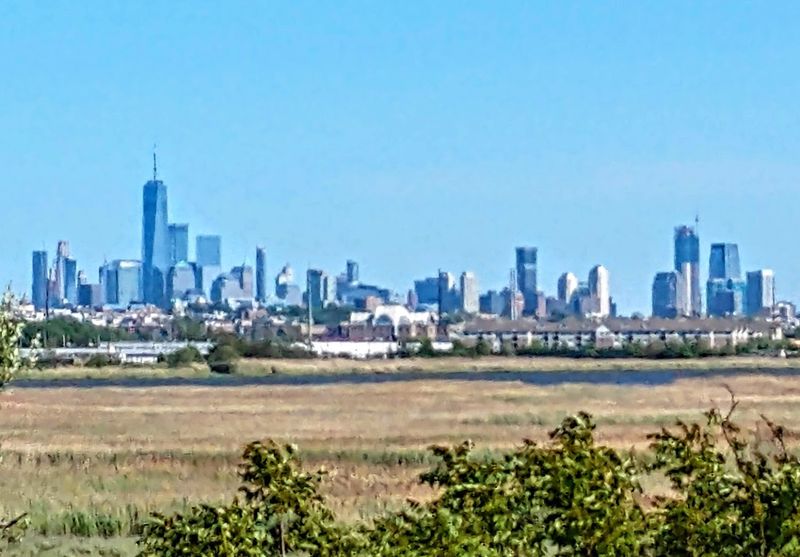
One of the more disarming things about walking the trails at DeKorte Park is the moment the Manhattan skyline comes into view. The park sits roughly ten miles west of Midtown, and on clear days the towers are visible from several points along the trails and from the North Arlington Scenic Lookout area.
The juxtaposition of open marshland in the foreground and a dense urban skyline in the distance is one of those visual combinations that stops people mid-step. Sunset in particular turns this view into something photographers return for repeatedly, as the light hits the skyline while the marsh reflects the colors of the sky.
This is not a manufactured overlook with a railing and an interpretive sign. The view arrives naturally as part of the walk, which makes it feel more like a discovery than a destination.
It is one of the more honest arguments for why this park deserves more attention than it typically receives.
The Environmental Center and What It Offers
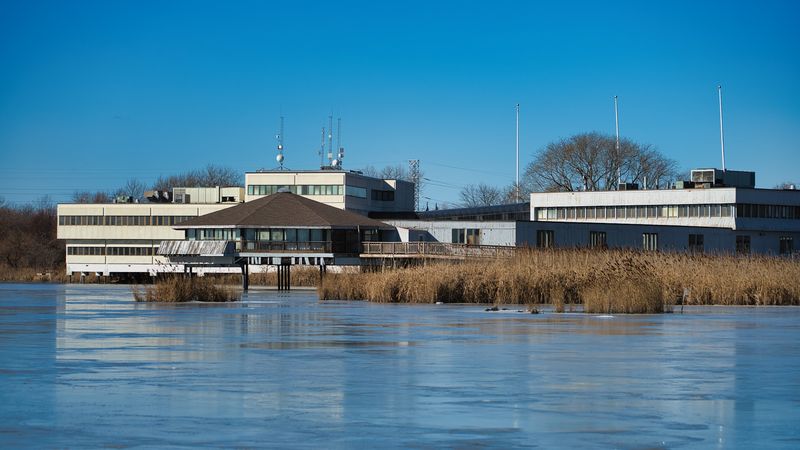
The Meadowlands Environment Center, located within the park, serves as an educational hub for the surrounding ecosystem. The center houses exhibits focused on the ecology of the Hackensack Meadowlands, including information on the wildlife, plant life, and the environmental history of the region.
The center also provides access to an observatory on select days, which adds an astronomy component to what is otherwise a nature-focused destination. Hours and programming vary, and the buildings have been closed at various points, so checking the NJSEA website before a visit is the most reliable way to confirm availability.
School groups frequently use the center for field trips, and guided programs are offered throughout the year for both children and adults. The educational dimension of the park is one of its less-publicized strengths.
For families who want more than just a walk, the center provides structured context that makes the outdoor experience more meaningful and easier to connect to what kids are learning in school.
Wildlife Beyond the Birds

Birds get most of the attention at DeKorte Park, but the wetland habitat supports a much broader range of wildlife. Turtles are commonly spotted along the water’s edge, particularly painted turtles basking on logs during warmer months.
Fish are present in the marsh channels as well, and the park does permit catch-and-release fishing in designated areas.
Signage throughout the park makes clear that fish caught on site are not safe to consume due to water quality conditions in certain areas, so catch-and-release is not just a recommendation but a practical necessity. That transparency is part of what makes the park’s management approach credible rather than promotional.
Muskrats, diamondback terrapins, and various amphibians have also been documented within the park boundaries. Rabbits has also been spotted.
The Meadowlands as a whole functions as a significant wildlife corridor in an otherwise heavily developed region, and DeKorte represents one of the most accessible entry points into that ecosystem for the general public.
What the Seasons Do to This Place
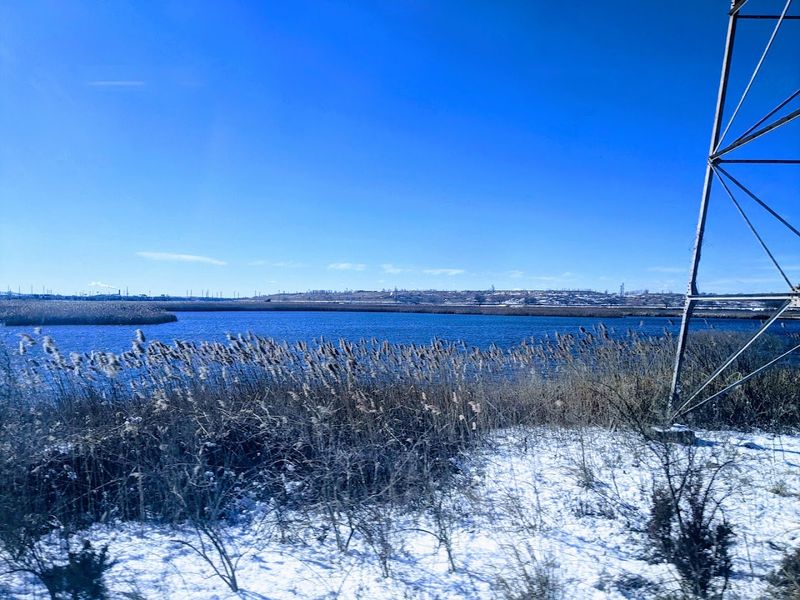
Each season at DeKorte Park produces a noticeably different version of the same landscape. Spring brings migrating shorebirds and wading birds, along with the return of nesting species that use the marsh vegetation for cover.
The trails are active and the bird counts during April and May can be remarkably high.
Summer shifts the dynamic toward resident species and the full growth of the marsh grasses, which creates a denser, more enclosed atmosphere on the boardwalk sections. The open sections of trail can be exposed and warm during peak summer hours, so earlier morning visits tend to be more comfortable.
Fall migration rivals spring in terms of bird diversity, and the changing colors of the marsh vegetation add a visual layer that photographers take advantage of. Winter strips back the vegetation and opens up long sight lines across the water, which paradoxically makes certain species easier to spot.
The park rewards return visits across the calendar year in ways that a single trip cannot fully capture.
Practical Details Worth Knowing Before You Go
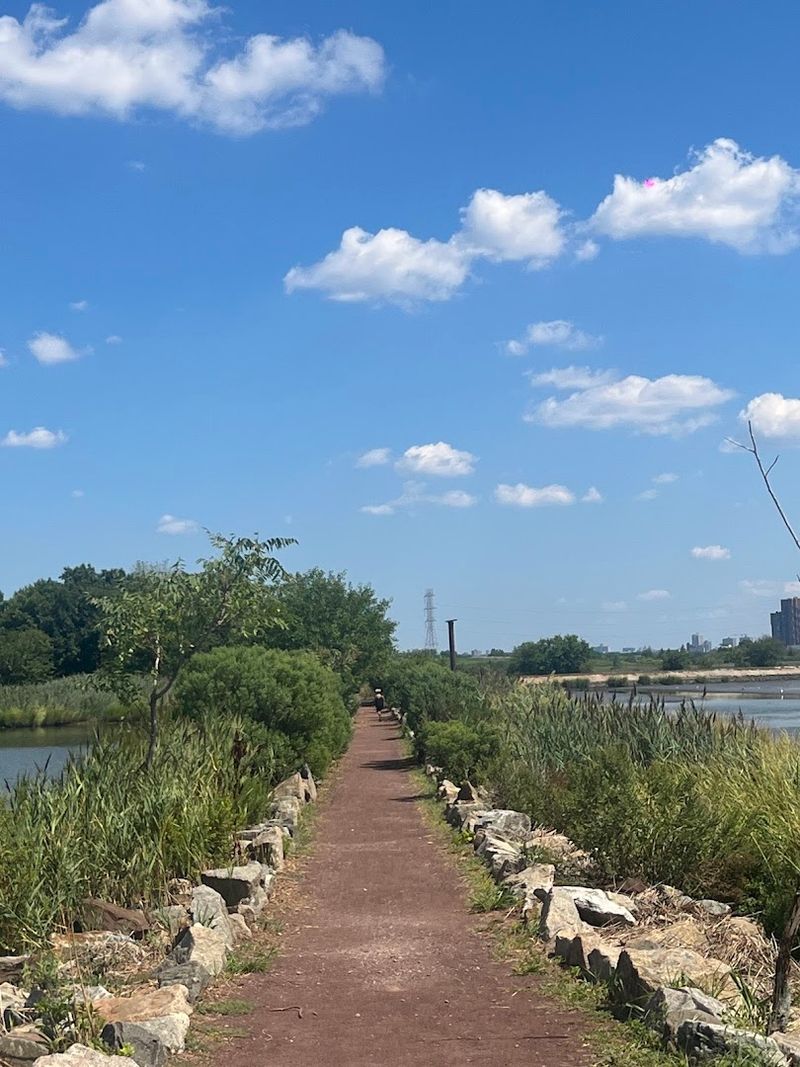
Parking at DeKorte Park is free and available in multiple lots near the trailhead. The main lot can accommodate around 15 or more cars depending on the configuration, and overflow areas nearby help on busier days.
The park does not charge an admission fee, which makes it one of the more accessible public green spaces in the region.
Restroom facilities are limited. There is typically one porta-potty in the parking lot area, and indoor restroom access within the buildings has been inconsistent.
Planning accordingly before arriving is a sensible approach, especially for longer visits or trips with young children.
Dogs are welcome on the trails but must be kept on a leash, and owners are expected to clean up after their pets. Trail conditions can change after heavy rain, particularly on the boardwalk sections.
Checking the NJSEA website for closures before visiting, especially for trails like the Marsh Discovery Trail, will save a wasted trip.
Why Photographers Keep Coming Back
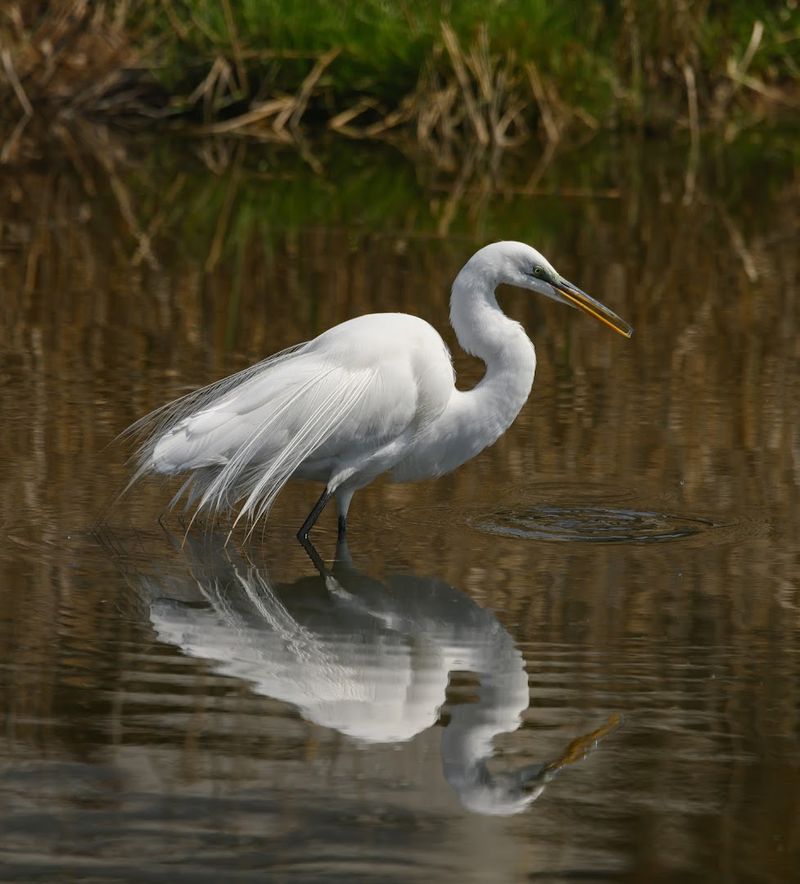
The photographic appeal of DeKorte Park is consistent enough that people with serious camera equipment show up on a regular basis. The combination of open water, marsh vegetation, accessible boardwalk trails, and abundant bird life creates a reliable set of conditions for nature photography.
The viewing blinds along the boardwalk are positioned to allow close-range shots of birds without requiring the photographer to move into the habitat. Herons, egrets, ducks, and shorebirds have all been captured at close range from these structures.
The NYC skyline in the background gives landscape shots an unusual compositional element that is hard to replicate elsewhere in the state.
Golden hour, meaning the period just after sunrise or before sunset, tends to produce the most dynamic lighting conditions over the marsh. Sunset in particular has a reputation among regulars for delivering dramatic color across the water and sky.
A tripod and patience are the two most useful tools to bring along on any photography-focused visit.
The Hackensack Meadowlands: The Bigger Picture
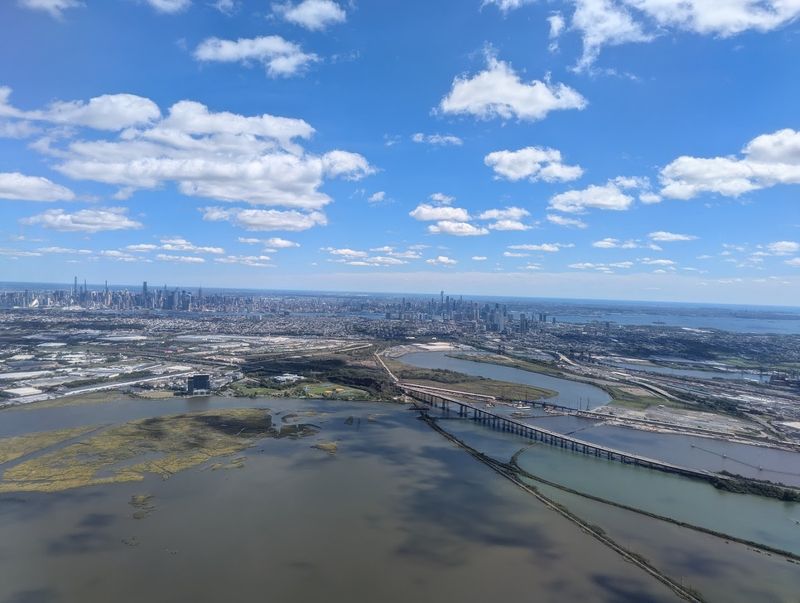
DeKorte Park is one component of the Hackensack Meadowlands, a 8,400-acre ecosystem that spans 14 municipalities across Bergen and Hudson counties. The Meadowlands is one of the largest remaining wetland systems in the northeastern United States, and its survival has been the result of sustained conservation and regulatory work over several decades.
The New Jersey Sports and Exposition Authority oversees the Meadowlands District, which includes not just the park but also sports and entertainment facilities, transit hubs, and various managed natural areas. The ecological work done within this district represents one of the more complex balancing acts in regional land management.
Understanding this broader context changes how a walk through DeKorte feels. The marsh is not a remnant that survived by accident; it is an actively managed system that required deliberate intervention to reach its current condition.
That background gives the park a significance that goes well beyond its modest size and straightforward trail layout.
Trail Conditions and What to Watch For
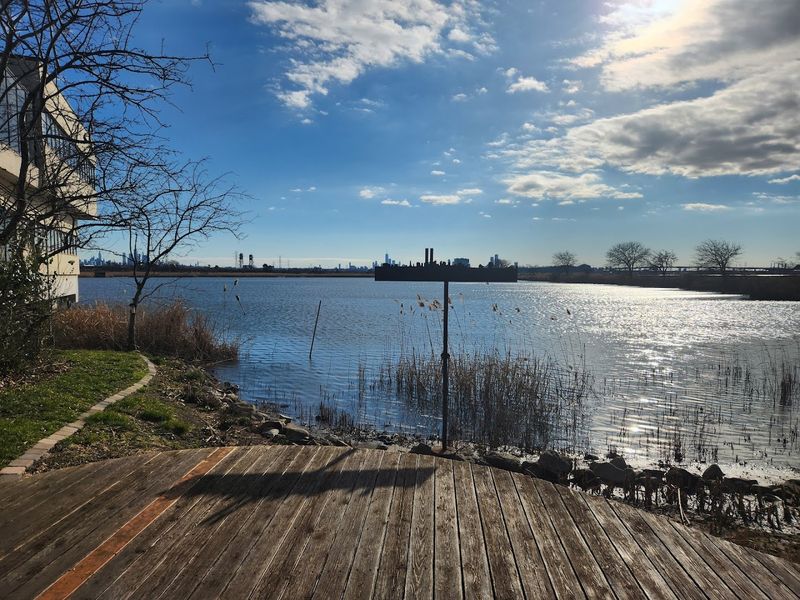
Trail conditions at DeKorte Park can vary depending on the season and recent weather. The boardwalk sections are generally stable but can become slippery after rain, and some planks show the kind of wear that comes with years of exposure to a humid marsh environment.
Wearing shoes with grip is a practical choice regardless of the forecast.
As of early 2026, the Marsh Discovery Trail and the Sawmill Trail were both closed, which reduced the total walkable area significantly. Trail closures at DeKorte are not uncommon, and the NJSEA website is the most current source for checking which paths are accessible on any given visit.
The open sections of trail are well-marked and easy to navigate without a map, but first-time visitors benefit from reviewing the park layout online before arriving. Some sections of the trail curve around marsh channels in ways that limit visibility ahead, so staying on marked paths and keeping children within eyesight is a reasonable precaution.
Why This Park Deserves More Credit Than It Gets
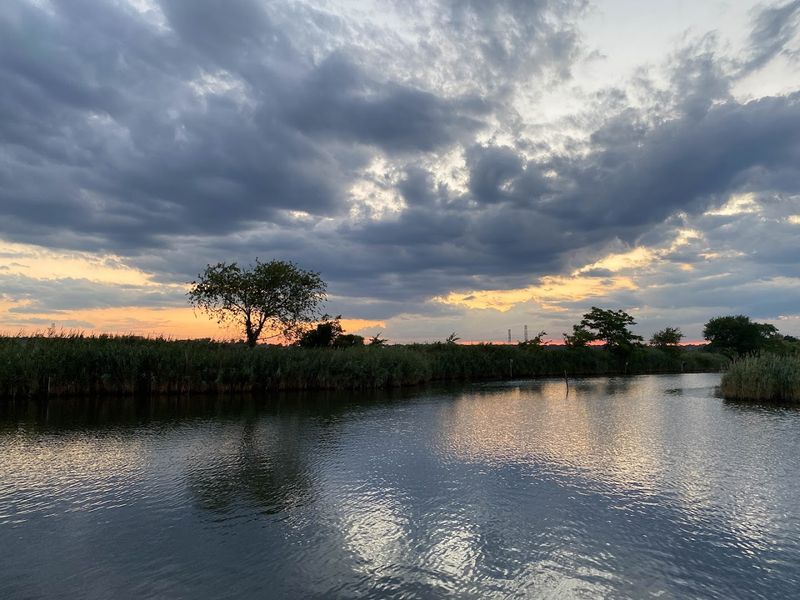
DeKorte Park rarely appears on lists of top New Jersey destinations, which is partly a function of its unassuming location and partly a result of the Meadowlands’ complicated public image. For decades, the region was associated with industry, pollution, and the kind of landscape people drove past rather than through.
The work done to restore and maintain the wetland habitat here represents a genuine shift in what is possible when conservation efforts are applied consistently over time. The park is not perfect; maintenance gaps, limited restroom facilities, and periodic trail closures are real drawbacks that regular visitors have noted.
But the core offering, which is a quiet, accessible, wildlife-rich walk within reach of one of the most densely populated corridors in the country, is something that deserves recognition.
Parks like this one do not announce themselves loudly. The reward for showing up, however, is a version of New Jersey that most people who live here have never taken the time to see.
Where to Find This Unlikely Escape
Richard W. DeKorte Park sits at 1 DeKorte Park Plaza, Lyndhurst, NJ 07071, right in the heart of the New Jersey Meadowlands.
The address is easy to find, the parking lot is free, and the park is open daily from 8 AM to 4 PM every day of the week.
The location might surprise first-time visitors. The park is sandwiched between Route 3, the New Jersey Turnpike, and several industrial zones, yet the moment you step onto the trails, the surrounding infrastructure fades into the background.
The New Jersey Sports and Exposition Authority manages the site, and their website at njsea.com provides updated trail conditions and event schedules. Checking ahead is a good idea because some trails, including the Marsh Discovery Trail, have been closed at various points for maintenance.
Getting there is straightforward from most parts of Bergen County and the greater metro area.
Share this story