 Unearth The Voyage
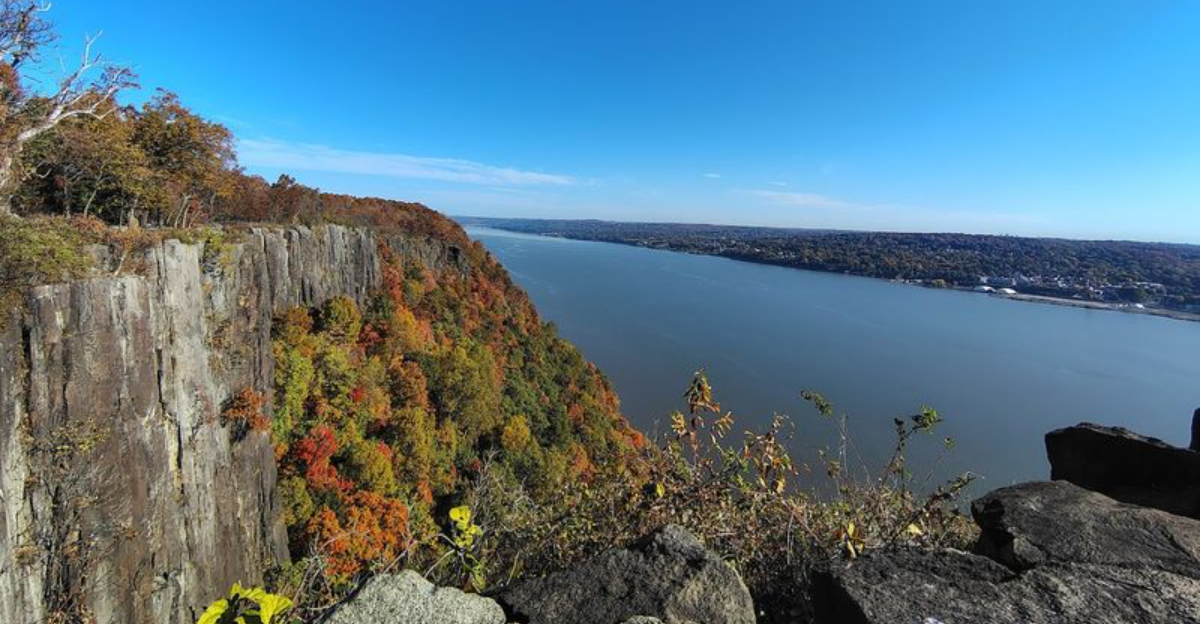
There is a trail in northern New Jersey that most people outside the state have never heard of, and even some locals keep it quietly to themselves. It sits right along the Hudson River, tucked below towering cliff walls, and it asks a lot from anyone who shows up unprepared.
The rock scramble is real, the elevation gain is real, and the reward at the top is absolutely real. This is not a casual Sunday stroll with a coffee cup in hand.
It is the kind of hike that leaves you tired, proud, and already thinking about when you can come back. If you are ready to earn your views the old-fashioned way, keep reading, because this trail delivers on every front.
Where the Trail Begins: Address and Location
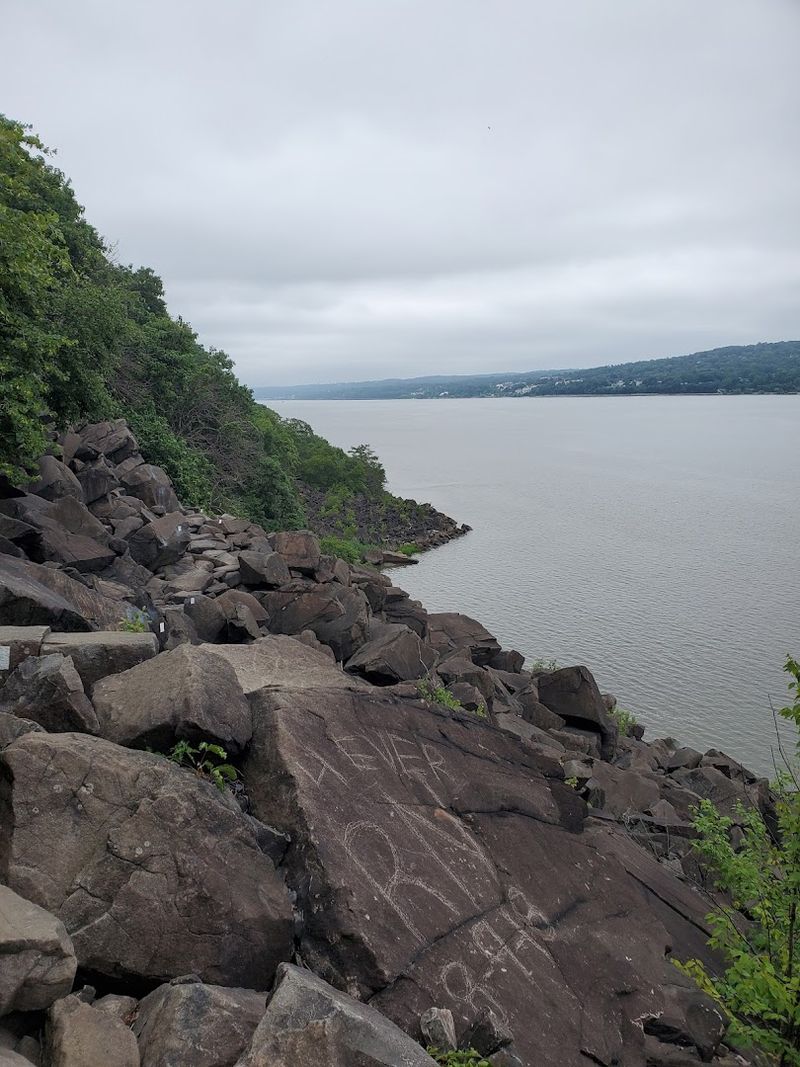
The Giant Stairs Palisades trail is accessed from Shore Trail, Closter, NJ 07624, right along the Hudson River in Bergen County, northern New Jersey. The trailhead sits within the Palisades Interstate Park system, managed under the New Jersey Palisades, and the official website at njpalisades.org lists all trail details.
The parking lot here is generously sized, so arriving on a weekend morning does not usually mean circling for a spot. There is a small concession stand near the lot that sells grilled cheese, sandwiches, drinks, and snacks, which is a smart place to grab something before you head out.
Rangers are typically on-site and genuinely helpful when you need to confirm which trail you are looking for. The lot also has bathrooms, which is a detail every hiker quietly appreciates before a four-hour adventure along the cliffs and boulders of the Hudson Valley.
The Layout of the Loop and How to Read the Trail
The Giant Stairs trail runs as a loop, which means you end up back at the same parking lot where you started. That design is genuinely useful because it lets hikers plan their energy and time without worrying about retracing every step.
The loop covers roughly four miles for the standard route, though a longer version stretches out to about eight miles total. Most hikers complete the shorter loop in three to four hours at a comfortable pace, while the longer version can take six to seven hours depending on how many breaks you take.
Trail markers guide the way throughout. The white trail markings lead up the boulder section known as the Giant Stairs, while aqua markers guide hikers along earlier stretches near the water.
Signage along the route warns of the more difficult sections ahead, so you always have a heads-up before the terrain shifts beneath your boots.
Going Clockwise vs. Counter-Clockwise: Which Direction Works Best
Choosing your direction on this loop is not just a preference, it actually changes how the hike feels from start to finish. Going counter-clockwise means you descend via the northern ridge trail, follow a creek for a stretch, and then tackle the Giant Stairs rock scramble before finishing on the lower shore trail.
The northern ascent coming back up the ridgeline is steep and relentless, but there are frequent spots to stop and rest, and the creek running alongside that section keeps things interesting. The southern staircase option, by contrast, has fewer natural rest points and less interesting views on the way up.
Going clockwise sends you down the steps to the waterfall first, then along the shore, and finally up through the scramble. Both routes work, but counter-clockwise tends to give hikers a more rewarding final climb with better scenery along the way back to the top.
The Descent to the Hudson: What the Lower Trail Looks Like
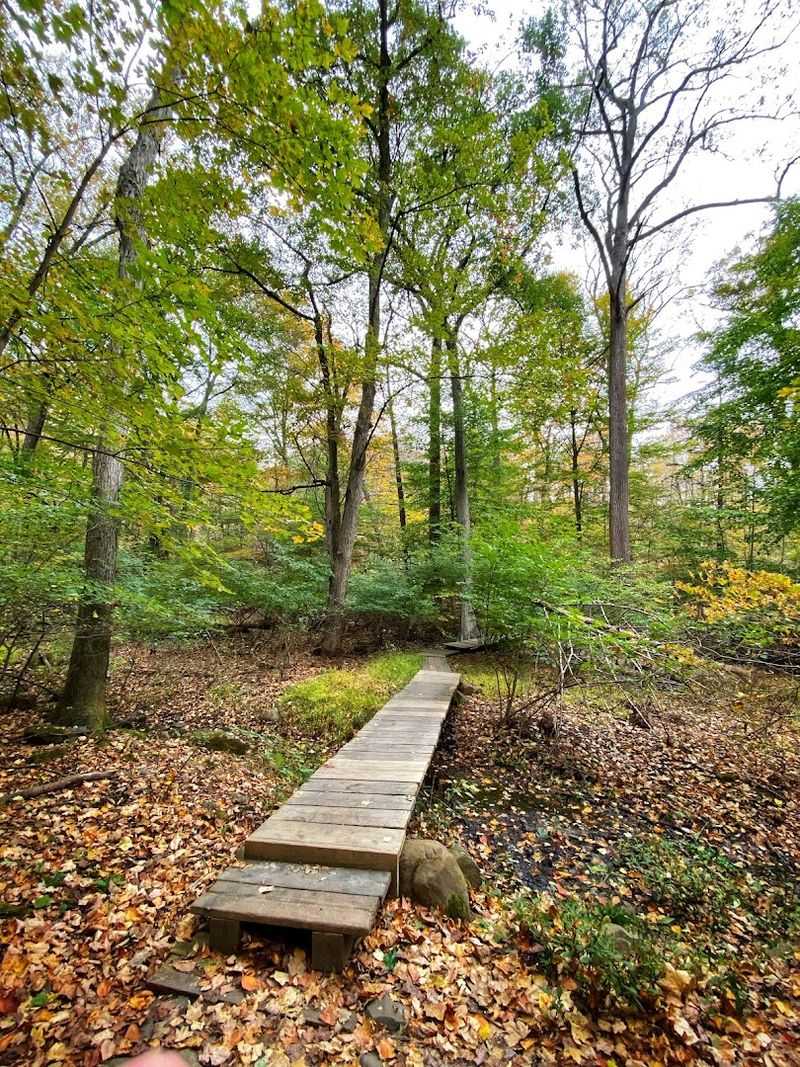
The early portion of the descent is relatively manageable. The path moves through forest and over roots and rocks, with some muddy patches after rain, but nothing that requires hands-on scrambling just yet.
Aqua trail markers guide you through this lower stretch, and after a while the path passes a pond and two small wooden bridges. Those bridges are a reliable signal that the Giant Stairs section is not far ahead.
Just past them, the trail delivers its first real reward: a waterfall tucked at the base of the cliffs.
The waterfall is modest but worth pausing at, and it sits right before the rock scramble begins in earnest. Signs posted in the area warn hikers about the challenge ahead, which is a welcome bit of honesty from the park.
The lower Hudson shoreline also opens up here, offering clear water views that make the descent feel worthwhile before the real work starts.
The Giant Stairs Rock Scramble: What You Are Actually Getting Into
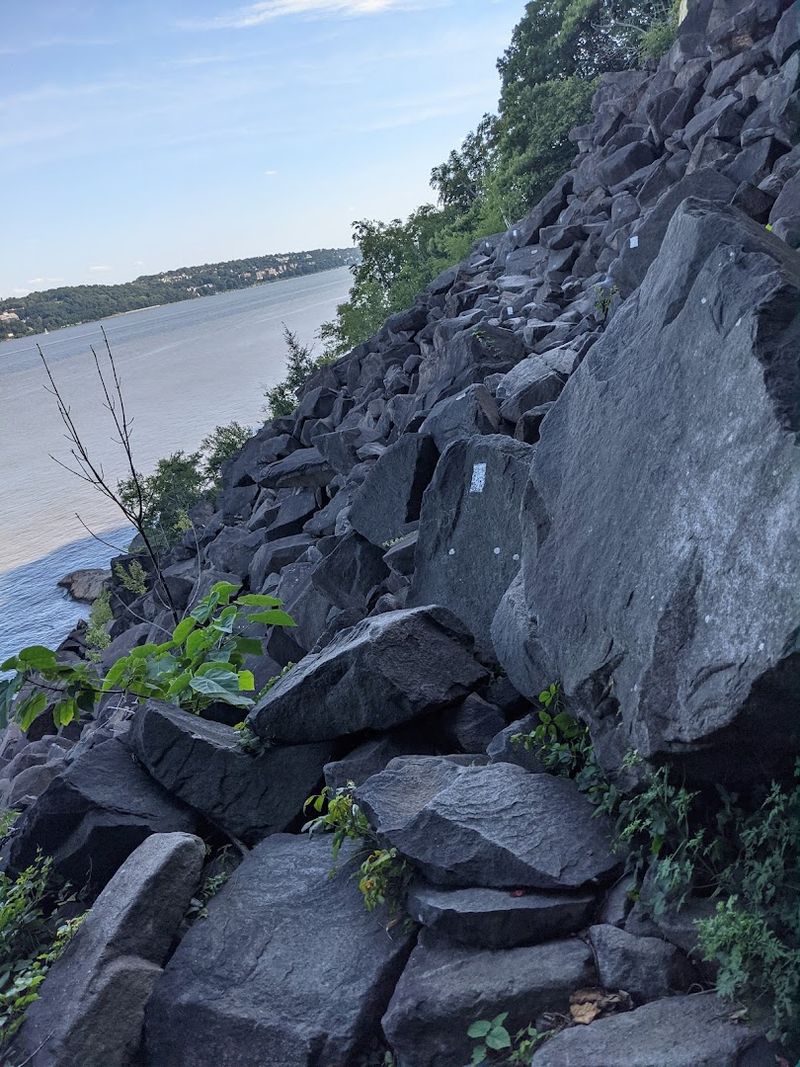
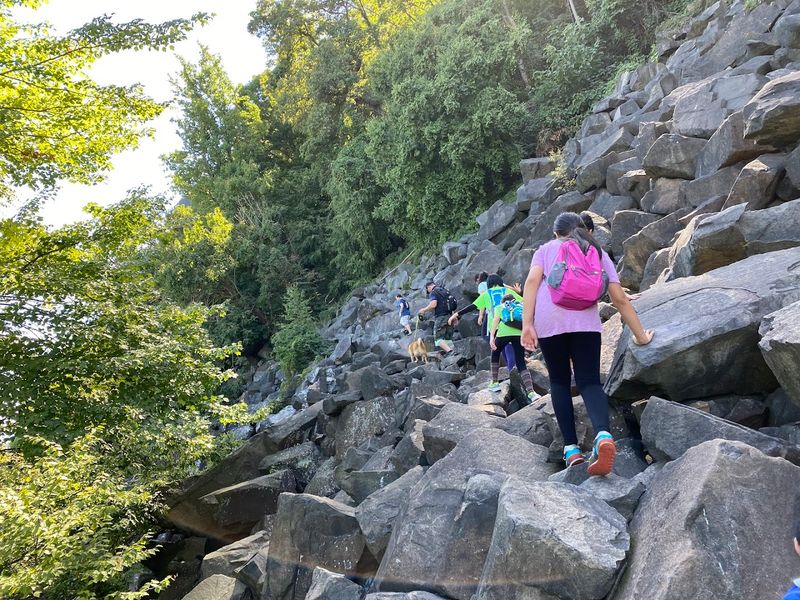
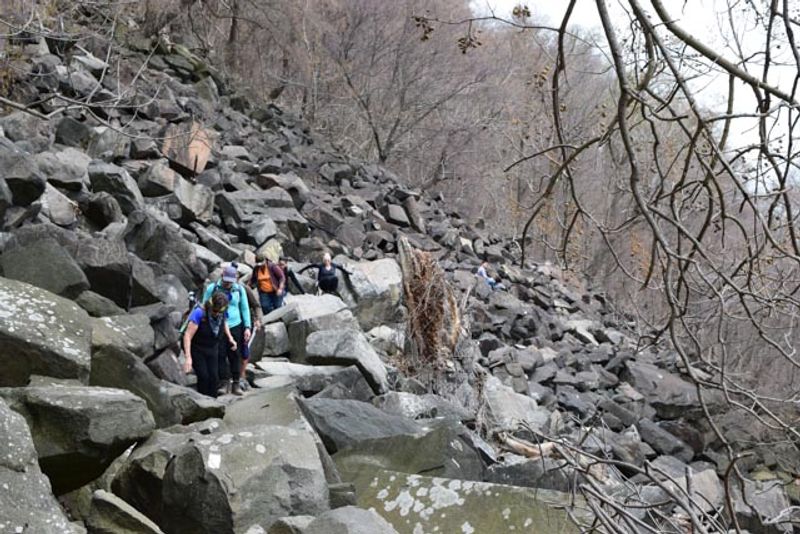
The rock scramble is the centerpiece of this entire hike, and it earns its reputation. After the waterfall, the trail turns right and the boulders begin.
These are not small stepping stones. The rocks are massive, river-facing, and stacked in a way that requires constant attention to hand and foot placement.
The scramble runs parallel to the Hudson for an extended stretch, and the views out toward the water are open and clear throughout. The route is well-marked with white blazes, so getting lost is unlikely, but moving quickly is not really an option either.
The boulders have mostly flat surfaces, which makes gripping them manageable even for first-timers with decent footwear. That said, the sheer length of the scramble surprises most people.
What feels fun and novel in the first twenty minutes becomes a sustained physical effort by the time you reach the far end, and that is what makes finishing it feel like a genuine accomplishment.
Elevation Gain and the Final Climb Back to the Top
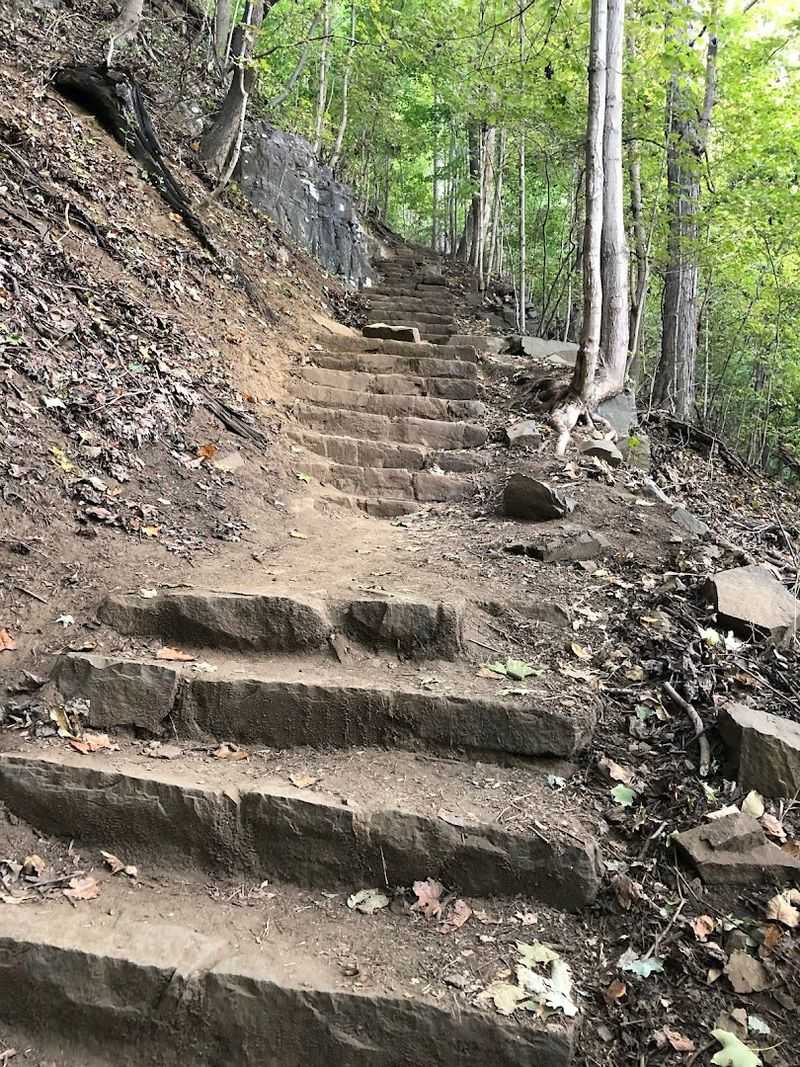
After the scramble ends, the trail transitions into a forest path that leads back up to the top of the Palisades ridge. This ascent covers roughly 500 feet of elevation gain and is the section that tends to test whatever energy reserves you have left after the boulder section.
The climb is steep and consistent, but the trail offers enough natural rest spots that you can break the effort into manageable chunks. A creek runs alongside part of this ascent, giving the uphill stretch some character beyond just burning legs.
Experienced hikers who do the longer loop and add extra mileage on the upper and lower trails can easily surpass 1,000 feet of total elevation gain for the day. That number puts this hike in a different category than most New Jersey options.
The final steps back onto the ridge near the state line lookout point feel genuinely earned, and the view from the top makes the math worth it.
Views Along the Way: What the Palisades Ridge Delivers
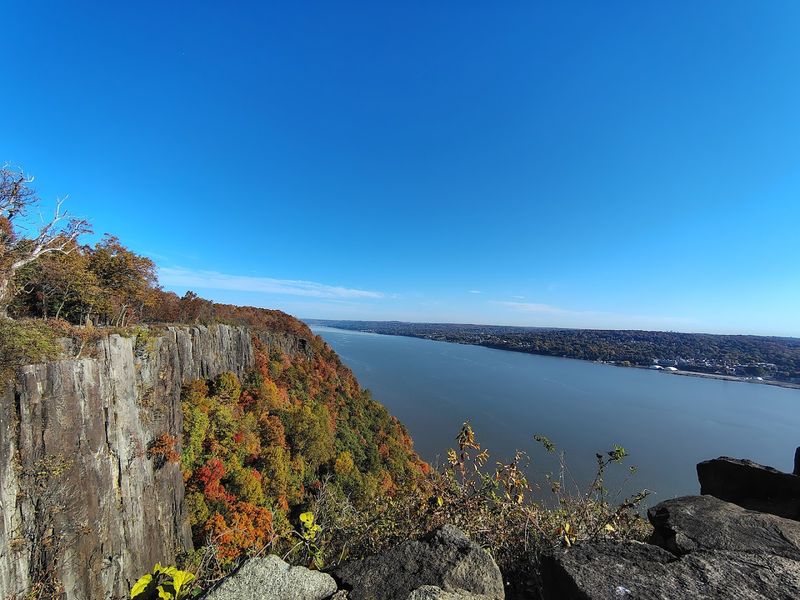
The views on this trail come in layers. At the bottom, the Hudson River spreads out wide and flat, framed by the cliff walls rising above.
During the scramble itself, the river stays visible to the east as you move north along the base of the Palisades.
At the top of the ridge, the state line lookout point provides a broad, elevated perspective across the Hudson Valley. On a clear day the New York side of the river is fully visible, and the scale of the cliffs becomes obvious from up here in a way that the lower trail does not quite capture.
Fall foliage transforms this entire route into something worth planning a trip around. The trees along the ridge and the lower forest floor shift into deep reds and oranges in October, and the contrast against the gray rock faces and blue river water is the kind of visual that ends up in a lot of camera rolls and zero complaints.
Wildlife and Natural Features Worth Watching For
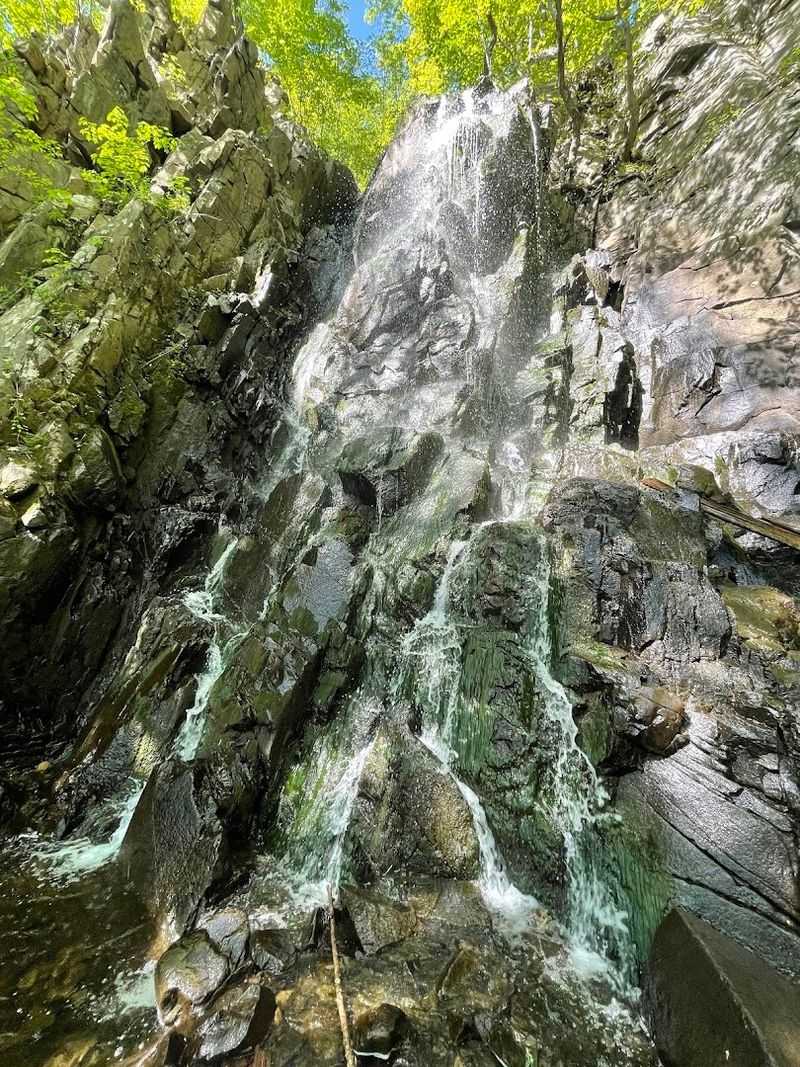
The trail passes through a genuinely wild corridor of the Palisades, and the natural features beyond rocks and trees are worth paying attention to. The waterfall near the northern end of the scramble is the most photographed natural feature on the route, and it earns that status.
Lizards and small snakes have been spotted on the boulder sections during dry, warm days. Rangers and other hikers have also reported copperhead sightings near the waterfall area during summer months, so watching where you step and where you place your hands on the rocks is genuinely important, not just trail etiquette.
Poison ivy grows along portions of the trail and occasionally encroaches onto the path itself. It is easy enough to spot and avoid, but hikers who are particularly sensitive to it should stay especially aware of where their hands land during the scramble.
The rest of the natural setting along this trail is worth every moment of that extra attention.
Who Should Attempt This Trail and Who Should Think Twice
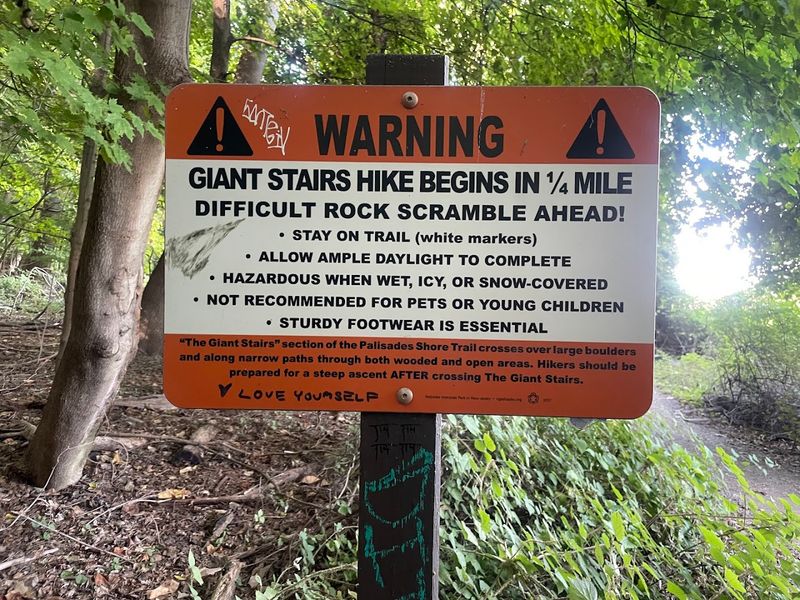
This trail is best suited for hikers who already have some experience under their belts. The rock scramble requires comfort with using both hands and feet on large boulders, and anyone who gets anxious on uneven or exposed terrain will find sections genuinely uncomfortable.
Older hikers with knee concerns should think carefully about the descent and the extended scramble, since both put real stress on joints over a sustained period. Parents bringing children under six face a logistical challenge: if a small child needs to be carried during the boulder section, that is a serious physical commitment on top of an already demanding trail.
Beginners are not automatically excluded, but they should go with someone who knows the route and should plan for a longer time on trail. Dogs can do this hike, though smaller breeds will need assistance at several points during the scramble.
Proper footwear and a full water supply are non-negotiable for every group.
Best Conditions for Hiking the Giant Stairs
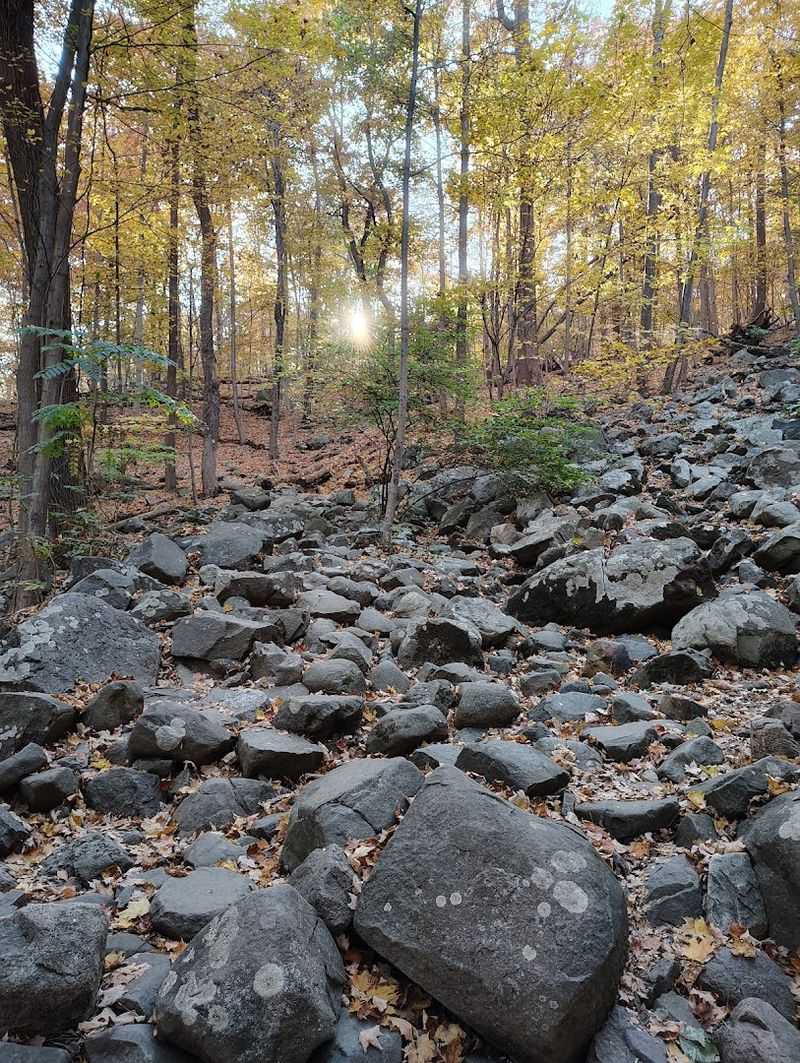
Timing and weather matter more on this trail than on most. The rocks become dangerously slippery after rain, and wet mud on the lower sections adds another layer of difficulty that turns a challenging hike into a risky one.
Dry days are the clear standard here.
Winter brings its own complications. Cold temperatures make the rock surfaces slick, and the waterfall can freeze over entirely, removing one of the trail’s main highlights while adding real hazard to the boulder section.
Starting in winter is possible for prepared, experienced hikers, but it is not the recommended season for a first visit.
The ideal window runs from late spring through early fall, with dry weather and good daylight. Starting by mid-morning gives most hikers enough time to complete the loop comfortably before the light fades.
Evening starts are strongly discouraged, since low visibility on the boulder sections turns a manageable challenge into a genuinely dangerous situation.
Why This Trail Keeps Pulling People Back
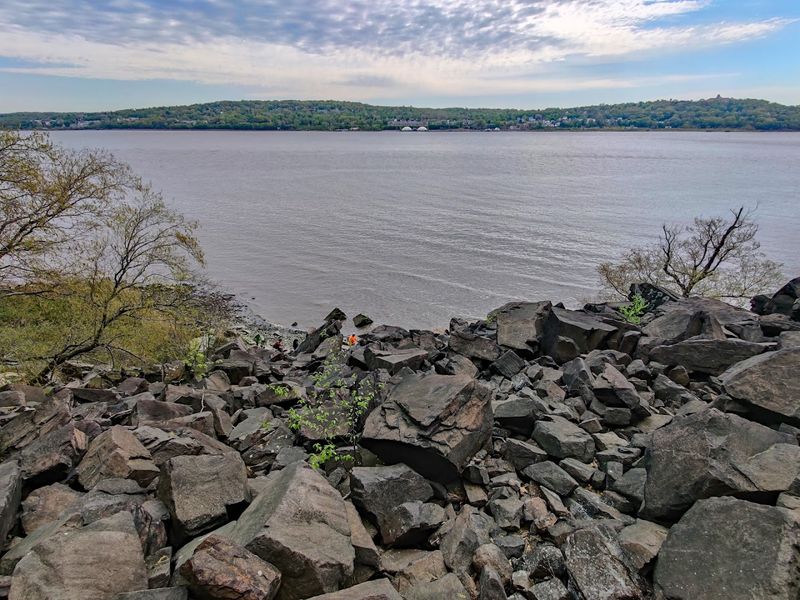
The Giant Stairs Palisades trail delivers a combination that is genuinely hard to find this close to a major metropolitan area: real physical challenge, dramatic natural scenery, and a route that feels remote even though it sits minutes from the New York state line.
The loop format keeps the experience fresh on repeat visits, since you can vary your direction, extend your mileage on the upper or lower trails, or simply move at a different pace than last time. The picnic area near the marina at the base of the trail is a practical and pleasant bonus for anyone who wants to extend the outing after the scramble.
Trails that earn this kind of loyalty from hikers do so because they ask something real of the people who walk them, and then pay it back in full. The Giant Stairs is exactly that kind of trail, and northern New Jersey is lucky to have it.



