 Unearth The Voyage
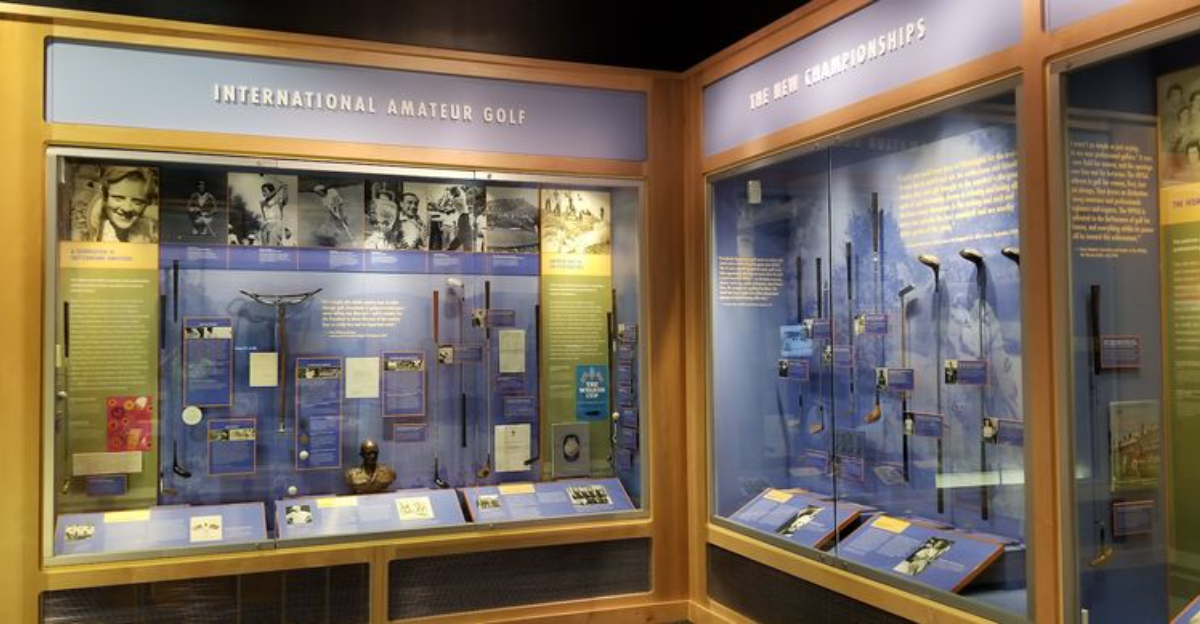
Tucked away in the rolling hills of New Jersey, there is a place that holds the full story of American golf, from its earliest roots to its most celebrated champions. Most people drive past Liberty Corner without a second thought, but those who stop discover one of the most carefully curated sports museums in the country.
The museum is not just for hardcore golf fans. It is a place where history comes alive through artifacts, trophies, interactive exhibits, and personal stories that connect every era of the game.
Whether you have swung a club once or never, this museum has a way of pulling you in and keeping you there far longer than you planned.

The USGA Golf Museum and Library sits at 77 Liberty Corner Rd, Liberty Corner, NJ 07938, nestled in Somerset County among open fields, horse farms, and quiet country roads that feel worlds away from the busy highways nearby.
The building itself is substantial and well-maintained, with a clean, professional appearance that signals something serious is happening inside. The surrounding grounds are carefully kept, giving the whole property a polished and welcoming look from the moment you pull up.
Getting there requires a bit of navigation since the brown directional signs along the roads are small and easy to miss. A GPS is strongly recommended, especially if you are coming from Interstate 287 via Exit 26 at Mt.
Airy Road.
The museum is open Tuesday through Sunday from 10 AM to 5 PM and is closed on Mondays. Admission is modestly priced, and USGA members receive a discount, making it an accessible outing for most budgets.

The layout of the USGA Golf Museum is one of its strongest qualities. Exhibits are arranged in a clear, chronological order, so the story of golf unfolds naturally as you move from room to room.
From the earliest days of the sport in Scotland to the modern professional game, the museum traces golf’s development through physical objects, photographs, and video presentations. The collection includes real golf clubs, golf balls, personal items from famous players, and equipment that spans well over a century of the game.
Each display is clearly labeled and explained in a way that does not require any prior knowledge of golf history. Even a first-time visitor who has never watched a tournament can follow along without confusion.
Plan to spend at least two hours here, though three hours is a more realistic estimate if you want to read the panels, watch the videos, and take in the full scope of what is on display.
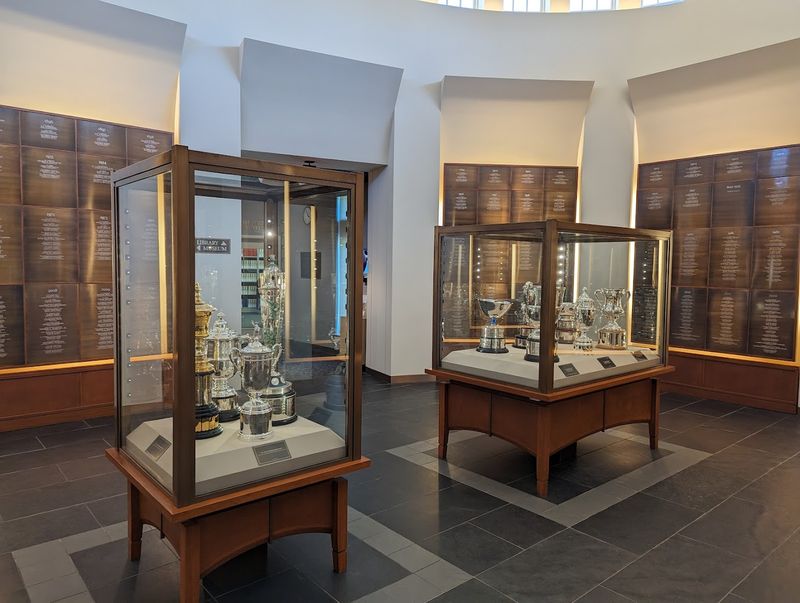
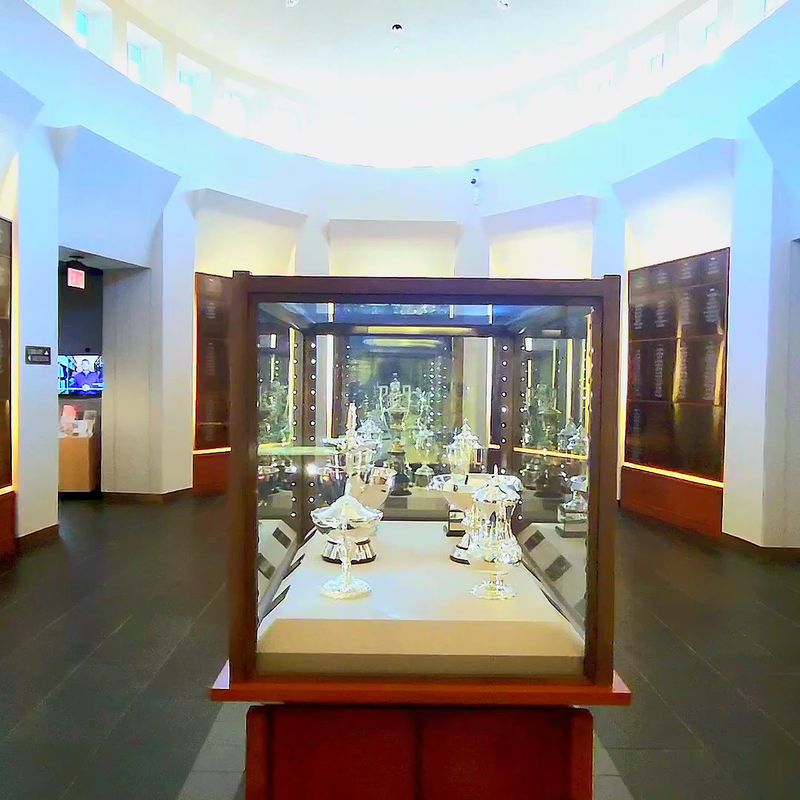
Few rooms in any American sports museum match the Hall of Champions at the USGA Golf Museum for sheer visual impact. The oval rotunda is lined with trophy cases holding the actual hardware awarded at USGA championships, both professional and amateur, going back to the 1800s.
Bronze panels on the walls list every tournament winner by name, year after year, creating a timeline of golf excellence that stretches across generations. Standing in this room gives a clear sense of how long and storied the USGA’s history truly is.
The trophies are not replicas. These are the real engraved cups and bowls that were handed to champions on the final day of competition.
Seeing the actual trophy that Dustin Johnson received after winning the US Open, for example, carries a different weight than seeing a photograph of it.
This room alone is worth the price of admission for anyone who follows professional golf at any level.
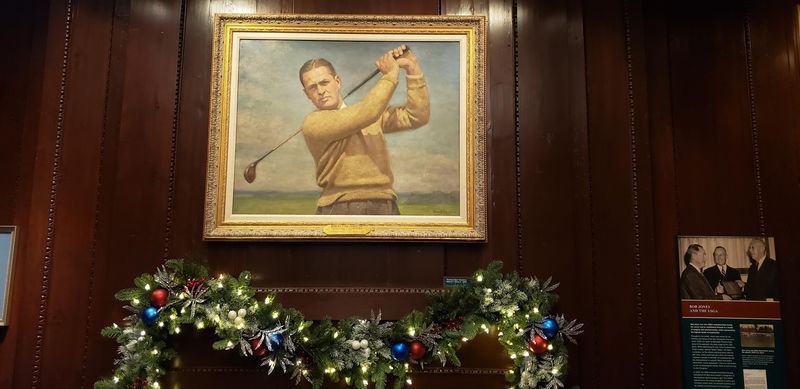
Bobby Jones remains one of the most remarkable figures in golf history, and the museum gives him the dedicated space his legacy deserves. The Bobby Jones gallery is filled with photographs, personal items, and artifacts that tell the story of a man who achieved things in the sport that no one has managed to replicate.
Jones won the Grand Slam in 1930, capturing all four major championships available to him in a single calendar year, a feat that still stands alone in the record books. He accomplished this as an amateur, never turning professional, which adds another layer of fascination to his story.
The gallery includes golf clubs Jones actually used during competition, giving the collection a tangible connection to his career that photographs alone cannot provide.
Video presentations in the room add context and bring the era to life. For anyone who only knows Jones by name, this gallery turns that name into a full and compelling human story.
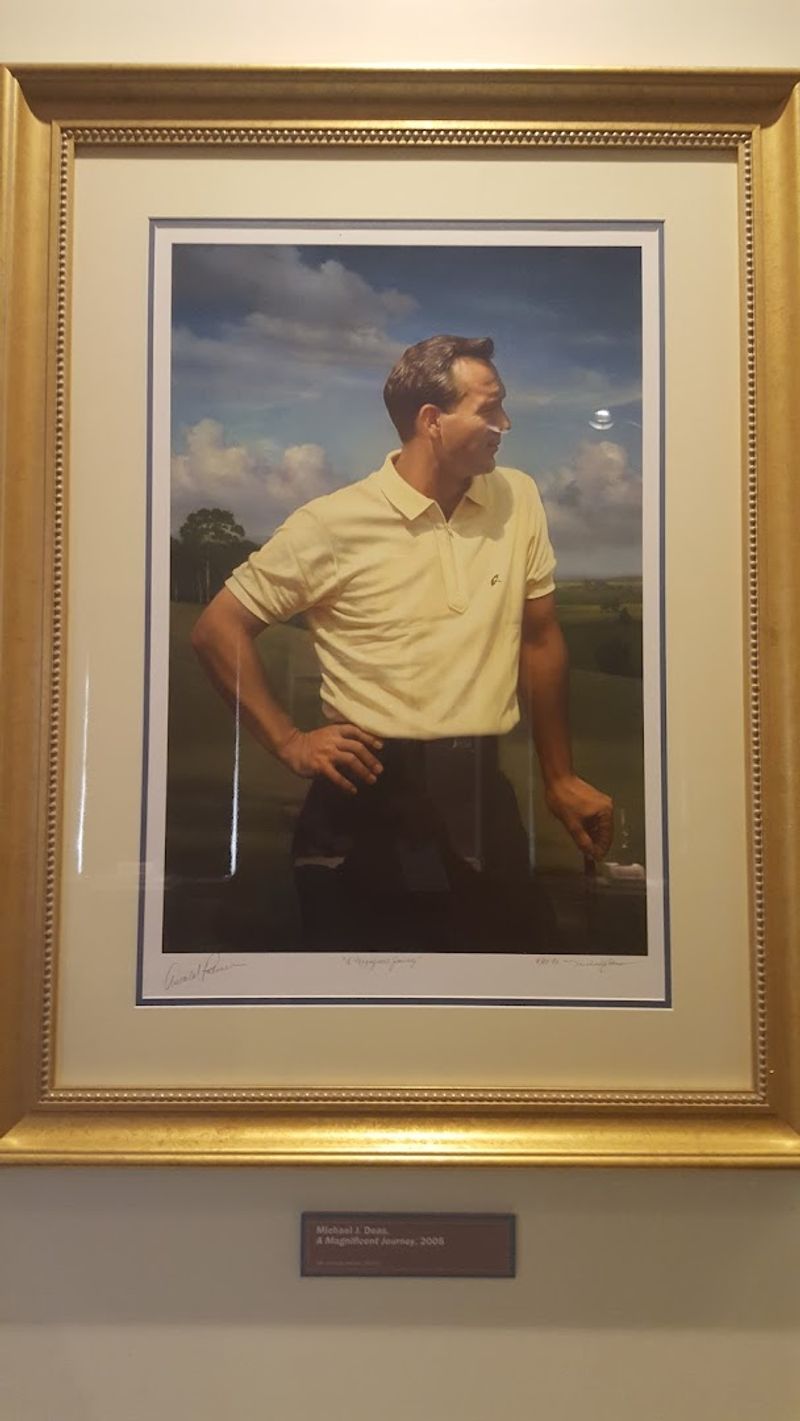
Arnold Palmer transformed professional golf from a niche sport into a mainstream American obsession, and the USGA Golf Museum honors that transformation with a dedicated exhibit that captures both the player and the personality.
The gallery covers Palmer’s major championship victories, his connection with fans, and his broader impact on the game’s popularity during the television era of the 1950s and 1960s. His ability to connect with everyday people made him one of the most beloved athletes of the twentieth century.
Personal items on display help bridge the gap between the legend and the man. Seeing his actual equipment, alongside photographs from key moments in his career, creates a more complete picture than statistics alone ever could.
The exhibit also touches on his involvement with the USGA and amateur golf, reminding visitors that Palmer’s story began long before the professional tour. His arc from amateur competitor to global icon is presented clearly and with genuine respect for his contributions.
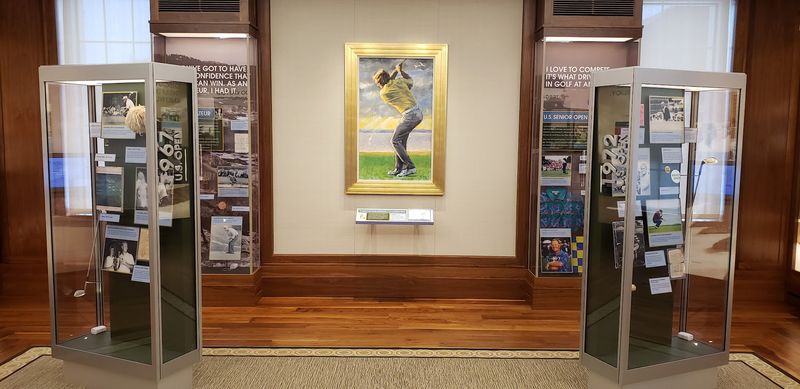
The Jack Nicklaus addition to the museum stands out for more than just the breadth of his championship record. The wing includes an interactive golf course design display where visitors can choose where to place a green on a hypothetical hole, and Nicklaus himself appears on screen to explain the strengths and weaknesses of each placement decision.
This kind of hands-on engagement is rare in traditional museums, and it works particularly well here because course design was a major second career for Nicklaus after his playing days. The exhibit connects his competitive instincts to his architectural philosophy in a way that is genuinely educational.
His championship record, which includes 18 major titles, is documented through trophies, photographs, and career timelines that cover both his amateur and professional accomplishments.
One detail that surprises many visitors is learning about his early battle with a health condition as a young man, a part of his personal history that adds considerable depth to an already extraordinary career story.
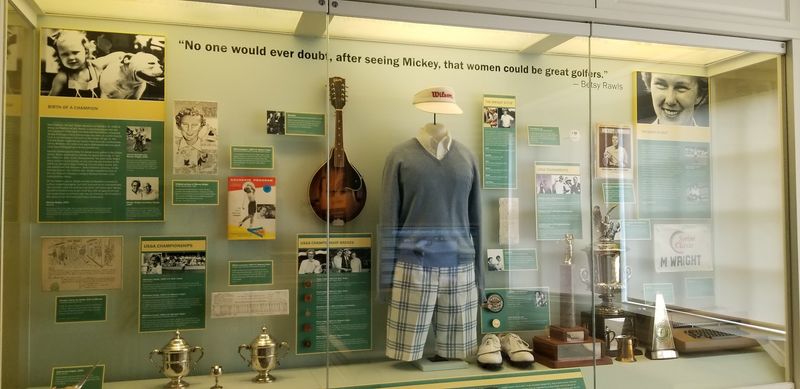
The USGA Golf Museum does not limit its storytelling to the men’s game, and the recognition given to Mickey Wright reflects a genuine commitment to covering golf’s full history. Wright is considered by many analysts and players to be the greatest female golfer of the twentieth century, yet her name is less familiar to casual fans than it deserves to be.
Her swing was famously admired even by male tour professionals, and her championship record across LPGA events and US Women’s Open titles places her in the highest tier of the sport regardless of gender.
The museum’s exhibit on Wright includes photographs from her competitive years, personal memorabilia, and context about the era in which she played, a time when women’s professional golf was still finding its footing as a recognized sport.
Giving Wright her own dedicated space in the museum is a meaningful curatorial choice, and it ensures that her contributions are not treated as an afterthought in the broader golf narrative.
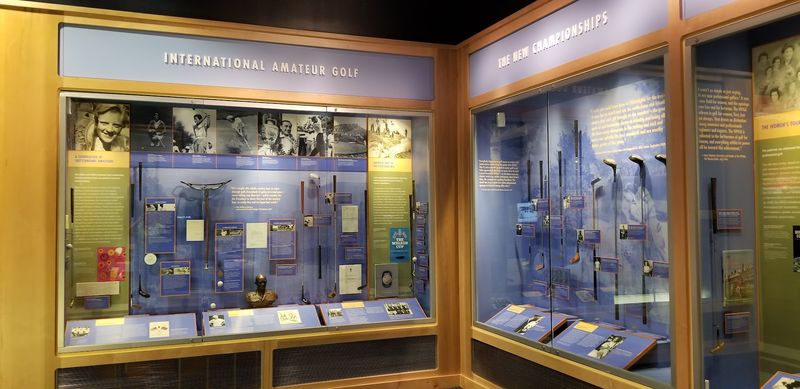
Francis Ouimet’s 1913 US Open victory at The Country Club in Brookline, Massachusetts is one of the most consequential moments in American golf history. He was a 20-year-old amateur who grew up across the street from the course, and his win over two established British professionals in a playoff shocked the golf world and helped establish the sport’s popularity in the United States.
The museum treats this moment with the historical weight it deserves. Ouimet’s exhibit includes period photographs, equipment from his era, and clear explanations of why his victory mattered far beyond the scorecard.
Before Ouimet, golf in America was largely seen as a sport for the wealthy elite. His win changed that perception and opened the door for a broader, more democratic participation in the game.
For visitors who know little about early American golf, this section of the museum often turns out to be one of the most engaging and eye-opening parts of the entire tour.
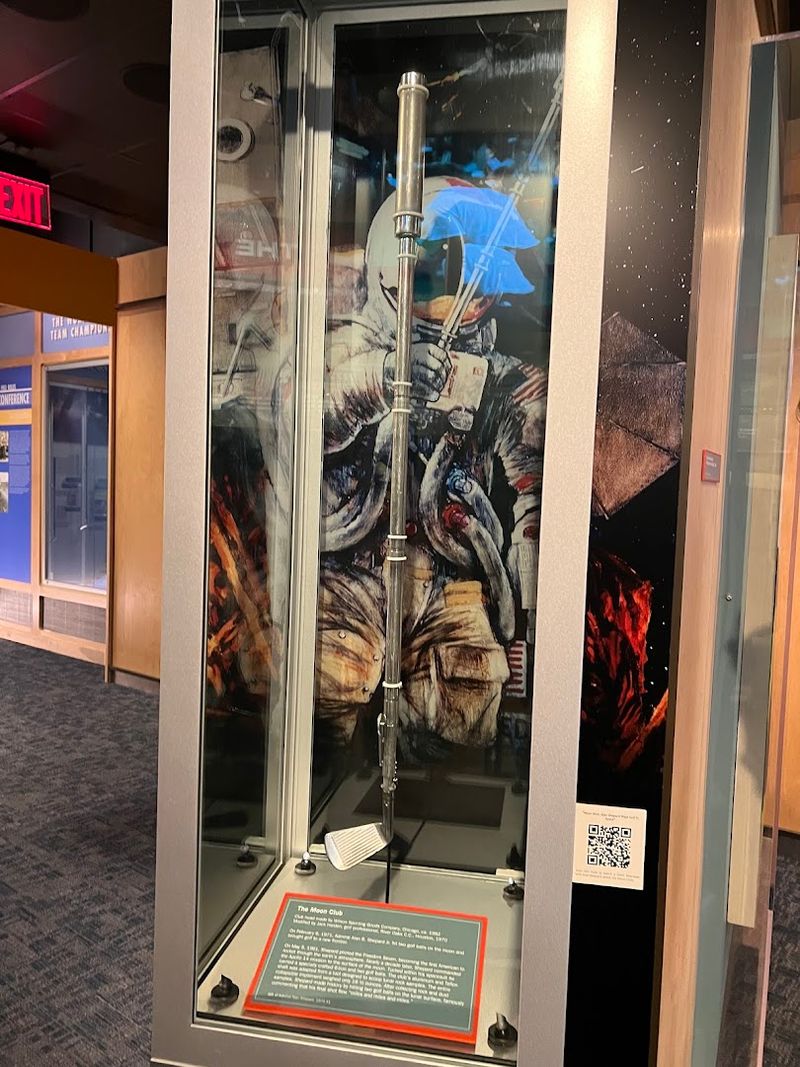
Among all the remarkable objects in the USGA Golf Museum, one tends to stop visitors completely in their tracks: the actual golf club used on the moon. During the Apollo 14 mission in 1971, astronaut Alan Shepard attached a six-iron head to a lunar sample collection tool and hit two golf balls on the lunar surface, making golf the only sport ever played on another world.
The club is on display at the museum, and the sheer improbability of its existence makes it one of the most talked-about artifacts in the entire collection. It is not a replica or a reproduction.
It is the real implement that made contact with a golf ball approximately 238,000 miles from the nearest golf course on Earth.
Beyond the moon club, the museum holds an extensive collection of historic golf balls and clubs spanning multiple centuries, offering a detailed physical record of how equipment has evolved from the game’s earliest days to the present.

The museum experience does not end at the front door. Outside, there is a nine-hole putting course that visitors can play for a modest additional fee, using old-style putters and golf balls that connect the activity to the museum’s historical theme.
The putting course is not a casual miniature golf setup with windmills and ramps. It is a genuine short-game challenge laid out on real turf, and the combination of historic equipment and proper putting surfaces makes it a unique experience that extends the visit beyond the galleries.
Players who finish the course get to keep their golf ball as a souvenir, which is a small but memorable touch that most visitors appreciate. For families with children, the putting course adds a physical, participatory element to what might otherwise be a purely observational day.
The course draws a mix of serious golfers testing their touch and first-time players discovering just how tricky a well-designed putting green can be under any conditions.
A few practical details can make a significant difference in how much a visitor gets out of the USGA Golf Museum. Admission is currently around $15 per adult, with a separate $10 fee for the outdoor putting course.
USGA members receive a discount on the main admission, which is one of the tangible perks of membership beyond the magazine and event access.
The museum provides a printed map at the front desk that helps with self-guided navigation through the galleries. Given how much material is spread across multiple rooms, having that map in hand from the start saves time and ensures nothing important gets missed.
The lobby gift shop carries a solid selection of golf-related books, souvenirs, hats, postcards, and branded merchandise. USGA members can also pick up complimentary publications and program materials near the entrance.
Arriving when the museum opens at 10 AM on any open day gives the best chance of a quieter, less crowded experience, especially on weekends when foot traffic tends to pick up steadily through the afternoon.



