 Unearth The Voyage
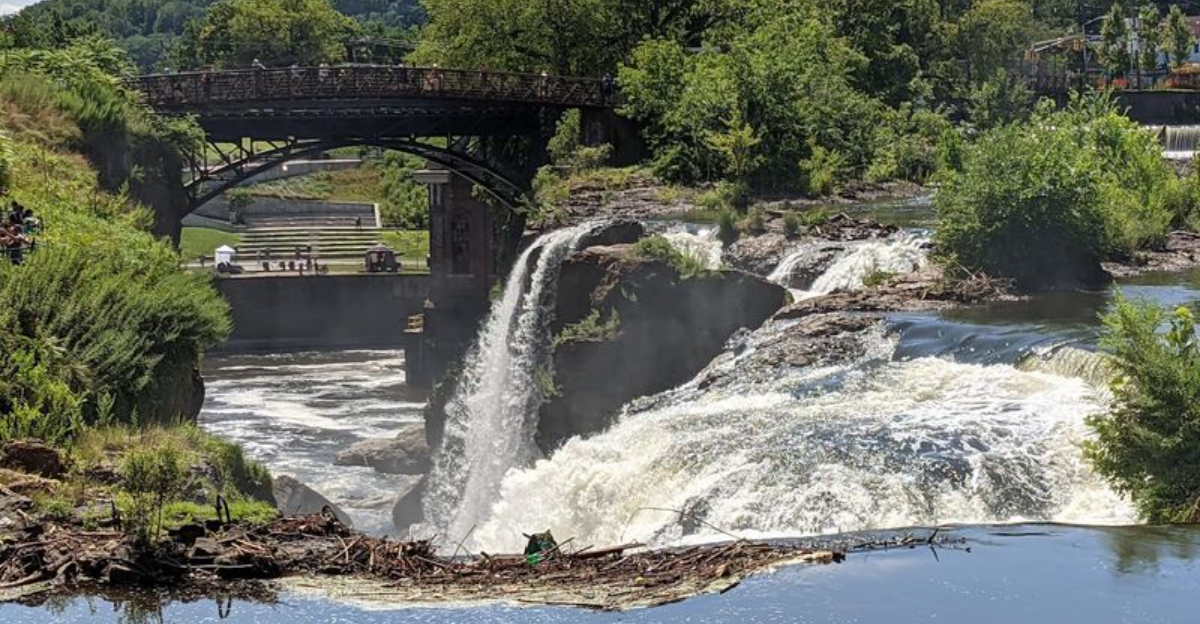
New Jersey is not the first place most people think of when they picture a roaring, powerful waterfall. But tucked inside the city of Paterson, a 77-foot cascade of water has been turning heads and shaping history since before the United States was even a finished idea.
This waterfall did not just impress tourists. It literally helped launch American industry.
The Paterson Great Falls National Historical Park tells the story of how one natural wonder became the engine behind the country’s first planned industrial city, a story tied to Alexander Hamilton, the early republic, and the workers who built a nation from the ground up. Whether you are a history fan, a nature lover, or just someone looking for a genuinely surprising afternoon trip, this park delivers far more than you might expect from an urban green space in northern New Jersey.
Where to Find This Urban Wonder
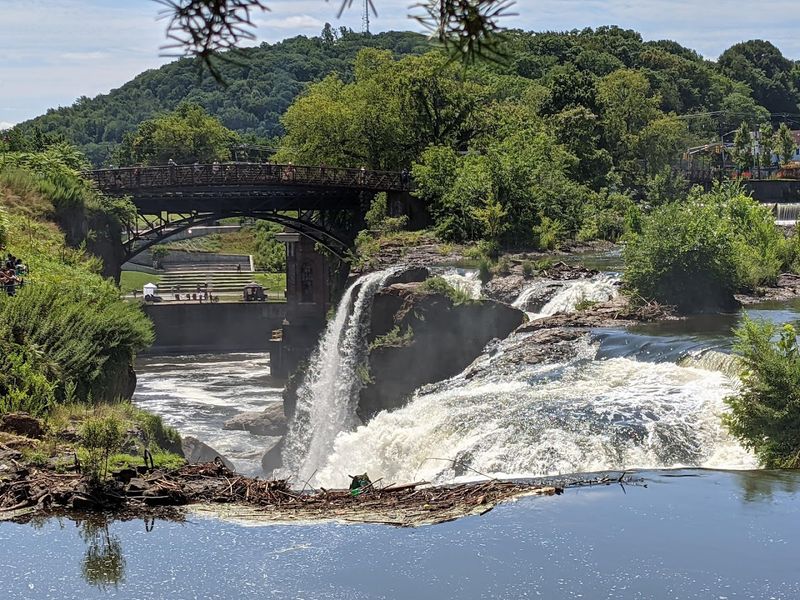
The park sits right in the heart of Paterson, New Jersey, at 72 McBride Ave Ext, Paterson, NJ 07501. That address alone tells you something unusual is going on, because not many national parks share a zip code with a densely populated urban neighborhood.
The park is open 24 hours a day, every day of the week, which gives you a lot of flexibility for planning your visit. The visitor center, managed by the National Park Service, keeps its own schedule, so checking the NPS website at nps.gov/pagr before you go is a smart move.
Free parking is available in the main lot near the falls, though it fills up quickly on weekends. Street parking exists on the opposite side of the gorge, which also happens to offer a different and worthwhile view of the falls.
Arriving early on weekends is the best strategy to snag a spot without circling the block twice.
The Waterfall That Started It All
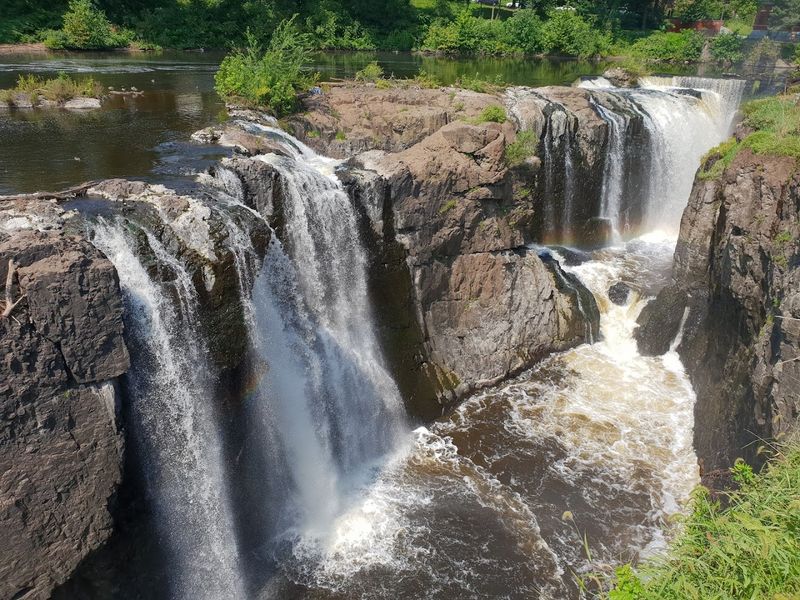
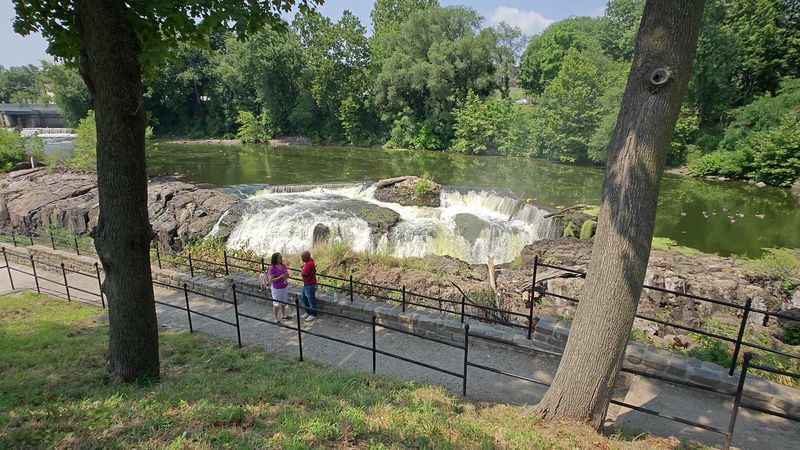
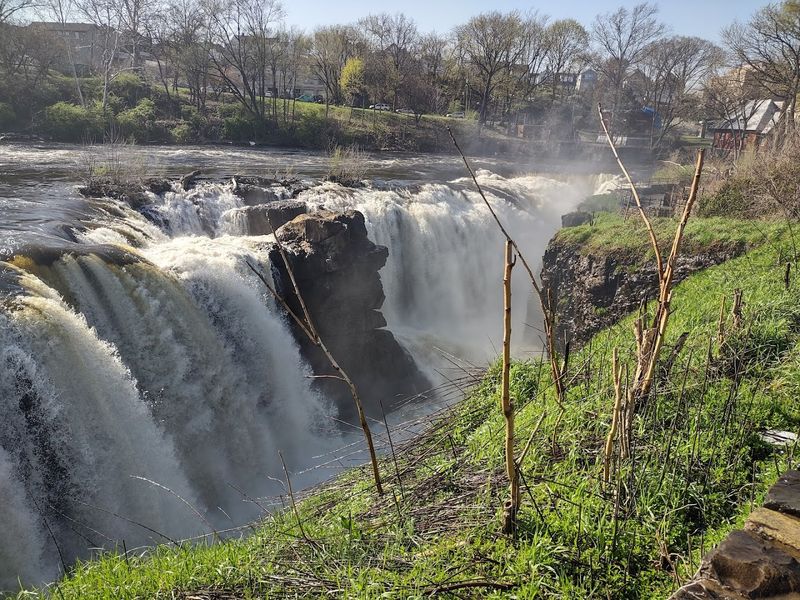
At 77 feet tall and roughly 300 feet wide, the Paterson Great Falls is the second-largest waterfall by volume on the entire East Coast, ranking just behind Niagara Falls. That is not a small claim, and the falls absolutely back it up, especially after heavy rain when the Passaic River runs high and the water crashes into the gorge below with full force.
The falls drop into a basalt gorge formed by ancient volcanic activity, which gives the surrounding rock walls a dramatic, almost theatrical look. Multiple viewing platforms let you take in the scene from different angles, and each one offers a distinct perspective on just how much water is moving through this narrow channel.
A footbridge over the Passaic River connects the main overlook area to the opposite bank, though construction and seasonal closures have affected access at various times. Checking current conditions before your visit will save you from a frustrating surprise at the gate.
Alexander Hamilton’s Industrial Blueprint
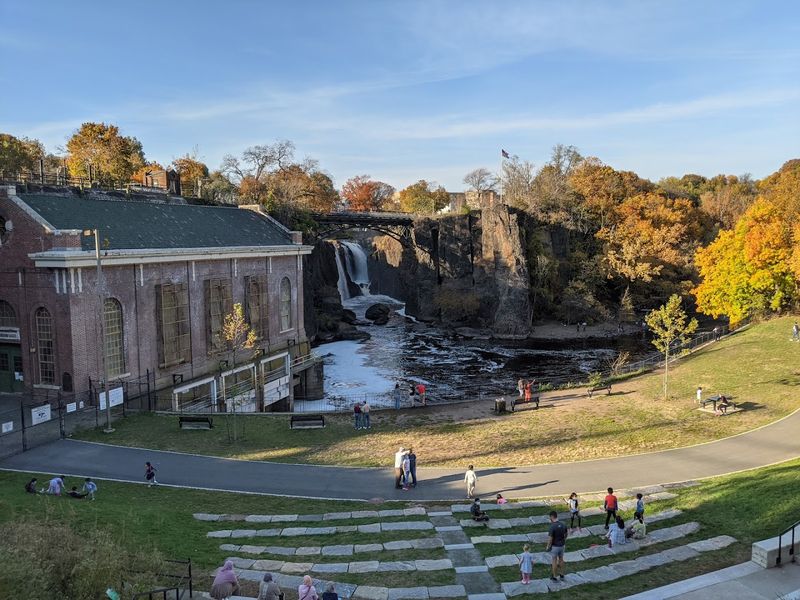
Most people know Alexander Hamilton from the Broadway show or the ten-dollar bill, but Paterson is where his economic vision took physical form. In 1778, Hamilton visited the falls alongside George Washington and the Marquis de Lafayette.
He was struck by the raw power of the water and filed that memory away for later use.
By 1791, Hamilton had helped establish the Society for Establishing Useful Manufactures, known as the S.U.M., which chose Paterson as the site for the country’s first planned industrial city. The idea was to harness the energy of the falls through a system of raceways, channels that directed water to power mills and factories throughout the city.
A monument honoring Hamilton stands near the falls today, and informational signs throughout the park explain his role in shaping early American economic policy. The Hamilton connection gives this place a layer of historical weight that most urban parks simply cannot match.
The Raceway System That Powered a City
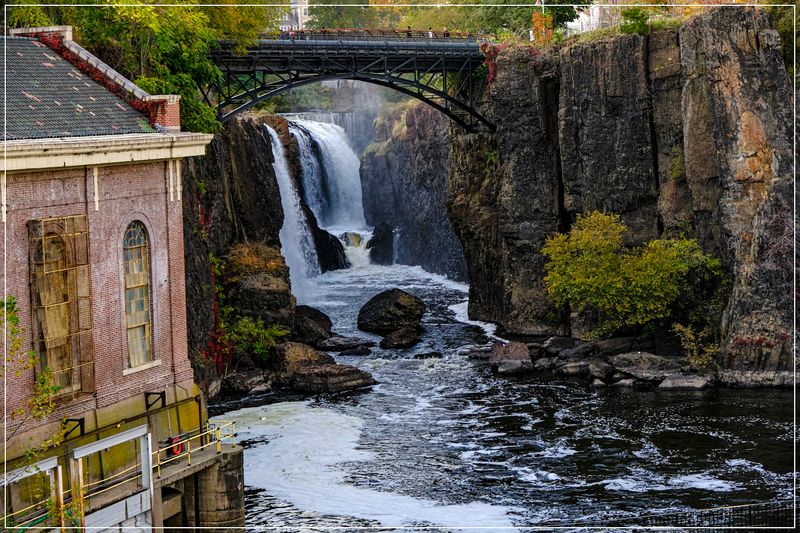
The genius of Paterson’s industrial design was not just the waterfall itself but the elaborate system of raceways built to carry its energy throughout the city. Engineers constructed a network of channels at three different levels, known as the upper, middle, and lower raceways, that directed water from the Passaic River to mills and factories across the district.
At its peak in the 19th century, Paterson’s mills produced silk, locomotives, and firearms, earning the city the nickname “Silk City.” The raceways made all of that possible by delivering consistent water power to dozens of industrial operations running simultaneously.
Remnants of this raceway system are still visible in and around the park today. Walking along the preserved sections gives you a tangible connection to the engineering ingenuity of the early republic.
It is one thing to read about the Industrial Revolution in a textbook and quite another to stand next to the actual stone channels that made it happen.
A National Park in the Middle of a City
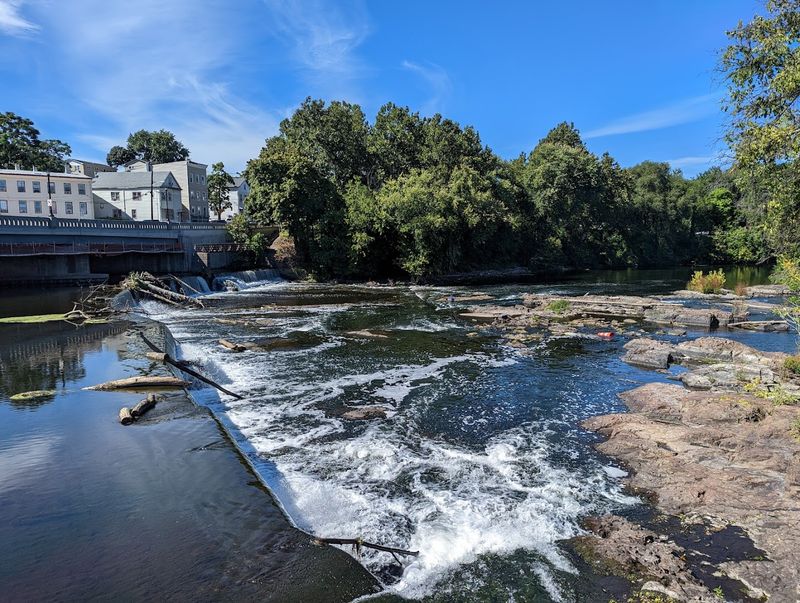
Paterson Great Falls became a National Historical Park in 2011, making it one of the newer additions to the National Park Service system and one of the most urban national parks in the entire country. The designation recognized both the natural significance of the falls and the historic importance of Paterson’s industrial legacy.
Being a national park inside a working-class city creates an interesting dynamic. The park is well-maintained, with clean pathways, informative signage, and friendly rangers on hand during operating hours.
The surrounding neighborhood, however, reflects the economic challenges that many older industrial cities continue to face.
Visitors consistently note that staying within the well-trafficked park areas makes for a comfortable and safe experience. The contrast between the park’s polished presentation and the gritty urban surroundings outside its borders is real, but it also adds authenticity.
This is not a sanitized tourist bubble. It is a real place with a complicated, layered story.
Viewing the Falls from Every Angle
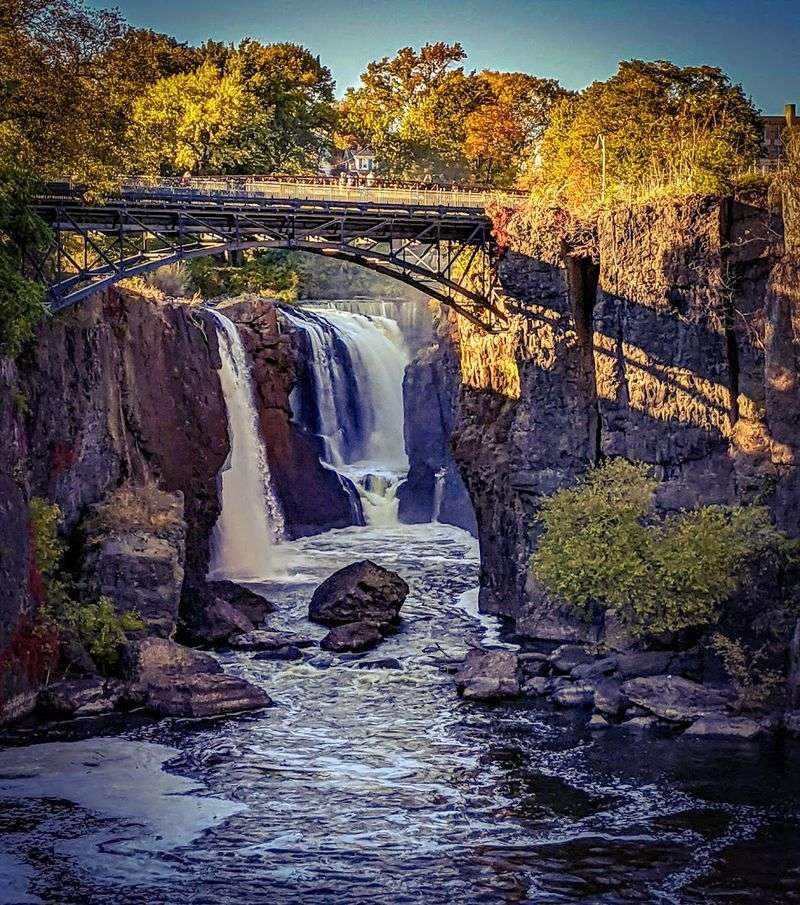
One of the best things about this park is that the falls can be viewed from multiple vantage points, each one offering something different. The main overlook at Overlook Park gives you a broad, elevated view of the full cascade, and it is where most visitors take their photos.
The footbridge across the gorge, when open, puts you almost directly above the rushing water.
Crossing to the opposite side of the river reveals a second perspective that many visitors skip entirely. From there, you can see the full width of the falls against the backdrop of the basalt cliffs, and the scale of the gorge becomes much more apparent.
There are also lower viewing areas accessible by a series of stairs that bring you closer to the base of the falls. The steps are fairly steep, and some visitors find them challenging, but the payoff is a close-up view that the overlook simply cannot replicate.
Every angle tells a different part of the story.
The Falls in Winter: A Different Kind of Visit
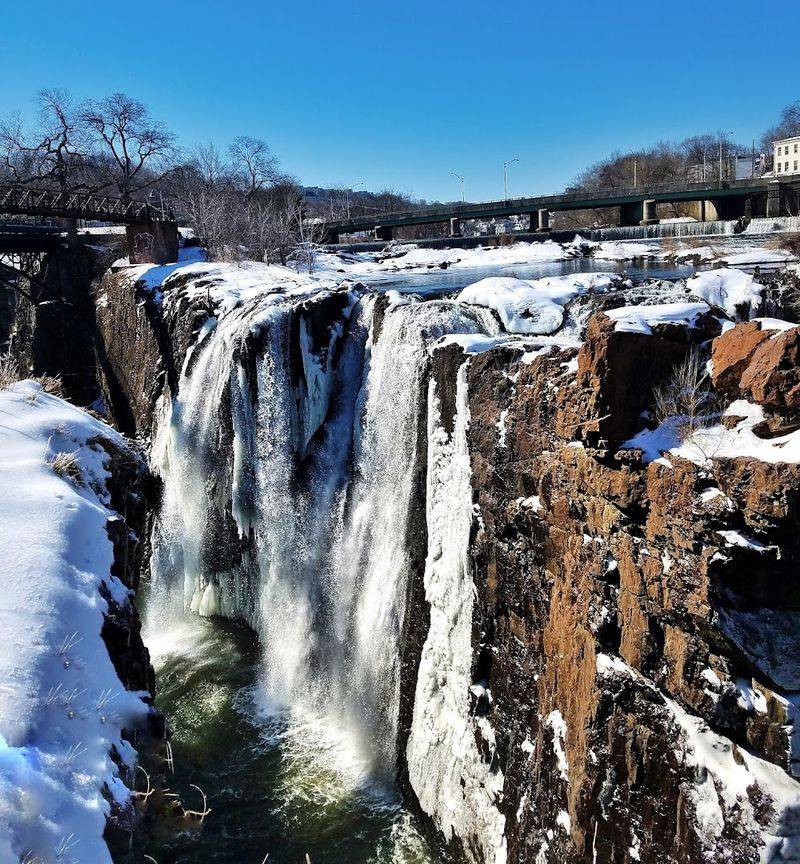
Winter transforms the falls in ways that are hard to predict and genuinely worth seeing. During cold snaps, ice builds up along the edges of the cascade and coats the surrounding rocks in thick layers that catch the light in striking ways.
The water keeps moving through the center, but the frozen borders give the whole scene a completely different character.
That said, winter visits come with real limitations. Parts of the park close during icy conditions for safety reasons, and the bridge over the gorge has been shut during particularly cold periods.
Pathways can be slippery, and some of the lower viewing areas become inaccessible when ice covers the stairs.
Checking the NPS website or calling ahead before a winter visit is genuinely important, not just a suggestion. The park staff updates conditions regularly, and arriving to find half the park cordoned off is a disappointment that a quick phone call could have prevented.
Winter beauty here is real, but it requires flexibility.
Ranger-Led Tours and Educational Programs
The National Park Service rangers stationed at Paterson Great Falls are a genuine highlight of the visit for anyone who wants more than just a view of the water. Rangers lead guided tours that cover the natural history of the falls, the industrial development of Paterson, and the social history of the workers who built and operated the mills.
The tours are free and run on a seasonal schedule, with more frequent programming during warmer months. Groups that include younger visitors tend to find the ranger-led format especially engaging, since the rangers have a way of making 19th-century industrial history feel relevant and interesting rather than dry.
The park also distributes informational pamphlets at the visitor center that cover the major historical points in a concise, readable format. These are worth picking up even if you skip the guided tour, since they help you understand what you are looking at as you walk the grounds.
Knowledge genuinely adds to the experience here.
The Hamilton Monument and Historic Details
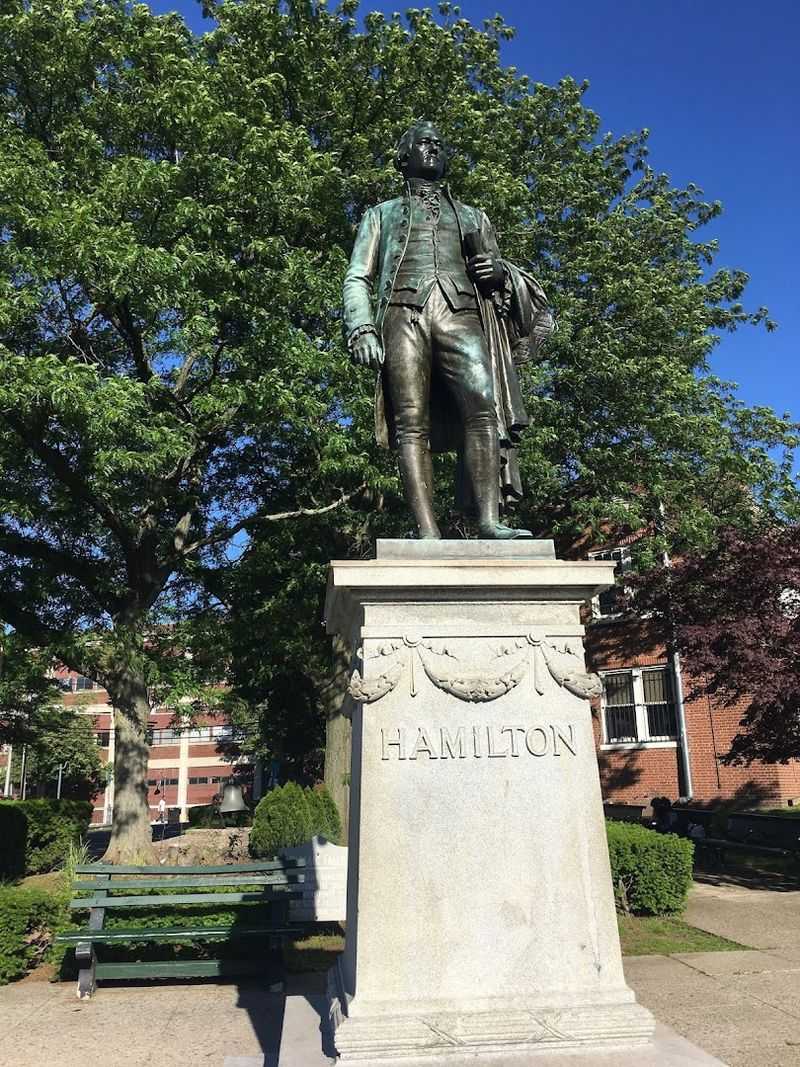
Beyond the waterfall itself, the park holds several smaller details that reward attentive visitors. The Alexander Hamilton monument near the falls is a popular photo stop, and it anchors the historical narrative of the site in a tangible, physical way.
Standing next to it while looking out at the falls gives you a real sense of why Hamilton chose this location.
A charming old clock near the falls has also caught the attention of many visitors who stumble across it while exploring the grounds. It is the kind of small, unexpected detail that makes a park feel layered rather than one-dimensional.
Informational plaques and exhibit panels are scattered throughout the park, covering topics from the geology of the basalt gorge to the labor history of Paterson’s silk workers. The park does a solid job of presenting multiple threads of history rather than just the founding-father narrative.
Taking time to read the signs rather than rushing past them pays off considerably.
Paterson’s Industrial Legacy: Silk, Locomotives, and Firearms
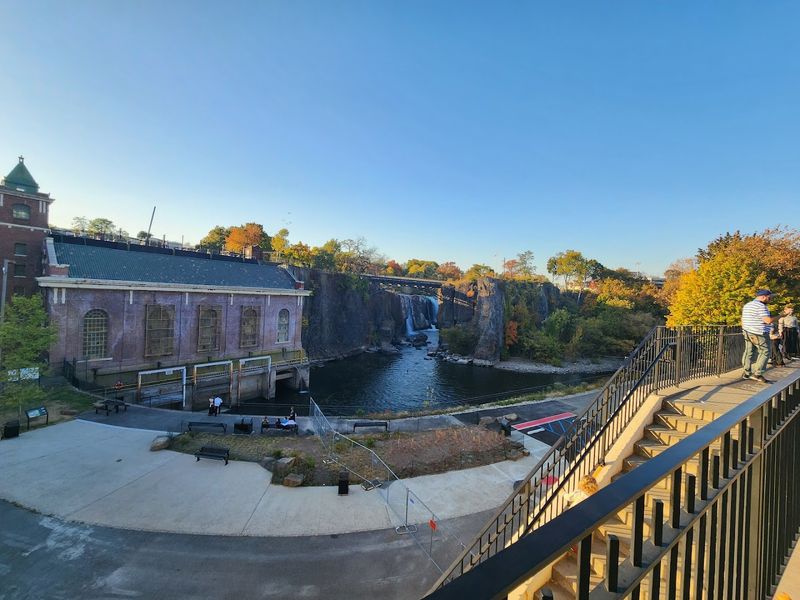
Paterson’s nickname, Silk City, came from the massive silk-weaving industry that dominated the city through much of the 19th and early 20th centuries. At one point, Paterson produced more silk fabric than any other city in the United States, and the mills that lined the raceways ran on the power delivered by the Passaic River.
But silk was only part of the story. Paterson also produced some of the earliest American-built locomotives and became a significant center for firearms manufacturing, including the Colt revolver, which Samuel Colt developed and produced in the city in the 1830s.
The range of industries that grew up around the falls is genuinely impressive for a single mid-sized city.
The park’s interpretive materials cover this industrial breadth well, giving visitors a fuller picture of what Paterson contributed to the national economy. It is a history that goes well beyond any single industry or inventor, and the falls sit at the center of all of it.
The Labor Movement and Paterson’s Workers
The industrial history of Paterson is inseparable from its labor history. In 1913, Paterson’s silk workers launched one of the most significant strikes in American labor history, known as the Paterson Silk Strike.
Thousands of workers walked off the job to protest long hours, low wages, and dangerous conditions in the mills.
The strike lasted five months and drew national attention, attracting support from prominent figures in the labor movement and the arts. Though the workers ultimately did not achieve their immediate demands, the strike became a landmark moment in the broader struggle for workers’ rights in the United States.
The park acknowledges this history alongside the story of Hamilton and the industrial founders, which gives the site a more complete and honest narrative. The falls powered the mills, and the mills were run by real people whose stories deserve as much attention as the engineering achievements that made the industry possible.
That balance is what makes this park worth visiting.
Family-Friendly Accessibility and What to Expect
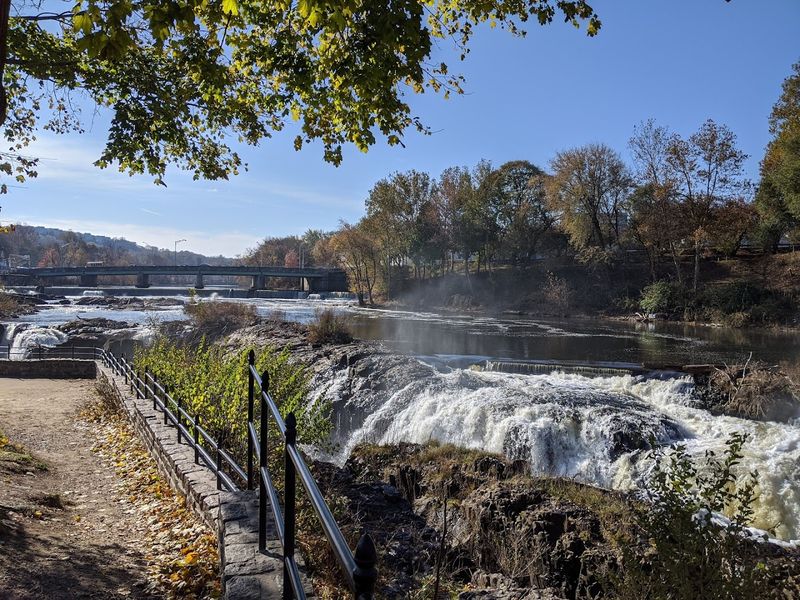
Getting to the main viewing area at Paterson Great Falls does not require any serious hiking. The walk from the parking lot to the overlook is short and easy, making the park genuinely accessible for families with young children, older visitors, and anyone who is not looking for a strenuous outdoor experience.
The lower viewing areas near the base of the falls involve steeper stairs, and some visitors find those sections more physically demanding. For anyone with mobility limitations, the main overlook provides a strong view without requiring any stair climbing.
Picnic benches are set up above the falls, making the park a practical spot for a packed lunch with a dramatic backdrop. The grounds attract a mix of tourists, local families, and workers on lunch breaks, which gives the place a lively, community-oriented feel rather than the hushed reverence of more remote national parks.
Kids tend to respond enthusiastically to the sheer volume and power of the water.
Photography Tips and Best Times to Visit
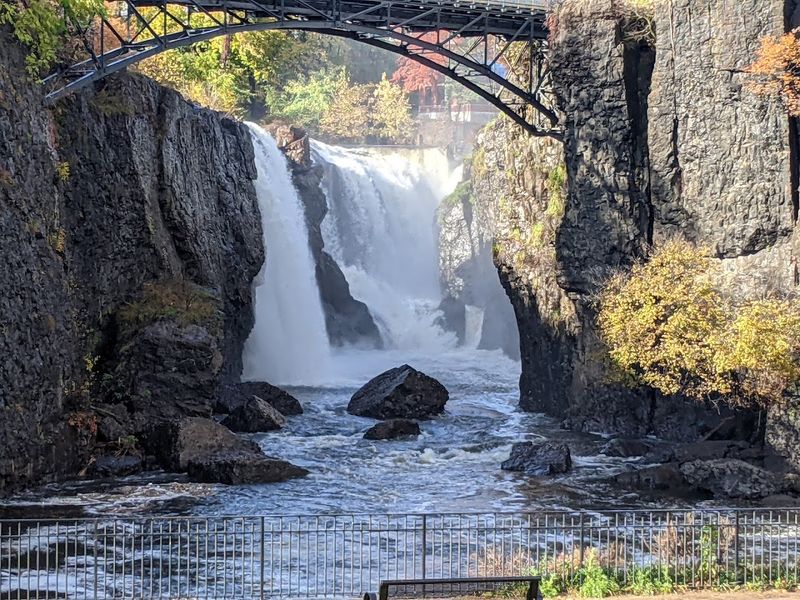
The falls photograph well in almost any season, but the conditions that produce the most dramatic images are high water levels after significant rainfall and the soft light of early morning or late afternoon. Midday sun can create harsh contrasts in the gorge, while lower-angle light brings out the texture of the basalt walls and the movement of the water.
Spring tends to bring the highest water volume as snowmelt and rain combine to push the Passaic River to its peak flow. The falls at full strength are genuinely impressive, and spring visits also avoid the peak summer crowds that fill the parking lot on hot weekends.
Bringing a wide-angle lens is useful for capturing the full width of the falls from the overlook. The footbridge, when open, offers a unique overhead angle that most visitors do not think to use.
Early arrivals on weekday mornings often have the overlook almost entirely to themselves, which makes for a very different kind of visit.
Why This Place Matters Beyond the View
There are plenty of beautiful waterfalls in the northeastern United States, but very few of them carry the historical freight that Paterson Great Falls does. This is the spot where Alexander Hamilton’s vision of an industrial America took its first real steps toward becoming reality.
The water that still crashes into that basalt gorge is the same water that powered the machines that helped build the early American economy.
The park holds that history without turning it into a theme-park version of the past. The industrial ruins, the preserved raceways, and the interpretive signage all ask visitors to think about what it actually took to build a country, including the labor, the engineering, the conflict, and the compromise.
Paterson Great Falls National Historical Park is the kind of place that stays with you after you leave. The falls are worth seeing on their own terms, but the history wrapped around them is what makes a visit here feel genuinely meaningful rather than just another item checked off a travel list.



