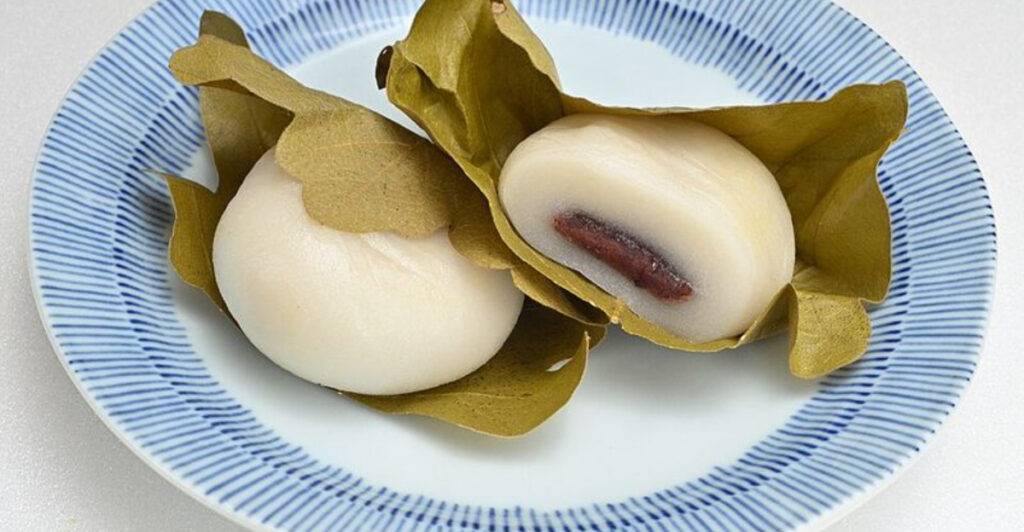
From flaky layers of buttery dough to creamy custard-filled shells, sweet pastries have been bringing joy to people across the globe for centuries. Every country has its own beloved version, shaped by local ingredients, traditions, and a whole lot of love.
Whether you grew up eating cinnamon rolls on a cold morning or tried baklava at a family celebration, pastries have a way of making any moment feel special. Get ready to explore 15 of the most delicious sweet pastries the world has to offer.
1. Pastel de Nata – Portugal
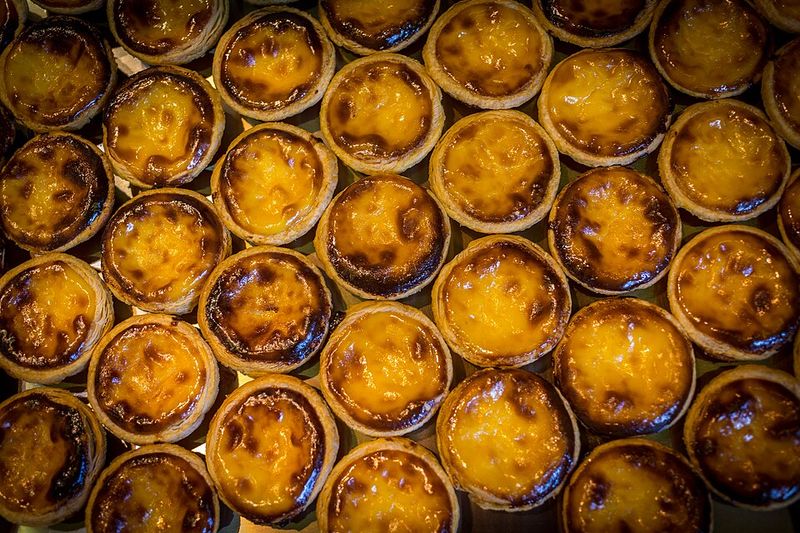
Walk into almost any bakery in Lisbon, Portugal, and the warm, sweet smell of Pastel de Nata will stop you in your tracks. These little custard tarts have been made since the 18th century by monks at the Jeronimos Monastery, and their recipe became one of Portugal’s most treasured secrets.
Each tart features a crispy puff pastry shell cradling a silky, slightly caramelized egg custard filling.
The contrast between the crunchy shell and the creamy center is what makes this pastry so irresistible. Locals traditionally dust them with cinnamon and powdered sugar before eating.
Today, Pastel de Nata is sold in cafes and bakeries around the world, but nothing beats having one fresh out of the oven in Portugal. If you ever visit Lisbon, the famous Pasteis de Belem bakery is a must-stop destination for the most authentic version you will ever taste.
2. Baklava – Turkey and the Middle East
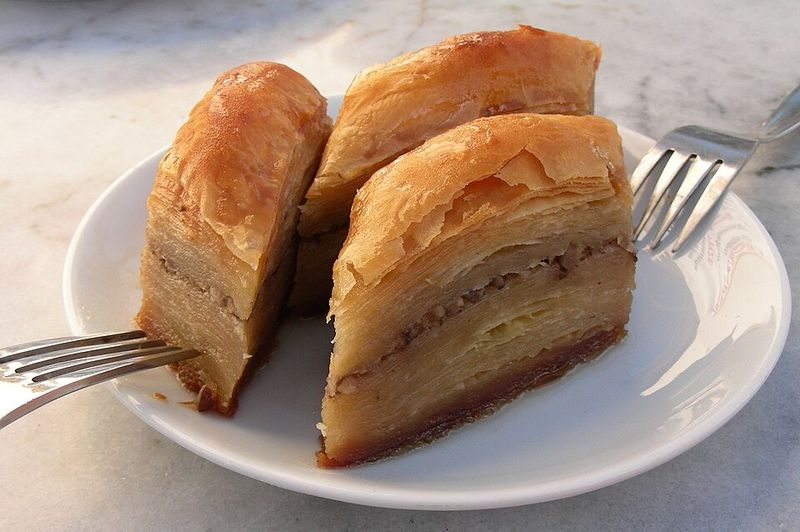
Few pastries in the world can match the sheer elegance of baklava. Made from paper-thin sheets of filo dough layered with finely chopped nuts and soaked in fragrant honey or sugar syrup, this pastry has been a symbol of celebration and hospitality across the Middle East, Turkey, and Greece for centuries.
The result is a treat that is crispy, sticky, sweet, and deeply satisfying all at once.
Pistachios, walnuts, or almonds are commonly used as the filling, and each region puts its own spin on the recipe. Turkish baklava tends to use clarified butter and pistachios, while Greek versions often favor honey and walnuts.
Making baklava from scratch is a labor of love, requiring patience and skill to layer each delicate sheet of filo. But that effort shows in every single bite.
It is no surprise that baklava has traveled far beyond its origins to become a worldwide favorite.
3. Croissant – France
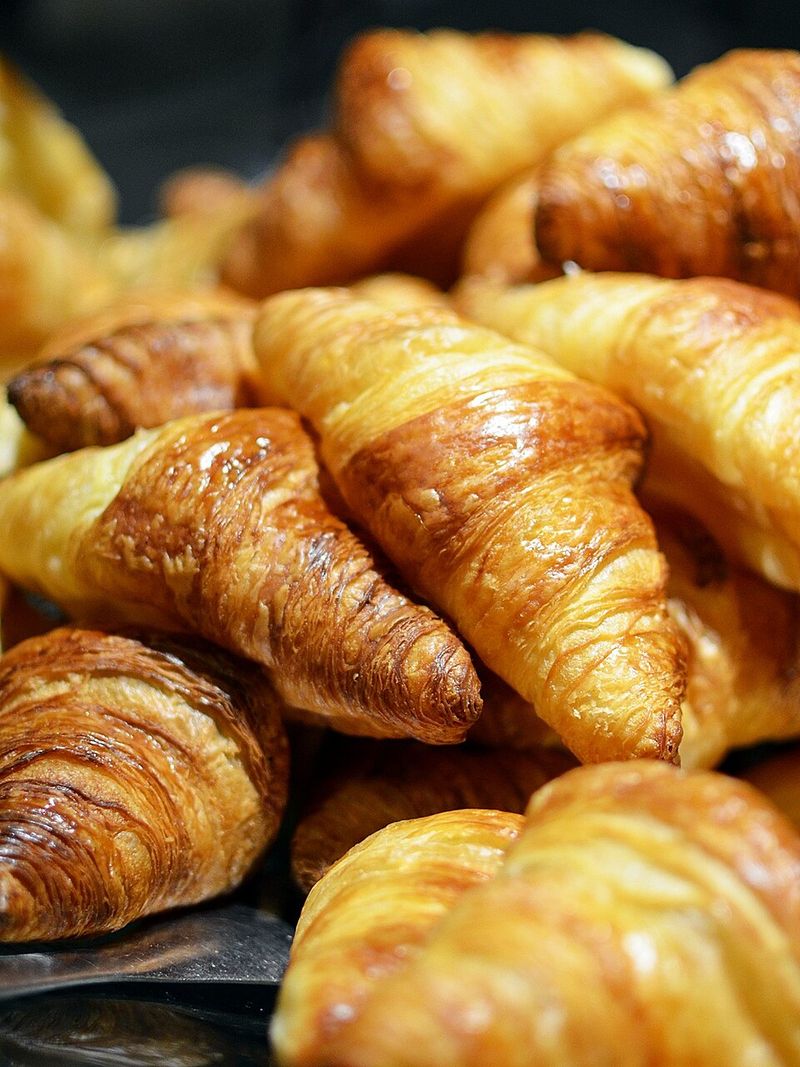
The croissant is one of the most recognized pastries on the planet, and for very good reason. That golden, crescent-shaped roll with its shatteringly crisp layers and soft, buttery interior has become a breakfast staple from Paris to Tokyo.
Though it is deeply associated with France, the croissant actually has Austrian roots, inspired by a pastry called the kipferl before French bakers transformed it into the laminated, layered masterpiece we know today.
Making a proper croissant requires a process called lamination, where butter is folded into dough dozens of times to create those signature airy layers. A truly great croissant should be light enough to leave flakes on your shirt after just one bite.
Plain croissants are wonderful on their own, but they also come filled with almond cream, chocolate, or ham and cheese. No matter where you are in the world, a good croissant is always a reliable source of pure morning happiness.
4. Cannoli – Italy
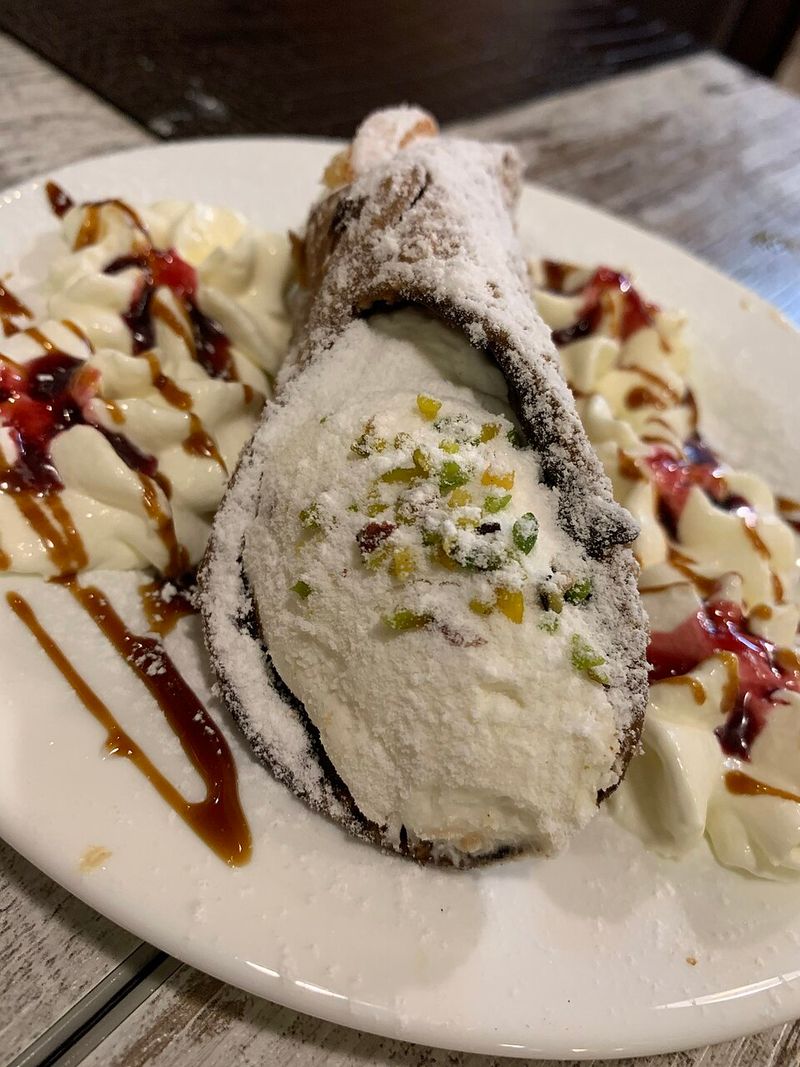
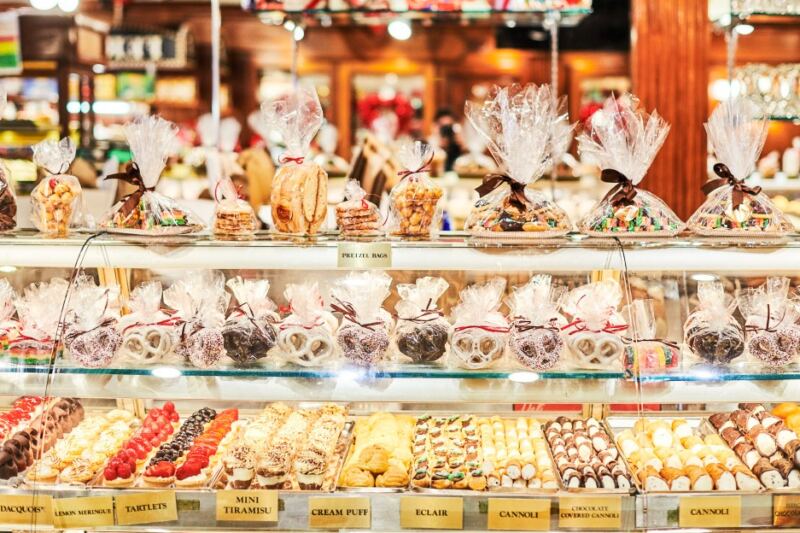
Cannoli might just be Italy’s most beloved export after pizza and pasta. Originating from Sicily, these crispy fried pastry tubes are stuffed with a lightly sweetened ricotta cream that is rich, smooth, and absolutely addictive.
The shell itself has a satisfying crunch, and when it is filled fresh, the contrast with the creamy interior is nothing short of magical. Many recipes also add mini chocolate chips, candied fruit, or chopped pistachios on top.
The word cannoli actually means little tubes in Italian, and they have been made in Sicily since at least the Arab rule of the island over a thousand years ago. Originally prepared as a Carnival treat, cannoli eventually became an everyday indulgence enjoyed year-round.
One important rule among cannoli purists: the shell should never be filled too far in advance, or it will lose its famous crunch. Fresh is always best when it comes to this timeless Italian classic.
5. Sachertorte – Austria
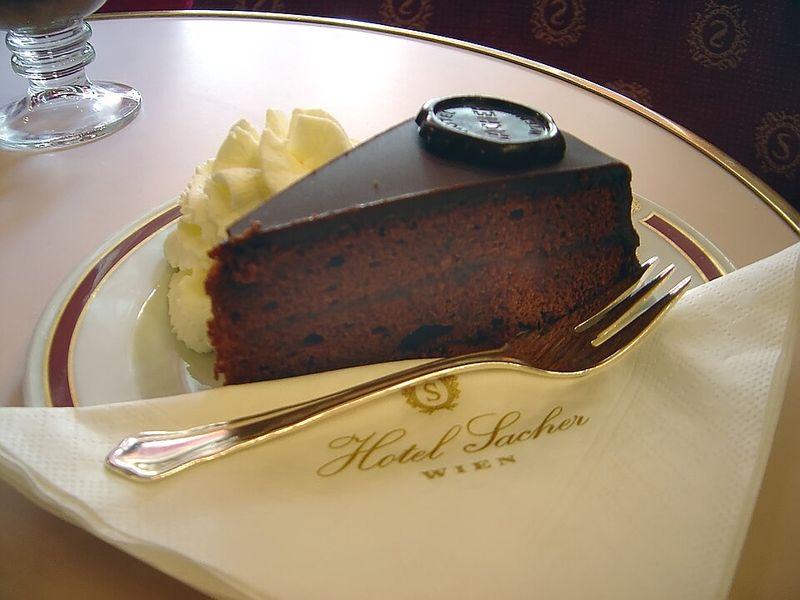
There is a reason the Sachertorte has been Vienna’s most famous dessert for nearly 200 years. Created in 1832 by a 16-year-old apprentice chef named Franz Sacher, this dense chocolate cake features a thin layer of apricot jam sandwiched between two halves, all covered in a smooth, glossy dark chocolate glaze.
It is rich without being overwhelming, and elegantly simple in both appearance and flavor.
The original recipe has been at the center of a famous legal dispute between two Viennese institutions, Hotel Sacher and Demel bakery, both claiming to hold the authentic version. That kind of rivalry only adds to the pastry’s legendary status.
Sachertorte is traditionally served with a generous portion of unsweetened whipped cream on the side, which balances the intensity of the chocolate beautifully. Whether enjoyed in a grand Viennese coffee house or made at home, this cake delivers a taste of old-world European sophistication in every forkful.
6. Churros – Spain
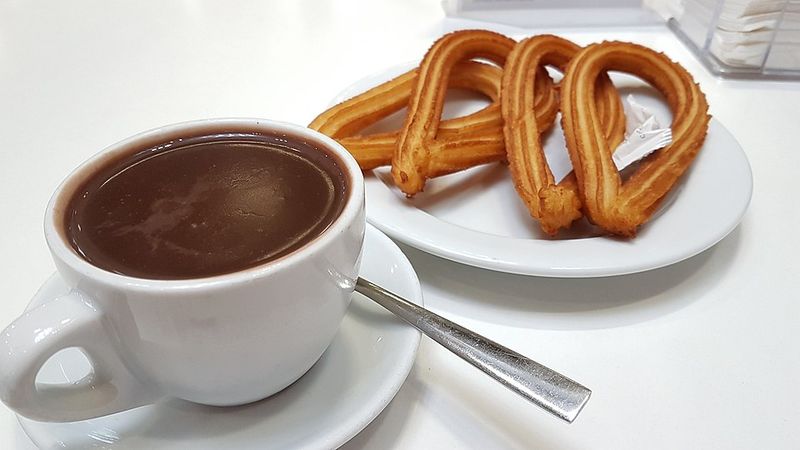
Churros are the kind of street food that can turn an ordinary afternoon into a celebration. These long, ridged sticks of fried dough are crispy on the outside, soft on the inside, and rolled generously in cinnamon sugar.
In Spain, they are traditionally eaten for breakfast or as a late-night snack, almost always paired with a thick, intensely rich hot chocolate made specifically for dipping. The combination is outrageously good.
The origin of churros is a little fuzzy, with some historians tracing them to Spanish shepherds who fried simple dough over open fires. Others suggest Portuguese traders brought a similar recipe back from China.
Regardless of where they started, churros have spread across Latin America, the United States, and beyond, each region adding its own twist. Some versions are filled with dulce de leche or chocolate cream.
Simple, satisfying, and endlessly fun to eat, churros have earned their global fanbase honestly.
7. Mille-Feuille – France
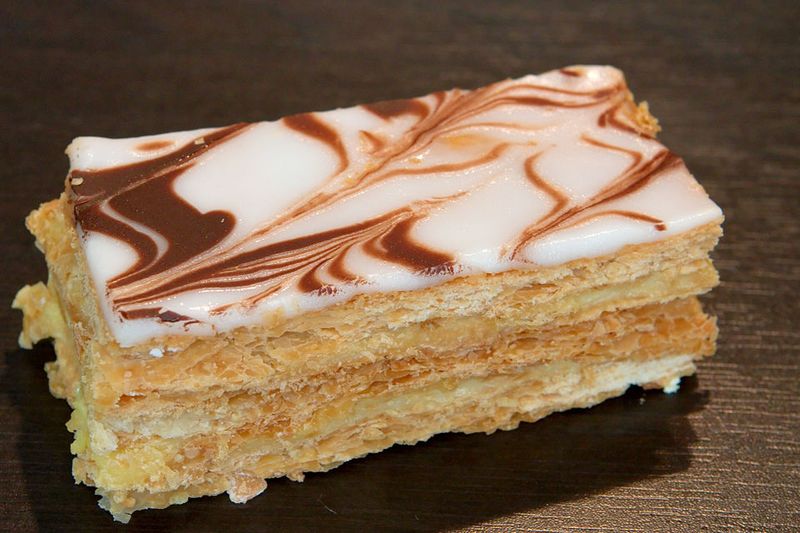
Also known as the Napoleon, the Mille-Feuille is one of the most architecturally impressive pastries in the French baking tradition. Its name literally translates to a thousand leaves, a nod to the seemingly endless flaky layers of puff pastry that give this dessert its signature texture.
Between those crispy layers sits a generous amount of smooth, lightly sweetened vanilla pastry cream that melts in your mouth with every bite.
The top of a classic Mille-Feuille is decorated with white fondant icing and a chocolate drizzle that is combed into elegant patterns, making it as beautiful to look at as it is to eat. Despite its fancy appearance, the flavor profile is actually quite balanced and not overly sweet.
French patisseries take tremendous pride in getting each layer perfectly crisp. If you have never tried one fresh from a proper French bakery, you are genuinely missing out on one of the finest experiences in all of pastry making.
8. Cinnamon Rolls – Sweden and Scandinavia

Sweden takes its cinnamon rolls so seriously that October 4th is officially celebrated as Kanelbullens Dag, or Cinnamon Roll Day. Known locally as kanelbullar, these soft, pillowy spirals of enriched dough are packed with a buttery cinnamon and cardamom filling that fills the entire kitchen with an irresistible aroma while baking.
Unlike the heavy American version, Swedish cinnamon rolls are typically lighter, less sweet, and topped with crunchy pearl sugar instead of thick frosting.
Cardamom is the secret ingredient that sets the Swedish version apart, adding a warm, slightly floral spice note that makes these rolls feel uniquely Scandinavian. They are a central part of fika, the beloved Swedish tradition of pausing your day for coffee and a small treat with friends or coworkers.
Whether you prefer the Swedish original or the gooey American style loaded with cream cheese frosting, cinnamon rolls have an undeniable comfort factor that has made them a global baking obsession.
9. Strudel – Austria
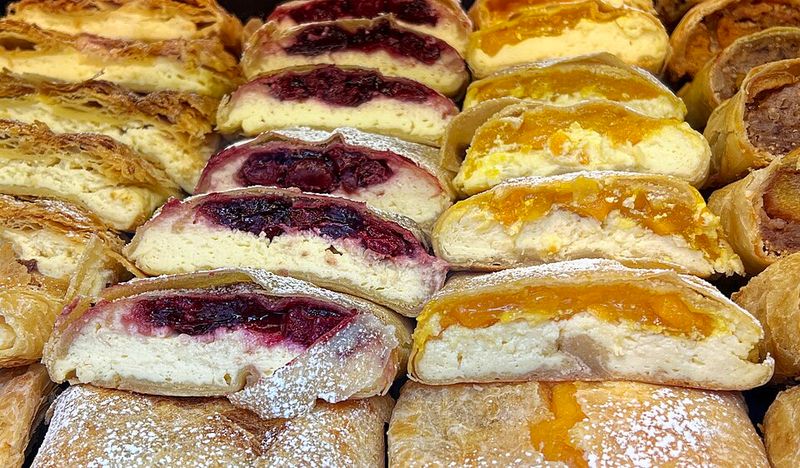
Apple strudel, or Apfelstrudel, is one of Austria’s most comforting and enduring contributions to the world of baking. The pastry consists of an incredibly thin, hand-stretched dough wrapped tightly around a warm filling of spiced apples, raisins, cinnamon, and breadcrumbs.
When baked to golden perfection, the dough becomes wonderfully flaky and light, creating a beautiful contrast with the tender, fragrant fruit inside.
Making authentic strudel dough is considered an art form. Traditional Austrian bakers stretch the dough so thin that you can supposedly read a newspaper through it.
This technique takes years of practice to master. The pastry is deeply rooted in the culinary traditions of the Habsburg Empire, which once stretched across much of Central Europe, which is why variations of strudel can be found in Hungary, the Czech Republic, and beyond.
Served warm with a dusting of powdered sugar and a scoop of vanilla ice cream, strudel is pure, timeless comfort food.
10. Eclair – France

Long, elegant, and endlessly satisfying, the eclair is a French patisserie staple that has been winning over dessert lovers since the 19th century. Made from light choux pastry that puffs up beautifully in the oven, the eclair is hollow inside, leaving plenty of room for a lush filling of vanilla, chocolate, or coffee pastry cream.
The top is then coated in a shiny glaze that matches the flavor of the cream inside.
The word eclair means lightning in French, and some food historians believe the name comes from the way the glossy glaze catches the light, or perhaps from how quickly people eat them. Either way, the name suits this pastry perfectly.
Choux dough is unusual because it is cooked twice, first on the stove and then in the oven, which gives it that characteristic airy structure. Modern patisseries now offer eclairs in bold flavors like salted caramel, pistachio, and raspberry, keeping this classic pastry exciting and fresh for new generations.
11. Tiramisu – Italy
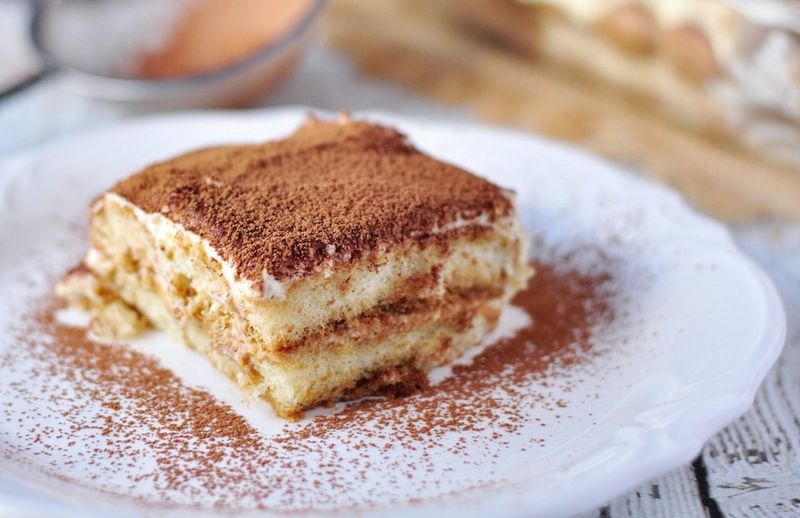
Tiramisu may technically be a dessert rather than a baked pastry, but its legendary status in the world of sweet indulgence makes it impossible to leave off this list. Originating in the Veneto region of northeastern Italy in the 1960s, tiramisu is built from layers of espresso-soaked ladyfinger biscuits and a cloud-like mascarpone cream made with eggs and sugar.
A heavy dusting of cocoa powder finishes the top, giving it a slightly bitter contrast to the sweet, creamy layers below.
The name tiramisu translates to pick me up in Italian, a reference to the energizing combination of coffee and sugar. It became an international phenomenon in the 1980s and 1990s, appearing on restaurant menus across the globe almost overnight.
The beauty of tiramisu is its balance: rich but not heavy, sweet but not cloying. No special baking equipment is needed, just quality ingredients and a little patience.
That accessibility is a big part of why it remains one of Italy’s most beloved sweet creations worldwide.
12. Mochi Pastries – Japan
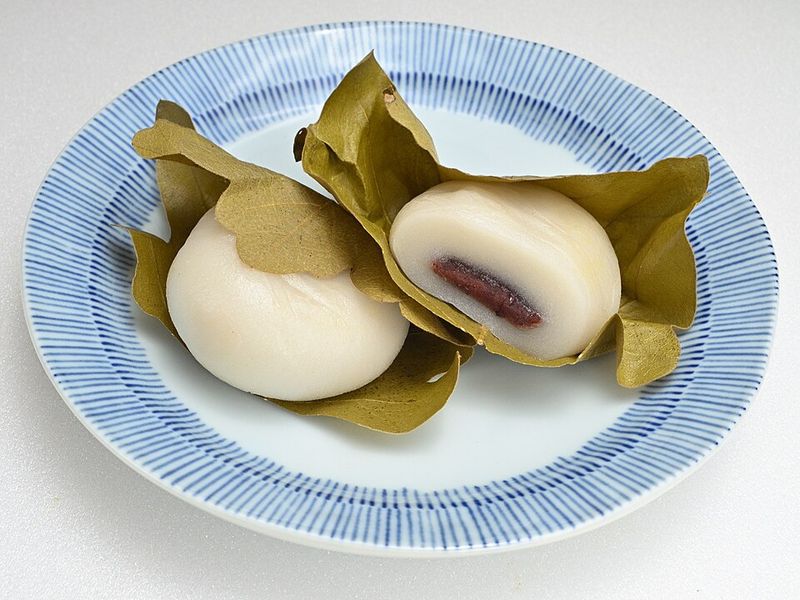
Mochi is one of Japan’s most iconic sweet treats, and its soft, chewy texture is unlike anything else in the pastry world. Made from mochigome, a short-grain glutinous rice that is pounded into a smooth, stretchy dough, mochi has been part of Japanese culture for over a thousand years.
Traditional fillings include sweet red bean paste, called anko, but modern versions are packed with ice cream, strawberries, or even matcha cream.
The texture of mochi is genuinely addictive. It has a gentle resistance when you bite into it, followed by a soft, pillowy give that makes each mouthful feel like a small sensory event.
Mochi is especially significant during Japanese New Year celebrations, where it is shaped into decorative rounds and used in savory dishes as well as sweets. Mochi ice cream, a modern fusion creation, has become particularly popular in the United States and Europe, introducing a whole new audience to this extraordinary Japanese ingredient.
13. Paczki – Poland
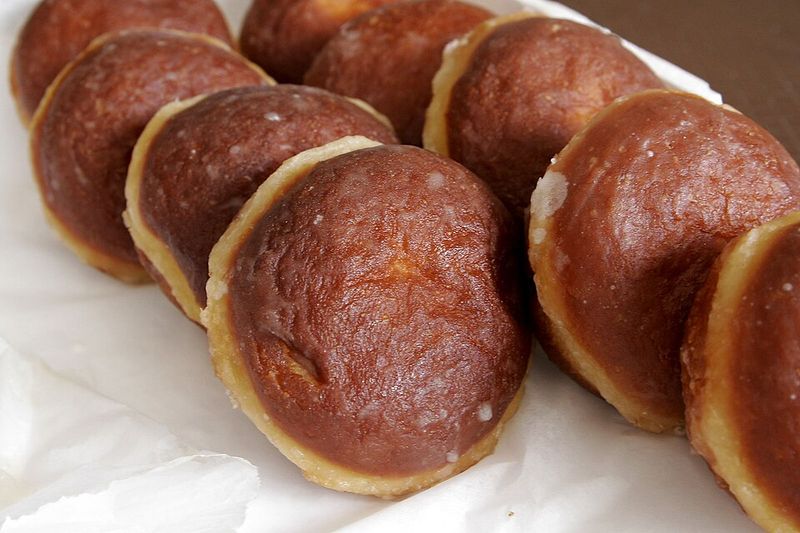
Poland’s answer to the doughnut is bigger, richer, and more indulgent than almost any other version in the world. Paczki (pronounced PONCH-kee) are deep-fried rounds of enriched dough made with eggs, butter, sugar, and sometimes a splash of grain alcohol to keep them tender and light.
They are traditionally stuffed with a generous amount of rose hip jam or custard, then dusted with powdered sugar and decorated with a strip of candied orange peel on top.
Paczki are especially associated with Fat Thursday, the last Thursday before Lent, when Poles across the country indulge in as many of these rich pastries as they can before the fasting season begins. On that single day, bakeries across Poland sell tens of millions of paczki.
Polish communities around the world, particularly in cities like Chicago, celebrate Fat Thursday with the same enthusiasm. Rich, satisfying, and steeped in tradition, paczki are a true expression of Polish baking culture at its most joyful and generous.
14. Kouign-Amann – Brittany, France
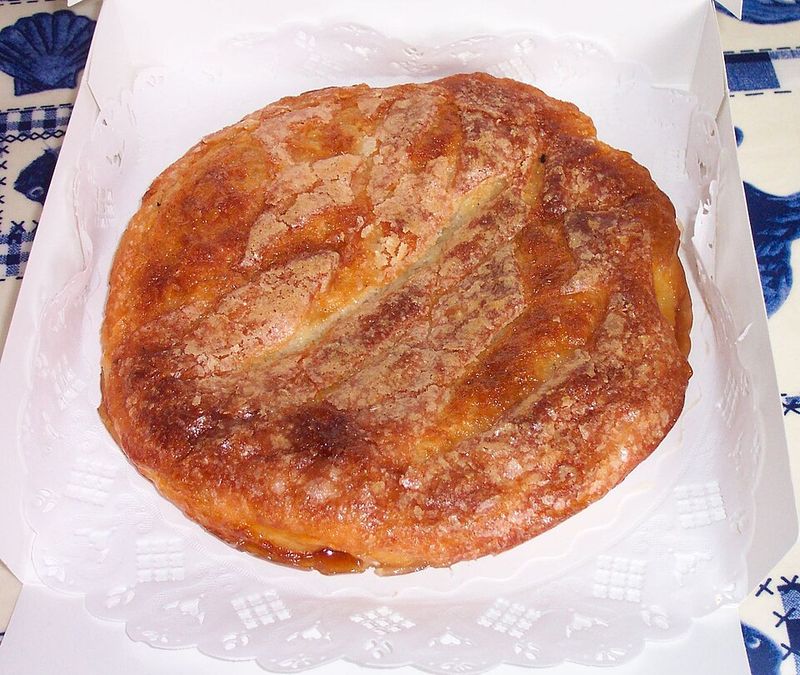
Kouign-Amann (pronounced KWEEN ah-MAHN) might be the most underrated pastry on this list, but those who know it are completely devoted to it. Created in 1860 by a baker named Yves-Rene Scordia in the town of Douarnenez in Brittany, France, this pastry was reportedly born out of necessity when Scordia ran low on ingredients and improvised with what he had.
The result was a thick, round cake made from bread dough, generous amounts of butter, and sugar folded together and baked until the outside caramelizes into a shatteringly crisp, golden crust.
The name comes from the Breton language and simply means butter cake, which is an accurate but modest description of something this spectacular. The inside stays soft and slightly chewy while the caramelized exterior provides a satisfying crunch.
Kouign-Amann has gained serious international attention in recent years, appearing in artisan bakeries across the United States and beyond. Once you taste it warm from the oven, it is very hard to forget.
15. Sticky Toffee Pudding – United Kingdom
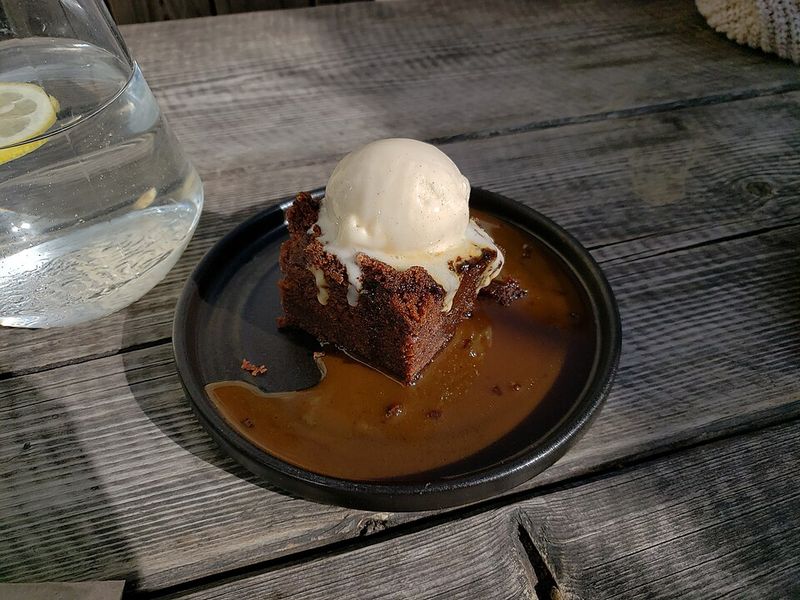
Sticky toffee pudding is the kind of dessert that wraps around you like a warm blanket on a cold evening. This beloved British classic is a dense, moist sponge cake made with finely chopped dates that melt into the batter during baking, giving it a deep, almost caramel-like sweetness.
The real magic, though, comes from the toffee sauce poured generously over the top, made from butter, cream, and brown sugar cooked together into something truly extraordinary.
Though its exact origin is debated, sticky toffee pudding became widely popular in the United Kingdom during the 20th century and is now considered a cornerstone of British comfort food. It appears on pub menus and restaurant dessert lists throughout England, Scotland, and Wales.
Served warm with vanilla ice cream or clotted cream, it delivers a combination of textures and flavors that is deeply satisfying. Sticky toffee pudding proves that sometimes the most comforting things in life are also the most delicious.
Share this story