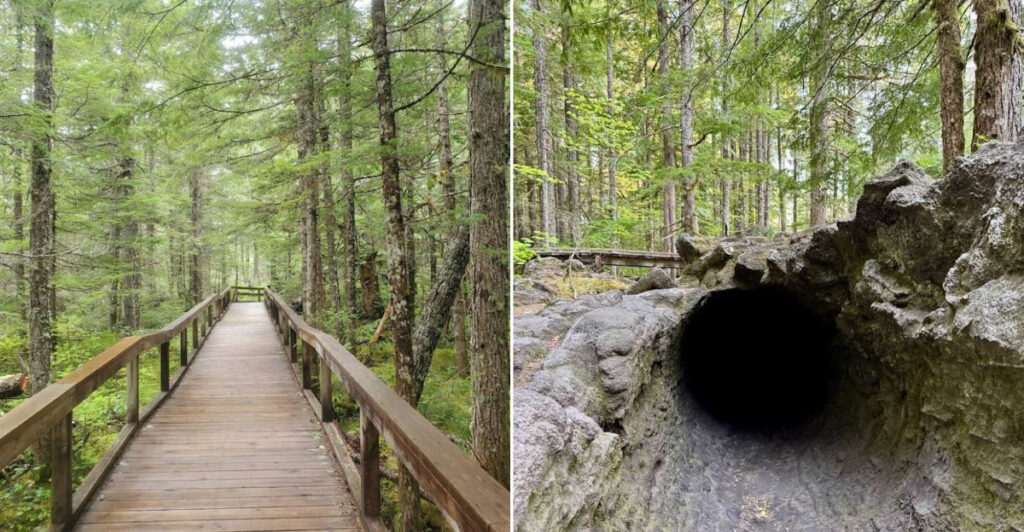
There is a trail in Washington State where you can crawl through the hollow cast of a tree that was swallowed by lava roughly 2,000 years ago. The tree is long gone, but the lava mold it left behind is still there, perfectly preserved underground, wide enough to squeeze through on your hands and knees.
This is not a theme park attraction or a recreation of something historical. It is the real thing, sitting quietly in the forest near Cougar, Washington, waiting for curious people to find it.
This spot does not get nearly as much attention as nearby Ape Cave, but those who stop here tend to leave with a much bigger story to tell. A short boardwalk, a geological mystery at every turn, and one very memorable crawl through ancient volcanic history make this stop hard to forget.
The Volcanic Event That Started It All
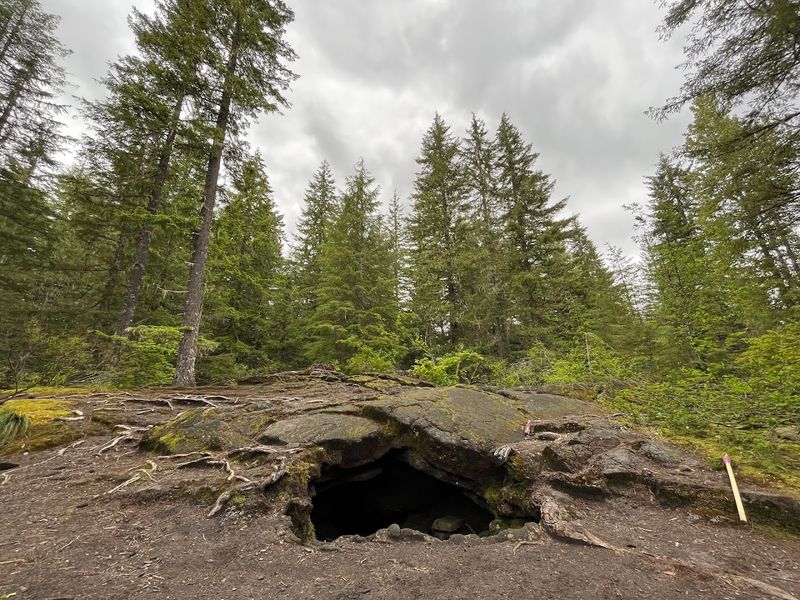
Around 2,000 years ago, a lava flow from Mount St. Helens moved through this forested area and changed everything it touched. The molten rock moved slowly enough to wrap around standing trees and fallen logs, cooling and hardening into a solid crust before the wood inside had fully burned away.
Over time, the organic material rotted and disappeared, leaving behind hollow tubes in the exact shape of the trees that once stood or lay there. These formations are called lava casts, and the Trail of Two Forests has some of the most accessible examples anywhere in the Pacific Northwest.
The eruption that created this landscape was not the famous 1980 blast most people associate with Mount St. Helens. This was a much older event, a reminder that the mountain has been reshaping its surroundings for thousands of years in ways that are still visible today.
What a Lava Cast Actually Is
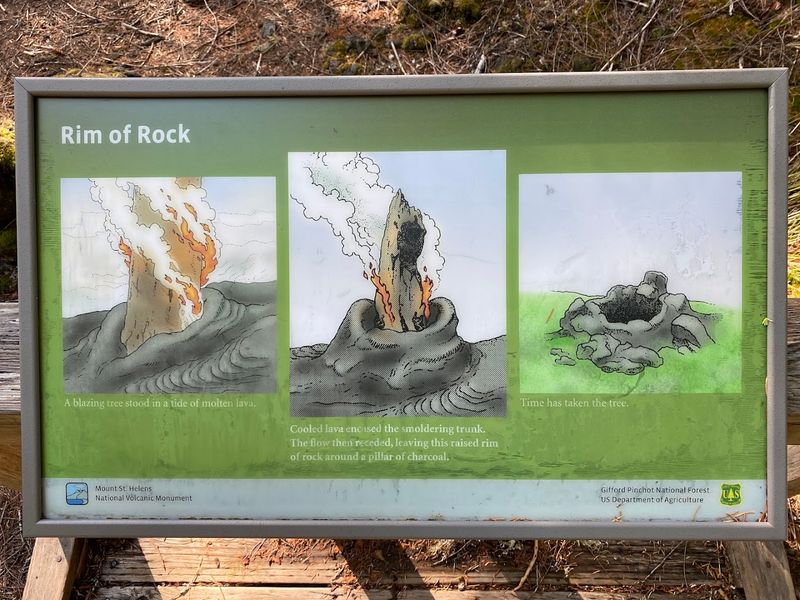
A lava cast is essentially a natural mold. When hot lava surrounds a tree trunk or log, the outer rock layer cools and solidifies against the wood.
The inside of the tree continues to burn or decay slowly, and once all the organic material is gone, what remains is a rock-walled cavity in the precise shape of the original tree.
Some lava casts at this site are vertical, showing where trees once stood upright when the lava arrived. Others are horizontal, formed around logs that were already lying on the forest floor.
The difference between the two types tells a story about how the lava moved through the area and which trees were standing versus which had already fallen.
Interpretive signs along the boardwalk explain all of this clearly, making the science easy to follow even for younger visitors who have never thought about volcanoes before visiting this trail.
The Boardwalk That Keeps You Safe and Informed
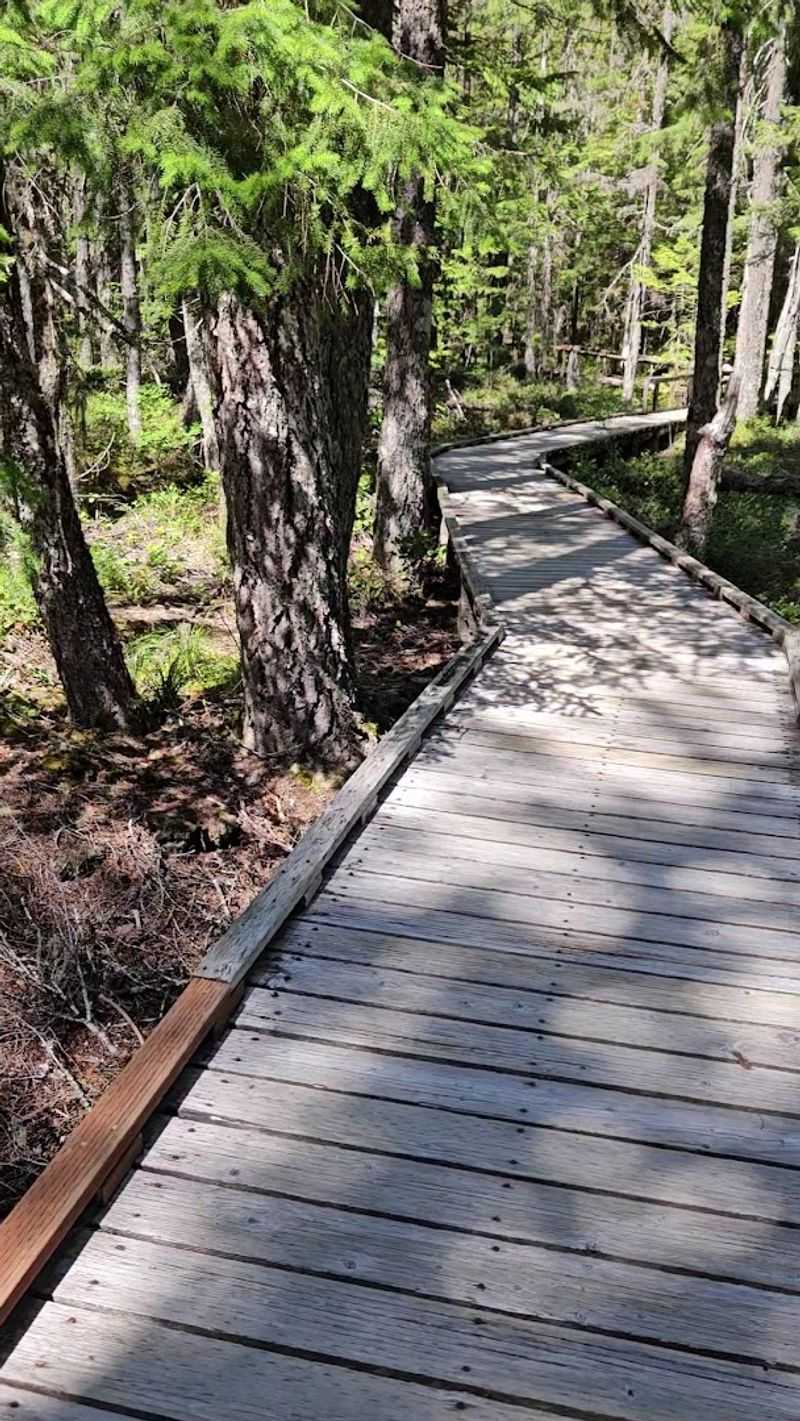
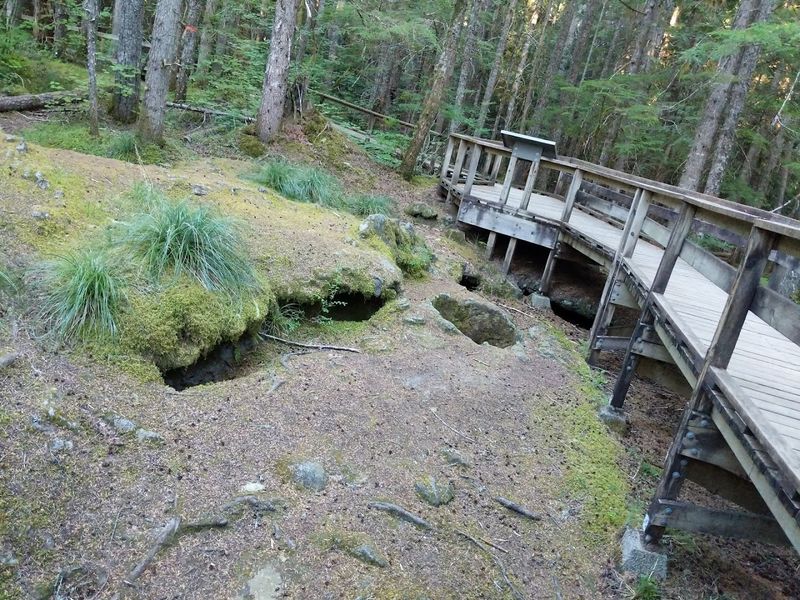
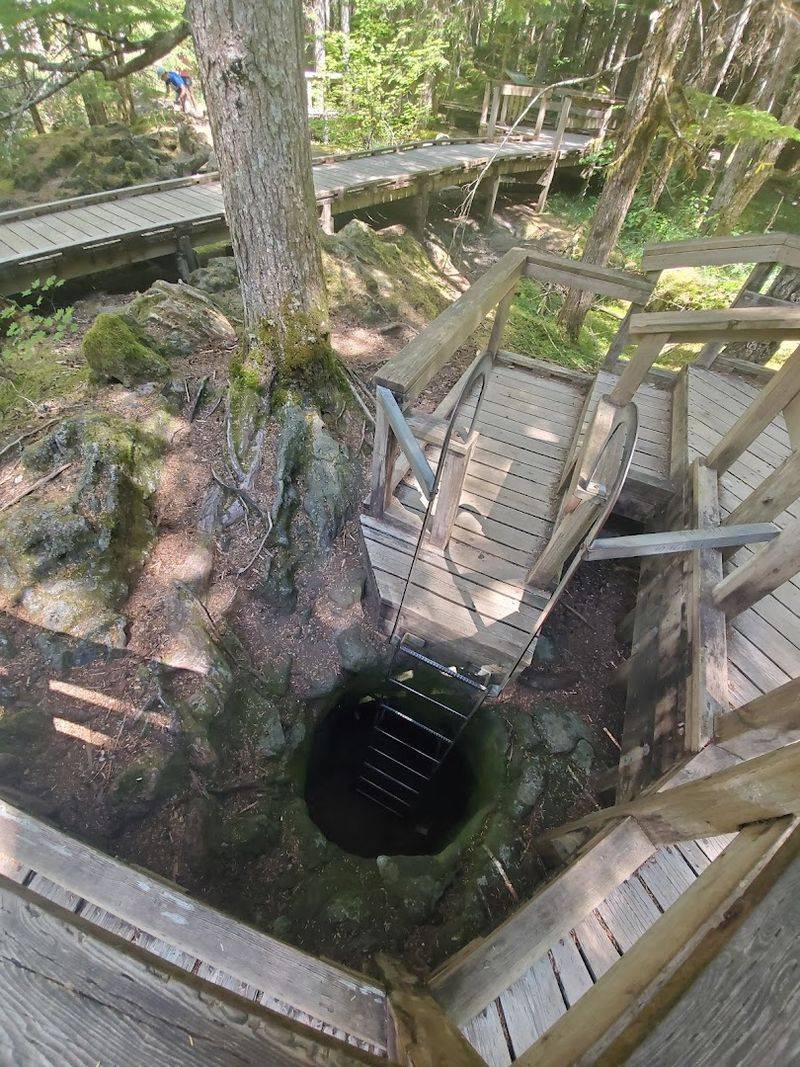
The entire trail runs on an elevated wooden boardwalk, which serves two important purposes. First, it keeps visitors from accidentally stepping into open lava tubes that dot the ground throughout the area.
Second, it protects the fragile volcanic formations from foot traffic that could cause damage over time.
The boardwalk is relatively flat and well-maintained, making it one of the more accessible short trails in the Mount St. Helens area. People using wheelchairs or strollers can navigate most of the path without major difficulty, though checking current trail conditions before visiting is always a good idea.
Interpretive signs are placed at regular intervals along the route, explaining the geology, the history of the eruption, and the ecological changes that followed. The signs are written clearly and concisely, giving just enough information to keep the walk educational without turning it into a lecture.
The whole loop takes about 20 minutes at a relaxed pace.
The Crawl-Through Lava Tube That Everyone Talks About
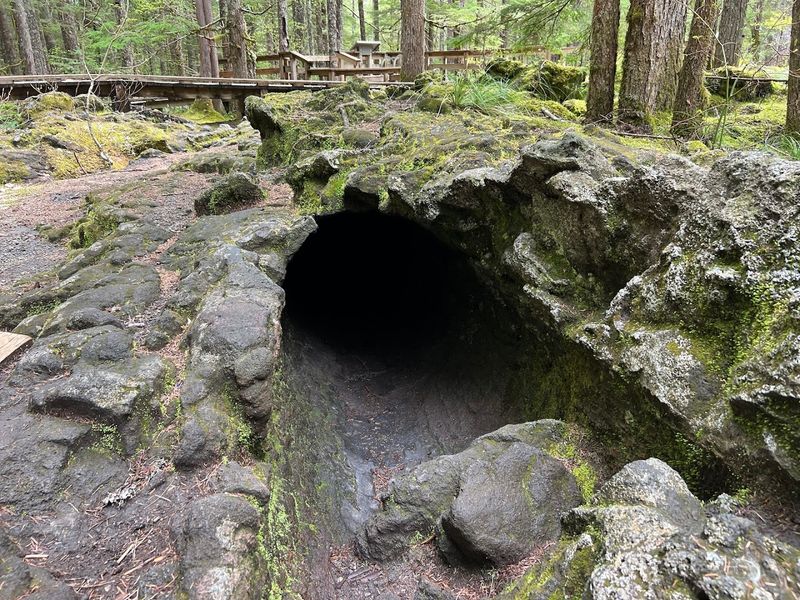
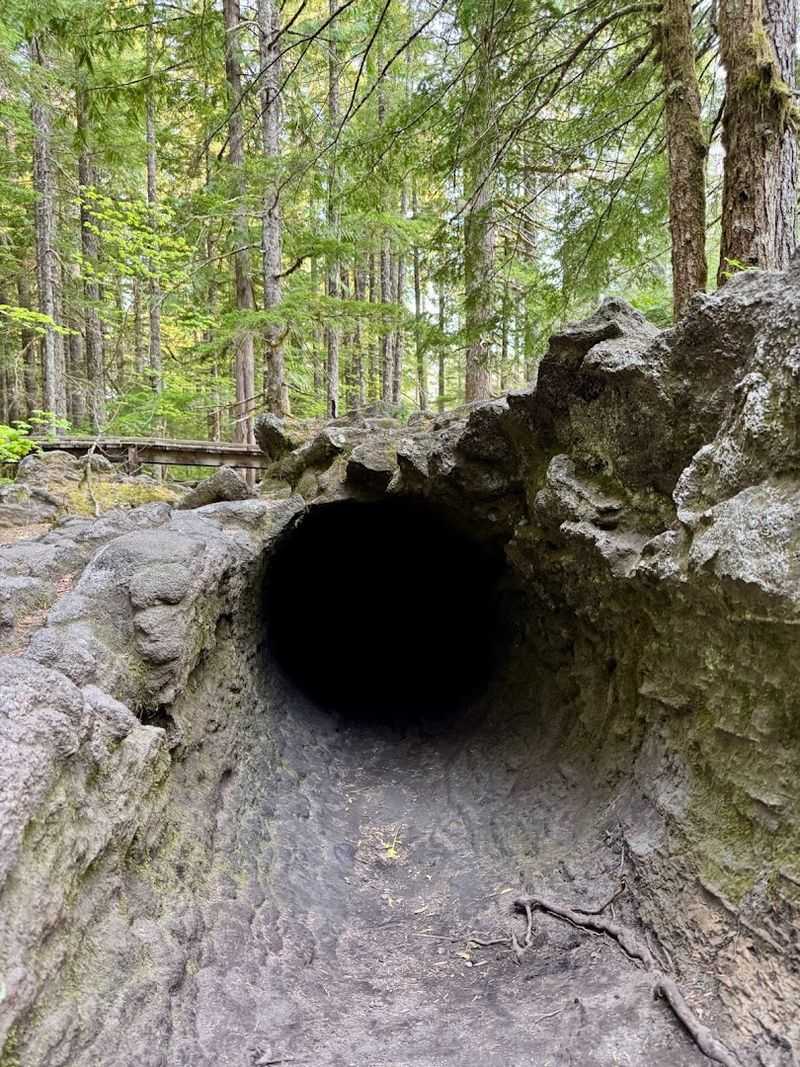
The highlight of the Trail of Two Forests is a 55-foot horizontal lava tube that visitors can actually crawl through from one end to the other. The tube was formed around a large fallen log, and its diameter is roughly the width of a mature fir tree, which means adults go through on hands and knees while younger kids move through with considerably more ease.
There is a 90-degree turn about halfway through the tube, which means a flashlight or headlamp is strongly recommended. Without one, that corner becomes a genuine dark spot where navigation gets tricky.
The tube stays cool and damp, and the walls are solid volcanic rock throughout the entire length.
Completing the crawl is genuinely satisfying. It is short enough that it does not feel overwhelming, but unusual enough that most people come out the other side talking about it immediately.
Kids tend to absolutely own this part of the trail.
What to Bring for the Lava Tube Crawl
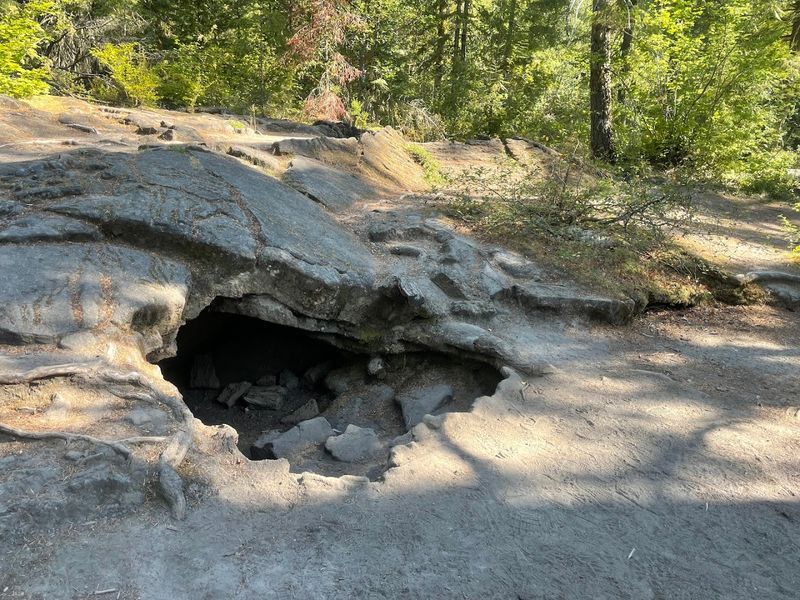
A headlamp is the single most important item to bring for the lava tube experience. A phone flashlight can work in a pinch, but keeping both hands free inside a tight rock tunnel is a much better approach.
The 90-degree turn inside the tube is the moment when a headlamp earns its place in the pack.
Knee pads are not required, but anyone with sensitive knees will appreciate them. The floor of the tube is rough volcanic rock, and the crawl, while short, is still a crawl on hard ground.
Wearing long pants adds a basic layer of protection without any extra gear needed.
Gloves are another optional but useful addition, especially if the tube is damp from recent rain or snowmelt. The site is open year-round, and spring visits in particular can mean wet conditions inside the tube.
Coming prepared for the crawl makes the whole experience more enjoyable and keeps the focus on the geology rather than the discomfort.
The Two Forests the Trail Name Refers To
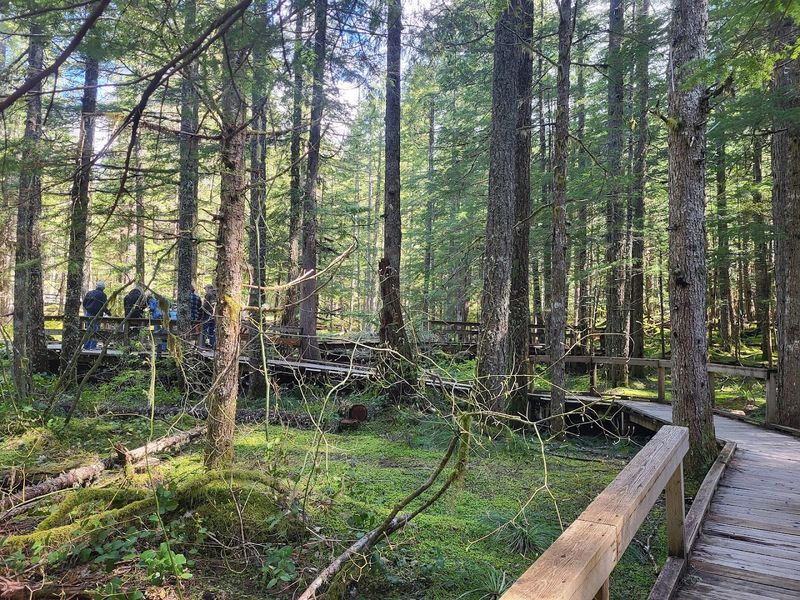
The name Trail of Two Forests is not just poetic. It refers to two genuinely different forests that exist in the same space, separated by thousands of years of time.
The first forest is the ancient one, represented by the lava casts of trees that stood here before the volcanic flow arrived 2,000 years ago.
The second forest is the one growing right now. Over centuries, plants and trees have slowly reclaimed the lava field, taking root in cracks and building a new ecosystem on top of the old one.
Walking the boardwalk means passing through both forests simultaneously, with one visible above ground and the other preserved in rock below.
This layered quality is what makes the trail genuinely interesting rather than just a geological curiosity. The contrast between the living canopy overhead and the hollow rock formations underfoot creates a very specific kind of perspective about how landscapes change and recover after major geological events.
How Long the Hike Actually Takes
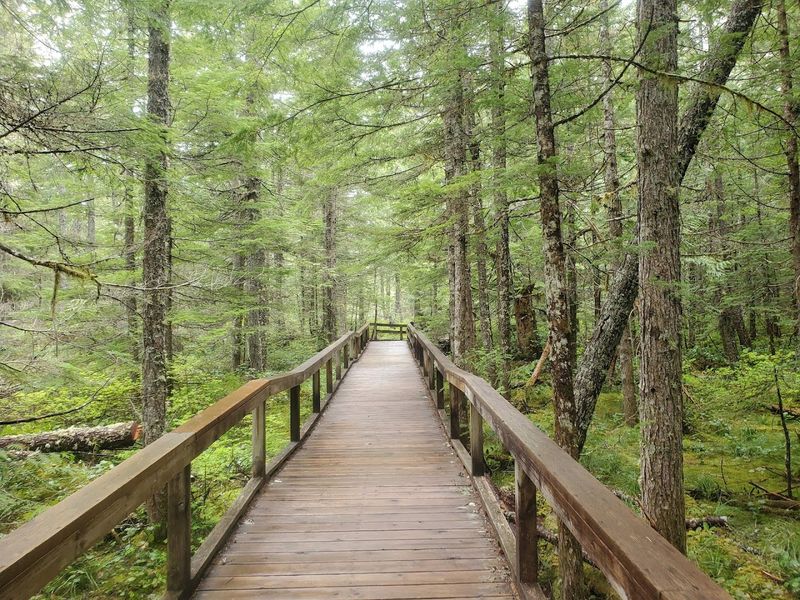
The Trail of Two Forests loop is approximately a quarter mile long, which translates to a very manageable 20 to 30 minutes for most people walking at a comfortable pace. Stopping to read the interpretive signs and look at the lava formations adds time, but the total visit rarely stretches past an hour even for those who are thorough.
The trail length is one of its biggest advantages for families with young children or anyone who wants a meaningful outdoor experience without committing to a long hike. The flat boardwalk surface keeps physical demands low, and the variety of things to look at along the route holds attention well throughout the loop.
For those who want more time outdoors after finishing the interpretive loop, there are additional trails accessible from the parking area that extend into the surrounding Gifford Pinchot National Forest. The site works equally well as a quick stop or as part of a longer day of exploration in the area.
The Best Direction to Walk the Loop
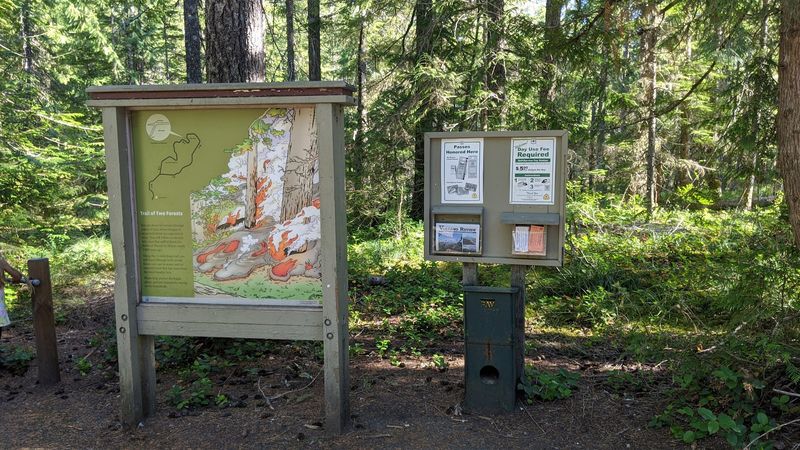
Walking the loop counter-clockwise is the recommended approach at the Trail of Two Forests, and the reason is straightforward. The interpretive signs along the trail are arranged in chronological order when read in that direction, which means the geological story unfolds in a logical sequence from start to finish.
Going clockwise is not wrong, but the narrative flow of the signs gets reversed, which can make the geological history feel a bit out of order for those trying to follow the story. The counter-clockwise direction also leads visitors to the crawl-through lava tube at a point in the walk where anticipation has already been building from the earlier signs.
The trailhead has a sign indicating the recommended direction, and following it genuinely improves the experience. Small details like trail direction rarely feel important before a hike, but at this particular site, the sequence of information actually shapes how the whole visit comes together and lands.
Plants Growing on Top of Ancient Lava
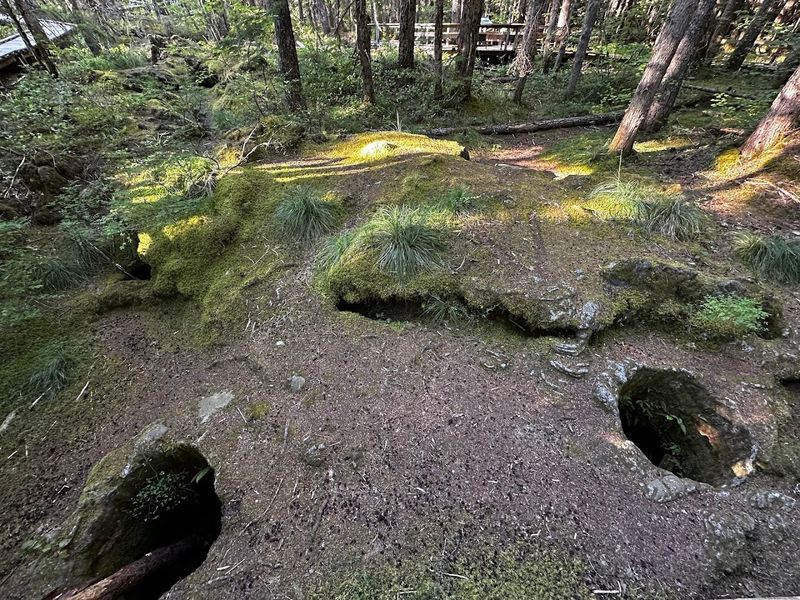
One of the quieter surprises along the boardwalk is the amount of plant life that has established itself directly on the lava formations. Mosses, ferns, and other pioneer species have been slowly colonizing the volcanic rock for centuries, and the results are visible all along the trail in patches of green growing on what was once bare rock.
This process is called ecological succession, and the Trail of Two Forests offers a very clear example of it. The plants do not need deep soil to get started.
They find cracks and mineral deposits in the rock surface, break down material over time, and gradually build conditions that allow larger plants and eventually trees to take hold.
Looking at the lava formations with this in mind changes how the trail reads. What appears to be a static geological site is actually a living system in slow motion, still in the process of recovering and rebuilding from an event that happened two millennia ago.
Visiting in Different Seasons
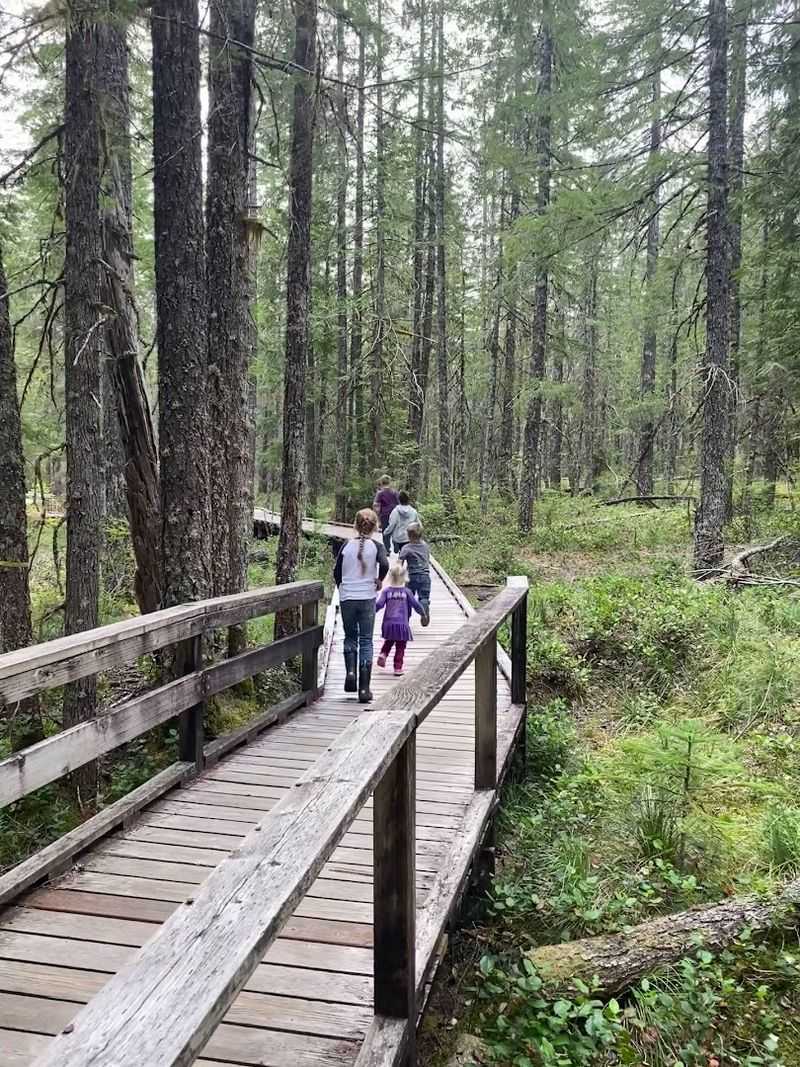
The Trail of Two Forests is open every day of the year and does not close for winter, which makes it a viable destination across all four seasons. Spring visits bring green growth and active birdlife but also wet conditions inside the lava tube, so waterproof layers and good footwear matter more during those months.
Summer is the busiest period, particularly on weekends when Ape Cave draws larger crowds to the area. Arriving early in the morning helps avoid congestion in the parking area and on the boardwalk.
Fall brings quieter conditions and cooler air, which many people find preferable for a relaxed walk through the forest.
Winter visits are the most solitary experience the trail offers. Snow covers the boardwalk occasionally, and the lava tubes can be wet or icy, but the forest has a particular stillness during those months that is hard to find at busier times of year.
Coming prepared with appropriate gear makes any season workable.
How This Trail Compares to Ape Cave
Ape Cave is the more famous attraction in the area, drawing large numbers of visitors to its long underground lava tube system. The Trail of Two Forests is smaller, shorter, and far less crowded, which makes it a genuinely different kind of experience rather than a lesser version of the same thing.
Ape Cave requires a flashlight, sturdy footwear, and a reasonable level of physical fitness to navigate its longer underground passages. The Trail of Two Forests is accessible to a much wider range of people, with its flat boardwalk and short crawl-through tube offering a taste of volcanic geology without the same physical demands.
Many people visit both on the same day, treating the Trail of Two Forests as either a warm-up before Ape Cave or a wind-down afterward. The two sites are close to each other, and together they provide a fuller picture of the volcanic landscape surrounding Mount St. Helens than either one does alone.
What the Interpretive Signs Actually Teach
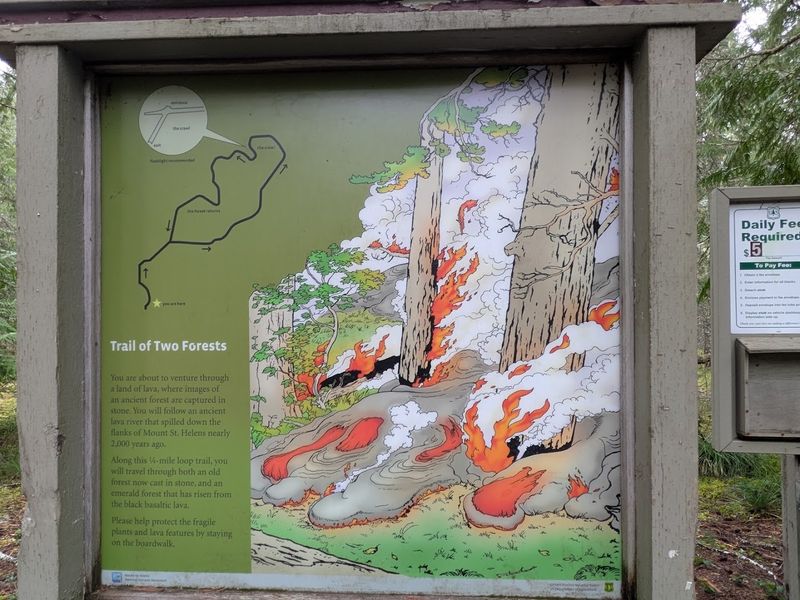
The interpretive signs along the boardwalk cover geology, ecology, and local history in a way that is genuinely accessible without being overly simplified. They explain how lava casts form, what the two forests in the trail name refer to, and how the ecosystem has changed over the past 2,000 years since the volcanic flow moved through.
For younger visitors, the signs provide enough context to make the lava formations feel meaningful rather than just odd-looking rocks. Understanding why the hollow tubes exist and what they used to be transforms the walk from a nature stroll into something closer to an outdoor science lesson.
Adults with no background in geology consistently find the signage informative rather than condescending, which is a balance that many interpretive trails struggle to hit. The Forest Service put genuine care into the educational content here, and it shows in how naturally the information fits the physical features visible from the boardwalk at each stopping point.
Why This Trail Deserves Its Own Trip
Most people discover the Trail of Two Forests as a backup plan when Ape Cave is closed or as a quick add-on to another destination. The ones who show up expecting very little tend to leave with the most to say about it.
That pattern says something real about what the trail actually delivers.
A 2,000-year-old volcanic landscape, a crawl-through lava tube, an accessible boardwalk, detailed educational signage, and a peaceful forest setting are not a small collection of features for a site that takes less than an hour to explore. The Trail of Two Forests packs a lot of genuine geological interest into a very compact experience.
Planning a visit specifically to this site, rather than treating it as an afterthought, changes how much attention it gets and how much the visit sticks in memory afterward. The trail is open every day, the parking fee is minimal, and the experience is unlike most things available within a short drive of the Mount St. Helens area.
Where to Find This Hidden Geological Wonder
The Trail of Two Forests Interpretive Site sits at 9945 Virginia 122, Cougar, WA 98616, tucked into the Gifford Pinchot National Forest on the southern slopes of Mount St. Helens. The site is managed by the U.S.
Forest Service and is open 24 hours a day, seven days a week, every day of the year.
Getting there requires a drive through winding forest roads, and the route is scenic but remote. There is no cell signal in the area, so downloading offline maps before leaving is a smart move.
A $5 day-use parking fee applies, and it can be paid online in advance or with cash in an envelope at the trailhead.
The site is close to Ape Cave, which makes it a natural companion stop on any Mount St. Helens day trip. Many people combine both locations into a single outing without feeling rushed at either one.
Share this story