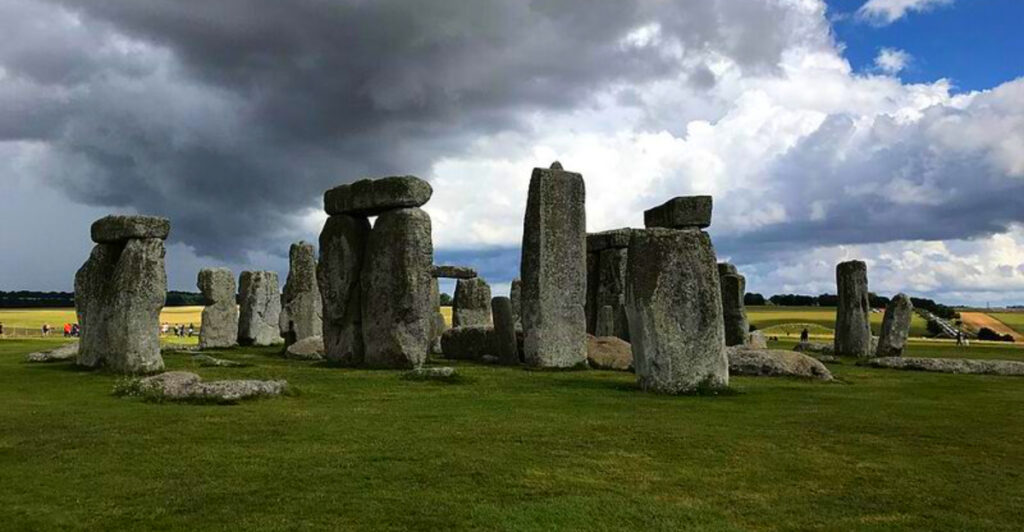
Stonehenge has stood on Salisbury Plain in Wiltshire, England, for roughly 5,000 years, and researchers are still arguing about what it was actually for. Built in stages between approximately 3000 BCE and 1500 BCE, the monument consists of massive standing stones arranged in careful circular patterns that have puzzled historians, archaeologists, and curious visitors for centuries. What makes Stonehenge so fascinating is not just its age or scale, but the fact that no written records from its builders have ever been found. Every theory about its purpose comes from physical evidence, astronomical observation, and a fair amount of educated guesswork.
Some theories are backed by solid archaeological data, others lean heavily on folklore and imagination, and a few sit somewhere in between. Whether you are a history enthusiast or simply someone who enjoys a good unsolved puzzle, the competing ideas about Stonehenge offer a genuinely compelling window into how prehistoric people understood the world around them.
1. It Was an Ancient Astronomical Observatory
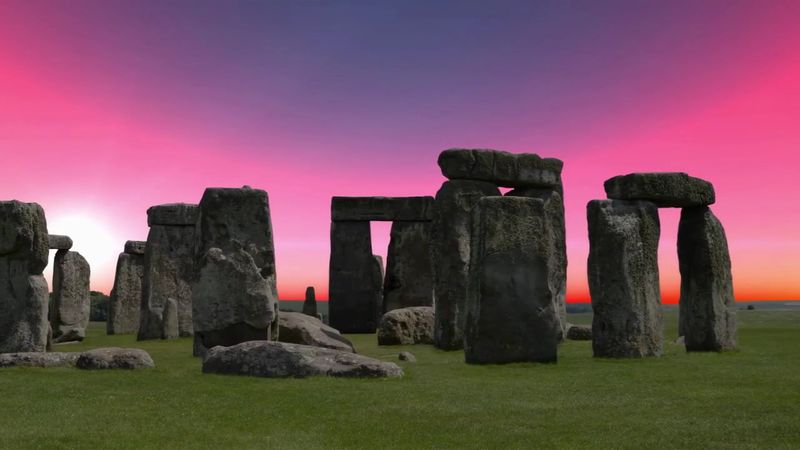
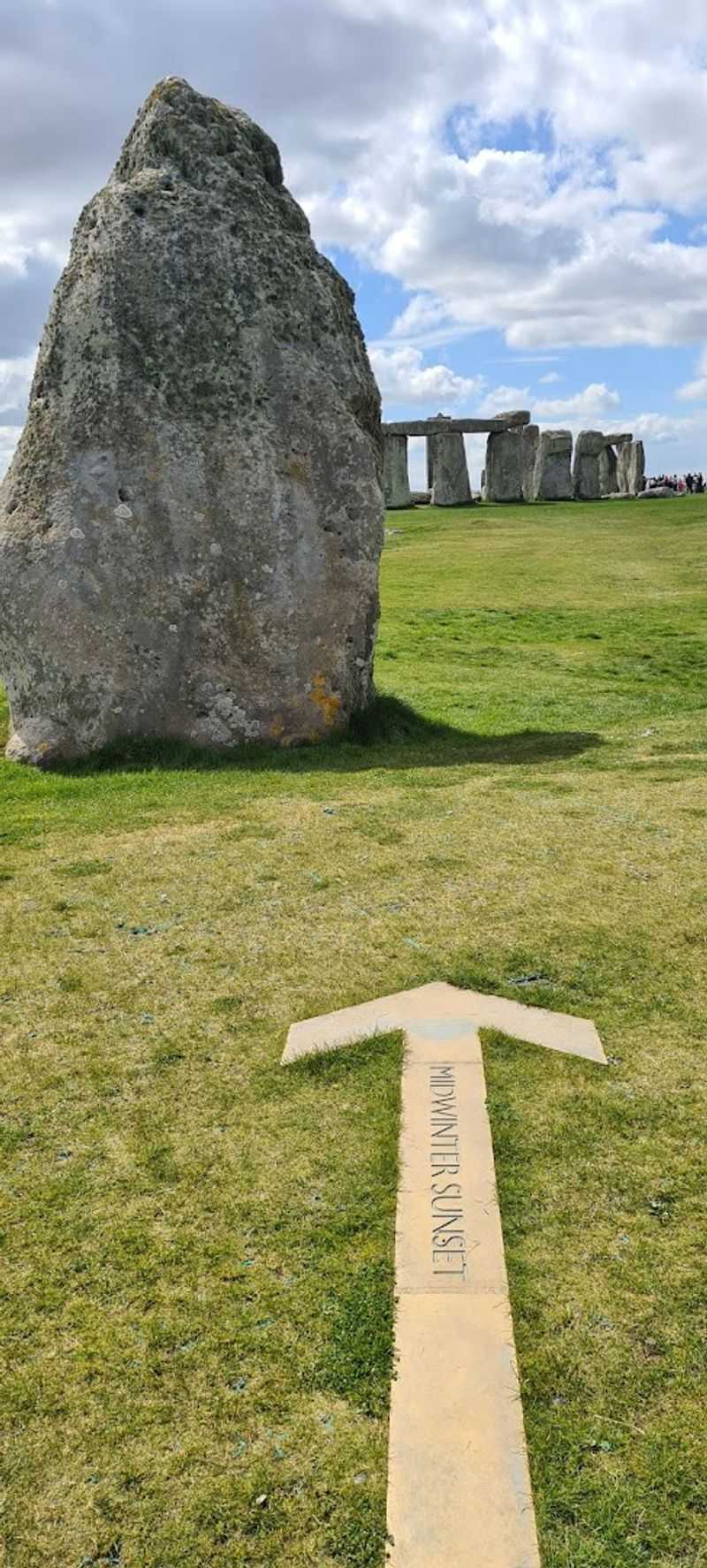
Few prehistoric structures line up with the cosmos quite as deliberately as Stonehenge does. The monument’s main axis aligns with the sunrise on the summer solstice and the sunset on the winter solstice, a relationship that has been documented and measured by researchers since the 18th century.
Astronomer Gerald Hawkins caused a sensation in 1963 when he published findings suggesting the stones could be used to predict solar and lunar events. His book, Stonehenge Decoded, brought the observatory theory into mainstream conversation and sparked decades of follow-up research.
Critics argue that alignment with the sun does not automatically make a structure an observatory in the scientific sense. The builders left no instruments, no records, and no written observations. Still, the precision of the alignments is difficult to dismiss as coincidence, and most archaeologists agree that celestial awareness played some role in the monument’s original design and orientation.
2. It Was a Sacred Temple for Religious Ceremonies
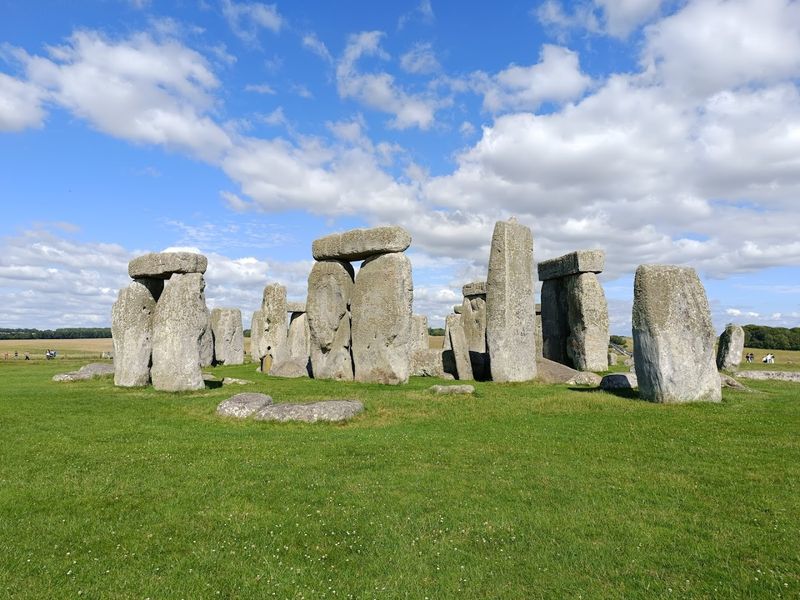
Archaeology rarely uncovers a more compelling case for prehistoric ritual activity than what has been found at and around Stonehenge. Excavations have revealed animal bones, feasting deposits, and evidence of large gatherings stretching back thousands of years, pointing strongly toward repeated ceremonial use.
The Avenue, a processional earthwork that runs from the River Avon to the monument’s entrance, suggests that arriving at Stonehenge was itself a structured, deliberate act rather than a casual visit. Researchers believe processions may have moved along this route during important seasonal events.
English Heritage, which manages the site today, describes Stonehenge as a place of ceremony, burial, and gathering. The monument was modified multiple times over roughly 1,500 years, suggesting that each new generation found fresh religious or ceremonial meaning in the stones. Rather than a fixed-function building, it appears to have been a living sacred space that communities continued to invest in across many centuries.
3. It Was a Burial Ground for Important People
Archaeologists have uncovered cremated human remains at Stonehenge dating back to around 3000 BCE, making it one of the largest known Neolithic cremation cemeteries in Britain. The Aubrey Holes, a ring of 56 pits just inside the outer earthwork, contained a significant number of these burials.
Research published in 2018 by a team from the University of Oxford determined that some individuals buried at the site came from as far away as western Wales. This finding suggests Stonehenge attracted people from considerable distances, possibly because of its special status as a burial destination for important or high-ranking individuals.
Burial activity at the site appears to have continued for at least 500 years. While the monument clearly served other purposes as well, the sheer volume of cremation deposits from its earliest phases indicates that honoring the dead was central to what Stonehenge meant to its earliest builders and the communities that followed them.
4. It Was a Place of Healing
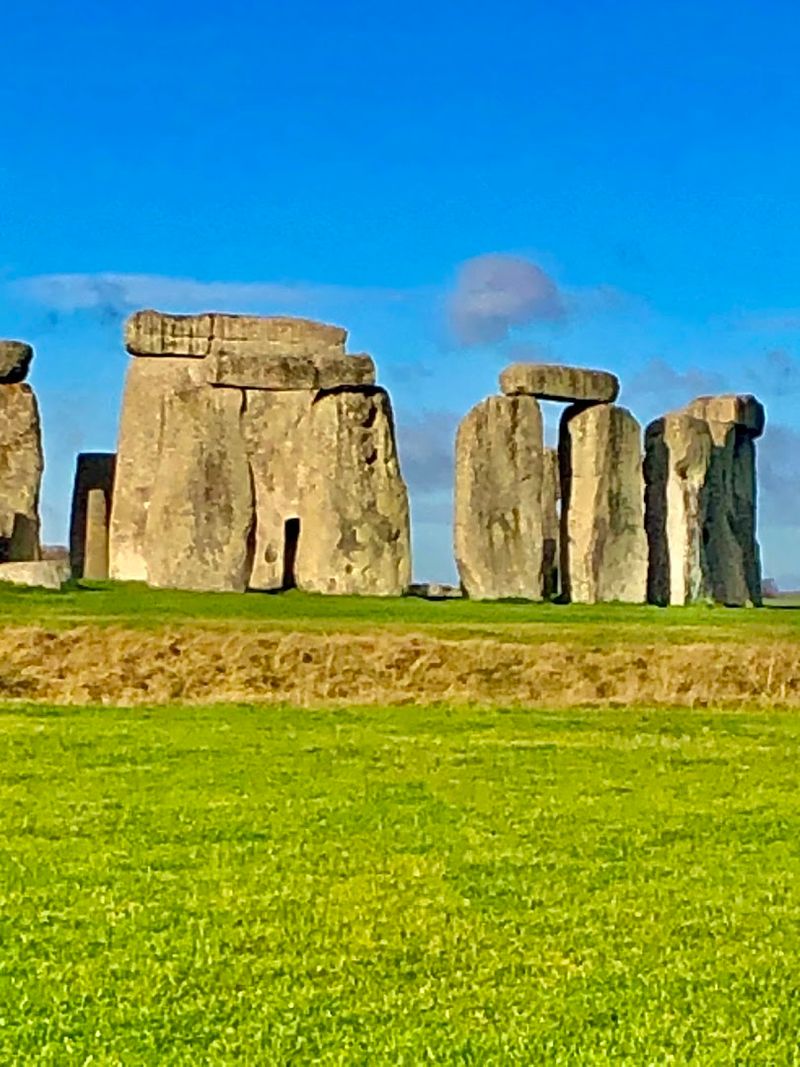
Archaeologist Timothy Darvill and geologist Geoffrey Wainwright proposed in 2008 that Stonehenge functioned as a prehistoric healing center, drawing comparisons to Lourdes in France, where pilgrims have historically traveled seeking cures. Their argument rested partly on the unusual origin of the bluestones.
The bluestones, which weigh up to four tons each, were transported approximately 200 miles from the Preseli Hills in Pembrokeshire, Wales. Darvill and Wainwright suggested that these particular stones were considered sacred or medicinal, and that people traveled long distances to be near them.
Supporting evidence came from skeletal analysis of individuals buried near the site, some of whom showed signs of serious physical conditions suggesting they may have sought relief at the monument. The theory remains debated among archaeologists, with many pointing out that pilgrimage and healing are difficult to prove from physical remains alone. Even so, the idea has continued to attract serious academic attention and ongoing field research around Stonehenge and its Welsh source sites.
5. It Was a Monument to Ancestors
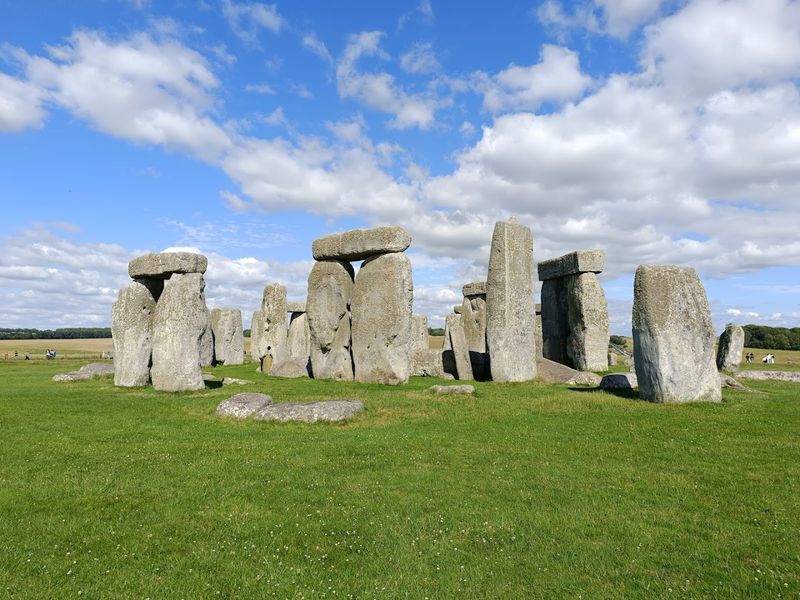
Archaeologist Mike Parker Pearson, who led the Stonehenge Riverside Project, developed a compelling argument that the monument represented the domain of the dead, while the nearby timber circle at Durrington Walls represented the living. Together, the two sites formed a paired ceremonial landscape connected by the River Avon.
In this interpretation, the permanent stone circle honored ancestors and provided a fixed point of connection between the living community and those who had passed. The durable nature of stone, compared to the temporary quality of timber, reinforced the idea of permanence and continuity across generations.
Hundreds of burial mounds surrounding Stonehenge on Salisbury Plain add weight to this reading of the landscape. These mounds, many of which date to the Bronze Age, cluster around the monument as if people deliberately wanted to be buried near it. Whether ancestor worship was the primary purpose or one function among several, the connection between Stonehenge and the dead is among the most archaeologically supported ideas on record.
6. It Marked a Powerful Political Alliance
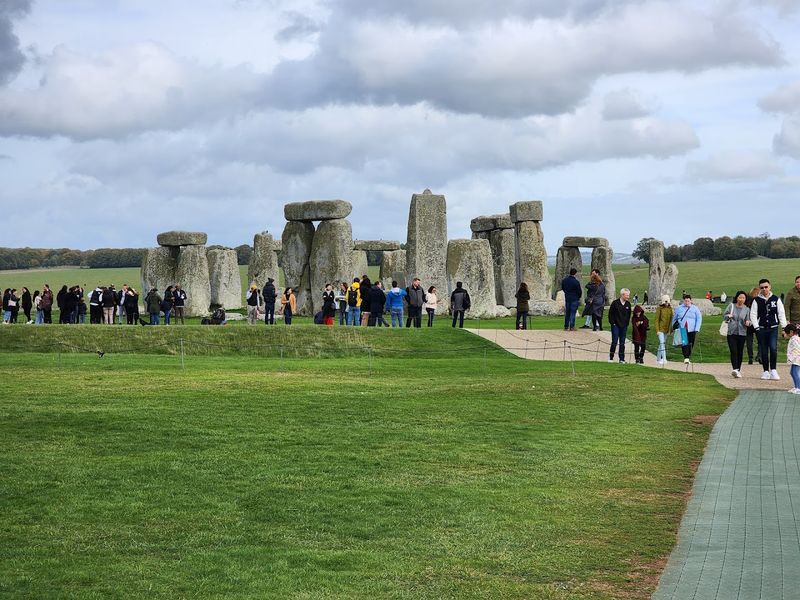
The logistics of building Stonehenge were staggering by any era’s standards. The bluestones came from Wales, roughly 200 miles away, while the larger sarsen stones were transported from Marlborough Downs, about 25 miles north of the site. Moving either type required extraordinary organization and cooperation.
Some researchers have proposed that this effort was not purely spiritual. Bringing materials from distant regions may have symbolized alliances between different prehistoric communities, with the monument standing as a physical record of those relationships. Construction itself could have served as a shared project that reinforced social bonds.
Isotope analysis of cattle bones found at Durrington Walls, a nearby feasting site, has shown that animals were brought from as far as Scotland and Wales for large gatherings during Stonehenge’s construction period. This evidence suggests that people from across Britain participated in the project. Whether the monument was a political statement, a spiritual achievement, or both, it clearly required a level of coordination that extended well beyond a single local community.
7. Merlin Used Magic to Build It
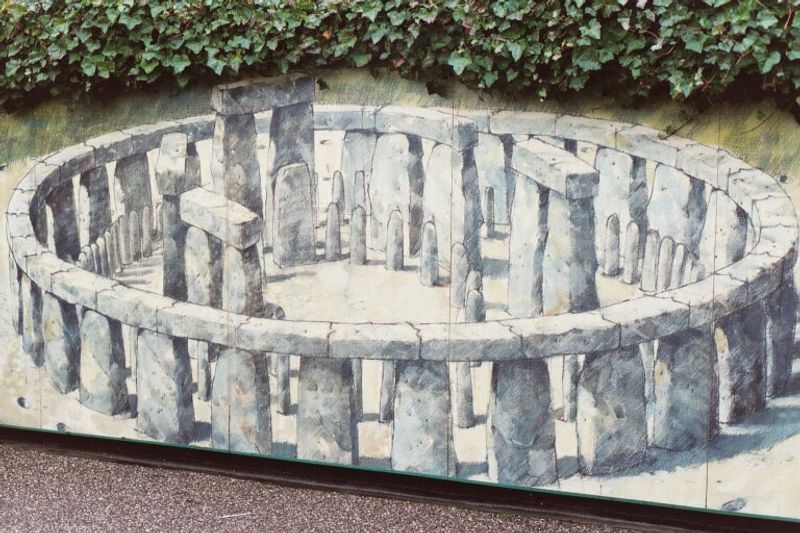
Geoffrey of Monmouth introduced the world to a very different explanation for Stonehenge in his 1136 work, Historia Regum Britanniae, or History of the Kings of Britain. According to his account, the stones originally stood in Ireland as a monument called the Giants’ Ring, assembled there by giants who had brought them from Africa.
King Aurelius Ambrosius, wanting a memorial for fallen British nobles, sent the wizard Merlin to retrieve the stones. Merlin used his magical abilities to dismantle the ring and transport the stones across the sea to their current location on Salisbury Plain. The story was presented as history rather than fiction at the time of its writing.
Modern archaeology has thoroughly dismantled the legend, but Geoffrey’s version stuck in popular culture for centuries and contributed to Stonehenge’s reputation as a place of mystery and supernatural significance. It remains one of the most widely recognized myths attached to the monument, appearing in countless books, films, and tourist discussions even today.
8. Giants Built the Monument
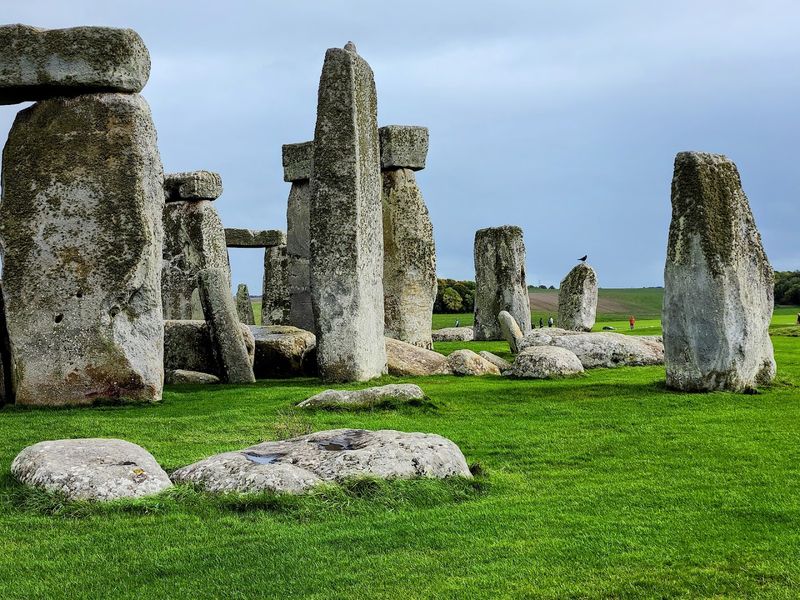
Before modern engineering studies explained how prehistoric people could have moved multi-ton stones, the most obvious explanation for many observers was that ordinary humans simply could not have done it. Giants, a common feature of British folklore, seemed like the only logical answer.
Stories of enormous beings carrying the stones across the landscape appear in various regional traditions across Britain and Ireland. Some accounts described the stones as household objects casually tossed or carried by these giant figures, reflecting genuine bewilderment at the scale of what had been achieved.
Researchers have since demonstrated through practical experiments that large organized groups using wooden sledges, rollers, ropes, and ramps could have transported and raised the stones without supernatural assistance. A 2020 study estimated that moving a single sarsen stone from Marlborough Downs would have required a team of around 70 people working in coordinated shifts. The giants theory has no archaeological support, but it reflects how genuinely impressive the construction remains even when understood through a factual lens.
9. It Was Built by Druids
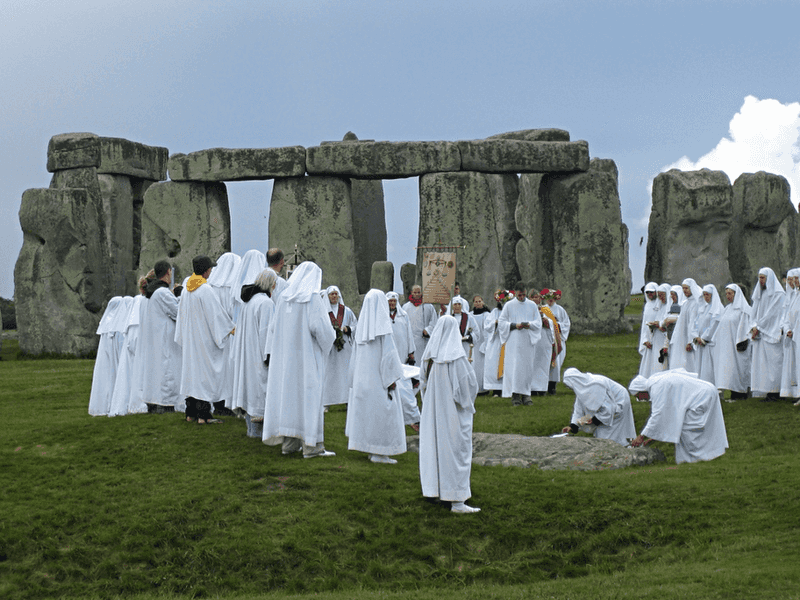
The association between Stonehenge and Druids is one of the most persistent and publicly visible connections attached to the monument. Every year, modern Druid groups gather at the stones to mark the summer and winter solstices, a tradition that has made the link feel ancient and organic to many visitors.
The idea that Druids built Stonehenge was popularized in the 17th century by antiquarian John Aubrey, who linked the monument to the Celtic peoples of Britain. His ideas were later expanded by William Stukeley in the 18th century, cementing the Druid connection in public imagination for generations.
Archaeological dating has conclusively shown that Stonehenge was built between approximately 3000 BCE and 1500 BCE, while the earliest historical references to Celtic Druids date to around 200 BCE at the earliest. That gap of over a thousand years makes it impossible for Druids to have constructed the monument. The modern gatherings at Stonehenge are a cultural tradition, not a historical continuation of any original building practice.
10. It Was an Ancient Calendar
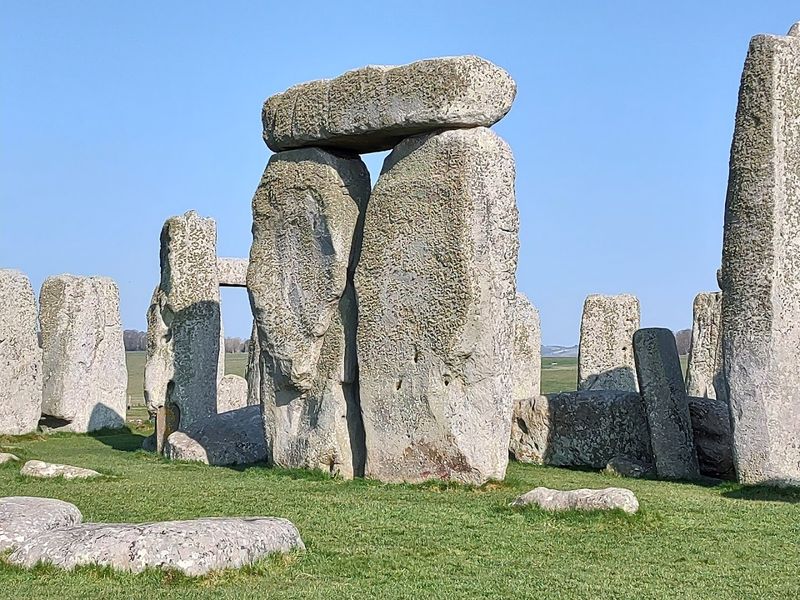
Researcher Tim Daw proposed in 2022 that the arrangement of Stonehenge’s sarsen stones could represent a solar calendar based on a 365.25-day year. His analysis suggested that the 30 stones of the outer sarsen circle, combined with specific marker stones, could track a 12-month calendar with additional days accounted for.
The proposal attracted significant media attention and was published in the journal Antiquity, giving it a level of academic credibility that purely speculative theories rarely achieve. Supporters argued it offered a practical, everyday purpose that complemented the monument’s ceremonial functions.
Skeptics within the archaeological community pushed back, noting that the calendar interpretation requires assumptions about which stones were original and which were later additions or replacements. The monument has been substantially altered and partially collapsed over millennia, making precise numerical analysis difficult. While the alignment evidence is real, converting it into a working calendar system remains a significant interpretive leap that many researchers are not yet prepared to make without stronger supporting evidence from the archaeological record.
11. It Was Built with Help from Aliens
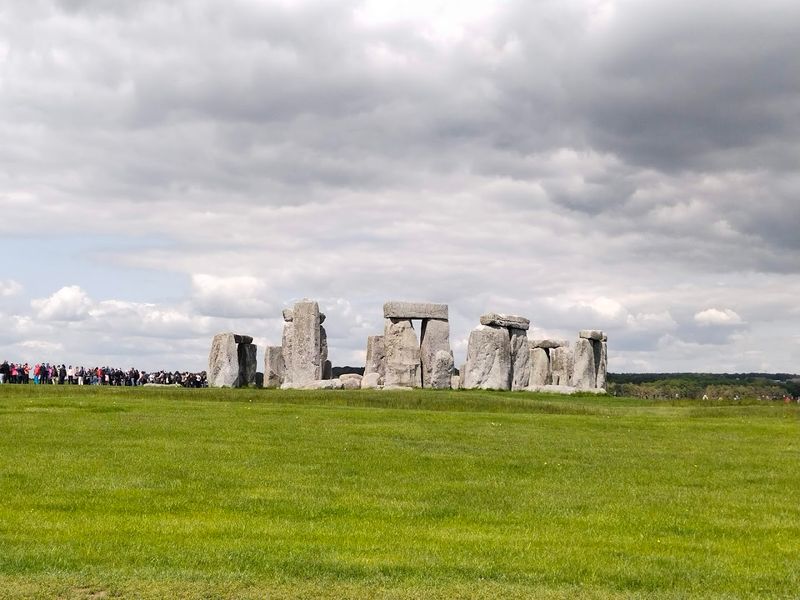
Erich von Daniken’s 1968 book Chariots of the Gods brought the ancient astronaut theory to a global audience, and Stonehenge quickly became one of its most frequently cited examples. The core argument was straightforward: prehistoric humans lacked the technology to build such a monument, so outside help must have been involved.
The theory has maintained a persistent presence in popular culture through television documentaries, books, and online communities. Its appeal lies in the genuine difficulty of imagining how Neolithic people, without metal tools or wheeled vehicles, managed to transport and erect stones weighing up to 25 tons.
Archaeological evidence, however, tells a different story. Excavations have uncovered stone hammers, antler picks, and other tools consistent with the work required to shape and move the stones. Experimental archaeology projects have repeatedly demonstrated that organized human labor using period-appropriate technology was entirely sufficient. The alien theory persists not because of evidence but because the alternative, crediting prehistoric communities with extraordinary capability and planning, requires a significant shift in how people think about ancient human potential.
12. It Was Part of a Much Larger Ceremonial Landscape
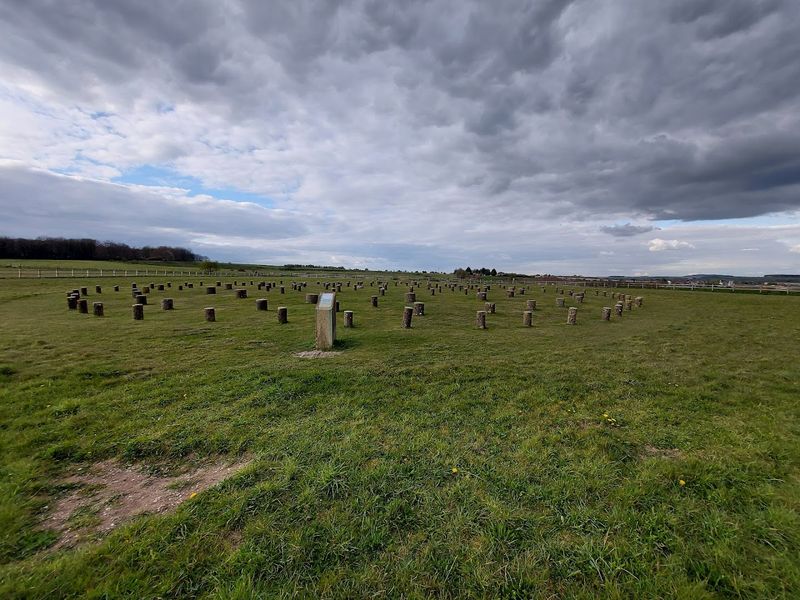
Stonehenge does not stand alone. Within a few miles of the monument, the landscape contains Durrington Walls, one of the largest known Neolithic settlements in Britain; Woodhenge, a circular timber structure; the Cursus, a long rectangular earthwork; and hundreds of burial mounds spanning thousands of years of use.
The Stonehenge Hidden Landscapes Project, which used ground-penetrating radar and other non-invasive survey technologies between 2010 and 2014, revealed dozens of previously unknown features buried beneath the surface of the surrounding area. These discoveries reinforced the understanding that Stonehenge was the centerpiece of a densely used ceremonial region rather than an isolated monument.
UNESCO recognized this broader significance by designating the area as a World Heritage Site in 1986, covering not just the stone circle but the wider prehistoric landscape around it. For archaeologists, the surrounding context is just as important as the monument itself. Understanding Stonehenge now means studying the entire network of sites, pathways, and structures that its builders created and used across many centuries.
13. It Was Designed for Multiple Purposes
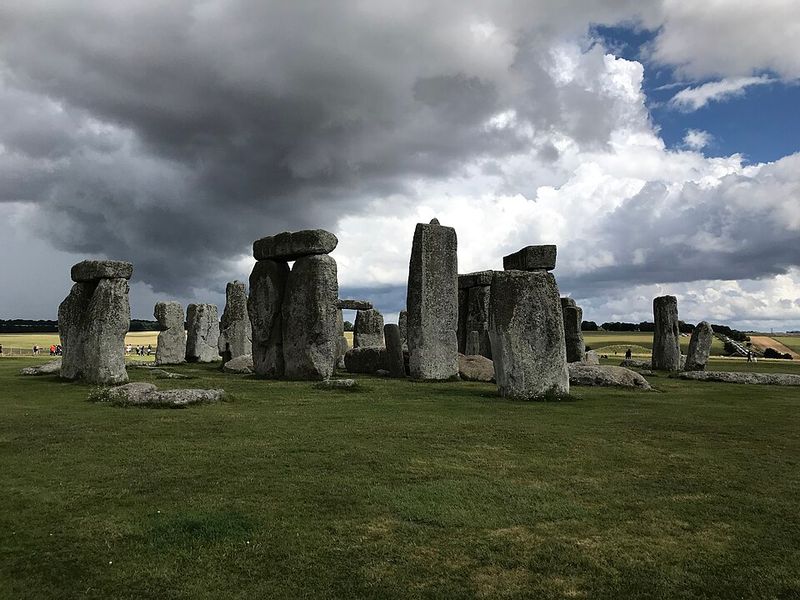
Stonehenge was not built in a single moment of inspiration. Construction and modification took place across roughly 1,500 years, beginning around 3000 BCE with a circular earthwork and ditch, progressing through the arrival of the bluestones from Wales, and culminating in the raising of the massive sarsen trilithons around 2500 BCE.
Each phase likely reflected changing needs, beliefs, or social structures within the communities responsible for the work. What mattered to the people of 3000 BCE may have been quite different from what mattered to those who added the sarsens 500 years later. The monument was continuously reinterpreted and rebuilt across generations.
Most archaeologists working at Stonehenge today favor a multi-purpose interpretation. At different points in its history, the site probably functioned as a burial ground, a ceremonial gathering place, an astronomical marker, a monument to ancestors, and a symbol of regional identity. Expecting a single clean answer may be the wrong approach entirely. Stonehenge’s enduring mystery is partly a product of its genuine complexity across deep time.
Share this story