Somewhere in the Piedmont region of North Carolina, a 110-acre county park hides a cave that most people drive right past without ever knowing it exists. This place has deep roots in American frontier history, a river trail that winds through old-growth trees, and a cave that once sheltered a teenage boy who would grow up to become one of the most legendary explorers this country has ever known.
The best part? Getting in costs absolutely nothing.
I made the trip out to this park on a quiet weekday, and what I found was far more layered and interesting than I expected from a free county park tucked off a rural road.
Where Exactly You Will Find This Place
The address is 3552 Boones Cave Rd, Lexington, NC 27295, and getting there feels like following a thread of history through Davidson County, North Carolina. The roads narrow as you get closer, and the surrounding landscape shifts from small-town streets to dense woodland.
There is no grand entrance, no ticket booth, and no long line of cars waiting to get in.
Boone’s Cave Park is a county-managed property, which means it runs on a straightforward schedule: open every day of the week from 8 AM to 5 PM. A park ranger is typically on site, and the restrooms near the parking lot are clean and well-maintained, which is a small detail that makes a real difference on a long outing.
The parking area is modest in size, but you can park along the road once inside the park boundaries if the lot fills up. Phone service can be spotty, so downloading a trail map beforehand is a smart move.
The park’s phone number is 336-752-2322 if you need to call ahead.
The History Behind the Cave and Daniel Boone
Back in 1751, a 15-year-old named Daniel Boone arrived in this part of North Carolina with his entire family in tow. The group numbered around 25 people, including all ten of the Boone children, along with neighbors and relatives who had all left Pennsylvania together in search of new land.
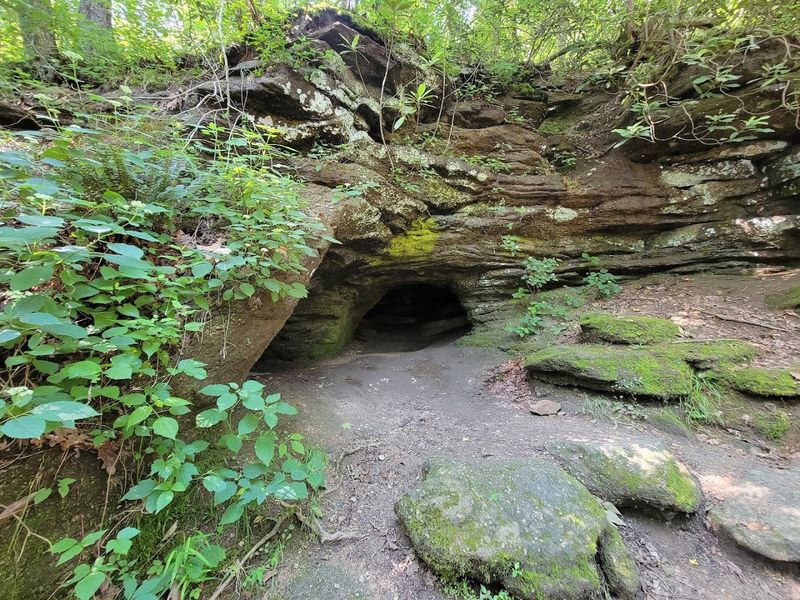
According to local legend, the family used the shallow cave here to shelter during their first winter in the region, possibly to stay safe from conflict with Native Americans. The Boone family eventually built homes near the cave, right along the Yadkin River, before later settling on the opposite bank in what is now Davie County, about two miles west of Mocksville.
The park was officially established in 1909 by the Daniel Boone Memorial Association, which means this land has been recognized as historically significant for well over a century. A monument honoring that history stands in the park today.
Whether or not every detail of the legend is verified, the connection to one of America’s most iconic frontier figures gives this place a weight that you can actually feel while standing at the cave entrance.
What the Cave Actually Looks Like Up Close
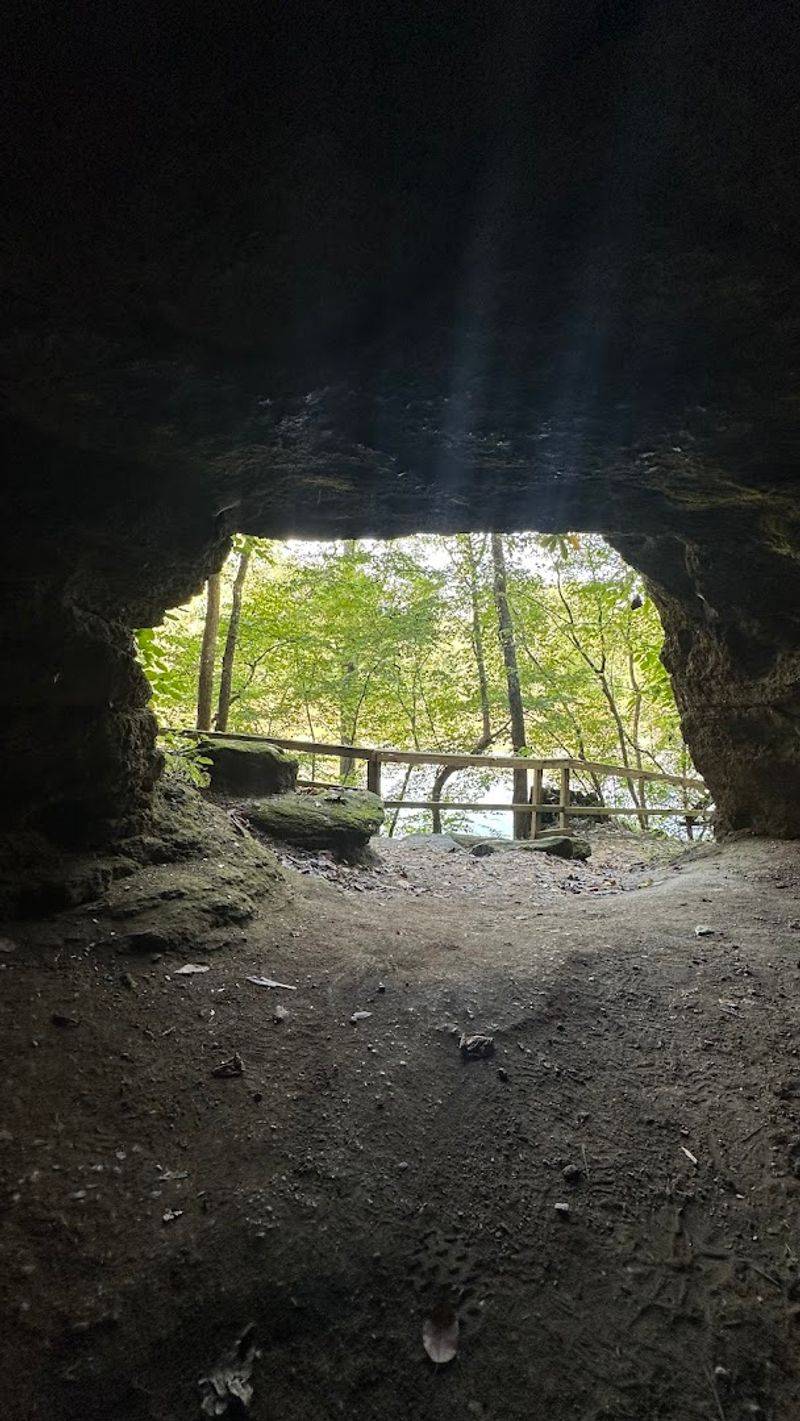
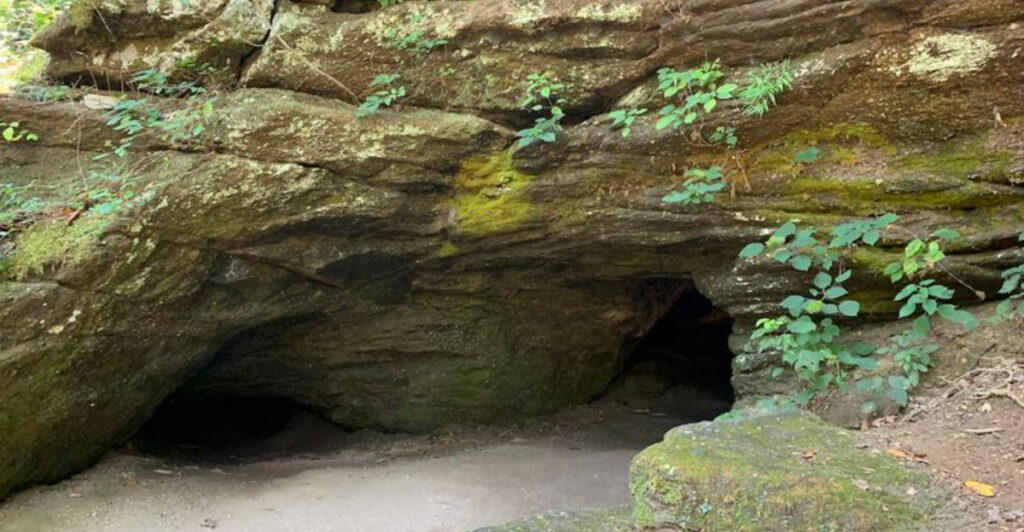
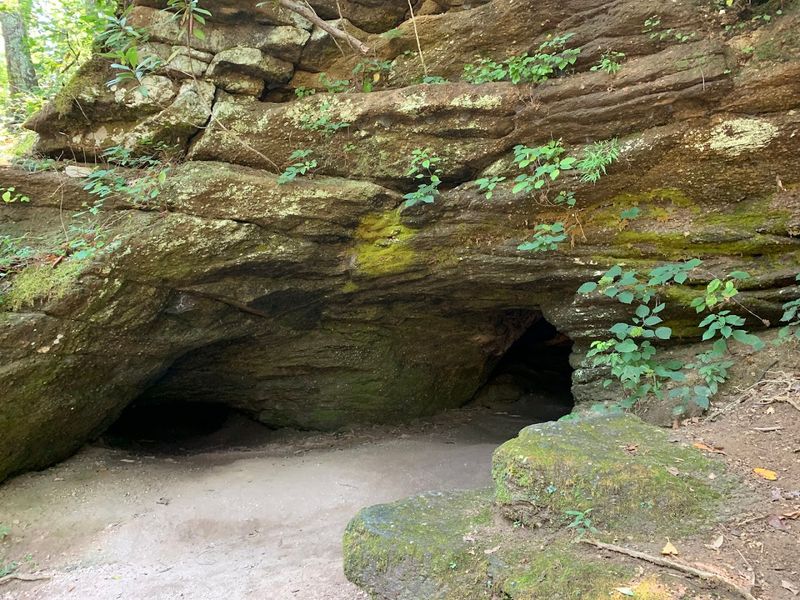
Honesty first: the cave is not the towering underground cavern that the word “cave” might bring to mind. What you find is a deep rocky overhang, the kind that can shelter a good number of people from rain or wind, and that plunges roughly 140 feet below the surrounding ridgeline when measured from the top of the bluff down to the river level.
The rock walls are cool and damp, and there is a low ceiling in the deepest section that will remind taller visitors to watch their heads. Moisture clings to the stone year-round, giving the interior a raw, earthy quality that feels genuinely ancient.
In winter, icicles form along the rock faces around the cave, which makes a visit during colder months surprisingly dramatic.
The cave sits right alongside the Yadkin River, so the sound of moving water is always present when you are there. It is the kind of spot where you can stand quietly for a moment and actually picture what it must have been like for a family to camp here through a cold Carolina winter more than 270 years ago.
The Staircase Descent That Will Test Your Legs
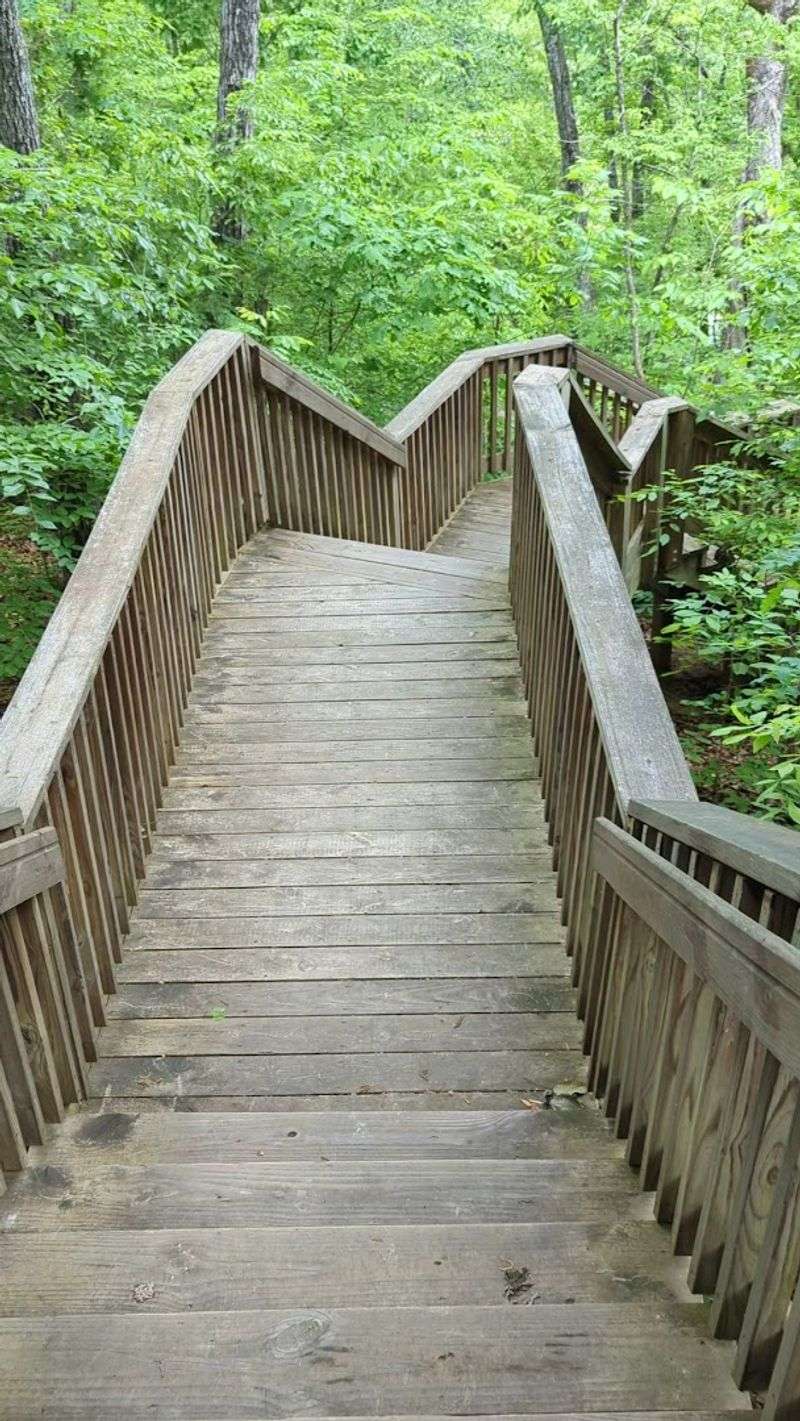
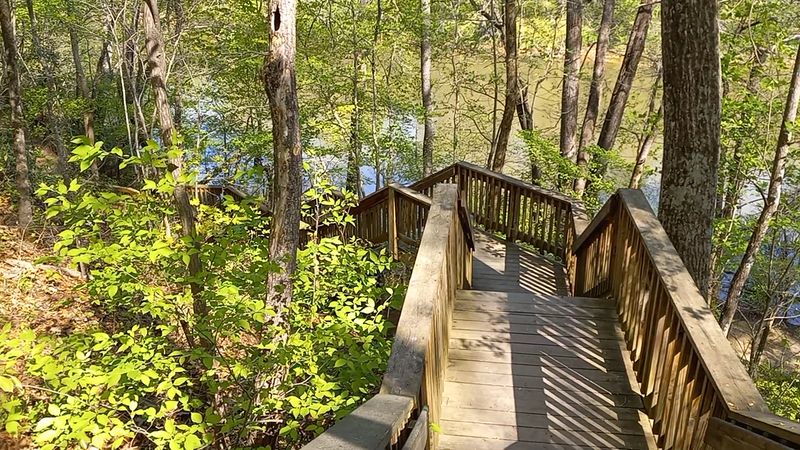
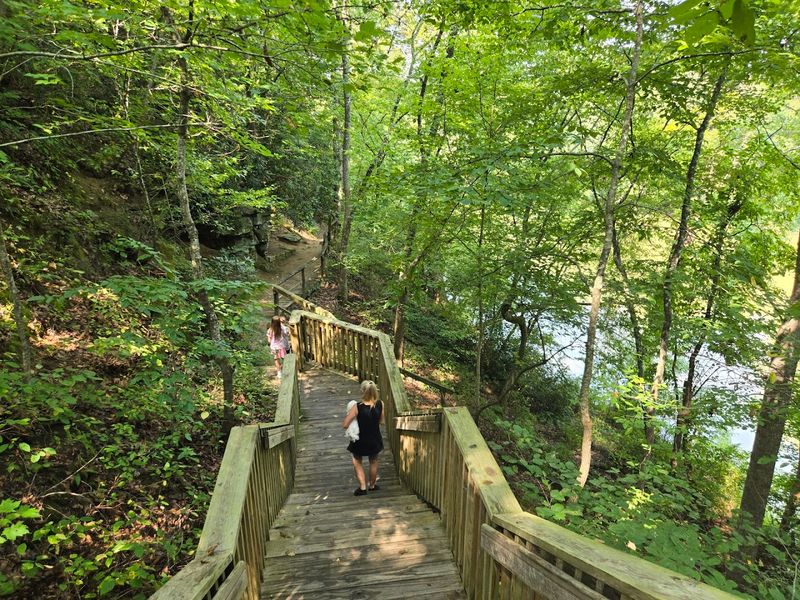
The most talked-about feature of this park, aside from the cave itself, is the staircase that takes you down to it. There are a lot of steps.
A lot. The descent is steep, the stairs are uneven in places, and by the time you reach the bottom, your legs will know they did something.
Coming back up is where most people realize they underestimated the climb. The stairs get your heart pumping in a way that a flat trail simply does not, and the effort is honestly part of what makes reaching the cave feel worthwhile.
It is worth noting that some of the stone stairs have been closed off at certain points, so follow the current signage carefully rather than relying solely on older trail markers.
If steep staircases are not an option for you, there is a walking trail that approaches the cave from the opposite direction, coming in at a gentler grade from a different part of the park. That route is longer but much more manageable for those who need a lower-impact path.
Either way, the cave is reachable, and both routes are worth knowing about before you set out.
Hiking Trails Along the Yadkin River
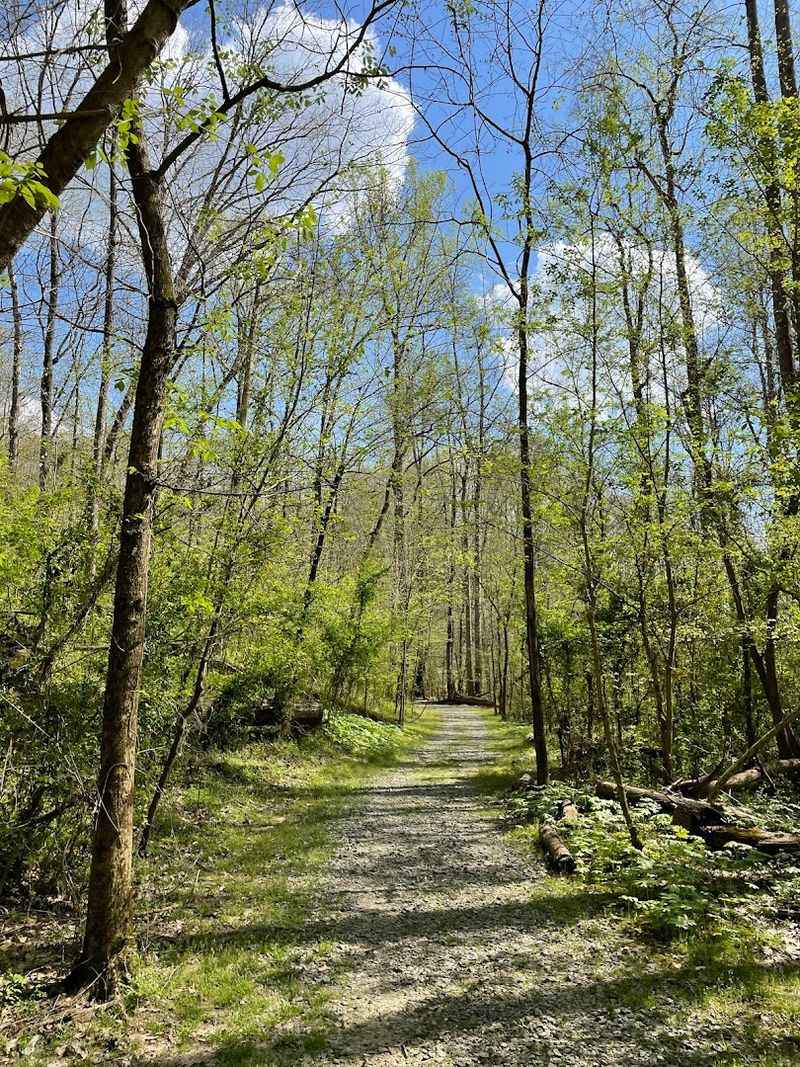
Once you reach the bottom of the descent, the park opens up into a network of trails that wind along the Yadkin River and deeper into the surrounding woodland. The trails are generally wide, well-maintained, and clearly marked, ranging from easy riverside walks to more strenuous routes that involve real elevation changes.
The Cottonwood Trail is a personal favorite. It follows the river for a good stretch before leading to one of the most impressive trees I have seen in a Carolina park.
The trails are clean underfoot, with resting benches placed at intervals for those who want to pause and take in the scenery without rushing.
The Winter Overlook Trail earns its name honestly. From the top, the view of the Yadkin River stretches out wide and clear, especially in the colder months when the leaves are down and the sightlines open up.
In spring, a wildflower trail adds bursts of color to the woodland floor. With several distinct trails to choose from, three hours of hiking still leaves routes unexplored, which is a genuinely good sign for a free county park.
The Legendary Cottonwood Tree
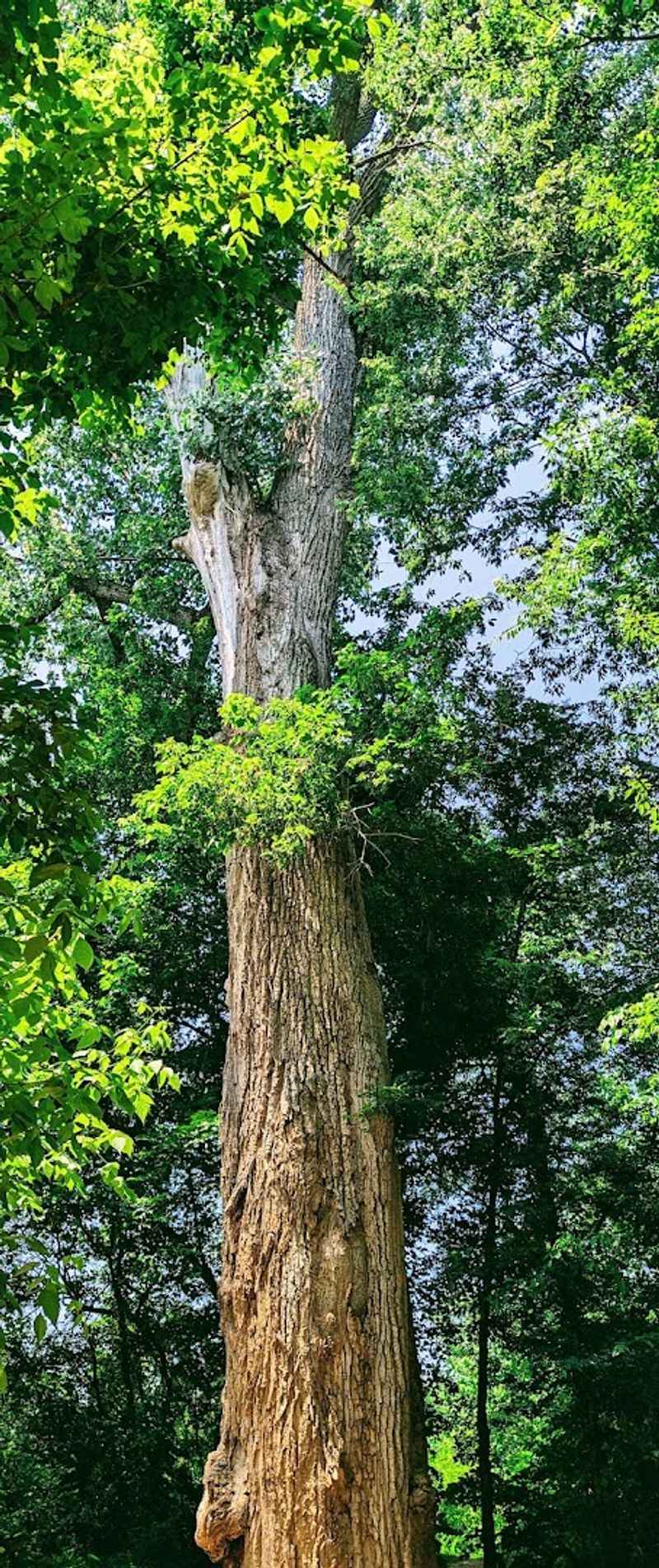
At the end of the Cottonwood Trail stands a tree that genuinely earns a moment of quiet appreciation. This cottonwood has a trunk that measures 16 feet thick, a height of 169 feet, and a canopy that spreads 109 feet across.
It is recognized as the third-largest cottonwood tree in the state of North Carolina, and it is believed to be well over 125 years old.
Standing at the base of it and looking straight up is one of those experiences that recalibrates your sense of scale. The trunk is wider than most rooms, and the bark has the deep, furrowed texture that only comes with serious age.
The trail leading to it can be a little overgrown with grass during warmer months, so long pants are a reasonable choice.
There is also a large Red Oak tree in the park that has its own dedicated trail. Both trees are remarkable examples of what these species can become when left undisturbed for generations.
For anyone who appreciates old-growth specimens, this park quietly delivers two of the most impressive trees in the Piedmont region, and neither one costs a cent to visit.
Wildlife, Wildflowers, and What to Watch For
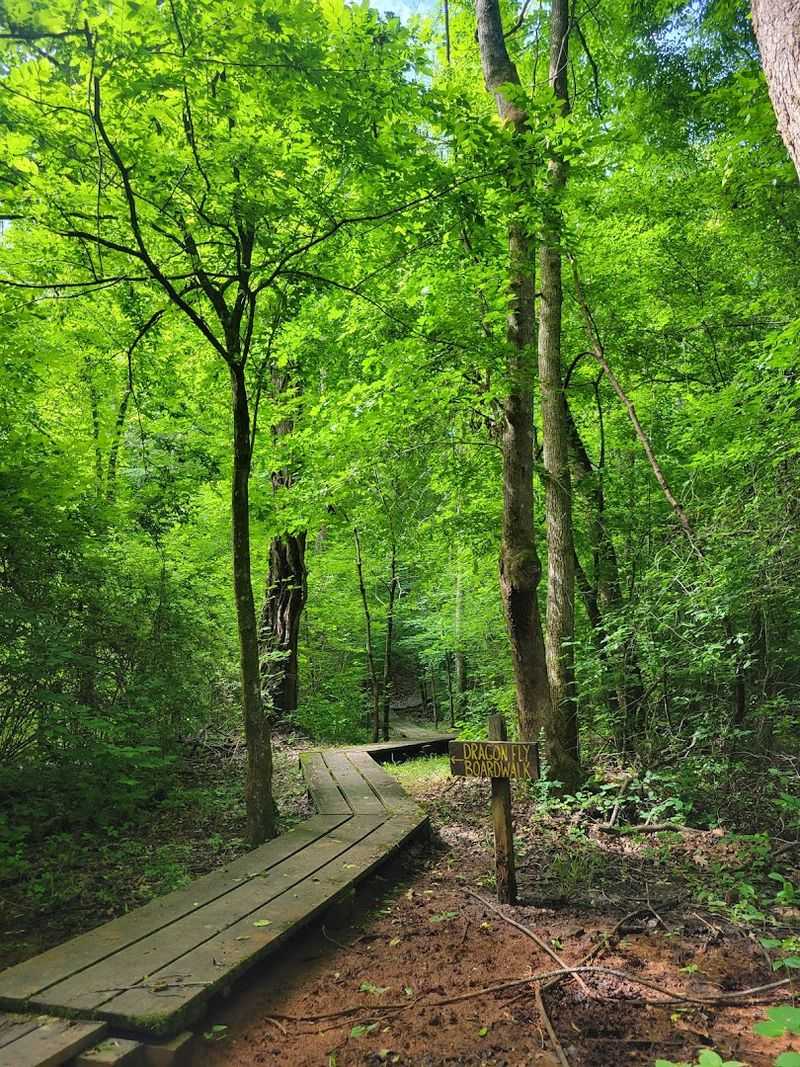
The park changes personality with every season, and each visit brings something different to notice. Spring is particularly rewarding, when wildflowers push up along the forest floor and the trails feel almost theatrical in their color.
A dedicated wildflower trail makes the most of this seasonal show, and it is genuinely worth timing a visit around late March or April.
A wide variety of mushrooms grow throughout the park, especially after rain, and the woodland floor rewards slow, attentive walkers who are not purely focused on mileage. The Yadkin River runs muddy much of the year, but during dry spells it clears up considerably, and the difference in the river’s appearance between a rainy week and a drought period is striking.
One honest warning: mosquitoes can be ferocious here, particularly in the warmer months and near the river. Bug spray is not optional in summer; it is essential.
A few visitors have been turned back early simply because they arrived unprepared for the insects. Lightweight long sleeves and a good repellent will make a warm-weather visit dramatically more enjoyable, and they weigh almost nothing to pack.
Fishing the Yadkin River
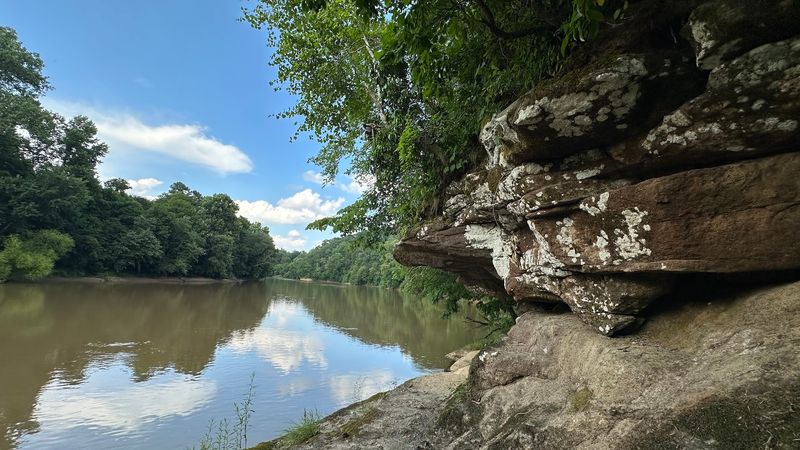
The Yadkin River runs right through the park, and it is accessible from multiple points along the trail system. Fishing is permitted here, and the riverbank offers enough open stretches to make casting practical without too much brush in the way.
The water level and clarity vary considerably depending on recent rainfall, so checking conditions before heading out specifically to fish is a worthwhile step.
After heavy rain, the river runs high and brown, and the banks can be slick and muddy. During drier periods, the water drops and clears, and the fishing experience improves noticeably.
The park does not have a formal boat launch, so this is strictly bank fishing, which suits the casual outdoor visitor perfectly well.
Even if fishing is not the primary goal, the river itself is a constant companion throughout the park. The sound of it moving over rocks and around bends gives the trails a rhythm that makes the walk feel less like exercise and more like an actual escape.
There is something grounding about a river that has been flowing past the same stone cave for centuries, quietly indifferent to everything that has changed around it.
Picnic Areas, Playgrounds, and Family Amenities
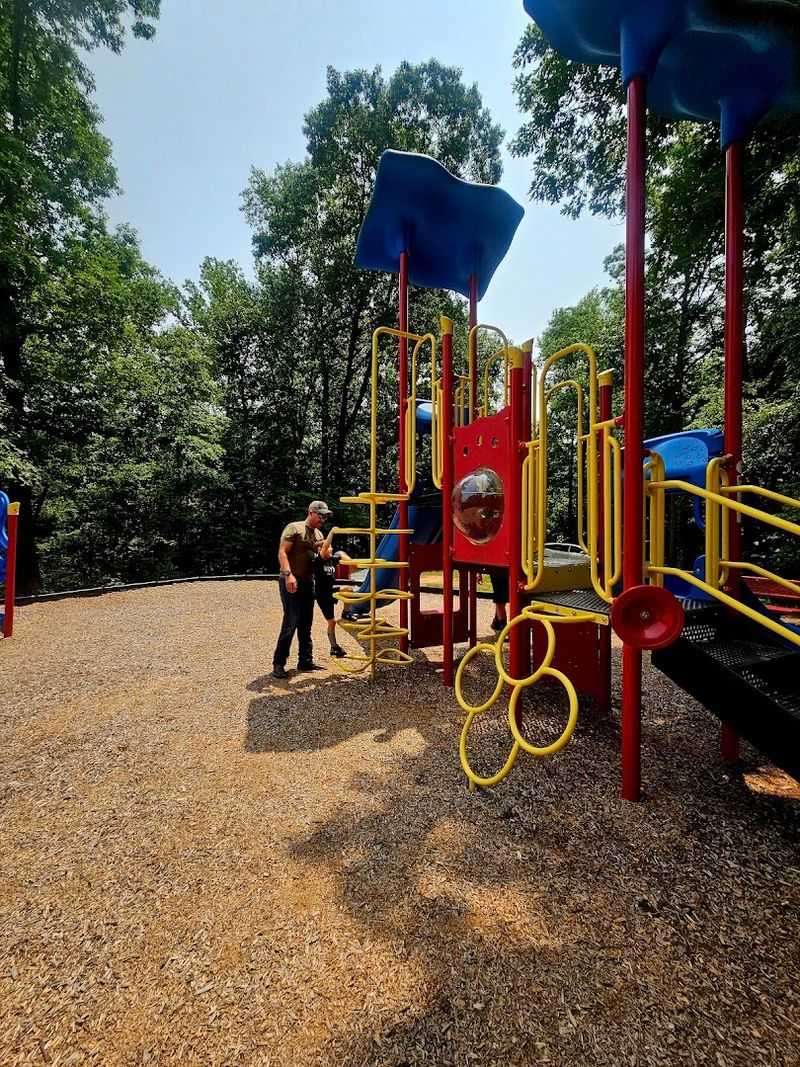
Boone’s Cave Park is not just a hiker’s destination. Families with young children will find a playground on site, along with a large covered picnic shelter at the far end of the park road that is spacious enough to host a birthday party, which is exactly what was happening there on one of my visits.
The picnic area is well-shaded and offers a genuinely pleasant place to sit down after a morning on the trails. Benches are placed along the trails as well, which is thoughtful for visitors who want to rest without backtracking to the main shelter.
A couple of vending machines are available near the restroom area, which is a small but welcome convenience on a hot day.
The restrooms themselves are consistently well-maintained, which sounds like a minor point until you have visited parks where they are not. A park ranger is typically on site during operating hours, which adds a layer of comfort for families visiting for the first time.
Tent camping areas are also available for those who want to extend their stay beyond a single afternoon visit.
The Disc Golf Course Hidden in the Trails
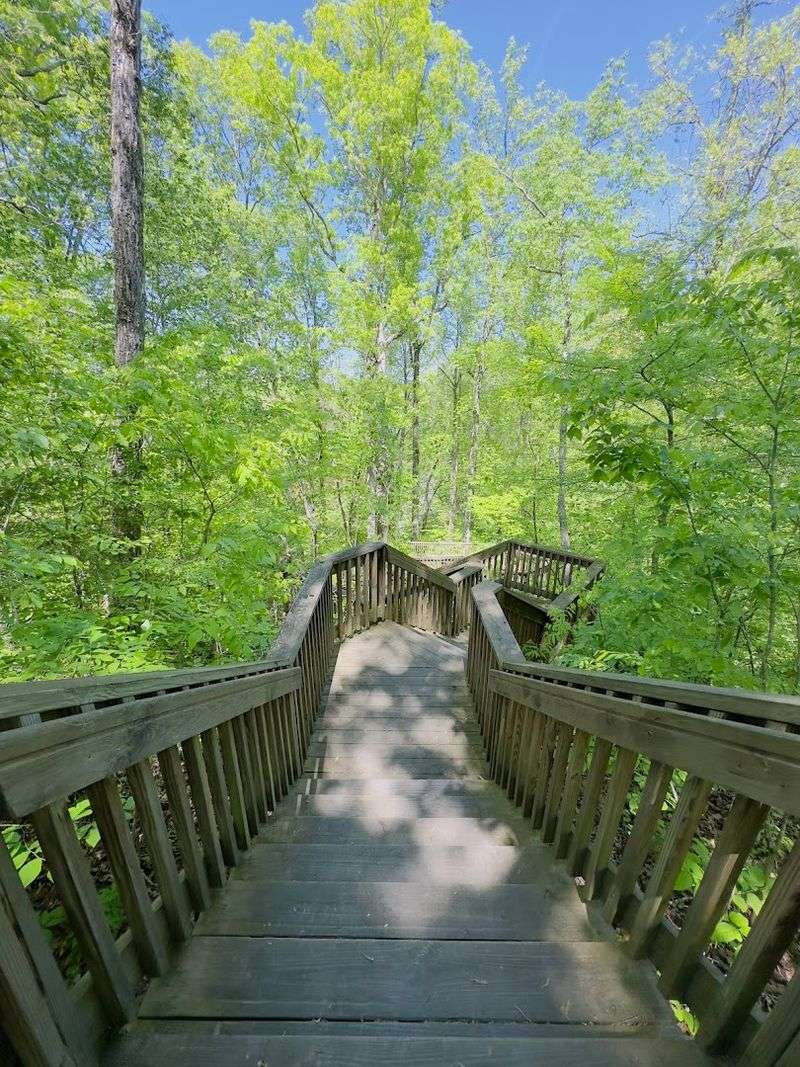
Tucked into the trail system is a disc golf course that covers a surprisingly large portion of the park. The course is spread across the more strenuous sections of the trail network, which means playing a full round involves real hiking between holes, not just a casual stroll across a flat field.
The layout is ambitious, and some of the holes are bordered by patches of poison ivy, so staying on the designated path is more than just good trail etiquette here. Knowing what poison ivy looks like before you start chasing an errant disc into the brush is genuinely useful information.
Long pants and awareness of your surroundings will serve you well on the course.
For disc golf enthusiasts, the combination of a challenging course and a beautiful natural setting makes this a legitimate draw. For everyone else, the course adds an extra layer of activity to a park that already offers hiking, fishing, caving, and picnicking.
It is the kind of unexpected addition that makes the park feel more versatile than its free price tag might initially suggest, and it rewards repeat visits with a different experience each time.
The Best Time of Year to Visit
Every season at this park has its own appeal, and the right time to visit depends entirely on what kind of experience you are after. Fall is the crowd favorite for good reason: the leaf color along the Yadkin River is genuinely beautiful, the mosquito pressure drops significantly, and the cooler temperatures make the staircase climb far more manageable.
Winter visits have their own quiet reward. The bare trees open up the sightlines along the Winter Overlook Trail, the cave’s rock walls develop icicles that add an unexpected drama to the setting, and the park is usually very quiet.
Spring brings wildflowers and birdsong, but also the return of insects, so plan accordingly. Summer is the most popular season for families, but the heat and humidity, combined with aggressive mosquitoes, require more preparation.
The park opens at 8 AM every day and closes at 5 PM, so arriving early on a weekend morning gives you the best chance of having the trails to yourself before the afternoon crowd arrives. A weekday visit is even quieter, and the experience of walking these trails without other groups nearby is a noticeably different and more peaceful one.
Practical Tips Before You Head Out
A few practical notes can make the difference between a great day and a frustrating one at this park. Bring bug spray, and bring more than you think you need.
This is the single most repeated piece of advice from people who have visited, and it is worth repeating one more time: the mosquitoes near the river are relentless in warm weather.
Download the trail map before you arrive, since phone service can be unreliable in the park. The trails are marked, but some of the signage can be confusing, particularly around the cave area where certain routes have been closed or rerouted.
Wearing sturdy shoes with grip is important, especially if you plan to use the staircase, where some steps are uneven or have protruding hardware.
Bring water and a snack, especially if you plan to spend more than an hour or two exploring. The vending machines near the restrooms help in a pinch, but they are not a substitute for carrying your own supplies on the trail.
Admission is completely free, parking is free, and the trails are open to dogs on leashes, making this one of the more accessible and budget-friendly outdoor destinations in the entire Piedmont region.
Share this story