 Unearth The Voyage
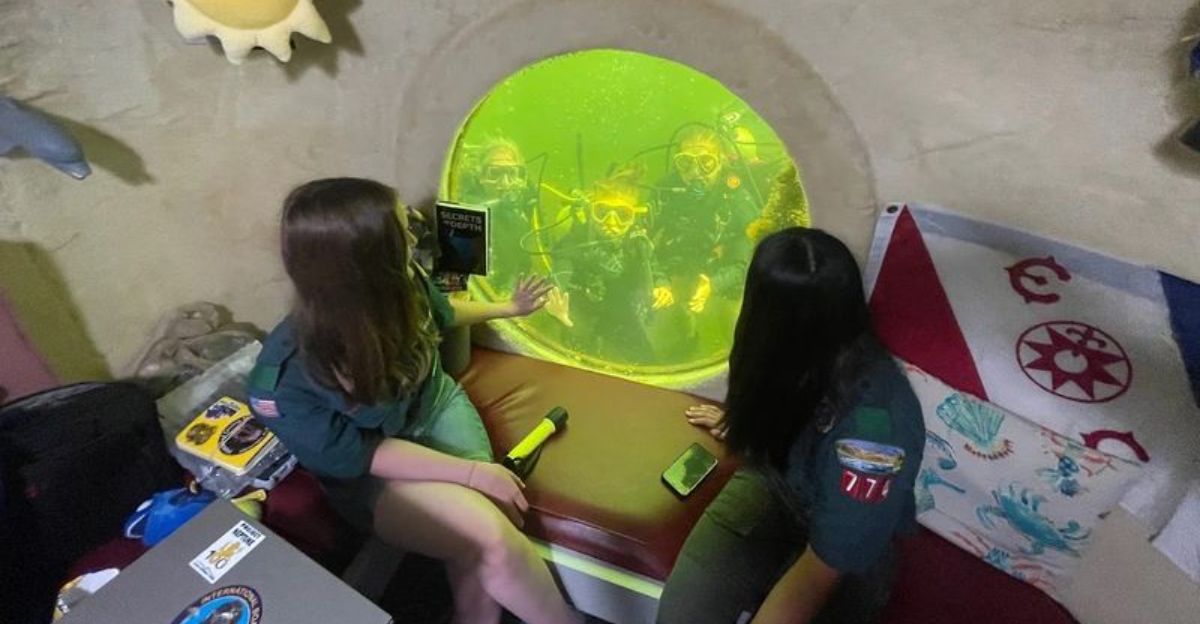
Most people think sleeping underwater is something reserved for science fiction movies or billionaire submarines. But there is a real place in Florida where you can spend the night beneath the surface of a lagoon, surrounded by fish swimming past your window, with pizza delivered by a scuba diver.
Yes, that is a real thing that actually happens. Florida is full of surprises, but this one sits about 21 feet below the water and holds the title of the only underwater hotel in the entire United States.
The adventure starts with a scuba descent and ends with a story you will be telling for the rest of your life. Keep reading, because this place is unlike anything you have ever heard of.
Where Exactly This Underwater Wonder Is Located
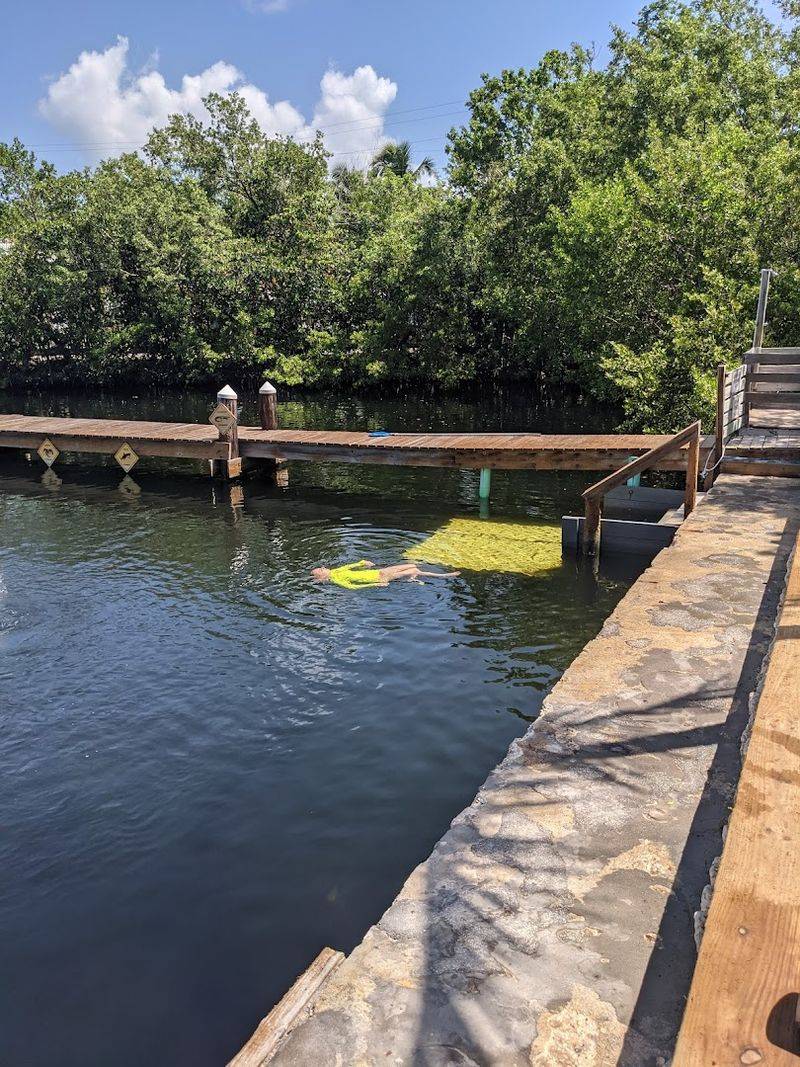
Tucked inside a calm, protected lagoon in Key Largo, Florida, Jules’ Undersea Lab sits at 51 Shoreland Dr, Key Largo, roughly 1.5 hours south of Miami along the Overseas Highway.
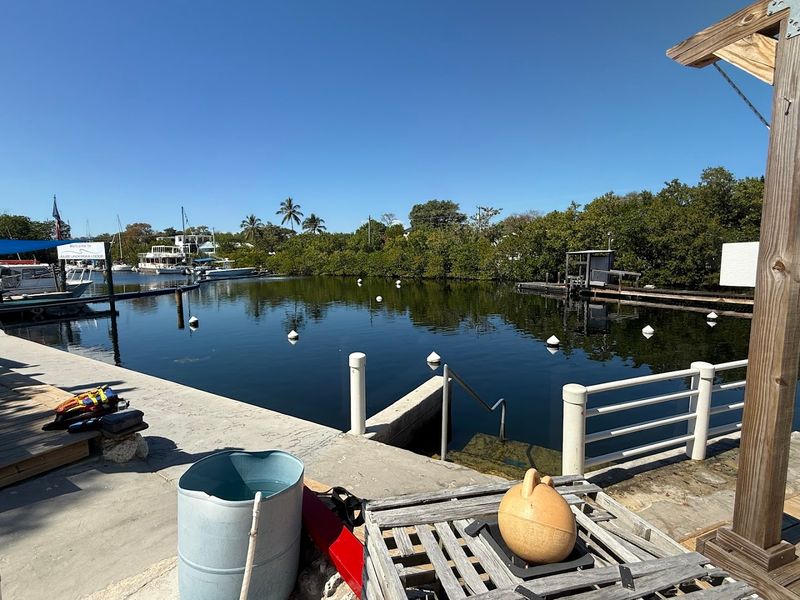
Key Largo is the first and largest island in the Florida Keys, known for its warm turquoise water and incredible marine life. The lab is part of the MarineLab Undersea Park, a unique stretch of protected lagoon that keeps the water calm and clear almost every single day of the year.
Because it sits in a sheltered lagoon rather than the open ocean, conditions here stay smooth even when the seas outside get rough. That makes it a reliable spot for both overnight guests and divers training for certifications.
The surrounding neighborhood is quiet, with mangroves lining the water and a laid-back Florida Keys atmosphere that starts the moment you pull into the parking lot.
The Fascinating History Behind the Lab
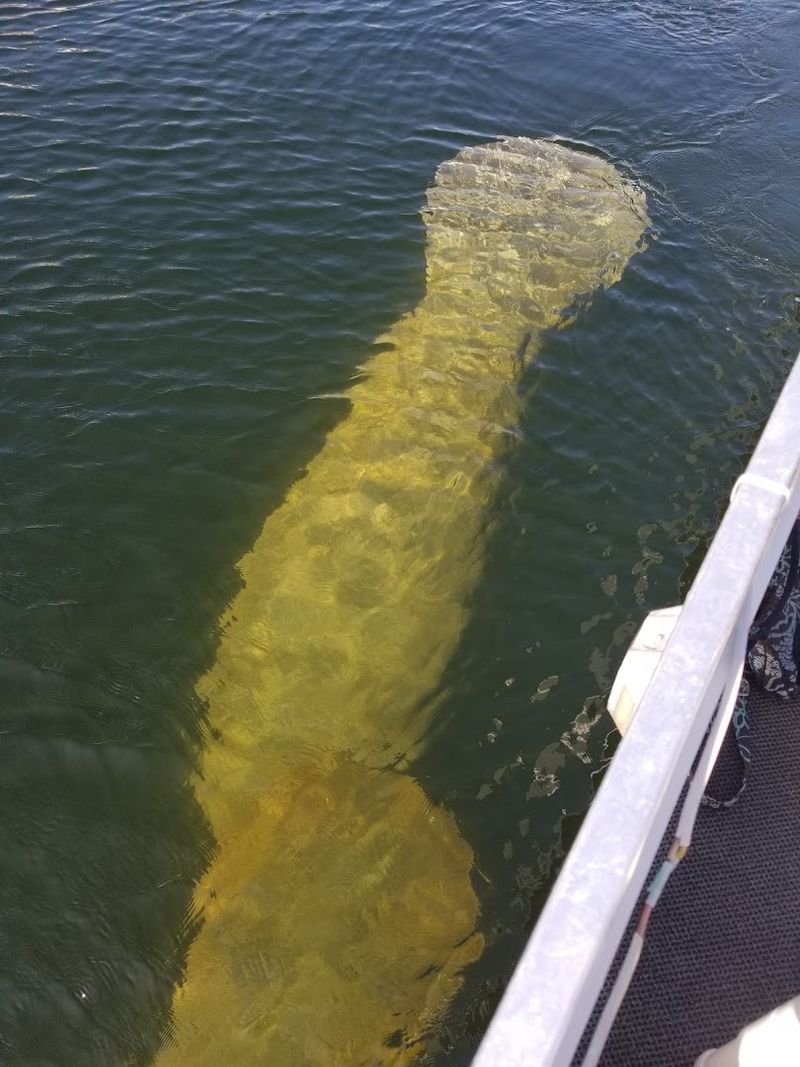
Before it became the world’s most unusual hotel, this structure had a serious scientific purpose. The habitat was originally built in the early 1970s as a research station called La Chalupa, used by scientists studying marine environments off the coast of Puerto Rico.
After years of research work, the structure was relocated to Key Largo in 1986 and transformed into what is now Jules’ Undersea Lodge, named after the legendary science fiction author Jules Verne. The people behind the move were marine biologists who wanted to share the experience of underwater living with the public, not just researchers.
The history of the site goes even deeper, since the marina itself has been part of the local community since the 1970s, when it operated under the name Paradise Isle Marina. The blend of scientific heritage and public adventure is what gives this place such a genuinely interesting character that sets it apart from any regular hotel.
How You Actually Get to Your Room
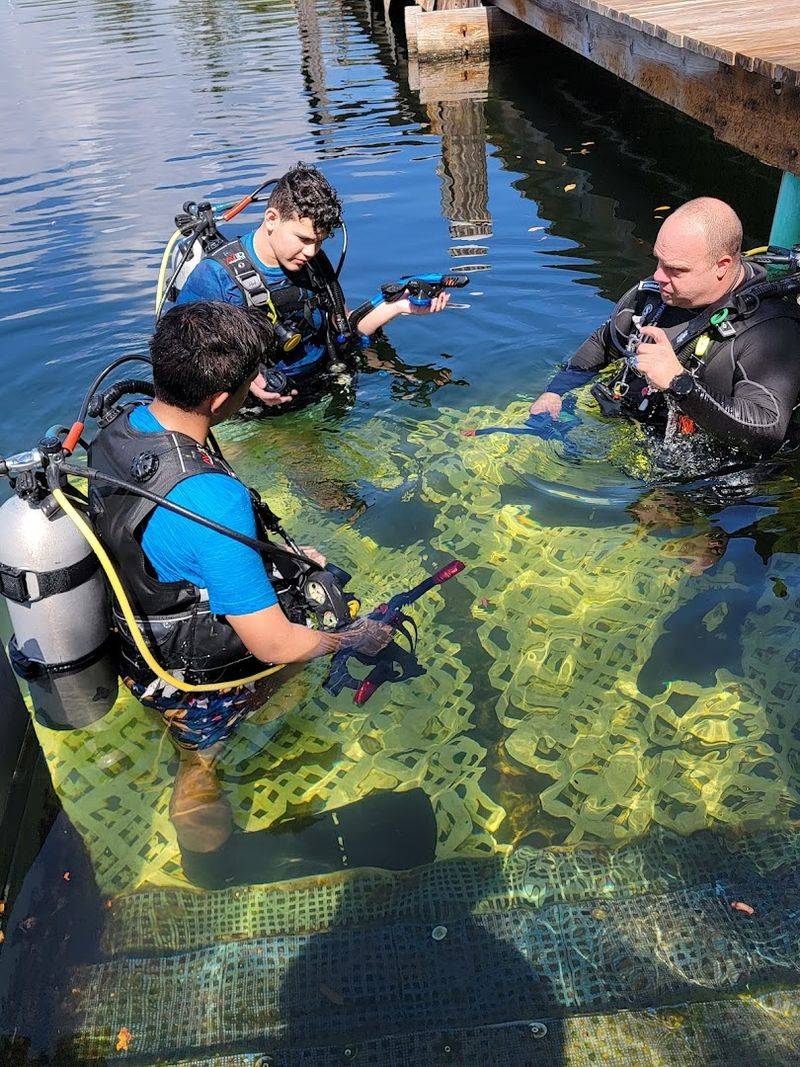
There is no elevator, no lobby, and no bellhop to carry your bags here. Getting to your room requires strapping on scuba gear and descending about 21 feet beneath the surface of the lagoon.
Guests enter the habitat through a moon pool, which is an opening in the floor of the structure that stays dry inside thanks to pressurized air. The concept is the same one used in real underwater research stations, and it works surprisingly well.
You surface inside the habitat, climb out of the water, and find yourself standing in a fully furnished room.
Because you are entering through water rather than a door, you do not bring a suitcase. A bathing suit is genuinely all you need.
The staff handles everything else, from equipment to food to entertainment. The entry process sounds intimidating, but most guests describe it as the moment the whole adventure really clicks into place.
What the Rooms Actually Look Like Inside
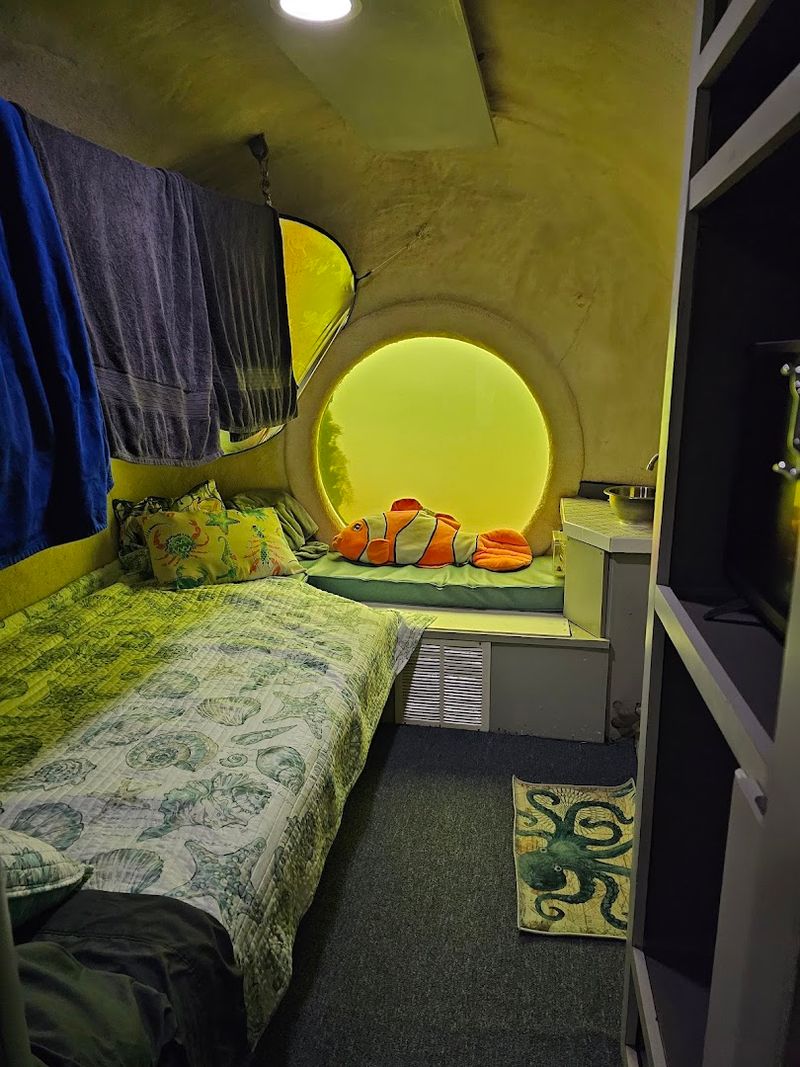
Once you are inside, the habitat feels a lot cozier than you might expect from something that started life as a research station. There are two bedrooms, a common living area, a bathroom, and a small kitchenette stocked with snacks and drinks.
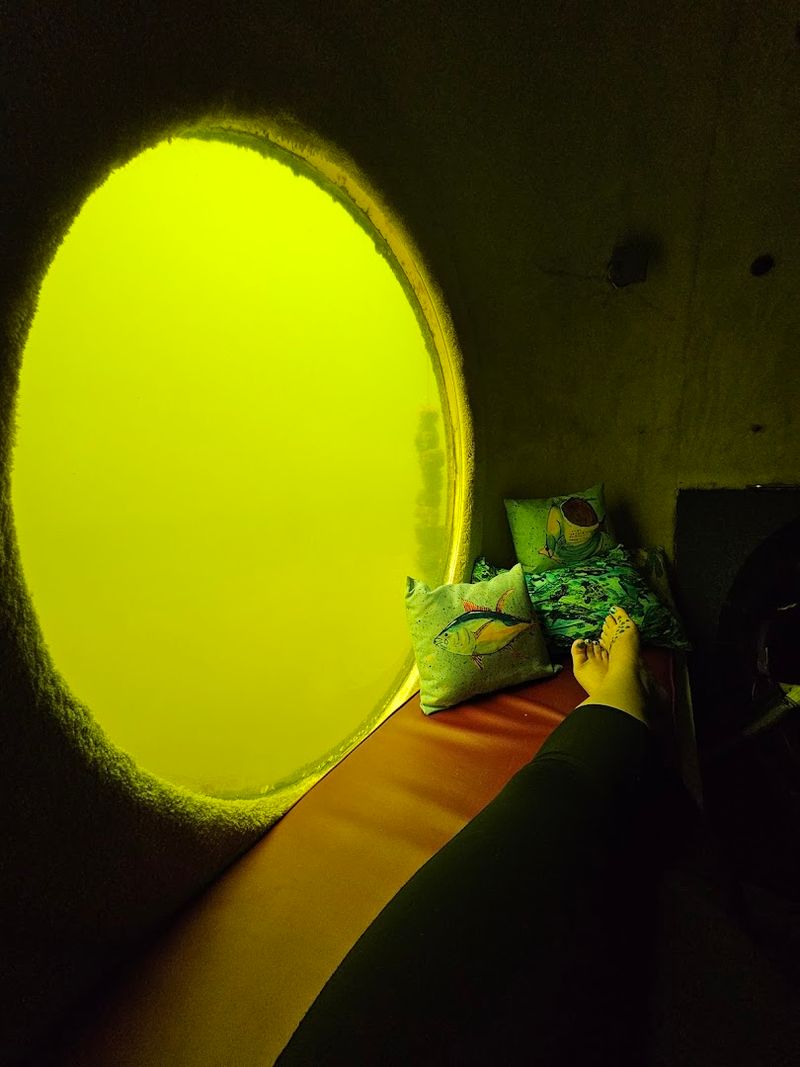
The walls are curved and compact, giving the space a capsule-like feeling that is genuinely comfortable rather than cramped. Large porthole windows line the sides of the habitat, and through them you can watch snappers, barracudas, parrotfish, and other reef fish swim past at any hour of the day or night.
The silence inside is one of the details that surprises guests the most. There is a deep, muffled quiet that feels almost meditative, broken only by the occasional sound of bubbles or the hum of the life support system.
Some guests have described falling asleep to the sight of fish drifting past the window as one of the most calming experiences of their lives.
The Aquanaut Certification Experience
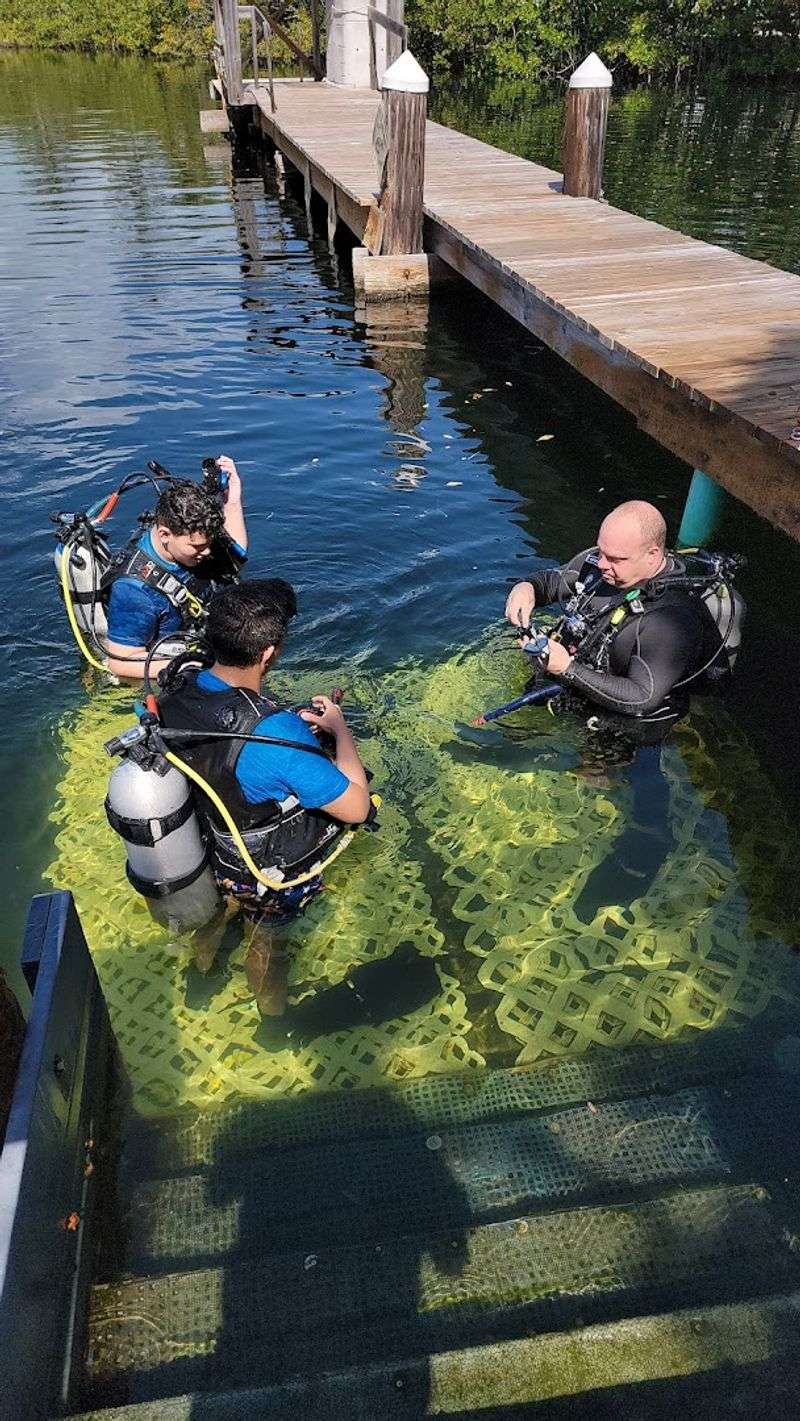
Not everyone who visits has a scuba certification already, and that is exactly why the Aquanaut program exists. This specialty course teaches guests everything they need to know to safely descend into the habitat, even if they have never worn a tank before.
The training covers basic underwater skills, safety procedures, and the science behind living in an ambient pressure habitat, which means the air pressure inside matches the water pressure outside at that depth. It is a genuinely educational experience, not just a formality before you get to the fun part.
Couples, friends, and solo travelers have all completed the Aquanaut certification and gone on to spend the night, with many calling it one of the most rewarding things they have ever done. The combination of learning something real and then immediately applying it in one of the most unusual settings on Earth creates a sense of accomplishment that a standard hotel stay simply cannot replicate.
Pizza Delivered Underwater: The Stuff of Legend
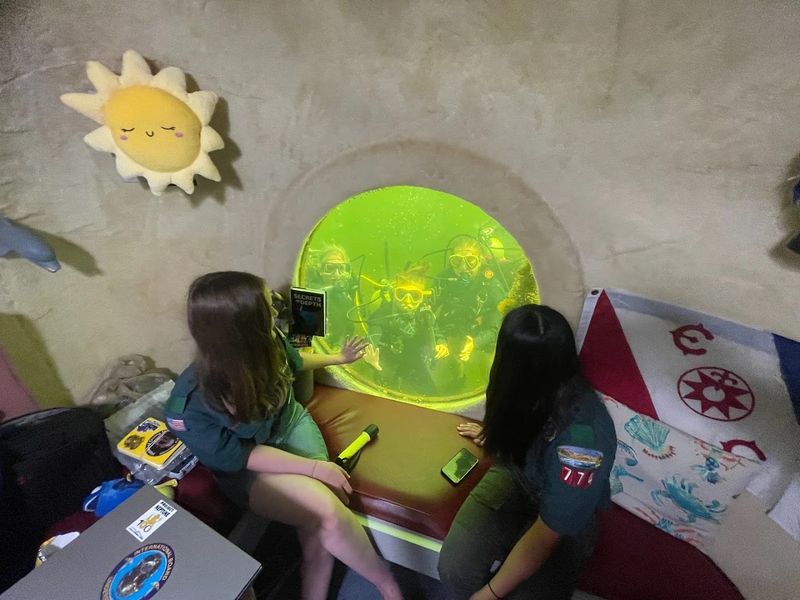
Few things in life are as unexpectedly delightful as having a pizza delivered to you by a scuba diver while you are sitting 21 feet underwater. At Jules’ Undersea Lab, that is not a gimmick or a one-time stunt.
It is a genuine service that guests rave about.
The kitchen above the surface prepares the food, and staff members dive down to deliver it through the moon pool. Meals arrive warm and sealed, and the whole experience of watching someone emerge from the water holding your dinner is something that gets funnier and more surreal every time it happens.
Beyond pizza, the habitat comes stocked with a generous supply of snacks, drinks, and food options that make extended stays feel well-supported. Several guests have noted that the amount of food available was almost overwhelming in the best possible way.
Eating a meal while watching fish swim past your window is, without question, a dining experience unlike anything else available in the United States.
Diving the Lagoon Around the Habitat
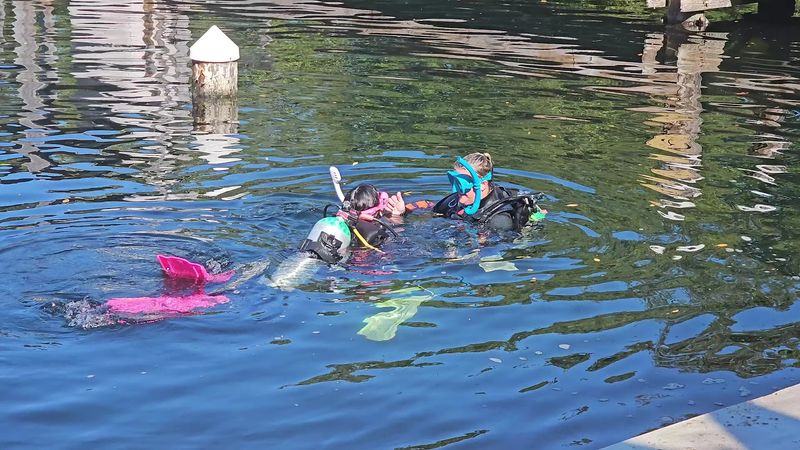
The lagoon surrounding the habitat is a protected environment, which means the marine life here has had time to thrive in a relatively undisturbed setting. Fish gather around the structure in large numbers, attracted by the shelter and the steady stream of gentle human visitors who do not disturb them.
Overnight guests have unlimited diving access during their stay, meaning you can slip in and out of the water as many times as you want throughout the day and night. Night dives here are especially atmospheric, with the habitat glowing softly from within and the dark water full of curious fish drawn to the light.
The maximum depth in the lagoon is around 24 feet, which makes it approachable for newer divers while still offering plenty to explore. Navigation practice, buoyancy work, and fish identification are all genuinely useful skills to sharpen here, and the calm conditions make it a much more comfortable environment than the open ocean on a windy day.
SNUBA for Non-Certified Visitors
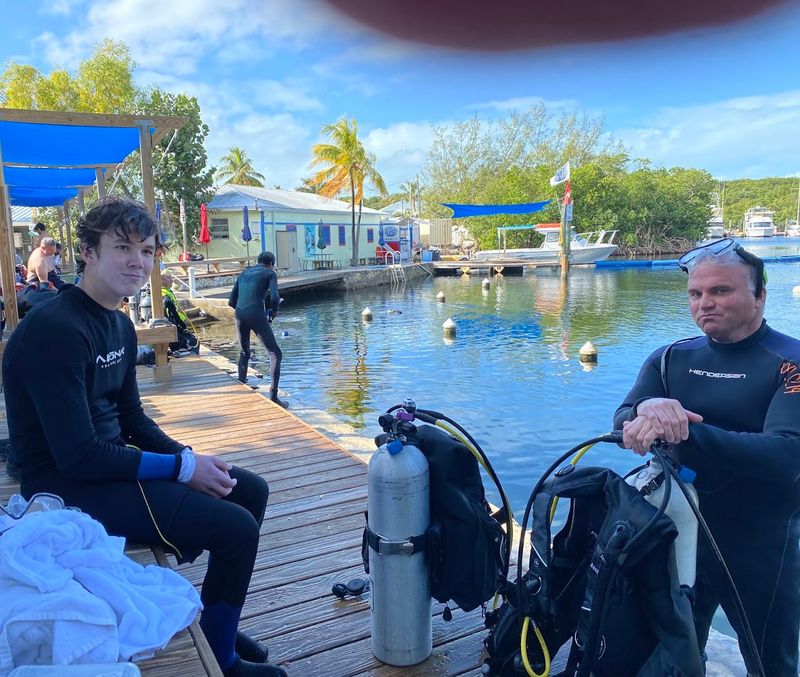
Not every visitor arrives with a scuba certification, and the team at Jules’ has a solution for that too. SNUBA is a system that uses a long air hose connected to a tank floating at the surface, allowing people to breathe underwater without needing a full certification course.
The setup lets non-certified guests explore the lagoon and even visit the exterior of the habitat, getting close to the fish and the structure without the full commitment of scuba training. It is a genuinely accessible option that opens the experience up to a much wider range of visitors.
One longtime visitor described walking along the bottom of the lagoon using the SNUBA system, with the natural buoyancy of the water making the whole thing feel almost weightless. The approachability of SNUBA means families, first-timers, and curious travelers who are not quite ready for full scuba can still get a meaningful taste of what makes this place so special.
Scuba Certification and Training at the Lagoon
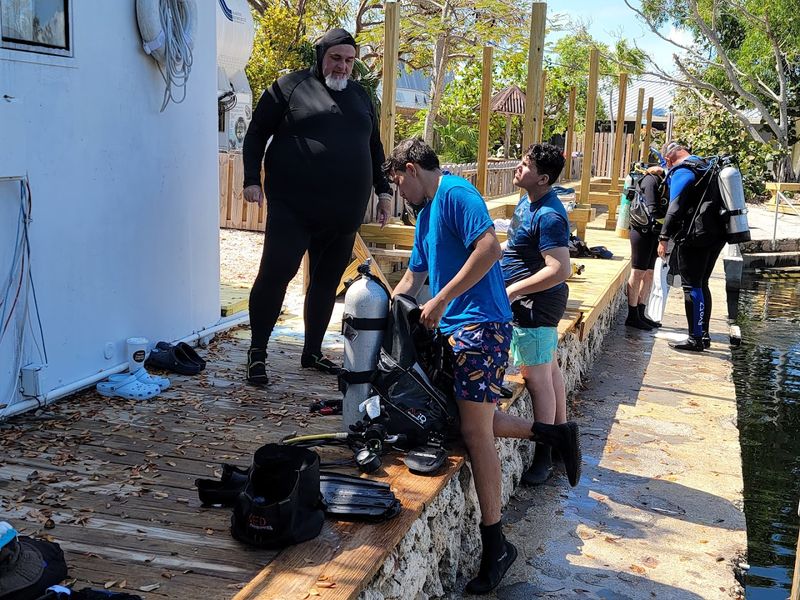
The protected lagoon at Jules’ is one of the most popular spots in South Florida for completing open water scuba certification dives. The calm, clear water and shallow depth make it a forgiving environment for students who are still getting comfortable with their gear and breathing patterns.
Local dive shops regularly bring students here for checkout dives, and the facility is well-organized to handle groups efficiently. Multiple entry points around the lagoon mean there is no crowding or long waits to get in the water, and the rental equipment available on site is consistently described as being in great condition.
The staff keeps the facility organized and clean, and instructors who teach here regularly appreciate the consistency of the conditions. Even when the ocean outside is choppy from wind or weather, the lagoon stays calm, making it a reliable backup option that has saved many a certification course from being postponed or canceled entirely.
The Navy MK V Dive Helmet Experience
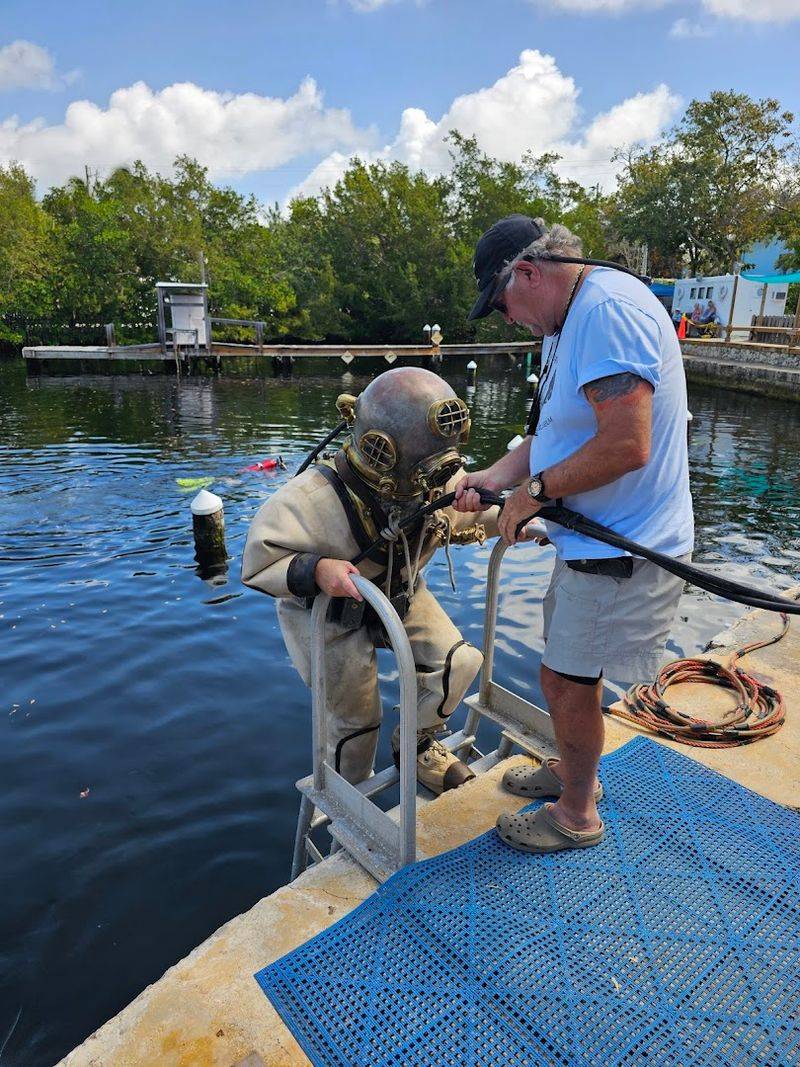
One of the more unexpected offerings at this location is the chance to dive with a genuine Navy MK V dive helmet, one of the iconic hard-hat helmets used by military divers in an earlier era of underwater work. Very few places in the United States offer this experience to the public.
The helmet is heavy, old-school, and completely unlike anything used in modern recreational diving. Wearing it underwater is a hands-on history lesson as much as it is an adventure, and the novelty of the experience draws serious diving enthusiasts from across the country.
Staff members who specialize in this experience, including a team member known locally as Sharky, guide participants through the process with obvious enthusiasm and deep knowledge of the equipment’s history. For anyone with an interest in the evolution of diving technology, this is the kind of rare, tactile experience that cannot be replicated by reading a book or watching a documentary.
The Science Behind Living Underwater
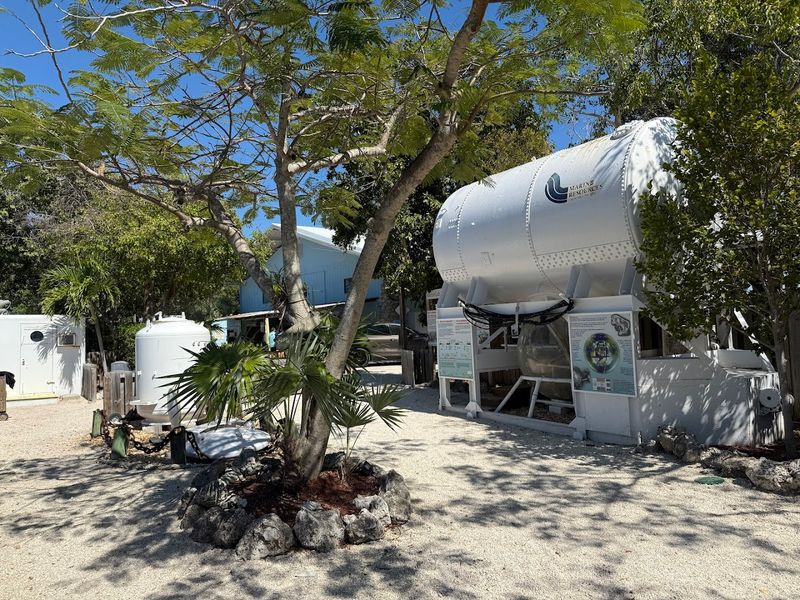
The habitat operates on a principle called ambient pressure, which means the air inside is pressurized to match the water pressure at that depth. This is the same technology used in real scientific research habitats and underwater construction projects, and it is what allows the moon pool entrance to stay open without flooding the interior.
Living at ambient pressure has some interesting effects on the body. Sounds are slightly different, voices can take on a subtle change in quality, and the sensation of breathing is noticeably richer than it is at the surface.
These are not uncomfortable effects, just genuinely fascinating ones that remind you how unusual your surroundings actually are.
The science education component of the experience is something guests consistently highlight as one of the unexpected highlights of their visit. Learning how the habitat works, why it stays dry, and how humans have used similar technology to study the ocean floor adds a layer of depth to the stay that transforms it from a novelty into something genuinely enriching.
What to Expect from the Staff and Guest Experience
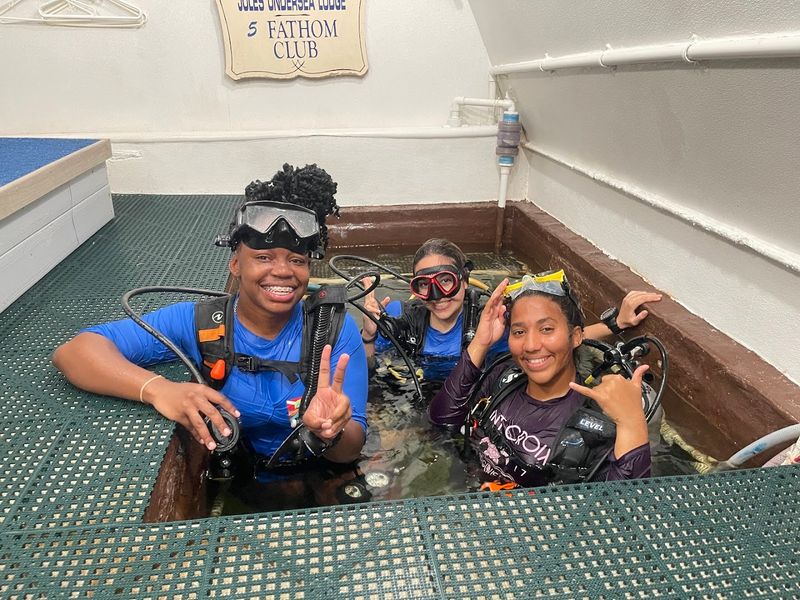
The team at Jules’ Undersea Lab gets mentioned in nearly every guest account, and almost always in glowing terms. The staff is described as organized, friendly, knowledgeable, and genuinely enthusiastic about sharing what makes this place so remarkable.
From the moment guests arrive, the crew handles equipment setup, safety briefings, food arrangements, and any special requests with a level of attentiveness that makes the unusual logistics of an underwater hotel feel surprisingly smooth. Staff members with specific expertise, like Joe, who guided one couple through their Aquanaut certification, are frequently singled out by name for going above and beyond.
Even visitors who stop in without a reservation, just to browse the gift shop or ask questions, consistently report being welcomed warmly and sent on their way with helpful local tips. The culture of the place feels genuinely invested in making sure every person who walks through the gate leaves with a positive experience worth talking about.
Practical Tips Before You Book Your Stay
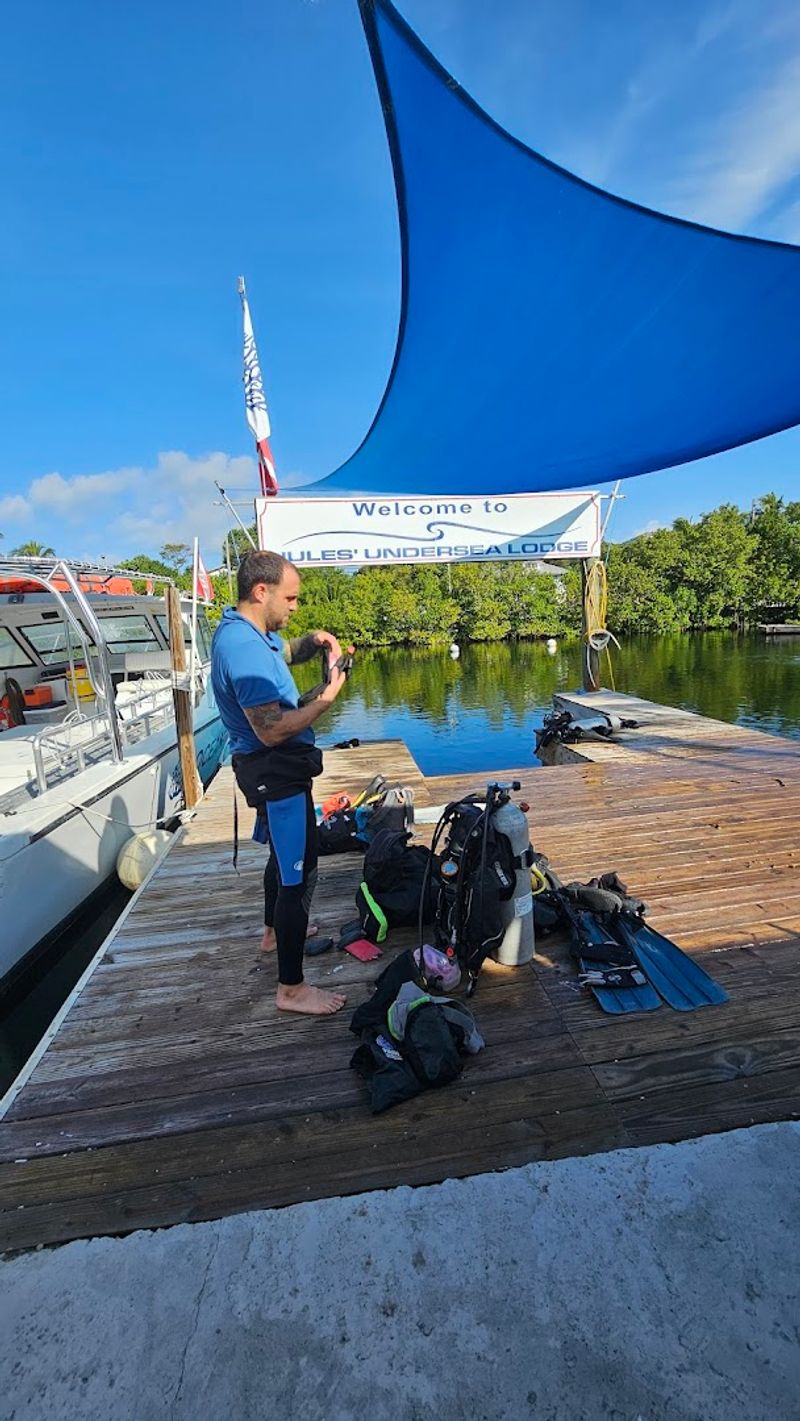
Planning ahead is essential for a stay at Jules’ Undersea Lab. The facility is small, with only two bedrooms in the habitat, which means availability fills up quickly, especially during peak travel seasons in Florida.
The official website at marinelabunderseapark.org/jules has current pricing, package details, and availability calendars. Booking months in advance is genuinely recommended, not just a polite suggestion.
Guests do not need to bring much, since a bathing suit and a sense of adventure are the primary requirements. The facility provides all necessary diving equipment, food, and in-room amenities.
If you are not yet certified for scuba, booking the Aquanaut package is the straightforward path to making the overnight stay possible, and it comes with everything you need to get safely underwater.
How Close It Is to Miami and Other Florida Keys Stops
One of the most appealing things about Jules’ Undersea Lab is how easy it is to reach from South Florida. Key Largo sits about 60 miles south of Miami, making it roughly a 1.5-hour drive under normal traffic conditions along US-1, also known as the Overseas Highway.
The drive itself is part of the appeal, since the road passes through Miami’s southern suburbs before opening up into the wide, flat landscape of the Upper Keys, with water visible on both sides and a gradual shift in atmosphere that signals you are leaving the city far behind.
Key Largo is also a strong base for exploring the broader Florida Keys. John Pennekamp Coral Reef State Park, the first undersea park in the United States, is just minutes away, and the string of islands stretching south toward Key West offers days’ worth of additional adventures for anyone who wants to extend the trip beyond a single night underwater.
Why This Experience Stays With You Long After You Surface
There is a particular kind of travel memory that does not fade the way most trips do, and a night at Jules’ Undersea Lab tends to produce exactly that. The combination of novelty, genuine science, physical adventure, and the sheer strangeness of waking up surrounded by water creates a layered experience that sticks.
Guests who stayed years ago still describe specific details with vivid clarity: the sound of bubbles outside the window, the weight of the humid air inside the habitat, the surreal calm of a night dive with only the habitat lights cutting through the dark water.
The place has hosted NASA astronauts using it as a training environment, world record holders for continuous underwater living, honeymooners celebrating with steak and lobster beneath the sea, and families whose kids completed their first scuba certifications here. Whatever brings you to this lagoon in Key Largo, the story you leave with is entirely your own, and entirely unlike anything else Florida has to offer.



