 Unearth The Voyage
Nature has a way of showing off, and honestly, we are here for it. From mountains striped like candy to lakes that blush pink under the sun, our planet is packed with jaw-dropping color that no painter could fully replicate.
These ten natural wonders prove that Earth has been quietly crafting masterpieces long before humans ever picked up a brush. Get ready to feel very small and very amazed at the same time.
Grand Prismatic Spring — Yellowstone Nation Park, USA
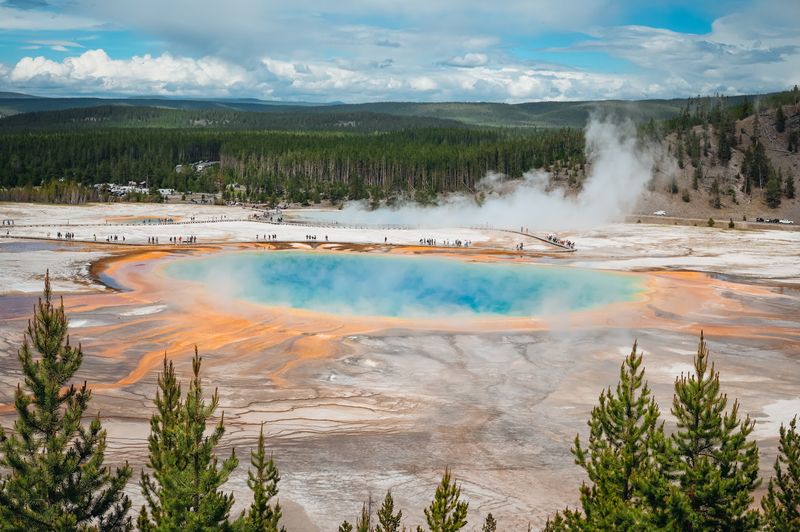
Staring at the Grand Prismatic Spring from above feels less like looking at Earth and more like peering into a glowing alien eye. This massive hot spring stretches over 300 feet wide, making it the largest in the United States and the third largest on the entire planet.
The colors are not painted on — they are alive.
The brilliant rings of orange, yellow, and green surrounding the deep sapphire center are actually colonies of heat-loving bacteria called thermophiles. Each band represents a different species thriving at a specific temperature, so the further from the blazing center, the cooler and greener it gets.
Scientists study these microbes because they offer clues about how life might survive on other planets.
Visiting in the morning gives you the best chance of clear views, since steam tends to drift across the spring and blur the colors later in the day. The boardwalk path brings you close enough to feel the warmth radiating off the water.
Standing there, surrounded by that bubbling, steaming, rainbow-ringed pool, it is nearly impossible not to feel like you have stumbled into something truly extraordinary.
Zhangye Danxia National Geopark — China
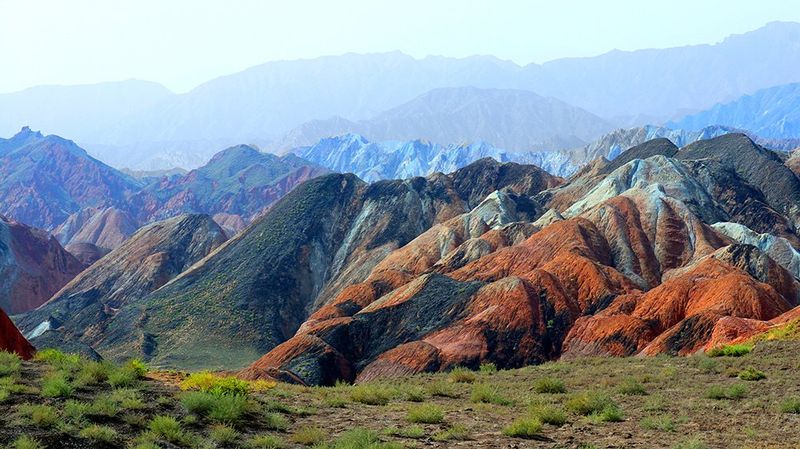
Imagine someone stacked millions of years of Earth history into a hillside, then let wind and rain slowly peel back the layers to reveal every color hidden inside. That is basically what happened at Zhangye Danxia, and the result is nothing short of spectacular.
These landforms look like they belong in a fantasy film set, not a real Chinese province.
The striped colors come from sandstone and mineral deposits laid down over roughly 24 million years. Tectonic forces pushed those layers upward, and erosion carved them into the rolling, ridged shapes you see today.
Iron oxides create the reds and oranges, while other minerals contribute greens and purples, giving each hillside a completely unique palette.
The best time to visit is late afternoon, when the low-angle sunlight makes the colors pop with almost unreal intensity. There are multiple viewing platforms scattered throughout the park, each offering a completely different perspective on the landscape.
Photographers from around the world make the trek specifically for golden hour shots here, and once you see the images, it is easy to understand why they keep coming back.
Painted Hills — Oregon, USA
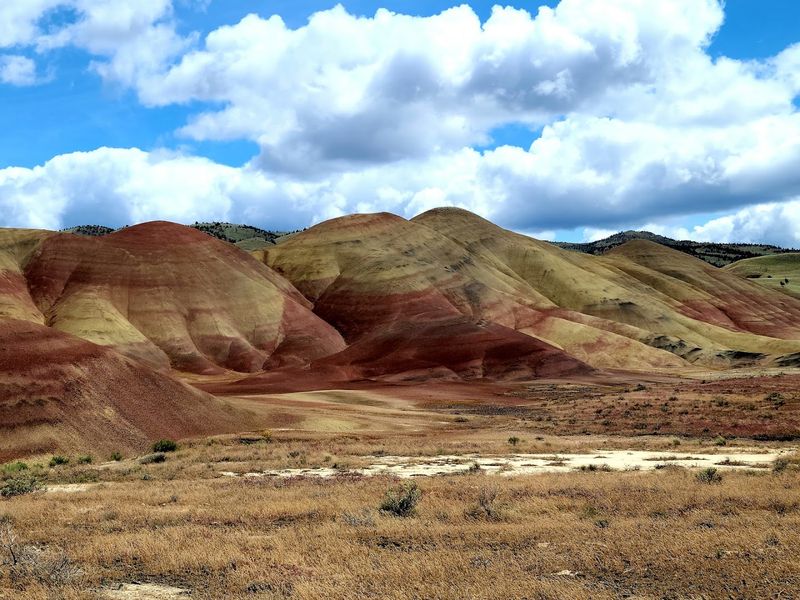
There is something almost meditative about the Painted Hills — they do not roar or rush, they simply glow. Located in the high desert of central Oregon, these gentle mounds shift color throughout the day as the light changes, turning from muted tones at midday into rich, saturated bands of red and gold at sunrise and sunset.
They are quiet, unhurried, and absolutely mesmerizing.
The colors come from ancient layers of volcanic ash and clay minerals deposited over millions of years. Red layers formed during warm, wet periods when iron in the soil oxidized, while black layers represent ancient swamp environments rich in organic material.
Yellow and tan tones come from different mineral compositions entirely, making these hills a timeline of prehistoric climate change.
Unlike many natural wonders that require serious hiking, the Painted Hills are accessible right from the roadside. Short, easy trails wind around the formations, and photography is encouraged everywhere.
One fun tip: visit after a light rain, when the clay surface becomes slightly damp and the colors intensify dramatically. It is the kind of place that seems almost too beautiful to be real, yet there it sits, quietly dazzling visitors in the Oregon desert.
Seven Coloured Earths — Mauritius
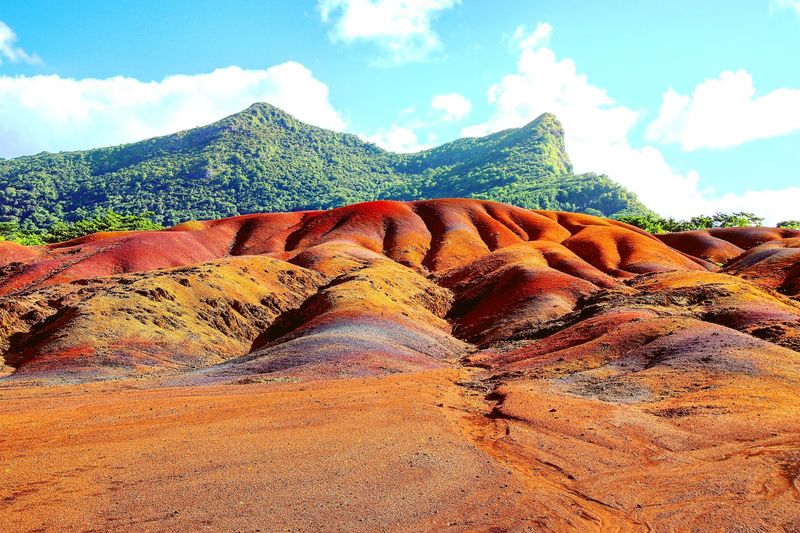
Only in Mauritius would you find sand dunes that look like they were sorted by a very artistic geologist with a passion for color. The Seven Coloured Earths at Chamarel are one of the island’s most beloved natural attractions, drawing visitors who honestly cannot believe what they are seeing until they are standing right in front of it.
The dunes are small but completely unforgettable.
The colors — violet, blue, green, yellow, red, brown, and more — come from volcanic basalt rock that cooled at different temperatures, causing different minerals to crystallize. What makes this place truly bizarre is that even when you mix the different colored sands together, they slowly separate back into their distinct layers over time.
Scientists believe this happens due to differences in particle density and grain size between each colored layer.
The surrounding area is part of the Chamarel Nature Park, which also features a stunning waterfall and roaming giant tortoises, making it a full day of natural wonders. The dunes are protected by a fence to prevent erosion, but viewing platforms give excellent angles for photos.
Visiting in the morning light makes the colors appear most vivid, and the contrast against the surrounding green tropical forest adds an extra layer of visual drama.
Antelope Canyon — Arizona, USA
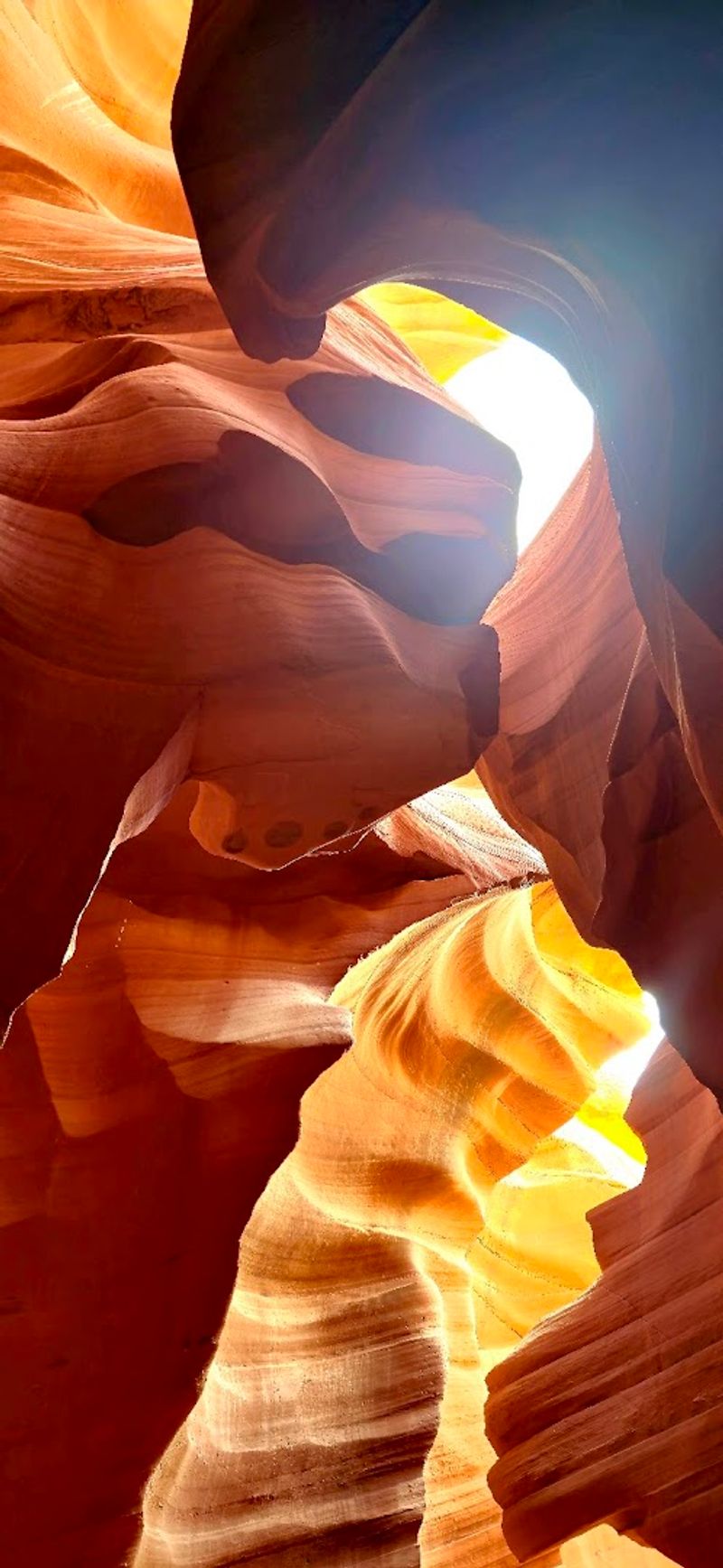
Walking into Antelope Canyon feels like stepping inside a sculpture — one that took water thousands of years to carve. Tucked within the Navajo Nation in northern Arizona, this slot canyon is split into two separate sections: Upper Antelope Canyon and Lower Antelope Canyon.
Both are extraordinary, but they offer distinctly different experiences for visitors.
Flash floods rushing through the narrow sandstone passages over millennia created the smooth, wave-like walls that seem to ripple and flow. Sunlight drops through the thin opening above and bounces off the curved walls, shifting from deep red to blazing gold depending on the time of day.
Midday in summer produces the most dramatic light beams, which photographers travel from across the globe to capture.
Access to the canyon is only possible through guided tours run by Navajo-owned companies, which helps protect the fragile environment and supports the local community. Tour guides are knowledgeable about both the geology and the cultural significance of the canyon to the Navajo people.
The entire experience lasts about an hour, but the images you take home — and the feeling of standing inside those glowing walls — tend to stay with you for a lifetime.
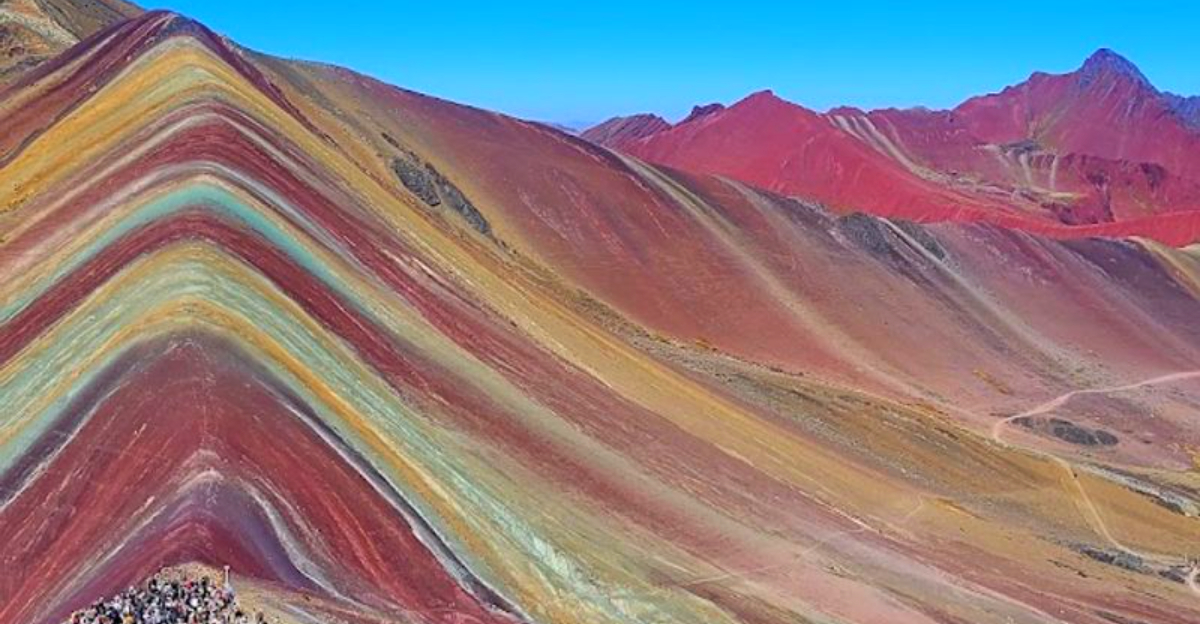
Rainbow Mountain (Vinicunca) — Peru
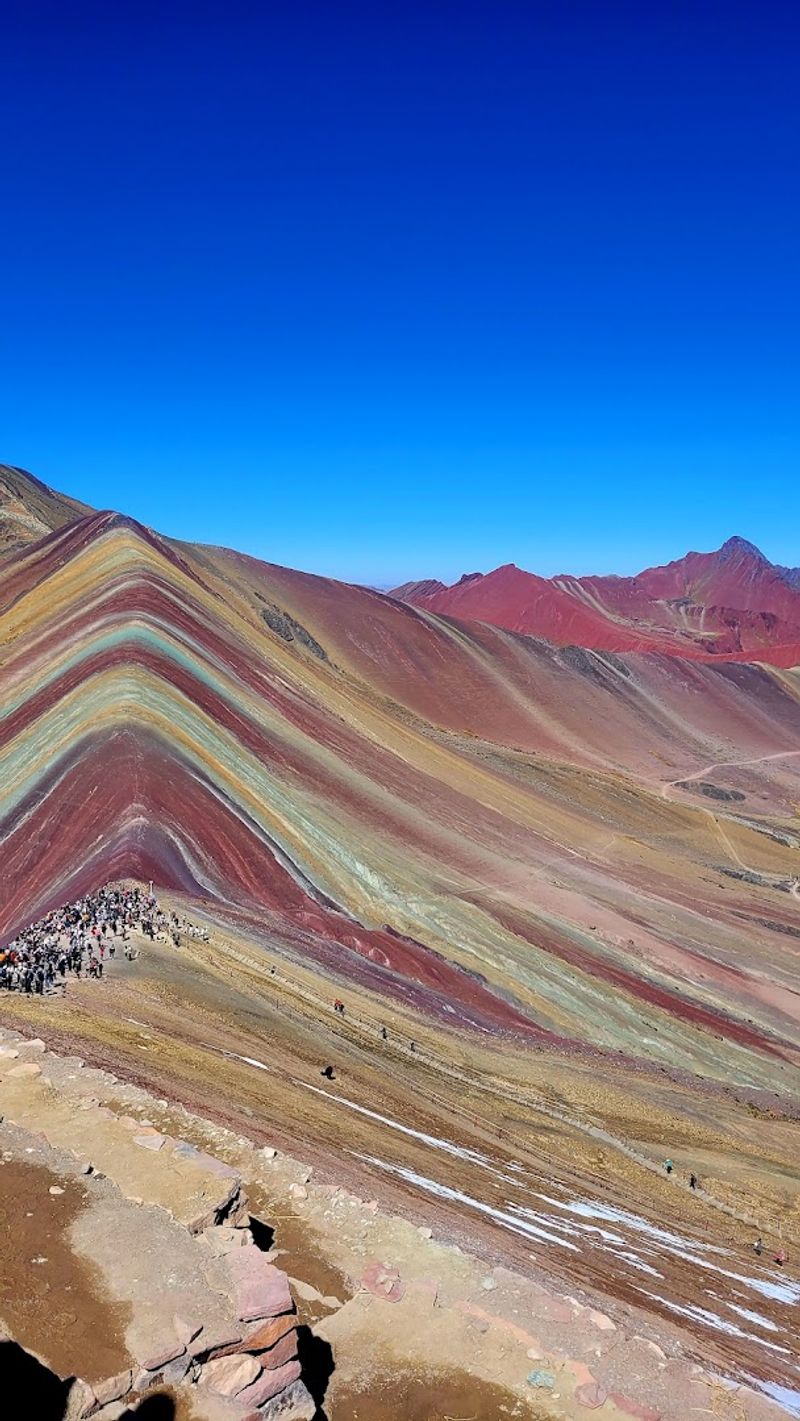
At over 17,000 feet above sea level, Rainbow Mountain — known locally as Vinicunca — is not exactly a casual stroll. But the hikers who push through the altitude and the thin air are rewarded with one of the most surreal landscapes on the planet.
The mountain’s striped slopes look like someone draped a giant, color-coded blanket across the Andes.
For centuries, the mountain’s vivid colors were hidden beneath a thick layer of glacial ice and snow. As climate change caused that ice to retreat, the mineral-rich rock beneath was exposed, revealing stripes of deep red from iron oxide, yellow from sulfur compounds, green from chlorite, and lavender from iron silicate.
The result is a mountain that seems almost too colorful to be natural.
Tours typically depart from the nearby city of Cusco early in the morning to allow time for acclimatization. Horseback riding is available for those who find the altitude challenging, which is a smart option since altitude sickness is genuinely common here.
The surrounding landscape — dotted with alpacas, wildflowers, and snowcapped peaks — makes the journey to the summit feel like traveling through an entirely different world altogether.
Lake Natron — Tanzania
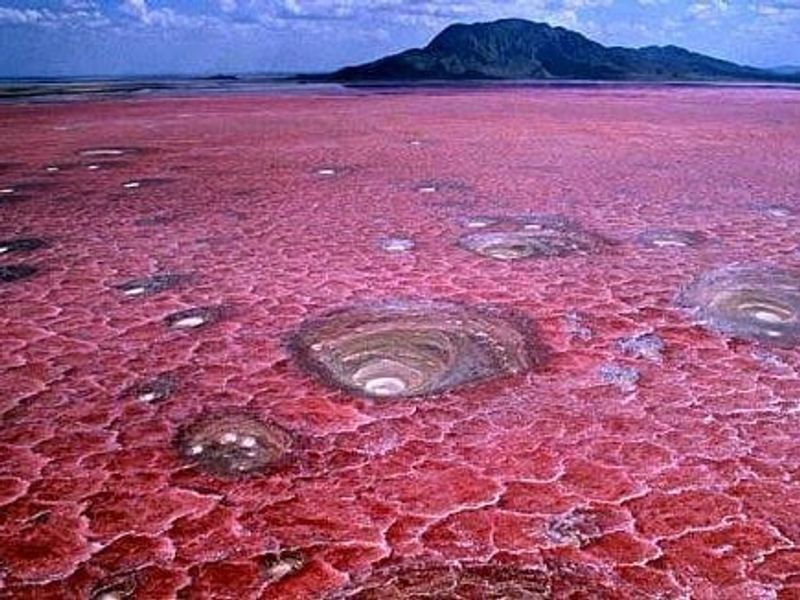
Lake Natron looks like a wound in the earth — vivid, red, and utterly alien. Located in northern Tanzania near the Kenyan border, this shallow alkaline lake has a pH close to that of ammonia, making it one of the most caustic bodies of water on the planet.
Yet somehow, it is also one of the most hauntingly beautiful.
The deep red and orange colors come from salt-loving microorganisms called haloarchaea that thrive in the extreme conditions. These microbes produce red pigments as part of their biology, turning the lake’s surface into a blazing crimson mirror when viewed from above.
The water temperature can reach up to 140 degrees Fahrenheit in some areas, which would be lethal to most living things.
Despite its hostile chemistry, Lake Natron is the primary breeding ground for East Africa’s lesser flamingos. Around 2.5 million flamingos flock here each year to nest on the salt flats, because the extreme conditions keep predators away.
The sight of thousands of pink birds wading across that blood-red water is one of the most surreal wildlife spectacles anywhere on Earth. Visiting during nesting season offers a visual experience that feels completely otherworldly.
Five Flower Lake (Jiuzhaigou) — China
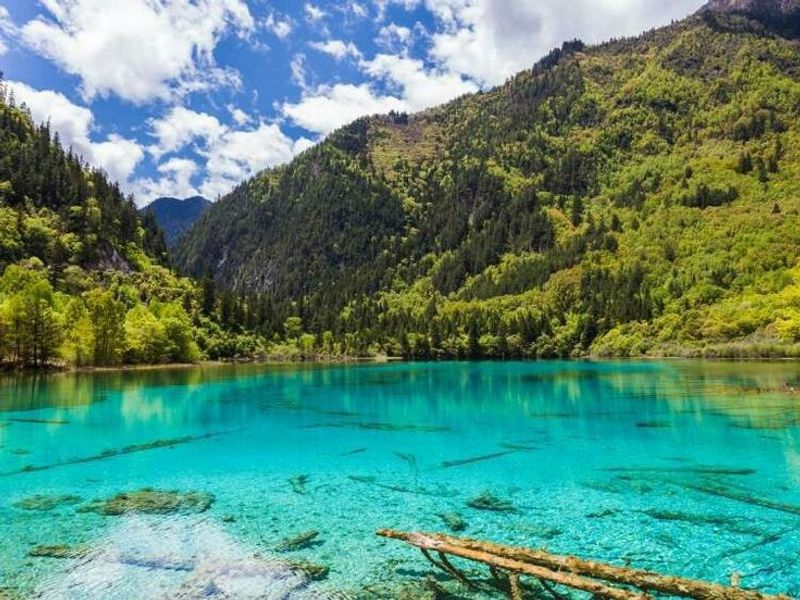
Five Flower Lake earns its poetic name the moment you see it — the water looks less like a lake and more like a living mosaic of color shifting beneath the surface. Located inside Jiuzhaigou National Park in Sichuan Province, this glacier-fed lake is so clear that you can see submerged logs and the detailed pattern of the lake bed from the shore.
It is the kind of clarity that makes you question whether the water is even real.
The extraordinary colors come from calcium carbonate deposits and algae on the lake bed, combined with the refraction of sunlight through the ultra-clear water. Different depths and mineral concentrations create patches of emerald, gold, turquoise, and deep blue that seem to blend and shift as the light changes throughout the day.
In autumn, fallen leaves from surrounding trees add splashes of orange and red to the surface, creating a completely different kind of beauty.
Jiuzhaigou was designated a UNESCO World Heritage Site in 1992, and Five Flower Lake is considered the crown jewel of the entire park. A boardwalk runs alongside the lake so visitors can take in the view without disturbing the fragile ecosystem.
Early morning visits offer the calmest water and the most vivid reflections, making it a photographer’s absolute dream destination.
Pink Sand Beaches — Bahamas
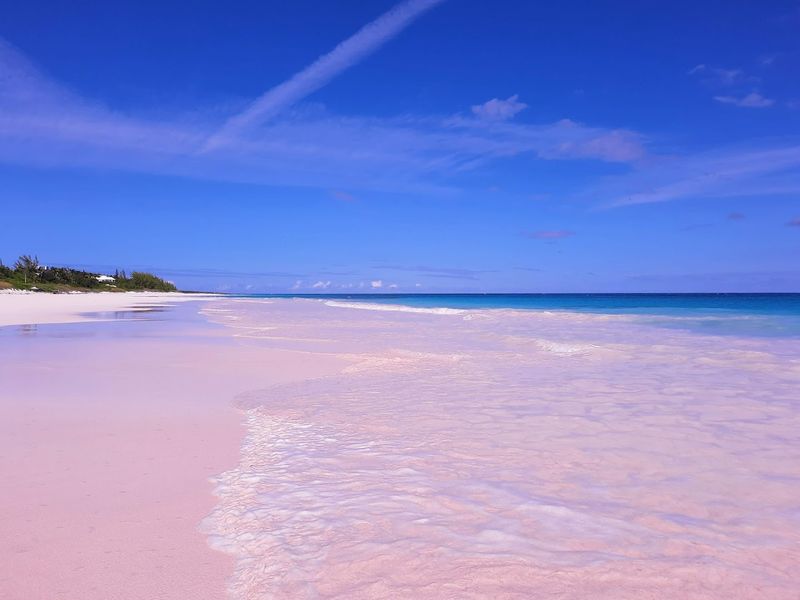
Pink sand sounds like something from a children’s book, but Harbour Island in the Bahamas makes it a very real and very stunning reality. The beach stretches for about three miles along the island’s eastern shore, and the sand really does glow in soft, rosy pink tones that deepen at sunrise and sunset into something almost dreamlike.
It is one of the most photographed beaches in the entire Caribbean.
The pink color comes from the crushed shells and skeletal fragments of a tiny marine organism called foraminifera. These microscopic creatures have bright red or pink shells, and when they wash ashore and mix with the white sand and coral, they tint the whole beach in that signature blush hue.
The more foraminifera present, the deeper the pink — so the color can actually vary slightly from one stretch of beach to another.
The water alongside the pink sand is a brilliant turquoise, and the contrast between the two colors is almost too pretty to process. Swimming, snorkeling, and simply lounging are all excellent options here.
The island itself is small and charmingly low-key, with colorful wooden houses and golf carts as the main form of transportation. It is the kind of place that makes you want to stay forever.
Autumn Forests — New England, USA
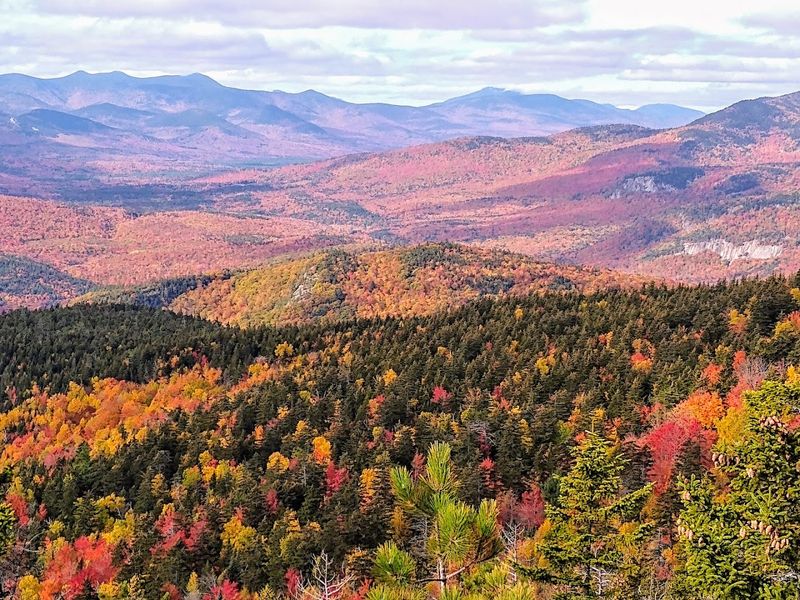
Every year, like clockwork, New England stages the most spectacular free show on the continent. Come September and October, the forests of Vermont, New Hampshire, Maine, and their neighbors ignite in a full-spectrum blaze of crimson, amber, gold, and rust that draws millions of visitors from around the world.
Locals call it leaf-peeping season, and it is taken very seriously.
The science behind the color change is genuinely fascinating. As days grow shorter and temperatures drop, trees stop producing chlorophyll — the green pigment that dominates during summer.
Without it, the underlying pigments like carotenes (yellow and orange) and anthocyanins (red and purple) become visible. The intensity of the colors depends on the weather: warm sunny days and cool nights produce the most vivid displays.
Peak foliage typically hits different areas at different times, starting in northern Maine in late September and sweeping southward through October. Road trips along scenic routes like Vermont Route 100 or the Kancamagus Highway in New Hampshire are legendary for their fall views.
Farmers markets, apple orchards, and cozy covered bridges add to the experience, making autumn in New England feel less like a season and more like a full sensory celebration of nature at its most colorful.



