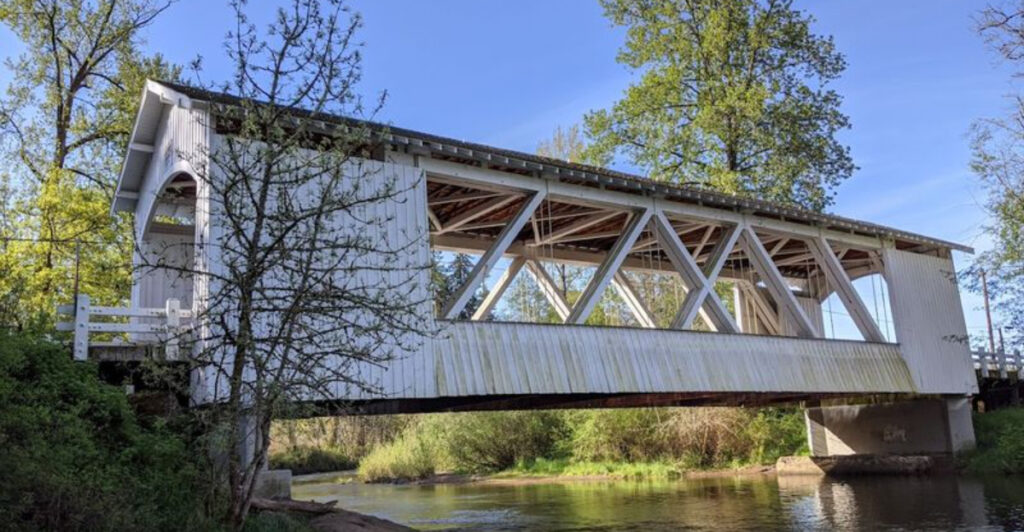
Oregon has a secret that road trippers absolutely love: a stunning collection of historic covered bridges scattered across its countryside, forests, and river valleys. Many of these wooden gems were built between the late 1800s and mid-1900s, and they have been lovingly preserved ever since.
Whether you are chasing great photos, soaking up history, or just looking for a reason to hit the open road, these 11 covered bridges are the perfect excuse to explore the beautiful state of Oregon.
Lowell Covered Bridge — Lowell, Oregon
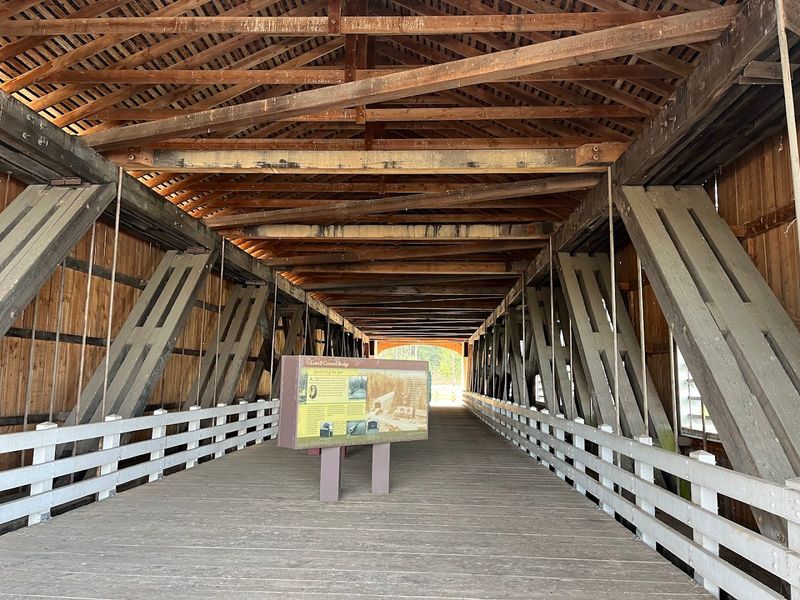
Step onto the Lowell Covered Bridge and you are walking across a true one-of-a-kind landmark. This is the only covered bridge in all of Oregon that exists solely for pedestrians, making every crossing feel like a quiet escape from the modern world.
Originally built in 1945, it spanned the Little Fall Creek before being carefully relocated to its current home near the Dexter Reservoir backwaters.
The relocation was no small task. Engineers and preservationists worked hard to move the entire structure without losing its historic character, and the result is a beautifully maintained bridge sitting at the heart of a scenic riverside park.
Picnic tables, shaded paths, and calm water views make this spot ideal for a relaxing afternoon stop.
Photographers love the soft light that filters through the bridge’s wooden slats in the early morning. Families enjoy the park setting, where kids can explore safely while adults soak up the history.
Lowell Covered Bridge is proof that some things are worth saving, and worth going a little out of your way to visit.
Office Bridge — Westfir, Oregon
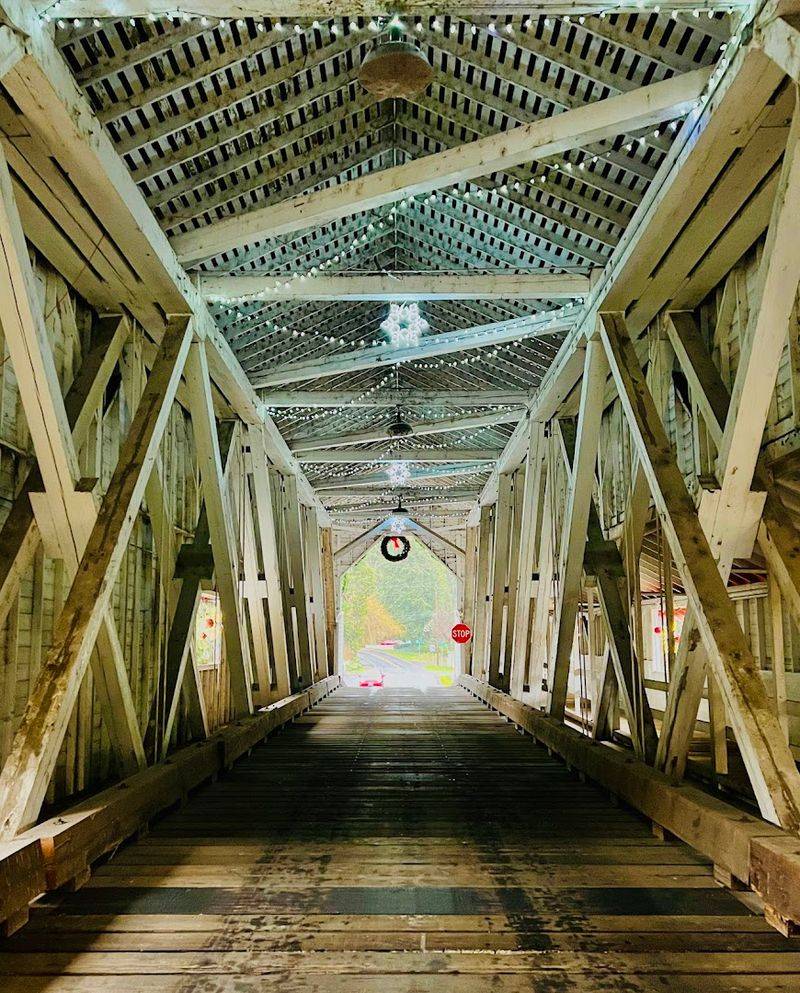
At 180 feet long, Office Bridge holds an impressive title: the longest covered bridge in Oregon that still carries vehicle traffic. That alone is worth the detour to the small town of Westfir, tucked into the foothills east of Eugene.
Built in 1944, this sturdy wooden structure crosses the North Fork of the Middle Fork Willamette River with the kind of confidence that only decades of solid craftsmanship can provide.
The name “Office Bridge” comes from a quirky piece of local history. It once connected the town to the nearby lumber company’s administrative office, and the name stuck long after the company disappeared.
That little detail makes the bridge feel like a living story, not just a structure.
Driving through it is a surprisingly fun experience. The wooden planks rumble beneath your tires, and for a few seconds you are transported back to an era when bridges like this were the lifeblood of rural communities.
Westfir itself is a charming, unhurried town worth exploring before or after your bridge visit. Pack a camera and allow yourself extra time to wander.
Earnest Covered Bridge — Cottage Grove, Oregon
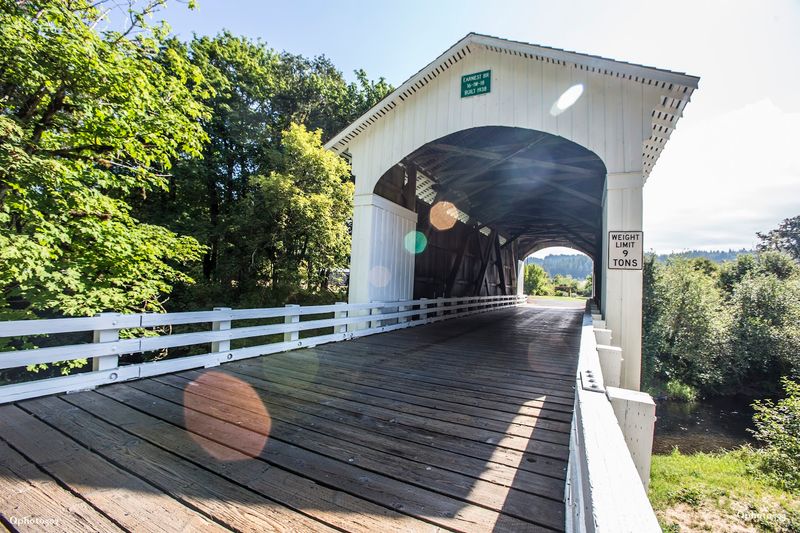
Cottage Grove wears its nickname “Covered Bridge Capital of Oregon” with pride, and Earnest Covered Bridge is one of the main reasons why. Built in 1938, this classic Howe truss structure spans Mosby Creek just east of town, sitting in a pastoral landscape that looks like it belongs on a postcard.
The Howe truss design, which uses a combination of wooden diagonals and vertical iron rods, was one of the most reliable bridge-building methods of the era.
What makes Earnest especially appealing is how peaceful the surrounding area feels. Farmland stretches out in every direction, and the sound of Mosby Creek trickling below adds to the calm atmosphere.
There are no crowds here, no gift shops, just open countryside and a beautifully preserved piece of Oregon history.
Earnest Covered Bridge is part of a self-guided covered bridge driving tour that loops through the Cottage Grove area. Picking up a tour map from the local visitor center is a smart move before you start exploring.
You can hit multiple bridges in a single afternoon, and Earnest is a highlight that never disappoints, no matter what season you visit.
Chambers Railroad Bridge — Cottage Grove, Oregon
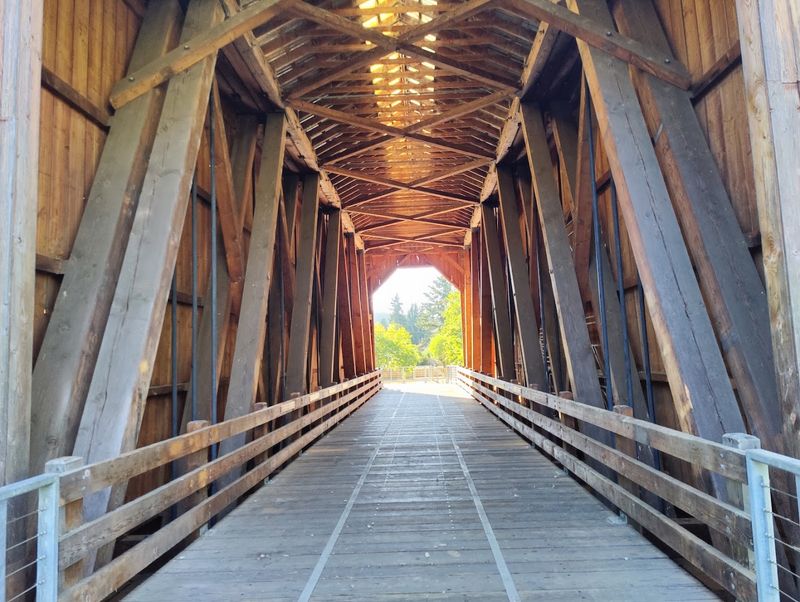
There is only one covered railroad bridge left west of the Mississippi River, and it happens to sit right in Cottage Grove, Oregon. That is not a small claim.
Chambers Railroad Bridge, originally constructed in 1925 for the Oregon Pacific and Eastern Railroad, is a genuine piece of American transportation history that somehow survived into the 21st century.
These days, trains no longer roll through its wooden frame. Instead, hikers and cyclists enjoy the bridge as part of the scenic Row River Trail, a paved path that winds through forests and past several other covered bridges in the area.
The conversion from railroad bridge to recreational trail has given Chambers a whole new life, and visitors clearly appreciate it.
Walking through the bridge gives you a real sense of its original scale. Railroad bridges needed to be wide and strong, and you can feel that engineering in every beam and plank.
The surrounding trail is flat and family-friendly, making it easy to combine a bridge visit with a longer bike ride or nature walk. History and outdoor adventure rarely come packaged this neatly, so do not skip this one on your road trip itinerary.
Dorena Covered Bridge — Cottage Grove, Oregon
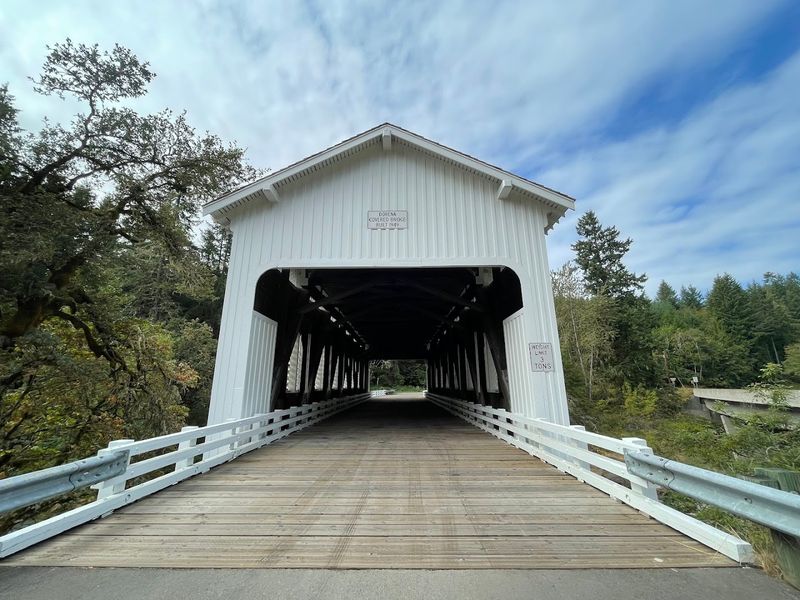
Some bridges are famous for their engineering. Dorena Covered Bridge is famous for being drop-dead gorgeous.
Dating back to 1949, this Lane County landmark crosses the Row River and draws photographers from across the Pacific Northwest who come specifically to capture its classic silhouette against the surrounding farmland and forest. It is consistently ranked among the most photogenic covered bridges in the entire state.
The bridge sits just off the Row River Trail, making it an easy and rewarding stop whether you are driving, cycling, or hiking through the area. Surrounding fields shift colors with the seasons, so Dorena looks completely different in spring, summer, fall, and winter.
Each visit can feel like seeing it for the first time.
One fun fact: the nearby Dorena Reservoir shares its name with the bridge, and both are named after a small community that was flooded when the reservoir was created in the 1940s. That bittersweet history adds an extra layer of meaning to the bridge’s presence in the landscape.
Pull over, set up your shot, and take a moment to appreciate how much this corner of Oregon has held onto its past.
Currin Covered Bridge — Cottage Grove, Oregon
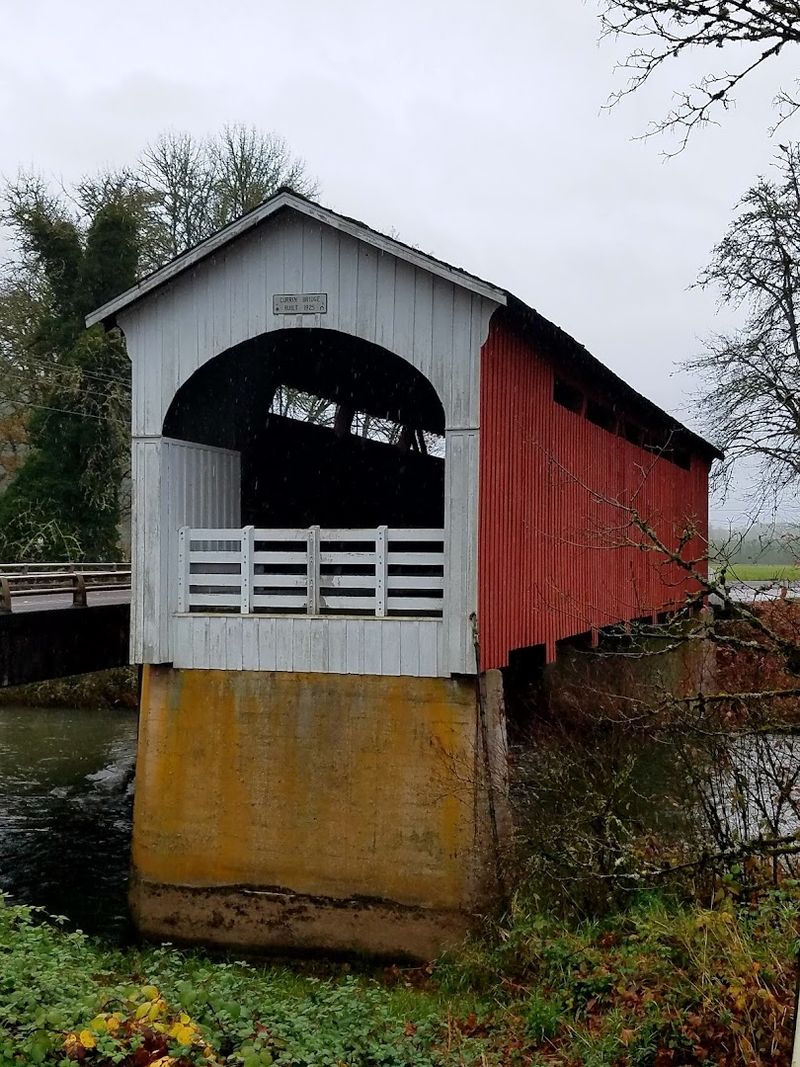
You will spot Currin Covered Bridge from a distance, and that is entirely the point. Its bold red-and-white painted portals make it one of the most visually striking covered bridges in Oregon, standing out beautifully against the green trees and blue sky of the Row River valley.
Built in 1925, it has been turning heads for exactly one century and shows no signs of stopping.
What makes Currin even more fun to visit is its location. A short walk away sits the Mosby Creek Bridge, meaning you can check off two historic covered bridges in a single stop.
That kind of efficiency is rare on a road trip, and it makes Currin an easy favorite among visitors doing the full Cottage Grove covered bridge loop.
The bridge still carries vehicle traffic, so you can actually drive through it rather than just admire it from the outside. That rumbling, echoing experience inside a covered bridge is something you genuinely have to feel to appreciate.
Currin Covered Bridge rewards visitors with great photos, a bit of history, and a neighboring bridge just down the road. It is a two-for-one deal that road trippers absolutely love.
Mosby Creek Covered Bridge — Cottage Grove, Oregon
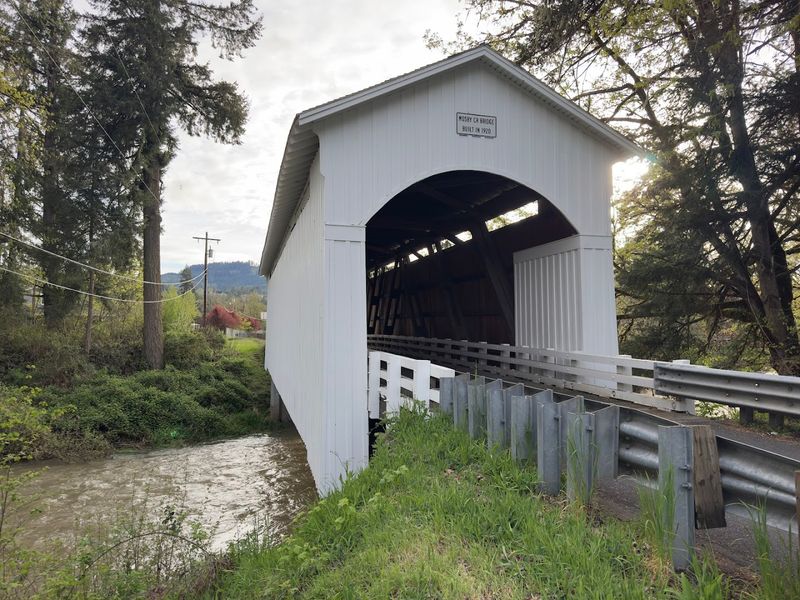
Completed in 1920, Mosby Creek Covered Bridge is the oldest covered bridge still open to vehicle traffic in the Cottage Grove area. Over a century old and still doing its job, this bridge is a testament to how well Oregon’s covered bridges were built.
Its single-span Howe truss design stretches impressively across the creek, and the surrounding canopy of tall trees makes the whole scene feel like something out of a storybook.
Drivers who cross it for the first time often slow down just to take it all in. The wooden interior creates a brief, pleasant darkness before the light opens back up on the other side.
It is one of those small travel moments that stays with you long after the road trip ends.
Mosby Creek itself is worth a look from the bridge’s edge. The water moves gently below, and in the right season you might spot wildlife along the banks.
Mosby Creek Covered Bridge sits close to Currin Covered Bridge, so combining both into one quick stop is an easy win. For a structure that is more than 100 years old, it remains remarkably solid, scenic, and satisfying to visit any time of year.
Unity Covered Bridge — Fall Creek, Oregon
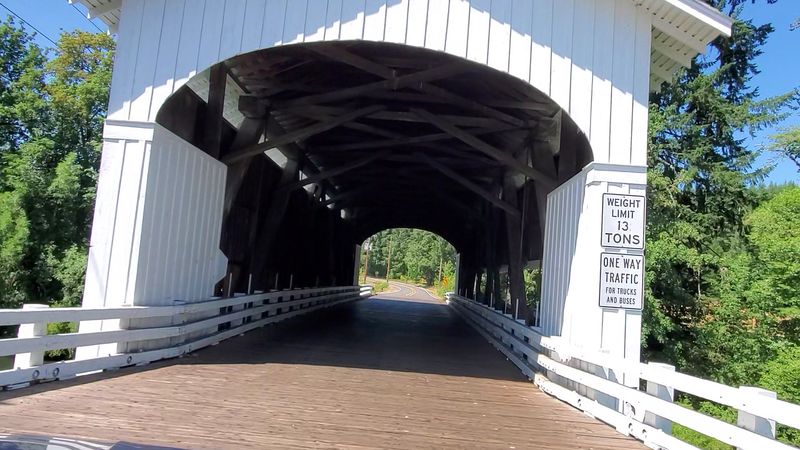
Tucked into the forest east of Eugene, Unity Covered Bridge has a name that feels perfectly suited to its setting. Built in 1936, it crosses Fall Creek and continues to serve local traffic, making it one of the functioning historic covered bridges in the Willamette National Forest area.
The surrounding landscape is lush, green, and wonderfully quiet, especially on weekday mornings when you might have the whole place to yourself.
The real draw here goes beyond the bridge itself. Fall Creek is a popular spot for fishing, and nearby trails offer easy access to the forest for hikers of all skill levels.
Combining a bridge stop with a few hours of outdoor activity makes Unity a genuinely full experience rather than just a quick photo opportunity.
Unity Covered Bridge does not get the same tourist traffic as the Cottage Grove bridges, which honestly makes it more appealing to visitors who prefer a quieter, more personal connection with Oregon’s history. The drive out to Fall Creek is scenic on its own, winding through farmland before entering the trees.
If you are the kind of traveler who loves finding hidden gems on a road trip, Unity Covered Bridge belongs on your list without question.
Stayton-Jordan Covered Bridge — Stayton, Oregon
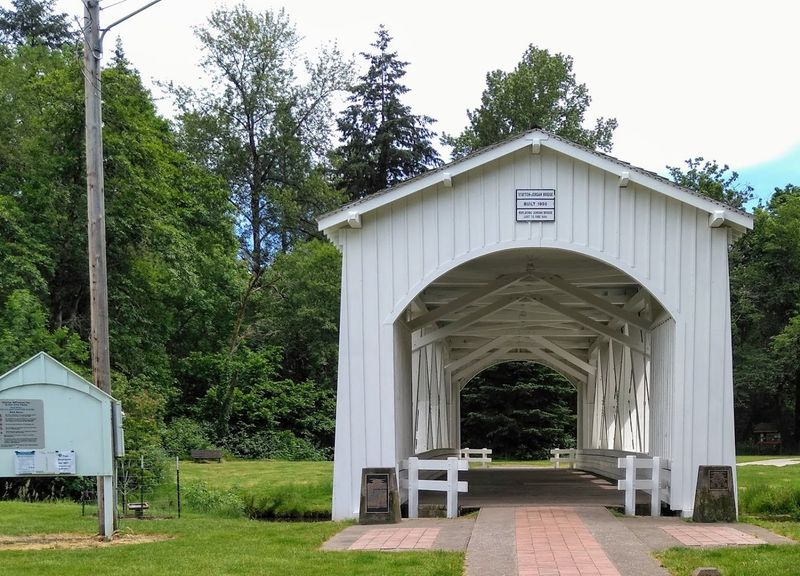
Not every historic bridge survives the march of modern progress, but the Stayton-Jordan Covered Bridge beat the odds in a big way. Originally built in 1937 and later bypassed by newer roads, it faced the very real possibility of demolition.
Instead, the community rallied, the bridge was relocated and carefully restored, and today it stands as a proud landmark near the town of Stayton in Marion County.
The restoration work is genuinely impressive. Up close, you can see the care and craftsmanship that went into preserving the original character of the structure while making it safe and stable for modern visitors.
It now spans a small channel near a local park, giving families and history enthusiasts a lovely spot to stop and appreciate rural Oregon engineering.
Stayton itself is a welcoming small town with local shops and restaurants worth exploring before or after your bridge visit. The bridge serves as a reminder that communities can choose to honor their history rather than pave over it.
For road trippers moving through the Willamette Valley, the Stayton-Jordan Covered Bridge is an easy and rewarding detour that combines small-town charm with a genuine slice of Oregon heritage.
Hannah Bridge — Crabtree, Oregon
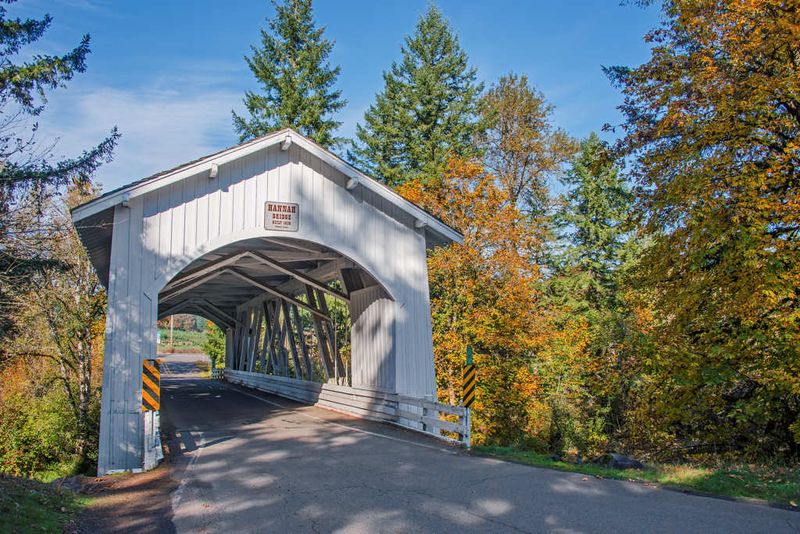
Linn County is serious about its covered bridges, and Hannah Bridge is one of its finest examples. Built in 1936 over Thomas Creek near the small community of Crabtree, this bridge has aged beautifully, retaining its original wooden character while remaining accessible to visitors who make the effort to find it.
The surrounding countryside is quiet and open, with farms and rolling hills providing a classic Oregon backdrop.
Photographers especially love Hannah Bridge in the golden hours of early morning and late afternoon, when the light wraps around the wooden frame and turns the whole scene warm and cinematic. Weekend road trippers often combine a visit here with drives along the scenic byways of Linn County, which are dotted with other historic sites and natural landmarks.
What makes Hannah Bridge stand out is how unspoiled the whole experience feels. There are no guardrails of tourism here, just a well-preserved bridge, a trickling creek, and the sound of wind moving through nearby trees.
It rewards curiosity and rewards even more those willing to venture off the main highway. Linn County has worked hard to maintain bridges like Hannah, and that effort shows in every plank and beam you see.
Larwood Bridge — Lacomb, Oregon
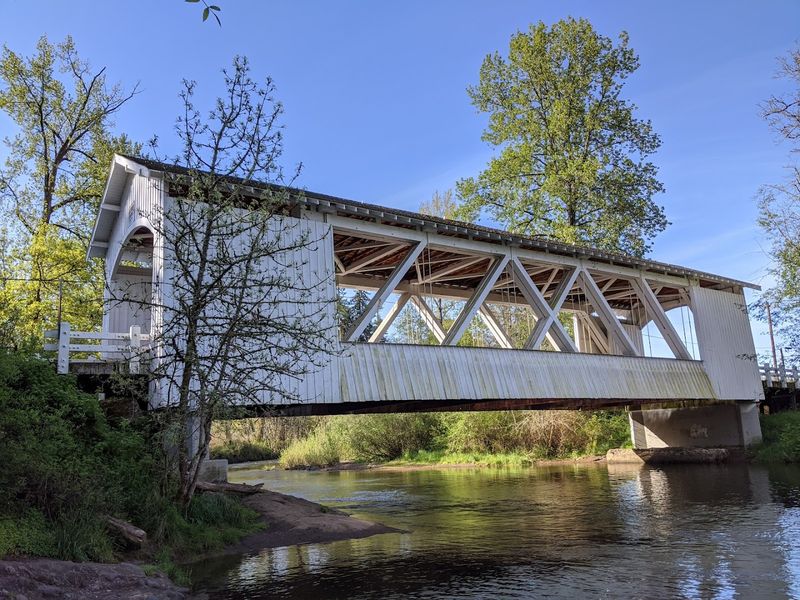
Saving the most dramatic setting for last feels right, because Larwood Bridge delivers scenery that genuinely stops people in their tracks. Constructed in 1939, it crosses the South Santiam River in a park framed by basalt formations and towering mature trees.
The combination of historic wooden bridge and volcanic rock landscape is something you simply do not expect to find on a country road in Oregon, and that surprise is half the fun.
The park surrounding Larwood Bridge is set up for extended visits. Picnic areas invite families to spread out and stay awhile, and nearby walking paths wind through the natural landscape at an easy, enjoyable pace.
Anglers frequently head to the river for fishing, making this spot popular with outdoor enthusiasts well beyond the bridge-admiring crowd.
Larwood Bridge is located near Lacomb, a quiet rural community in Linn County that most travelers pass without a second glance. Those who stop discover one of the most beautiful historic bridge settings in the entire Pacific Northwest.
Whether you are wrapping up a full covered bridge road trip or just discovering Oregon’s hidden landscapes for the first time, Larwood Bridge is a genuinely unforgettable final stop that earns every bit of praise it receives.
Share this story